Cannabis & Anxiety: The Complete Science-Backed Guide to Finding Relief
Discover how cannabinoids and terpenes affect anxiety, which strains may help, and evidence-based strategies for using cannabis safely for stress relief.

Updated July 2026: Added results from the 2026 Lancet Psychiatry meta-analysis (54 RCTs), a Phase 3 CBD trial for generalized anxiety, and new strain recommendations with direct links. Expanded internal links to newer deep-dives on GABA, serotonin, and anandamide.
If you’ve ever felt your anxiety melt away after a few puffs—or, conversely, found yourself spiraling into paranoid thoughts—you’re not imagining things. Cannabis has a complex, sometimes contradictory relationship with anxiety, and understanding the science behind it can mean the difference between finding relief and making things worse.
Let’s dive deep into what researchers have discovered about cannabis and anxiety, explore the key compounds involved, and give you practical strategies for navigating this nuanced terrain.
The Paradox: Why Cannabis Can Both Help and Hurt Anxiety
Here’s the thing that trips up many people: cannabis isn’t simply “good” or “bad” for anxiety. It’s both, depending on a constellation of factors including dose, cannabinoid ratios, terpene profiles, your individual biology, and even your mindset going in.
Research published in the Journal of Affective Disorders analyzed over 1,400 cannabis sessions and found that 58% of users reported significant reductions in anxiety. However—and this is crucial—the same study found that a subset of users experienced increased anxiety, particularly at higher doses.
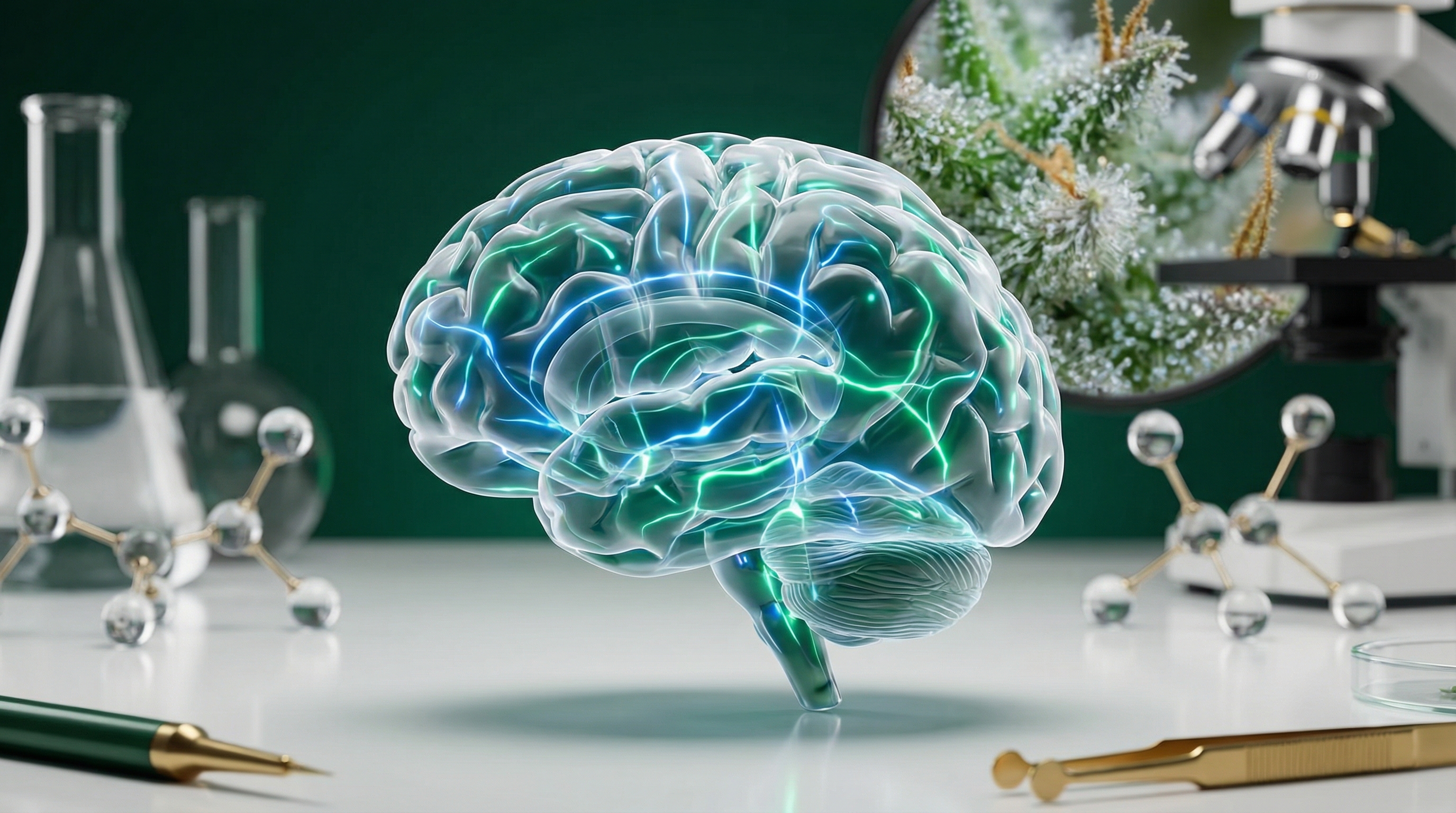
This bidirectional effect isn’t a bug; it’s a feature of how the endocannabinoid system works. Your body’s own endocannabinoid system (ECS) acts as a master regulator, constantly working to maintain balance. When cannabis compounds interact with this system, the results depend heavily on context.
Understanding the Endocannabinoid System and Anxiety
To understand why cannabis affects anxiety the way it does, you need to know about two key receptors: CB1 and CB2.
CB1 Receptors: The Anxiety Control Center
CB1 receptors are concentrated heavily in brain regions associated with fear and anxiety:
- Amygdala – Your brain’s fear alarm system
- Prefrontal cortex – Responsible for emotional regulation
- Hippocampus – Processes memories, including traumatic ones
- Hypothalamus – Controls stress hormone release
When cannabinoids bind to CB1 receptors in these areas, they can modulate the anxiety response. But here’s where it gets interesting: low to moderate activation tends to reduce anxiety, while excessive activation can increase it.
Think of it like a dimmer switch. Turn it up a little, and the harsh overhead light becomes a pleasant glow. Crank it all the way up, and you’re blinded.
The Role of Anandamide
Your body produces its own cannabinoid called anandamide (named after the Sanskrit word for “bliss”). Anandamide naturally regulates anxiety by binding to CB1 receptors. Some research suggests that people with anxiety disorders may have lower baseline levels of anandamide or faster breakdown of this compound—a concept known as clinical endocannabinoid deficiency.
This is where CBD enters the picture—it inhibits the enzyme (FAAH) that breaks down anandamide, potentially allowing your natural anxiety-relief system to work more effectively.
THC: The Double-Edged Sword
Delta-9-tetrahydrocannabinol (THC) is the primary psychoactive compound in cannabis, and its relationship with anxiety is the most complex.
The Dose-Response Curve
Multiple studies have confirmed what many users intuitively know: THC’s effect on anxiety follows a biphasic dose-response curve.
| THC Dose | Typical Anxiety Effect |
|---|---|
| Low (2.5-5mg) | Often reduces anxiety |
| Moderate (10-15mg) | Mixed effects, depends on individual |
| High (20mg+) | Frequently increases anxiety |
A landmark 2017 study from the University of Chicago found that 7.5mg of THC reduced stress during a simulated job interview, while 12.5mg increased negative mood and subjective distress in the same scenario.
Key Takeaway: If you’re using cannabis for anxiety, starting low isn’t just good advice—it’s backed by solid science. More THC doesn’t mean more relief; often, it means the opposite.
Why High THC Can Backfire
At higher doses, THC can overstimulate CB1 receptors, particularly in the amygdala. This can trigger:
- Racing thoughts
- Heightened sensory awareness (which can feel overwhelming)
- Paranoid ideation
- Physical symptoms like rapid heartbeat
These effects can create a feedback loop where the physical sensations of being high are misinterpreted as danger signals, escalating anxiety further.
CBD: The Anxiety-Relieving Counterbalance
Cannabidiol (CBD) has emerged as a promising compound for anxiety, and the research is genuinely encouraging.
How CBD Reduces Anxiety
Unlike THC, CBD doesn’t directly activate CB1 receptors. Instead, it works through multiple mechanisms:
- Serotonin receptor activation – CBD binds to 5-HT1A receptors, the same targets as many anti-anxiety medications
- FAAH inhibition – Increases natural anandamide levels
- Neurogenesis – May promote new neuron growth in the hippocampus (reduced in chronic anxiety)
- THC modulation – Can reduce THC’s binding to CB1 receptors, softening its intensity
What the Research Shows
A 2019 study in The Permanente Journal followed 72 adults with anxiety and poor sleep. After one month of CBD treatment:
- 79.2% reported decreased anxiety scores
- Benefits were sustained over the study period
- Side effects were minimal
Another notable study gave participants 300mg of CBD before a public speaking test—one of the most reliable ways to induce anxiety in a laboratory setting. CBD significantly reduced anxiety, cognitive impairment, and discomfort compared to placebo.
2025-2026 Research Update
The evidence base has grown substantially. A 2025 meta-analysis of 21 placebo-controlled RCTs found that pure CBD showed a moderate, statistically significant anxiolytic effect (SMD -0.61), while mixed CBD/THC formulations did not reach significance [Raminelli et al., 2025]. This supports the idea that CBD’s anxiety benefits come through its own distinct pathways—particularly serotonin 5-HT1A activation and GABA modulation.
A Phase 3 randomized controlled trial (N=178) tested nanodispersible CBD oral solution (300-600mg over 12 weeks) for generalized anxiety disorder and found significant reductions in GAD-7 scores compared to placebo (difference -7.02, p<0.0001), with no serious adverse events [Gundugurti et al., 2024].
However, balance is important: a 2026 Lancet Psychiatry meta-analysis of 54 RCTs (N=2,477) found that cannabinoids broadly did not reach significance for anxiety symptoms and were associated with higher adverse events [Wilson et al., 2026]. The takeaway? Pure CBD appears promising for anxiety, but “cannabis” as a broad category is not a blanket anxiolytic. Formulation, dose, and cannabinoid specificity matter enormously.
The CBD-THC Ratio Question
For many people, the most effective approach isn’t pure CBD or pure THC, but a balanced combination. Research suggests that CBD can mitigate THC’s anxiety-inducing potential while preserving its therapeutic effects.
| Ratio (CBD:THC) | Best For |
|---|---|
| 20:1 or higher | Maximum anxiety reduction, minimal psychoactivity |
| 8:1 to 4:1 | Mild relaxation with anxiety protection |
| 1:1 | Balanced effects, moderate psychoactivity |
| 1:4 or lower | Stronger psychoactive effects, higher anxiety risk |
The Terpene Factor: Aromatherapy Meets Pharmacology
Here’s where cannabis science gets really interesting. The aromatic compounds that give different strains their distinctive smells—terpenes—aren’t just about flavor. They have genuine pharmacological effects that can significantly influence your anxiety response.
Linalool: The Lavender Connection
Found in lavender and many cannabis strains, linalool has been extensively studied for its anxiolytic (anti-anxiety) properties. It works by:
- Modulating glutamate and GABA neurotransmitter systems
- Reducing stress-induced changes in gene expression
- Enhancing the effects of other sedative compounds
Strains high in linalool often produce a notably calming experience. Good examples include Granddaddy Purple, Lavender, and Do-Si-Dos. For a deeper look at this compound, see our linalool deep-dive.
Myrcene: The Relaxation Terpene
Myrcene is the most abundant terpene in most cannabis strains. It’s also found in hops, mangoes, and lemongrass. Research indicates myrcene:
- Enhances GABA-A receptor activity (similar to benzodiazepines, but milder)
- Produces sedative and muscle-relaxant effects
- May increase the permeability of the blood-brain barrier, allowing other compounds to take effect more quickly
Myrcene-rich strains like Northern Lights, Bubba Kush, and OG Kush are often reported as calming. Learn more in our myrcene guide.
Limonene: The Mood Lifter
Despite its energizing citrus aroma, limonene has demonstrated anti-anxiety effects in research. It appears to:
- Increase serotonin and dopamine in key brain regions
- Reduce stress hormone (cortisol) levels
- Produce anxiolytic effects through olfactory pathways
Limonene-forward strains such as Super Lemon Haze, Lemon Haze, and Strawberry Cough may help lift mood while keeping anxiety at bay. See our limonene guide for the full science.
Beta-Caryophyllene: The Unique Cannabinoid-Terpene
Beta-caryophyllene is remarkable because it’s the only terpene known to directly activate cannabinoid receptors (specifically CB2). While CB2 receptors are primarily associated with immune function, emerging research suggests they may also play a role in anxiety regulation. Strains like Girl Scout Cookies and GG4 (Gorilla Glue) are notably rich in this compound.
Practical Strategies for Using Cannabis with Anxiety
Now let’s translate this science into actionable guidance.
Start Low, Go Slow (Seriously)
This isn’t just a catchy phrase—it’s the most evidence-supported approach for anxiety-prone individuals:
- Begin with 2.5mg THC or less if using THC-containing products
- Wait at least 2 hours before redosing with edibles
- Consider CBD-dominant products for your first experiences
- Track your responses in a journal to identify patterns
Choose Your Consumption Method Wisely
Different consumption methods produce different experiences:
| Method | Onset | Duration | Control Level |
|---|---|---|---|
| Inhalation | 1-5 minutes | 1-3 hours | High (easy to titrate) |
| Sublingual | 15-30 minutes | 4-6 hours | Moderate |
| Edibles | 30-90 minutes | 4-8 hours | Low (harder to adjust) |
For anxiety management, inhalation or sublingual methods offer better control because you can adjust your dose in real-time based on how you’re feeling.
Set and Setting Matter
Research on cannabis and anxiety consistently shows that context influences outcomes. To maximize positive effects:
- Use in a comfortable, familiar environment
- Avoid cannabis when you’re already highly anxious or stressed
- Have trusted people around, especially when trying new products
- Keep CBD on hand as a potential “rescue” option
Consider Time of Day
Some research suggests that cannabis may be more effective for anxiety in the evening when cortisol levels are naturally declining. Morning use, when cortisol peaks, may be more likely to produce mixed effects.
Strains Worth Exploring for Anxiety
If you’re looking for specific strains to discuss with your provider or budtender, here are some that align with the terpene and cannabinoid science above:
- High-CBD options: ACDC, Harlequin, Cannatonic, Pennywise, Ringo’s Gift — all offer meaningful CBD content with minimal psychoactivity
- Balanced THC:CBD: Blue Dream, Jack Herer — moderate THC with anxiety-friendly terpene profiles
- Relaxing, myrcene-dominant: Granddaddy Purple, Northern Lights — best for evening anxiety and sleep onset
For a deeper dive, see our best strains for social anxiety, best strains for stress relief, and best strains for deep relaxation guides.
Know Your Genetics
Emerging research indicates that genetic variations affect how individuals respond to cannabis. Specifically, variations in the CNR1 gene (which codes for CB1 receptors) and FAAH gene may predispose some people to anxiety from THC. While consumer genetic testing for cannabis response is still in its infancy, being aware that your biology matters can help you approach cannabis with appropriate caution.

What the Research Says About Specific Anxiety Disorders
While most cannabis-anxiety research examines general anxiety, some studies have looked at specific conditions:
Generalized Anxiety Disorder (GAD)
CBD has shown promise for GAD in several studies, with doses ranging from 25-300mg showing benefit. THC research is more limited, but low-dose THC may help some individuals with GAD-related sleep disturbances.
Social Anxiety Disorder
The public speaking studies mentioned earlier specifically model social anxiety. CBD at 300-600mg has repeatedly shown benefit in these scenarios. Interestingly, even single doses appear to produce acute effects.
PTSD
This is one area where cannabis research is most robust. Several studies have found that cannabis users with PTSD report:
- Reduced intrusive memories and flashbacks
- Improved sleep quality
- Decreased hyperarousal symptoms
The Canadian Armed Forces has even funded research into cannabis for PTSD in veterans, reflecting growing institutional acceptance of this application.
Important Note: While these findings are promising, cannabis should be considered as a complement to—not replacement for—evidence-based treatments like therapy. If you have a diagnosed anxiety disorder, work with a healthcare provider who can help you integrate cannabis safely into your treatment plan.
When Cannabis Isn’t the Right Choice
Honesty matters here: cannabis isn’t appropriate for everyone with anxiety.
Consider avoiding or being extremely cautious with cannabis if you:
- Have a personal or family history of psychotic disorders
- Are under 25 (the brain is still developing)
- Have experienced severe panic attacks or psychotic symptoms from cannabis before
- Are taking medications that may interact with cannabinoids
- Have a history of substance use disorder
For some individuals, cannabis may provide short-term relief while worsening anxiety long-term through dependency or avoidance patterns. If you find yourself needing cannabis to function in normal daily situations, that’s worth examining honestly.
The Bottom Line
Cannabis and anxiety have a complicated relationship, but science is helping us understand it better every year. The key insights:
- Dose matters enormously—low THC doses tend to reduce anxiety while high doses often increase it
- CBD is your friend if anxiety is a concern, either alone or in combination with THC
- Terpenes contribute significantly to the anxiety profile of any given cannabis product
- Individual variation is real—what works for your friend may not work for you
- Context and mindset influence outcomes as much as the plant itself
The most successful approach combines scientific knowledge with careful self-observation. Start with products that have favorable cannabinoid and terpene profiles for anxiety, begin with minimal doses, and pay close attention to how your body and mind respond.
Cannabis can be a valuable tool for anxiety management for many people—but like any tool, its effectiveness depends on using it skillfully.
Related Reading:
- Cannabis and Mental Health: What 28 Clinical Trials Actually Show
- Cannabis and GABA: The Anxiety Brake System
- Cannabis and Dopamine: What Neuroscience Actually Shows
- Microdosing Cannabis for Productivity and Focus
- Cannabis and PTSD: What Therapeutic Research Shows
Sources (2025-2026 additions):
- Raminelli, G.A. et al. (2025). Meta-analysis of cannabinoids for anxiety. Cannabis and Cannabinoid Research. DOI: 10.1177/25785125251378242
- Gundugurti, P.R. et al. (2024). Phase 3 RCT of nanodispersible CBD for GAD. Asian Journal of Psychiatry. DOI: 10.1016/j.ajp.2024.104073
- Wilson, J., Dobson, O., Langcake, A. et al. (2026). “The efficacy and safety of cannabinoids for the treatment of mental disorders and substance use disorders: a systematic review and meta-analysis.” The Lancet Psychiatry, 13, 304–315. DOI: 10.1016/S2215-0366(26)00015-5
- Roberts, B.A. et al. (2025). Systematic review of cannabinoids for anxiety disorders. Psychiatry Research, 350. DOI: 10.1016/j.psychres.2025.116552
Have questions about cannabis and anxiety? Want to share what’s worked for you? The conversation continues in our community. Remember: this information is for educational purposes and isn’t medical advice. If you’re dealing with significant anxiety, please consult with a qualified healthcare provider.


