Cannabis Consumption Methods Ranked by Bioavailability
Compare smoking, vaping, edibles, tinctures, and more. Science-backed bioavailability data to help you choose the right method.

Professor High
Your friendly cannabis educator, bringing science-backed knowledge to the community.
You took 10 milligrams of THC. But depending on how you took it, your body might absorb 1 milligram or 5 milligrams. That’s not a rounding error—it’s the difference between feeling nothing and feeling everything.
The reason? Bioavailability: the percentage of a substance that actually reaches your bloodstream. It’s the single most important concept nobody talks about at the dispensary counter, and it changes everything about how you should think about dosing, onset, and choosing your method.
Let’s rank every major consumption method by how efficiently your body absorbs cannabinoids—backed by pharmacokinetic research, not marketing claims.
What Is Bioavailability (and Why Should You Care)?
Think of it like a filter. Every time you consume cannabis, your body filters out some of it before it reaches your brain. How much gets filtered depends entirely on the route it takes.
Swallow a 10 mg THC edible? Your stomach and liver strip away most of it. Only about 1-2 mg of that original 10 mg actually makes it into your blood as THC.
This happens because THC is fat-soluble. It doesn’t mix well with the water in your gut, and your liver breaks down a big chunk before it reaches your brain. Researchers call this “first-pass metabolism.”
A 2018 review in the British Journal of Clinical Pharmacology found that cannabinoid absorption varies a lot—not just between people, but even between sessions for the same person (Lucas et al., 2018). The same method can hit you differently on different days.
Here’s the full ranking, from highest to lowest absorption.
The Complete Ranking
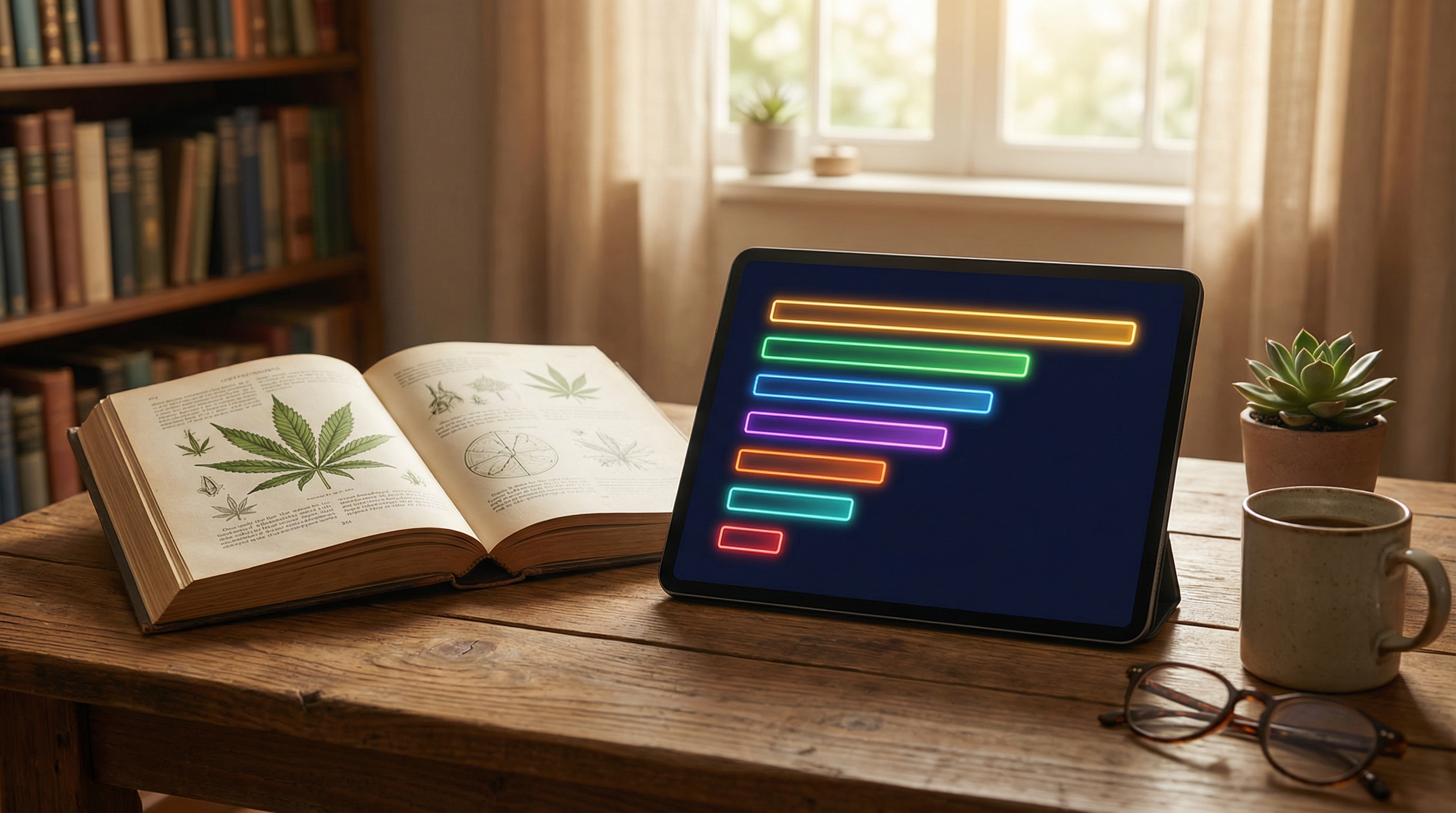
| Rank | Method | Bioavailability | Onset | Peak Effects | Duration |
|---|---|---|---|---|---|
| 1 | Dabbing/Concentrates | 50-80% | Seconds-2 min | 5-15 min | 1-3 hours |
| 2 | Vaporizing Flower | 30-50% | 1-5 min | 10-20 min | 2-4 hours |
| 3 | Intranasal | 34-46% | 5-15 min | 15-30 min | 2-4 hours |
| 4 | Sublingual Tinctures | 20-35% | 15-45 min | 30-60 min | 4-6 hours |
| 5 | Smoking Flower | 10-35% | Seconds-2 min | 15-30 min | 1-3 hours |
| 6 | Nano-Emulsion Edibles | ~20-30% | 15-30 min | 30-60 min | 2-4 hours |
| 7 | Traditional Edibles | 4-20% | 30-120 min | 90-180 min | 4-8 hours |
| 8 | Transdermal Patches | Low systemic | 1-2 hours | Steady-state | 12-48+ hours |
| 9 | Topicals | ~0% systemic | 15-45 min local | 30-60 min local | 1-3 hours local |
Now let’s break down each one.
1. Dabbing and Concentrates (50-80%)
Dabbing delivers the highest bioavailability of any consumption method. You’re inhaling highly concentrated cannabinoids through a heated surface, and the vapor enters your lungs where it crosses directly into your bloodstream through the alveoli—the same gas-exchange membranes that handle oxygen.
Why it ranks first: Concentrates are already purified (70-90%+ THC), and flash vaporization at controlled temperatures means minimal combustion loss. Your lungs have approximately 70 square meters of surface area for absorption.
The trade-off: This is the deep end of the pool. With bioavailability this high and concentrations this potent, dabbing is not beginner-friendly. A single dab can deliver more THC in one hit than an entire joint.
Best for: Experienced users seeking rapid, potent relief. Patients with severe symptoms who need high-dose delivery.
2. Vaporizing Flower (30-50%)
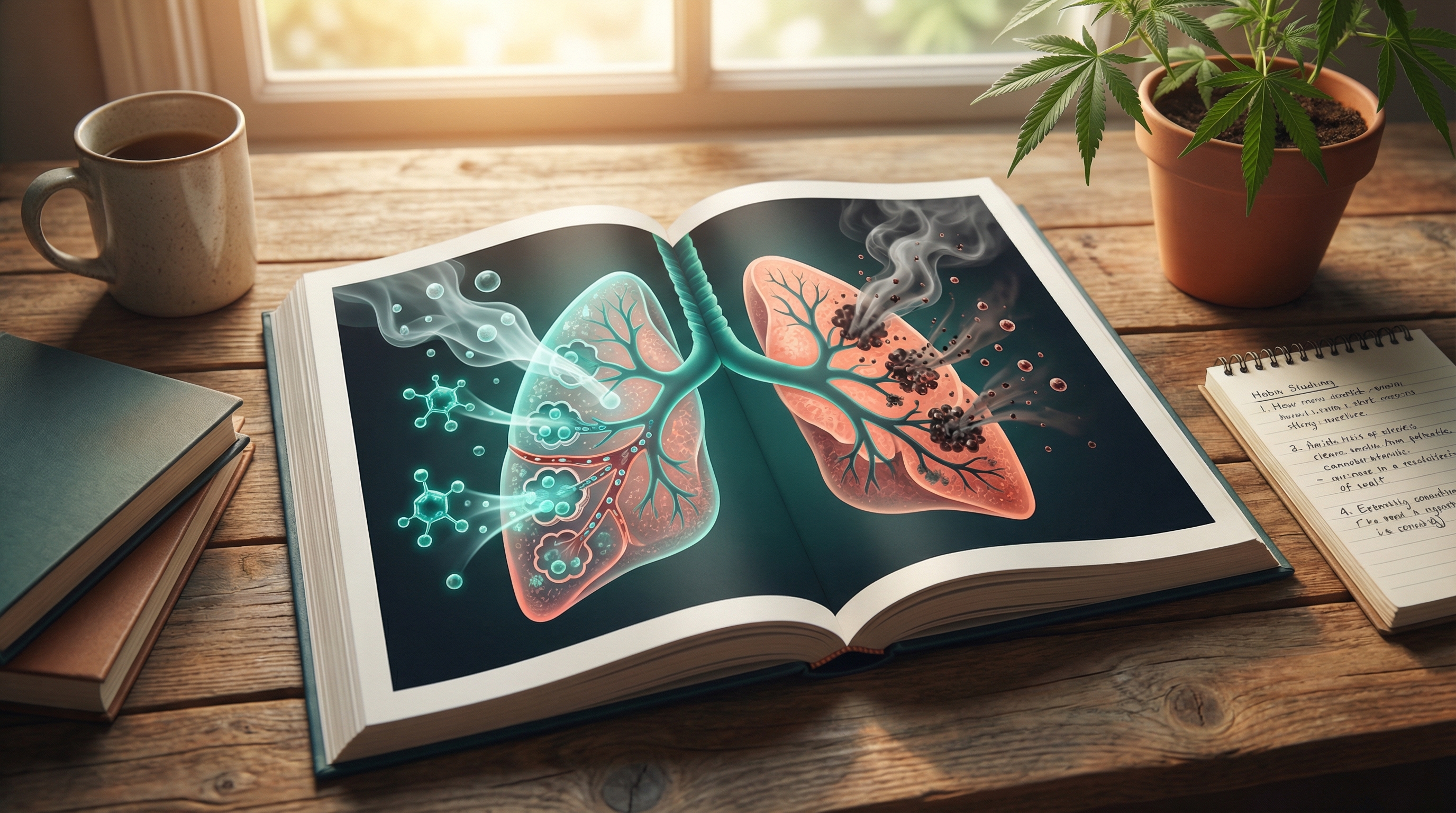
Vaporizers heat cannabis just enough to release cannabinoids as vapor—without burning it. That distinction matters. Burning (combustion) destroys a big chunk of the cannabinoids and creates harmful byproducts. Vaping preserves more of the good stuff.
Research confirms that vaporized CBD can reach up to 50% bioavailability (Lucas et al., 2018). The onset timing is similar to smoking, but you absorb a higher percentage of what’s in the flower.
Why it beats smoking: It comes down to temperature. Burning happens around 230°C (450°F), but cannabinoids vaporize between 160-220°C (320-430°F). Staying below that burn point means you keep more cannabinoids intact and skip the tar and carbon monoxide. If you’re looking for the right gear, a quality dry herb vaporizer is one of the best investments you can make.
Best for: Regular users who want efficiency and reduced respiratory irritation. Anyone seeking fast onset with cleaner delivery.
3. Intranasal Delivery (34-46%)
Nasal sprays and mucosal delivery are an emerging category in medical cannabis. The nasal mucosa is rich in blood vessels and provides direct access to systemic circulation—bypassing the liver entirely.
Research on transdermal and alternative delivery routes found intranasal administration achieves “moderate bioavailability of 34-46%” while “avoiding hepatic degradation” (Tijani et al., 2022). This makes it particularly interesting for medical applications where precise dosing matters.
Why it’s notable: Fast onset similar to inhalation, but without any lung involvement. It’s the only non-inhalation method that comes close to the speed and efficiency of smoking or vaping.
Best for: Medical patients who cannot inhale. Anyone seeking fast onset without respiratory involvement.
4. Sublingual Tinctures (20-35%)
Place a tincture under your tongue, and the cannabinoids absorb through the thin tissue there—right into your blood. This skips your liver (mostly), which is why it works better than just swallowing the same tincture.
The catch: some of the liquid always gets swallowed. That swallowed portion goes through your gut and liver like a normal edible. Studies describe sublingual blood levels as “higher than oral, but reduced relative to inhaled THC” (Lucas et al., 2018).
Pro tip: Hold tinctures under your tongue for at least 60-90 seconds before swallowing. The longer the liquid contacts your sublingual membrane, the more that bypasses your liver.
Best for: Users who want a middle ground between edibles and inhalation. Good for precise dosing with moderate onset speed.
5. Smoking Flower (10-35%)
Smoking is the oldest way to consume cannabis—but it’s surprisingly wasteful. That wide 10-35% range depends on how deeply you inhale, how long you hold it, how evenly it burns, and how much THC the flame destroys.
A Johns Hopkins study found that inhaled cannabis produces peak blood THC levels anywhere from 15 to 192 ng/mL—a huge range that shows how inconsistent smoking can be (Newmeyer et al., 2017). If you’ve ever wondered why the same strain hits differently each time, smoking technique is a big part of the answer.
Why it ranks below vaping: The flame destroys an estimated 30-50% of cannabinoids before they reach your lungs. The tip of a burning joint gets far hotter than needed to release THC, and that extra heat breaks down the very compounds you want.
Best for: Social settings, simplicity, and the ritual experience. Many users prefer smoking for the full-spectrum entourage effect despite lower efficiency.
6. Nano-Emulsion Edibles and Beverages (~20-30%)
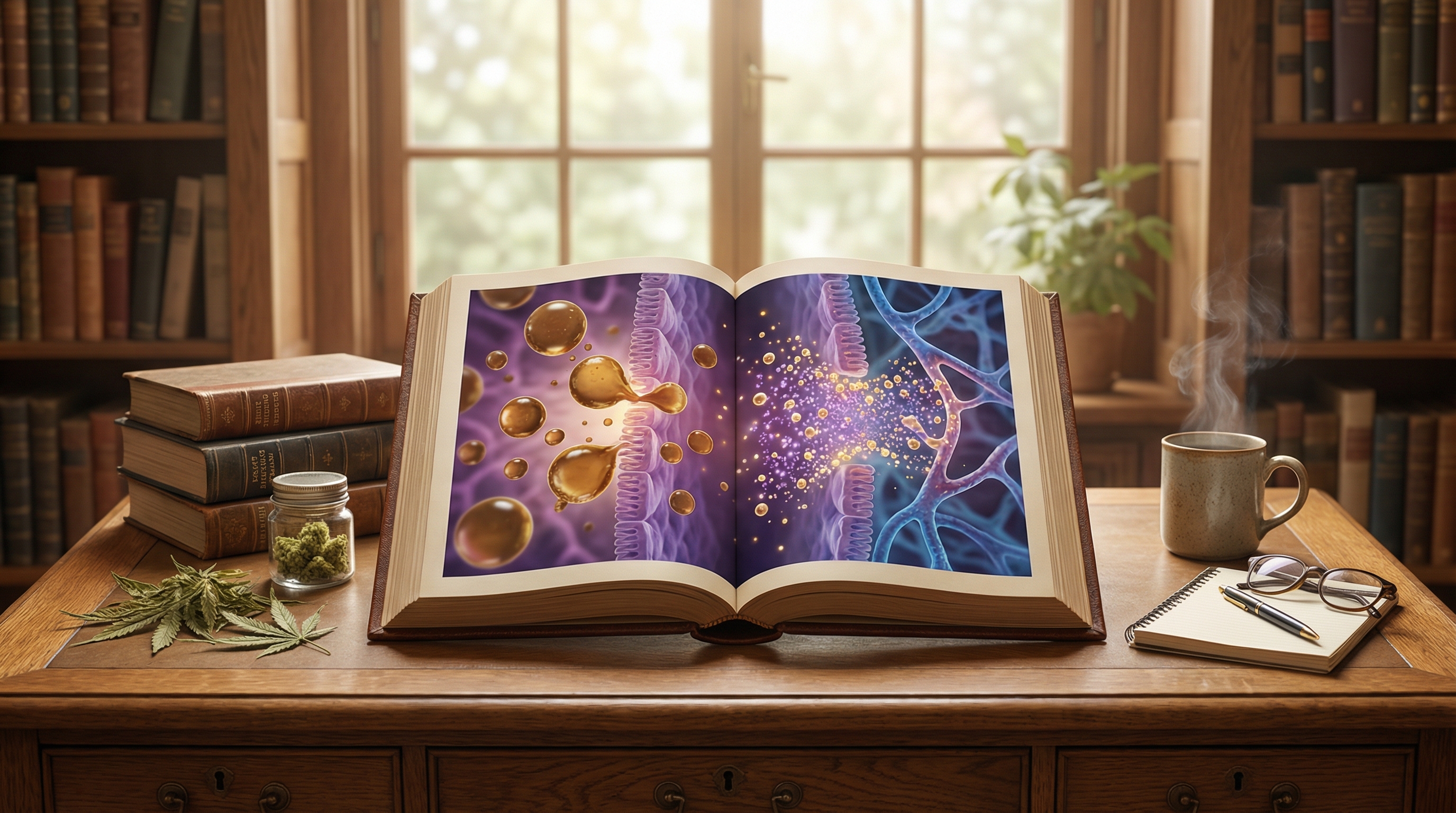
This is the fastest-growing product category in cannabis, and for good reason. Nano-emulsions use sound waves to break cannabis oil into tiny particles—smaller than 200 nanometers. That’s small enough to mix with water and skip much of the slow digestive process.
Normal THC is fat-soluble. It struggles in the watery environment of your gut. But nano-sized particles slip right through the intestinal lining and into your blood much faster.
The key differences from regular edibles:
- Onset: 15-30 minutes (vs. 30-120 for traditional edibles)
- Duration: 2-4 hours (vs. 4-8 for traditional)
- Consistency: More predictable effects due to better absorption uniformity
Best for: Users who prefer edibles but want faster, more predictable onset. Social consumption as an alcohol alternative. Anyone frustrated by the “I don’t feel anything yet” edible experience.
7. Traditional Edibles (4-20%)
Gummies, baked goods, and capsules have the lowest bioavailability of any method you can swallow. The reason: first-pass metabolism. After your gut absorbs THC, it travels straight to your liver. There, enzymes break down a big portion before it ever reaches your brain.
But here’s the twist. Your liver converts regular THC into 11-hydroxy-THC (11-OH-THC)—a stronger version that crosses into your brain more easily. So even though less THC reaches your blood, the total high can feel more intense.
A study of 18 adults who ate cannabis brownies (10, 25, and 50 mg THC) found peak blood levels that “never exceeded 5 ng/mL.” Compare that to 15-192 ng/mL from smoking (Newmeyer et al., 2017). Yet many users say edibles feel stronger. That’s the 11-OH-THC at work.
For a deeper dive into this liver transformation, check out our guide on why edibles hit harder: the science of 11-OH-THC.
Best for: Long-lasting relief (4-8 hours). Users who need sustained effects for sleep, chronic pain, or extended symptom management. Lung-health-conscious consumers.
8. Transdermal Patches (Low Systemic, Sustained)
Patches push cannabinoids through your skin and into your blood—but slowly. THC doesn’t cross skin easily because it’s so fat-soluble that it resists the watery layers in your skin.
A study of 18 adults found that CBD/THC patches reached steady levels within 1.4 hours and held them for over 48 hours. But the actual blood levels were very low (0.35 ng/mL for THC) and nobody felt any high at all (Varadi et al., 2022).
Delta-8-THC patches work better, holding steady blood levels of 4.4 ng/mL for over 48 hours (Tijani et al., 2022).
Best for: Sustained, low-level delivery for chronic conditions. Patients who need all-day symptom management without peaks and valleys. Not suitable for recreational effects.
9. Topicals (~0% Systemic)
Creams, balms, and salves work right where you rub them in. They don’t reach your blood in any meaningful amount. Instead, cannabinoids interact with receptors in your skin and the tissue underneath—giving local relief without any high.
That’s actually the point. Topicals are the one method where low bioavailability is a feature, not a bug. You want the cannabinoids to stay put. If you’re curious about the science of how cannabinoids work in your body, CB2 receptors in skin tissue are a big part of why topicals work for pain and inflammation.
Best for: Localized pain, inflammation, and skin conditions. Athletes, arthritis sufferers, and anyone seeking targeted relief without any high.
Beyond the Numbers: Choosing Your Method
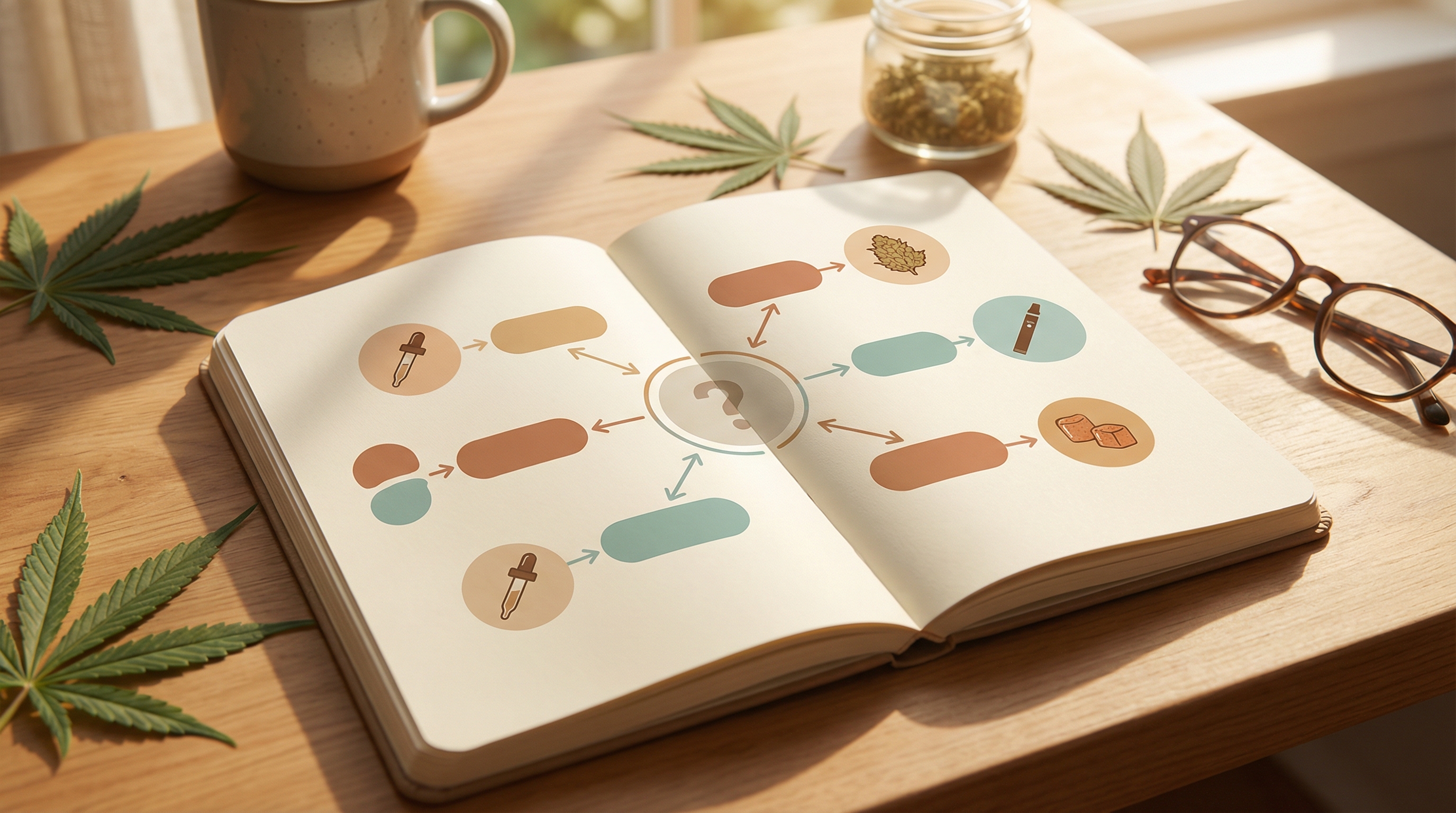
Bioavailability is important, but it’s not the only factor. Here’s a practical decision framework:
If you need fast relief
Choose: Vaporizing or dabbing (seconds to minutes onset)
If you need long-lasting effects
Choose: Traditional edibles (4-8 hours duration)
If you want the best of both worlds
Choose: Nano-emulsion edibles or sublingual tinctures (moderate onset, moderate duration)
If you have respiratory concerns
Choose: Sublingual, edibles, or topicals (no lung involvement)
If you need consistent, predictable dosing
Choose: Sublingual tinctures or nano-emulsion products (more uniform absorption)
If you need all-day relief without peaks
Choose: Transdermal patches (steady-state delivery)
The Bioavailability Hack Most People Miss
Here’s something the research makes clear that dispensary labels don’t: a 10 mg edible and a 10 mg vape hit are not equivalent experiences, even though they contain the same amount of THC.
With vaping (30-50% bioavailability), your body absorbs roughly 3-5 mg of that 10 mg. With a traditional edible (4-20% bioavailability), you absorb 0.4-2 mg of the THC as THC—though 11-OH-THC adds its own intensity.
This is why the cannabis community’s “start low, go slow” advice is especially important for new users switching between methods. Your ideal edible dose and your ideal vaping dose should be different numbers.
If you’re curious about how to calibrate your personal dosing across methods, check out our first-time cannabis user’s guide or our guide to microdosing cannabis for productivity.
What the Research Says About Individual Variation
Here’s what every study agrees on: the same dose, taken the same way, can hit two people very differently. Your personal bioavailability depends on:
- Your genes: Liver enzyme differences change how fast you process cannabinoids
- Your body: THC is fat-soluble and stores in body fat, affecting how much stays in your blood
- Your tolerance: Regular use changes your receptor sensitivity (see our tolerance breaks guide)
- What you ate: Fatty foods can boost oral absorption significantly
- How you inhale: Deeper, longer draws mean more reaches your lungs
This is why your friend’s perfect dose might be too much or too little for you. It’s also why tracking what works for your body matters more than any chart.
Key Takeaways
- Bioavailability ranges from under 6% (edibles) to over 50% (dabbing/vaping)—the same milligram dose produces very different experiences depending on how you take it
- Vaping beats smoking by preserving 30-50% of cannabinoids versus 10-35%, because it avoids the destruction caused by combustion
- Edibles absorb the least THC but can feel the strongest thanks to your liver converting THC into the more potent 11-OH-THC
- Nano-emulsion beverages are a game-changer: they offer edible-like convenience with onset times closer to inhalation (15-30 minutes)
- Your ideal dose should change when you switch methods—10 mg vaped and 10 mg eaten are not the same experience
- Individual variation is huge, so tracking your own responses across methods is more useful than following generic advice
Sources
- Lucas, C.J., Galettis, P., & Schneider, J. (2018). The pharmacokinetics and the pharmacodynamics of cannabinoids. British Journal of Clinical Pharmacology, 84(11), 2477-2482. PMC6177698
- Newmeyer, M.N., et al. (2017). Free and glucuronide whole blood cannabinoids’ pharmacokinetics after controlled smoked, vaporized, and oral cannabis administration in frequent and occasional cannabis users. Clinical Chemistry, 62(12), 1579-1592. PMC5890870
- Varadi, G., et al. (2022). Examining the systemic bioavailability of cannabidiol and tetrahydrocannabinol from a novel transdermal delivery system. Advances in Therapy, 40, 282-293. PMC9859876
- Tijani, A.O., et al. (2022). The transdermal delivery of therapeutic cannabinoids. Pharmaceutics, 14(2), 438. PMC8876728
- Chen, M.Y., et al. (2025). Mode matters: exploring how modes of cannabis administration affect THC plasma concentrations and subjective effects. Journal of Cannabis Research, 7, 28
- Stepensky, D., et al. (2024). Comparative pharmacokinetic assessment of innovative sublingual, rectal and vaporizer cannabis products. Cannabis and Cannabinoid Research, 9(4)
Looking to understand how your body uniquely responds to different consumption methods? High IQ lets you log your experiences across methods, track patterns over time, and discover what actually works for your chemistry—not just what the label says.


