Cannabis Legalization in the United States (2026): Complete State-by-State Guide
Where is cannabis legal in 2026? Complete verified guide to recreational and medical marijuana laws across all 50 states, D.C., and territories.

Professor High
Your friendly cannabis educator, bringing science-backed knowledge to the community.
Cannabis legalization in the United States has crossed a quiet but historic threshold. In 2026, legalization is no longer a fringe policy experiment or a political novelty—it’s a settled reality across most of the country.

Some states operate fully mature recreational markets. Others allow medical use only. A smaller group still restricts access to limited, low-THC products. Understanding where cannabis is legal—and how it’s legal—matters more than ever for consumers, patients, researchers, and anyone navigating the cannabis ecosystem.
This guide provides a clear, verified snapshot of cannabis legalization as it stands today, broken down by recreational use, medical use, and restricted or non-existent programs.
🗺️ The U.S. Cannabis Landscape at a Glance
Here’s the current state of cannabis legalization in America:
| Category | Count | Notes |
|---|---|---|
| Recreational (Adult-Use) | 24 states + D.C. | Adults 21+ can purchase without a medical card |
| Medical Cannabis | 40 states + D.C. | Requires qualifying condition and registration |
| No Comprehensive Program | 10 states | Limited or no cannabis access |
| Decriminalized Only | 7 additional states | Reduced penalties, no legal sales |
The bottom line: Cannabis access is now the rule, not the exception. But the details still matter enormously.
🌿 Recreational (Adult-Use) Cannabis: Where It’s Legal
In the following 24 states and Washington D.C., adults 21 and older can legally possess and purchase cannabis without a medical card:
Full Recreational States (Alphabetical)
| State | Year Legalized | Retail Status |
|---|---|---|
| Alaska | 2014 | ✅ Operating |
| Arizona | 2020 | ✅ Operating |
| California | 2016 | ✅ Operating |
| Colorado | 2012 | ✅ Operating |
| Connecticut | 2021 | ✅ Operating |
| Delaware | 2023 | ✅ Operating |
| Illinois | 2019 | ✅ Operating |
| Maine | 2016 | ✅ Operating |
| Maryland | 2022 | ✅ Operating |
| Massachusetts | 2016 | ✅ Operating |
| Michigan | 2018 | ✅ Operating |
| Minnesota | 2023 | ✅ Operating |
| Missouri | 2022 | ✅ Operating |
| Montana | 2020 | ✅ Operating |
| Nevada | 2016 | ✅ Operating |
| New Jersey | 2020 | ✅ Operating |
| New Mexico | 2021 | ✅ Operating |
| New York | 2021 | ✅ Operating |
| Ohio | 2023 | ✅ Operating |
| Oregon | 2014 | ✅ Operating |
| Rhode Island | 2022 | ✅ Operating |
| Vermont | 2018 | ✅ Operating |
| Virginia | 2021 | ⚠️ Possession legal, retail pending |
| Washington | 2012 | ✅ Operating |
| Washington, D.C. | 2014 | ⚠️ Gifting market (no retail sales) |

What “Recreational” Actually Means
These states operate licensed markets with:
- Regulated dispensaries with testing requirements
- Consumer protections including lab-tested products and clear labeling
- Possession limits (typically 1-2.5 ounces for personal use)
- Home cultivation rights in most states (exceptions: Delaware, Illinois, New Jersey, Washington)
- Tax structures ranging from 10% to 37% depending on the state
Medical programs continue alongside recreational systems in every state, often offering tax advantages, higher possession limits, or access to higher-potency products for registered patients.
U.S. Territories with Recreational Cannabis
- Guam — Legalized 2019, retail operating
- Northern Mariana Islands — Legalized 2018, retail operating
- U.S. Virgin Islands — Legalized 2022, implementation ongoing
🏥 Medical Cannabis Only: Legal but Not Recreational
The following 16 states allow cannabis exclusively for medical use. Recreational possession and sales remain illegal:

| State | Program Type | Key Notes |
|---|---|---|
| Alabama | Medical | Flower prohibited; oils and tablets only |
| Arkansas | Medical | Full medical program with dispensaries |
| Florida | Medical | Large program; 2024 recreational measure failed at 56% (needed 60%) |
| Hawaii | Medical | Full program; tourism consumption rules |
| Kentucky | Medical | Program launching 2025; limited conditions |
| Louisiana | Medical | Pharmacy-based model; expanding product forms |
| Mississippi | Medical | Operating since 2022; limited dispensaries |
| Nebraska | Medical | Voters approved 2024; implementation underway |
| New Hampshire | Medical | HB 198 recreational bill passed House in 2025; Senate pending in 2026 |
| North Dakota | Medical | 2024 recreational measure failed |
| Oklahoma | Medical | Broad access; 2024 recreational measure failed |
| Pennsylvania | Medical | Large program; recreational bills pending (SB 120, HB 20) |
| South Dakota | Medical | 2024 recreational measure failed |
| Texas | Medical | Very limited; low-THC only for specific conditions |
| Utah | Medical | Tightly regulated; state-run dispensaries |
| West Virginia | Medical | Operating; limited qualifying conditions |
Wide Variation in Medical Programs
Not all medical programs are created equal. The difference between Oklahoma’s nearly open-access model and Texas’s heavily restricted low-THC program is enormous:
- Broad access states (Oklahoma, Arkansas, Florida): Wide qualifying conditions, many dispensaries, variety of product forms
- Restricted access states (Texas, Georgia): Limited to specific severe conditions, often no smokable flower, few dispensaries
If you’re relocating or traveling with a medical condition, research the specific state’s program requirements—reciprocity between states is limited and inconsistent.
🚫 States Without Comprehensive Cannabis Programs
These 10 states do not have a full medical cannabis program and do not allow recreational use:
| State | Status | Limited Access? |
|---|---|---|
| Georgia | No recreational, limited medical | Low-THC oil only for specific conditions |
| Idaho | Fully prohibited | No cannabis programs |
| Indiana | No programs | CBD-only with low THC |
| Iowa | No recreational | Very limited medical (low-THC) |
| Kansas | No programs | HB 2405 recreational bill pending in 2026 |
| North Carolina | No programs | CBD-only |
| South Carolina | No programs | CBD-only |
| Tennessee | No programs | CBD-only |
| Wisconsin | No programs | CBD-only; decriminalized in some cities |
| Wyoming | No programs | CBD-only |
The Practical Reality
In most of these states:
- No licensed dispensaries exist
- No smokable flower is legally available
- Low-THC CBD products may be the only option
- Possession of THC-containing products carries criminal penalties
From a practical standpoint, cannabis remains largely unavailable in these states despite CBD-only carve-outs.
⚠️ The Low-THC Gray Area
Several states technically allow “medical cannabis” but restrict products to very low THC concentrations. These programs often:
- Prohibit traditional flower (no smoking)
- Limit THC content to 0.3-5% (compared to 15-30% in typical dispensary flower)
- Restrict qualifying conditions to severe illnesses only
- Require special registration and physician certification
- Offer no in-state retail infrastructure
Examples include:
- Texas — Compassionate Use Program limited to 1% THC max
- Georgia — Low-THC oil (5% max) for specific conditions
- Iowa — Medical cannabidiol program with 3% THC limit
While these laws are frequently cited as evidence of legalization, they function more as narrow medical exemptions than true cannabis access. For patients, consumers, and data platforms tracking legalization, this distinction is critical.
📊 Why This Legal Map Matters
Cannabis legality shapes far more than whether someone can walk into a dispensary. The regulatory environment affects:
Product Availability and Quality
| Legal Environment | Typical Product Options |
|---|---|
| Recreational | Flower, concentrates, edibles, topicals, tinctures, pre-rolls |
| Full Medical | Same as recreational, often with higher potency options |
| Limited Medical | Oils, capsules, sometimes topicals only |
| Low-THC Only | CBD products, minimal THC options |
Strain Diversity and Research
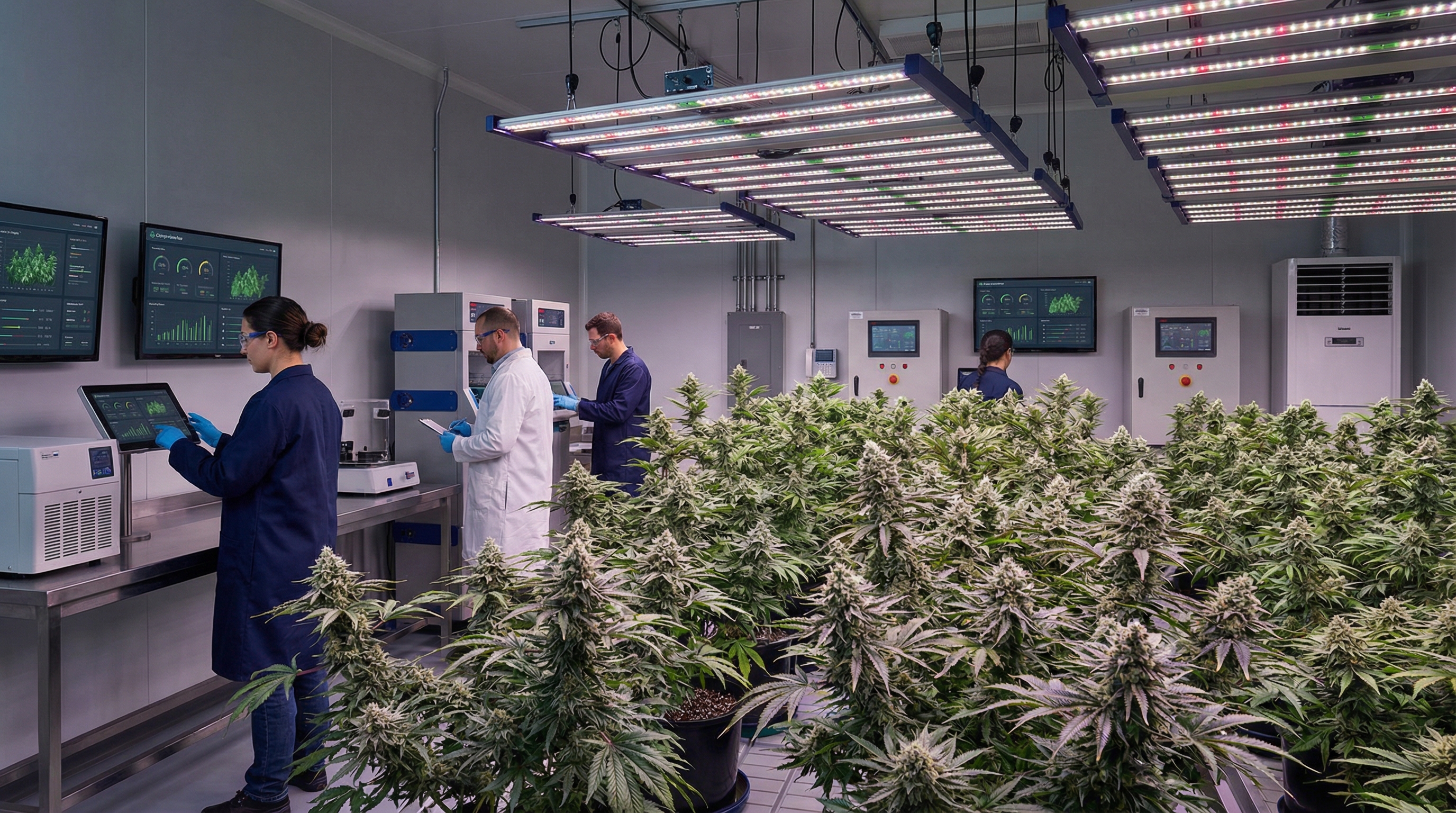
Legal markets drive cultivation innovation. States with mature recreational programs—Colorado, California, Oregon, Washington—have become hubs for genetic development, creating the diverse strain catalog that defines modern cannabis.
Pricing and Consumer Behavior
Taxation varies wildly between states:
| State | Combined Tax Rate | Impact |
|---|---|---|
| Washington | ~37% | Higher consumer prices |
| Oregon | ~17% | Competitive with black market |
| Colorado | ~15% | Strong legal market adoption |
| Illinois | Up to 41% | Premium pricing market |
For platforms focused on cannabis intelligence and personalization, legalization status is foundational context. A strain purchased in Illinois exists in a completely different regulatory environment than the same strain in Texas—or Wisconsin.
🔮 The Trend Line: What’s Next
While state laws remain uneven, the direction is unmistakable:
2026 Legislation to Watch
| State | Bill/Measure | Status |
|---|---|---|
| New Hampshire | HB 186 | Committee consideration January 2026 |
| Pennsylvania | SB 120, HB 20 | Active legislation |
| Kansas | HB 2405 | Carried to 2026 session |
| Florida | 2026 Ballot Petition | Already qualified for ballot |
Federal Status
Cannabis remains federally classified as Schedule I under the Controlled Substances Act. However, in December 2025, an executive order expedited the rescheduling process initiated in April 2024 to move cannabis to the less-restrictive Schedule III classification.
Schedule III reclassification would:
- Remove the 280E tax penalty crushing cannabis businesses
- Open banking access for the industry
- Enable more clinical research
- Create a pathway for interstate commerce
The federal landscape is shifting—slowly, but definitively.

Frequently Asked Questions
How many states have legal recreational cannabis in 2026?
24 states plus Washington D.C. have legalized recreational (adult-use) cannabis. This includes Alaska, Arizona, California, Colorado, Connecticut, Delaware, Illinois, Maine, Maryland, Massachusetts, Michigan, Minnesota, Missouri, Montana, Nevada, New Jersey, New Mexico, New York, Ohio, Oregon, Rhode Island, Vermont, Virginia, and Washington.
What’s the difference between recreational and medical cannabis states?
Recreational states allow anyone 21+ to purchase cannabis without a medical card. Medical-only states require a qualifying medical condition, doctor’s recommendation, and state registration to access cannabis legally.
Can I travel between legal states with cannabis?
No. Transporting cannabis across state lines is a federal offense, even between two states where it’s legal. Purchase and consume only within the state where you bought it.
Why did Florida’s 2024 recreational measure fail?
Florida requires a 60% supermajority to pass ballot initiatives. Amendment 3 received 56% approval—a majority, but short of the threshold. A new petition has already qualified for the 2026 ballot.
Is cannabis legal at the federal level?
Not yet. Cannabis remains Schedule I federally. However, the DEA is actively considering rescheduling to Schedule III following a December 2025 executive order expediting the process.
Which states might legalize recreational cannabis next?
The most likely candidates for 2026-2027 are:
- New Hampshire — Recreational bill passed House in 2025
- Pennsylvania — Multiple active bills with bipartisan support
- Florida — 2026 ballot initiative already qualified
- Kansas — HB 2405 carries over to 2026 session
Key Takeaways
-
Cannabis is legal for recreational or medical use in most of the United States. Only 10 states lack comprehensive programs.
-
Legal doesn’t mean uniform. Tax rates, product forms, possession limits, and home cultivation rights vary dramatically between states.
-
Medical programs range from broad access to nearly symbolic. Research your specific state’s requirements before assuming access.
-
Federal rescheduling is actively progressing. Schedule III classification would transform the industry’s banking, tax, and research capabilities.
-
The trend is unmistakable. No state that has legalized cannabis has reversed course. New states continue joining the legal column through legislation and ballot initiatives.
-
Cross-state transport remains illegal. Federal law applies between state lines regardless of individual state laws.
Related Resources
If you’re navigating cannabis in 2026, understanding your local laws is just the starting point. Explore our strain database to find products that match your preferences—because knowing what you can buy is only half the equation. Knowing what to look for is where real cannabis intelligence begins.
Last updated: January 2026
Sources: DISA Marijuana Legality by State, NCSL State Medical Cannabis Laws, MPP 2025 Cannabis Policy Reform Legislation, Wikipedia: Legality of cannabis by U.S. jurisdiction


