The Complete Science of Cannabis: Terpenes, Cannabinoids & The Entourage Effect (2025 Guide)
Master cannabis science with our comprehensive 2025 guide. Learn about terpenes, cannabinoids, the entourage effect, and how to optimize your experience.

Professor High
Your friendly cannabis educator, bringing science-backed knowledge to the community.
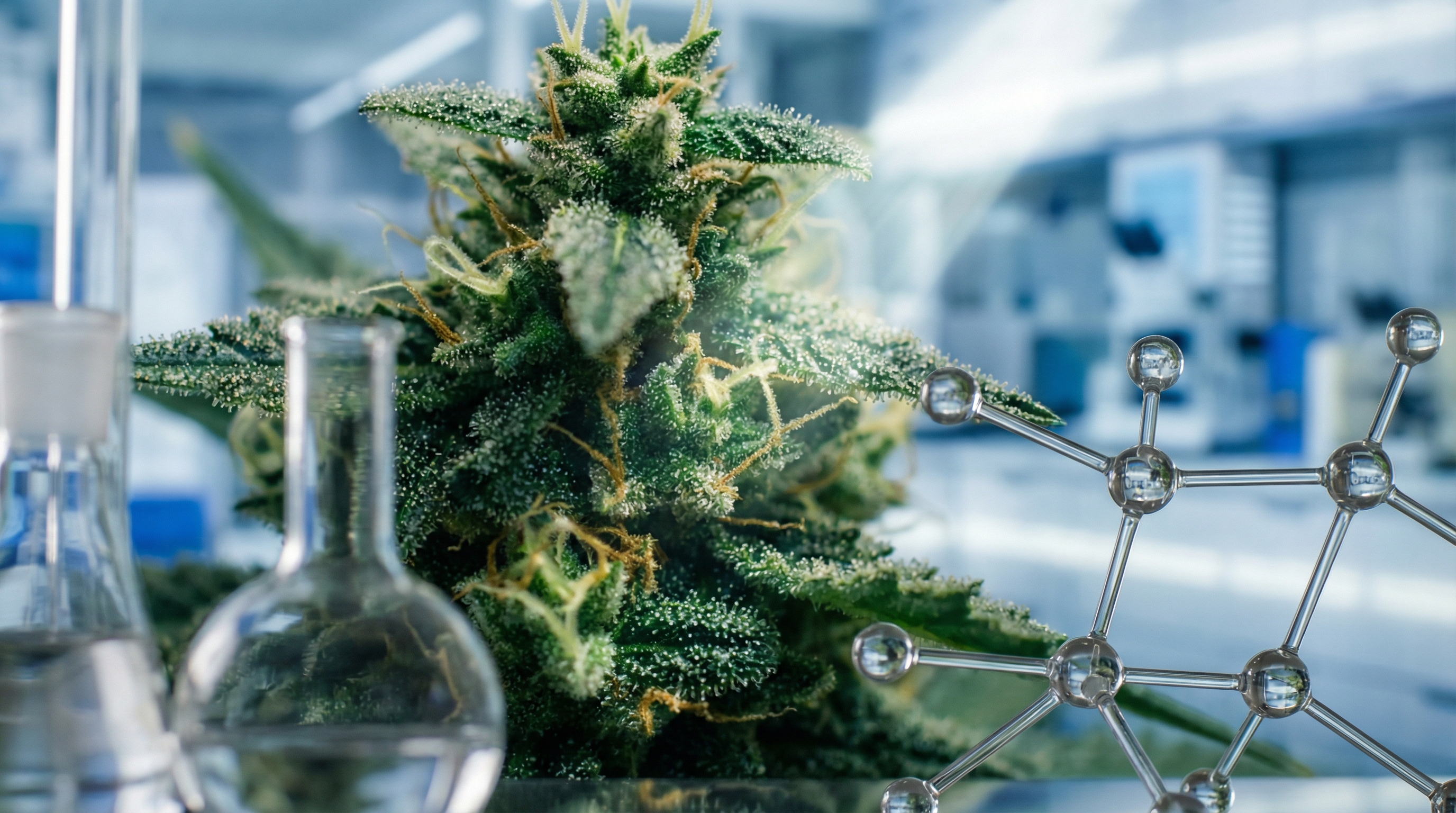
Cannabis contains over 400 chemical compounds that work together in unique ways. This comprehensive guide breaks down the science behind how cannabis affects you, based on the latest 2025 research and clinical studies.
Understanding Cannabis Science
Before diving deep, here are the three core concepts you need to understand:
🧬 400+ Compounds
Cannabis contains over 113 cannabinoids and 200 terpenes working in synergy. Each strain has a unique chemical fingerprint that determines its effects.
🌿 Terpenes
Aromatic compounds that modulate effects and create unique experiences. These are the same compounds found in fruits, herbs, and flowers throughout nature.
🧪 Cannabinoids
Active compounds that interact with your endocannabinoid system. THC and CBD are the most famous, but many others contribute to the overall experience.
The High Families: Beyond Indica & Sativa
Traditional classifications like “indica” and “sativa” describe plant structure, not effects. The High Families are an enhancement that adds a layer of precision by mapping strains by their chemistry—cannabinoid ratios and terpene profiles—to predict effects more accurately.
Key Insight: The old “0.5% myrcene rule” for classifying indica vs. sativa has been debunked by 2025 research. Terpene profiles are far more accurate predictors of effects than traditional classifications.
Terpenes: The Architects of Experience
Terpenes are aromatic compounds that give cannabis its distinct smell and contribute significantly to its effects. Here are the major terpenes you’ll encounter:
🍋 Myrcene (MER-seen)
Aroma: Earthy, musky, fruity | Concentration: 0.1-0.5% (can reach 1-2%)
The most abundant terpene in cannabis. Myrcene is lipophilic and crosses the blood-brain barrier, contributing to sedative and analgesic properties—the so-called “couch-lock” effect.
Effects: Sedating, Muscle relaxant, Anti-inflammatory, Analgesic
How It Works:
- Activates TRPV1 channels
- Engages opioid receptors
- Modulates GABA neurotransmission
- Crosses blood-brain barrier
Found In: Mangoes, Hops, Lemongrass, Thyme
Popular Strains: Blue Dream, OG Kush, Granddaddy Purple
🍊 Limonene (LIM-oh-neen)
Aroma: Citrus, lemon, orange | Concentration: 0.1-0.3% (can exceed 0.5%)
Second most abundant terpene. Limonene provides uplifting effects and may help with anxiety and depression without psychotropic side effects.
Effects: Anxiety reduction, Mood elevation, Stress relief, GABA enhancement
How It Works:
- Modulates adenosine A2A receptors
- Reduces pro-inflammatory cytokines (TNF-α, IL-1β)
- Enhances GABA activity
- Does not strongly bind CB receptors
Clinical Evidence: A 2024 cross-over study found that vaporizing 1-5mg limonene with THC significantly reduced THC-induced anxiety without diminishing therapeutic effects.
Found In: Citrus fruits, Rosemary, Peppermint, Juniper
Popular Strains: Super Lemon Haze, Durban Poison, Jack Herer
🌲 Pinene (PIE-neen)
Aroma: Pine, fresh forest | Concentration: 0.1-0.5% (some reach ~1%)
The most common terpene in nature. Pinene promotes alertness and mental clarity while potentially preserving memory during cannabis use.
Effects: Alertness, Memory retention, Bronchodilator, Anti-inflammatory
How It Works:
- Inhibits acetylcholinesterase
- Acts as bronchodilator
- Crosses blood-brain barrier within 30 minutes
- May counteract THC-induced memory deficits
Found In: Pine trees, Basil, Dill, Rosemary
Popular Strains: Jack Herer, Blue Dream, Island Sweet Skunk
💜 Linalool (lin-ah-LOOL)
Aroma: Floral, lavender, sweet | Concentration: 0.01-0.5%
Known for its calming lavender aroma. Linalool reduces anxiety and promotes relaxation through NMDA receptor modulation.
Effects: Calming, Anti-anxiety, Sedative, Anti-epileptic
How It Works:
- Modulates NMDA receptors
- Modulates ion channels
- Reduces excitatory neurotransmission
- Opioid-system involvement (reversed by naloxone)
Found In: Lavender, Coriander, Cinnamon, Birch
Popular Strains: Lavender, LA Confidential, Amnesia Haze
🌶️ Caryophyllene (carry-OFF-ill-een)
Aroma: Spicy, peppery, woody | Concentration: 0.1-0.5%
The only terpene that acts as a cannabinoid. β-Caryophyllene (BCP) selectively activates CB2 receptors for anti-inflammatory effects without psychotropic side effects.
Effects: Anti-inflammatory, Pain relief, Anti-anxiety, Neuroprotective
How It Works:
- Selective CB2 receptor agonist
- Activates anti-inflammatory pathways
- No CB1-mediated psychotropic effects
- Interacts with PPAR receptors
Found In: Black pepper, Cloves, Rosemary, Hops
Popular Strains: Girl Scout Cookies, Sour Diesel, Bubba Kush
🍺 Humulene (HYOO-muh-leen)
Aroma: Hoppy, woody, earthy | Concentration: 0.03-0.4%
Found in hops and cannabis. Humulene has anti-inflammatory properties and may suppress appetite through IL-8 pathway modulation.
Effects: Appetite suppressant, Anti-inflammatory, Antibacterial
How It Works:
- Binds moderately to CB1, strongly to CB2
- Increases IL-8 levels
- Reduces meal size (not frequency)
- Peaks in blood within 30 min, clears in ~2 hours
Found In: Hops, Sage, Ginger, Cannabis
Popular Strains: White Widow, Headband, Pink Kush
🌸 Terpinolene (ter-PIN-oh-leen)
Aroma: Fresh, piney, floral, citrus | Concentration: 0.01-0.3%
Less common but provides uplifting and energetic effects. Terpinolene has potent antioxidant and anti-inflammatory properties.
Effects: Uplifting, Antioxidant, Antibacterial, Anti-inflammatory
How It Works:
- Inhibits NF-κB activation
- Reduces pro-inflammatory cytokines (TNF-α, IL-1, IL-6)
- Decreases lipid peroxidation
- Increases antioxidant enzymes and glutathione
Found In: Nutmeg, Tea tree, Apples, Lilacs
Popular Strains: Jack Herer, Ghost Train Haze, XJ-13
🌿 Ocimene (oh-SIM-een)
Aroma: Sweet, herbaceous, woody | Concentration: 0.01-0.2%
Known for its sweet aroma and potential antiviral properties. Ocimene may contribute antifungal and antimicrobial effects.
Effects: Antiviral, Antifungal, Decongestant, Antimicrobial
Clinical Evidence: Essential oils containing β-ocimene demonstrate antiviral activity against SARS-CoV in vitro (IC50 ≈120 mg/mL).
Found In: Mint, Parsley, Orchids, Basil
Popular Strains: Golden Goat, Strawberry Cough, Chernobyl
Additional Terpenes Worth Knowing
| Terpene | Aroma | Key Effects | Found In |
|---|---|---|---|
| Nerolidol | Woody, floral | Sedating, Anti-parasitic | Ginger, Jasmine |
| Bisabolol | Sweet, floral | Anti-inflammatory, Healing | Chamomile |
| Valencene | Sweet, citrus | Anti-inflammatory | Valencia oranges |
| Eucalyptol | Mint, cooling | Cognitive enhancement | Eucalyptus |
| Fenchol | Fresh, lemon | Antibacterial | Basil |
| Camphene | Damp woodlands | Cardiovascular support | Fir needles |
| Borneol | Camphor, mint | Analgesic, Sedative | Rosemary |
| Guaiol | Pine, woody | Antimicrobial | Guaiacum |
| Phytol | Floral, green tea | Relaxing, Anti-anxiety | Green tea |
Cannabinoids: The Engine of Effects
Cannabinoids are the active compounds that interact with your endocannabinoid system to produce therapeutic and psychoactive effects.
⚡ THC (Δ9-Tetrahydrocannabinol)
Type: Psychoactive | Typical Range: 10-30%
The primary psychoactive cannabinoid in cannabis. THC binds strongly to CB1 receptors in the brain, producing euphoria, altered perception, and appetite stimulation.
Effects: Euphoria, Pain relief, Appetite stimulation, Altered perception, Relaxation
Medical Uses: Chronic pain, Nausea/vomiting, Appetite stimulation, PTSD, Insomnia
How It Works:
- Strong CB1 receptor agonist
- Modulates neurotransmitter release
- High CB1 density in cortical, amygdala, and basal ganglia regions
- Metabolized to 11-OH-THC (more potent) via first-pass metabolism
Bioavailability:
- Smoking: 10-35%
- Vaping: 30-40%
- Edibles: 4-20%
Key Insight: Edibles convert THC to 11-OH-THC in the liver, which is more potent and produces stronger body effects.
💚 CBD (Cannabidiol)
Type: Non-psychoactive | Typical Range: 0.5-20%
Non-psychoactive cannabinoid with numerous therapeutic benefits. CBD modulates cannabinoid receptor signaling indirectly and interacts with serotonin and TRPV receptors.
Effects: Anti-anxiety, Anti-inflammatory, Neuroprotective, Anti-seizure, Muscle relaxation
Medical Uses: Epilepsy, Anxiety disorders, Inflammation, Chronic pain, Neuroprotection
FDA Approved: Epidiolex (for severe childhood epilepsies)
How It Works:
- Modulates cannabinoid receptor signaling indirectly
- Interacts with serotonin (5-HT1A) receptors
- Activates TRPV1 (vanilloid) receptors
- Enhances anandamide levels (FAAH inhibition)
Bioavailability:
- Smoking: 11-45%
- Vaping: 40-50%
- Edibles: 6-15%
🧠 CBG (Cannabigerol)
Type: Non-psychoactive | Typical Range: <1%
The “mother” or “stem cell” cannabinoid from which THC, CBD, and CBC are synthesized. CBG is usually present in low amounts but has powerful therapeutic properties.
Effects: Memory enhancement, Anxiety reduction, Antibacterial, Anti-inflammatory, Neuroprotective
Medical Uses: Glaucoma, IBD, Huntington’s disease, Bacterial infections, Bladder dysfunction
Clinical Breakthrough (2024): 20mg CBG enhanced memory recall and reduced anxiety without impairment. CBG also shows antibacterial activity superior to vancomycin against MRSA.
😴 CBN (Cannabinol)
Type: Mildly psychoactive | Typical Range: <1%
Created when THC ages or is exposed to heat/light. CBN is about 10 times less potent at CB1 receptors than THC, producing minimal intoxication but notable sedative properties.
Effects: Sedative, Sleep aid, Pain relief, Appetite stimulation, Anti-inflammatory
How It Works:
- Weak CB1 receptor agonist (~10x less potent than THC)
- Increases non-rapid eye movement and REM sleep
- Metabolite 11-hydroxy-CBN may be more active
🌟 CBC (Cannabichromene)
Type: Non-psychoactive | Typical Range: 0.05-0.3%
Non-psychoactive cannabinoid that selectively activates CB2 receptors with higher efficacy than THC, leading to strong anti-inflammatory and analgesic effects.
Effects: Anti-inflammatory, Analgesic, Mood enhancement, Neurogenesis, Antidepressant
How It Works:
- Selectively activates CB2 receptors (higher efficacy than THC)
- Reduces NO and pro-inflammatory cytokines by ~50%
- Inhibits NF-κB and MAPK pathways
⚡ THCV (Tetrahydrocannabivarin)
Type: Psychoactive | Typical Range: <1%
A homologue of THC with unique metabolic effects including appetite suppression and enhanced energy metabolism.
Effects: Appetite suppressant, Energy boost, Bone growth, Glycemic control, Neuroprotective
Medical Promise: Preliminary human trials found THCV lowers fasting plasma glucose and improves glycaemic control, making it a promising candidate for obesity and type-2 diabetes management.
The Entourage Effect
The entourage effect is the theory that cannabis compounds work better together than in isolation. Terpenes, cannabinoids, and other compounds create synergistic effects that enhance therapeutic benefits.
Proven Combinations
| Combination | Effect | Evidence |
|---|---|---|
| THC + Limonene | Limonene reduces THC-induced anxiety without diminishing therapeutic effects | 2024 clinical trial (1-5mg limonene vaporized with THC) |
| THC + Pinene | Pinene may counteract THC-induced memory impairment while preserving other effects | Preclinical studies on acetylcholinesterase inhibition |
| THC + CBD | CBD modulates THC effects, reducing anxiety and paranoia while maintaining therapeutic benefits | Multiple clinical trials showing CBD’s allosteric modulation of CB1 |
| CBD + Linalool | Enhanced anti-anxiety and sedative effects through complementary mechanisms | Synergistic anxiolytic activity in preclinical models |
| Caryophyllene + CBD | Dual anti-inflammatory action for enhanced pain relief | Combined CB2 agonism and cannabinoid signaling modulation |
How the Entourage Effect Works
- Terpenes modulate neurotransmitter systems (GABA, serotonin, dopamine)
- Cannabinoids bind different receptors with varying affinities
- Compounds affect absorption and metabolism of each other
- Synergistic activation of multiple therapeutic pathways
Your Endocannabinoid System
The endocannabinoid system was only discovered in the 1990s, making it one of the most recently identified physiological systems. Your body naturally produces compounds similar to cannabis (anandamide and 2-AG) that regulate mood, memory, appetite, pain, and immune response.
🧠 CB1 Receptors
Found primarily in the brain and central nervous system. THC binds to these receptors to produce psychoactive effects. CB1 is the most abundant G-protein-coupled receptor in the mammalian brain, highly expressed in cortical, amygdala, and basal ganglia regions.
💪 CB2 Receptors
Located primarily on immune cells and peripheral organs. CBD and other cannabinoids interact with these for therapeutic effects without psychoactivity. CB2 receptors are up-regulated on microglia during inflammation.
Consumption Methods: How You Consume Matters
Different methods affect onset time, duration, intensity, and bioavailability.
🚬 Smoking (Joints, Pipes, Bongs)
| Onset | Peak | Duration | Bioavailability |
|---|---|---|---|
| 1-3 min | 20-30 min | 1-3 hours | 10-35% |
Combustion delivers cannabinoids rapidly through lung absorption. Traditional and most common method with fast onset and easy dose titration.
Pros: Fastest onset, easy to control dosage, immediate feedback Cons: Harsh on lungs, produces combustion by-products, lower bioavailability
Dosage: Start with 1-2 puffs, wait 5-10 minutes before taking more.
💨 Vaporizing (Flower or Concentrates)
| Onset | Peak | Duration | Bioavailability |
|---|---|---|---|
| 1-3 min | 30-60 min | 2-4 hours | 30-60% |
Heats cannabis below combustion point (315-430°F) to release cannabinoids and terpenes as vapor.
Pros: Higher bioavailability, avoids combustion by-products, better flavor, temperature control Cons: Requires device investment, learning curve, maintenance needed
Pro Tips:
- Start at lower temps (350-375°F) for terpenes and flavor
- Increase to 380-410°F for more cannabinoids
- Grind flower consistently for even heating
🍪 Edibles (Gummies, Baked Goods)
| Onset | Peak | Duration | Bioavailability |
|---|---|---|---|
| 30-90 min | 2-4 hours | 4-8+ hours | 5-12% |
Cannabinoids absorbed through digestive system. THC is metabolized to 11-OH-THC (more potent) during first-pass metabolism in the liver.
⚠️ Critical Warning: START LOW AND GO SLOW
Pros: Longest duration, no lung irritation, discreet, stronger body effects Cons: Slow unpredictable onset, easy to overconsume, effects are much stronger
Dosage: Start with 1-2.5mg THC, wait 2 full hours before increasing. Some effects can last 24 hours.
💧 Sublingual (Tinctures, Oils)
| Onset | Peak | Duration | Bioavailability |
|---|---|---|---|
| 15-45 min | 90 min | 4-6 hours | 20-30% |
Cannabinoids absorbed directly through mucous membranes under the tongue, bypassing some first-pass metabolism.
Pros: Faster than edibles, higher bioavailability, easy dose control, discreet Cons: Requires holding under tongue, can have strong taste
Dosage: Start with 2-5mg THC, hold under tongue for 60-90 seconds before swallowing.
🧴 Topicals (Creams, Balms)
| Onset | Peak | Duration | Bioavailability |
|---|---|---|---|
| 15-30 min | 45-90 min | 2-4 hours | 0% systemic |
Applied directly to skin for localized relief. Cannabinoids act locally on CB2 receptors without entering bloodstream. No psychotropic effects.
Pros: Localized relief, no psychoactive effects, can target specific areas Cons: No systemic effects, limited to surface-level relief
🔥 Dabbing (Concentrates)
| Onset | Peak | Duration | Bioavailability |
|---|---|---|---|
| 1-5 min | 15-30 min | 1-3 hours | 50-80% |
Vaporizing high-potency cannabis concentrates (wax, shatter, rosin) at high temperatures.
⚠️ For Experienced Users Only
Very high potency (60-90% THC). Start with a rice grain-sized dab (~10-25mg THC).
Tolerance & Dosage: Finding Your Balance
Tolerance Reset Timeline
Cannabis tolerance develops due to CB1 receptor down-regulation with chronic use. Here’s the recovery timeline based on PET imaging studies:
| Timeframe | Recovery | What Happens |
|---|---|---|
| 48-72 hours | 15-20% | Initial reset begins |
| 1-2 weeks | 50-70% | Significant tolerance reduction |
| 4 weeks | 90-100% | Near-baseline sensitivity (CB1 receptor density returns to non-user levels) |
Evidence: PET imaging found cannabis-dependent subjects had ~15% lower CB1 receptor availability than controls, but receptor density recovered after only 2 days of abstinence. After 28 days, there was no difference from non-users.
Dosage Guidelines by Experience Level
| Level | THC Range | Effects | Best For |
|---|---|---|---|
| Microdose | 1-2.5mg | Subtle effects, functional | Beginners, daily function |
| Low | 2.5-5mg | Mild euphoria and relaxation | Beginners, social use, gentle relief |
| Moderate | 5-10mg | Noticeable psychoactive effects | Intermediate users, evening use |
| High | 10-20mg+ | Strong effects and impairment | Experienced users only |
⚠️ Always start low and go slow, especially with edibles. You can take more, but you can’t take less.
Frequently Asked Questions
What is the entourage effect?
The entourage effect is the theory that cannabis compounds work better together than in isolation. Terpenes, cannabinoids, and other compounds create synergistic effects that enhance therapeutic benefits. For example, limonene can reduce THC-induced anxiety without diminishing therapeutic effects.
How do terpenes influence my high?
Terpenes modulate neurotransmitters and receptor activity. Myrcene enhances sedation via TRPV1 and opioid pathways, while limonene reduces anxiety via adenosine A2A receptors. Knowing a strain’s terpene profile offers better prediction of effects than broad “indica/sativa” labels.
Why do the same strains affect people differently?
Individual differences in endocannabinoid system, metabolism, tolerance, body chemistry, and even mood all affect how cannabis impacts you. Genetic polymorphisms in CB1 receptors, enzyme activity, and differences in body fat alter absorption and clearance.
How do the High Families relate to Sativa/Indica?
The High Families are an enhancement, not a replacement. Sativa/Indica/Hybrid tells you about plant structure. The High Families add a layer of precision by mapping strains by their chemistry (cannabinoid ratios and terpene profiles) to predict effects more accurately.
How long does tolerance take to reset?
CB1 receptors begin to recover within 48-72 hours of abstinence. Significant tolerance reduction occurs after 1-2 weeks, and near-baseline sensitivity returns by four weeks. Periodic breaks and microdosing help maintain sensitivity.
Key Takeaways
- Chemistry over classification: Terpene profiles predict effects better than indica/sativa labels
- The entourage effect is real: Compounds work synergistically for better outcomes
- Know your cannabinoids: THC, CBD, CBG, CBN, and others all contribute differently
- Method matters: How you consume affects onset, duration, and intensity
- Start low, go slow: Especially with edibles—you can always take more
Ready to put this knowledge into practice? Explore our strain database to find strains with the terpene and cannabinoid profiles that match your needs.


