The Endocannabinoid System: Your Body's Hidden Cannabis Network
Discover the endocannabinoid system (ECS), your body's master regulator. Learn about CB1/CB2 receptors and why cannabis affects you.

Professor High
Your friendly cannabis educator, bringing science-backed knowledge to the community.

Your body has been making its own cannabinoids long before you ever considered trying cannabis. That’s right—inside you is an entire biological system designed to work with cannabinoid-like compounds. Scientists call it the endocannabinoid system (ECS), and understanding it is the key to understanding why cannabis affects you the way it does.
The ECS wasn’t discovered until the 1990s, making it one of the youngest systems in our physiological vocabulary. Yet it may be one of the most important—regulating everything from mood and memory to pain and appetite. Let’s explore this fascinating network that’s been running quietly in the background your whole life.
The Accidental Discovery: How THC Led Us to the ECS
The endocannabinoid system wasn’t found by researchers looking for it. It was discovered almost by accident—by scientists trying to figure out how THC works.
The THC Puzzle (1960s-1988)
In 1964, Israeli chemist Dr. Raphael Mechoulam first isolated THC from cannabis. But knowing the molecule’s structure didn’t explain how it worked. For decades, scientists assumed cannabinoids simply disrupted cell membranes—a clumsy, non-specific mechanism that didn’t match THC’s very specific effects.
The breakthrough came in 1988 when researchers at St. Louis University discovered something remarkable: rats had specific receptor sites in their brains that THC locked into like a key in a lock. They called this receptor CB1 (cannabinoid receptor type 1). Suddenly, THC’s precise effects made sense—it wasn’t just disrupting cells; it was activating a dedicated biological system.
The “Bliss Molecule” (1992)
Finding a receptor raised an obvious question: why would the brain evolve receptors specifically for a plant compound? The answer came in 1992 when Dr. Mechoulam’s team discovered anandamide—the body’s own THC.
Mechoulam named it after “ananda,” the Sanskrit word for bliss, because of its mood-enhancing effects. Anandamide is an endocannabinoid—an internally produced compound that activates the same receptors as cannabis. Your body had been making its own cannabinoids all along; THC was simply a botanical interloper that happened to fit the same locks.
A second endocannabinoid, 2-AG (2-arachidonoylglycerol), was discovered shortly after. While anandamide got the poetic name, 2-AG is actually more abundant in the body and plays an equally important role.
Understanding Your Cannabinoid Receptors
The endocannabinoid system has two primary types of receptors, each concentrated in different parts of your body and responsible for different effects.
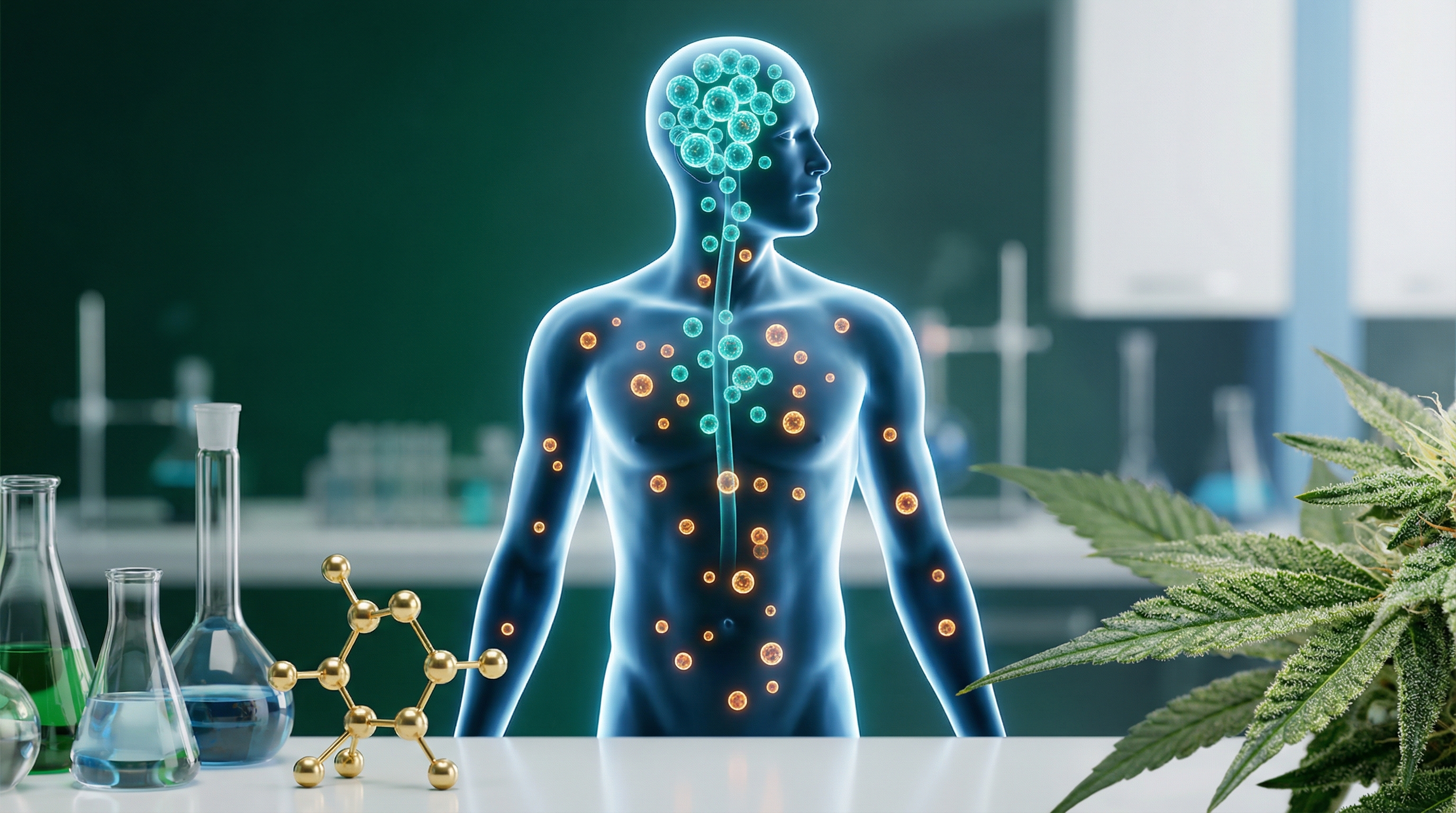
CB1 Receptors: The Brain’s Cannabis Network
CB1 receptors are found primarily in the brain and central nervous system. They’re one of the most abundant receptor types in the entire brain—more common than many neurotransmitter receptors you might be more familiar with.
Where CB1 receptors concentrate:
- Hippocampus — Memory formation
- Cerebral cortex — Higher thinking, decision-making
- Basal ganglia — Movement control
- Cerebellum — Coordination
- Hypothalamus — Appetite regulation
- Amygdala — Emotional responses
When THC enters your system, it binds to CB1 receptors. This is what produces the “high”—altered perception, euphoria, changes in time perception, enhanced sensory experiences, and yes, those memory lapses you might experience.
Key insight: CB1 receptors are notably sparse in the brainstem, which controls vital functions like breathing and heart rate. This is why cannabis overdose is essentially non-lethal—there simply aren’t enough receptors in the areas that would make it dangerous.
CB2 Receptors: The Immune System’s Regulators
CB2 receptors tell a different story. They’re concentrated outside the brain, primarily in:
- Immune cells (macrophages, B cells, T cells)
- Spleen
- Tonsils
- Bone marrow
- Skin
- Gastrointestinal tract
CB2 activation doesn’t produce psychoactive effects—you won’t get high from a compound that only activates CB2. Instead, CB2 receptors regulate inflammation, immune response, and pain signaling throughout the body.
This is why some terpenes like beta-caryophyllene—which selectively binds to CB2—provide anti-inflammatory benefits without any intoxication. It’s also why researchers are excited about CB2-targeting drugs for conditions from arthritis to inflammatory bowel disease.
| Receptor | Primary Location | Primary Functions | Psychoactive? |
|---|---|---|---|
| CB1 | Brain, central nervous system | Mood, memory, perception, appetite, pain | Yes |
| CB2 | Immune system, peripheral tissues | Inflammation, immune response, bone health | No |
Your Body’s Own Cannabinoids: Anandamide and 2-AG
Here’s where things get philosophically interesting: your body produces compounds that do essentially what cannabis does—just with shorter duration and tighter regulation.
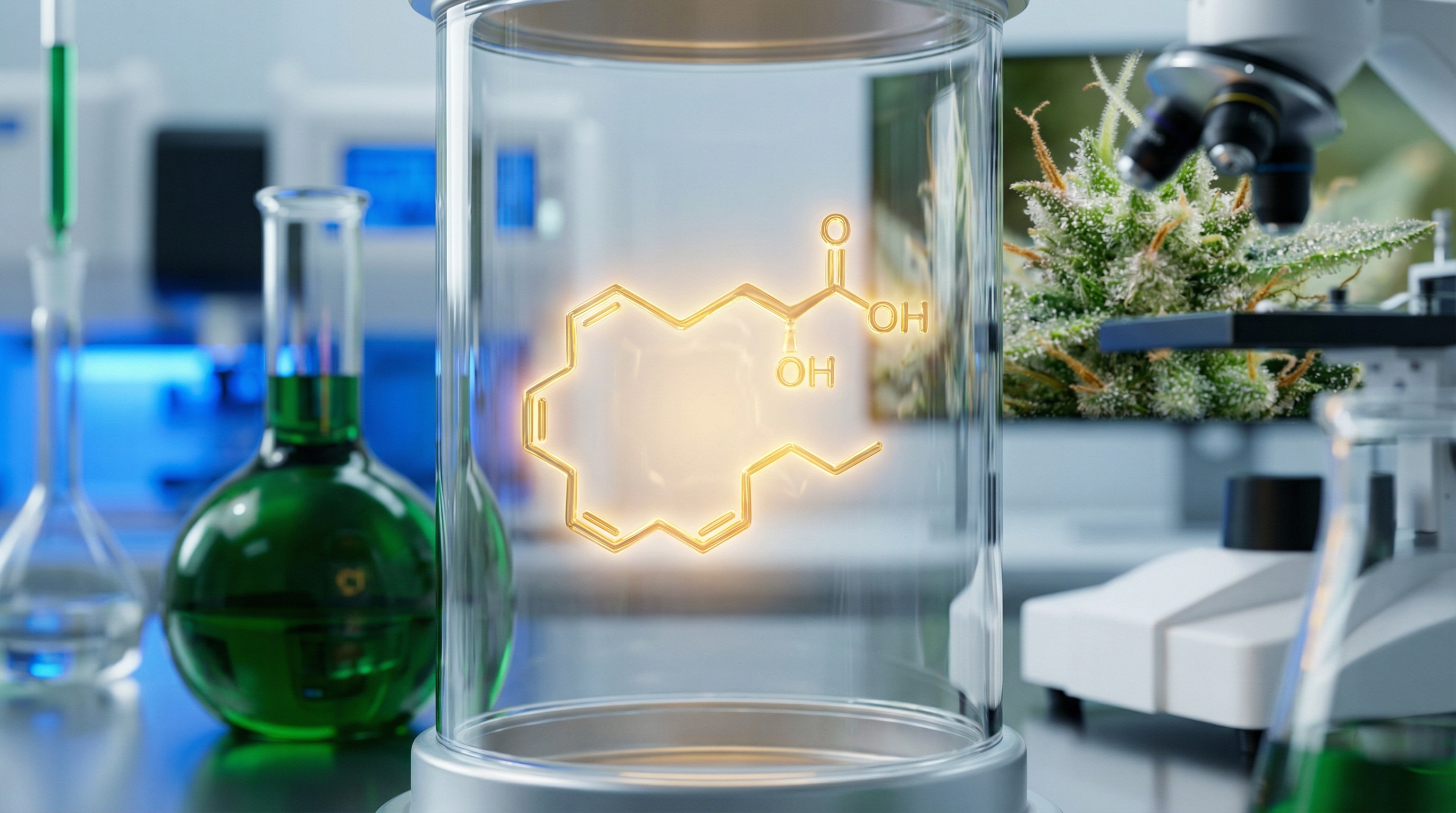
Anandamide: The Bliss Molecule
Anandamide earned its name because it elevates mood, reduces anxiety, and promotes feelings of well-being—sound familiar? It’s a partial agonist of CB1 receptors, meaning it activates them but not as fully or as long as THC does.
What anandamide does:
- Regulates mood and reduces anxiety
- Modulates pain perception
- Promotes neurogenesis (new brain cell formation)
- May contribute to “runner’s high” during exercise
- Regulates appetite signals
Anandamide breaks down quickly in the body via an enzyme called FAAH (fatty acid amide hydrolase). This rapid breakdown is why you don’t walk around feeling high all the time—your body keeps tight control over endocannabinoid levels.
Interesting fact: Some people have genetic variations that produce less FAAH enzyme, meaning their anandamide sticks around longer. Studies suggest these individuals tend to be less anxious, more resilient to stress, and often report getting less benefit from cannabis—their baseline is already elevated.
2-AG: The Abundant Workhorse
2-arachidonoylglycerol (2-AG) doesn’t have a catchy name, but it’s present in the brain at concentrations 170 times higher than anandamide. It’s a full agonist at both CB1 and CB2 receptors.
What 2-AG does:
- Signals between neurons (retrograde signaling—more on this below)
- Modulates immune function
- Regulates cardiovascular function
- Protects against brain injury
- Maintains emotional homeostasis
Retrograde Signaling: The ECS Works Backwards
Here’s something truly remarkable about the endocannabinoid system: it uses retrograde signaling, which means it sends messages backwards compared to most neurotransmitters.
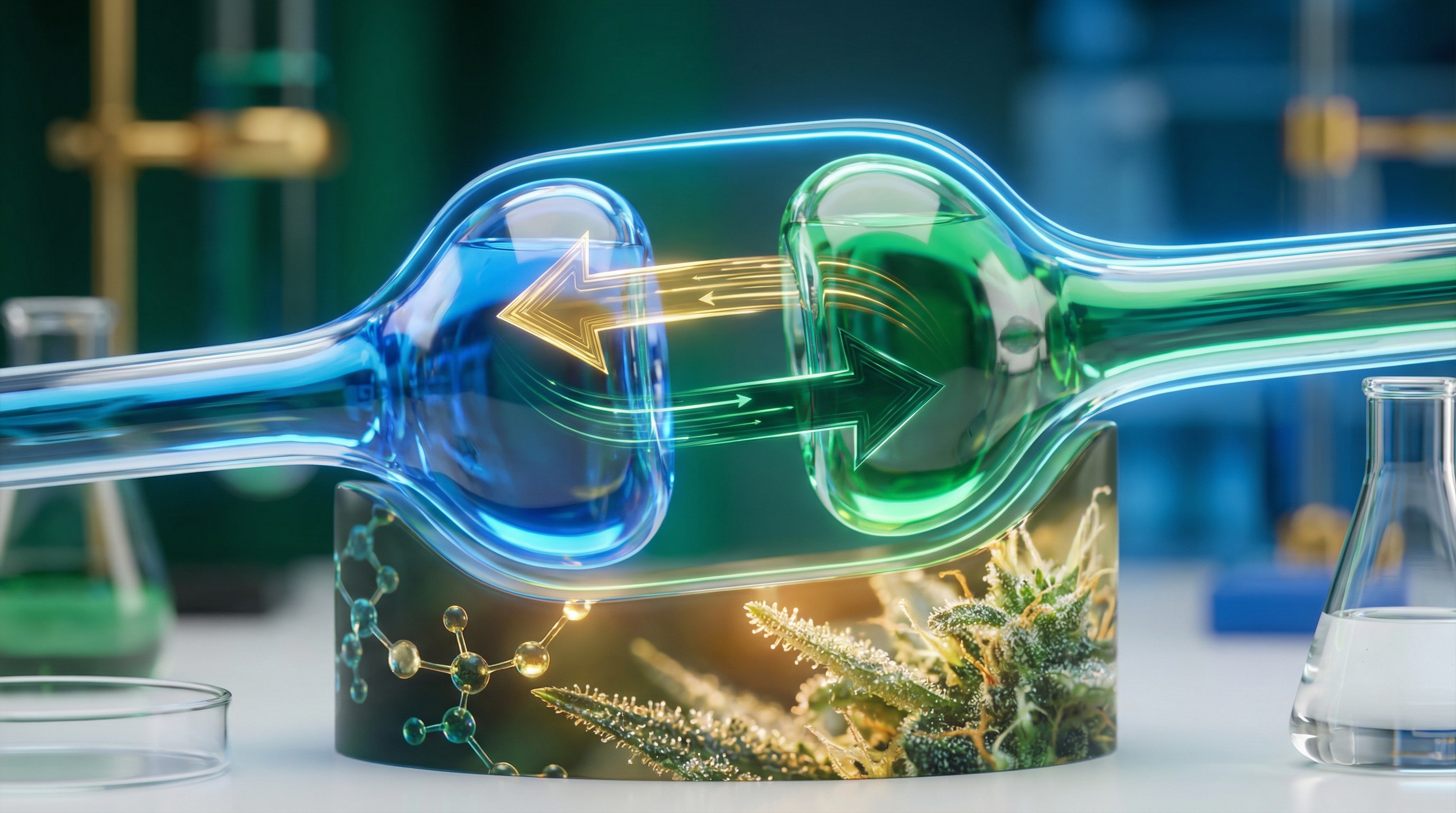
How Normal Neurotransmission Works
In typical neural communication:
- A sending neuron releases neurotransmitters into the synapse
- These cross the gap and bind to receptors on the receiving neuron
- The receiving neuron responds accordingly
The signal flows one direction: sender → receiver.
How Endocannabinoid Signaling Works
The ECS flips this script:
- A receiving neuron gets activated
- It synthesizes endocannabinoids on demand (they’re not stored)
- These endocannabinoids travel backwards to the sending neuron
- They bind to CB1 receptors on the sender
- This tells the sender to dial back its activity
This is why the ECS is called a “dimmer switch” rather than an on/off switch. When neural circuits get too active, endocannabinoids are produced to tell them to calm down. It’s a built-in feedback mechanism that prevents neurons from getting overstimulated.
Real-world example: When you feel pain, neurons fire rapidly to signal danger. Endocannabinoids are released in response, traveling backwards to reduce the intensity of those pain signals. This is your body’s natural pain management system—the same one that THC and CBD tap into.
Homeostasis: The ECS as Master Regulator
The endocannabinoid system’s primary job isn’t to get you high or even to manage pain specifically. Its core function is maintaining homeostasis—keeping your body’s internal environment stable despite external changes.
Think of homeostasis as your body’s thermostat. Too hot? Sweat. Too cold? Shiver. The ECS performs similar regulation across multiple systems simultaneously.
What the ECS Helps Regulate
| System | ECS Role |
|---|---|
| Mood | Modulates anxiety, depression, stress response |
| Sleep | Regulates sleep-wake cycles and sleep quality |
| Appetite | Signals hunger and satiety |
| Pain | Reduces pain perception and inflammation |
| Immune function | Modulates inflammatory responses |
| Memory | Balances memory formation and emotional processing |
| Reproduction | Influences fertility and pregnancy |
| Temperature | Helps maintain core body temperature |
When any of these systems get out of balance, the ECS steps in to restore equilibrium. This is why cannabis can seem to help with such diverse conditions—it’s not that cannabis is a miracle drug; it’s that the ECS touches nearly every major bodily function.
Clinical Endocannabinoid Deficiency
Some researchers, including Dr. Ethan Russo, have proposed that certain conditions might result from an underactive endocannabinoid system. This theory, called Clinical Endocannabinoid Deficiency (CECD), suggests that migraines, fibromyalgia, and irritable bowel syndrome might share a common root cause: insufficient endocannabinoid tone.
While still theoretical, CECD would explain why these seemingly unrelated conditions often occur together and why some patients report benefit from cannabinoid therapy when other treatments fail.
Why This Matters: Cannabis and Your ECS
Understanding the endocannabinoid system transforms how you think about cannabis. Cannabis doesn’t create effects out of thin air—it taps into a system your body already uses.
THC: The CB1 Key
THC is a partial agonist at CB1 receptors, meaning it activates them similarly to anandamide but with key differences:
- Stronger binding: THC activates CB1 more fully than anandamide
- Longer duration: Unlike anandamide, THC isn’t rapidly broken down
- External source: THC levels aren’t self-regulated by your body
This explains why cannabis produces more intense, longer-lasting effects than your natural endocannabinoids. It’s also why tolerance develops—with repeated THC exposure, your brain reduces CB1 receptor density to compensate.
CBD: The Modulator
CBD doesn’t bind strongly to CB1 or CB2 receptors. Instead, it works indirectly:
- Inhibits FAAH: This slows anandamide breakdown, keeping your natural “bliss molecule” active longer
- Allosteric modulation: CBD changes the shape of CB1 receptors, affecting how other compounds bind
- Multiple targets: CBD also acts on serotonin receptors, TRPV1 channels, and more
This explains why CBD doesn’t get you high but still produces effects—and why CBD combined with THC often produces a more balanced experience.
The Entourage Effect Connection
The entourage effect—where cannabis compounds work better together than alone—makes more sense once you understand the ECS. Terpenes can modulate receptor activity, CBD can change how THC binds, and minor cannabinoids each bring their own receptor interactions to the mix.
Supporting Your Endocannabinoid System Naturally
You don’t need cannabis to support your ECS. Several lifestyle factors influence endocannabinoid tone:
Exercise
Exercise increases anandamide levels—this may explain the “runner’s high” that scientists once attributed solely to endorphins. Studies show that moderate aerobic exercise reliably boosts circulating endocannabinoids.
Diet
- Omega-3 fatty acids are precursors to endocannabinoids. Fatty fish, walnuts, and flaxseed support ECS function.
- Chocolate contains compounds that inhibit anandamide breakdown
- Black truffles actually contain anandamide itself
Stress Management
Chronic stress depletes endocannabinoid tone. Meditation, adequate sleep, and social connection all support healthy ECS function.
Probiotics
Emerging research suggests gut bacteria influence the ECS. A healthy gut microbiome may support optimal endocannabinoid signaling.
FAQs
Did humans evolve the ECS because of cannabis?
No. The endocannabinoid system evolved approximately 600 million years ago—long before cannabis existed. All vertebrates have an ECS. Cannabis simply evolved compounds that happen to interact with this ancient system, likely as a defense mechanism against herbivores.
Why do some people feel nothing their first time using cannabis?
Several factors: First-timers may not inhale properly. But there’s also evidence that inexperienced users’ CB1 receptors may need “priming” with repeated exposure before they respond normally to THC. Your ECS may need to upregulate receptor sensitivity.
Can you have too few endocannabinoids?
Theoretically, yes. Clinical Endocannabinoid Deficiency is a proposed condition where the ECS is underactive, potentially contributing to conditions like migraines, fibromyalgia, and IBS. Research is ongoing.
Does CBD oil affect the endocannabinoid system?
Yes, but indirectly. CBD inhibits the enzyme that breaks down anandamide, effectively boosting your natural endocannabinoid levels. It also modulates CB1 receptors and interacts with other receptor systems.
How long does it take for CB1 receptors to return to normal after heavy cannabis use?
Studies suggest CB1 receptor density begins recovering within 48 hours of abstinence and returns to baseline within approximately 4 weeks. This explains why tolerance breaks work and why the experience often feels “fresh” after a period of abstinence.
Key Takeaways
-
The ECS was discovered in the 1990s by researchers studying how THC works—it’s one of the youngest identified biological systems.
-
You have two main cannabinoid receptors: CB1 (brain, psychoactive effects) and CB2 (immune system, inflammation).
-
Your body makes its own cannabinoids: Anandamide (the “bliss molecule”) and 2-AG regulate mood, pain, appetite, and more.
-
The ECS uses retrograde signaling—it works backwards compared to most neurotransmitters, acting as a feedback mechanism that prevents overstimulation.
-
Homeostasis is the goal: The ECS exists to maintain balance across multiple body systems, explaining why cannabinoids can help with diverse conditions.
-
THC mimics anandamide; CBD enhances your natural endocannabinoids by slowing their breakdown.
-
Lifestyle factors matter: Exercise, omega-3s, stress management, and gut health all influence your endocannabinoid tone.
Continue Your Education
Now that you understand the biological foundation, explore how cannabis compounds work together in the Entourage Effect. Or if you’re new to cannabis entirely, check out our First-Time User’s Guide for practical advice on your first experience.
The endocannabinoid system is your body’s hidden network—and now you know how to speak its language.
Sources:
- Mechoulam, R. et al. (1992). “Isolation and structure of a brain constituent that binds to the cannabinoid receptor.” Science 258, 1946-1949
- Devane, W.A. et al. (1988). “Determination and characterization of a cannabinoid receptor in rat brain.” Molecular Pharmacology 34(5), 605-613
- Russo, E.B. (2016). “Clinical Endocannabinoid Deficiency Reconsidered.” Cannabis and Cannabinoid Research 1.1, 154-165
- Lu, H.C. & Mackie, K. (2016). “An Introduction to the Endogenous Cannabinoid System.” Biological Psychiatry 79(7), 516-525
- Heifets, B.D. & Bhaskara Reddy, P.S.S. et al. (2021). “Runner’s high: Endocannabinoids and exercise-induced reward.” Science Signaling 14(679)
- Psychology Today (2025). “The Endocannabinoid System: An Overview”


