The Entourage Effect: Why Whole-Plant Cannabis Beats Isolated THC
The entourage effect explains why cannabis compounds work better together. Learn the science behind cannabinoid-terpene synergy with clinical proof.

Professor High
Your friendly cannabis educator, bringing science-backed knowledge to the community.
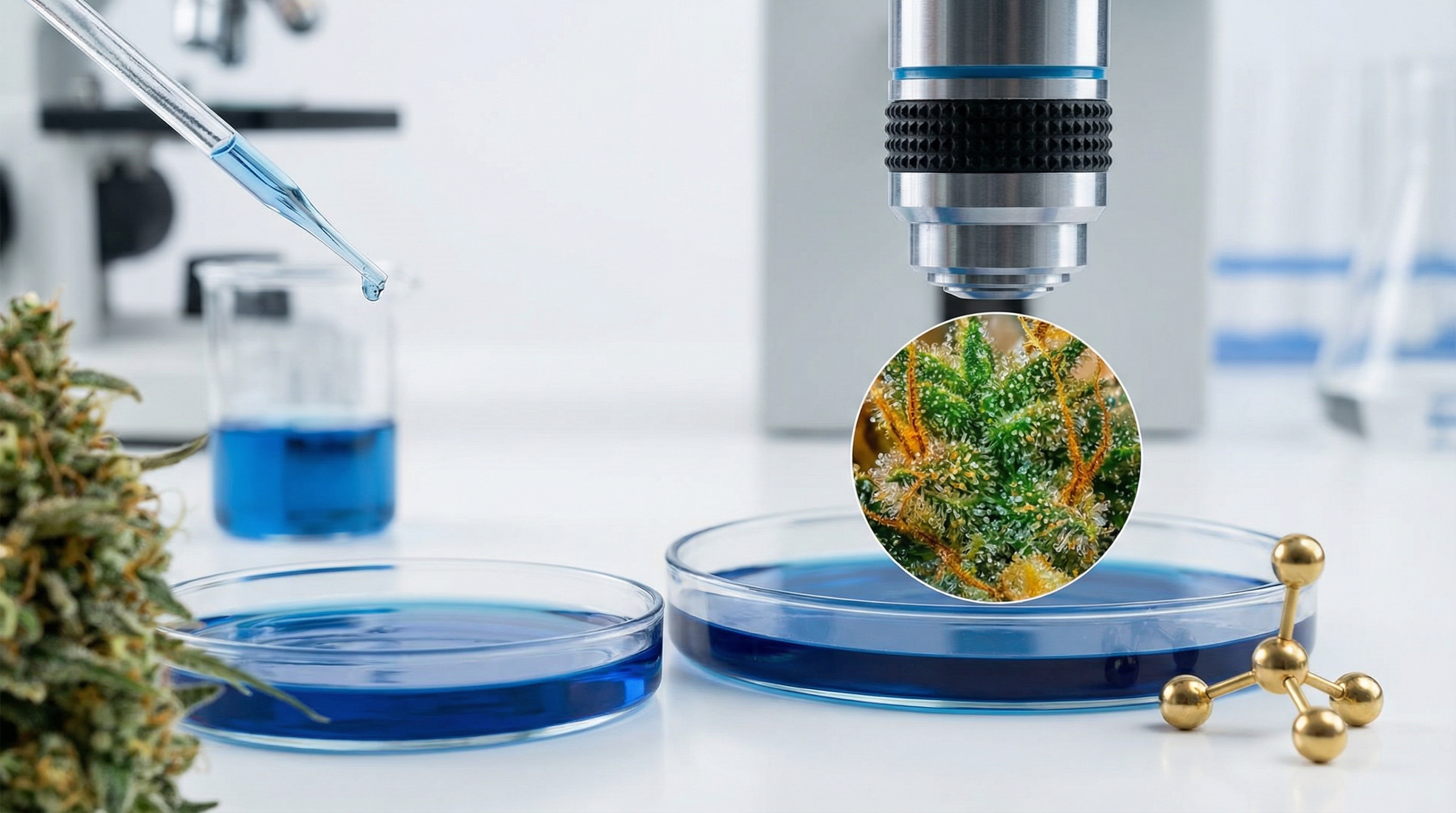
The entourage effect is the phenomenon where cannabis compounds—cannabinoids, terpenes, and flavonoids—work together to produce effects that none of them could achieve alone. It’s why pure THC from a pharmaceutical lab feels different from smoking actual flower. And in 2024, researchers at Johns Hopkins finally proved it in a controlled clinical trial.
If you’ve ever wondered why some strains hit different despite having the same THC percentage, or why that full-spectrum CBD tincture worked better than the isolate version—the entourage effect is your answer. Let’s break down the science.
🧬 What Is the Entourage Effect?
The entourage effect describes the synergistic interaction between cannabis compounds that produces enhanced or modified effects compared to any single compound alone. Think of it as a molecular orchestra: THC might be the lead singer, but the terpenes, CBD, and minor cannabinoids are the instruments that make the music actually sound good.
The Origin: Dr. Raphael Mechoulam (1998)
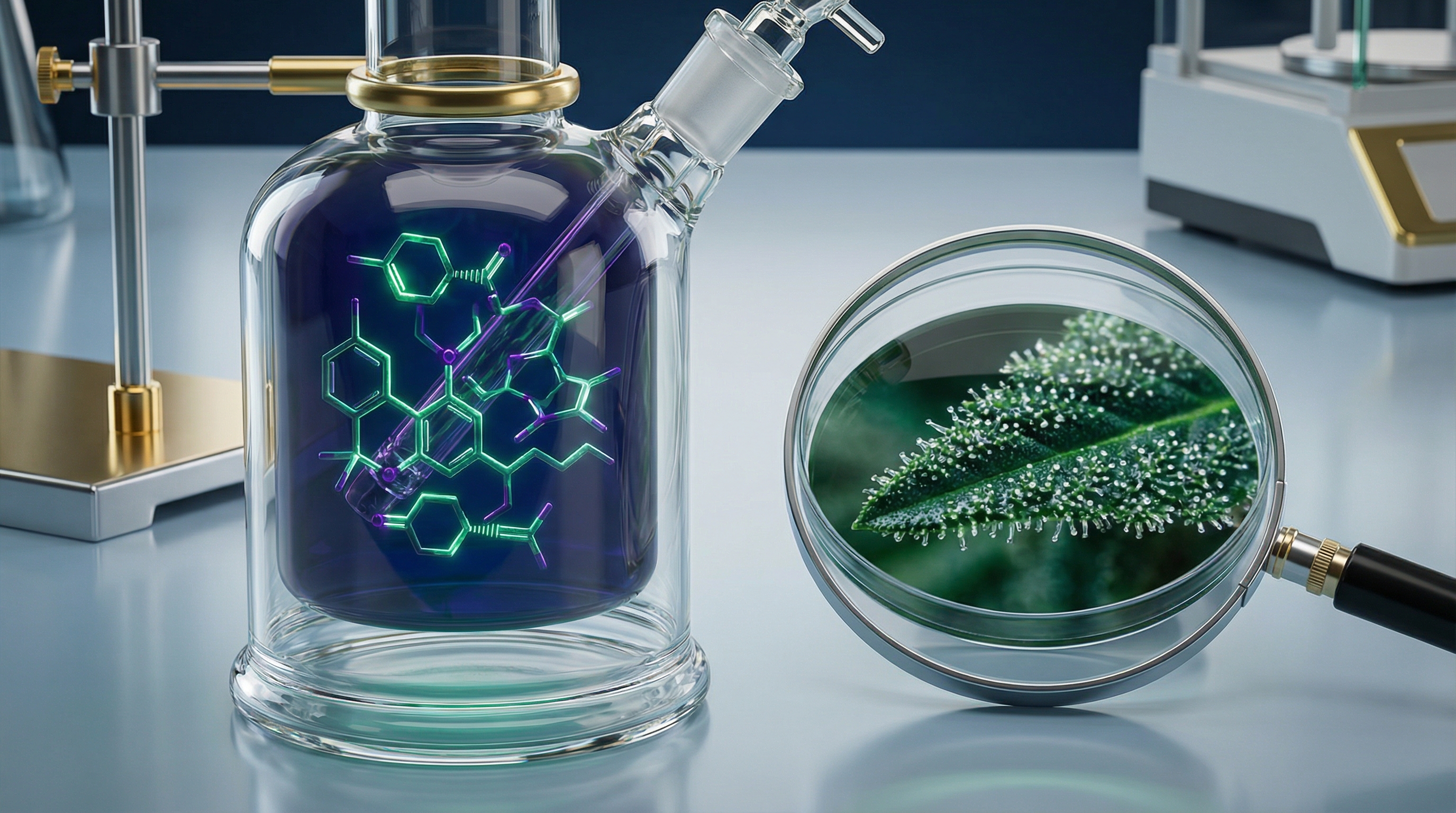
The term “entourage effect” was coined by Israeli chemist Dr. Raphael Mechoulam—the same scientist who first isolated THC in 1964—along with colleague Shimon Ben-Shabat. In their 1998 paper published in the European Journal of Pharmacology, they discovered something unexpected.
They were studying 2-arachidonoylglycerol (2-AG), an endocannabinoid your body naturally produces. They found that 2-AG typically exists alongside two other compounds—2-linoleoylglycerol and 2-palmitoylglycerol—that can’t bind to cannabinoid receptors on their own. But here’s the kicker: when these “inactive” compounds were present, they dramatically increased 2-AG’s ability to bind to receptors and produce effects like pain relief.
The takeaway: In cannabis chemistry, 1 + 1 doesn’t equal 2. It equals something closer to 3.
Why This Changes Everything
Before Mechoulam’s discovery, the pharmaceutical approach to cannabis was simple: isolate THC, purify it, put it in a pill. Done. But isolated THC (like Marinol/dronabinol) consistently underperformed compared to whole-plant cannabis in patient reports. Now we know why.
🔬 The Science: How the Entourage Effect Works
The entourage effect operates through multiple mechanisms—and the science is more nuanced than most “cannabis education” content admits. Here’s what actually happens at the receptor level.
Your Endocannabinoid System: A Quick Primer
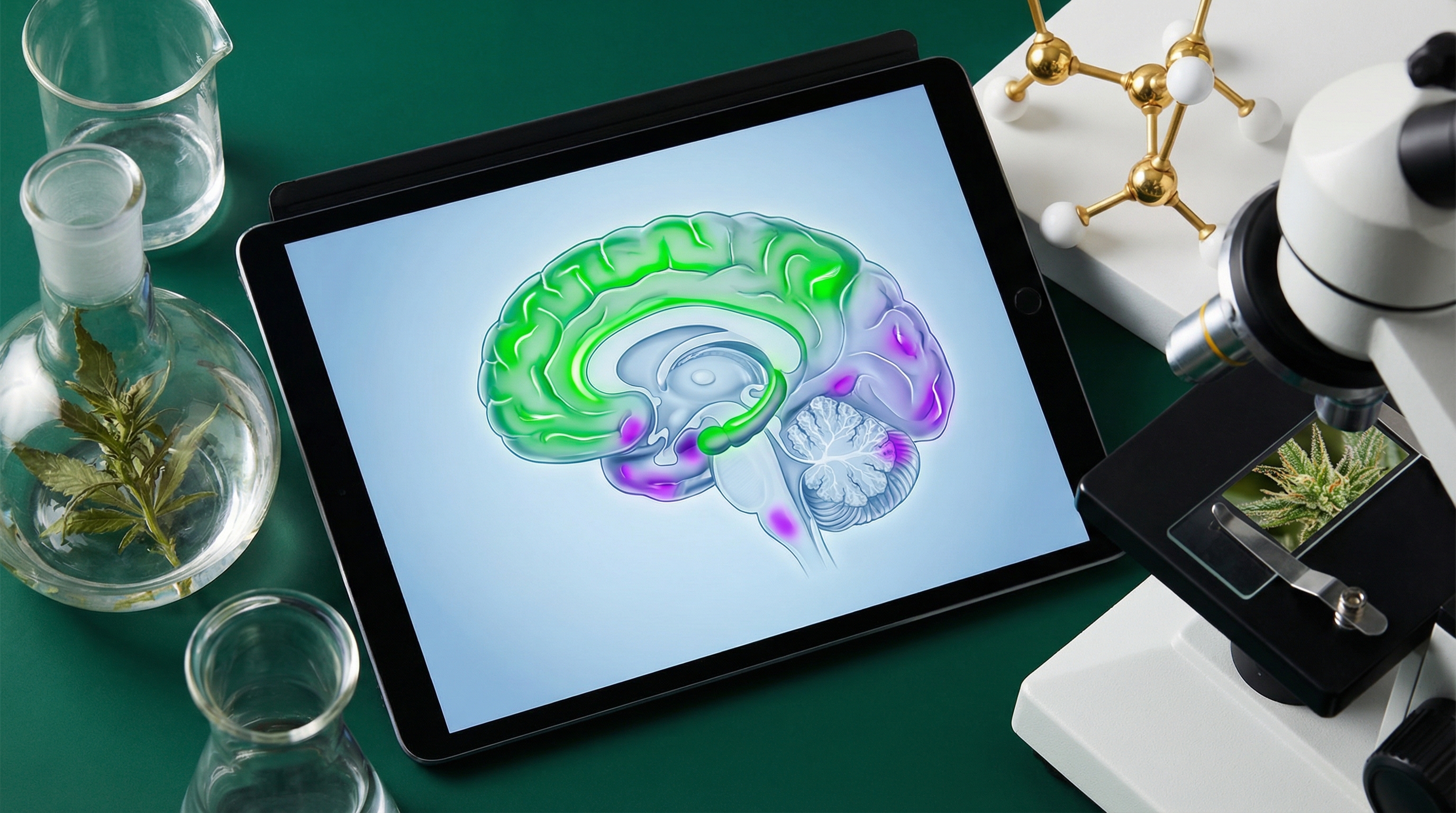
Your body has two main cannabinoid receptors:
| Receptor | Primary Location | Primary Function |
|---|---|---|
| CB1 | Brain, central nervous system | Psychoactive effects, pain modulation, mood |
| CB2 | Immune system, peripheral tissues | Inflammation, immune response, pain |
THC binds primarily to CB1 receptors—that’s what gets you high. But the entourage effect involves much more than just CB1.
Mechanism 1: Direct Receptor Binding
Beta-caryophyllene (the peppery terpene) is the only terpene proven to directly bind to cannabinoid receptors. Research published in Biomedicine & Pharmacotherapy confirms it’s a selective CB2 receptor agonist with a binding affinity (Ki) of 155 nM—strong enough to produce real anti-inflammatory and pain-relieving effects.
This means when you consume cannabis high in caryophyllene, you’re getting cannabinoid receptor activation from a terpene, not just THC.
Mechanism 2: Receptor Modulation
Other terpenes don’t bind directly to CB1 or CB2, but they modulate how cannabinoids interact with those receptors. A 2025 Israeli study found that sixteen cannabis terpenes showed “significant dose-dependent responses at both CB1 and CB2 receptors, reaching a maximal response of about 10-60 percent the activation elicited by THC.”
Mechanism 3: Blood-Brain Barrier Penetration
Myrcene—the most common terpene in cannabis—doesn’t bind to cannabinoid receptors at all. Instead, research shows it increases cell membrane permeability, including the blood-brain barrier. This allows cannabinoids to reach CB1 receptors in the brain more effectively. It’s essentially a molecular escort service for THC.
The 2024 Johns Hopkins Clinical Proof
For years, the entourage effect was mostly theoretical—supported by patient reports and preclinical studies, but lacking rigorous clinical evidence. That changed in April 2024.
Researchers at Johns Hopkins and UC Boulder conducted a double-blind, placebo-controlled study with 20 healthy adults. They administered vaporized THC alone, d-limonene (a citrus terpene) alone, and combinations of both.
The results:
- 30mg THC alone: Significant anxiety, nervousness, and paranoia
- 30mg THC + 15mg d-limonene: Significantly reduced anxiety, nervousness, and paranoia
- D-limonene alone: No notable effects
As lead author Dr. Tory Spindle stated: “This study is a first step in uncovering how we can mitigate risks of THC when used in medicine.” The study, published in Drug and Alcohol Dependence, is one of the first to clinically demonstrate that terpenes can selectively modify THC’s effects.
🌿 Key Players: The Cannabinoids and Terpenes That Matter
Not all compounds contribute equally to the entourage effect. Here’s your field guide to the most important players.
Major Cannabinoids
| Cannabinoid | Effect Profile | Entourage Role |
|---|---|---|
| THC | Psychoactive, pain relief, appetite | Primary driver; effects modulated by everything else |
| CBD | Non-intoxicating, anti-anxiety, anti-inflammatory | Modulates THC’s intensity and duration |
| CBG | Non-intoxicating, potential neuroprotection | May enhance other cannabinoids’ effects |
| CBN | Mildly sedating, degraded THC | Contributes to “sleepy” aged cannabis effects |
The CBD-THC Synergy
CBD doesn’t just reduce THC’s side effects—it actively changes how THC works. CBD is a negative allosteric modulator of CB1 receptors, meaning it changes the receptor’s shape so THC can’t bind as strongly. This results in:
- Reduced anxiety and paranoia
- Potentially longer-lasting effects
- A “smoother” high with less intensity spike
This is why 1:1 THC:CBD products often produce more manageable experiences than high-THC, low-CBD options—even at the same total cannabinoid content.
Major Terpenes and Their Contributions
| Terpene | Aroma | Primary Effect | Mechanism |
|---|---|---|---|
| Myrcene | Earthy, musky | Sedation, muscle relaxation | Increases membrane permeability; TRPV1 activation |
| Limonene | Citrus, lemon | Mood elevation, anxiety reduction | Modulates CB1/CB2; proven to reduce THC-induced anxiety |
| Pinene | Pine, forest | Alertness, memory support | May counteract THC’s short-term memory effects |
| Linalool | Floral, lavender | Calming, sedation | NMDA receptor modulation |
| Caryophyllene | Peppery, spicy | Anti-inflammatory, pain relief | Direct CB2 agonist (Ki: 155 nM) |
The Caryophyllene Exception
Beta-caryophyllene deserves special attention. Unlike other terpenes, it doesn’t just modulate cannabinoid effects—it creates them. As a full CB2 agonist, caryophyllene triggers anti-inflammatory cascades and pain relief independent of THC. This makes it functionally a dietary cannabinoid, despite technically being a terpene.
Found in: Black pepper, cloves, and many cannabis strains including GSC (Girl Scout Cookies), OG Kush, and Bubba Kush.
💡 Real-World Examples: The Entourage Effect in Action
Theory is great, but let’s see how this actually plays out with real strains and products.
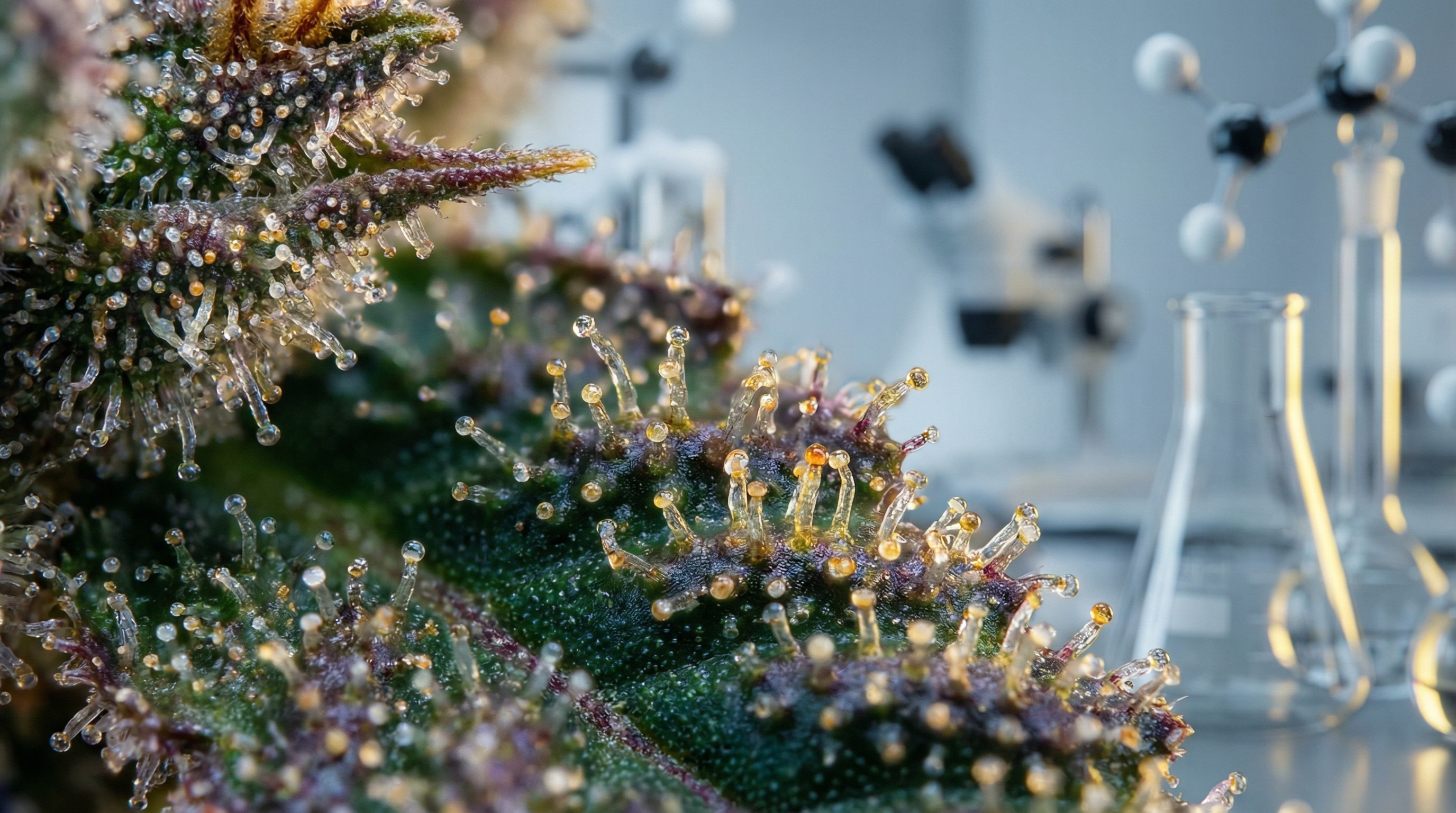
Why Blue Dream Feels Different from Pure THC
Blue Dream typically tests around 18-24% THC—nothing extreme. Yet it’s famous for producing a balanced, creative, euphoric high that pure THC simply can’t replicate.
The chemistry:
- Dominant terpene: Myrcene (relaxation)
- Secondary: Pinene (mental clarity), Caryophyllene (anti-anxiety)
- CBD: Minimal (under 1%)
The myrcene contributes body relaxation while pinene keeps your head clear. Caryophyllene’s CB2 activation adds anti-inflammatory benefits. Together, they produce an experience that’s distinctly “Blue Dream”—not just “high.”
Full-Spectrum vs. Isolate: The 10x Dose Difference
The most striking evidence for the entourage effect comes from comparing full-spectrum and isolate products.
Research from the Lautenberg Center found that CBD isolate produces a “bell-shaped dose-response curve”—meaning after a certain point, more CBD actually becomes less effective. Full-spectrum CBD showed a linear dose-response: more product = more effect.
Even more dramatic: a 2022 clinical trial found that full-spectrum CBD effectively treated moderate-to-severe anxiety at approximately 30mg per day. Previous trials using CBD isolate required approximately 300mg per day for similar effects.
That’s a 10x difference—entirely attributable to the entourage effect.
When Strains with Identical THC Feel Different
Ever noticed two strains with 22% THC producing completely different experiences? The entourage effect explains this.
Strain A: High myrcene, low limonene
- Effect: Heavy body high, couch-lock, sedation
- Best for: Evening, sleep, pain
Strain B: High limonene, low myrcene (same 22% THC)
- Effect: Uplifting, energetic, mood boost
- Best for: Daytime, creativity, social situations
The THC is doing the same thing in both cases. The terpenes are directing where and how you feel it.
🛒 How to Shop for the Entourage Effect
Understanding the science is nice, but you need practical purchasing guidance. Here’s how to actually find products that maximize the entourage effect.
Product Types: Full-Spectrum vs. Broad-Spectrum vs. Isolate
| Type | Contains THC? | Contains Terpenes? | Entourage Effect? |
|---|---|---|---|
| Full-Spectrum | Yes (under 0.3% in hemp, variable in cannabis) | Yes | Maximum |
| Broad-Spectrum | No (THC removed) | Yes | Partial |
| Isolate | No | No | None |
Professor High’s recommendation: Unless you have specific reasons to avoid THC (drug testing, sensitivity), always choose full-spectrum products. The research is clear: they work better.
Reading Lab Results: What to Look For
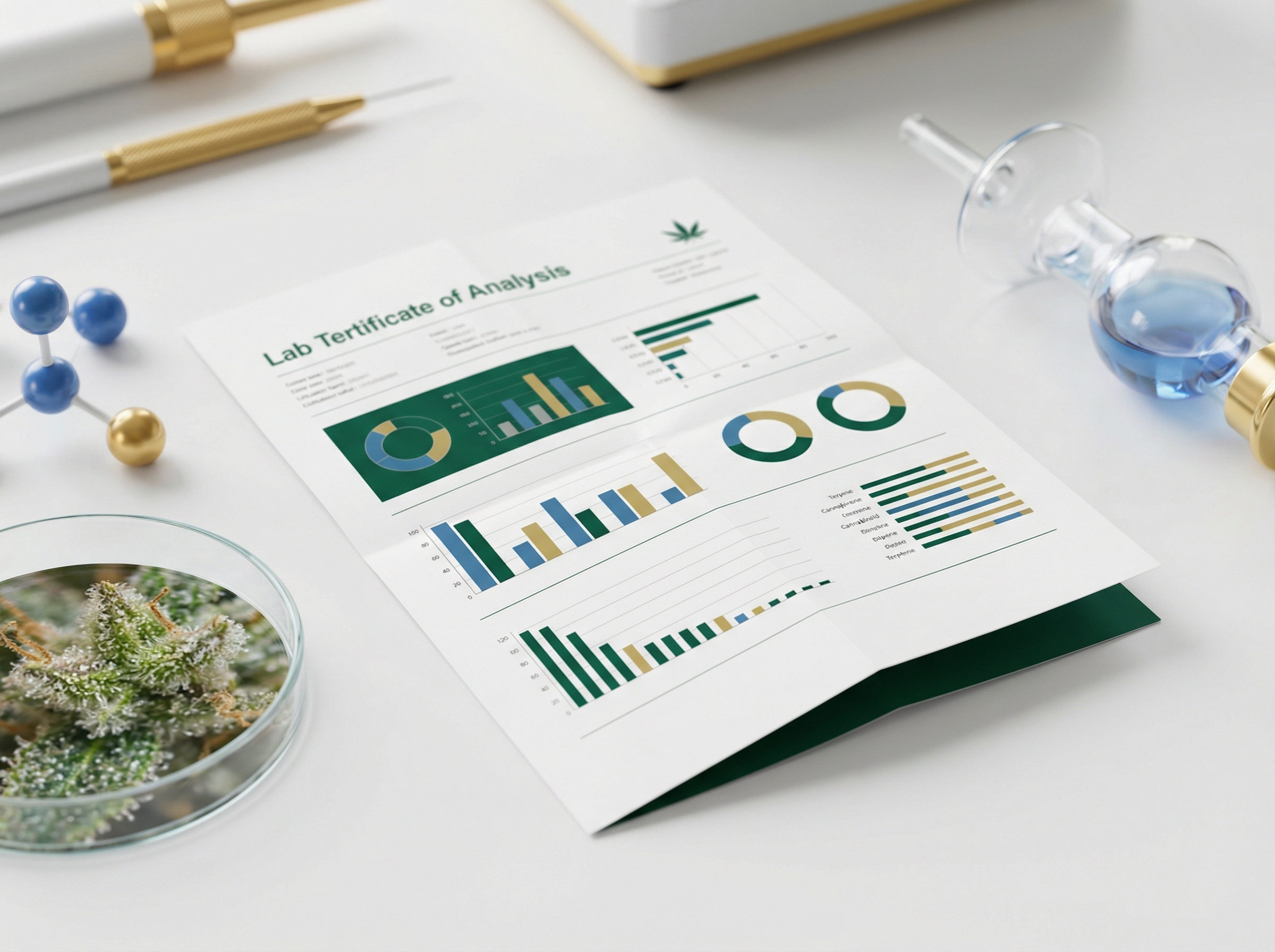
Most dispensaries provide COAs (Certificates of Analysis). Here’s what matters:
-
Total cannabinoid content — Not just THC. Look for CBD, CBG, and CBN percentages too.
-
Terpene profile — The best labs list individual terpene percentages. Look for:
- Total terpene content >1% (ideally 2-4%)
- Diverse profile (4+ terpenes above 0.1%)
- Dominant terpene that matches your desired effect
-
THC:CBD ratio — For reduced anxiety, look for ratios closer to 1:1 or 2:1. Pure THC products (20:1+) are more likely to cause anxiety.
Strain Selection Framework
For relaxation/sleep:
- Seek: High myrcene (>0.5%), linalool
- Avoid: High limonene, pinene, terpinolene
For energy/creativity:
- Seek: High limonene, pinene, terpinolene
- Avoid: Myrcene-dominant profiles
For pain relief:
- Seek: Caryophyllene, myrcene, high THC + some CBD
- Look for: Full-spectrum with diverse terpene profile
For anxiety reduction:
- Seek: Limonene (clinical proof), linalool, CBD presence
- Avoid: High-THC, low-terpene products
Red Flags to Avoid
- “THC percentage” as the only metric — Chasing numbers ignores the entourage effect entirely
- Isolate products marketed as “pure” — Pure isn’t better. Synergy is better.
- No terpene data available — If they’re not testing for terpenes, they’re not optimizing for the entourage effect
- Distillate-only products — Distillation strips terpenes. Re-added terpenes aren’t the same as naturally occurring ones.
FAQs
Is the entourage effect scientifically proven?
Yes—with caveats. The 2024 Johns Hopkins study provided the first rigorous clinical evidence that terpenes (specifically limonene) can selectively modify THC’s effects. However, the field is young, and not all claimed synergies have clinical-level evidence yet. The strongest proof exists for: CBD-THC synergy, limonene-THC anxiety reduction, and caryophyllene’s CB2 activation.
Can I get the entourage effect from edibles?
Yes, if you choose full-spectrum products. Edibles made from whole-plant extracts retain cannabinoids and terpenes. However, many commercial edibles use THC distillate, which strips terpenes. Check the label: “full-spectrum” or “whole-plant extract” indicates entourage potential; “THC distillate” does not.
What’s the best terpene combination for anxiety?
Based on current research, limonene + some CBD + moderate THC appears most effective. The Johns Hopkins study used 15mg limonene with 30mg THC. For the lowest anxiety risk, consider full-spectrum products with THC:CBD ratios of 1:1 to 2:1 and high limonene content.
Does CBD alone have an entourage effect?
Partial. Full-spectrum CBD products contain minor cannabinoids (CBG, CBN) and terpenes that can enhance CBD’s effects. The 10x dose-response difference between full-spectrum and isolate CBD demonstrates this clearly. However, without THC, you’re missing the most significant cannabinoid-cannabinoid synergy.
How much terpene content matters?
Quality matters more than quantity, but aim for 1-4% total terpenes. A diverse profile with multiple terpenes above 0.1% typically indicates a full entourage potential. Single-terpene dominance above 2% (like some myrcene-heavy strains) can produce very specific effects.
Why do some researchers question the entourage effect?
A 2020 study found that common terpenes don’t directly activate CB1 or CB2 receptors (except caryophyllene at CB2). This is technically accurate but misses the point: the entourage effect operates through multiple mechanisms—membrane permeability, allosteric modulation, alternative receptor activation—not just direct cannabinoid receptor binding.
Key Takeaways
-
The entourage effect is real and clinically proven. The 2024 Johns Hopkins study demonstrated that limonene selectively reduces THC-induced anxiety in controlled human trials.
-
Dr. Raphael Mechoulam coined the term in 1998 when he discovered that inactive compounds potentiate endocannabinoid effects. The concept has only grown stronger with subsequent research.
-
Full-spectrum products outperform isolates dramatically. Studies show up to 10x dose differences for equivalent effects between full-spectrum and isolated cannabinoids.
-
Terpenes work through multiple mechanisms: direct receptor binding (caryophyllene), receptor modulation, blood-brain barrier permeability (myrcene), and alternative receptor activation (TRPV1).
-
Beta-caryophyllene is functionally a cannabinoid. It’s the only terpene that directly activates CB2 receptors, producing anti-inflammatory effects independent of THC.
-
Stop shopping by THC percentage alone. Terpene profiles, cannabinoid ratios, and full-spectrum extraction matter more for your actual experience than raw THC numbers.
-
Match terpenes to your goals: Myrcene for sleep, limonene for anxiety reduction, pinene for alertness, caryophyllene for inflammation.
Explore the Entourage Effect
Ready to experience the entourage effect for yourself? Browse our strain database with full terpene profiles and High Families classifications. Learn more about individual terpenes to understand exactly what creates your ideal cannabis experience.
The entourage effect isn’t marketing—it’s chemistry. And now you know how to use it.
Sources:
- Spindle et al. (2024). “Vaporized D-limonene selectively mitigates the acute anxiogenic effects of Δ9-tetrahydrocannabinol.” Drug and Alcohol Dependence
- Ben-Shabat, S. et al. (1998). “An entourage effect: inactive endogenous fatty acid glycerol esters enhance 2-arachidonoyl-glycerol cannabinoid activity.” European Journal of Pharmacology 353, 23–31
- Francomano et al. (2021). “β-Caryophyllene: A Sesquiterpene with Countless Biological Properties.” Biomedicine & Pharmacotherapy
- Raz, N. et al. (2026). “Selective activation of cannabinoid receptors by cannabis terpenes.” Biochemical Pharmacology, 243, 117498. DOI: 10.1016/j.bcp.2025.117498. Summarized in NORML Research Summary
- Gallily et al. (2015). “Overcoming the Bell-Shaped Dose-Response of Cannabidiol by Using Cannabis Extract Enriched in Cannabidiol.” Lautenberg Center Study


