How to Read Cannabis Lab Results: Your Complete COA Guide
Learn to decode cannabis Certificates of Analysis (COAs). Understand potency, terpenes, and safety testing to make smarter dispensary purchases.

Professor High
Your friendly cannabis educator, bringing science-backed knowledge to the community.
That QR code on your cannabis packaging? It’s not just decoration—it’s your gateway to understanding exactly what you’re consuming. Behind that little square is a Certificate of Analysis (COA), essentially a report card for your cannabis that reveals everything from how strong it is to whether it’s free from harmful contaminants.
Most consumers never scan that code. They glance at the THC percentage on the label, maybe check the price, and call it a day. But if you want to truly understand what you’re buying—and make smarter purchasing decisions—learning to read a COA is one of the most valuable skills you can develop.
Let’s break it down together.
What Is a COA (Certificate of Analysis)?
A Certificate of Analysis is a lab report generated by a licensed third-party testing facility. In legal cannabis markets, these tests are mandatory—every batch of cannabis must be tested before it can be sold to consumers.
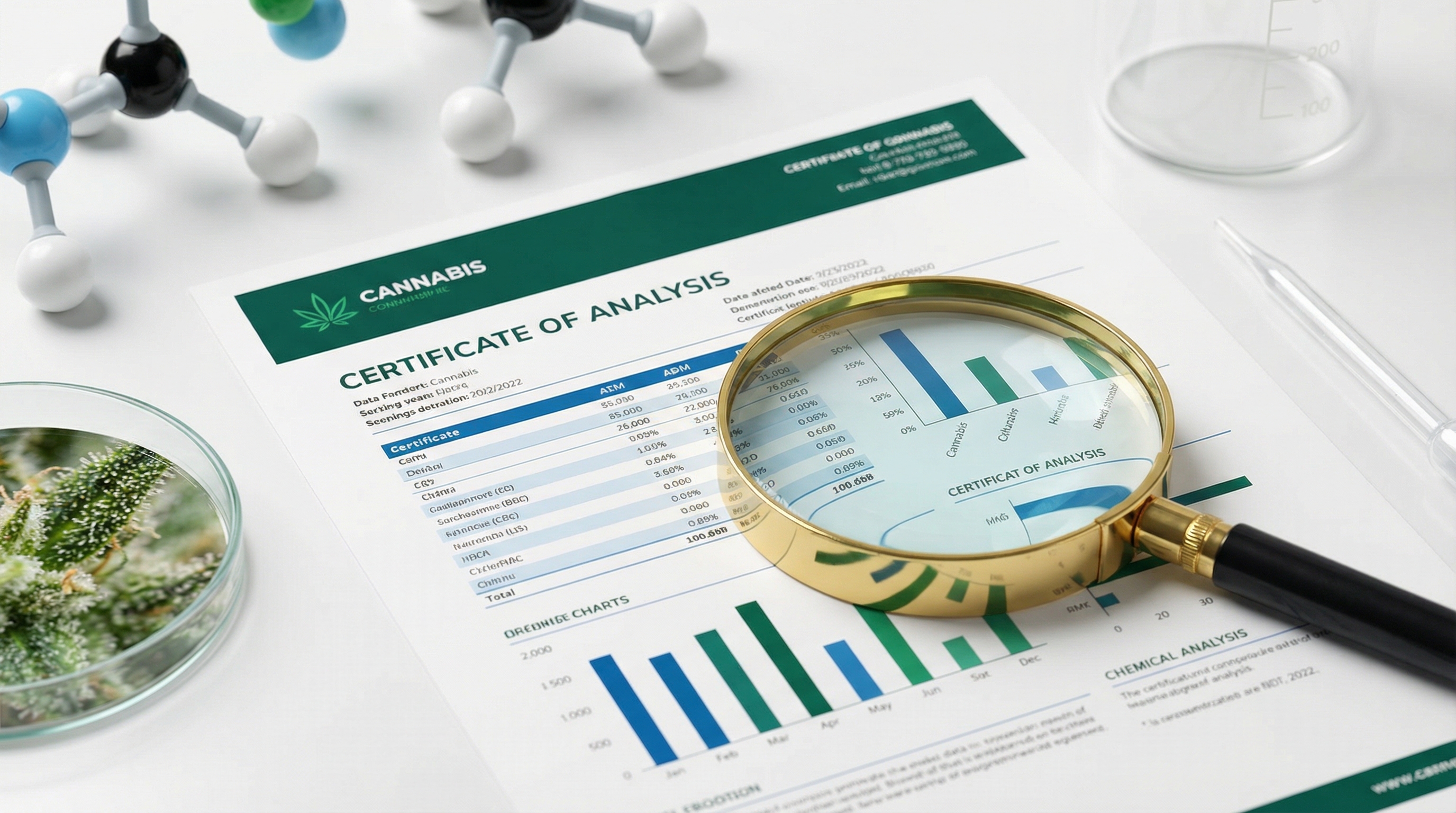
Think of a COA as your cannabis product’s medical record, job interview, and background check all rolled into one. It tells you:
- Potency: How strong is this product? What cannabinoids are present?
- Terpene Profile: What aromatic compounds shape the experience?
- Safety: Is it free from pesticides, mold, heavy metals, and other contaminants?
Why COAs Matter
Here’s the reality: cannabis labels can be… optimistic. A package might boast “premium quality” or “fire genetics,” but those are marketing terms. The COA is where the actual data lives. It’s verified by a licensed lab with no financial stake in making the product look good.
In states like California, Colorado, and New Jersey, dispensaries are legally required to provide COAs upon request. This isn’t a favor—it’s your right as a consumer.
Finding the COA
Before you can read the results, you need to actually find them. Here are your options:
1. Scan the QR Code
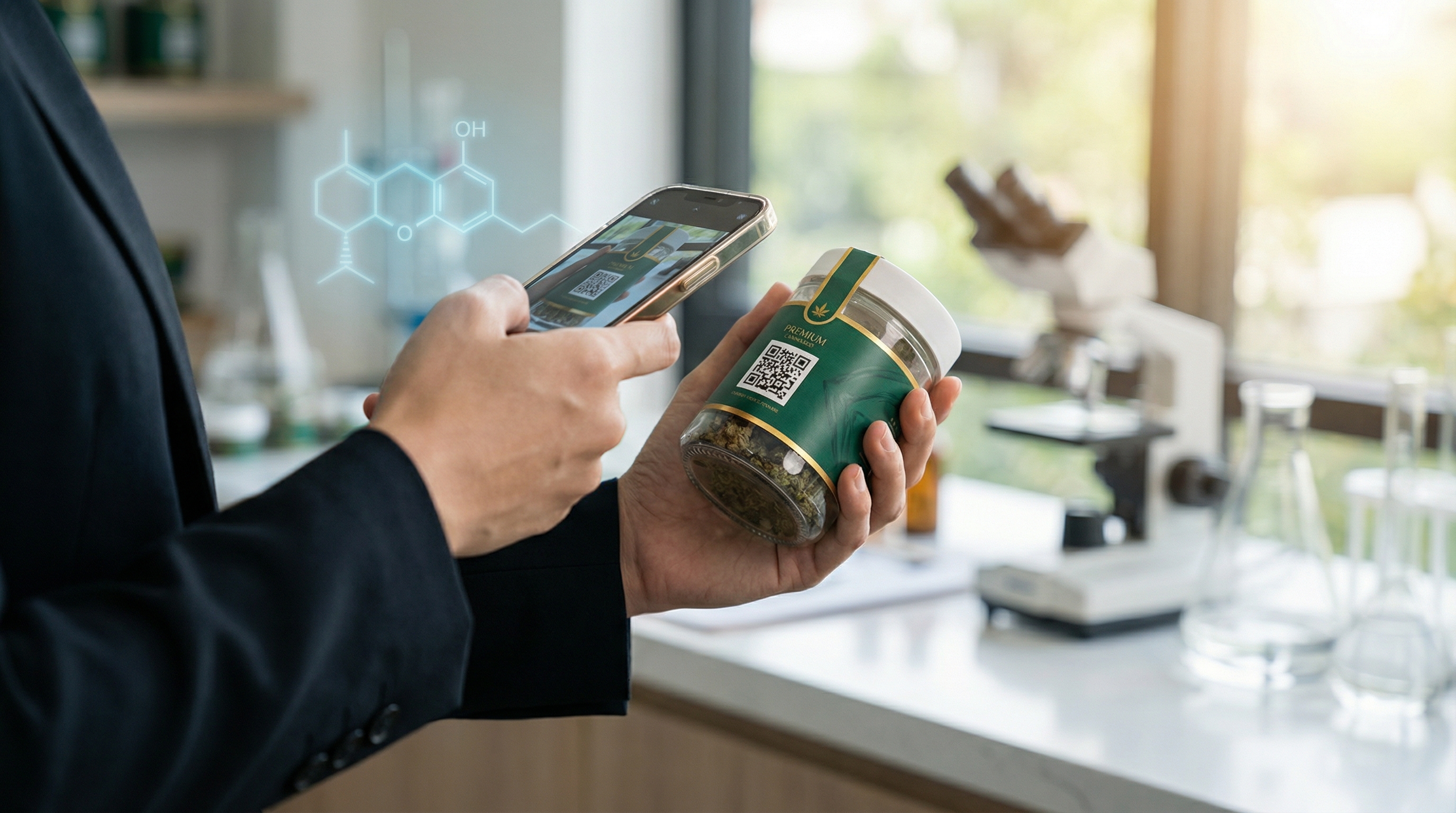
Most modern cannabis packaging includes a QR code that links directly to the lab results. Just point your phone’s camera at it, tap the link, and you’ll see the full report.
2. Ask Your Budtender
If there’s no QR code, or if the link is broken (it happens), ask your budtender. They’re required to have COAs available for every product on the shelf. A good dispensary keeps these organized and accessible.
3. Check the Brand’s Website
Many cannabis brands publish their lab results online, searchable by batch number or product name. Look for a “Lab Results” or “Testing” section on their website.
4. Match the Batch Number
This is crucial: always verify that the COA matches your specific product. Look for the batch number or lot number on your packaging and confirm it matches the one on the lab report. COAs are batch-specific—results from a different batch are essentially meaningless for your product.
Reading the COA: Section by Section
Now for the main event. A typical COA has several distinct sections, each telling you something important about your product.
Product and Sample Information
At the top of any COA, you’ll find basic identification details:
| Field | What It Tells You |
|---|---|
| Product Name | The specific product tested |
| Batch/Lot Number | Unique identifier—verify this matches your package |
| Sample Date | When the product was submitted for testing |
| Testing Lab | Name and license number of the testing facility |
| Cultivator/Manufacturer | Who produced the product |
Why it matters: This section confirms you’re looking at the right report. If the batch number doesn’t match, you’re looking at results for a completely different product.
Potency Testing
This is what most people look at first—and for good reason. The potency section tells you about the cannabinoid content.
Key Cannabinoids to Understand
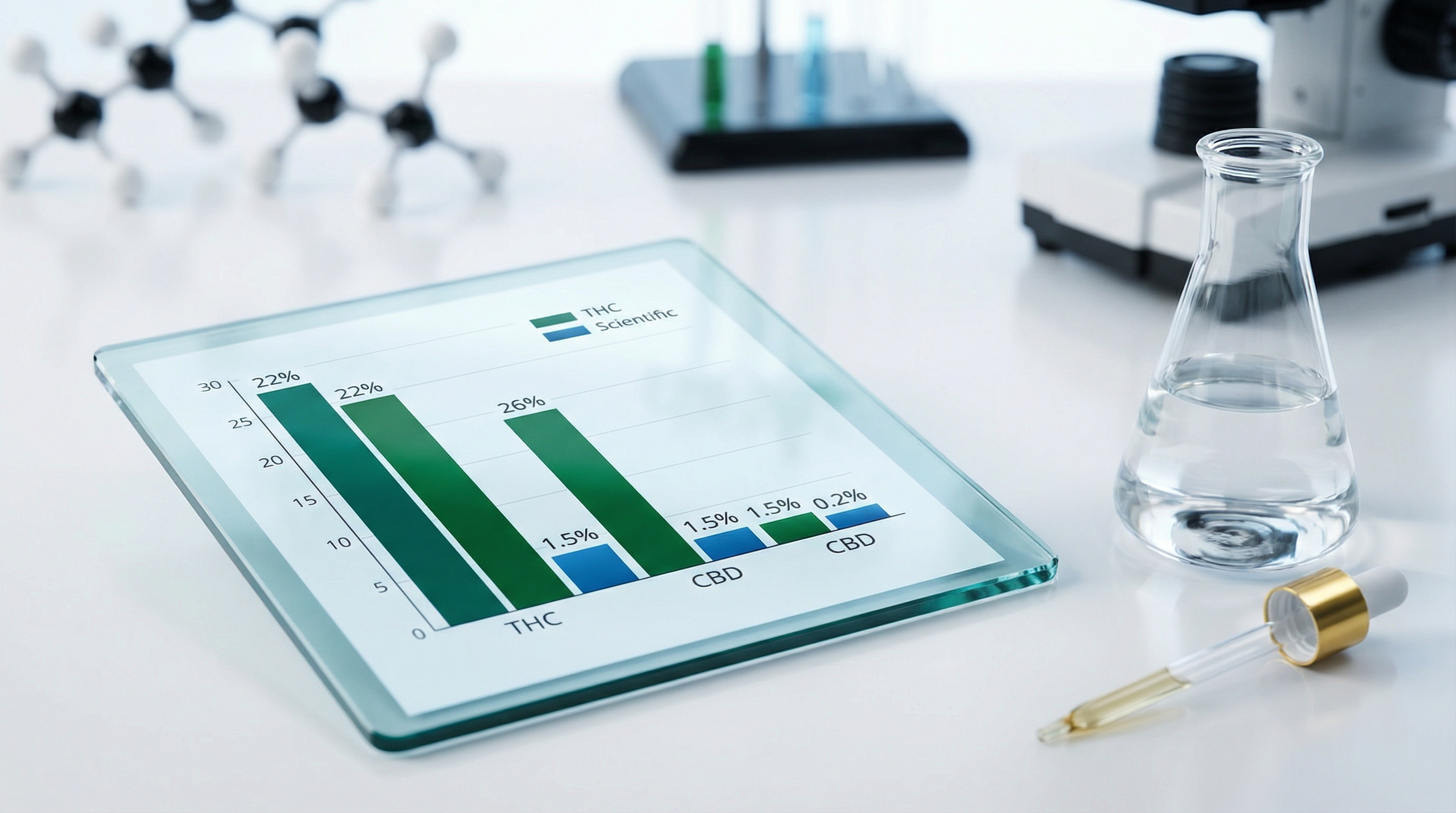
THC (Delta-9-THC): The primary psychoactive cannabinoid—this is what gets you high. Listed as a percentage of total weight.
THCA (Tetrahydrocannabinolic Acid): The raw, non-psychoactive form of THC found in fresh cannabis. When you heat it (smoking, vaping, cooking), THCA converts to THC.
Total THC: This is the number that actually matters for flower. It’s calculated using this formula:
Total THC = THC + (THCA x 0.877)
The 0.877 factor accounts for the molecular weight lost when THCA converts to THC through heat. When comparing products, always compare Total THC, not just the THC or THCA numbers alone.
CBD and CBDA: Same relationship as THC/THCA. CBD is non-intoxicating and may moderate THC’s effects. Total CBD uses the same conversion formula.
Minor Cannabinoids: Many labs also test for CBG (cannabigerol), CBN (cannabinol), CBC (cannabichromene), and others. These contribute to the entourage effect—the synergy between cannabis compounds that shapes your experience.
Potency Red Flags
- THC over 35%: For flower, this is extremely rare. Some testing labs have been caught inflating numbers. Be skeptical.
- 0% cannabinoids: Something went wrong with the test or the product.
- No THCA for flower: Fresh flower should have THCA, not just THC. If a flower COA only shows THC, the product may have been decarboxylated already or the lab results are incomplete.
Terpene Profile
If potency tells you how strong a product is, terpenes tell you how it will feel. These aromatic compounds don’t just create flavor and smell—they influence the overall experience.
| Terpene | Aroma | Commonly Associated Effects |
|---|---|---|
| Myrcene | Earthy, musky | Relaxation, sedation |
| Limonene | Citrus, lemon | Mood elevation, stress relief |
| Pinene | Pine, forest | Alertness, memory support |
| Linalool | Floral, lavender | Calming, anxiety reduction |
| Caryophyllene | Peppery, spicy | Anti-inflammatory, pain relief |
What to look for:
- Total terpene content: 1-4% is typical for quality flower. Higher isn’t always better—balance matters.
- Dominant terpenes: The top 2-3 terpenes shape most of the experience.
- Diversity: A profile with 5+ terpenes above 0.1% often indicates quality genetics and proper curing.
For more on how terpenes work with cannabinoids, check out our deep dive on the entourage effect.
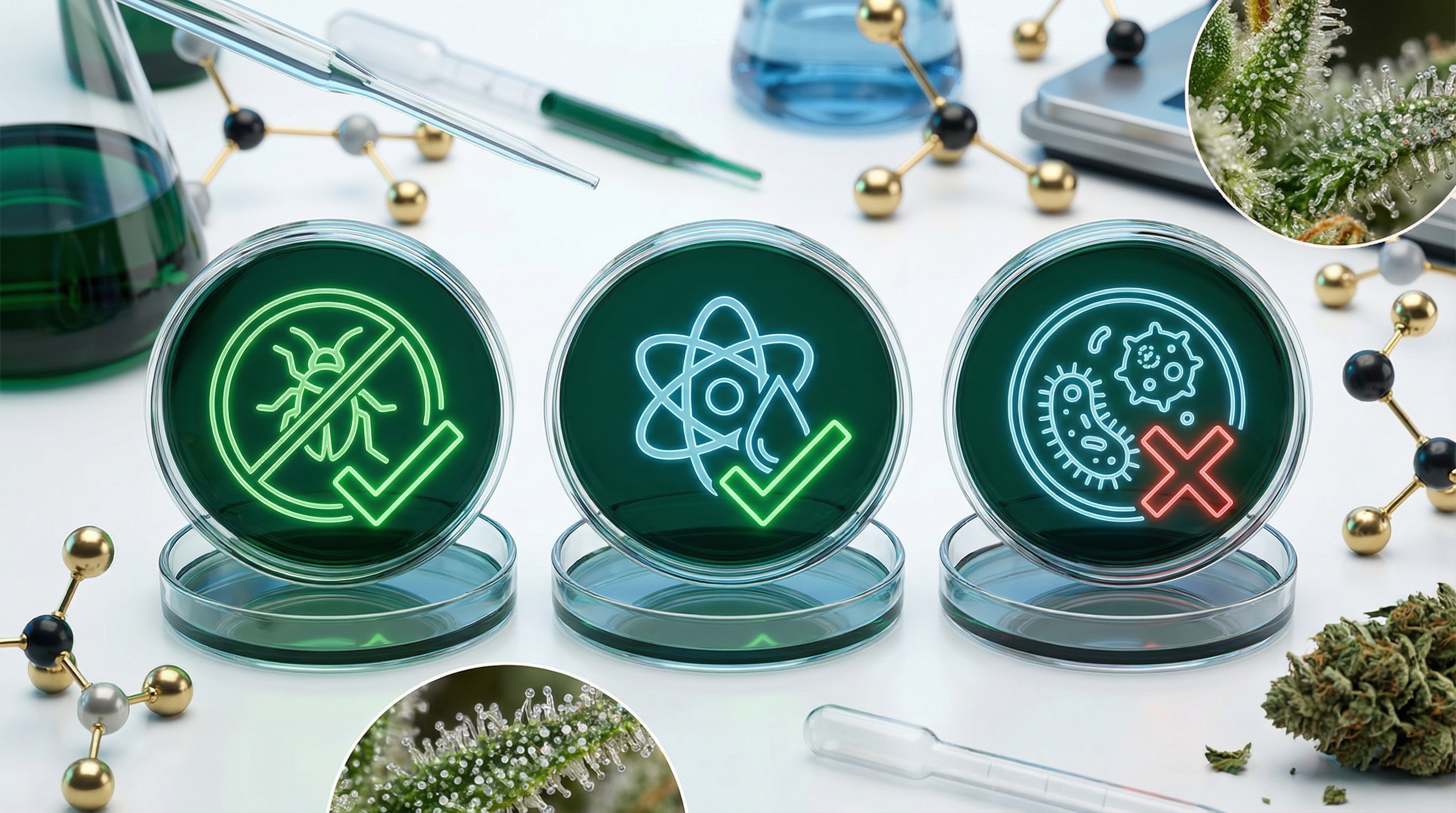
Safety and Contaminant Testing
This is arguably the most important section—especially for medical patients, those with compromised immune systems, or anyone who prefers not to inhale pesticides.
Pesticides
Cannabis should show “ND” (Not Detected) or “Pass” for all tested pesticides. Legal markets have strict limits—often in parts per billion. Even trace amounts of certain pesticides (like myclobutanil, which converts to hydrogen cyanide when heated) are grounds for failure.
Heavy Metals
Labs test for lead, arsenic, cadmium, and mercury. These can accumulate in cannabis plants from contaminated soil or water. Results should be well below legal thresholds, ideally “ND” across the board.
Microbial Contaminants
This includes:
- Mold and mildew: Aspergillus is particularly dangerous for immunocompromised individuals
- Yeast: Should be below threshold limits
- Bacteria: Including E. coli and Salmonella
- Mycotoxins: Toxic compounds produced by certain molds
If you have a compromised immune system or respiratory conditions, pay extra attention to this section. “Pass” is the only acceptable result.
Residual Solvents (for Concentrates)
Extraction processes often use solvents like butane, propane, or ethanol. Proper purging removes these, but improperly made concentrates can contain harmful residual solvents. Look for results in parts per million (ppm)—lower is better, and all should be below state limits.
Foreign Matter
Yes, labs check for things like hair, insects, and other physical contaminants. A “Pass” means the product met visual inspection standards.
Red Flags: When to Walk Away
Not all COAs are created equal. Here’s what should make you think twice:
Missing Information
- No lab name or license number
- No batch number (can’t verify it’s your product)
- Incomplete testing (missing pesticides or microbials)
Suspicious Results
- Any “Fail” on safety tests: This should never happen on a dispensary shelf, but errors occur
- Very old test dates: Some states allow COAs from months ago—freshness matters for terpene content
- THC percentages that seem too high: If everyone else’s “top shelf” is 25% and this one claims 38%, be skeptical
Hard-to-Verify Labs
- Lab names that don’t appear in state licensing databases
- No contact information or website for the lab
- Generic or templated reports that look unprofessional
Putting It All Together: Practical Shopping Tips
Now that you understand the anatomy of a COA, here’s how to use this knowledge at the dispensary:
Before Trying New Brands
Always check the COA. New or unfamiliar brands should prove their quality with transparent, complete lab testing. If they won’t provide results, that’s a red flag.
Compare Value, Not Just Price
A $40 eighth at 18% THC with a rich terpene profile might be a better value than a $50 eighth at 25% THC with minimal terpenes. The COA helps you calculate what you’re actually paying for.
Match Terpenes to Your Goals
Looking for relaxation? Prioritize myrcene and linalool. Want energy and focus? Look for limonene and pinene. The COA makes this matching possible.
When in Doubt, Ask
Your budtender should be able to explain any confusing results. If they can’t—or won’t—consider shopping somewhere with more knowledgeable staff.
Key Takeaways
-
A COA is your cannabis product’s independent report card, verifying potency, terpenes, and safety through third-party testing.
-
Always match the batch number on the COA to your product’s packaging. Results from different batches don’t apply to your purchase.
-
Total THC matters more than THC alone for flower products. Use the formula: Total THC = THC + (THCA x 0.877).
-
Terpenes shape your experience beyond just potency. A diverse profile with 1-4% total terpenes often indicates quality.
-
Safety testing is non-negotiable. Look for “Pass” or “ND” (Not Detected) on all contaminant tests, especially pesticides and microbials.
-
Red flags include missing lab credentials, absent batch numbers, impossible potency claims, and any failed safety tests.
Your Next Steps
The next time you’re at the dispensary, take an extra minute to scan that QR code. You’ll be surprised how much you can learn about a product before you even open the package.
For more cannabis science fundamentals, explore our guide to the entourage effect to understand why the whole plant works better than isolated compounds. And if you’re just getting started on your cannabis journey, our first-time user’s guide covers everything you need to know.
Knowledge is power—especially when it comes to what you’re putting in your body. Now you’ve got the tools to read the data and make informed choices.
Stay curious, stay informed, and as always—consume responsibly.
Sources:
- New Jersey Cannabis Regulatory Commission: Official COA Guidelines (2025)
- Metrc. “Learn to Read a Cannabis Certificate of Analysis.” (November 2025)
- California Bureau of Cannabis Control: Testing Requirements and Standards
- Colorado Marijuana Enforcement Division: Mandatory Testing Protocols


