THC vs CBD: Understanding Cannabis's Two Most Famous Molecules
Learn the key differences between THC and CBD - how they work, their effects, medical uses, and legal status. A complete guide to cannabis's power duo.

Professor High
Your friendly cannabis educator, bringing science-backed knowledge to the community.
Updated July 2026: Added the April 2026 DEA Schedule III reclassification, a 2026 pharmacokinetics study showing CBD increases THC plasma levels, and a memory study on 1:1 ratios. Expanded links to terpene deep-dives and newer articles on dopamine, GABA, and flavonoids.
THC and CBD are the two most talked-about compounds in cannabis, but they couldn’t be more different in how they affect you. One gets you high; the other doesn’t. One is federally illegal; the other you can buy at your local gas station. Yet these two molecules share the exact same chemical formula and come from the exact same plant.
If you’ve ever wondered why THC makes you feel euphoric while CBD keeps you calm without intoxication, or why one requires a dispensary trip and the other ships to your doorstep, you’re in the right place. Let’s break down the science of cannabis’s most famous molecular siblings.
The Molecular Twins: Same Formula, Different Effects
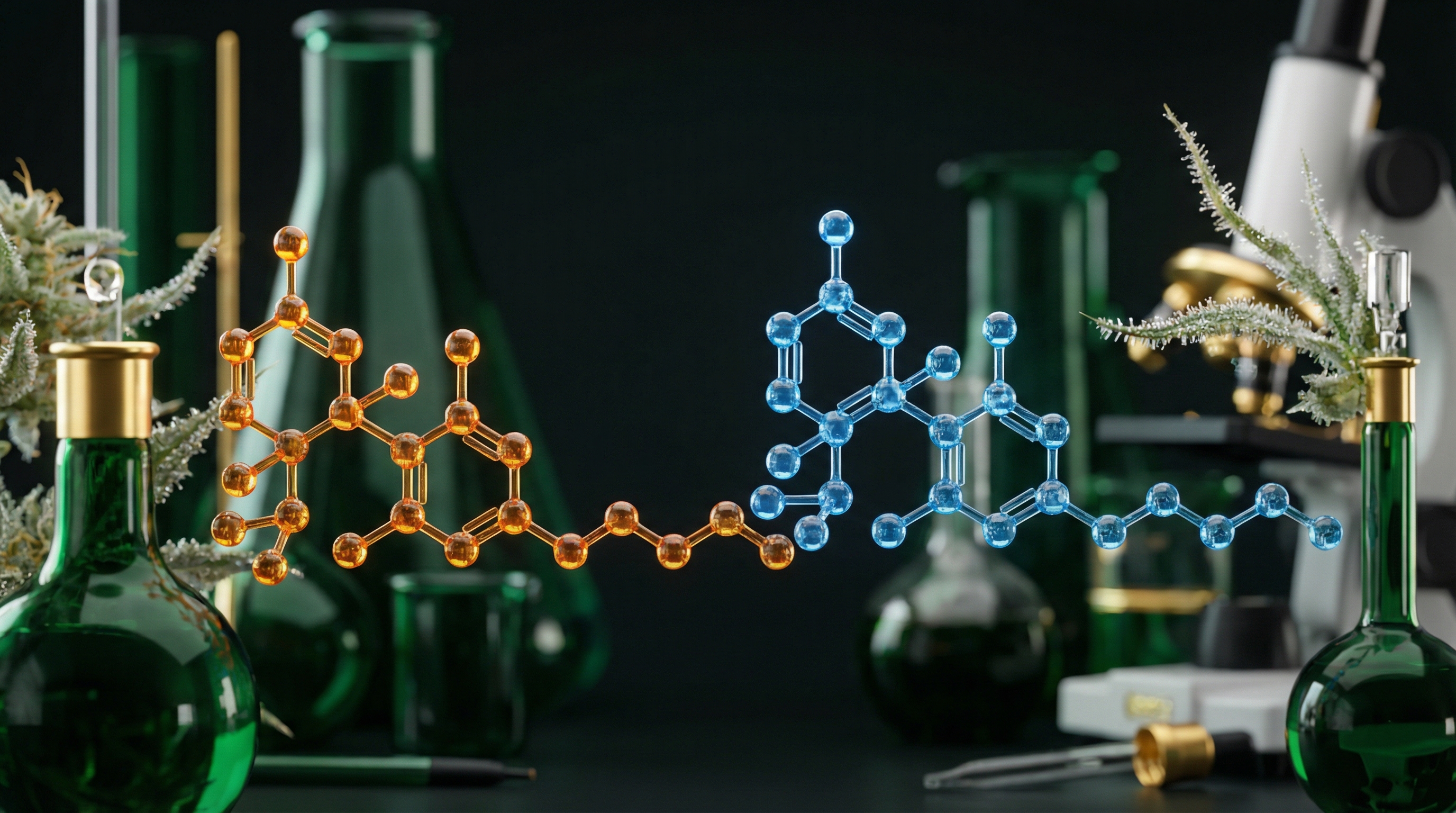
Here’s something that blows most people’s minds: THC and CBD have the identical molecular formula. Both are C21H30O2. That’s 21 carbon atoms, 30 hydrogen atoms, and 2 oxygen atoms arranged in slightly different configurations.
The Tiny Difference That Changes Everything
The only structural difference between THC and CBD is the position of a single atom and how one ring closes. In THC, a cyclic ring closes with an oxygen bridge. In CBD, that ring stays open with a hydroxyl group (OH) hanging off.
This tiny architectural difference completely changes how each molecule interacts with your body. It’s like having two keys cut from the same blank that fit completely different locks.
Think of it this way: THC is shaped perfectly to slip into the CB1 receptor in your brain, like a key sliding into a lock. CBD’s slightly different shape means it can’t fit that same lock directly, so it works through completely different pathways.
How THC Works: The Direct Route to Getting High
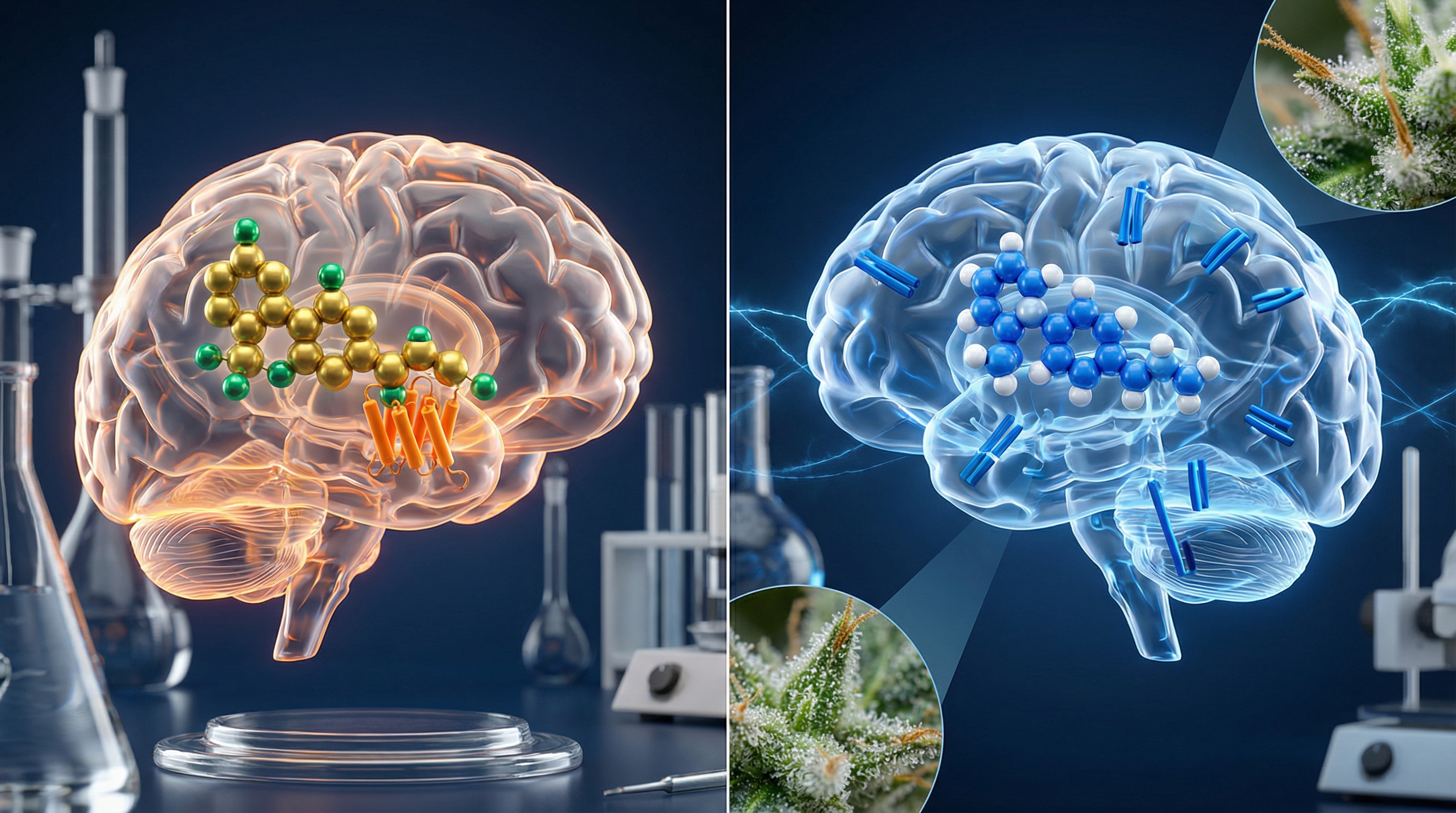
THC produces its psychoactive effects by binding directly to CB1 receptors in your brain and central nervous system. These receptors are part of your endocannabinoid system (ECS), a signaling network that regulates mood, pain, appetite, memory, and much more.
The CB1 Connection
When THC locks into a CB1 receptor, it triggers a cascade of cellular responses:
- Dopamine release increases in the brain’s reward centers
- Pain signals get dampened in the spinal cord and brain
- Appetite signals fire (hello, munchies)
- Short-term memory processing changes in the hippocampus
- Time perception shifts as your brain processes information differently
This direct receptor activation is why THC produces such pronounced effects. You’re literally flipping switches in your brain’s signaling system.
The THC Experience
The effects of THC vary based on dose, individual tolerance, and the specific product, but typically include:
| Effect Category | Common Experiences |
|---|---|
| Mental | Euphoria, altered time perception, creativity, giggles, introspection |
| Physical | Relaxation, pain relief, increased appetite, dry mouth, red eyes |
| Potential negatives | Anxiety, paranoia, impaired memory, coordination issues |
The intensity depends heavily on dose. Low doses (2.5-5mg) often produce mild relaxation and mood elevation. Higher doses (15mg+) can produce intense psychoactive effects that may be overwhelming for newcomers.
How CBD Works: The Indirect Approach
CBD is fascinating because it doesn’t directly activate cannabinoid receptors the way THC does. Instead, it works through multiple indirect mechanisms that produce its calming, anti-inflammatory effects without any intoxication.
CBD’s Multiple Pathways
1. Negative Allosteric Modulation
CBD changes the shape of CB1 receptors so that THC (and your body’s natural endocannabinoids) can’t bind as strongly. This is why CBD can actually reduce a THC high’s intensity, and why 1:1 THC:CBD products often feel smoother than pure THC.
2. Enzyme Inhibition
CBD blocks the enzyme (FAAH) that breaks down anandamide, your body’s natural “bliss molecule.” More anandamide hanging around means more of its mood-boosting, pain-relieving effects, just produced by your own body rather than the CBD directly.
3. Serotonin Receptor Activation
CBD activates 5-HT1A serotonin receptors, which is likely responsible for much of its anti-anxiety effects. This is the same receptor targeted by some anti-anxiety medications.
4. TRPV1 Activation
CBD activates vanilloid receptors (TRPV1) involved in pain perception, inflammation, and body temperature. This contributes to its analgesic and anti-inflammatory properties.
The CBD Experience
Because CBD doesn’t directly activate CB1 receptors, it produces no “high.” What you might notice:
| Effect Category | Common Experiences |
|---|---|
| Mental | Calm without sedation, reduced anxiety, clearer head |
| Physical | Reduced inflammation, muscle relaxation, no impairment |
| What you won’t feel | Euphoria, altered perception, intoxication, munchies |
Many people describe CBD as “taking the edge off” or creating a subtle sense of equilibrium rather than a noticeable altered state.
Effects Comparison: Head to Head
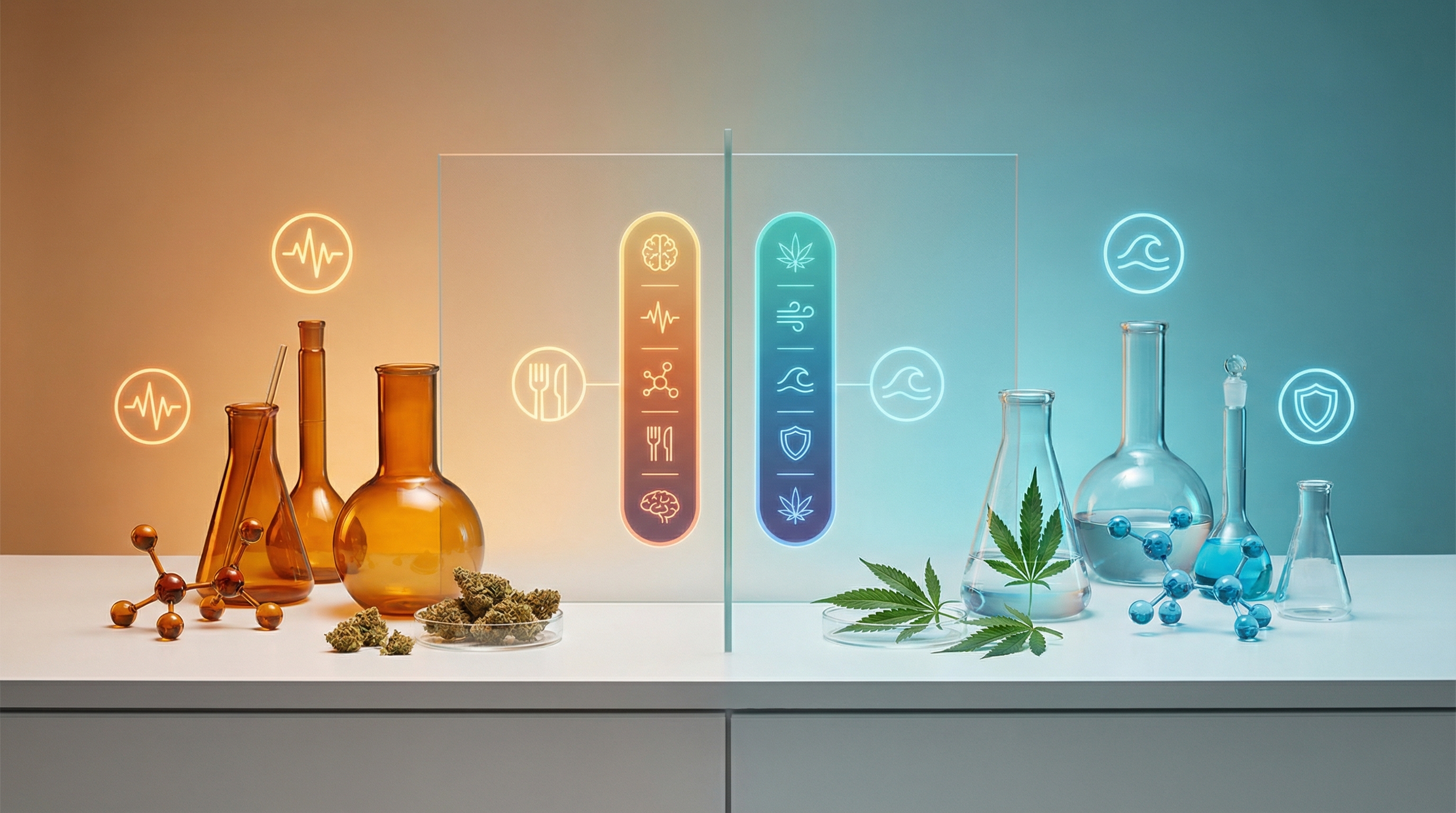
Let’s put these compounds side by side:
| Property | THC | CBD |
|---|---|---|
| Psychoactive | Yes, produces a “high” | No intoxication |
| Receptor binding | Direct CB1 agonist | Indirect modulator |
| Pain relief | Strong, immediate | Moderate, gradual |
| Anxiety | Can cause or relieve (dose-dependent) | Generally reduces |
| Appetite | Increases (munchies) | Neutral or slight suppression |
| Sleep | Can help at higher doses | Promotes relaxation |
| Impairment | Yes, affects coordination and cognition | No impairment |
| Drug test detection | Yes, most tests look for THC metabolites | Generally no (unless product contains THC) |
The Anxiety Paradox
Here’s something interesting: THC’s relationship with anxiety is complicated. Low doses often reduce anxiety, but higher doses can actually cause anxiety and paranoia, especially in THC-sensitive individuals or unfamiliar situations.
CBD, on the other hand, shows consistent anti-anxiety effects across most dose ranges. The 2024 Johns Hopkins study even demonstrated that adding limonene (a citrus terpene) to THC significantly reduced its anxiety-inducing effects. Understanding these nuances is part of the entourage effect, where different cannabis compounds work together synergistically.
2026 Research Update: CBD-THC Interactions Are More Complex Than We Thought
A 2026 pharmacokinetics study (N=35, double-blind crossover) found that CBD actually increased plasma THC concentrations by 40-60% through competition for CYP liver enzymes [Hall et al., 2026]. This challenges the popular narrative that “CBD simply buffers THC”—the interaction is more nuanced than a simple counterbalance.
Meanwhile, a separate 2026 memory study (N=116) confirmed that THC-dominant cannabis impaired recognition memory, while a 1:1 THC:CBD strain showed no significant impairment, supporting CBD’s protective cognitive effect [Paulich et al., 2026]. And a transcriptomic meta-analysis spanning 105 datasets found that CBD produces more consistent gene expression changes (anti-inflammatory, zinc homeostasis) than THC, which shows context-dependent effects [2025/2026, Journal of Cannabis Research].
For a practical guide to finding your optimal ratio, see how to find your ideal THC:CBD ratio.
Medical Applications: Different Tools for Different Jobs
Both THC and CBD have legitimate medical applications, but they’re suited for different conditions.
THC Medical Uses
THC has been used medicinally for conditions including:
- Chronic pain - Strong evidence for neuropathic pain relief
- Nausea and vomiting - FDA-approved for chemotherapy-induced nausea (Marinol/dronabinol)
- Appetite stimulation - Approved for AIDS-related wasting syndrome
- Muscle spasticity - Approved in Sativex (THC+CBD) for MS
- Sleep disorders - Particularly effective for pain-related insomnia
- Glaucoma - Reduces intraocular pressure (though not first-line treatment)
CBD Medical Uses
CBD’s medical applications include:
- Epilepsy - FDA-approved as Epidiolex for severe seizure disorders (Dravet syndrome, Lennox-Gastaut syndrome)
- Anxiety disorders - Strong clinical and preclinical evidence
- Inflammation - Promising for arthritis, inflammatory bowel disease
- Chronic pain - Particularly for inflammation-related pain
- Sleep issues - Helps with sleep quality via anxiety reduction
The FDA-Approved Distinction
It’s worth noting that while many cannabis medicines are approved at state levels, federal FDA approval is much rarer:
| Product | Active Ingredient | FDA Approval |
|---|---|---|
| Epidiolex | CBD | Yes (2018) - Epilepsy |
| Marinol (dronabinol) | Synthetic THC | Yes - Nausea, wasting |
| Syndros | Synthetic THC | Yes - Nausea, wasting |
| Cesamet (nabilone) | Synthetic THC analog | Yes - Nausea |
| Sativex | THC + CBD | Approved in 25+ countries, not US |
Legal Status: A Tale of Two Molecules
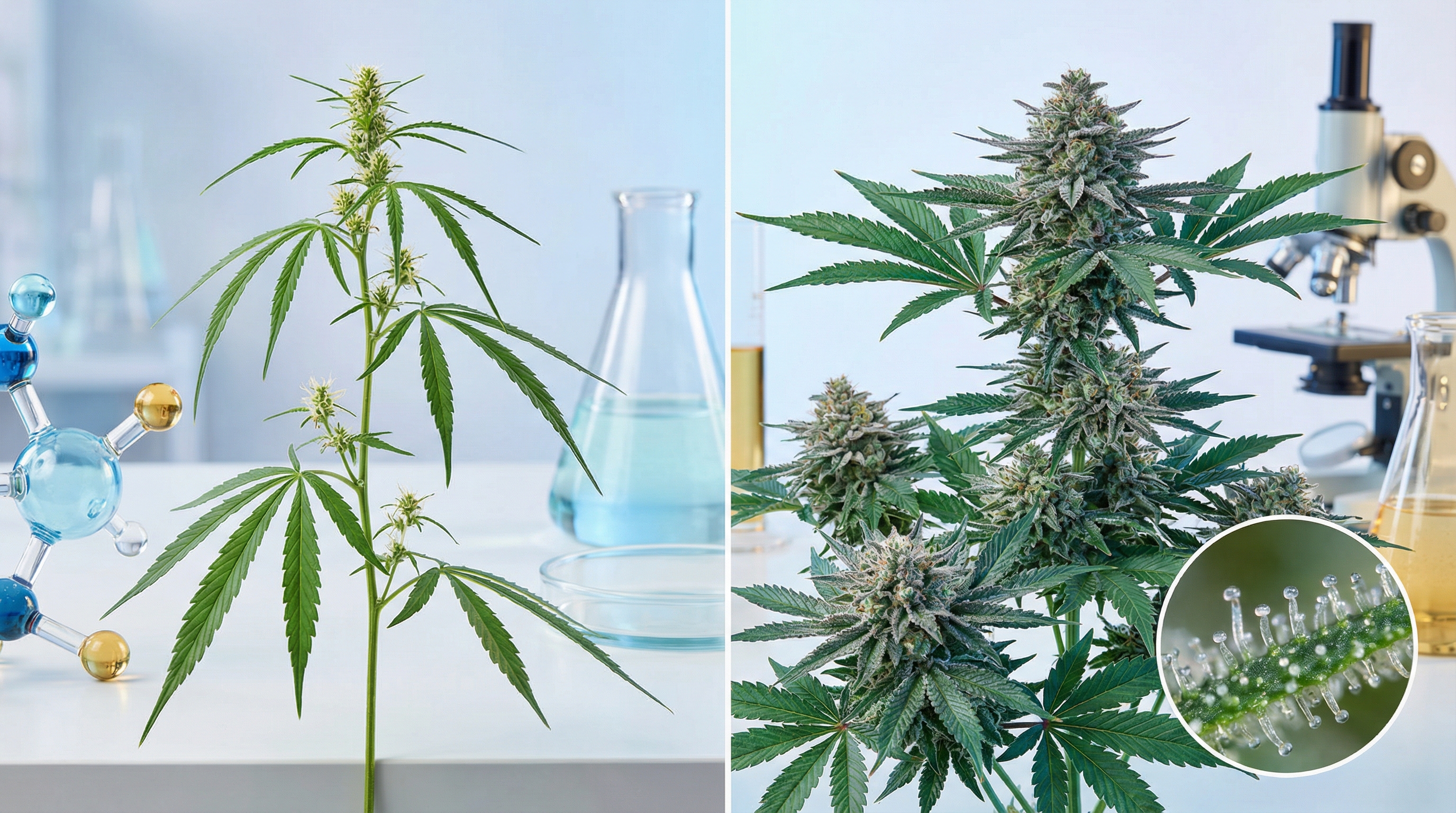
The 2018 Farm Bill Changed Everything (For CBD)
The Agriculture Improvement Act of 2018 (Farm Bill) removed hemp from the Controlled Substances Act definition of marijuana. Hemp is defined as cannabis containing less than 0.3% THC by dry weight.
This means:
- Hemp-derived CBD is federally legal
- CBD products with under 0.3% THC can be sold across state lines
- CBD is available at gas stations, pharmacies, and online retailers nationwide
THC Rescheduling: The April 2026 Shift
In a landmark move, the DEA placed FDA-approved marijuana products and state-licensed medical marijuana in Schedule III in April 2026, with broader rescheduling hearings beginning in late June 2026. This is the most significant federal cannabis policy shift since the 2018 Farm Bill and changes the landscape for THC research, banking, and taxation—though recreational THC still operates under a patchwork of state laws.
As of mid-2026, the state-level landscape:
| Legal Status | States |
|---|---|
| Recreational legal | 24 states + DC |
| Medical only | 14 states |
| CBD only / Limited | 8 states |
| Fully illegal | 4 states |
For a full breakdown, see our state-by-state cannabis laws guide and legalization tracker.
Practical Implications
For CBD users:
- Can purchase online and in most retail stores
- Can travel across state lines (generally)
- No prescription needed
- Drug tests usually don’t target CBD (but some products contain trace THC)
For THC users:
- Must purchase from licensed dispensaries in legal states
- Cannot legally cross state lines with products
- May need medical card depending on state
- Will trigger standard drug tests
Choosing Between THC and CBD: A Decision Framework
So which compound is right for you? Here’s a practical framework:
Choose CBD When…
- You need to stay clear-headed for work or driving
- You’re subject to drug testing
- You want daily wellness support without altered states
- You’re addressing anxiety without wanting to feel “different”
- You’re new to cannabis and want to start gently
- You live somewhere THC isn’t legal
Choose THC When…
- You’re seeking relief from severe pain
- You want the full psychoactive experience
- You’re dealing with chemotherapy-induced nausea
- You need strong appetite stimulation
- You’re using cannabis recreationally in a legal state
- Sleep is the primary goal and CBD alone isn’t cutting it
Consider Both (1:1 or Balanced Ratios) When…
- You want THC benefits with reduced anxiety risk
- You’re managing chronic conditions
- You want a “smoother” psychoactive experience
- Full-spectrum benefits matter for your condition
Research consistently shows that CBD can modulate THC’s effects, reducing anxiety and paranoia while potentially enhancing therapeutic benefits. Products with balanced ratios often provide the best of both worlds.
Strain Examples by Cannabinoid Profile
| Profile | Strains to Explore |
|---|---|
| High-CBD, low-THC | ACDC, Charlotte’s Web, Harlequin, Cannatonic, Remedy |
| Balanced 1:1 | Pennywise, Ringo’s Gift |
| THC-dominant | Blue Dream, Jack Herer, Sour Diesel, Girl Scout Cookies |
| High-THC | Gorilla Glue, Gelato, Wedding Cake |
Beyond THC and CBD, the cannabis plant produces dozens of other cannabinoids worth knowing about, including CBG (the “mother cannabinoid”), CBN (for sleep), and THCV (the energizing cannabinoid).
FAQs
Can CBD show up on a drug test?
Unlikely, but possible. Standard drug tests look for THC metabolites, not CBD. However, many CBD products contain trace amounts of THC (up to 0.3% is legal in hemp products), which could theoretically trigger a test at high enough doses. For guaranteed safety, use CBD isolate products that contain zero THC.
Will CBD cancel out a THC high?
Partially, yes. CBD can reduce the intensity of THC’s psychoactive effects by altering CB1 receptor function. It won’t completely eliminate a high, but it can take the edge off anxiety or make the experience more manageable. This is why some people keep CBD products around as a “rescue” option.
Is one safer than the other?
Both have excellent safety profiles. Neither compound has been linked to fatal overdose. CBD has fewer side effects and no abuse potential. THC can cause temporary anxiety, impaired coordination, and has mild dependence potential with heavy use. Both are generally well-tolerated, though THC requires more caution around driving and operating machinery.
Can I take THC and CBD together?
Yes, and many people prefer it. The combination often produces more balanced effects than either alone. CBD can reduce THC-induced anxiety while THC can enhance some of CBD’s therapeutic effects through the entourage effect. Many medical cannabis products specifically combine both.
Why does THC make some people anxious?
It’s related to CB1 receptor density and activity in anxiety-related brain regions. People with more CB1 receptors in the amygdala may be more prone to THC-induced anxiety. Genetics, tolerance, dose, and setting all play roles. Starting with lower doses and adding CBD can help minimize anxiety risk.
Key Takeaways
-
Same formula, different effects. THC and CBD are both C21H30O2, but their slightly different structures mean THC binds directly to CB1 receptors (causing a high) while CBD works indirectly (no intoxication).
-
THC is psychoactive; CBD is not. This fundamental difference drives everything from effects to legality to appropriate uses.
-
Both have legitimate medical applications. THC excels for pain, nausea, and appetite. CBD shines for epilepsy, anxiety, and inflammation. Many conditions benefit from both.
-
Legal status differs dramatically. Hemp-derived CBD (under 0.3% THC) is federally legal since 2018. THC remains a Schedule I controlled substance, though many states have legalized it.
-
They work well together. CBD can moderate THC’s anxiety-inducing potential while THC can enhance some therapeutic effects. Balanced ratios often provide the best experience.
-
Neither is “better.” The right choice depends on your goals, legal situation, and individual response. Many experienced cannabis users incorporate both into their wellness routines.
The Bottom Line
THC and CBD are like siblings who chose very different career paths. They came from the same family (literally the same plant), share the same basic makeup, but express themselves in completely different ways.
Understanding these differences empowers you to make informed choices about cannabis products. Whether you’re seeking the euphoric experience of THC, the calm clarity of CBD, or the balanced synergy of both, knowing how these molecules work helps you find exactly what you’re looking for.
The cannabis plant produces over 100 cannabinoids, but THC and CBD are the headliners for a reason. Now you know why.
Related Reading:
- The Entourage Effect: Why Whole-Plant Cannabis Beats Isolated THC
- Cannabis and Sleep: The Science Behind Better Rest
- First-Time Cannabis User’s Guide
- Cannabis and Dopamine: What Neuroscience Actually Shows
- Cannabis Flavonoids: The Anti-Inflammatory Compounds Beyond Terpenes
- The Endocannabinoidome: Beyond the Endocannabinoid System
Sources:
- Mechoulam, R. & Parker, L.A. (2013). “The Endocannabinoid System and the Brain.” Annual Review of Psychology
- NIH StatPearls (2025). “Cannabidiol” - Clinical applications and pharmacology
- Spindle et al. (2024). “Vaporized D-limonene selectively mitigates the acute anxiogenic effects of THC.” Drug and Alcohol Dependence
- 2018 Agriculture Improvement Act (Farm Bill) - Hemp legal definition
- FDA (2018). “FDA Approves First Drug Comprised of an Active Ingredient Derived from Marijuana to Treat Rare, Severe Forms of Epilepsy”
- U.S. Department of Justice (2026). “Justice Department Places FDA-Approved Marijuana Products in Schedule III”
- Hall, W. et al. (2026). CBD-THC pharmacokinetic interaction study. Drug and Alcohol Dependence. DOI: 10.1016/j.drugalcdep.2026.113160
- Paulich, K.N. et al. (2026). THC:CBD ratio effects on recognition memory. Frontiers in Psychology. DOI: 10.3389/fpsyg.2025.1685412


