Cannabis and Hip-Hop: From Cypress Hill to Today's Strain Economy
From Cypress Hill and The Chronic to billion-dollar brands like Cookies and Khalifa Kush, here's how hip-hop built modern cannabis culture.

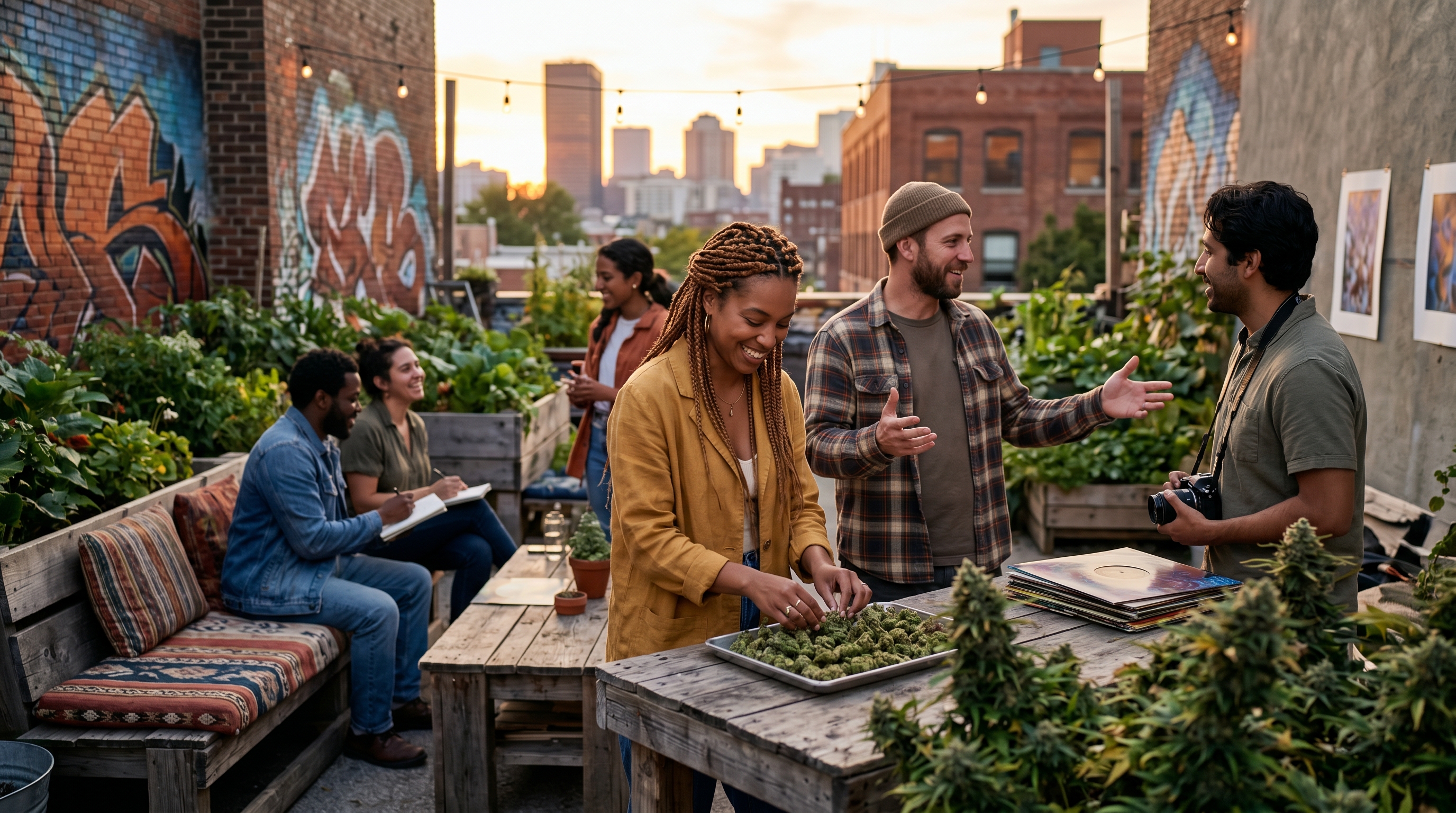
Long before there was a billion-dollar legal cannabis market, there was a microphone, a smoky studio, and a generation of artists who decided to say the quiet part out loud. The story of modern cannabis culture is, in large part, a hip-hop story. The slang we use. The strains we ask for by name. The brands stacked on dispensary shelves. Even the idea that weed could be a lifestyle rather than a vice. It all traces back to a lineage of MCs who turned a criminalized plant into a cultural anthem.
This story did not start in 1991, though. To understand how Cypress Hill, Dr. Dre, and Snoop Dogg reshaped the conversation, you have to rewind a few more decades. Picture a different smoky room.

The Jazz Roots: Reefer Before Rap
Cannabis and American music were entangled long before hip-hop existed. In the 1920s and ’30s, jazz musicians in New Orleans, Harlem, and Chicago openly referenced “muggles,” “tea,” and “gage” in their songs. Louis Armstrong was a lifelong and unapologetic cannabis advocate who called it “a thousand times better than whiskey.” Cab Calloway’s 1932 hit “Reefer Man” put the plant front and center on the bandstand.
That early link still shapes the industry today. Cannabis prohibition in America was explicitly racialized. Harry Anslinger, the first commissioner of the Federal Bureau of Narcotics, openly tied marijuana to jazz and to Black musicians. He fed a moral panic that fueled the 1937 Marihuana Tax Act [Anslinger, 1937]. The criminalization of the plant and the culture that celebrated it were never separable. When hip-hop later picked up the torch, it inherited both the celebration and the consequences.
Reggae carried the thread forward. Bob Marley made cannabis spiritual and global, and his influence rippled directly into early hip-hop. So when the first rappers reached for weed as a subject, they were stepping into a tradition that already linked music, the margins, and the herb.
The Golden Era’s Uneasy Silence
Here’s the part that surprises people: hip-hop did not start out as a pro-weed genre. During the so-called golden era, roughly 1984 to 1994, marijuana was largely absent from rap, and when it appeared it was often a warning. Crack had devastated the same neighborhoods these artists came from, and many MCs drew a hard line against drugs of any kind.
The most famous example is the one nobody expects. On N.W.A.-era records, Dr. Dre rapped, “I don’t smoke weed or sess / ’cause it’s known to give a brother brain damage.” The man who would soon make the most influential weed album in history was, at the time, on record against it. That tension, between caution and celebration, is the hinge the whole story turns on.
1991: Cypress Hill Lifts the Veil of Smoke
Then came Cypress Hill. The Los Angeles trio of B-Real, Sen Dog, and producer DJ Muggs released their self-titled debut in 1991 and did something no major act had done so brazenly: they built an entire identity around cannabis. Tracks like “Light Another,” “Stoned Is the Way of the Walk,” and later “Hits from the Bong” weren’t coy. They were a manifesto.
As Sen Dog later put it, the goal was to “put a cool twist back on it and get people to relax on the subject” [Consequence, 2021]. It worked. Within months of that debut, other rappers began writing songs that praised marijuana. Cypress Hill became the first group to take cannabis culture mainstream from a hip-hop platform. They also became activists. They performed at NORML rallies and pushed legalization when doing so was still a career risk.
Cypress Hill’s sound leaned heavy and hypnotic, the kind of music that pairs naturally with a deeply relaxing high. If you gravitate toward that sedative, body-heavy feeling, you’re chasing the same profile the band built their aesthetic around. Today we’d map that to the Relaxing High family, driven largely by the terpene myrcene, and to strains like Granddaddy Purple and Northern Lights.
1992: “The Chronic” Names a Culture
If Cypress Hill opened the door, Dr. Dre kicked it off the hinges. In December 1992, Dre released The Chronic, now free of his earlier reservations [Andscape, 2017]. The album sold nearly eight million copies. It established Death Row Records and shifted hip-hop’s gravity to the West Coast. It also did something even bigger. It gave cannabis a permanent nickname.
“Chronic” was already street slang for premium, high-potency flower, but Dre’s album cemented it into the national vocabulary. The cover art, a riff on Zig-Zag rolling papers, told you everything before you pressed play. And the album launched the career of its breakout star, a lanky Long Beach rapper with a jazzlike, unhurried cadence: Snoop Dogg.
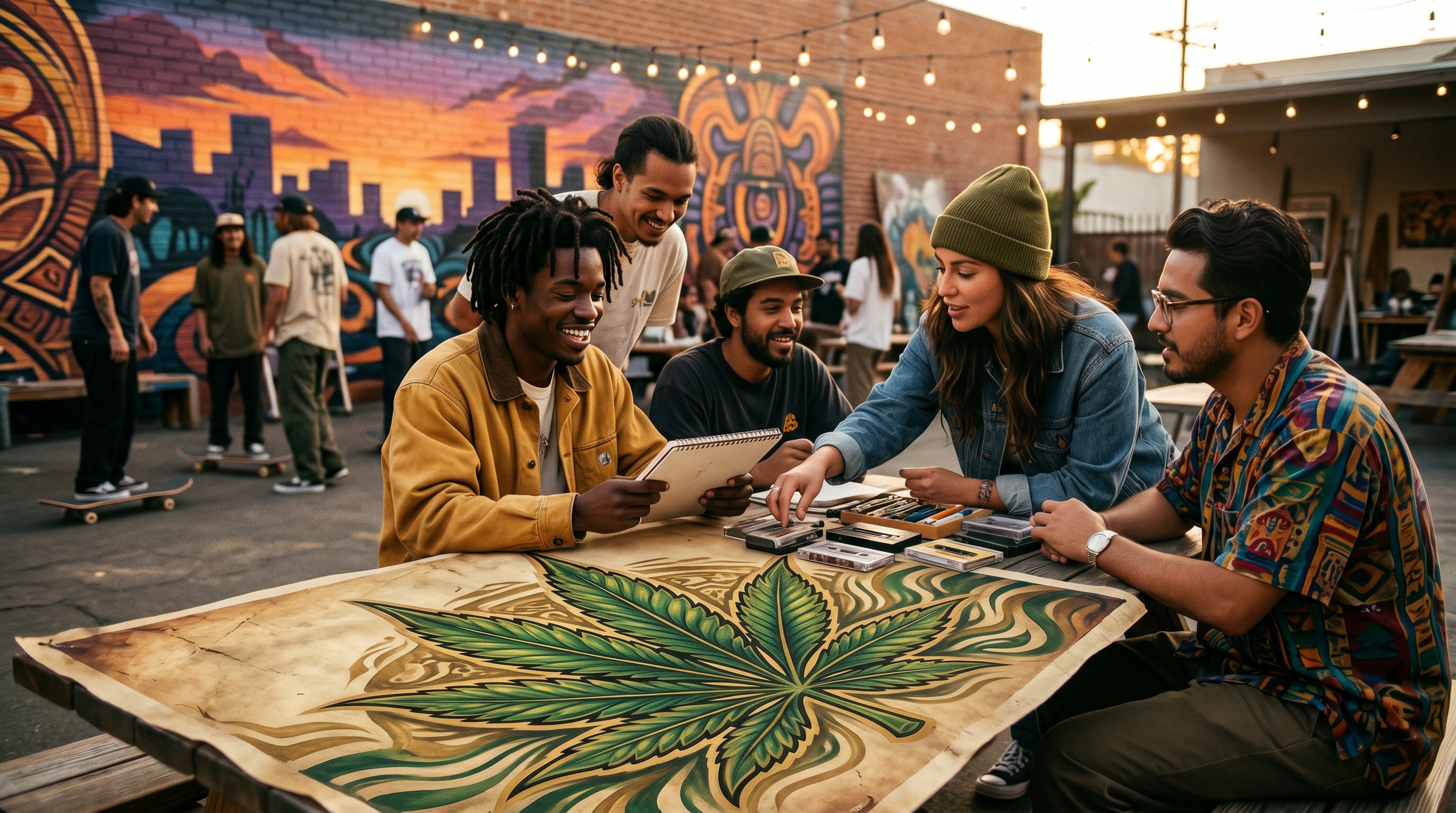
Snoop became the album’s biggest beneficiary and the genre’s most enduring cannabis ambassador. The white hat with the marijuana leaf, the laid-back delivery, the constant on-record presence of the herb, all of it made him synonymous with weed itself. More than thirty years later, Snoop is still the first name most non-smokers associate with cannabis, a remarkable feat of cultural branding that started on someone else’s album.
It’s worth naming the harder truth that runs alongside this triumph. As one writer observed about The Chronic at its 25th anniversary, there’s a “poetic dissonance” in the fact that the communities most criminalized for cannabis possession remain, in many states, locked out of the legal industry these artists helped create. Hip-hop normalized the plant for the mainstream while the people who made that culture often paid the steepest legal price. We’ll come back to that.
How Hip-Hop Named the Strains
Walk into any dispensary and read the menu, and you are reading a document co-authored by hip-hop. The most globally recognized strain name on Earth is a perfect example: OG Kush.
The “OG” in OG Kush is debated. Theories range from “Ocean Grown” to “Original Grower.” But the version most people believe is “Original Gangster,” a phrase carried straight out of ’90s West Coast rap [Hashtag, 2023]. Dr. Dre, Snoop, and Cypress Hill were all known OG Kush fans. Their lyrics and public use turned an underground California favorite into a worldwide standard. From there, “OG” became its own naming category. It is a tag breeders still bolt onto everything from Bubba Kush to Fire OG.
The plant’s most famous offspring tells the same story. Girl Scout Cookies, the Bay Area cross of OG Kush and Durban Poison, didn’t just become a beloved hybrid. It became the foundation of an entire business empire (more on that shortly) and spawned a dynasty of descendants. Many of these high-energy, euphoric hybrids land in the Uplift High family, powered by the citrusy terpene limonene, which research associates with elevated mood and a bright euphoric headspace. Other artist-favorite strains like Sour Diesel and Green Crack lean toward the cerebral, motivating Energetic High profile, often shaped by terpinolene.
The naming culture hip-hop seeded is the reason strain names are so chaotic and so colorful. They’re not pharmaceutical labels. They’re slang, references, jokes, and flexes, exactly like the genre that popularized them.
The 2010s: From Anthem to Economy
For two decades, hip-hop’s relationship with cannabis was lyrical and cultural. Then legalization arrived, and the rappers who had spent careers championing the plant did something logical: they got into the business. The era of the celebrity strain and the artist-owned brand had begun, and the numbers got serious fast.
Berner and Cookies
Few people embody the bridge from rap to retail like Berner. He is a San Francisco rapper and entrepreneur. Around 2010 he co-founded Cookies, a lifestyle brand built out of the Girl Scout Cookies strain he helped popularize. Cookies grew into one of the most recognizable names in cannabis. It runs dozens of dispensaries across the country, with a valuation reported in the billion-dollar range [Rolling Stone, 2021]. The apparel line alone reportedly made more than eight million dollars in sales. Berner proved that a strain could become a logo, and a logo could become an empire.
Wiz Khalifa and Khalifa Kush
Wiz Khalifa took a different route. Instead of branding a brand, he branded a strain. He worked with cultivators to develop Khalifa Kush, an OG-descended cut. He shared it publicly in 2014, and the first commercial sales launched in 2016. By 2024, Khalifa Kush reportedly pulled in roughly fifty million dollars in sales [Herb, 2024]. That nearly doubled its closest celebrity competitor. Khalifa Kush is a potent, heady cut that fits squarely in the Uplift High lane.
Snoop Dogg’s Cannabis Portfolio
Snoop, fittingly, built the broadest footprint. He launched the Leafs by Snoop product line in 2015, then went far beyond flower: he co-founded Casa Verde Capital, a venture fund investing across the cannabis industry, and the media outlet MERRY JANE. Snoop didn’t just sell weed; he invested in the infrastructure of the entire market, turning three decades of cultural capital into financial capital.
Jay-Z and Monogram
If Snoop went broad, Jay-Z went luxury. Beginning around 2019 with the California operator Caliva, he eventually launched Monogram, a premium line positioned less like a dispensary staple and more like a high-end spirit, sold by the gram with the reverence of fine wine. Monogram was also explicit about social equity, a nod to the inequities baked into the industry’s origins.
Method Man, Redman, and the Wider Roster
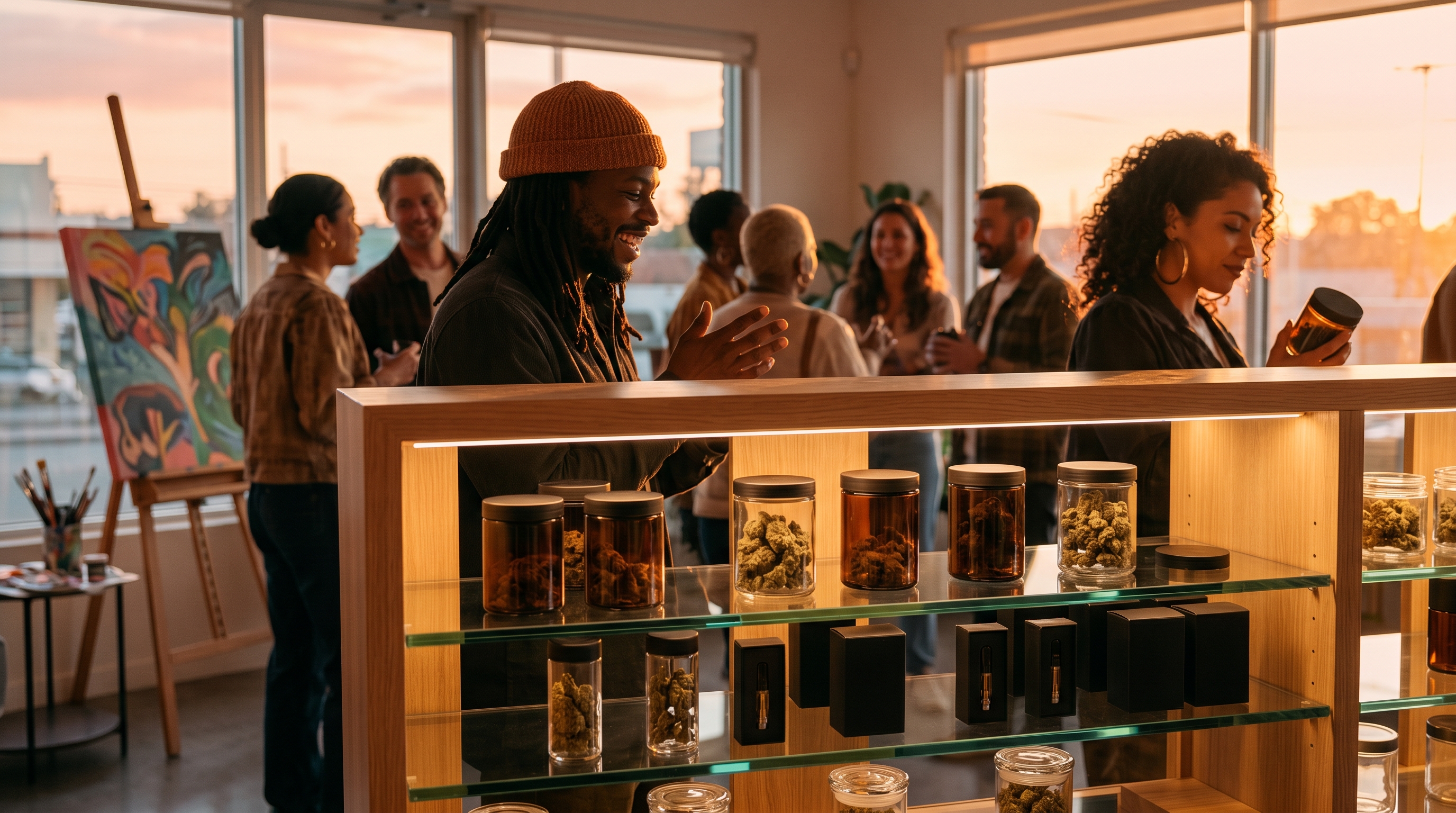
The roster runs deep. Method Man, who established his cannabis affinity back in his Wu-Tang days, launched Tical (named for his 1994 debut). Redman, a self-professed stoner who credits Cypress Hill as an early influence, has long been a cultural fixture of the connection. Add in brands and partnerships from Curren$y, 2 Chainz, B-Real’s own ventures, and countless others, and you have an entire economic sector that grew directly out of a musical movement.
What the Strain Economy Inherited from the Music
It’s tempting to treat the brands as the punchline, the happy ending where the artists finally cash in. But the more interesting inheritance is cultural, and it shapes how you probably shop for cannabis right now.
Hip-hop taught the market to buy by name and identity rather than by effect. You don’t walk in asking for “a sedating indica with a high myrcene content.” You ask for OG Kush, for Cookies, for Khalifa Kush. These are names loaded with cultural meaning. That’s powerful branding, but it has a hidden cost. A strain name tells you almost nothing about how the plant will actually make you feel. The OG Kush in one shop can have a very different chemical profile than the OG Kush down the street. And your body’s response to either can differ from your friend’s.
This is exactly the gap High IQ was built to close. The name on the jar is the culture. The terpene and cannabinoid profile is the chemistry. And your personal response is the only thing that actually matters. A strain that lands as a creative, talkative Energetic High for one person can feel like an anxious overload for another. It depends on terpenes like caryophyllene and pinene. It also depends on your tolerance, your dose, and your setting. The smart move is to treat the famous name as a starting point. Then track what the profile actually does for you. That way your next “OG” pick is based on your data, not a 1993 lyric.
The Unfinished Verse
Any honest account of cannabis and hip-hop has to hold two truths at once. The genre genuinely normalized a criminalized plant, built the vocabulary of an entire industry, and converted cultural influence into real ownership and wealth. And at the same time, the communities that built that culture, disproportionately Black and Latino, were the ones most aggressively policed under prohibition and remain underrepresented among the people now profiting from legal cannabis.
That’s why the social-equity language from brands like Monogram, and the advocacy work going back to Cypress Hill’s NORML appearances, isn’t just marketing. It’s an attempt to settle a cultural debt. Whether the legal industry actually pays it back is the verse still being written.
Key Takeaways
Cannabis and hip-hop have been writing the same song for nearly a century. It runs from Cab Calloway’s “Reefer Man” to Cypress Hill’s manifesto. It runs from The Chronic naming a culture to Cookies and Khalifa Kush building empires. The plant gave the music a subject and an attitude. The music gave the plant a vocabulary, a mainstream, and eventually a marketplace.
The next time you order a strain by name, remember that you’re speaking a language hip-hop wrote. Just don’t stop there. Let the culture pick the playlist. Let the chemistry, and your own tracked experience, pick the strain. Explore the Uplift High, Relaxing High, and Entourage High families to find the profile behind the name. And check out our guide to the best strains for concerts and live music for the modern soundtrack to all of it.
Sources
- Andscape, “Putting It Bluntly: Compton, Cannabis and ‘The Chronic’ 25 Years Later.” https://andscape.com/features/putting-it-bluntly-compton-cannabis-and-the-chronic-25-years-later/
- Consequence, “Cypress Hill’s Weed Rap Changed Cannabis Culture” (The Opus). https://consequence.net/2021/08/cypress-hill-weed-rap-the-opus-episode-4/
- Cuepoint / Medium, “How Cypress Hill Made Marijuana Mainstream.” https://medium.com/cuepoint/how-cypress-hill-made-marijuana-mainstream-44408324ae7b
- Hashtag Cannabis, “How Did OG Kush Get Its Name?” https://seattlehashtag.com/blog/how-did-og-kush-get-its-name
- Rolling Stone, “Best Cannabis Brands by Celebrities: Snoop Dogg, Jay-Z, Seth Rogen.” https://www.rollingstone.com/culture/culture-lists/best-cannabis-brands-celebrity-1156965/
- Herb, “This Celebrity Weed Brand Is Outselling Everyone.” https://herb.co/learn/this-celebrity-weed-brand-is-outselling-everyone-and-its-not-who-you-think
- The Fresh Toast, “13 Rappers Who Are Dominating the Cannabis Industry.” https://thefreshtoast.com/celebrity/13-rappers-succeeding-in-the-cannabis-industry/


