Cannabis Allergy: Symptoms, Causes, and Treatment
Cannabis allergy is real but underrecognized. Learn the symptoms, allergens, cross-reactive foods, diagnosis, and treatment options.


Here is something that surprises almost everyone the first time they hear it: you can be allergic to cannabis. Not “the smoke bothers my throat” irritated, but genuinely, immunologically allergic — the same kind of IgE-driven reaction that sends some people running from peanuts or shellfish. It is real, it is increasingly recognized as legalization spreads, and it is still under-diagnosed because so few clinicians think to ask about it.
If you have ever broken out in hives after handling fresh flower, sneezed your way through a grow room, or felt your lips tingle after a hemp-seed smoothie, this article is for you. I want to walk you through what cannabis allergy actually is, the proteins behind it, the strange world of cannabis-fruit cross-reactivity, and what diagnosis and treatment look like. As always with anything medical: I am Professor High, not your physician. Nothing here is a diagnosis, and if you suspect a true allergy, please see a board-certified allergist. Some of these reactions can be serious.
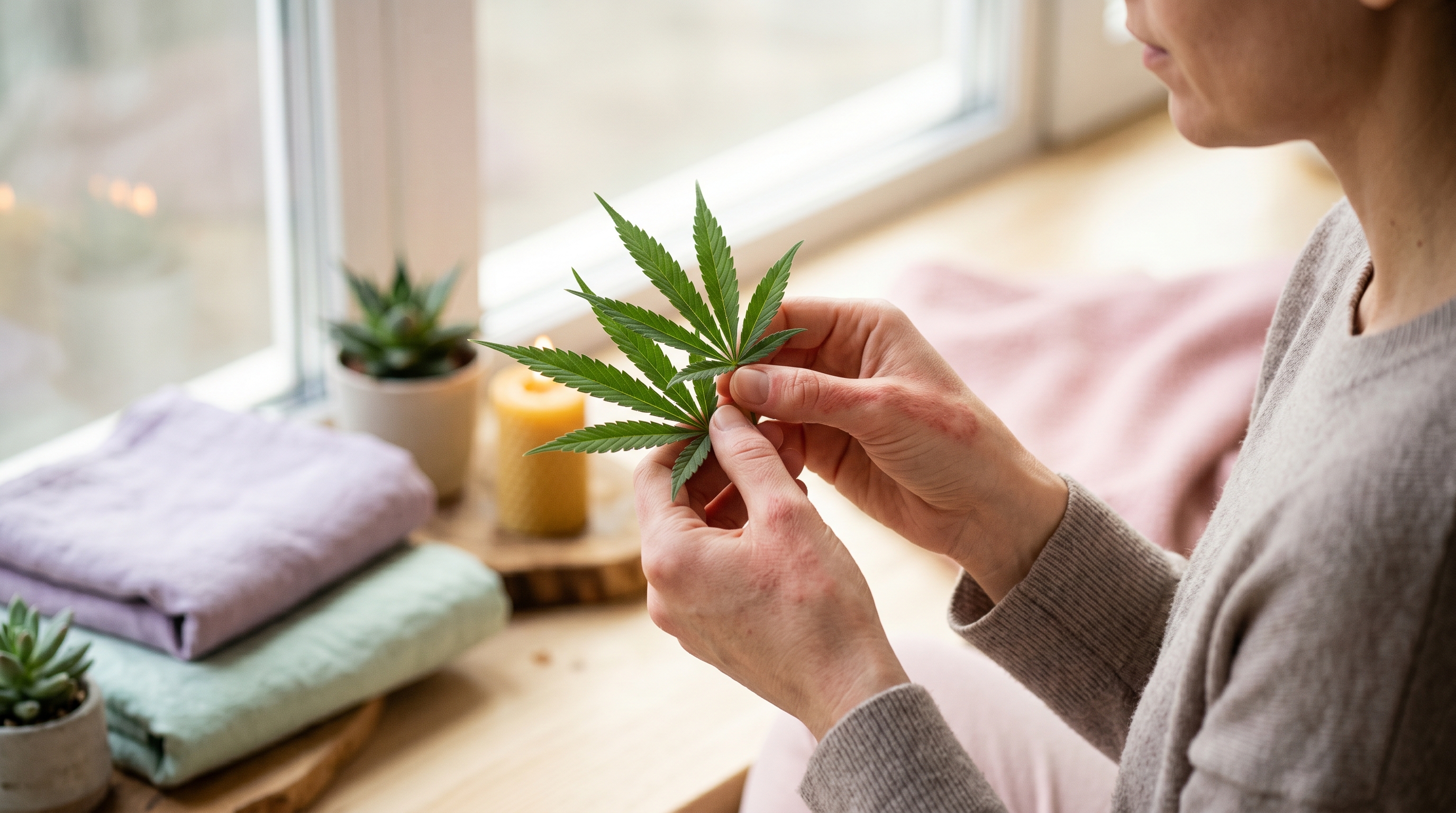
Yes, Cannabis Allergy Is Real — and Underrecognized
For decades, cannabis allergy lived in the medical footnotes. As prohibition lifted and the plant moved from back alleys into dispensaries, grow facilities, and wellness shelves, allergists started seeing patterns. A 2024 international review documented dozens of published cases and noted that the condition is “recognized but underdiagnosed,” with many reactions misattributed to other allergens (Skypala et al., 2024).
The numbers tell the story of something quietly common. In one survey of allergists, 43.1% (192 of 445) reported seeing patients with suspected cannabis allergy. Sensitization — meaning your immune system has made antibodies against cannabis, whether or not you have symptoms — appears in roughly 5% of cannabis nonsmokers tested by skin prick, climbing to 14.6% among smokers and around 18% among frequent users. That smoking association was statistically meaningful (odds ratio 3.2, 95% confidence interval 1.6–6.2), which makes intuitive sense: the more you inhale, handle, and ingest a plant, the more chances your immune system has to take notice.
A crucial distinction here, and one your allergist will care about deeply: sensitization is not the same as allergy. Plenty of people carry cannabis-specific antibodies and feel perfectly fine. True allergy means you have both the antibodies and reproducible clinical symptoms on exposure. Confusing the two leads to needless fear — which is exactly why self-diagnosis from a blog (even mine) is a bad idea.
How You Get Exposed: Three Routes
Cannabis can reach your immune system through three main doors, and the route often shapes the symptoms.
- Inhalation — Smoke, vapor, and airborne pollen. Cannabis is wind-pollinated, and its pollen can drift for miles, so even non-users in cannabis-growing regions can become sensitized. This is also the dominant route for the respiratory symptoms we will discuss. If you are curious how inhaled compounds enter the body, our breakdown of cannabis consumption methods ranked by bioavailability covers the mechanics.
- Skin contact — Trimmers, growers, and budtenders who handle raw plant material can develop contact urticaria (hives) right where the plant touched them.
- Ingestion — Edibles, hemp seeds, hemp-based foods, and hemp protein powders. Ingested allergens tend to drive the more systemic, occasionally severe reactions, including anaphylaxis in rare cases.
Even passive exposure — secondhand smoke, sharing a space with the plant — has been implicated in sensitization. If you have ever wondered about the broader risks of being around smoke, we dug into that in is secondhand cannabis smoke actually harmful.
The Allergens: Meet Can s 3 and Friends
Here is where it gets molecular, and genuinely interesting. Your immune system does not react to “cannabis” as a vague whole — it reacts to specific proteins. Four cannabis allergens have been formally characterized so far:
| Allergen | Protein type | Why it matters |
|---|---|---|
| Can s 3 | Non-specific lipid transfer protein (nsLTP) | The headline allergen. Heat- and digestion-stable, so it survives cooking and stomach acid. The main driver of food cross-reactivity and severe reactions. |
| Can s 2 | Profilin | A pan-allergen found across many plants and pollens; usually causes milder, oral symptoms. |
| Can s 4 | Oxygen-evolving enhancer protein 2 | A more recently described allergen, still being studied. |
| Can s 5 | PR-10 (Bet v 1 homolog) | Related to the birch-pollen allergen family; can drive pollen-food syndromes. |
Can s 3 is the one to know. Lipid transfer proteins are tough little molecules — they shrug off heat and digestion, which is why they can cause reactions even after an edible has been baked and eaten. That stability is also why Can s 3 is the central player in the cross-reactivity story below.
It is worth saying clearly: cannabinoids like THC and CBD are not the allergens here, and terpenes are not classic IgE allergens either. The proteins are. So this is biochemically separate from the kind of individual variation in how people respond to cannabis — that is more about genetics and the endocannabinoid system, which we explore in the genetics of cannabis sensitivity. An allergy is your immune system; sensitivity to the high is your neurochemistry. Different systems entirely.

Symptoms: From a Runny Nose to Anaphylaxis
Cannabis allergy presents on a spectrum, and the picture depends partly on how you were exposed. In an allergist survey, the most commonly reported symptoms were urticaria or angioedema (51.6%), rhinitis (45.3%), nasal congestion (43.2%), and cough (41.7%). Across published cases, the large majority were moderate in severity, with a smaller fraction mild and a small but real fraction severe.
The table below maps typical symptoms to severity. Use it to understand the landscape — not to grade your own reaction. Only a clinician can do that safely.
| Severity | Typical symptoms | What it tends to look like |
|---|---|---|
| Mild / local | Itchy eyes, sneezing, runny nose (rhinitis), conjunctivitis, localized hives or itch where plant touched skin | Often from pollen or handling; uncomfortable but self-limited |
| Moderate | Widespread urticaria (hives), angioedema (lip/face/eyelid swelling), nasal congestion, cough, wheeze | The most commonly reported band in case reports |
| Severe / asthma | Asthma attack, chest tightness, difficulty breathing, throat tightness | More likely with heavy inhalation or occupational exposure |
| Anaphylaxis (rare) | Rapid multi-system reaction: hives + breathing difficulty + drop in blood pressure, dizziness, vomiting | A medical emergency — call emergency services and use epinephrine if prescribed |

Anaphylaxis from cannabis is uncommon but documented, often linked to ingestion — hemp seeds and hemp-containing foods appear repeatedly in the case literature. If you have ever had a reaction that involved breathing trouble, fainting, or whole-body hives, that is not a “wait and see” situation. That is an allergist-and-possibly-emergency-room situation.
Cannabis-Fruit/Vegetable Syndrome: The Cross-Reactivity Twist
This is the part that catches people off guard. Because Can s 3 is a lipid transfer protein, and because nearly identical lipid transfer proteins show up across the plant kingdom, your immune system can confuse cannabis with a surprising list of foods. Clinicians call this cannabis-fruit/vegetable syndrome.
The peach LTP, Pru p 3, is the classic cross-reactive partner — patients sensitized to peach often react to cannabis, and vice versa. Reported cross-reactive foods and substances include:
- Stone fruits — peach, cherry, nectarine, apricot
- Tree nuts — hazelnut, walnut, almond
- Vegetables — tomato, celery
- Other plant foods — apple, peanut
- Non-food plant items — latex, tobacco, and some plant-derived components of wine and beer
The clinical range mirrors the LTP itself: anything from mild oral itching to, in some sensitized people, anaphylaxis. The practical takeaway is twofold. First, if you have an unexplained LTP food allergy (especially peach), cannabis exposure deserves a mention to your allergist. Second, if you react to cannabis, you may benefit from being evaluated for these food cross-reactivities before one surprises you. None of this is about the plant’s effect profile or its terpenes — it is purely a protein resemblance game, and it is worth understanding alongside the basics in our cannabis terpenes guide so you can keep the two concepts separate.
Occupational Exposure: Growers, Trimmers, and Workers
As the legal industry has scaled, so has a new category of patients: people who work with cannabis all day. The data here is striking. In studies of indoor cultivation facilities, a large share of workers reported work-related symptoms — predominantly respiratory — and a meaningful proportion showed abnormal lung function on spirometry plus sensitization on skin testing. Forensic and law-enforcement personnel handling seized cannabis have also reported respiratory and skin symptoms.
High endotoxin levels in hemp dust seem to compound the respiratory picture, blurring the line between true allergy and irritant-driven airway inflammation. For workers, the management lever is exposure reduction: ventilation, respiratory protection, gloves, and good dust control. If you grow or trim and you have noticed creeping respiratory or skin symptoms, that is a conversation to have with an occupational health provider — sooner rather than later, because airway changes can accumulate.
Diagnosis: How Allergists Actually Confirm It
Cannabis allergy is genuinely tricky to diagnose, in part because there is no FDA-standardized commercial extract, so testing quality varies. A careful workup usually layers several tools:
- Clinical history first. A detailed timeline — what you were exposed to, how, and what happened — is the foundation. Honesty about cannabis use is essential; allergists are not there to judge.
- Skin prick testing (SPT). Often using native cannabis extract (buds or leaves). Sensitive but not perfectly specific.
- Specific IgE blood tests. Testing for IgE to hemp and, where available, to recombinant Can s 3. In one analysis, hemp sIgE had high sensitivity (around 82%) but low specificity (around 32%), while rCan s 3 sIgE was far more specific (around 87%) — which is why component testing matters.
- Component-resolved diagnostics (CRD). Pinpointing exactly which protein you react to (Can s 3 versus profilin, for example), which helps predict cross-reactivity and severity.
- Basophil activation test (BAT). A cell-based test reserved for complicated or ambiguous cases.
The point of all this layering is to separate true, symptom-causing allergy from harmless sensitization — and to map your cross-reactivity risk. It is detailed, methodical work, and it is exactly why this belongs with a specialist rather than a guess.
Treatment and Management
Here is the honest current state of the science: there is no cure, and avoidance remains the primary treatment. That said, management is very much possible, and most people do well once they understand their triggers.
- Avoidance. Identify and steer clear of your specific exposure routes — and, where relevant, the cross-reactive foods your testing flags. For some, this means giving up cannabis entirely; for others with milder, route-specific reactions, it means changing how they consume.
- Symptomatic medication. Antihistamines for hives and rhinitis; topical or inhaled corticosteroids where appropriate; these are clinician-directed.
- Emergency preparedness. Anyone with a history of severe reaction or anaphylaxis should carry epinephrine (an auto-injector) and have a written action plan. Epinephrine is the first-line treatment for anaphylaxis — antihistamines are not a substitute.
- Emerging options. Anti-IgE therapy (omalizumab) has shown promise in case reports for controlling severe reactions, and allergen immunotherapy is an active research area for pollen-driven symptoms. These are specialist decisions, not DIY.
If your reactions are mild and tied to a specific method, working with your clinician on how you consume — switching away from inhalation, for instance — may be part of the plan. Our overview of cannabis consumption methods ranked by bioavailability can help you have a more informed conversation, and our 100 cannabis tips every consumer should know touches on listening to your body. But to be unambiguous: changing methods does not fix a true allergy, and it should never replace medical evaluation.
Where High IQ Fits In
High IQ is a tracking and education tool, not a medical device — and a suspected allergy is squarely a doctor’s domain. That said, the habit High IQ encourages is exactly the one that helps here: paying close, honest attention to how your body responds. If logging your sessions helps you notice that hives show up every time you handle fresh flower, or that a particular hemp product reliably makes you wheeze, that is a pattern worth bringing to an allergist.
You can explore strains and their profiles like Blue Dream, Granddaddy Purple, OG Kush, or Sour Diesel, and browse effect categories such as relaxed, calm, and sleepy. You can also dig into the families that organize those effects, from Relax High to Balance High, and read up on individual terpenes like myrcene, limonene, and linalool. Just remember the theme of this whole article: terpenes and cannabinoids shape your experience, but they are not the allergens — the proteins are. Treat all of this as context for an informed conversation with a professional, never as a substitute for one. If you are still learning the chemistry, our cannabis terpenes guide and the piece on genetic cannabis sensitivity are good companions.
Key Takeaways
Cannabis allergy is real, more common than the medical world long assumed, and driven mostly by a stubborn little protein called Can s 3. It can show up as a runny nose, hives, asthma, or — rarely — anaphylaxis, and it can quietly link itself to peaches, hazelnuts, and tomatoes through cross-reactivity. The good news is that it is diagnosable and manageable. The essential move is not to self-diagnose from a screen, but to bring your symptoms to a board-certified allergist who can test properly and build you a plan. Stay curious, stay safe, and listen to your body. — Professor High
Sources
- Skypala IJ, et al. “IgE-Mediated Allergy and Asymptomatic Sensitization to Cannabis Allergens — Review of Current Knowledge and Presentation of Six Cases.” Medicina (2024). DOI: 10.3390/medicina60060954. https://pmc.ncbi.nlm.nih.gov/articles/PMC11205784/
- Decuyper II, et al. “Cannabis-related allergies: an international overview and consensus recommendations.” Allergy (2022). DOI: 10.1111/all.15237. https://pmc.ncbi.nlm.nih.gov/articles/PMC9871863/
- “IgE-Mediated Cannabis Allergy and Cross-Reactivity Syndromes: A Roadmap for Correct Diagnosis and Management.” J Allergy Clin Immunol Pract (2024). DOI: 10.1016/j.jaip.2024.06.054. https://pubmed.ncbi.nlm.nih.gov/38990404/
- Decuyper II, et al. “Cannabis Allergy: What do We Know Anno 2015.” Arch Immunol Ther Exp (2015). DOI: 10.1007/s00005-015-0352-z. https://link.springer.com/article/10.1007/s00005-015-0352-z
- Scheurer S, Schülke S. “Non-specific lipid-transfer proteins: Allergen structure and function, cross-reactivity, sensitization, and epidemiology.” Clin Transl Allergy (2021). DOI: 10.1002/clt2.12010. https://pubmed.ncbi.nlm.nih.gov/34025983/
This article is for educational purposes only and is not medical advice. Cannabis allergy can be serious. If you suspect you have a cannabis or food allergy, consult a board-certified allergist or your physician. In the event of a severe reaction or anaphylaxis, seek emergency care immediately.


