Delta-8 vs Delta-9 THC: The Science Behind the Difference
Explore the molecular differences between Delta-8 and Delta-9 THC, how each interacts with your body, and what research says about their effects.

A Single Bond Changes Everything
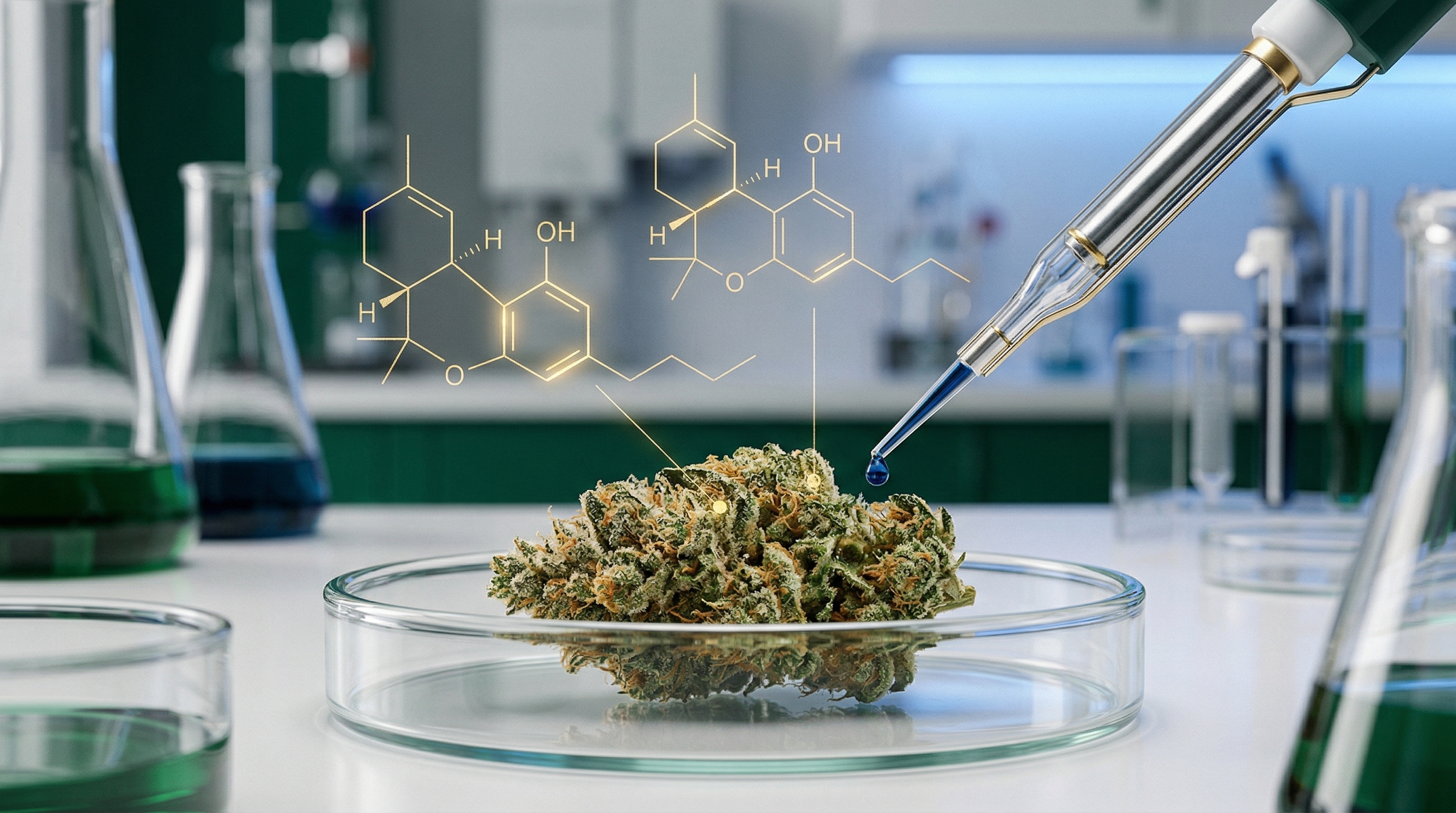
Here’s a mind-bending fact: the difference between Delta-8 THC and Delta-9 THC comes down to the position of a single chemical bond. That’s it. One tiny shift in molecular geometry—and the result is two cannabinoids with noticeably different effects on your mind and body.
If you’ve walked into a dispensary or browsed a cannabis website in the last few years, you’ve almost certainly seen Delta-8 products lining the shelves alongside traditional Delta-9 offerings. Delta-8 exploded onto the market after the 2018 Farm Bill created a legal gray area, and suddenly everyone from curious newcomers to seasoned enthusiasts started asking the same question: what’s actually different about these two compounds?
It’s a great question—and one that deserves more than a marketing tagline. Understanding the distinction between Delta-8 and Delta-9 isn’t just chemistry trivia. It directly affects how you choose products, how you dose, and what kind of experience you can expect. Whether you’re someone who finds Delta-9 a little too intense and is looking for a gentler option, or you’re simply a science nerd who wants to understand what’s happening at the receptor level, this deep dive is for you.
In this article, we’ll break down the molecular structures of both cannabinoids, explore how each one interacts with your endocannabinoid system, review what the (still limited) research tells us, and connect all of it to practical decisions you can make the next time you’re choosing a product. Let’s put on our lab coats—metaphorical pineapple-print ones, of course—and get into it.
The Science Explained
Molecular Structure: Where the “Delta” Comes From
To understand the difference, you need a quick chemistry primer—but I promise to keep it painless.
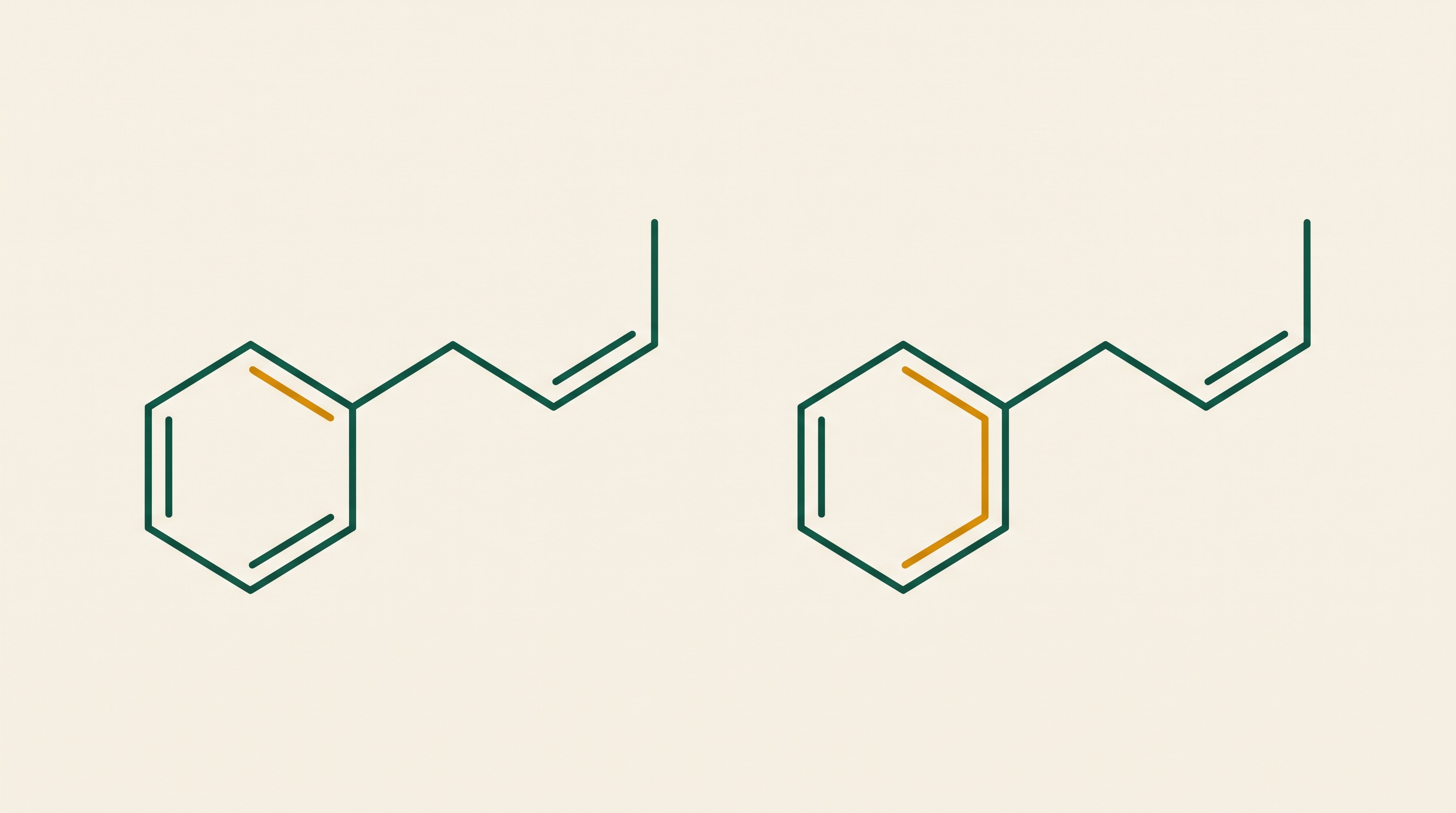
Both Delta-8 and Delta-9 THC share the same chemical formula: C₂₁H₃₀O₂. They have the same atoms, the same number of atoms, and nearly identical structures. They’re what chemists call isomers—molecules with the same ingredients arranged slightly differently.
The name tells you exactly where the difference lies. “Delta” refers to a double bond in the carbon chain. In Delta-9 THC (the cannabinoid most people simply call “THC”), that double bond sits on the ninth carbon in the chain. In Delta-8 THC, it’s on the eighth carbon.
Think of it like two identical necklaces where one bead has been shifted over by a single position. The necklace looks almost the same, but the way it drapes—the way it interacts with the world—changes.
This seemingly minor shift has a significant impact on how each molecule fits into the CB1 receptors in your brain, which are the primary receptors responsible for the psychoactive effects of THC. Delta-9’s geometry gives it a slightly better “fit” in the CB1 receptor binding pocket, kind of like how a key cut just right turns a lock smoothly, while a key that’s a fraction of a millimeter off still works—but with more resistance [Hollister & Gillespie, 1973].
How Each Cannabinoid Interacts with Your Endocannabinoid System
Your body has a built-in signaling network called the endocannabinoid system (ECS). It consists of two primary receptor types:
- CB1 receptors — concentrated in the brain and central nervous system, responsible for psychoactive effects
- CB2 receptors — found primarily in the immune system and peripheral tissues, associated with inflammation and immune response
Delta-9 THC is a potent partial agonist at CB1 receptors. “Partial agonist” means it activates the receptor, but not to its maximum possible extent. Even so, Delta-9’s binding affinity at CB1 is strong enough to produce the well-known psychoactive effects: euphoria, altered time perception, heightened sensory experience, and at higher doses, anxiety or paranoia in some individuals.
Delta-8 THC also binds to CB1 receptors as a partial agonist, but with lower binding affinity. Research by the National Cancer Institute describes Delta-8 as having roughly 50-75% of the psychoactive potency of Delta-9 [NCI, 2024]. Imagine two people knocking on the same door—Delta-9 knocks firmly and the door swings open; Delta-8 knocks more gently, and the door opens partway.
This reduced affinity is why many users describe Delta-8 as producing a “clearer” or “milder” experience. But lower potency doesn’t mean no potency—it’s still a psychoactive cannabinoid, and at sufficient doses, its effects can be quite pronounced.
Both cannabinoids also interact with CB2 receptors, though the research here is less developed. Early studies suggest Delta-8 may have meaningful CB2 activity, which has sparked interest in its potential role in supporting physical comfort and immune function [Pertwee, 2008]. However, this research is still in its early stages, and we should be cautious about drawing firm conclusions.
What the Research Shows
Let’s be upfront: the body of research on Delta-8 THC is significantly smaller than the research on Delta-9. Most cannabis research over the past several decades has focused on Delta-9, and Delta-8 has only recently attracted serious scientific attention. That said, here’s what we know so far:
The Foundational Study (1995): One of the most cited Delta-8 studies comes from Abrahamov, Abrahamov, and Mechoulam (1995), who studied Delta-8 THC’s antiemetic (anti-nausea) properties in pediatric oncology patients undergoing chemotherapy. The study reported that Delta-8 appeared to reduce nausea with what the researchers described as “negligible” psychoactive side effects compared to Delta-9 [Abrahamov et al., 1995]. This was a small study, but it remains a landmark in Delta-8 research.
Appetite Stimulation: A 2004 study in mice by Avraham et al. found that low doses of Delta-8 THC increased food intake and appeared to support appetite even more effectively than Delta-9 in the animal model studied [Avraham et al., 2004]. Animal studies don’t always translate to humans, but this finding has fueled interest in Delta-8’s potential applications.
Anxiety and Psychoactivity: Anecdotal reports consistently describe Delta-8 as producing less anxiety than Delta-9 at comparable doses. While we lack large-scale human clinical trials confirming this, the pharmacological basis is plausible: lower CB1 binding affinity logically correlates with a reduced likelihood of the overstimulation that can trigger anxiety [Kruger & Kruger, 2022]. A 2022 survey study by Kruger and Kruger published in the Journal of Cannabis Research found that Delta-8 users commonly reported relaxation, pain relief, and euphoria with fewer adverse effects like anxiety and paranoia compared to their experiences with Delta-9.
Important Caveats: Most Delta-8 research is either preclinical (animal studies), based on very small human samples, or relies on self-reported survey data. We need more robust, controlled human trials before we can make definitive statements about Delta-8’s effects relative to Delta-9.
| Factor | Delta-9 THC | Delta-8 THC |
|---|---|---|
| Double bond position | 9th carbon | 8th carbon |
| CB1 binding affinity | Higher | Lower (~50-75% of Delta-9) |
| Psychoactive potency | Stronger | Milder |
| Research volume | Extensive | Limited but growing |
| Common user reports | Euphoria, creativity, potential anxiety | Relaxation, clarity, less anxiety reported |
| Natural abundance in cannabis | High (dominant cannabinoid) | Very low (trace amounts) |
| Legal status (U.S.) | Federally illegal (state-legal in many) | Legal gray area (varies by state) |
The Production Question: Natural vs. Synthesized
Here’s something crucial that often gets overlooked in the Delta-8 conversation: Delta-8 THC occurs naturally in cannabis, but only in trace amounts—typically less than 1% of the plant’s total cannabinoid content [Hanuš & Hod, 2020]. The Delta-8 products you find on shelves are almost never extracted directly from the plant.
Instead, most commercial Delta-8 is synthesized from CBD (cannabidiol) through a chemical conversion process involving acids and solvents. CBD, which is abundant in hemp, is chemically rearranged to produce Delta-8 THC in a laboratory setting.
This process is where quality concerns arise. When performed by reputable manufacturers with proper equipment and testing, the conversion can produce clean, consistent Delta-8. But the largely unregulated nature of the Delta-8 market means that some products may contain residual solvents, unknown byproducts, or inaccurately labeled potencies [Meehan-Atrash & Rahman, 2022]. A 2022 study by Meehan-Atrash and Rahman found significant variability in Delta-8 product purity and labeling accuracy.
Key takeaway: If you’re exploring Delta-8, always look for products with third-party certificates of analysis (COAs) that verify cannabinoid content and test for contaminants like heavy metals, residual solvents, and pesticides.
Practical Implications
Connecting to Your Experience: High Families and Cannabinoid Choice
When we talk about choosing between Delta-8 and Delta-9, it’s worth remembering that cannabinoids are only part of the equation. The terpene profile of a product plays a massive role in shaping your experience—which is exactly why we use the High Families system instead of the outdated indica/sativa binary.
For example, if you’re drawn to Delta-8 because you want a gentler, more relaxed experience, pairing it with a product rich in myrcene could align you with the Relaxing High family—deepening the calm without the intensity that sometimes comes with high-dose Delta-9.
Conversely, if you enjoy Delta-9 but want to steer the experience toward focused productivity rather than couch-lock, look for Delta-9 products with terpinolene-forward profiles that fall into the Energetic High family.
The cannabinoid you choose sets the foundation. The terpene profile shapes the architecture built on top of it. Understanding both gives you far more control over your experience than choosing based on “indica” or “sativa” labels ever could.
Dosing Considerations
Because Delta-8 has lower psychoactive potency than Delta-9, dosing doesn’t translate 1:1. Here are some general guidelines:
- If you’re experienced with Delta-9: You may need a higher milligram dose of Delta-8 to achieve a comparable level of effects. Many users report needing roughly 1.5-2x the dose.
- If you’re new to cannabis entirely: Delta-8’s milder profile can be a gentler introduction, but “milder” doesn’t mean “mild.” Start low (5-10mg for edibles) and increase gradually.
- If Delta-9 tends to make you anxious: Delta-8 may be worth exploring as an alternative, but manage expectations—individual responses vary widely, and no cannabinoid is anxiety-proof for everyone.
Legal Landscape
The legal status of Delta-8 is a patchwork. The 2018 Farm Bill legalized hemp-derived products containing less than 0.3% Delta-9 THC, and because most Delta-8 is synthesized from hemp-derived CBD, many producers argue it falls under this legal umbrella. However, numerous states have moved to restrict or ban Delta-8 specifically, and the FDA has issued warnings about unregulated Delta-8 products [FDA, 2022]. Always check your local laws before purchasing.
Key Takeaways
- Delta-8 and Delta-9 THC are molecular siblings that differ by the position of a single double bond, resulting in Delta-8 having roughly 50-75% of Delta-9’s psychoactive potency at CB1 receptors.
- Research on Delta-8 is promising but limited. Early studies and user surveys suggest it may produce fewer anxiety-related side effects, but we need larger controlled human trials to confirm this.
- Most commercial Delta-8 is synthesized from CBD, not extracted from cannabis, making third-party lab testing (COAs) essential for safety and quality.
- Terpenes matter as much as cannabinoids. Use the High Families system to match your desired experience rather than relying solely on the cannabinoid label.
- Dosing doesn’t translate equally between the two—start low with either, especially if you’re new, and adjust gradually.
FAQs
Is Delta-8 THC natural or synthetic?
Delta-8 occurs naturally in cannabis but only in trace amounts (typically under 1%). The vast majority of Delta-8 products are semi-synthetic, produced by chemically converting hemp-derived CBD in a laboratory. This doesn’t inherently make it dangerous, but it does make product quality and testing critically important.
Will Delta-8 THC show up on a drug test?
Most likely, yes. Standard drug tests screen for THC metabolites, and your body breaks down Delta-8 into metabolites that are structurally similar—often identical—to those produced by Delta-9 [Moosmann et al., 2015]. If you’re subject to drug testing, assume that Delta-8 use will produce a positive result.
Is Delta-8 safer than Delta-9?
“Safer” is a complicated word. Delta-8’s lower psychoactive potency may reduce the likelihood of anxiety or paranoia for some users, but the unregulated nature of many Delta-8 products introduces its own risks (contaminants, inaccurate labeling). Neither cannabinoid has a well-established safety profile for long-term use, and both should be approached with informed caution.
Why does Delta-8 feel different from Delta-9?
The difference in experience stems from Delta-8’s lower binding affinity at CB1 receptors in the brain. Because it activates these receptors less strongly, the psychoactive effects tend to be less intense. Many users describe the Delta-8 experience as “clearer-headed” or more physically relaxing, though individual responses vary significantly based on dose, tolerance, terpene profile, and personal biochemistry.
Sources
- Abrahamov, A., Abrahamov, A., & Mechoulam, R. (1995). “An efficient new cannabinoid antiemetic in pediatric oncology.” Life Sciences, 56(23-24), 2097-2102


