Anandamide: Your Body's Natural THC and Why It Matters
Your brain makes its own cannabis-like molecule. Here's how anandamide—the bliss molecule—works, why it exists, and what it means for your high.

Your Brain Was Built for Cannabis (Sort Of)
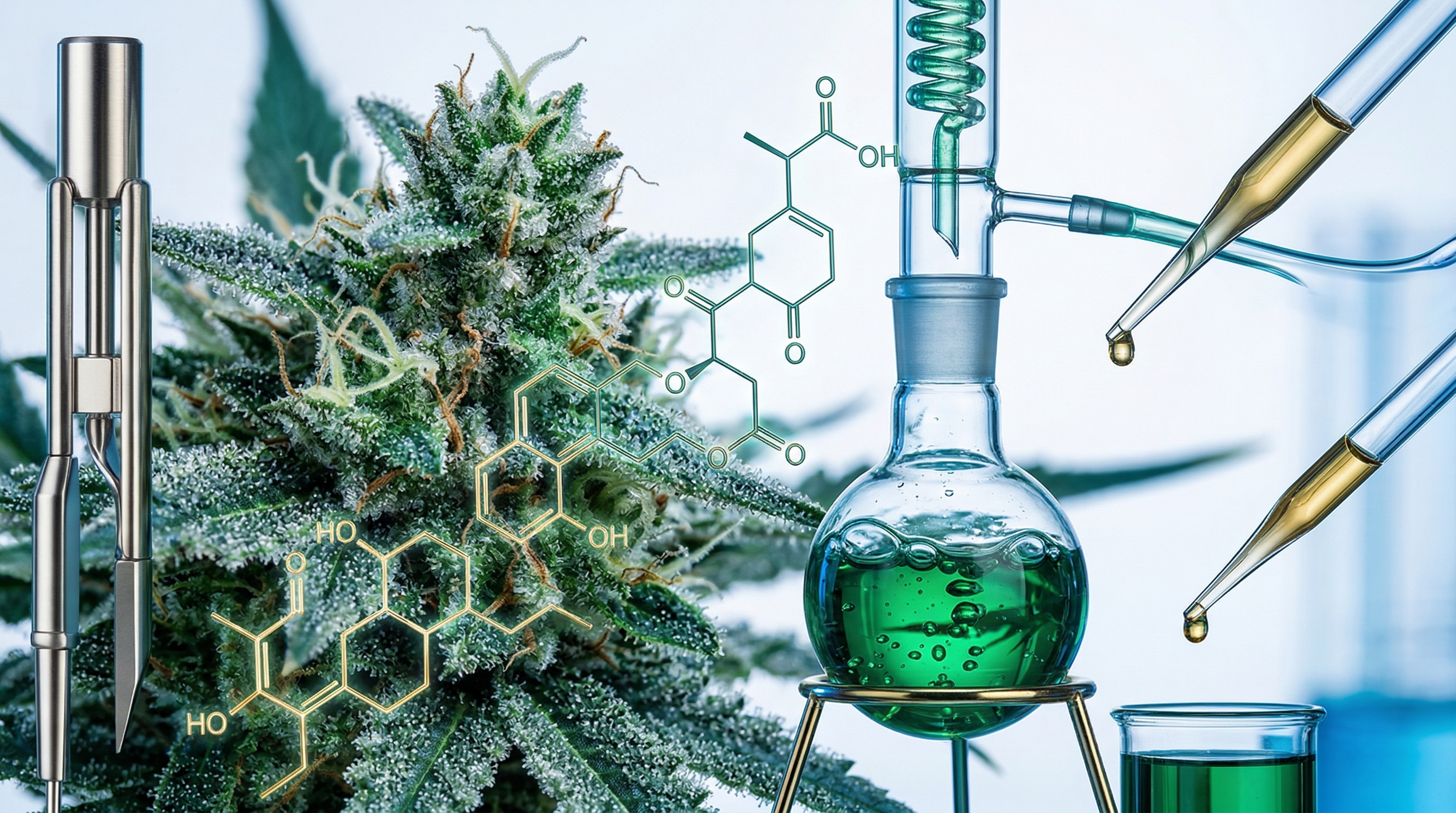
Here is a fact that might rearrange your understanding of cannabis: your body has been producing its own THC-like molecule since before you ever encountered a joint, a gummy, or a vaporizer. It is called anandamide, and it has been quietly shaping your mood, memory, appetite, and pain perception your entire life.
Named from the Sanskrit word ānanda, meaning “bliss” or “joy,” anandamide was discovered in 1992 by Czech chemist Lumír Hanuš and American pharmacologist William Devane, working in Raphael Mechoulam’s lab at the Hebrew University of Jerusalem [Devane et al., 1992]. Their finding was revolutionary: the human body does not just respond to THC—it produces its own version of it.
Mechoulam, already legendary for isolating THC in 1964, wanted a name that honored the molecule’s apparent role in pleasure and reward. The team considered Hebrew words, but as Mechoulam reportedly joked, Hebrew doesn’t carry obvious associations with bliss. They turned to Sanskrit instead. The compound became anandamide: the bliss amide.
This molecule is part of a vast signaling network called the endocannabinoid system (ECS), a biological system that exists in virtually every animal with a vertebral column—and that predates cannabis by hundreds of millions of years. The ECS is not some niche curiosity. It is one of the most widespread receptor systems in the human body, playing a role in regulating everything from stress responses to immune function, appetite, memory, and pain [Lu & Mackie, 2016].
So why should you care? Because understanding anandamide changes how you think about cannabis itself. THC does not create an alien experience in your brain—it piggybacks on a system your body already runs. And the more you understand that system, the better equipped you are to make informed choices about strains, dosing, and what kind of experience you are actually looking for.
How Anandamide Works
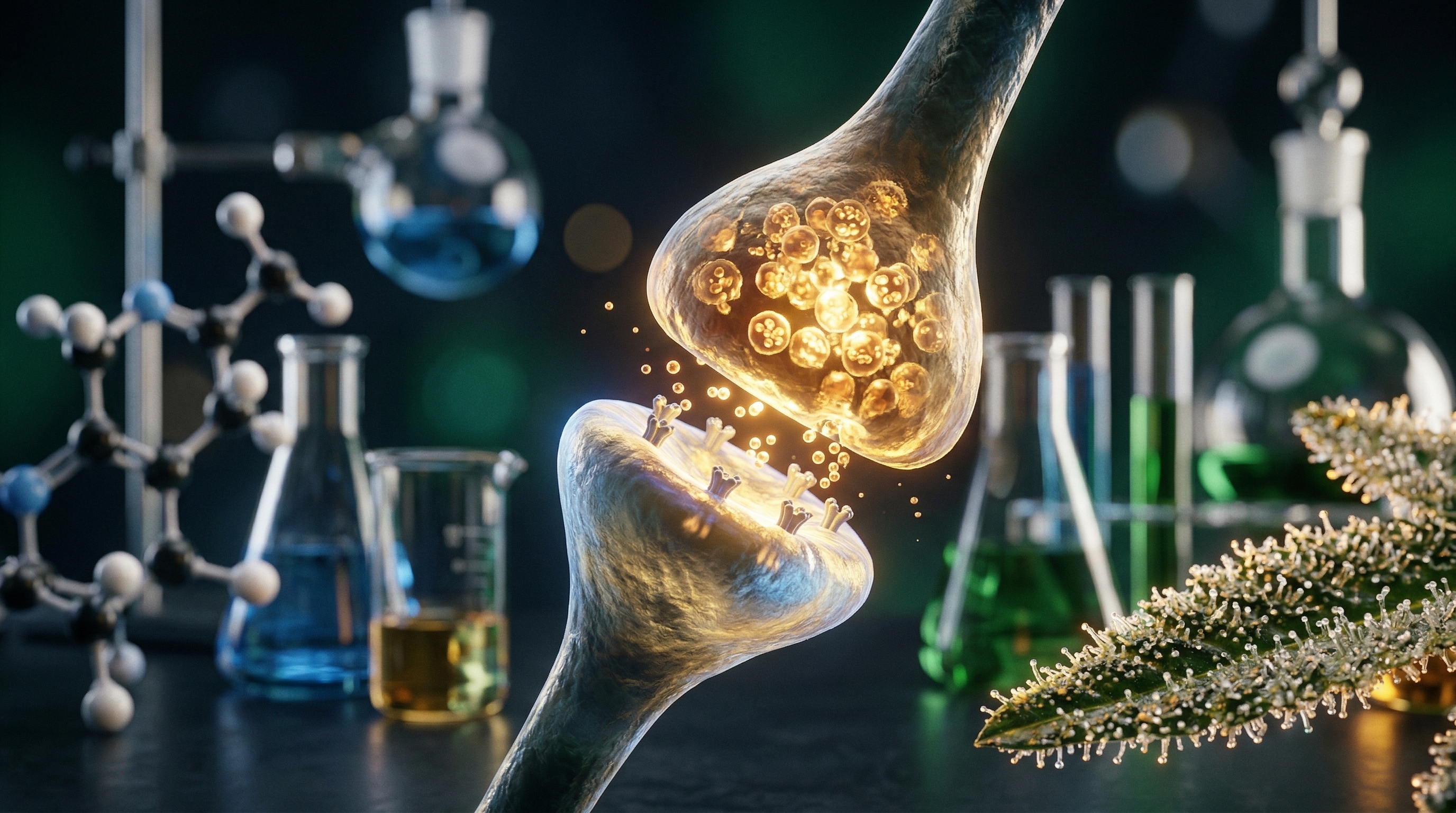
Think of your endocannabinoid system like a network of locks and keys scattered throughout your body. The locks are cannabinoid receptors—primarily CB1 receptors (concentrated in the brain and central nervous system) and CB2 receptors (found mostly in immune cells and peripheral tissues). The keys are molecules that fit into those locks and trigger a response.
Anandamide is one of your body’s own keys. It is an endocannabinoid—“endo” meaning “within”—produced on demand by your cells when they need to send a specific signal. Unlike neurotransmitters such as serotonin or dopamine, which are manufactured ahead of time and stored in vesicles, anandamide is synthesized from cell membrane components right when it is needed and broken down quickly afterward [Piomelli, 2003].
This is where the THC connection becomes concrete. When THC enters your body, it mimics anandamide’s shape closely enough to fit into those same CB1 receptors. But there is a critical difference: anandamide is a partial agonist—it activates CB1 receptors gently and briefly. THC, on the other hand, binds more strongly, activates those receptors more fully, and lingers far longer, which is why its effects are more intense and sustained [Reggio, 2010].
Imagine anandamide as a polite knock on a door, and THC as someone leaning on the doorbell for an hour.
The FAAH Enzyme: Your Brain’s Cleanup Crew
Your body also has a built-in off-switch. An enzyme called FAAH (fatty acid amide hydrolase) degrades anandamide rapidly after it completes its job. This is why the natural bliss feeling from anandamide is fleeting—your body keeps the signal tight and controlled [Cravatt et al., 1996].
FAAH is central to understanding why cannabis and anandamide interact the way they do. THC, crucially, is not broken down by FAAH. It follows completely different metabolic pathways, which is why cannabis intoxication lasts hours while your body’s natural anandamide signal lasts minutes. When you use cannabis, you are essentially bypassing the body’s precision control system and replacing it with a much blunter, longer-lasting signal.
This also explains why CBD may have calming properties. Some research suggests CBD inhibits FAAH, which means anandamide gets broken down more slowly and stays active longer—essentially allowing your own bliss molecule to do more work [Bisogno et al., 2001]. It is a more measured approach to ECS modulation than THC, which is one reason CBD tends to feel more subtle.
Genetic variation matters here too. Some people carry a FAAH gene variant (C385A) that produces less of the enzyme. Their anandamide naturally persists longer. Research links this variant with lower baseline anxiety and different responses to cannabis [Dincheva et al., 2015]—a reminder that your neurochemistry is as individual as your fingerprint.
The Discovery That Changed Everything
The story of anandamide’s discovery in 1992 is worth understanding, because it reframes the entire history of cannabis science.
By the late 1980s, researchers had already found that the brain contained specific receptors for THC—the CB1 receptor was mapped in 1988 by a team at St. Louis University. But this raised an obvious and profound question: why would the human brain have receptors specifically shaped to respond to a compound from a plant?
The answer had to be that the brain was not built for cannabis. Cannabis had evolved compounds that happened to fit receptors the brain already had—receptors built for something the body made itself. The search for that internal signal led directly to Mechoulam’s lab and to anandamide.
When William Devane and Lumír Hanuš isolated the molecule from pig brain tissue in 1992, they confirmed what many had suspected: the brain runs on its own endogenous cannabinoid system, and cannabis is simply a plant that figured out how to speak the same chemical language.
The original paper, published in Science on December 18, 1992, is now the most-cited paper in endocannabinoid research. The keyword “anandamide” appears in 17 of the 100 most-cited papers in the entire field. That single discovery launched more subsequent research than any other finding in cannabis science.
What the Research Shows
Research into anandamide has revealed its fingerprints across a surprisingly broad range of biological processes:
Mood regulation. Studies suggest anandamide levels correlate with reduced anxiety. Mice genetically engineered to lack FAAH—meaning their anandamide persists longer—show reduced anxiety-like behaviors [Kathuria et al., 2003]. Human studies using PET imaging have confirmed that higher FAAH activity (and therefore lower anandamide) is associated with greater anxiety and stress reactivity.
Pain modulation. Anandamide appears to dampen pain signals both centrally (at CB1 receptors in the brain and spinal cord) and peripherally (at sites of injury and inflammation). Early research published in Nature demonstrated that anandamide could inhibit pain initiation in rat models [Calignano et al., 1998], and follow-up work has confirmed multiple peripheral pain mechanisms.
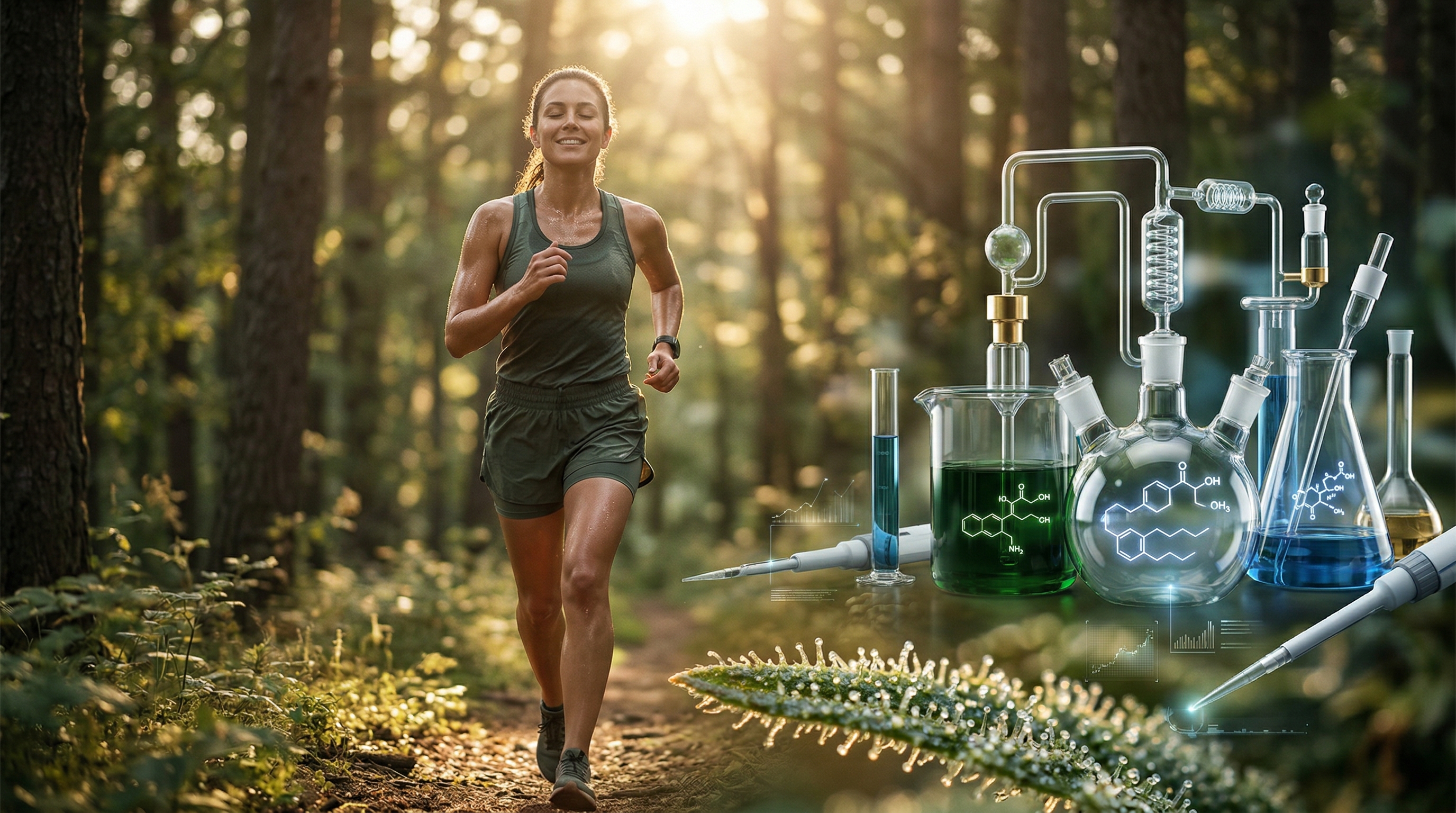
Runner’s high—not endorphins. This one surprises most people. For decades, the post-run euphoria known as runner’s high was attributed to endorphins—the body’s natural opiates. But a landmark 2015 mouse study found that blocking opioid receptors did not prevent runner’s high, while blocking cannabinoid receptors did [Fuss et al., 2015]. The culprit was anandamide, elevated by sustained aerobic exercise. A 2024 human study published in Sports confirmed that 60 minutes of outdoor running significantly increased plasma anandamide concentrations alongside mood improvements [Weiermair et al., 2024].
Stress and HPA axis regulation. Anandamide plays a suppressive role on the hypothalamic-pituitary-adrenal axis—your body’s primary stress-response system. Stress actually depletes anandamide by triggering corticotropin-releasing hormone (CRH), which in turn increases FAAH activity, rapidly breaking down anandamide and removing its calming influence [Gray et al., 2015]. This is one reason chronic stress feels so relentless: it systematically dismantles your natural bliss system.
PTSD and fear extinction. Emerging research suggests that anandamide plays a critical role in extinguishing fear memories. A 2024 study in Psychopharmacology linked FAAH gene variants and lower anandamide concentrations with more severe PTSD symptoms in adolescents [Marusak et al., 2024]. Clinical trials are now investigating FAAH inhibitors as adjunctive treatments for PTSD.
Key insight: Anandamide is not just relevant to cannabis users. It is a fundamental signaling molecule that influences your daily experience of mood, pain, and pleasure—whether or not you have ever touched a cannabis product.
It is worth noting that much of this research is still emerging. Many landmark studies have been conducted in animal models, and translating those findings directly to human experience requires care. But the direction of the evidence is consistent: anandamide is a central player in how your body maintains balance—or homeostasis.
How THC Interacts with Your Anandamide System
Cannabis does not add an entirely foreign experience to your brain. It amplifies and distorts a conversation your neurons are already having. Understanding exactly how is genuinely useful for cannabis consumers.
THC as a more powerful, longer-lasting anandamide. When THC binds to CB1 receptors, it produces many of the same downstream effects that anandamide does—euphoria, pain relief, appetite stimulation, memory modulation—but with greater potency and duration. Anandamide is a partial agonist with a half-life of minutes. THC is a more complete activator with a half-life of hours. Same lock, dramatically different key.
THC may actually suppress anandamide. Some research suggests THC dose-dependently decreases anandamide concentrations at the synapse, potentially through indirect pathways involving CB1 receptor feedback [Bidwell et al., 2024]. This creates a counterintuitive dynamic: the very compound mimicking your bliss molecule may be suppressing it at the same time. This partly explains why chronic heavy THC use can leave users feeling flat between sessions.
CBD preserves anandamide. Unlike THC, CBD does not powerfully activate CB1 receptors directly. Instead, one of its proposed mechanisms is FAAH inhibition—slowing the breakdown of your own anandamide and letting it work longer [Bisogno et al., 2001]. This is why CBD is often described as supporting the endocannabinoid system rather than overriding it. This is also a central mechanistic argument for attending to THC:CBD ratios when selecting cannabis products.
Tolerance is an anandamide story. When CB1 receptors are chronically flooded by THC, the brain compensates by downregulating them—producing fewer receptors or making existing ones less responsive. This is cannabis tolerance. Importantly, this same downregulation affects anandamide’s natural signaling too. Prolonged heavy use can leave the ECS less responsive to both THC and your own endocannabinoids, which is one neurobiological basis for the flat, unmotivated feeling some heavy users report between highs. For a deeper look at how this intersects with dopamine and reward circuitry, see our article on cannabis and dopamine.
Practical Implications for Your Cannabis Experience
Understanding anandamide is not just satisfying scientifically—it translates directly into how you think about your relationship with cannabis.
Your Baseline Endocannabinoid Tone Is Unique
Since everyone produces different levels of anandamide and carries different FAAH variants, your endocannabinoid tone—the baseline activity of your ECS—is unique to you. This helps explain why two people can consume the same strain at the same dose and have entirely different experiences. It is not just tolerance; it is biology. Individuals with lower FAAH activity (more naturally-persisting anandamide) may find cannabis effects more intense or may need lower doses to achieve the same experience.
High Families and the Anandamide Connection
This connects directly to our High Families classification system. Strains in the Relaxing High family—often richer in myrcene and higher in CBD—may support your endocannabinoid system differently than strains in the Energetic High family, which lean on terpinolene and ocimene. The Entourage High family, with its complex multi-terpene profiles, may offer the most nuanced interaction with the full ECS. For pain-focused use, strains in the Relief High family may engage anandamide’s peripheral pain-modulating pathways most directly.
CBD Ratios and FAAH Modulation
If you are looking for a more anandamide-adjacent experience—calmer, more sustained, less overwhelming—products with meaningful CBD content may be worth exploring. The proposed FAAH-inhibiting mechanism of CBD suggests these products might allow your own anandamide to do more of the work, rather than simply overwhelming CB1 receptors with THC.
Tolerance Breaks Are an ECS Reset
A tolerance break is not merely about clearing THC from your system. It is about allowing your CB1 receptors to upregulate back toward their natural density, which in turn restores your ECS’s sensitivity to anandamide. This is why returning from a break often involves a re-sensitization to both cannabis and everyday pleasures—your natural bliss molecule can be heard again.
Supporting Your ECS Naturally
Research suggests several lifestyle factors may support healthy anandamide levels:
- Exercise: Sustained aerobic activity (running, cycling) measurably elevates circulating endocannabinoids [Sparling et al., 2003; Weiermair et al., 2024]
- Diet: Omega-3 fatty acids are precursors to endocannabinoids; dietary omega-3s may support ECS function [McPartland et al., 2014]
- Dark chocolate: Contains small amounts of anandamide itself plus compounds that slow FAAH-mediated breakdown [di Tomaso et al., 1996]
- Stress management: Chronic stress actively depletes anandamide tone by upregulating FAAH activity [Hill et al., 2010]

Key Takeaways
- Anandamide is your body’s own THC-like molecule, binding to the same CB1 receptors that THC targets—but more gently, briefly, and with far more precision.
- It was discovered in 1992 by Mechoulam, Devane, and Hanuš, and the discovery explained why the brain has cannabinoid receptors at all.
- FAAH is the enzyme that breaks anandamide down. Genetic variants that reduce FAAH activity are linked to lower anxiety; CBD may inhibit FAAH, extending anandamide’s effects.
- Runner’s high is an endocannabinoid high. Sustained exercise raises anandamide levels—a finding now confirmed in both mice and humans.
- THC mimics but also displaces anandamide. Chronic heavy use can suppress your natural ECS signaling, contributing to tolerance and emotional flatness between sessions.
- Your endocannabinoid tone is unique, which is why the same strain hits two people completely differently.
- Lifestyle factors support anandamide naturally: exercise, omega-3s, stress reduction, and even dark chocolate.
FAQs
Is anandamide the same as THC?
No, but they are structurally similar enough to activate the same receptors. Anandamide is produced naturally by your body, acts for minutes, and is broken down by FAAH. THC comes from the cannabis plant, binds CB1 more strongly, and persists for hours. Same lock, very different keys.
Can I increase my anandamide levels naturally?
Yes, to a meaningful degree. Sustained aerobic exercise is the most well-documented method—human studies confirm measurable anandamide elevation after 60 minutes of running. Omega-3 fatty acid consumption, dark chocolate, and chronic stress reduction also appear to support anandamide levels, though the magnitude of dietary effects in humans needs more research.
Does CBD work by increasing anandamide?
That is one proposed mechanism. CBD appears to inhibit FAAH, slowing anandamide breakdown and allowing it to remain active longer [Bisogno et al., 2001]. This is a plausible explanation for some of CBD’s reported calming effects, though CBD has multiple mechanisms of action and the full picture is more complex.
Why do some people seem naturally more relaxed or “chill”?
Genetic variation in the FAAH gene (specifically the C385A polymorphism) may play a meaningful role. People with this variant produce less FAAH enzyme, so their anandamide persists longer. Research consistently associates this variant with lower baseline anxiety and reduced amygdala reactivity to threatening stimuli [Dincheva et al., 2015].
Why does cannabis tolerance feel like it drains joy from everyday life?
Because it partially does—temporarily. Chronic THC exposure downregulates CB1 receptors, which means your natural anandamide signaling becomes less effective too. The bliss system quiets down. This is reversible: tolerance breaks allow CB1 receptor density to recover, restoring your ECS’s sensitivity to both cannabis and ordinary pleasures.
Sources
- Bidwell, L.C. et al. (2024). “The interplay of exogenous cannabinoid use on anandamide and 2-arachidonoylglycerol.” Pharmaceuticals, 17(10), 1335. doi:10.3390/ph17101335
- Bisogno, T. et al. (2001). “Molecular targets for cannabidiol and its synthetic analogues.” British Journal of Pharmacology, 134(4), 845-852. PMID: 11606325
- Calignano, A. et al. (1998). “Control of pain initiation by endogenous cannabinoids.” Nature, 394(6690), 277-281. PMID: 9685157
- Cravatt, B.F. et al. (1996). “Molecular characterization of an enzyme that degrades neuromodulatory fatty-acid amides.” Nature, 384(6604), 83-87. PMID: 8900284
- Devane, W.A. et al. (1992). “Isolation and structure of a brain constituent that binds to the cannabinoid receptor.” Science, 258(5090), 1946-1949. PMID: 1470919
- di Tomaso, E. et al. (1996). “Brain cannabinoids in chocolate.” Nature, 382(6593), 677-678. PMID: 8751435
- Dincheva, I. et al. (2015). “FAAH genetic variation enhances fronto-amygdala function in mouse and human.” Nature Communications, 6, 6395. PMID: 25731744
- Fuss, J. et al. (2015). “A runner’s high depends on cannabinoid receptors in mice.” PNAS, 112(42), 13105-13108. PMID: 26438875
- Gray, J.M. et al. (2015). “Corticotropin-releasing hormone drives anandamide hydrolysis in the amygdala to promote anxiety.” Journal of Neuroscience, 35(9), 3879-3892.
- Hill, M.N. et al. (2010). “Endogenous cannabinoid signaling is essential for stress adaptation.” PNAS, 107(20), 9406-9411. PMID: 20439721
- Kathuria, S. et al. (2003). “Modulation of anxiety through blockade of anandamide hydrolysis.” Nature Medicine, 9(1), 76-81. PMID: 12461523
- Lu, H.C. & Mackie, K. (2016). “An introduction to the endogenous cannabinoid system.” Biological Psychiatry, 79(7), 516-525. PMID: 26698193
- Marusak, H.A. et al. (2024). “Endocannabinoid dysregulation and PTSD in urban adolescents.” Psychopharmacology, 243, 275-286. doi:10.1007/s00213-024-06717-3
- McPartland, J.M. et al. (2014). “Care and feeding of the endocannabinoid system.” PLoS ONE, 9(3), e89566. PMID: 24622769
- Piomelli, D. (2003). “The molecular logic of endocannabinoid signalling.” Nature Reviews Neuroscience, 4(11), 873-884. PMID: 14595399
- Reggio, P.H. (2010). “Endocannabinoid binding to the cannabinoid receptors.” Current Medicinal Chemistry, 17(14), 1468-1486. PMID: 20166921
- Sparling, P.B. et al. (2003). “Exercise activates the endocannabinoid system.” NeuroReport, 14(17), 2209-2211. PMID: 14625449
- Weiermair, T. et al. (2024). “Investigating runner’s high: Changes in mood and endocannabinoid concentrations after a 60 min outdoor run.” Sports, 12(9), 232. doi:10.3390/sports12090232


