

Best Cannabis Strains for Energy and Motivation
Terpinolene- and limonene-rich strains like Jack Herer, Durban Poison, and Super Lemon Haze suit energy better than the sativa label. Eight picks inside.

Professor High
Written by Professor High, our AI guide. See how we research and correct articles.

The best cannabis strains for energy are terpinolene- or limonene-rich, such as Jack Herer, Durban Poison, and Super Lemon Haze. Terpene profile predicts effects better than the indica or sativa label, and moderate THC (15-22%) tends to keep the experience functional. Very high THC can tip into anxiety, so start low.
Why Some Cannabis Strains Wake You Up While Others Put You to Sleep
Here’s a question I get asked all the time: “Can cannabis actually make me more productive?”
The short answer? Absolutely—if you know what to look for.
Updated October 2026: A double-blind Johns Hopkins study of 20 healthy adults found that adding 15 mg of vaporized d-limonene to 30 mg of THC lowered ratings of feeling anxious, nervous, and paranoid compared with THC alone, in a 12-person subset of the group [Spindle et al., 2024]. A 2025 human trial of vaporized alpha-pinene with THC found that pinene did not reduce THC-related memory impairment [Kumar et al., 2025]. We’ve updated the science sections and added links to newer guides published since this article’s original release.
For decades, people have used a simple rule: “sativa for energy, indica for sleep.” But modern science tells us this is too simple. The real drivers of your experience aren’t the shape of the leaves. They’re the terpenes—aromatic compounds that shape how cannabis affects your body and brain.
Ever tried a “sativa” and ended up glued to the couch? Or smoked an “indica” that left you buzzing with ideas? That’s because the chemical profile of a strain—its mix of terpenes and cannabinoids—matters far more than any label.
In this guide, we’ll cover the best cannabis strains for energy and motivation, the terpene science behind why they work, and tips for using cannabis as a mindful productivity tool. We’ll use the High Families system—our terpene-based approach that predicts how a strain will make you feel—instead of relying on outdated myths.
Let’s get into it.

The Science of Energizing Cannabis: Terpenes Are the Key
Before we dive into specific strains, let’s understand why certain cannabis makes you feel alert, creative, and driven while other varieties make you want to nap.
Terpenes That Fuel Focus
Terpenes are aromatic compounds made by cannabis (and many other plants, fruits, and herbs). They do far more than add flavor and smell. Research suggests they interact with your brain’s receptors and change how THC and CBD affect you [Russo, 2011]. This teamwork between terpenes and cannabinoids is called the “entourage effect”—and it’s why picking the right strain matters so much for energy and motivation.
Here are the key terpenes associated with energy and motivation:
| Terpene | Aroma | Also Found In | Potential Effects |
|---|---|---|---|
| Terpinolene | Floral, piney, herbal | Lilacs, nutmeg, tea tree | Uplifting, cerebral stimulation |
| Limonene | Citrus, bright, zesty | Lemon rinds, orange peel | Mood elevation, stress relief |
| Ocimene | Sweet, herbaceous, woody | Mint, parsley, orchids | Energizing, may support focus |
| Pinene (alpha) | Fresh pine, sharp | Pine needles, rosemary | Alertness, memory retention |
Terpinolene is the headliner here. It’s rare—found in only about 10% of cannabis strains—but when it’s the dominant terpene, the effects tend to be distinctly uplifting and energetic. Strains high in terpinolene often fall into what we call the Energy High family.
Limonene is one of the most common cannabis terpenes, and it’s strongly tied to mood elevation. Research suggests it may boost serotonin and dopamine—which could explain why limonene-rich strains feel euphoric and socially energizing [Komiya et al., 2006]. A 2024 Johns Hopkins study found that vaporized limonene selectively mitigates THC-induced anxiety in healthy adults who use cannabis intermittently [Spindle et al., 2024]. Johns Hopkins is recruiting for a follow-up trial of oral THC taken with oral D-limonene, to test whether swallowed limonene changes THC’s acute effects the way inhaled limonene did (ClinicalTrials.gov NCT06378957). Less anxiety means you can stay in that focused, motivated zone longer. These strains typically belong to the Uplifting High family.
Alpha-pinene may help you stay sharp. In lab tests, it blocks an enzyme called acetylcholinesterase—the same target used by some memory-enhancing medications [Miyazawa & Yamafuji, 2005]—and in mice it eased the memory and learning problems caused by the drug scopolamine [Lee et al., 2017]. This could explain why pinene-rich strains often feel “clear-headed.” A 2021 review also pointed to pinene’s antioxidant and neuroprotective properties, suggesting benefits for brain health beyond just alertness [Weston-Green et al., 2021]. However, a 2025 controlled human trial—the first to test alpha-pinene with THC in humans—found that vaporized pinene (up to 15 mg) did not significantly attenuate THC-induced memory impairment, despite establishing the safety of direct pinene inhalation [Kumar et al., 2025]. The science of pinene is more nuanced than preclinical models suggested; it may require interaction with other naturally occurring cannabis compounds to produce its hypothesized benefits.
Ocimene is a lesser-known terpene with a sweet, herbal aroma. You’ll find it in strains like Golden Goat and Clementine. Research on ocimene is still early, but it shows up often in strains that consumers report as energizing. It may add to the entourage effect that makes certain strains feel especially stimulating.
The Role of Cannabinoids and Dopamine
Terpenes don’t work alone. The THC-to-CBD ratio also matters for energy, and the science of why involves your brain’s dopamine system.
THC triggers dopamine release in your brain’s reward pathways. Dopamine is the “motivation molecule”—it’s what makes you care about finishing tasks and pursuing goals. A review in Nature found that acute THC increases dopamine release and neuron activity, while long-term heavy use is linked to a blunted dopamine system, and lower dopamine synthesis in heavy users tracks with lower motivation [Bloomfield et al., 2016]. For an in-depth exploration of how THC shapes the dopamine system, see our guide on cannabis and dopamine.
Think of your endocannabinoid system and dopamine system as dance partners. Researchers describe their relationship as a “pas de deux”—each one shaping the other’s behavior [Soejitno, 2021]. When the balance is right, cannabinoids may enhance your drive and focus. When it’s off, you get couch-lock.
Studies back this up. Research in Frontiers in Synaptic Neuroscience showed that cannabinoids modulate dopamine release during motivation, exploratory behavior, and sustained attention [Oleson & Hamilton, 2021]. Another study in the Journal of Neuroscience found that boosting endocannabinoid levels may increase how your brain encodes reward and motivation [Covey et al., 2021]. The takeaway? The right strain-dose combo may genuinely help you get things done.
Here’s how to optimize your cannabinoid ratio for energy:
- Moderate THC (15-22%) tends to produce clear-headed, functional effects for most people
- Very high THC (25%+) can sometimes overwhelm and cause anxiety or couch-lock, even in “energizing” strains—likely because excessive dopamine stimulation shifts from motivation to anxiety
- A touch of CBD (even 1-3%) may smooth out the experience and reduce the likelihood of anxious, scattered energy
- THCV, a lesser-known cannabinoid found in strains like Durban Poison and Jack the Ripper, has been studied mainly for appetite suppression and blood sugar control, with rodent evidence for lower appetite and a human finding of lower fasting glucose in type 2 diabetes [Abioye et al., 2020]. That commentary does not test energy or alertness, so treat any energizing effect as unproven
Key Takeaway: For energy and motivation, look for strains with dominant terpinolene, limonene, or pinene, moderate THC levels (15-22%), and ideally a small amount of CBD. The Energy High and Uplifting High families are your best starting points.
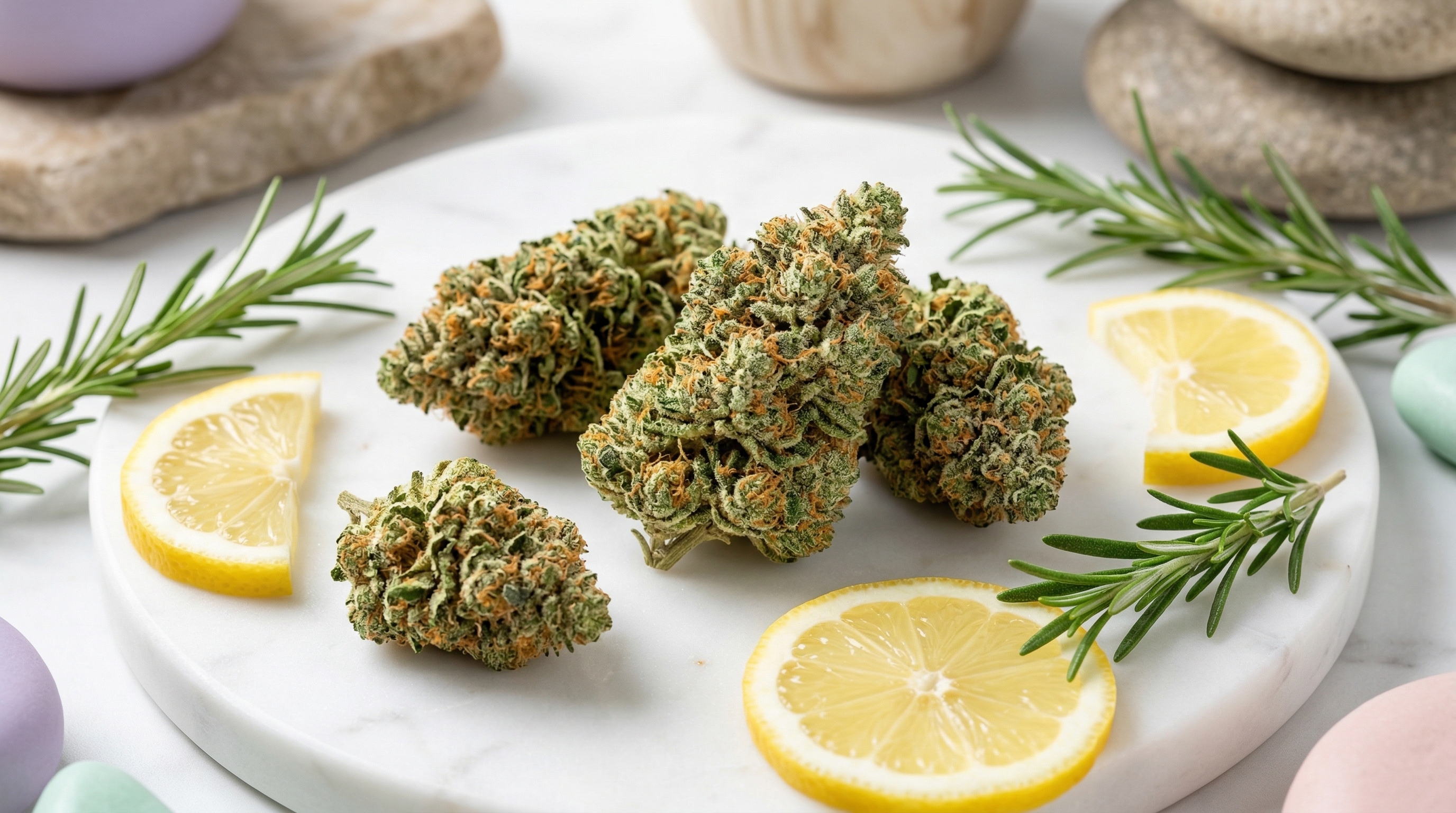
The Best Cannabis Strains for Energy and Motivation
Now let’s get to the strains themselves. I’ve organized these by their High Family classification so you can understand why each one energizes, not just that it does. Browse every strain for an energy boost, or open the energetic effect page, for the live catalog.
Energy High Family Strains
The Energy High family is defined by dominant terpinolene and ocimene profiles. These strains tend to produce focused, productive, mentally stimulating experiences—perfect for creative projects, deep work sessions, or active days.
1. Jack Herer
Named after the legendary cannabis activist, Jack Herer is one of the most celebrated energizing strains in cannabis history. Its terpene profile is typically led by terpinolene, with supporting notes of pinene and ocimene.
- Dominant terpenes: Terpinolene, pinene, ocimene
- THC range: 18-24%
- Experience: Clear-headed focus, creative spark, gentle euphoria
- Best for: Writing, brainstorming, morning routines
Many people describe Jack Herer as a “cup of coffee without the jitters.” It’s the kind of strain that makes you want to organize your desk and write a novel on it.
2. Durban Poison
Durban Poison is a pure landrace strain from South Africa and one of the few widely available cultivars with a terpinolene-dominant profile. It’s known for producing a remarkably clear, energetic experience.
- Dominant terpenes: Terpinolene, myrcene, ocimene
- THC range: 15-21%
- Experience: Focused energy, mental clarity, upbeat mood
- Best for: Physical activity, errands, social events
Durban Poison is a fantastic choice if you’re newer to energizing cannabis. Its moderate THC range makes it approachable, and its effects tend to be functional without being overwhelming.
3. Dutch Treat
Often overlooked in “best energizing strains” lists, Dutch Treat deserves more attention. Its terpinolene-forward profile produces a uniquely cerebral, creative high.
- Dominant terpenes: Terpinolene, myrcene, pinene
- THC range: 18-22%
- Experience: Euphoric creativity, gentle motivation, mental uplift
- Best for: Art projects, music, problem-solving
Uplifting High Family Strains
The Uplifting High family is driven by limonene and linalool. Where the Energetic High family feels like focused productivity, the Uplifting High family feels more like joyful energy—mood elevation, social confidence, and creative flow.
4. Super Lemon Haze
Super Lemon Haze is a two-time Cannabis Cup winner and one of the most reliably uplifting strains available. As the name suggests, it’s absolutely loaded with limonene.
- Dominant terpenes: Limonene, caryophyllene, linalool
- THC range: 19-25%
- Experience: Bright euphoria, social energy, creative confidence
- Best for: Social gatherings, collaborative work, afternoon pick-me-ups
5. Tangie
If you love citrus, Tangie will feel like liquid sunshine. This strain’s limonene content is among the highest you’ll find, and its effects match that bright, zesty profile.
- Dominant terpenes: Limonene, myrcene, pinene
- THC range: 19-22%
- Experience: Mood elevation, gentle energy, optimistic outlook
- Best for: Morning sessions, creative work, mood support
6. Strawberry Cough
Despite its name suggesting a harsh smoke, Strawberry Cough is actually quite smooth and delivers a beautifully uplifting experience. Its terpene profile blends limonene with linalool for a euphoric but not overstimulating effect.
- Dominant terpenes: Limonene, linalool, pinene
- THC range: 17-23%
- Experience: Happy energy, stress relief, social ease
- Best for: Anxiety-prone users who want energy without edginess
Honorable Mentions: Entourage High Family
Some of the best energizing experiences come from strains in the Entourage High family—cultivars with complex, multi-terpene profiles that produce nuanced, layered effects. These strains don’t rely on a single dominant terpene but instead create energy through the synergy of multiple compounds working together.
7. Green Crack (Green Cush)
Despite its unfortunate name (many dispensaries now call it Green Cush), this strain is one of the most popular energizing options on the market. Its complex terpene profile blends myrcene, caryophyllene, and ocimene in a way that somehow produces laser-focused energy.
- Dominant terpenes: Myrcene, caryophyllene, ocimene
- THC range: 17-24%
- Experience: Intense focus, mental sharpness, sustained energy
- Best for: Long work sessions, studying, detail-oriented tasks
8. Harlequin (CBD-Rich Option)
For those who want energy without significant intoxication, Harlequin is a game-changer. With a roughly 5:2 CBD-to-THC ratio, it provides gentle mental clarity and calm motivation.
- Dominant terpenes: Myrcene, pinene, caryophyllene
- THC range: 5-10% (CBD: 8-16%)
- Experience: Clear-headed calm, gentle focus, minimal impairment
- Best for: Workday use, beginners, those sensitive to THC
How to Use Energizing Cannabis Mindfully
Choosing the right strain is only half the equation. How you consume matters just as much as what you consume. Here’s a wellness-oriented framework for using cannabis as a motivational tool.
Start Low, Go Slow
This may be the most repeated advice in cannabis—and for good reason. It still holds up. For energizing strains:
- Begin with a small dose — one or two inhalations, or 2.5-5mg if using edibles
- Wait 15-20 minutes (or 60-90 minutes for edibles) before adding more
- Notice your baseline — are you feeling alert? Focused? Anxious? Adjust accordingly
- Find your sweet spot — the dose where you feel motivated but not overwhelmed
Timing Matters
- Morning sessions work best with terpinolene-dominant strains from the Energy High family
- Afternoon pick-me-ups pair well with limonene-rich Uplifting High strains
- Avoid energizing strains within 3-4 hours of bedtime — they may interfere with sleep
Pair with Intention
Cannabis works best as a motivational tool when you combine it with clear intention:
- Set your task before consuming — know what you want to accomplish
- Create your environment — tidy workspace, good lighting, minimal distractions
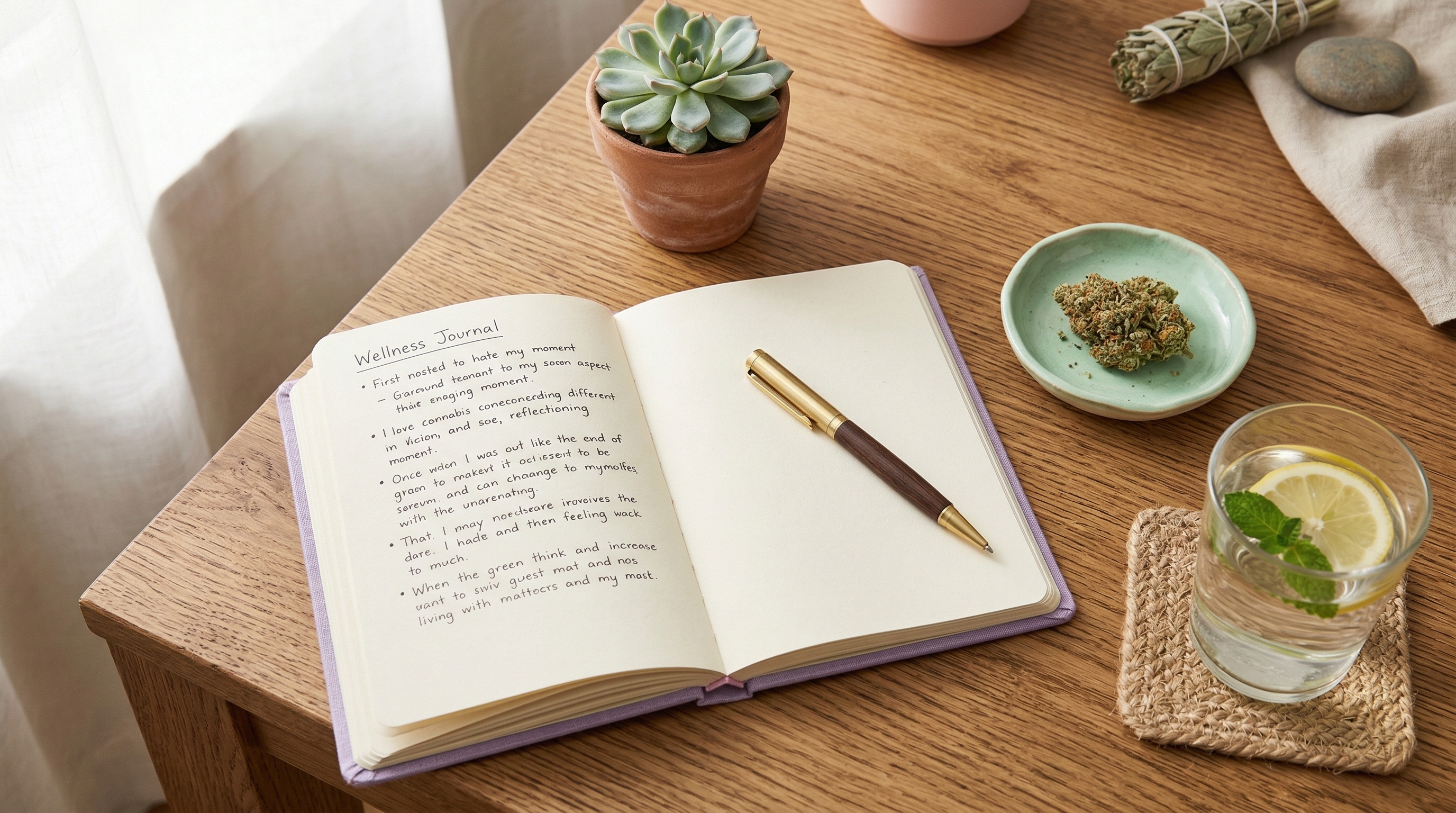
- Use a journal — track which strains, doses, and settings produce your best work
- Stay hydrated — dehydration amplifies brain fog and undermines focus
Pro Tip: Keep a simple cannabis journal noting strain name, dose, time of day, activity, and how you felt. After a few weeks, you’ll have a personalized playbook for productive sessions.
Common Mistakes to Avoid
Even experienced consumers make these errors when using cannabis for energy:
- Going too high on THC — More THC doesn’t mean more energy. In fact, very high doses often produce the opposite effect, leading to sedation and mental fog
- Ignoring terpene profiles — A strain’s name means nothing without knowing its chemistry. Always check lab-tested terpene data when available
- Relying on strain names alone — “Blue Dream” from one grower can have a completely different terpene profile than “Blue Dream” from another. Consistency varies
- Skipping food and water — Cannabis on an empty stomach can feel more intense and less functional. A light, nutritious meal beforehand supports a cleaner experience
- Using the same strain every day — Tolerance builds quickly. Rotating between 2-3 energizing strains helps maintain effectiveness
A Note on Individual Variation
Here’s something important that often gets left out of strain recommendation articles: your experience will be unique to you.
Your endocannabinoid system is as unique as your fingerprint. Genetics, tolerance, mood, sleep, and even gut health all shape how you respond to a given strain. What makes your friend feel like a productivity machine might make you feel spacey or anxious.
This is why the High Families system is so valuable—it gives you a starting framework based on terpene chemistry, but the real magic happens when you combine that knowledge with personal experimentation and honest self-assessment.
Quick Reference: Energizing Strains at a Glance
| Strain | High Family | Key Terpenes | THC Range | Best For |
|---|---|---|---|---|
| Jack Herer | Energy High | Terpinolene, pinene, ocimene | 18-24% | Writing, brainstorming, morning routines |
| Durban Poison | Energy High | Terpinolene, myrcene, ocimene | 15-21% | Physical activity, errands, social events |
| Dutch Treat | Energy High | Terpinolene, myrcene, pinene | 18-22% | Art projects, music, problem-solving |
| Super Lemon Haze | Uplifting High | Limonene, caryophyllene, linalool | 19-25% | Social gatherings, collaborative work |
| Tangie | Uplifting High | Limonene, myrcene, pinene | 19-22% | Morning sessions, creative work |
| Strawberry Cough | Uplifting High | Limonene, linalool, pinene | 17-23% | Anxiety-prone users who want energy |
| Green Crack | Entourage High | Myrcene, caryophyllene, ocimene | 17-24% | Long work sessions, studying |
| Harlequin | Entourage High | Myrcene, pinene, caryophyllene | 5-10% (CBD: 8-16%) | Workday use, beginners |
More Energizing Strains Worth Exploring
Beyond our top picks, these strains also deserve attention for their energizing potential:
- Ghost Train Haze — A potent terpinolene-dominant strain with intense cerebral effects. Best for experienced consumers who want maximum mental stimulation.
- Golden Goat — Rich in ocimene and limonene, delivering a sweet, tropical energy that’s perfect for outdoor activities and creative projects.
- Sour Diesel — A classic energizer with a pungent fuel-like aroma, known for fast-acting cerebral effects and sustained motivation.
- Pineapple Express — A balanced energizer with limonene and caryophyllene that provides uplifted, engaged focus without intensity.
- Clementine — Ultra-high limonene content makes this one of the most purely mood-elevating strains available.
- XJ-13 — A Jack Herer cross with a terpinolene-pinene profile perfect for clear-headed daytime use.
- Chocolope — A unique coffee-and-chocolate-flavored strain with terpinolene dominance and a dreamy, creative energy.
- Maui Wowie — A tropical classic that brings mellow, sustained energy perfect for outdoor adventures.
Key Takeaways
-
Terpenes drive energy, not strain names. Look for terpinolene, limonene, and pinene on lab test results. These terpenes are linked to uplifting, focused effects.
-
Use High Families instead of indica/sativa. The Energy High and Uplifting High families group strains by terpene chemistry—a far better predictor of effects than outdated plant labels.
-
Dose low for motivation. Cannabis may support motivation through dopamine modulation, but only at the right dose. Start with 2.5-5mg (edibles) or 1-2 puffs and find your sweet spot.
-
Top picks for energy: Jack Herer, Durban Poison, and Super Lemon Haze are consistently reliable choices.
-
Track your experience. Your body is unique. Keep a cannabis journal or use the High IQ app to discover which strains and doses work best for you.
Frequently Asked Questions
Can cannabis really boost energy and motivation?
Research suggests yes—with important caveats. The endocannabinoid system directly modulates dopamine signaling, which is central to motivation [Oleson & Hamilton, 2021]. However, the effects are highly strain-dependent. Strains rich in terpinolene and limonene tend to be energizing, while myrcene-dominant strains are typically sedating. Dose matters enormously too: low-to-moderate doses may enhance motivation, while high doses often produce the opposite effect. This isn’t a one-size-fits-all answer—you should track your personal responses using a cannabis journal or the High IQ app.
What makes some strains energizing and others sedating?
The primary driver is terpene profile, not whether a strain is labeled “sativa” or “indica.” The indica/sativa distinction describes plant morphology, not chemistry or effects. Energizing strains typically have higher concentrations of terpinolene, limonene, pinene, and ocimene, while sedating strains tend to be rich in myrcene and linalool. The High Families system classifies strains by their actual terpene chemistry, making it much easier to predict effects than relying on outdated sativa/indica labels.
Is there a best time of day to use energizing strains?
Most people find energizing strains work best in the morning or early afternoon, mirroring the natural cortisol and dopamine cycles of your body. Avoid energizing strains within 3-4 hours of bedtime, as they may interfere with sleep onset. For a deeper dive into optimizing your cannabis timing, see our guide on focus and productivity.
What if I want energy but THC makes me anxious?
You have several good options. Try a CBD-dominant strain like Harlequin (5:2 CBD:THC), start with much lower doses (1-2 puffs or 2.5mg edible), or look specifically for strains high in limonene, which research suggests may buffer THC’s anxiety-producing effects [Spindle et al., 2024]. Many people who think “cannabis makes them anxious” simply haven’t found the right strain-dose combination yet.
How is this different from the Focus and Productivity guide?
Great question. Our Focus and Productivity guide centers on sustained concentration and deep work—strains that help you sit down and stay locked in. This energy and motivation guide is broader: it covers physical energy for active days, creative motivation, social energy, and the drive to start tasks in the first place. There’s overlap in strain recommendations (both guides love Jack Herer), but the use cases and dosing strategies differ.
Related Reading
Looking to dive deeper into the science behind cannabis and productivity? Check out these guides:
- Best Cannabis Strains for Focus and Productivity — Deep dive into concentration-enhancing strains and cognitive terpenes
- Best Cannabis Strains for Creativity — Explore strains that unlock creative flow states
- Cannabis Terpenes Guide — The complete guide to understanding terpene profiles
- Cannabis and Dopamine: What Neuroscience Actually Shows — Deep dive into the dopamine system that drives motivation
- Best Cannabis Strains for ADHD and Concentration — Overlap with energy strains for neurodivergent consumers
- Best Cannabis Strains for Daytime Use — Broader daytime strain recommendations
- Terpene Bioavailability: How Much Reaches Your Brain — Why consumption method matters for terpene effects
Sources
-
Russo, E.B. (2011). “Taming THC: potential cannabis synergy and phytocannabinoid-terpenoid entourage effects.” British Journal of Pharmacology, 163(7), 1344-1364. PMC
-
Bloomfield, M.A.P., et al. (2016). “The effects of Δ9-tetrahydrocannabinol on the dopamine system.” Nature, 539(7629), 369-377. PMC
-
Soejitno, A. (2021). “Endocannabinoid and dopaminergic system: the pas de deux underlying human motivation and behaviors.” Journal of Neural Transmission, 128, 615-630. Springer
-
Oleson, E.B. & Hamilton, L.R. (2021). “Cannabinoid Modulation of Dopamine Release During Motivation, Periodic Reinforcement, Exploratory Behavior, Habit Formation, and Attention.” Frontiers in Synaptic Neuroscience, 13, 660218. PMC
-
Covey, D.P., et al. (2021). “Chronic Augmentation of Endocannabinoid Levels Persistently Increases Dopaminergic Encoding of Reward Cost and Motivation.” Journal of Neuroscience, 41(32), 6946-6953. J Neuroscience
-
Lee, J. (2024). “Tetrahydrocannabinol and dopamine D1 receptor.” Frontiers in Neuroscience, 18, 1360205. Frontiers
-
Lee, G.-Y., et al. (2017). “Amelioration of Scopolamine-Induced Learning and Memory Impairment by α-Pinene in C57BL/6 Mice.” Evidence-Based Complementary and Alternative Medicine, 2017, 4926815. PMC
-
Spindle, T.R., et al. (2024). “Vaporized D-limonene selectively mitigates the acute anxiogenic effects of Δ9-tetrahydrocannabinol in healthy adults who intermittently use cannabis.” Drug and Alcohol Dependence, 257, 111267. ScienceDirect
-
Komiya, M., et al. (2006). “Lemon oil vapor causes an anti-stress effect via modulating the 5-HT and DA activities in mice.” Behavioural Brain Research, 172(2), 240-249. DOI
-
Weston-Green, K., et al. (2021). “A Review of the Potential Use of Pinene and Linalool as Terpene-Based Medicines for Brain Health: Discovering Novel Therapeutics in the Flavours and Fragrances of Cannabis.” Frontiers in Psychiatry, 12, 583211. Frontiers
-
Abioye, A., et al. (2020). “Delta-9-Tetrahydrocannabivarin (THCV): a commentary on potential therapeutic benefit for the management of obesity and diabetes.” Journal of Cannabis Research, 2(1), 6. DOI
-
Miyazawa, M. & Yamafuji, C. (2005). “Inhibition of acetylcholinesterase activity by bicyclic monoterpenoids.” Journal of Agricultural and Food Chemistry, 53(5), 1765-1768. PubMed
-
Kumar, L., et al. (2025). “The Individual and Interactive Effects of Alpha-Pinene and Delta-9-Tetrahydrocannabinol in Healthy Adults.” Medical Cannabis and Cannabinoids, 8(1), 144-157. PMC
-
Hatav, A., et al. (2025). “Machine-learning of medical cannabis chemical profiles reveals analgesia beyond placebo expectations.” Communications Medicine, 5, 295. Nature



