Best Cannabis Strains for Daytime Use: Stay Clear-Headed and Functional
Discover the science behind clear-headed daytime cannabis strains. Learn which terpenes and cannabinoids keep you functional and productive.

Why Most People Pick the Wrong Daytime Strain
Here’s a surprising fact: the difference between a cannabis strain that leaves you glued to the couch and one that powers you through a creative afternoon has almost nothing to do with whether it’s labeled “sativa” or “indica.” A 2015 study analyzing over 400 cannabis samples found that the chemical profiles of strains marketed as sativa and indica overlapped so significantly that the labels were essentially meaningless as predictors of effect [Sawler et al., 2015].
So if those labels don’t matter, what does?
The answer lies in the specific cocktail of terpenes and cannabinoids in each strain — the actual molecules interacting with your brain and body. Understanding this chemistry is the difference between accidentally turning your Tuesday morning into a nap marathon and finding that sweet spot where cannabis enhances your focus, creativity, and motivation without dragging you down.
This matters more than ever. A growing number of people are integrating cannabis into their daily routines — not just for weekend relaxation, but as a functional tool for work, exercise, socializing, and creative projects. A 2022 survey found that nearly 44% of cannabis consumers reported using it specifically to enhance productivity or focus [New Frontier Data, 2022]. If you’re one of them, or want to be, you need to understand the science behind what makes a strain “daytime-friendly.”
In this guide, you’ll learn exactly which terpenes and cannabinoid ratios promote alertness and clarity, how our High Families system can help you find your ideal daytime experience, and which specific strains consistently deliver functional, clear-headed effects. Let’s get into it.
The Science Explained
How Terpenes Shape Your Daytime Experience
Think of terpenes as the steering wheel of your cannabis experience. THC might be the engine — it provides the psychoactive power — but terpenes determine the direction that power takes you. They’re the aromatic compounds responsible for the distinct smells of different strains, and they do far more than just provide flavor.
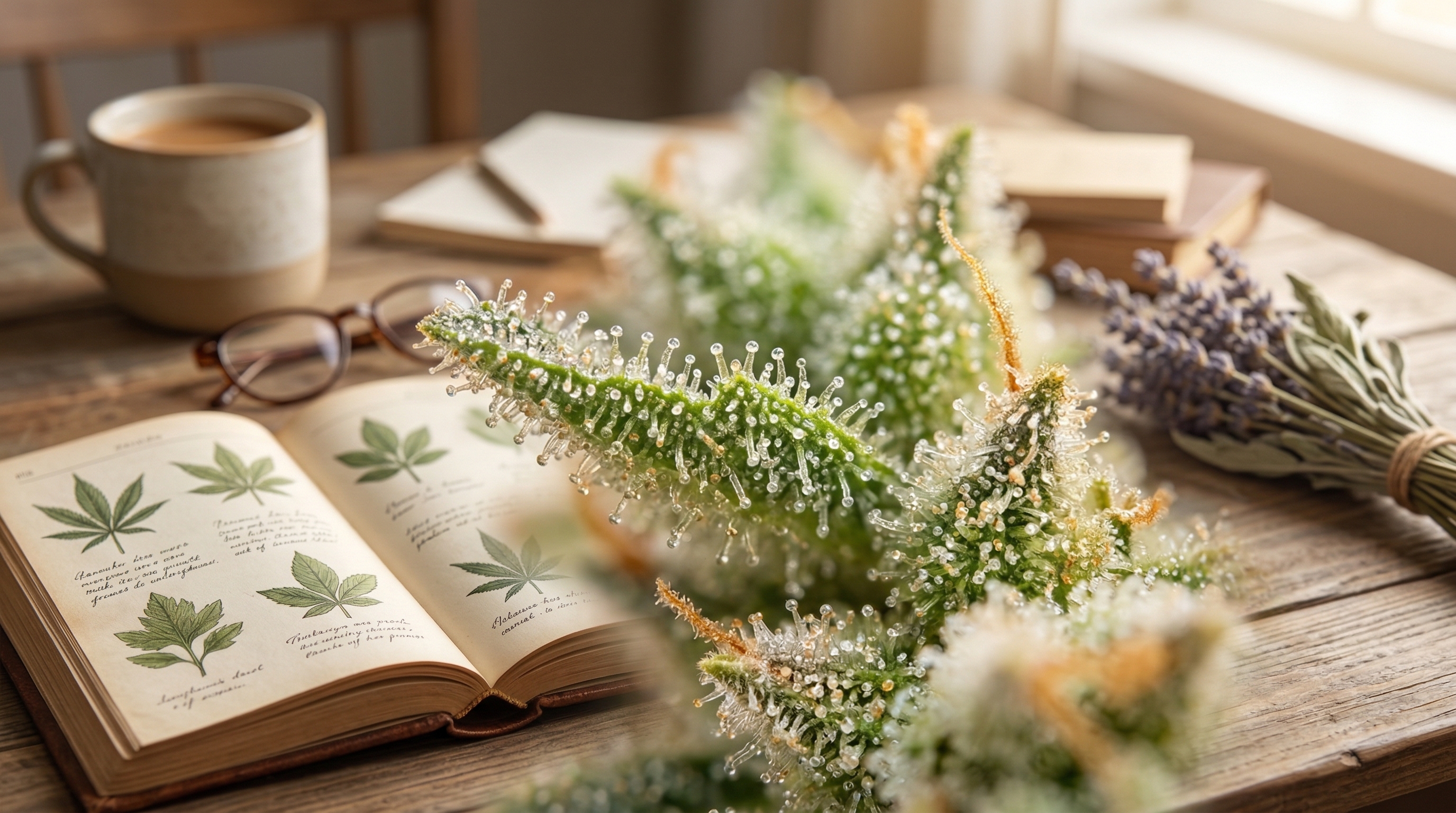
Terpenes are small, volatile organic molecules produced in the trichome glands of the cannabis plant. Over 200 different terpenes have been identified in cannabis, though most strains are dominated by just a handful [Booth et al., 2017]. These molecules interact with your endocannabinoid system, neurotransmitter pathways, and even your olfactory system to modulate how THC and other cannabinoids affect you.
This concept is known as the entourage effect — the idea that cannabis compounds work synergistically, with terpenes modifying and fine-tuning the effects of cannabinoids [Russo, 2011]. It’s why two strains with identical THC percentages can produce wildly different experiences.
For daytime use, certain terpenes consistently emerge as the stars:
| Terpene | Aroma | Key Effect | Found In |
|---|---|---|---|
| Limonene | Citrus, lemon | Mood elevation, stress relief | Citrus fruits, juniper |
| Terpinolene | Piney, floral, herbal | Uplifting, cerebral stimulation | Nutmeg, tea tree, lilac |
| Pinene | Fresh pine | Alertness, memory retention | Pine needles, rosemary |
| Ocimene | Sweet, herbaceous | Energizing, decongestant | Mint, parsley, orchids |
Limonene is perhaps the most well-studied daytime terpene. Research suggests it may elevate mood by increasing serotonin and dopamine levels in key brain regions [Zhang et al., 2019]. Imagine it as a natural mood brightener that counteracts the sometimes heavy or sedating qualities of THC. You can explore limonene-dominant strains to find options that lean into this profile.
Terpinolene is the dark horse of daytime terpenes. Despite being less commonly discussed, strains high in terpinolene are frequently reported as producing uplifting, cerebral effects. A 2020 analysis of consumer-reported effects found that terpinolene-dominant strains were among the most consistently associated with “energetic” and “creative” descriptors [Kaplan et al., 2020]. Browse terpinolene-rich strains for options built around this terpene.
Pinene — specifically alpha-pinene — may be particularly valuable for daytime users because research suggests it could counteract some of THC’s short-term memory impairment [Russo, 2011]. Think of it as a clarity-preserving terpene: it helps keep the lights on upstairs while you enjoy the benefits of cannabis. Explore pinene-forward strains for a sharper, more alert experience.
What the Research Shows About Cannabinoid Ratios
Terpenes aren’t the whole story. The ratio of cannabinoids — particularly THC to CBD — plays a critical role in whether a strain keeps you sharp or sends you to dreamland.
Higher THC concentrations, especially above 20-25%, are more likely to produce anxiety, cognitive impairment, and the kind of overwhelming high that’s the opposite of functional [Morgan et al., 2012]. For daytime use, moderate THC levels (roughly 10-18%) often hit the sweet spot — enough to provide noticeable effects without overwhelming your ability to think clearly.
CBD acts as a modulator of THC’s effects. Research suggests that CBD may reduce THC-induced anxiety and cognitive impairment through its interaction with CB1 receptors [Niesink & van Laar, 2013]. Strains with a small amount of CBD (even 1-3%) may produce a smoother, more functional experience than pure THC strains.
THCV (tetrahydrocannabivarin) is an emerging cannabinoid that deserves attention for daytime use. Early research suggests THCV may produce a shorter, more clear-headed psychoactive effect at moderate doses and could even suppress appetite — the opposite of the classic “munchies” [Abioye et al., 2020]. Strains of African origin, particularly those from the Durban lineage, tend to contain higher levels of THCV.
Key insight: The best daytime cannabis experience comes from the combination of uplifting terpenes (limonene, terpinolene, pinene), moderate THC levels, and the presence of modulating cannabinoids like CBD or THCV.
Practical Implications: Choosing Your Daytime High Family
This is where the science meets your daily life. Instead of relying on the outdated indica/sativa binary, our High Families system classifies strains by their actual terpene chemistry and the experiences they produce. For daytime use, three High Families stand out:
The Uplifting High Family
The Uplifting High family is defined by limonene and linalool dominance. These strains are your go-to for social energy, mood elevation, and creative flow. If your daytime plans involve brainstorming, socializing, or anything that benefits from a positive, engaged mindset, this is your family.
Top Uplifting High strains for daytime:
- Super Lemon Haze — Limonene-dominant, citrusy, consistently energetic. This award-winning hybrid from Lemon Skunk x Super Silver Haze delivers sparkling mood elevation perfect for social errands or creative afternoons.
- Tangie — Intense citrus terpene profile with a euphoric, motivating high perfect for early afternoon creative work. The tangerine aroma is as uplifting as the effects.
- Strawberry Cough — Sweet, berry-forward sativa known for social ease and gentle uplift. Great for those who find pure energy strains too stimulating.
- Mimosa — A Clementine x Purple Punch cross with bright citrus flavor and uplifted, energetic morning effects. One of the most popular wake-and-bake choices.
- Lemon Skunk — Zesty, lemon-forward hybrid with a clean cerebral boost and happy mood elevation that doesn’t overstimulate.
The Energetic High Family
The Energetic High family is built around terpinolene and ocimene — terpenes associated with focused productivity and mental clarity. If you need to get things done — clean the house, write a report, hit the gym — this family delivers.
Top Energetic High strains for daytime:
- Jack Herer — Terpinolene-dominant, widely regarded as the gold standard for functional cannabis. Named after the legendary cannabis activist, this Haze x (Northern Lights #5 x Shiva Skunk) cross delivers clear-headed energy, sustained focus, and creative flow. THC typically runs 18-24%, terpene profile is terpinolene, pinene, and caryophyllene.
- Durban Poison — The “espresso of cannabis.” This pure sativa from South Africa features high terpinolene content and notable THCV levels, producing an especially clean, cerebral energy without the racy jitteriness of some other stimulating strains. 17-26% THC.
- Sour Diesel — An East Coast classic with a pungent diesel aroma and fast-acting cerebral effects. Limonene-dominant (0.8-1.4%), it may help with mental fatigue and provides sustained energy for long work sessions. 18-25% THC.
- Green Crack — (Also known as Green Cush.) Sharp, mango-citrus flavor with what many describe as laser focus. Myrcene-forward but pairs with terpinolene and caryophyllene for a surprisingly functional effect. Great for morning productivity.
- Trainwreck — A Northern California classic (Mexican x Thai x Afghani) with terpinolene-forward lemon-pine flavor. Delivers a bright, creative headspace with a whisper of body ease. Excellent for brainstorming sessions and creative work.
- XJ-13 — Jack Herer x G13 Haze cross with strong mental clarity and bright citrus-pine flavor. A favorite for social situations and detailed tasks requiring sustained attention.
The Balancing High Family
The Balancing High family features balanced terpene profiles and often includes higher CBD ratios. If you’re new to daytime cannabis use or want the gentlest possible functional experience, start here. These strains provide subtle mood enhancement without significant psychoactive intensity.
Top Balancing High strains for daytime:
- Harlequin — Roughly 5:2 CBD:THC ratio, clear-headed and gentle. One of the best choices for daytime use without intoxication. CBD modulates THC’s effects for a reliably functional experience.
- ACDC — Very high CBD (up to 20:1 ratio), minimal intoxication. Research suggests ACDC may help with anxiety and pain while preserving mental clarity completely.
- Cannatonic — Balanced CBD:THC ratio, smooth and functional. A great stepping stone for users transitioning to daytime cannabis use.
- Blue Dream — Sativa-dominant hybrid (Blueberry x Haze) with moderate THC (17-24%) and a gentle, full-body relaxation balanced by cerebral invigoration. One of the most widely available daytime options in legal markets.
Dosing for Daytime Functionality
Even the most uplifting strain can derail your afternoon if you overdo it. Here are some practical dosing guidelines:
- Start low: 2.5-5mg THC for edibles, or a single small inhalation for flower/vape
- Wait before re-dosing: 10-15 minutes for inhalation, 60-90 minutes for edibles
- Microdosing works: Many daytime users find that sub-perceptual doses (1-2.5mg THC) provide mood and focus benefits without any noticeable “high” [Spindle et al., 2018]
- Keep CBD handy: If you accidentally overshoot, CBD may help moderate the intensity [Niesink & van Laar, 2013]
Strains to Approach with Caution During the Day
Just as certain terpene profiles promote alertness, others are strongly associated with sedation. The terpene myrcene — found in mangoes, hops, and lemongrass — is the most abundant terpene in cannabis and is associated with the deeply relaxing effects characteristic of our Relaxing High family [Russo, 2011].
Strains high in myrcene and caryophyllene (without significant limonene or terpinolene to balance them) tend to produce heavy body effects, drowsiness, and couch-lock. For daytime, you’ll generally want to avoid or minimize:
- Granddaddy Purple — Myrcene-dominant, deeply sedating
- Northern Lights — Classic relaxation strain, best saved for evening
- 9 Pound Hammer — The name says it all
This isn’t to say these are bad strains — they’re excellent for their intended purpose. They’re just not your Tuesday morning allies.
Building Your Daytime Cannabis Routine
Integrating cannabis into your daytime life isn’t about getting as high as possible — it’s about finding the minimum effective dose of the right chemistry to enhance what you’re already doing. Here’s a practical framework:
- Identify your goal: Focus? Creativity? Social ease? Physical activity?
- Match to a High Family: Energetic High for productivity, Uplifting High for creativity and social situations, Balancing High for gentle enhancement
- Start with a microdose: You can always add more, but you can’t take it back
- Track your results: Note the strain, dose, time, and how you felt — patterns will emerge quickly
- Rotate strains: Tolerance builds faster with the same strain; rotating between 2-3 daytime options helps maintain effectiveness
The High IQ app makes this easy — you can log each session, track which strains work best for your specific goals, and get personalized recommendations based on your history. If you’re serious about building a functional daytime routine, having that data at your fingertips is a game-changer.
Key Takeaways
-
Terpenes, not labels, determine your experience. Look for limonene, terpinolene, and pinene for clear-headed daytime effects. Forget “sativa” and “indica” — they don’t reliably predict how a strain will make you feel.
-
Moderate THC with supporting cannabinoids. Strains with 10-18% THC and some CBD tend to produce the most functional daytime experiences. THCV-containing strains like Durban Poison may offer uniquely clear-headed effects.
-
Use the High Families system. The Uplifting High, Energetic High, and Balancing High families are your daytime allies. Explore them to find your personal sweet spot.
-
Dose matters as much as strain choice. Microdosing (1-5mg THC) is the most reliable path to functional daytime cannabis use. Start low, go slow, and track your results.
-
Myrcene-heavy strains are evening strains. Save the couch-lock for when you actually want it.
FAQs
Can cannabis really help you focus, or is that just a myth?
It’s nuanced. Some research suggests that low doses of THC, particularly in combination with terpenes like pinene and terpinolene, may enhance certain aspects of divergent thinking and creative problem-solving [Schafer et al., 2012]. However, higher doses consistently impair working memory and attention. The key is dose and chemistry — a microdose of a terpinolene-dominant strain is a very different experience from a large dose of a myrcene-heavy one.
Is it better to vape or smoke for daytime use?
Vaporizing at lower temperatures (around 315-385°F) may preserve more of the lighter, uplifting terpenes like limonene and pinene that can be destroyed by the higher temperatures of combustion [Hazekamp et al., 2006]. Vaporizing also tends to produce a clearer, less sedating experience for many users. That said, individual responses vary — the best method is the one that gives you consistent, controllable results.
What if I pick a “daytime” strain and it still makes me sleepy?
Individual biochemistry plays a huge role. Your endocannabinoid system is unique, and factors like tolerance, metabolism, sleep quality, and even what you’ve eaten can influence how a strain affects you. If an Energetic High family strain still sedates you, try lowering your dose significantly, trying a different strain within the same family, or exploring the Balancing High family with its higher CBD ratios.
Are there daytime strains that won’t give me the munchies?
Strains containing THCV may actually suppress appetite rather than stimulate it [Abioye et al., 2020]. Durban Poison, Doug’s Varin, and some African landrace varieties tend to have higher THCV content. Additionally, strains with prominent pinene and humulene profiles are less commonly associated with intense hunger compared to myrcene-dominant varieties.
Sources
-
Sawler, J. et al. (2015). “The Genetic Structure of Marijuana and Hemp.” PLOS ONE. DOI: 10.1371/journal.pone.0133292
-
New Frontier Data. (2022). “Cannabis Consumers in America.” New Frontier Data Market Report.
-
Booth, J.K. et al. (2017). “Terpene synthases from Cannabis sativa.” PLOS ONE. DOI: 10.1371/journal.pone.0173911
-
Russo, E.B. (2011). “Taming THC: potential cannabis synergy and phytocannabinoid-terpenoid entourage effects.” British Journal of Pharmacology. DOI: 10.1111/j.1476-5381.2011.01238.x
-
Zhang, L.L. et al. (2019). “Limonene: A review of its biological properties.” Food and Chemical Toxicology. DOI: 10.1016/j.fct.2019.110268
-
Kaplan, B.L.F. et al. (2020). “Identifying cannabis terpene signatures associated with euphoric effects.” Cannabis and Cannabinoid Research.
-
Morgan, C.J. et al. (2012). “Impact of cannabidiol on the acute memory and psychotomimetic effects of smoked cannabis.” British Journal of Psychiatry. DOI: 10.1192/bjp.bp.110.088930
-
Niesink, R.J. & van Laar, M.W. (2013). “Does Cannabidiol Protect Against Adverse Psychological Effects of THC?” Frontiers in Psychiatry. DOI: 10.3389/fpsyt.2013.00130
-
Abioye, A. et al. (2020). “Delta-9-tetrahydrocannabivarin (THCV): a commentary on potential therapeutic benefit for the management of obesity and diabetes.” Journal of Cannabis Research. DOI: 10.1186/s42238-020-0016-7
-
Spindle, T.R. et al. (2018). “Acute Effects of Smoked and Vaporized Cannabis in Healthy Adults.” JAMA Network Open. DOI: 10.1001/jamanetworkopen.2018.4841
-
Schafer, G. et al. (2012). “Investigating the interaction between schizotypy, divergent thinking and cannabis use.” Consciousness and Cognition. DOI: 10.1016/j.concog.2011.11.009
-
Hazekamp, A. et al. (2006). “Evaluation of a vaporizing device for the administration of tetrahydrocannabinol.” Journal of Pharmaceutical Sciences. DOI: 10.1002/jps.20574


