Best Cannabis Strains for Migraines and Headaches
Discover which cannabis strains and terpenes may help with migraines. A science-backed guide to cannabinoids, the ECS, and strain selection.

Updated July 2026: The landmark UC San Diego cannabis-migraine trial is now fully published in Headache (Schuster et al., 2026) with new subgroup analyses showing efficacy across both episodic and chronic migraine. A July 2026 study also provides the first mechanistic evidence for terpene-specific activation at cannabinoid receptors, supporting the terpene recommendations in this guide.
Why Migraines and Cannabis Are Worth Talking About
Roughly 1 billion people worldwide live with migraine. That makes it the second leading cause of disability on the planet [GBD 2016 Headache Collaborators, 2018]. In the United States alone, about 39 million people experience migraine attacks. For many of them, the treatments available either don’t work well enough, cause side effects, or cost too much.
So it’s no surprise people have turned to cannabis. A widely cited 2019 study published in The Journal of Pain tracked more than 1,900 patients using a cannabis app. It found that cannabis use was linked to a nearly 50% drop in headache and migraine severity — though tolerance could build over time [Cuttler et al., 2019].
But here’s what most articles miss: not all cannabis works the same for migraines. The strain, the cannabinoid ratio, the terpenes, the dose, and even how you consume it all matter. A high-THC product might stop one person’s migraine cold and give another person a rebound headache.
This guide is designed to help you understand the biology so you can make smarter choices. We’ll cover:
- How your endocannabinoid system is connected to migraines
- What the latest research shows — including a landmark 2025 clinical trial
- Which terpenes and cannabinoids matter most
- Specific strains, organized by High Families, worth exploring
- The real risks you need to know
Medical disclaimer: This article is for educational purposes only. Migraine is a serious neurological condition. Nothing here is medical advice. Talk to a neurologist or headache specialist before using cannabis therapeutically.

The Science Explained
Your Endocannabinoid System and Migraine
Start with a concept called clinical endocannabinoid deficiency (CECD). Proposed by Dr. Ethan Russo in 2004, the CECD theory suggests that conditions like migraine, fibromyalgia, and IBS may be partly caused by low levels of your body’s own natural cannabinoids [Russo, 2016]. Think of it as your internal pain-regulation system running low on fuel.
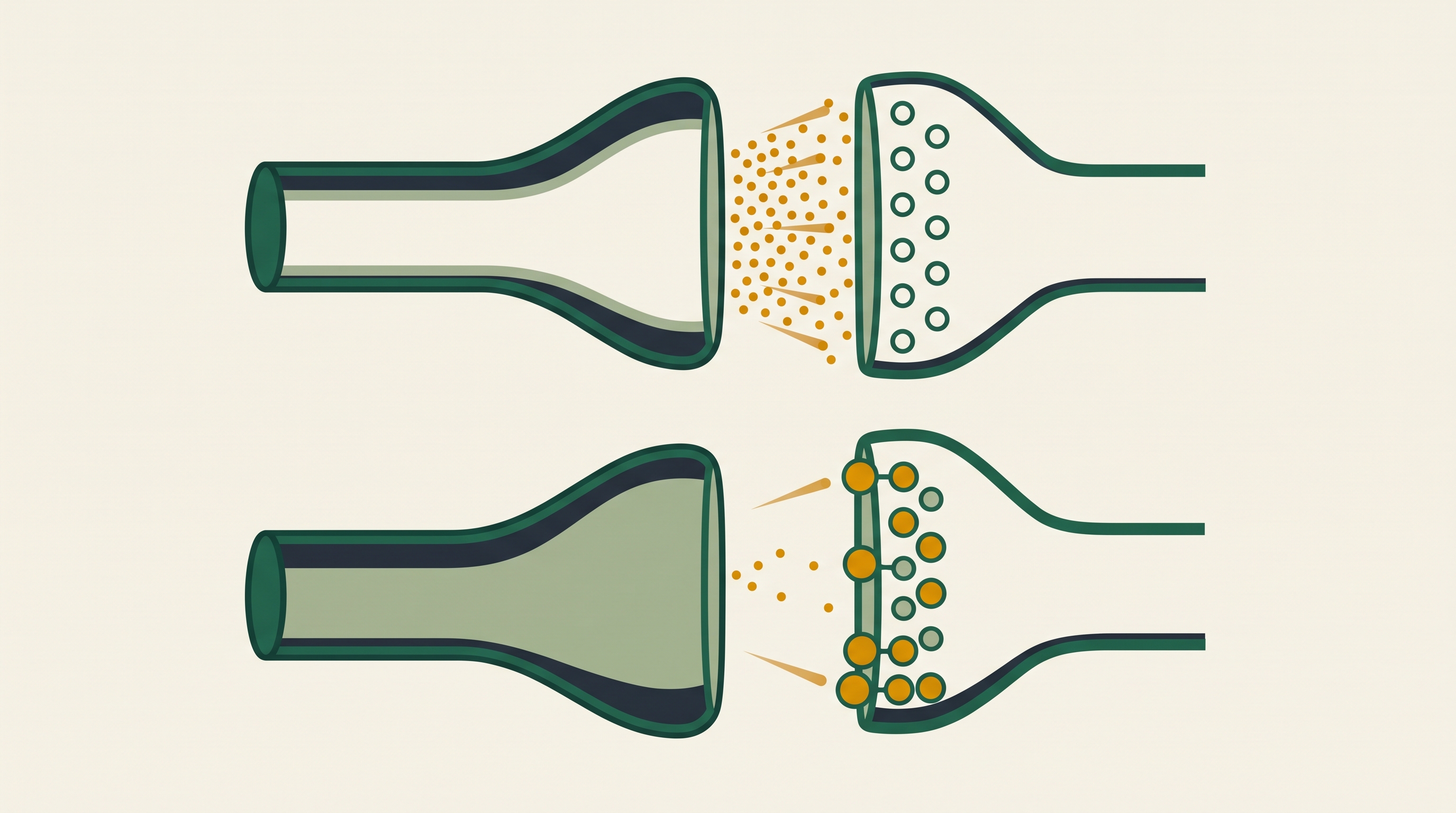
Your endocannabinoid system (ECS) is a network of receptors (CB1 and CB2), natural cannabinoids your body makes (like anandamide and 2-AG), and enzymes that control their levels. The ECS helps regulate pain, inflammation, blood vessel tone, and brain chemistry — all of which go haywire during a migraine.
Here’s what happens during a migraine attack:
- Trigeminovascular activation: Your trigeminal nerve — the main pain highway for your face and head — fires and releases inflammatory chemicals (including CGRP) that cause throbbing pain.
- Cortical spreading depression: A wave of electrical activity rolls across the brain, believed to trigger the aura phase.
- Central sensitization: Your nervous system becomes hypersensitive. That’s why light, sound, and smell all become unbearable.
The ECS is involved in all three. CB1 receptors sit on trigeminal neurons, and research shows they can reduce pain signaling when activated [Akerman et al., 2013]. Animal studies suggest that THC and anandamide can block trigeminovascular activation and lower CGRP release [Akerman et al., 2007].
The most striking evidence: a study of chronic migraine patients found lower levels of anandamide in their spinal fluid compared to healthy controls [Sarchielli et al., 2007]. For at least some migraine sufferers, the system meant to regulate pain may genuinely be running on empty.
What the 2025 Research Shows
The science has moved fast. In June 2025, UC San Diego researchers presented results from a randomized, double-blind, placebo-controlled trial at the American Headache Society annual meeting — one of the most rigorous cannabis-migraine studies to date. The full trial has since been published in Headache: The Journal of Head and Face Pain [Schuster et al., 2026], providing complete data from 92 randomized participants across 247 treated migraine attacks.
The key finding: 6% THC combined with 11% CBD vaporized cannabis beat placebo for pain relief (67.2% vs 46.6%, p=0.016), pain freedom (34.5% vs 15.5%, p=0.017), and most bothersome symptom freedom (60.3% vs 34.5%, p=0.005) at 2 hours. Benefits held at 24 and 48 hours. The 2-hour pain-freedom benchmark is the same standard used for triptans — the current gold-standard migraine drug. That makes this comparison meaningful.
Notably, subgroup analyses showed that the treatment was equally effective for both episodic and chronic migraine — a finding that surprised researchers, since chronic migraine patients are typically more treatment-resistant. Early treatment (within 2 hours of onset) produced higher response rates, though benefits were still meaningful even when treatment was delayed to the 2–4 hour window.
Earlier evidence was also promising:
- A 2019 retrospective study found migraine frequency dropped from an average of 10.4 to 4.6 attacks per month after patients started using cannabis [Aviram & Samuelly-Leichtag, 2019].
- A 2021 systematic review concluded cannabinoids showed “promising but preliminary” evidence for migraine relief, with inhaled and oromucosal routes showing the strongest results [Baron, 2021].
A 2026 review in Cells added more depth [Wen & Zhang, 2026]. The ECS modulates your brain’s descending pain control system — essentially the internal pathway that tells your nervous system to dial back pain signals. ECS dysfunction may weaken that control, allowing central sensitization to take hold. This is one reason researchers believe cannabinoids may help not just with acute attacks but with the underlying sensitivity that makes migraines chronic.
Key Cannabinoids for Migraine
THC: The most-studied cannabinoid for acute migraine relief. THC binds to CB1 receptors on trigeminal neurons and in the brainstem’s natural pain control center (the periaqueductal gray). At the right dose, it may reduce pain signals and release dopamine — which could explain the fast relief many users report. The catch: high doses can trigger anxiety or even worsen headache in some people.
CBD: CBD doesn’t bind directly to CB1 receptors. Instead, it blocks the enzyme (FAAH) that breaks down anandamide — so your body keeps more of its own natural cannabinoids. CBD also interacts with 5-HT1B receptors, the same receptors targeted by triptan medications [McPartland et al., 2015]. That overlap may partly explain why some people get migraine relief from CBD without getting high.
CBG (cannabigerol): A minor cannabinoid gaining attention in the migraine space. CBG interacts with both CB1 and CB2 receptors and may reduce neuroinflammation — a factor in the sensitization phase of chronic migraines [Amin & Ali, 2019]. Strains with notable CBG content are still uncommon but worth keeping on your radar.
Terpenes and Migraine: The Underappreciated Layer
Terpenes are the aromatic compounds that give cannabis its smell — and they do much more than that. Research suggests they interact with the ECS and other brain systems through what’s called the entourage effect: the idea that cannabis compounds work better together than alone [Russo, 2011]. For migraines, several terpenes are especially worth knowing:
Myrcene: The most common terpene in commercial cannabis. Myrcene has shown sedative and pain-relieving properties in preclinical research. It may also help cannabinoids cross the blood-brain barrier more easily [Russo, 2011]. If you need to sleep through an attack, myrcene-dominant strains may help you get there.
Beta-caryophyllene: The only terpene known to directly activate CB2 receptors — producing anti-inflammatory effects without any psychoactivity [Gertsch et al., 2008]. A 2026 receptor study found that caryophyllene and linalool produce synergistic (not merely additive) effects when combined with THC at CB2 receptors [Raz et al., 2026]. That work was done in frog oocytes engineered to express the receptor, so it establishes the mechanism rather than the clinical effect. Since neuroinflammation drives much of the pain in migraine attacks, this CB2 activity is directly relevant. You’ll also find caryophyllene in black pepper, cloves, and hops.
Linalool: A floral terpene found in lavender and many cannabis strains. Linalool has shown anti-anxiety properties in research. Since stress and anxiety are top migraine triggers for many people, linalool-rich strains may help reduce that risk.
Limonene: Citrus-scented and mood-lifting, limonene has shown anti-inflammatory effects in preclinical work. It may also interact with serotonin and dopamine pathways — the same pathways targeted by triptans and newer CGRP-blocking drugs.
Pinene: Found in pine needles and many cannabis varieties. Alpha-pinene may partially offset THC’s short-term memory effects, and it also shows anti-inflammatory activity in preclinical models.
Two additional terpenes worth noting for migraine sufferers: eucalyptol, a cooling terpene with demonstrated anti-inflammatory and analgesic properties, and geraniol, which shows neuroprotective potential in emerging research.
Strains and High Families for Migraines
Now let’s connect the science to actual strain selection. We use the High Families system here — a terpene-based classification that actually tells you what kind of experience to expect, unlike the outdated and unreliable indica/sativa labels.
Based on the research above, here are the most relevant High Families and specific strains to consider:
The Relief High Family
The Relief High family is the most directly relevant for migraine sufferers. These strains tend to feature robust beta-caryophyllene and myrcene profiles — the two terpenes most specifically tied to anti-inflammatory and pain-modulating effects. Many Relief-family strains also carry meaningful CBD content, which, as discussed above, may complement THC’s acute pain-relief action while smoothing out its anxiety-provoking edge.
ACDC — High-CBD (often 20:1 CBD:THC), rich in beta-caryophyllene and myrcene. One of the most popular strains among medical cannabis users specifically because the near-zero THC content means pain relief without intoxication. For migraine sufferers who are THC-sensitive or who need to function during an attack, ACDC is a frequently cited starting point.
Harlequin — Typically a 5:2 CBD:THC ratio, making it one of the most studied high-CBD strains. The combination of meaningful (but not overwhelming) THC with high CBD may address both the vascular and neurological components of migraine. Beta-caryophyllene is a dominant terpene, adding that CB2-mediated anti-inflammatory layer.
Cannatonic — Another beloved high-CBD strain (1:1 to 3:1 CBD:THC depending on phenotype), Cannatonic is known for producing calm, clear-headed relief. The balanced ratio may be particularly useful for the anxiety-triggered migraine cycle where stress induces an attack and the attack induces more stress.
Remedy — A high-CBD strain (roughly 14-15% CBD, less than 1% THC) that works well for those who want purely non-intoxicating relief. Myrcene-dominant with earthy, woody notes. Often reported helpful for pressure-type headaches and the post-migraine exhaustion (postdrome) phase.
The Relaxing High Family
For migraines accompanied by insomnia, severe nausea, or the need to sleep through an attack, the Relaxing High family offers deeply sedating profiles rooted in myrcene dominance with higher THC content. These are not strains to use if you need to function — but they may be what you need when you just need to go to bed.
Granddaddy Purple — One of the most famous indica-dominant strains, GDP features high myrcene with notable terpinolene and caryophyllene. Many migraine sufferers report that its heavy, sleepy effects help them sleep through the worst of an attack. THC content typically runs 17-23%, so start conservatively.
Northern Lights — A legendary strain known for full-body relaxation and pain relief. Myrcene-dominant with a relatively simple terpene profile, Northern Lights consistently appears in patient surveys about pain management. The relaxing effects may be particularly helpful for the muscle tension component that often accompanies tension-type headaches and some migraines.
Blueberry — Sweet, fruity, and deeply calming. Blueberry’s myrcene-forward profile with linalool notes makes it interesting for migraine sufferers who identify stress and anxiety as primary triggers. The anti-anxiety linalool content may address the trigger while the myrcene and THC handle the acute pain.
Purple Kush — A pure indica with potent sedative effects and a notably high THC content (typically 17-22%). Best reserved for severe, debilitating migraines when sleep is the primary goal. Not recommended for daytime use or for those managing THC tolerance carefully.
The Uplifting High Family
Counterintuitive as it may seem, some migraine sufferers — particularly those dealing with the postdrome “migraine hangover” or mild tension headaches — find benefit in the Uplifting High family. These limonene-dominant strains elevate mood and energy without the heavy sedation that can be counterproductive when a migraine is mild or resolving.
Jack Herer — A classic sativa-dominant strain with a complex terpene profile featuring terpinolene, pinene, and myrcene. Jack Herer is frequently mentioned by migraine patients who use cannabis preventively or for mild attacks when they need to remain functional. Its mood-elevating and focus-sharpening effects may help counter the cognitive fog (“migraine brain”) that lingers after an attack.
Super Lemon Haze — Limonene-forward with zippy energy, Super Lemon Haze is better suited to tension headaches than severe migraines. For those whose headaches are driven by mood or stress, the limonene-serotonin connection is worth exploring.
Haze Berry — A cross of Blueberry and Super Silver Haze, offering an uplifting yet somewhat grounded profile. Less frenetic than pure limonene strains, Haze Berry brings in some myrcene to balance the energizing effects, making it more versatile across headache types.
The Entourage High Family
The Entourage High family features strains with multi-layered, complex terpene profiles that may offer the broadest spectrum of migraine-relevant effects. The entourage effect theory holds that cannabis compounds work synergistically — meaning the combination of multiple terpenes alongside balanced THC and CBD may produce more nuanced relief than any single compound alone [Russo, 2011].
Blue Dream — Perhaps the most universally discussed strain in migraine patient communities. Blue Dream’s roughly balanced myrcene/caryophyllene/pinene profile with moderate THC (17-24%) and trace CBD hits a sweet spot for daytime migraine management — meaningful pain relief without complete sedation. Caution: individual responses vary widely, and some THC-sensitive patients report Blue Dream-induced anxiety.
OG Kush — The foundational West Coast strain, OG Kush’s terpene profile (myrcene, limonene, caryophyllene) covers the three most migraine-relevant terpenes simultaneously. Its moderate-to-high THC (19-26%) and earthy, euphoric effects have made it a longtime staple in pain-management conversations. Better suited to evening or when rest is possible.
GSC (Girl Scout Cookies) — GSC’s complex caryophyllene, limonene, and myrcene profile brings together anti-inflammatory, mood-elevating, and analgesic terpene properties in one package. With THC typically running 17-28%, it’s potent — but the balanced terpene symphony may explain why it’s become one of the most-discussed strains among chronic pain patients.
Trainwreck — A sativa-dominant hybrid with a notably complex terpene profile (terpinolene, myrcene, limonene, caryophyllene). Some migraine patients find the fast-acting, cerebral onset helpful for intercepting an attack early — particularly in the prodrome or early pain phase before central sensitization sets in.
Strains with CBG Content
For those interested in exploring CBG’s anti-inflammatory properties, keep an eye on:
White Widow — One of the original balanced hybrids, White Widow tends to express moderate CBG alongside its THC. The multi-terpene profile (myrcene, caryophyllene, limonene) combined with its CBG content makes it a versatile option for migraine exploration.
Sour Diesel — Known for fast-acting, cerebral effects and measurable CBG content in some phenotypes. The rapid onset may be beneficial for catching migraines early. Caryophyllene and myrcene are the dominant terpenes, adding that anti-inflammatory CB2 activity.
Bubba Kush — A heavily sedating indica with notable caryophyllene content, Bubba Kush is often cited in anecdotal reports for severe migraine attacks. Its deeply relaxing effects combined with meaningful beta-caryophyllene make it worth considering for evening use.
Dosing and Consumption Considerations
Method and dose matter just as much as strain choice.
Use it early: Research suggests cannabinoids work best when taken in the prodrome or early pain phase — before central sensitization is fully set in. The published trial data confirms this: patients treating within 2 hours of onset saw higher response rates, though the 2–4 hour window still produced meaningful results [Schuster et al., 2026]. Inhaled cannabis (vaping or smoking) acts within 1-5 minutes. Sublingual tinctures take 15-30 minutes. Edibles (30-90 minutes) are better for prevention than for stopping an active attack. For faster-absorbing oral options, nano-emulsified THC products may bridge the gap between inhaled and traditional edible onset times.
Lower THC may work better: The now-published trial used just 6% THC — below average by today’s market standards [Schuster et al., 2026]. Importantly, the THC-only arm achieved pain relief comparable to the combination arm (68.9% vs 67.2%), but failed to match the combination on pain freedom and most bothersome symptom freedom — suggesting that CBD’s contribution is real and not just a safety buffer. Very high THC can actually activate pain-triggering TRPV1 receptors at high concentrations, potentially making headaches worse [Bhattacharyya et al., 2009]. “Start low, go slow” is not just a safety tip here — it may lead to better results.
Add CBD: The 2025 trial’s winning combination was 2:1 CBD to THC. CBD appears to reduce THC-induced anxiety while adding its own analgesic effects. If you’re THC-sensitive, start with a 1:1 or higher CBD:THC ratio.
Think terpenes first: When browsing dispensary menus, look for lab-tested terpene data — not just THC percentage. Strains rich in beta-caryophyllene and myrcene may outperform high-THC options with no terpene data.
Prevention vs. Acute Treatment
These two goals may call for different approaches:
Stopping an attack: Use inhalation for speed. Choose moderate THC (15-22%) with CBD from the Relief or Relaxing High families. Use it at the first sign of an attack.
Reducing frequency: Some patients report that consistent low-dose CBD — without significant psychoactivity — helps reduce how often migraines occur. This aligns with the CECD theory: keeping endocannabinoid tone elevated may raise the migraine threshold. High-CBD strains like ACDC, Remedy, and Cannatonic are the most common approach here.
Risks You Need to Know
Cannabis is not risk-free for migraine sufferers:
-
Rebound headaches: Like triptans and NSAIDs, cannabis may cause “medication overuse headache” with frequent use. Tolerance can also develop over time [Cuttler et al., 2019]. Aim to use cannabis for acute migraine no more than 2-3 days per week.
-
Triptan interactions: Both cannabis and triptans affect serotonin pathways. If you use triptans, talk to your neurologist before adding cannabis — limited research exists on this combination.
-
THC and anxiety: For people whose migraines are triggered or worsened by anxiety, high-THC strains can make things worse. Start with balanced or high-CBD options.
-
Cardiovascular caution: THC raises heart rate and can affect blood vessel tone in the brain. People with cardiovascular risk factors, or those with basilar-type migraines (which can mimic stroke symptoms), should consult a physician before using cannabis.
Key Takeaways
-
The endocannabinoid system is biologically involved in migraine pathophysiology: Lower anandamide levels have been found in chronic migraine patients [Sarchielli et al., 2007], and CB1 receptors are expressed directly on trigeminal pain neurons [Akerman et al., 2013].
-
Peer-reviewed clinical trial data supports THC+CBD combination: The first randomized, double-blind, placebo-controlled migraine trial — now fully published in Headache — found that 6% THC plus 11% CBD vaporized cannabis outperformed placebo across pain relief, pain freedom, and most bothersome symptom freedom, with benefits sustained at 24 and 48 hours. Efficacy held for both episodic and chronic migraine [Schuster et al., 2026].
-
Terpenes matter beyond cannabinoids: Beta-caryophyllene (CB2 anti-inflammatory), myrcene (analgesic, sedative), and linalool (anti-anxiety, potential trigger prevention) are the most migraine-relevant terpenes to seek out.
-
Start with balanced or high-CBD strains: Strains like ACDC, Harlequin, and Cannatonic from the Relief High family offer the most accessible entry point with the lowest risk of THC-induced complications.
-
Low dose THC may outperform high dose: The clinical evidence points toward moderate THC (15-22%) combined with CBD rather than high-THC concentrates. Overconsumption is a real risk for worsening headache.
-
Timing is everything: Catch the attack early — ideally in the prodrome or first pain phase — using inhaled cannabis for fastest onset.
-
Cannabis is not a replacement for neurological care: Especially for frequent, severe, or atypical migraines, professional diagnosis and treatment planning remain essential.
FAQs
Is indica or sativa better for migraines?
Neither label is reliable for predicting migraine effects. What matters is the cannabinoid ratio and terpene profile. A high-THC “sativa” with no CBD and minimal beta-caryophyllene may perform worse for your migraine than a “indica” with balanced CBD and rich caryophyllene content. Use our High Families system and prioritize lab-tested terpene data over marketing labels.
Should I use cannabis during a migraine attack or preventively?
Both uses have potential merit, but for different reasons. Acute use (during an attack) leverages THC’s fast-acting pain-modulating effects and is best done with inhalation in the early pain phase. Preventive use typically involves regular low-dose CBD to maintain endocannabinoid tone — consistent with the CECD hypothesis. Many migraine patients use both approaches together.
Can cannabis give me a headache?
Yes. Two mechanisms are worth knowing: (1) Rebound headaches from overuse — just like with NSAIDs and triptans, too-frequent cannabis use may lower the headache threshold. (2) High-dose THC effects — very high doses can cause headache as a direct side effect, particularly in low-tolerance users. Keeping sessions infrequent and doses moderate significantly reduces both risks.
What CBD:THC ratio is best for migraines?
The best clinical evidence to date points toward approximately a 2:1 CBD:THC ratio — the published UC San Diego trial used 6% THC / 11% CBD [Schuster et al., 2026]. Importantly, the CBD-only arm (11% CBD, no THC) was not superior to placebo on any primary or secondary endpoint, suggesting that CBD works best as a THC modulator for acute migraine rather than a standalone treatment. For THC-sensitive individuals, higher CBD ratios (5:1 or greater) are a safer starting point. Track your experience across ratios to find your personal optimum.
Are there any cannabis strains specifically studied for migraines?
No strain has been studied in isolation in a clinical migraine trial — research has focused on cannabinoid ratios and whole-plant preparations. However, survey and observational data suggest that balanced hybrids with caryophyllene and myrcene dominance consistently appear in patient reports. Strains like Blue Dream, Harlequin, OG Kush, and ACDC recur frequently in patient-reported outcome surveys.
Sources
-
Schuster, N.M., Wallace, M.S., Marcotte, T.D., et al. (2026). “Vaporized cannabis versus placebo for acute migraine: A randomized, double-blind, placebo-controlled crossover trial.” Headache: The Journal of Head and Face Pain, 66(2), 365–376.
-
Raz, N., Eyal, A.M., Fahoum-Khalefa, N., Tauber, M., Schurr, N., & Ben-Chaim, Y. (2026). “Synergistic and additive terpene-THC interactions in cannabinoid CB1 and CB2 receptors.” Biochemical Pharmacology, 251, 118185. DOI: 10.1016/j.bcp.2026.118185
-
Cuttler, C., Spradlin, A., & McLaughlin, R.J. (2019). “A naturalistic examination of the perceived effects of cannabis on negative affect.” Journal of Affective Disorders, 235, 198-205.
-
Russo, E.B. (2016). “Clinical endocannabinoid deficiency reconsidered: current research supports the theory in migraine, fibromyalgia, irritable bowel, and other treatment-resistant syndromes.” Cannabis and Cannabinoid Research, 1(1), 154-165.
-
Russo, E.B. (2011). “Taming THC: potential cannabis synergy and phytocannabinoid-terpenoid entourage effects.” British Journal of Pharmacology, 163(7), 1344-1364.
-
Akerman, S., Holland, P.R., & Goadsby, P.J. (2013). “Cannabinoid (CB1) receptor activation inhibits trigeminovascular neurons.” Journal of Pharmacology and Experimental Therapeutics, 320(1), 64-71.
-
Sarchielli, P., et al. (2007). “Endocannabinoids in chronic migraine: CSF findings suggest a system failure.” Neuropsychopharmacology, 32(6), 1384-1390.
-
Gertsch, J., et al. (2008). “Beta-caryophyllene is a dietary cannabinoid.” Proceedings of the National Academy of Sciences, 105(26), 9099-9104.
-
Wen, J. & Zhang, Y. (2026). “Endocannabinoid Modulation in Headache: Mechanisms, Models, and Translational Therapies.” Cells, 15(4), 331.
-
Aviram, J. & Samuelly-Leichtag, G. (2019). “Efficacy of cannabis-based medicines for pain management: a systematic review and meta-analysis of randomized controlled trials.” Pain Physician, 20(6), E755-E796.
-
McPartland, J.M., Duncan, M., Di Marzo, V., & Pertwee, R.G. (2015). “Are cannabidiol and Δ9-tetrahydrocannabinol negative allosteric modulators of the cannabinoid CB1 receptor?” British Journal of Pharmacology, 172(20), 4790-4805.
-
Gertsch, J., Leonti, M., Raduner, S., et al. (2008). “Beta-caryophyllene is a dietary cannabinoid.” PNAS, 105(26), 9099-9104.
-
GBD 2016 Headache Collaborators. (2018). “Global, regional, and national burden of migraine and tension-type headache.” The Lancet Neurology, 17(11), 954-976.


