Best Cannabis Strains for ADHD and Concentration
Explore the science behind cannabis and ADHD focus. Discover which terpenes and strains may support concentration and mental clarity.


Updated July 2026: Added two new ECS-ADHD reviews (Özmeral Erarkadaş et al. 2026, J Mol Neurosci 2025), a recruiting Phase 2 terpene-enriched CBD trial for children (NCT06542445), and links to newer articles on endocannabinoid-dopamine pathways, THCV stacking, and terpene bioavailability.
What If the Key to Focus Is Not About Slowing Down but About Finding the Right Kind of Stimulation?
An estimated 6.1 million children and roughly 4.4% of adults in the United States have been diagnosed with ADHD (Attention-Deficit/Hyperactivity Disorder), according to the CDC. And while stimulant medications like Adderall and Ritalin remain the frontline treatment, a growing number of adults with ADHD are quietly exploring cannabis as a complementary tool for managing focus, restlessness, and the mental noise that can make concentration feel impossible.
This is not about replacing your treatment plan. It is about understanding the science – what we know, what we do not know, and what the terpene and cannabinoid profiles of certain strains might offer people who struggle with attention and executive function.
The link between cannabis and ADHD is complicated. Some people say certain strains sharpen their focus. Others find cannabis makes scattered thinking worse. The difference often comes down to what you consume, how much, and which compounds are doing the work.
In this article, we will cover the neuroscience of ADHD, what research says about cannabis and attention, which terpenes may help with focus, and practical strain picks using our High Families system. Whether you have ADHD or just want to stay sharper, you will walk away with a clear framework.
Important disclaimer: This article is for educational purposes only. Cannabis is not an FDA-approved treatment for ADHD. If you have ADHD, please work with a healthcare provider before making changes to your treatment plan.

The Neuroscience of ADHD and the Endocannabinoid System
How ADHD and Dopamine Work
To understand why certain cannabis strains might support focus, you first need to understand what is happening in an ADHD brain – and it starts with a neurotransmitter called dopamine.
Dopamine is not just about pleasure. It is the chemical messenger that helps you decide what is worth paying attention to. Every time you complete a task, learn something new, or experience something rewarding, dopamine reinforces that behavior and tells your brain to do it again.
In people with ADHD, this system works differently. Research suggests ADHD brains have lower baseline dopamine activity in the prefrontal cortex – the brain region that handles planning, prioritizing, and sustained attention [Volkow et al., 2009]. A major 2024 review looked at over 40 years of evidence and found strong support for dopamine’s role in ADHD. But the picture is more complex than a simple “dopamine deficit.” It likely involves altered dopamine signaling across brain circuits rather than one uniform reduction [MacDonald et al., 2024].
This is why people with ADHD often chase novelty and high-intensity activities. They are seeking the dopamine boost their brain does not produce well on its own. It is also why stimulant medications work. Drugs like Ritalin and Adderall increase dopamine in the prefrontal cortex [Faraone, 2018].
The Endocannabinoid Connection
Now here is where cannabis enters the picture. Your body has its own cannabis-like network called the endocannabinoid system (ECS). It plays a big role in controlling dopamine release. CB1 receptors are packed into the prefrontal cortex and striatum – the exact brain regions tied to ADHD [Lu and Mackie, 2016].
A 2026 study from the German Clinical Trials Register is the first to investigate the endocannabinoid system in ADHD patients directly. Researchers are using PET brain scans to visualize CB1 receptor levels in the striatum and prefrontal cortex of adults with ADHD versus healthy controls. The study highlights that CB1 receptors sit in the exact spots that control the dopamine pathways most relevant to ADHD [DRKS00037526, 2026].
A 2024 scoping review by Ryan et al. at Thomas Jefferson University looked at both preclinical and clinical evidence. They found that the ECS helps regulate impulsivity – especially the ability to stop yourself from acting on impulse. This makes it a possible target for managing attention-related deficits. The review also found that CB1 receptor function may drive persistent adolescent-like behavior in some adults [Ryan et al., 2024].
A comprehensive 2025 review in the Journal of Molecular Neuroscience synthesized the full landscape of cannabinoid-ADHD research – from in-vivo animal models to clinical data. It confirmed that both CBD and THC interact with the dopaminergic pathways implicated in ADHD and that self-medication with cannabis is more common among adults with ADHD than in the general population [J Mol Neurosci, 2025]. A 2026 narrative review in Neurochemical Research went further, evaluating 11 preclinical and 2 clinical studies of ECS-related biochemical alterations in ADHD. The authors concluded that dysregulation of the endocannabinoid system contributes to ADHD pathophysiology and that clarifying ECS mechanisms may reveal novel molecular targets for treatment [Özmeral Erarkadaş et al., 2026]. For a deeper look at how the endocannabinoid 2-AG shapes dopamine-driven decision-making, see our article on how 2-AG controls dopamine and decisions.
When THC binds to CB1 receptors, it changes dopamine signaling. But here is the key: dose matters enormously. Low doses of THC may slightly increase dopamine activity. High doses may actually decrease it or throw it off balance [Bloomfield et al., 2016]. This two-phase effect is one reason cannabis affects focus so differently from person to person.
What the Clinical Research Shows
Let us be honest: large clinical trials on cannabis for ADHD barely exist. But the early evidence is interesting enough to explore carefully.
The Cooper et al. RCT (2017) – This is the most important clinical study to date. It was a pilot randomized, placebo-controlled trial published in European Neuropsychopharmacology. Thirty adults with ADHD received either Sativex (a 1:1 THC:CBD mouth spray) or placebo. The main outcome measure did not reach significance (p=0.16). But the cannabinoid group showed notable improvements in hyperactivity/impulsivity (p=0.03) and cognitive inhibition (p=0.05). There were also trends toward better inattention scores (p=0.10) and emotional stability (p=0.11). The researchers said these findings offer early evidence supporting the self-medication theory [Cooper et al., 2017].
Naturalistic Study (2025) – A study in Psychopharmacology examined 104 adults in four groups: cannabis users with ADHD, non-users with ADHD, cannabis users without ADHD, and non-users without ADHD. Cannabis users with ADHD reported less impulsivity, irritability, and anxiety while intoxicated. But the study also found that acute cannabis use impaired other cognitive areas. The takeaway: cannabis may help with impulsivity for some ADHD users, but at a cost to other thinking skills [2025].
The Self-Medication Theory – A 2024 review noted that cannabis use is more common among people with ADHD than in the general population. CBD-rich products show early promise, but the science is not strong enough yet to back ADHD treatment claims [Dallabrida et al., 2024].
Terpene-Enriched CBD Trial for Children (NCT06542445) – A Phase 2 randomized, quadruple-blind trial is currently recruiting 120 children diagnosed with ADHD. It tests a terpene-enriched CBD oil (completely THC-free) against placebo over five weeks, measuring both hyperactivity and inattention via the Conners questionnaire and TOVA test. Expected completion is August 2026. If results are positive, this would be the first controlled evidence for a terpene-cannabinoid combination specifically designed for pediatric ADHD [ClinicalTrials.gov, NCT06542445].
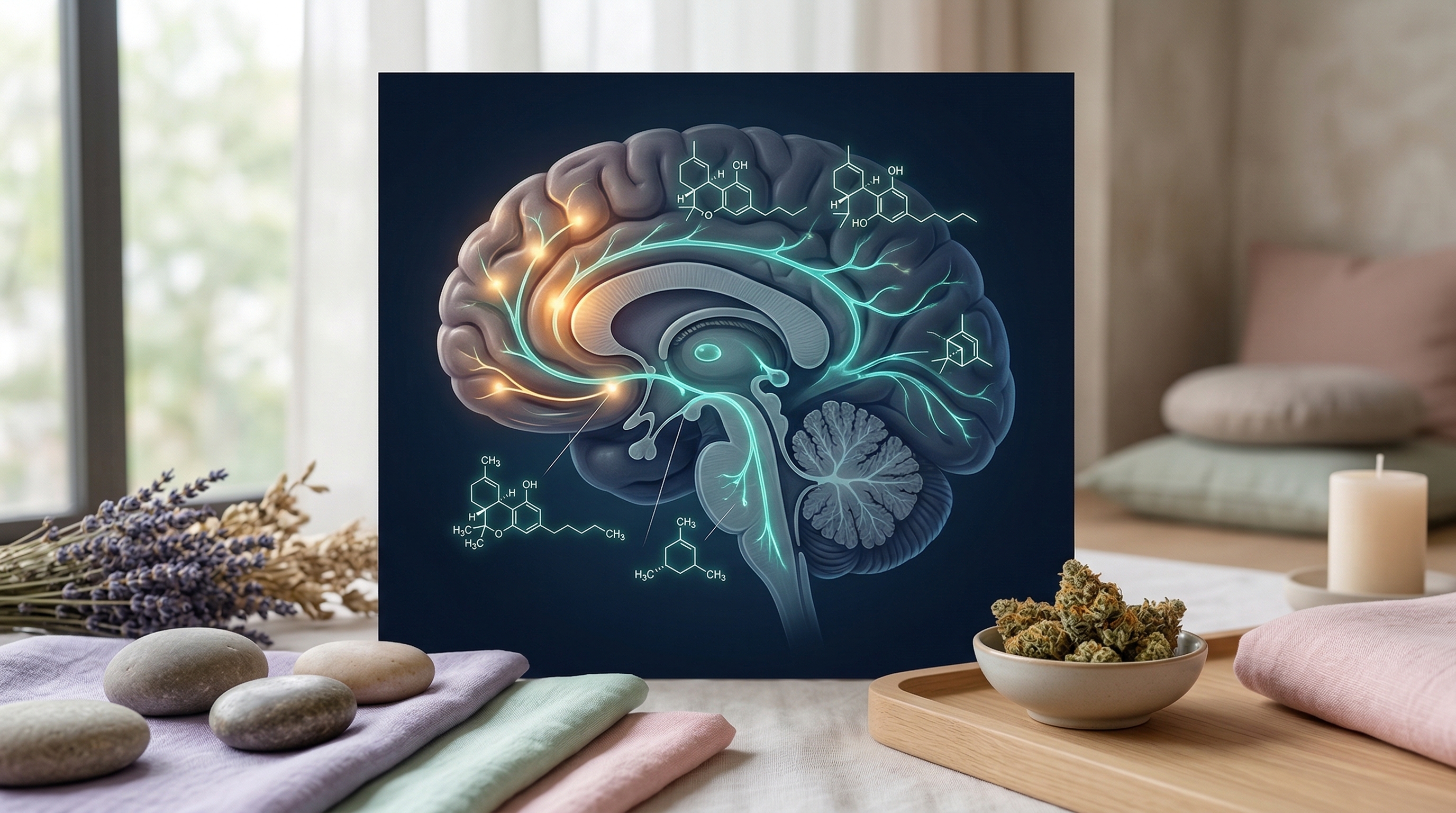
The Terpenes That May Support Focus
Alpha-Pinene: The Memory Protector
Alpha-pinene may be the most important terpene for mental clarity. Found in pine trees, rosemary, and many cannabis strains, pinene has a standout property: it may offset some of THC’s memory-impairing effects.
A 2017 study found that alpha-pinene significantly improved learning and memory in mice with drug-induced cognitive impairment. The terpene worked by blocking acetylcholinesterase – the same mechanism used by Alzheimer’s drugs like donepezil. Alpha-pinene also boosted production of choline acetyltransferase, the enzyme that makes acetylcholine [Lee et al., 2017].
A 2023 study by Hashemi and Ahmadi showed that alpha-pinene protects memory by restoring a key brain signaling pathway (BDNF/TrkB/CREB) in the hippocampus – the brain’s memory center [Hashemi and Ahmadi, 2023]. Research also confirms alpha-pinene crosses the blood-brain barrier within 30 minutes of inhalation. That means it reaches the brain quickly when cannabis is vaped or smoked [Satou et al., 2013].
A 2022 study found that alpha-pinene strengthened the brain’s antioxidant defenses, reduced inflammation, and improved spatial learning and memory in an Alzheimer’s model [Khan-Mohammadi-Khorrami et al., 2022]. For more on how much of an inhaled terpene actually reaches the brain, see our guide to terpene bioavailability.
Focus benefits of pinene:
- May preserve working memory during cannabis use through acetylcholinesterase inhibition
- Promotes alertness and mental clarity
- Opens airways, potentially improving oxygen flow to the brain
- Neuroprotective through anti-inflammatory and antioxidant pathways
- Found in strains like Jack Herer, Blue Dream, Pineapple Express, and Snoop’s Dream
Terpinolene: The Clarity Terpene
Terpinolene is relatively rare in cannabis – found in only about 10% of strains – but prized for its association with mental clarity and uplifting effects. Strains high in terpinolene consistently appear in user reports as energizing and conducive to focused work.
Product research suggests that 15-22% terpinolene in the total terpene profile may be the sweet spot for sustained mental clarity. Terpinolene behaves differently depending on what cannabinoids it is paired with: with THC, it tends to be energizing, while with CBD, it leans calming.
Focus benefits of terpinolene:
- Associated with clear-headed, cerebral effects
- May reduce mental fog common with high-THC strains
- Found in strains like Jack Herer, Ghost Train Haze, Dutch Treat, and Durban Poison
Limonene: The Anxiety Buffer
Limonene is the citrus-scented terpene that supports focus in a roundabout way – by cutting the anxiety that kills concentration. A 2024 study found that vaporized limonene reduced the anxiety that THC can cause. Since anxiety often goes hand-in-hand with ADHD, strains high in limonene may help you stay in a productive zone.
Limonene also elevates serotonin and dopamine levels in key brain regions [Komiya et al., 2006], promoting the positive mood states that support sustained attention.
Focus benefits of limonene:
- Reduces cannabis-related anxiety
- Elevates mood without sedation
- May enhance motivation and engagement
- Found in strains like Super Lemon Haze, Durban Poison, Tangie, and Wedding Cake
Beta-Caryophyllene: The Stress Buffer
Beta-caryophyllene is special. It is both a terpene and a cannabinoid, binding directly to CB2 receptors [Gertsch et al., 2008]. This gives it anti-inflammatory and stress-reducing properties without any high.
For focus, caryophyllene helps by lowering stress. Long-term stress weakens the prefrontal cortex, hurting attention and working memory. Research shows that beta-caryophyllene may protect against this kind of cognitive damage. The broader relationship between cannabis and your brain’s anxiety-regulation system is explored in our article on cannabis and the GABA system.
Focus benefits of caryophyllene:
- Reduces stress without sedation
- Anti-inflammatory properties may support brain health
- Does not add to THC’s psychoactive effects
- Found in strains like GSC (Girl Scout Cookies), Sour Diesel, Original Glue, and Chemdawg
THCV: The Emerging Focus Cannabinoid
While most attention goes to THC and CBD, a lesser-known cannabinoid called THCV (tetrahydrocannabivarin) is generating significant interest for its potential focus-enhancing properties.
THCV differs from THC by just two carbon atoms, but this small change may produce very different effects. At low doses, THCV acts as a CB1 receptor antagonist – meaning it may actually block some of THC’s impairing effects. At higher doses, it becomes a partial agonist with a shorter, clearer high.
A clinical trial (NCT06213064) by Phylos Bioscience is testing THCV products for their effects on motivation, energy, focus, and appetite in healthy adults. Anecdotal reports describe THCV as energizing and focusing without the munchies that THC usually brings [ClinicalTrials.gov, 2026].
THCV strains to explore:
- Durban Poison – One of the best natural sources of THCV, this South African landrace is renowned for focused, energetic effects
- Jack the Ripper – Known for elevated THCV levels and intense cerebral stimulation
- Doug’s Varin – Bred specifically for high THCV content
- Pineapple Purps – Notable THCV levels with a tropical terpene profile
Note: THCV research is still in early stages. The clinical trial above has not yet published results. These observations are based on preclinical data and anecdotal reports. For practical protocols on combining THCV with CBD and CBG, see our guide on cannabis biohacking stacks.
Practical Strain Recommendations by High Family
Our High Families system groups strains by their terpene makeup and actual effects, not by the outdated indica/sativa labels. Here are the families most linked to focus support:
Energetic High Family
The Energy High family is defined by terpinolene and ocimene, producing focused productivity and mental clarity. These are the strains most commonly associated with the “cerebral” and “clear-headed” experiences that ADHD users report as beneficial.
- Jack Herer – The gold standard for productive cannabis. Combines terpinolene, pinene, and caryophyllene for clear-headed focus. Named after the legendary cannabis activist.
- Durban Poison – A pure South African landrace with exceptionally high terpinolene and notable THCV content. Often described as the “espresso of cannabis.”
- Ghost Train Haze – Terpinolene-dominant with intense cerebral stimulation. Best for experienced users due to typically high THC content.
- Green Crack – Despite its unfortunate name, this strain is beloved by professionals for sharp mental focus. The terpene profile balances myrcene with terpinolene and pinene.
- Super Silver Haze – A multiple Cannabis Cup winner that combines stimulating effects with creative thinking.
Uplifting High Family
The Uplift High family is driven by limonene and linalool. It lifts mood and social energy. For many ADHD users, low motivation and mood swings are just as hard as inattention. A limonene-rich strain may help clear that emotional roadblock.
- Super Lemon Haze – Limonene-rich with a bright, citrusy profile. Many users report enhanced mood and motivation without mental fog.
- Tangie – Another limonene-forward strain known for upbeat, creative effects.
- Harlequin – A high-CBD strain (often 5:2 CBD:THC ratio) with limonene and pinene. An excellent option if THC-dominant strains cause anxiety that worsens focus.
- Strawberry Cough – Known for a bright, alert high with mood-elevating properties and moderate THC levels.
Entourage High Family
The Entourage High family has rich, multi-terpene profiles. When a strain has good amounts of pinene (for alertness) plus a little myrcene (for calm without drowsiness), you may get a focused but relaxed “flow state.”
- Blue Dream – A balanced terpene profile featuring myrcene, pinene, and caryophyllene. Produces what many describe as “productive calm.”
- ACDC – A CBD-dominant strain with complex terpene expression. Some users with ADHD find that high-CBD strains provide the mental quiet needed to concentrate without significant intoxication.
- Cannatonic – Another high-CBD option with a roughly 1:1 CBD:THC ratio. May offer gentle focus enhancement without overwhelming psychoactivity.
Terpenes to Be Cautious With
Myrcene in high amounts is the main terpene in the Relaxing High family. It is great for sleep but bad for focus – heavy myrcene strains cause the couch-lock you want to avoid. That said, small amounts of myrcene alongside pinene or terpinolene may calm anxiety without causing drowsiness.
| Terpene | Aroma | Potential Focus Benefit | Key Strains |
|---|---|---|---|
| Alpha-Pinene | Pine, fresh | Memory retention, alertness via AChE inhibition | Jack Herer, Blue Dream |
| Terpinolene | Floral, herbal | Clear-headed cerebral stimulation | Dutch Treat, Ghost Train Haze |
| Limonene | Citrus | Anxiety reduction, mood elevation | Super Lemon Haze, Tangie |
| Caryophyllene | Peppery | Stress reduction via CB2 binding | GSC, Sour Diesel |
| THCV | – | Emerging focus cannabinoid, CB1 antagonist at low doses | Durban Poison, Doug’s Varin |

Microdosing Protocols for Concentration
If there is one takeaway from the research, it is this: dose matters more than strain when it comes to focus. Remember that two-phase effect? Here is what it means in real life:
The Dosing Spectrum for Focus
- Microdoses (1-2.5mg THC): Most likely to support focus. At this level, you may experience subtle mood elevation and reduced mental noise without cognitive impairment. This is the range most commonly reported as helpful by adults with ADHD who use cannabis.
- Low doses (2.5-5mg THC): May still support concentration for some, especially with tolerance. Effects become more noticeable but generally remain functional.
- Moderate doses (5-10mg THC): Effects become increasingly variable. Some experienced users report maintained focus, but impairment risk rises significantly.
- High doses (10mg+ THC): Increasingly likely to impair focus, working memory, and executive function – the exact cognitive skills people with ADHD are trying to support.
A Practical Microdosing Protocol
- Start with 1-2mg THC via edible, tincture, or low-temperature vaporizer
- Wait 90 minutes before assessing effects (for edibles; 15 minutes for inhalation)
- Track your experience – note strain, dose, terpene profile, time of day, and subjective focus rating (1-10)
- Increase by 0.5-1mg in subsequent sessions if effects are insufficient
- Find your ceiling – the dose above which focus degrades rather than improves
- Consider CBD ratios – adding CBD (1:1 or 2:1 CBD:THC) may extend the functional window and reduce impairment risk
Pro tip: The 2025 Psychopharmacology study found that cannabis users with ADHD reported reduced impulsivity during acute intoxication, but impaired cognition in other domains. This supports the case for microdosing – finding the dose that captures the impulsivity benefit without the cognitive cost.
CBD-Dominant Options
For those who want to minimize psychoactive effects entirely, CBD-dominant strains offer a different pathway. While CBD does not directly boost dopamine, research suggests it may reduce anxiety and improve sleep quality – two factors that profoundly affect attention in people with ADHD [Shannon et al., 2019]. Think of CBD as removing obstacles to focus rather than directly enhancing it.
Strong CBD options include Harlequin (5:2 CBD:THC), ACDC (20:1 CBD:THC), Cannatonic (roughly 1:1), and Charlotte’s Web (high CBD, negligible THC).
What to Avoid: Strains That May Worsen ADHD Symptoms
Not every strain is focus-friendly. Here are patterns to watch for:
- High-myrcene, high-THC strains – Strains from the Relaxing High family like Granddaddy Purple or Northern Lights are designed for relaxation and sleep, not concentration. Their heavy myrcene content promotes sedation.
- Very high THC with no CBD – Strains testing above 25% THC with minimal CBD increase the risk of anxiety, paranoia, and working memory impairment. For focus, lower-THC or balanced strains tend to work better.
- Strains high in linalool alone – While linalool has calming, anti-anxiety properties, it is also associated with sedation. In combination with pinene or terpinolene it can be beneficial, but linalool-dominant strains may be too relaxing for focus work.
Key Takeaways
- ADHD involves dopamine dysregulation in the prefrontal cortex. Cannabis interacts with this system through the endocannabinoid system, but effects are highly dose-dependent – low doses may modestly support focus while high doses likely impair it.
- The endocannabinoid system is a legitimate research target for ADHD, with CB1 receptors concentrated in the same brain regions implicated in ADHD symptoms. The first PET imaging study of the ECS in ADHD is now underway [DRKS00037526, 2026].
- Terpenes matter more than strain names. Look for alpha-pinene (alertness, memory), terpinolene (clarity, energy), and limonene (mood, anxiety relief). Avoid heavy myrcene-dominant profiles if focus is your goal.
- THCV is an emerging focus cannabinoid with a clinical trial investigating its effects on motivation and concentration. Strains like Durban Poison are natural sources.
- The Energy High and Uplift High families are your best starting points for focus-oriented strain selection, with Entourage High strains offering balanced options.
- Microdosing is essential. Start at 1-2mg THC and track your results. The sweet spot for focus is almost always at the low end of the dosing spectrum.
- Cannabis is not a replacement for ADHD treatment. It may serve as a complementary tool for some individuals, but always consult with a healthcare provider, especially if you are on medication.
FAQs
Can cannabis actually help with ADHD?
The honest answer is: we do not have enough evidence to say definitively. The Cooper et al. (2017) RCT showed nominally significant improvements in hyperactivity/impulsivity (p=0.03) and cognitive inhibition (p=0.05), but the sample was small (n=30) and results did not survive correction for multiple comparisons. A 2025 naturalistic study found that cannabis users with ADHD reported reduced impulsivity during intoxication but impaired cognition in other areas. What we do know is that the endocannabinoid system interacts with dopamine pathways relevant to ADHD. It is a “promising but unproven” situation that requires larger clinical trials.
Is sativa better than indica for focus?
This is one of the most persistent myths in cannabis. The indica/sativa distinction describes plant morphology (how the plant grows), not its chemical effects on your brain. A strain labeled “indica” that happens to be high in pinene and terpinolene could be more focusing than a “sativa” loaded with myrcene. Use the High Families system instead – it classifies strains by their actual terpene profiles and predicted effects. Look for the Energy High and Uplift High families for focus.
What about CBD for ADHD?
CBD does not directly enhance focus the way certain terpenes or THC microdoses might. However, CBD may remove barriers to focus by reducing anxiety, improving sleep quality, and promoting general neurological calm [Shannon et al., 2019]. If anxiety is a significant component of your attention difficulties, a CBD-dominant strain like ACDC or Harlequin may be worth exploring. A 2024 review noted that CBD products are often preferred by parents and patients wanting to avoid THC’s psychoactive effects, but the scientific backing specifically for ADHD remains insufficient [Dallabrida et al., 2024].
Will cannabis interact with my ADHD medication?
This is a question for your healthcare provider, not the internet. Both cannabis and stimulant medications affect dopamine signaling, and combining them without medical guidance could lead to unpredictable effects. Some practitioners are open to discussing complementary cannabis use, while others may advise against it. Be transparent with your doctor about your cannabis use – it helps them provide better care.
How do I know if cannabis is helping or hurting my focus?
Keep a structured journal. For each session, record the strain name, terpene profile (available on lab test results or dispensary menus), THC/CBD content, dose, time of day, and a subjective focus rating from 1-10. After two weeks, patterns will emerge. If you find that a particular terpene profile consistently correlates with better focus scores, you have actionable data. If scores are consistently low or declining, cannabis may not be serving your focus goals. For a deeper framework on tracking your sessions, check out our guide on microdosing cannabis for productivity.
What is the best time of day to use cannabis for ADHD focus?
Most users who report focus benefits with cannabis use it during their peak productivity hours – typically morning to early afternoon. Using cannabis for focus later in the day risks interfering with sleep quality, which is critical for ADHD management. Microdosing in the morning with a terpinolene or pinene-rich strain, combined with your normal routine and tools, may offer the most consistent results. Avoid using cannabis as the only focus strategy – it works best as part of a broader system that includes sleep hygiene, exercise, and structured work practices.
Sources
- Bloomfield, M. A. et al. (2016). The effects of delta-9-tetrahydrocannabinol on the dopamine system. Nature, 539(7629), 369-377.
- Cooper, R. E. et al. (2017). Cannabinoids in attention-deficit/hyperactivity disorder: A randomised-controlled trial. European Neuropsychopharmacology, 27(8), 795-808.
- Dallabrida, K. G. et al. (2024). Endocannabinoid system changes throughout life: implications and therapeutic potential for autism, ADHD, and Alzheimer’s disease. Brain Sciences, 14(6), 592.
- Faraone, S. V. (2018). The pharmacology of amphetamine and methylphenidate. Neuroscience and Biobehavioral Reviews, 87, 255-270.
- Gertsch, J. et al. (2008). Beta-caryophyllene is a dietary cannabinoid. Proceedings of the National Academy of Sciences, 105(26), 9099-9104.
- Hashemi, P. and Ahmadi, S. (2023). Alpha-pinene moderates memory impairment induced by kainic acid via improving the BDNF/TrkB/CREB signaling pathway. Frontiers in Molecular Neuroscience, 16, 1202232.
- Khan-Mohammadi-Khorrami, M. K. et al. (2022). Neuroprotective effect of alpha-pinene is mediated by suppression of the TNF-alpha/NF-kB pathway. Metabolic Brain Disease, 37, 1575-1588.
- Komiya, M. et al. (2006). Lemon oil vapor causes an anti-stress effect via modulating the 5-HT and DA activities in mice. Behavioural Brain Research, 172(2), 240-249.
- Lee, G. Y. et al. (2017). Amelioration of scopolamine-induced learning and memory impairment by alpha-pinene in C57BL/6 mice. Evidence-Based Complementary and Alternative Medicine, 2017, 4926815.
- Lu, H. C. and Mackie, K. (2016). An introduction to the endogenous cannabinoid system. Biological Psychiatry, 79(7), 516-525.
- MacDonald, H. J. et al. (2024). The dopamine hypothesis for ADHD: An evaluation of evidence accumulated from human studies and animal models. Frontiers in Psychiatry, 15, 1492126.
- Ryan, J. E. et al. (2024). Attention deficit hyperactivity disorder, cannabis use, and the endocannabinoid system: A scoping review. Developmental Psychobiology, 66, e22540.
- Shannon, S. et al. (2019). Cannabidiol in anxiety and sleep: A large case series. The Permanente Journal, 23, 18-041.
- Özmeral Erarkadaş, K. et al. (2026). Biochemical role of the endocannabinoid system in the pathophysiology of ADHD: A narrative review and future directions. Neurochemical Research, 51, 16.
- Cannabinoids and ADHD: a New Frontier in Neuropharmacology? (2025). Journal of Molecular Neuroscience. DOI: 10.1007/s12031-025-02435-3.
- Volkow, N. D. et al. (2009). Evaluating dopamine reward pathway in ADHD. JAMA, 302(10), 1084-1091.


