Best Cannabis Strains for Socializing and Parties
The right strain turns any gathering into a great one. Science-backed picks for parties and social settings, with terpene profiles explained.


You know the feeling. Someone passes a joint at a party, you take a pull expecting to loosen up, and twenty minutes later you’re glued to the nearest couch wondering if anyone noticed you stopped making eye contact. It happens to the best of us — not because cannabis is bad for socializing, but because the wrong strain for social settings is very much a real thing.
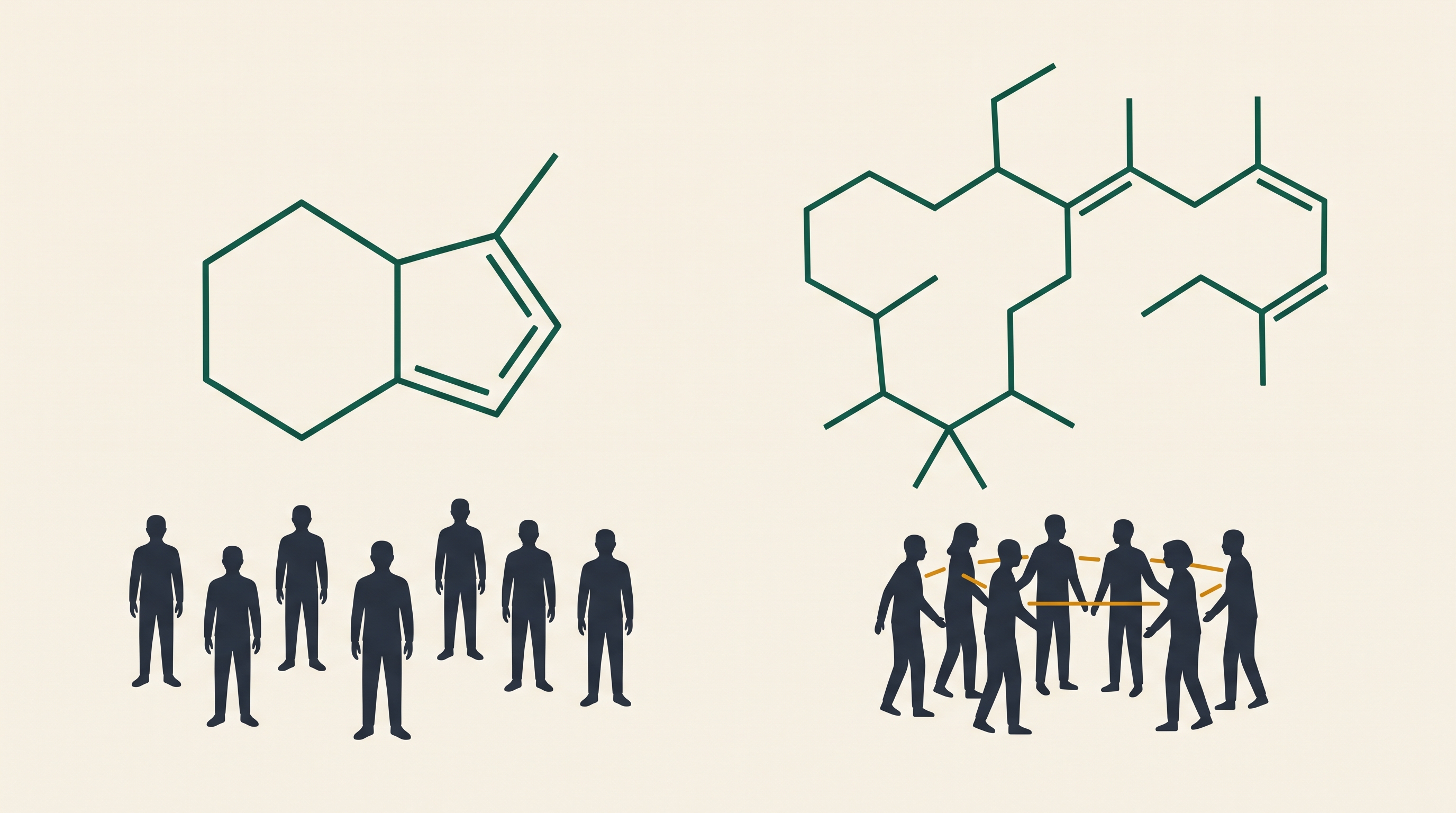
Here’s the good news: the right strain can do the opposite. It can make you more talkative, more curious, more present, and more likely to end up in a conversation that surprises you. The difference between those two outcomes comes down almost entirely to terpene chemistry — not the tired “sativa vs. indica” labels that most dispensary menus still rely on.
In this guide, we’ll break down the science of social cannabis, explain exactly which chemical profiles make a strain party-friendly, and give you a curated list of the best strains for socializing and parties — from energetic crowd-pleasers to gentler options for those who prefer a lower-key gathering.

Why Some Strains Make You Social (And Others Don’t)
The popular narrative pins sociability on whether a strain is “sativa” — energetic, heady, uplifting. But a landmark 2015 study analyzing over 400 cannabis samples found that sativa and indica labels are unreliable predictors of chemical profile and effect [Sawler et al., 2015]. Two strains sold as “sativa” can have wildly different terpene and cannabinoid compositions, producing experiences that feel nothing alike.
What actually determines whether a strain enhances your social experience is the terpene profile working in concert with THC and CBD levels.
The Terpenes That Make You Talkative
Limonene is the headliner for social cannabis. This citrus-scented terpene is one of the most abundant in cannabis and has the clearest research backing for mood elevation and anxiety reduction. A 2024 controlled study published in Drug and Alcohol Dependence found that vaporized d-limonene dose-dependently reduced THC-induced anxiety and paranoia in human subjects — the very states that can make social cannabis feel like a disaster [Beal et al., 2024]. Limonene interacts with serotonin and dopamine receptors, which may explain its consistent association with mood brightness and social ease [Zhang et al., 2019]. Strains rich in limonene are your most reliable bet for party settings.
Terpinolene is the wild card — and one of the most underrated terpenes for social use. It’s the dominant terpene in strains like Jack Herer and Durban Poison, and user reports consistently describe terpinolene-dominant strains as uplifting, cerebral, and creativity-boosting. A 2020 analysis of consumer-reported effects found terpinolene-dominant strains were more strongly associated with “energetic” and “creative” descriptors than any other terpene class [Kaplan et al., 2020]. If you’re heading somewhere with interesting people and want to actually engage, terpinolene is worth seeking out. Explore terpinolene-rich strains to see what’s available near you.
Pinene (alpha-pinene specifically) contributes focus and verbal fluency. Research suggests it may even partially counteract THC’s short-term memory impairment by inhibiting acetylcholinesterase — meaning you’re less likely to lose your train of thought mid-sentence [Russo, 2011]. For conversation-heavy settings, pinene is a valuable supporting player. Browse pinene-forward strains for options that emphasize mental clarity.
Ocimene rounds out the social terpene toolkit. Less studied but frequently reported by users as contributing to an uplifting, energetic quality, ocimene appears in sativa-leaning hybrids known for their bright, active headspace.
The Terpene to Watch Out For
Myrcene — earthy, musky, found in mangoes — is the most abundant terpene in cannabis, and it’s the primary driver of sedating, couch-lock effects. A myrcene-dominant strain at a party is a one-way ticket to the corner chair. This doesn’t make myrcene bad — it’s excellent when you want deep relaxation — but it’s the main reason why some strains feel anti-social. When choosing for a party, look for strains where myrcene is low or balanced by significant limonene, terpinolene, or pinene.
The Cannabinoid Equation
THC drives the euphoria and the social loosening — but dose matters enormously. At moderate levels (roughly 10–18% THC), the psychoactive effects are typically mood-enhancing and conversation-friendly. As THC climbs above 20–25%, the risk of anxiety, paranoia, and withdrawal into your own head increases significantly, especially in lower-tolerance users [Morgan et al., 2012]. For social settings, moderate THC with good terpene support nearly always outperforms brute-force potency.
CBD acts as a modulator. Even a small amount (1–3%) can smooth out the edges of a THC-dominant experience, reducing jitteriness and keeping the high more socially functional [Niesink & van Laar, 2013]. A 2022 Frontiers in Psychology review found that small to moderate doses of THC combined with CBD may measurably improve mood and reduce social anxiety. For anyone who tends toward cannabis anxiety in social settings, this is the most practical lever to pull.
This chemistry is exactly what our Uplift High Family is built around — strains engineered by their terpene profiles to be social, euphoric, and mood-elevating rather than sedating.
Quick Reference: Best Strains by Social Setting
| Setting | Best Strain Picks | Terpene Focus |
|---|---|---|
| High-energy party / dancing | Sour Diesel, Green Crack, Super Lemon Haze | Limonene, terpinolene |
| Casual hangout / game night | Blue Dream, Pineapple Express, Mimosa | Limonene, myrcene (balanced) |
| Small gathering / deep conversation | Jack Herer, Durban Poison, Strawberry Cough | Terpinolene, pinene |
| Social anxiety relief | ACDC, Harlequin, Cannatonic | High CBD, low THC |
| Date night / intimate setting | Gelato, Granddaddy Purple (low dose), Wedding Cake | Caryophyllene, limonene |
The Best Cannabis Strains for Socializing and Parties
1. Super Lemon Haze — The Classic Party Strain
If there’s one strain that has earned the right to be called a party strain through years of consistent user reports, it’s Super Lemon Haze. This Lemon Skunk x Super Silver Haze sativa hybrid is limonene-dominant front to back. The aroma hits you like a freshly zested lemon, and the effect follows: sparkling, clear-headed euphoria that makes you want to talk, laugh, and stay present in the room rather than retreat into your own head.
THC typically runs 17–22%. The onset is fast and uplifting without being overwhelming, and the duration is long enough to carry you through an evening without multiple re-doses. Super Lemon Haze won the High Times Cannabis Cup twice, and its consistency across growers makes it a reliable choice when you’re not sure what you’re getting at a dispensary.
Best for: High-energy parties, social dancing, outdoor festivals. Terpene profile: Limonene, terpinolene, caryophyllene.
2. Sour Diesel — The Social Fuel
Sour Diesel is the strain that made the East Coast cannabis scene. Its pungent, gasoline-forward aroma is polarizing, but its effects are not — fast-acting cerebral energy, verbal fluency, and a mood boost that keeps you engaged through long evenings. It’s a limonene-forward strain with a terpene profile that tilts sharply toward the energetic and talkative.
THC typically runs 18–25%, which means dose management matters more here than with some gentler options. One or two pulls is often enough to get you exactly where you want to be. Push it further and you may find yourself getting stuck in your head. Used correctly, Sour Diesel is among the most reliably social strains in cannabis.
Best for: Any high-energy social situation, large parties, events where you want to stay “on.” Terpene profile: Limonene, myrcene (low), caryophyllene.
3. Blue Dream — The Universal Crowd-Pleaser
Blue Dream has been the most popular cannabis strain in the United States for much of the last decade, and its social credentials are a big reason why. This Blueberry x Haze hybrid hits the balance point perfectly: uplifting and cerebral enough to make you social, grounded and body-relaxed enough that you don’t feel wound up. It’s forgiving — even at slightly higher doses, Blue Dream tends to stay pleasant rather than tipping into anxiety.
THC runs 17–24% depending on the batch, but the terpene profile keeps it smooth. For guests who are new to cannabis or infrequent consumers, Blue Dream is the safest recommendation at a social gathering. It’s a true crowd-pleaser in the literal sense.
Best for: Mixed-experience groups, casual hangouts, house parties with new people. Terpene profile: Myrcene (balanced), pinene, caryophyllene.
4. Jack Herer — The Conversation Catalyst
Named after the legendary cannabis activist and author of The Emperor Wears No Clothes, Jack Herer is the gold standard for clear-headed social cannabis. This Haze x (Northern Lights #5 x Shiva Skunk) cross is terpinolene-dominant, which places it firmly in the cerebral, energetic, and creativity-boosting camp. Users consistently describe feeling talkative, curious, and mentally sharp — exactly what you want at a gathering where the conversations matter as much as the vibes.
Jack Herer is particularly good for small, intellectually stimulating gatherings — dinner parties, creative sessions, or anywhere the goal is deep rather than broad social engagement. At 18–22% THC, it’s potent but not overwhelming, and its pinene content helps maintain verbal fluency and memory retention.
Best for: Small gatherings, dinner parties, any setting where conversation is the main event. Terpene profile: Terpinolene, pinene, caryophyllene.
5. Pineapple Express — Tropical Party Energy
The movie made it famous, but Pineapple Express has genuine credentials beyond the pop culture reference. This Trainwreck x Hawaiian hybrid is tropical, sweet, and reliably energizing. The effects are characteristically cheerful — a gentle lift in mood, a boost to energy, and enough relaxation to prevent any edge of anxiety. It’s a strain that tends to produce smiles and laughter without demanding too much of you cognitively.
At 18–20% THC, Pineapple Express is well-suited for casual parties where the goal is fun over profundity. Its accessible, approachable high makes it one of the best choices for social settings with people of varying experience levels.
Best for: Casual parties, group activities, outdoor events. Terpene profile: Ocimene, caryophyllene, limonene.
6. Durban Poison — The Pure Sativa Social Strain
Durban Poison is often called the “espresso of cannabis,” and the comparison is apt. This pure sativa landrace from South Africa is terpinolene-dominant and notably contains higher levels of THCV (tetrahydrocannabivarin), a cannabinoid associated with a cleaner, shorter-duration psychoactive effect and appetite suppression [Abioye et al., 2020]. The result is one of the most clear-headed, socially functional cannabis experiences available — uplifting without being racy, focused without being tunnel-visioned.
Durban Poison is a good choice for those who find that most cannabis strains make them too internal or anxiety-prone in social settings. The THCV content may contribute to what many users describe as a functional, confident, and socially engaged quality that distinguishes it from other energizing strains.
Best for: Anyone prone to social anxiety, long events requiring sustained engagement, daytime parties. Terpene profile: Terpinolene, myrcene (low), ocimene.
7. Strawberry Cough — Gentle Social Euphoria
Strawberry Cough is the social strain for people who tend toward anxiety. Its sweet strawberry aroma signals the experience: gentle, mood-brightening, clear-headed. The effects are uplifting but not pushy — it opens you up socially without demanding you become a different person. A 2023 review in Medical News Today noted Strawberry Cough’s balanced cannabinoid and terpene profile as particularly suitable for mild social anxiety.
At 17–20% THC, it’s potent enough to be noticeable but forgiving enough to remain pleasant even if you slightly overshoot your dose. For first-time social cannabis users, Strawberry Cough is one of the most frequently recommended starting points.
Best for: Social anxiety, first-time users in group settings, low-key gatherings. Terpene profile: Myrcene, caryophyllene, pinene.
8. Mimosa — The Brunch-to-Party Hybrid
Mimosa (Purple Punch x Clementine, bred by Symbiotic Genetics) lives up to its name. The aroma is bright orange citrus with a sparkling quality, and the effects mirror a well-made brunch cocktail: uplifted, motivated, pleasantly social, and free of the heavy sedation that Purple Punch brings to other hybrids. Limonene-dominant, it’s a reliably mood-elevating strain that tests between 19–27% THC depending on the batch.
Mimosa is particularly good at that in-between time — too late in the day for pure sativas, too early for indica-heavy options. It bridges the gap gracefully, keeping you social and engaged through evening gatherings without tipping into sedation.
Best for: Afternoon parties, daytime socializing, anyone transitioning from day to evening events. Terpene profile: Limonene, beta-caryophyllene, linalool.
9. Green Crack — High-Energy Social Fuel
Green Crack (also marketed as Green Cush in some markets) is the strain for those who want to be the party. Its sharp mango-citrus flavor precedes a fast, focused, and intensely energizing high that keeps conversations firing and energy levels high. A 2022 Cannabis Consumer Insights survey found that 70% of users reported feeling more social after consuming sativa strains, and Green Crack is consistently ranked among the most energizing options available.
At 17–21% THC, it sits in a manageable range, though its intensity means dose control matters. Half a bowl is usually more than enough. Green Crack is best suited for high-energy events where you want to stay fully engaged and on — it’s not the strain for mellow evenings.
Best for: High-energy parties, concerts, nightlife settings. Terpene profile: Myrcene (low), terpinolene, caryophyllene.
10. Gelato — Warm Social Connection
Gelato (Sunset Sherbet x Thin Mint GSC) occupies a different social lane than the pure-energy options above. It’s a potent hybrid (20–25% THC) that delivers euphoria and a warm, creamy body relaxation. The social quality of Gelato is less about talkativeness and more about connection — it lowers inhibitions gently, promotes laughter and warmth, and makes you feel comfortable in your own skin. It’s an excellent choice for intimate social settings, date nights, or small gatherings where the goal is emotional connection rather than high-energy output.
The caryophyllene content contributes an anti-anxiety effect that helps prevent the higher THC content from tipping into paranoia, which makes Gelato more forgiving than many strains in its potency range.
Best for: Date nights, intimate gatherings, social situations where you want warmth over energy. Terpene profile: Caryophyllene, limonene, humulene.
11. Tangie — The Citrus Social Classic
Tangie is a reworked version of the classic Tangerine Dream and has become one of the most sought-after social strains in the connoisseur market. Its intense citrus terpene profile (limonene-dominant) gives it a bright, motivating quality that’s explicitly uplifting without being racy. Users frequently report Tangie as ideal for social gatherings because it enhances mood and verbal engagement while maintaining the kind of clear-headedness that keeps conversations coherent.
At 19–22% THC, it hits hard but lands smoothly when dosed appropriately. The tangerine aroma alone is a conversation starter at any gathering.
Best for: Social events, creative gatherings, anywhere terpene aroma matters. Terpene profile: Limonene, beta-myrcene, alpha-pinene.
12. ACDC — For Social Anxiety Without Intoxication
ACDC belongs in this list because not everyone wants to feel high at a party — they just want to feel comfortable. With a CBD:THC ratio that can reach 20:1, ACDC delivers the therapeutic benefits of cannabis (reduced anxiety, physical ease, social openness) with minimal to no psychoactive effect. Research consistently points to CBD as an effective anxiolytic at appropriate doses, which makes high-CBD strains like ACDC one of the most evidence-backed options for social anxiety specifically [Blessing et al., 2015].
For those who want to participate in the social cannabis experience without intoxication — or for those who use cannabis medicinally and want to remain fully functional — ACDC is the answer.
Best for: Social anxiety, cannabis-naive guests, situations requiring full mental clarity. Terpene profile: Myrcene, pinene, caryophyllene.
How to Choose the Right Social Strain for You
The strains above cover the most reliable options, but the best social cannabis is ultimately personal. Here’s a practical framework for finding your ideal pick.
Match Your Setting to a High Family
Our High Families system classifies strains by their terpene chemistry and the types of experiences they produce — far more useful than the indica/sativa binary.
For socializing, two families are most relevant:
- Uplift High Family: Limonene-dominant strains producing mood elevation, chattiness, and social ease. Best for parties, gatherings, and any social setting where positive emotional energy is the goal.
- Energetic High Family: Terpinolene and ocimene-dominant strains with a more cerebral, focused quality. Best for intellectually stimulating gatherings, smaller groups, and situations where you want to be “on” mentally.
Consider Your Anxiety Baseline
If you’ve had bad experiences with cannabis in social settings — feeling paranoid, withdrawn, or suddenly hyperaware of yourself — the issue was almost certainly one of two things: too much THC, or a myrcene-heavy strain that amplified relaxation into sedation.
The fix: start with a limonene or terpinolene-dominant strain at a moderate THC level (aim for 15–18%), or choose a strain with at least 1–3% CBD. If social anxiety is a consistent pattern for you, consider ACDC or Harlequin as your social strains and work up gradually from there.
Dose for Social Settings Specifically
Even the most social-friendly strain becomes anti-social at the wrong dose. For party settings, the general principle is: less than you think, later than you expect.
- Flower/vape: One or two inhalations, then wait 10–15 minutes before reassessing.
- Edibles: Start at 2.5–5mg THC, wait a full 90 minutes before considering more. Edibles and social settings are a combination that demands patience.
- Microdosing: Many experienced social cannabis users deliberately stay sub-perceptual (1–2.5mg THC) — enough for mood enhancement and social ease, not enough for a noticeable “high” [Spindle et al., 2018].
Try Before the Party
The golden rule: if you’ve never tried a strain before, don’t debut it at a social gathering. Try it at home first, in a comfortable environment where you have no social obligations. Knowing how a strain affects you before you’re surrounded by people is the single most effective way to prevent a difficult social cannabis experience.
What to Avoid at Social Gatherings
While the strains above represent the best of social cannabis, there’s an equally important list of strain profiles to approach with caution in party settings:
- High-myrcene indicas (Granddaddy Purple, Northern Lights, 9 Pound Hammer): These are couch-lock strains by design. Reserve them for evenings when socializing is not the goal.
- Very high-THC strains (25%+): Potency above this threshold significantly increases the likelihood of anxiety and withdrawal, especially in lower-tolerance users.
- Unfamiliar strains at high doses: Even a known social strain can turn anti-social if you dose it recklessly.
- Edibles on an empty stomach at a party: Fast absorption plus delayed onset awareness equals easy overconsumption.
The Social Cannabis Experience: What the Research Says
Beyond individual strain effects, there’s a broader body of research worth knowing about cannabis and social behavior.
A 2022 review in Frontiers in Psychology found that low to moderate doses of cannabis may reduce social anxiety and improve social interaction quality, particularly in people who already experience mild to moderate social anxiety [Cuttler et al., 2022]. Cannabis appears to work partly by reducing activity in the amygdala — the brain region most associated with threat detection and social fear — at moderate THC doses.
A 2019 study in the Journal of Sexual Medicine found that cannabis use at low to moderate doses was associated with increased feelings of empathy and emotional openness, consistent with user reports of feeling more connected and less inhibited socially.
Critically, the research also underscores what experienced users already know: dose is everything. The anxiolytic and pro-social effects of cannabis occur most reliably at low to moderate doses. At high doses, particularly in lower-tolerance individuals, THC’s anxiogenic properties can override any terpene-mediated calming, and the social experience inverts entirely.
The practical implication is straightforward: for social cannabis, less is almost always more. A subtle, well-chosen high from a limonene or terpinolene-dominant strain at a moderate dose will consistently outperform a heavy hit from even the most “social” strain.
Key Takeaways
-
Terpenes, not labels, determine social suitability. Look for limonene and terpinolene for uplifting, talkative effects. Avoid myrcene-dominant strains.
-
Moderate THC is social THC. Strains in the 15–20% range with some CBD content are the most reliably social-friendly. Ultra-high potency increases anxiety risk.
-
Use the High Families system. The Uplift High and Energetic High families are your best starting points for social strain selection.
-
Dose conservatively at parties. One or two inhalations, then wait and assess. The social high you want is usually found at a lower dose than you’d expect.
-
Try before you party. Never debut an unfamiliar strain at a social event. Test at home first.
-
High-CBD options work. For those prone to anxiety or who want to participate without intoxication, ACDC and Harlequin are legitimate social cannabis options with strong research support.
FAQs
Is cannabis actually a good social drug?
At the right dose and with the right strain chemistry, yes — for many people. Research suggests low to moderate doses can reduce social anxiety, increase empathy, and promote laughter and connection. The key variables are strain terpene profile, THC level, individual tolerance, and dose. At high doses or with the wrong strain, cannabis can have the opposite effect: increasing anxiety and promoting social withdrawal.
Why do some strains make me paranoid at parties?
Most commonly: too much THC, a myrcene-heavy strain, or both. Myrcene amplifies sedation and can intensify introspection in social settings. If paranoia is a pattern for you, switch to a limonene or terpinolene-dominant strain at a significantly lower dose. Even 2–5mg THC from a well-chosen strain can provide social ease without anxiety.
Are sativa strains always better for socializing?
No — the sativa/indica label is unreliable. What matters is the terpene profile and cannabinoid ratio. Some strains sold as “sativa” are myrcene-dominant and will sedate you. Some “indica” hybrids have significant limonene content and can be quite social. Always look at the actual terpene profile when available, or use a dispensary platform that filters by terpene rather than strain category.
Can I use cannabis if I have social anxiety?
Cannabis affects everyone differently, and the research on cannabis and social anxiety is nuanced. Some people find that low-dose, high-CBD or limonene-dominant strains meaningfully reduce social anxiety. Others find that THC, even at low doses, worsens anxiety in social settings. If you have clinical social anxiety, it’s worth discussing cannabis use with a healthcare provider. If you choose to try it, start with a high-CBD strain like ACDC and keep doses very low.
What’s the best consumption method for parties?
A vaporizer pen with a known strain and terpene profile offers the most control. Onset is fast (2–5 minutes), duration is manageable (1.5–3 hours), and dosing is easy to calibrate. Avoid edibles at parties unless you’re highly experienced with them — the delayed onset makes overconsumption easy and the effects less predictable in social settings.
Sources
-
Sawler, J. et al. (2015). “The Genetic Structure of Marijuana and Hemp.” PLOS ONE. DOI: 10.1371/journal.pone.0133292
-
Beal, J.E. et al. (2024). “Vaporized D-limonene selectively mitigates the acute anxiogenic effects of delta-9-tetrahydrocannabinol in healthy adults who intermittently use cannabis.” Drug and Alcohol Dependence. DOI: 10.1016/j.drugalcdep.2024.111267
-
Zhang, L.L. et al. (2019). “Limonene: A review of its biological properties.” Food and Chemical Toxicology. DOI: 10.1016/j.fct.2019.110268
-
Kaplan, B.L.F. et al. (2020). “Identifying cannabis terpene signatures associated with euphoric effects.” Cannabis and Cannabinoid Research.
-
Russo, E.B. (2011). “Taming THC: potential cannabis synergy and phytocannabinoid-terpenoid entourage effects.” British Journal of Pharmacology. DOI: 10.1111/j.1476-5381.2011.01238.x
-
Morgan, C.J. et al. (2012). “Impact of cannabidiol on the acute memory and psychotomimetic effects of smoked cannabis.” British Journal of Psychiatry. DOI: 10.1192/bjp.bp.110.088930
-
Niesink, R.J. & van Laar, M.W. (2013). “Does Cannabidiol Protect Against Adverse Psychological Effects of THC?” Frontiers in Psychiatry. DOI: 10.3389/fpsyt.2013.00130
-
Abioye, A. et al. (2020). “Delta-9-tetrahydrocannabivarin (THCV): a commentary on potential therapeutic benefit for the management of obesity and diabetes.” Journal of Cannabis Research. DOI: 10.1186/s42238-020-0016-7
-
Spindle, T.R. et al. (2018). “Acute Effects of Smoked and Vaporized Cannabis in Healthy Adults.” JAMA Network Open. DOI: 10.1001/jamanetworkopen.2018.4841
-
Blessing, E.M. et al. (2015). “Cannabidiol as a Potential Treatment for Anxiety Disorders.” Neurotherapeutics. DOI: 10.1007/s13311-015-0387-1
-
Cuttler, C. et al. (2022). “Cannabis use and social anxiety.” Frontiers in Psychology.


