Best Cannabis Strains for Working Out and Exercise
The science-backed guide to cannabis and fitness: best strains, terpenes, and timing for pre-workout, cardio, strength training, and recovery.

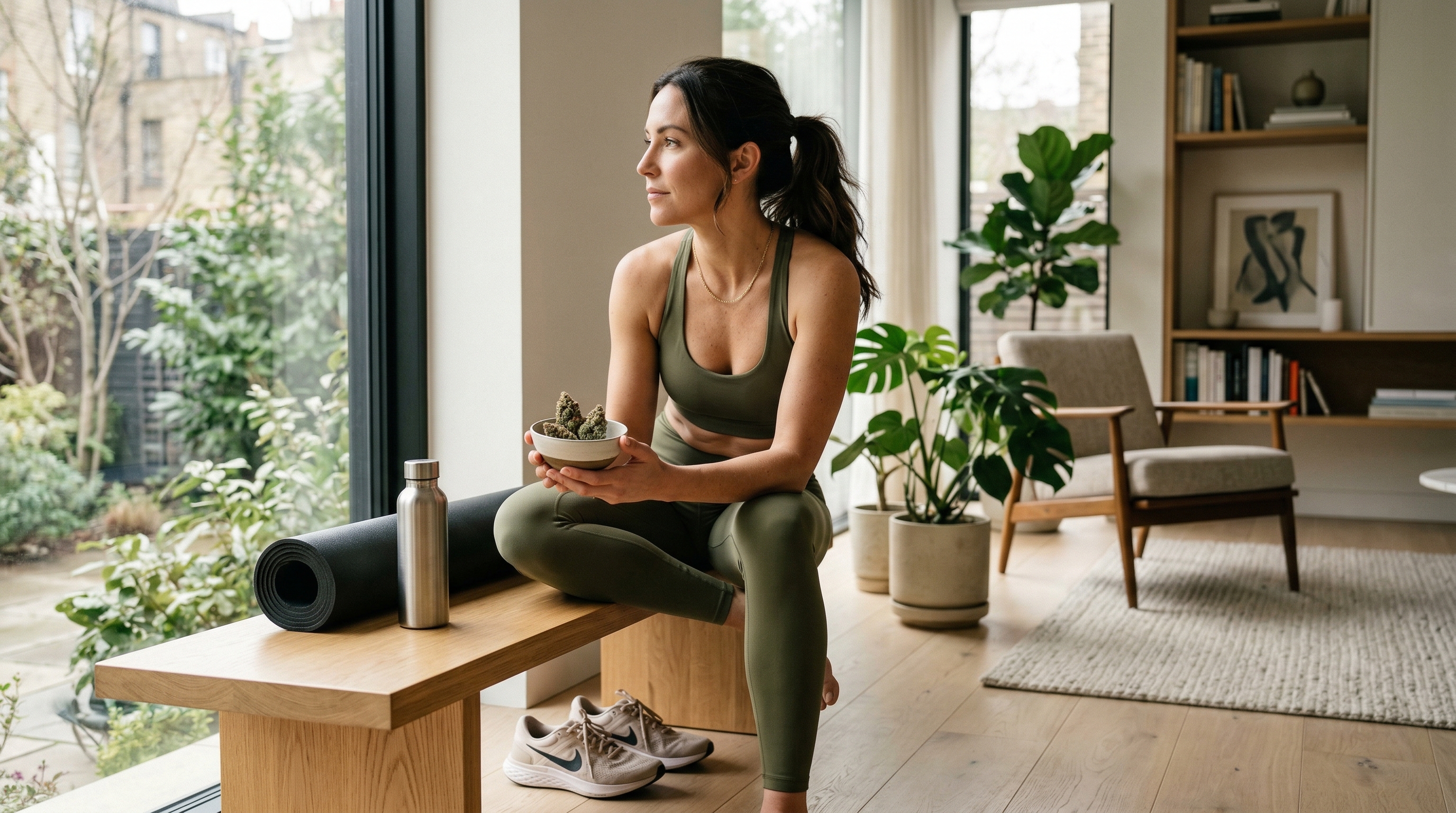
Here is a fact that surprises almost everyone: the famous “runner’s high” is not caused by endorphins. For decades, science textbooks told us that a flood of endorphins was responsible for the euphoria, reduced pain, and calm that follow a hard run. Then in 2015, a landmark study published in Proceedings of the National Academy of Sciences turned that story upside down. The anxiolytic and analgesic effects of running in mice were blocked when researchers inhibited the endocannabinoid system — but not when they blocked opioid receptors [Fuss et al., 2015]. The real driver is anandamide, your body’s own cannabis-like molecule.
This is not a trivial detail. It means the very biochemical pathway that cannabis compounds activate is the same pathway your body uses to reward and sustain physical movement. The two systems are deeply intertwined, which is why a growing number of athletes, weekend warriors, and gym regulars are exploring how the right cannabis strain — chosen thoughtfully and used responsibly — might enhance their training.
A 2019 University of Colorado Boulder survey found that 82% of cannabis users in legal states used cannabis in close proximity to exercise [YorkWilliams et al., 2019]. Of those, 70% reported greater workout enjoyment, 78% said it helped with recovery, and 52% said it boosted motivation. Perhaps most remarkably, cannabis users in the study spent an average of 43 more minutes exercising per week than non-users.
But the operative word here is which strain. Grab a heavy, myrcene-dominant indica before a HIIT class and you may spend the session staring at the ceiling. Choose a terpinolene-forward sativa before a morning run and you might find yourself covering more ground than you expected. The difference between those two outcomes is chemistry — and that is what this guide is about.
A note before we dive in: Cannabis affects everyone differently. Start with low doses, know how a strain affects you before exercising with it, and never engage in activities that could endanger yourself or others while impaired. People with cardiovascular conditions should consult a physician before combining THC with exercise, as THC can temporarily elevate heart rate.
Why Cannabis and Exercise Have More in Common Than You Think
The Endocannabinoid System: Your Body’s Built-In Cannabis Network
To understand how cannabis intersects with physical activity, you need a working understanding of the endocannabinoid system (ECS) — a network of receptors, signaling molecules, and enzymes found throughout virtually every tissue in your body.
The ECS operates through two primary receptor types:
- CB1 receptors: Found densely in the brain and central nervous system. THC binds here, producing psychoactive effects, mood elevation, and altered pain perception.
- CB2 receptors: Concentrated in immune cells and peripheral tissues. These regulate inflammation, immune response, and pain signaling — and are the primary target of beta-caryophyllene, a terpene found in many cannabis strains.
Your body produces its own ECS ligands called endocannabinoids. The most studied is anandamide, derived from the Sanskrit word ananda meaning bliss. Exercise increases circulating anandamide levels significantly — this rise corresponds precisely with the post-exertion mood boost and pain relief known as runner’s high. Because THC and anandamide bind to the same receptors, cannabis can amplify and extend these effects. CBD works differently: it appears to inhibit FAAH, the enzyme that breaks down anandamide, effectively letting your body’s own bliss molecule linger longer [Leweke et al., 2012].
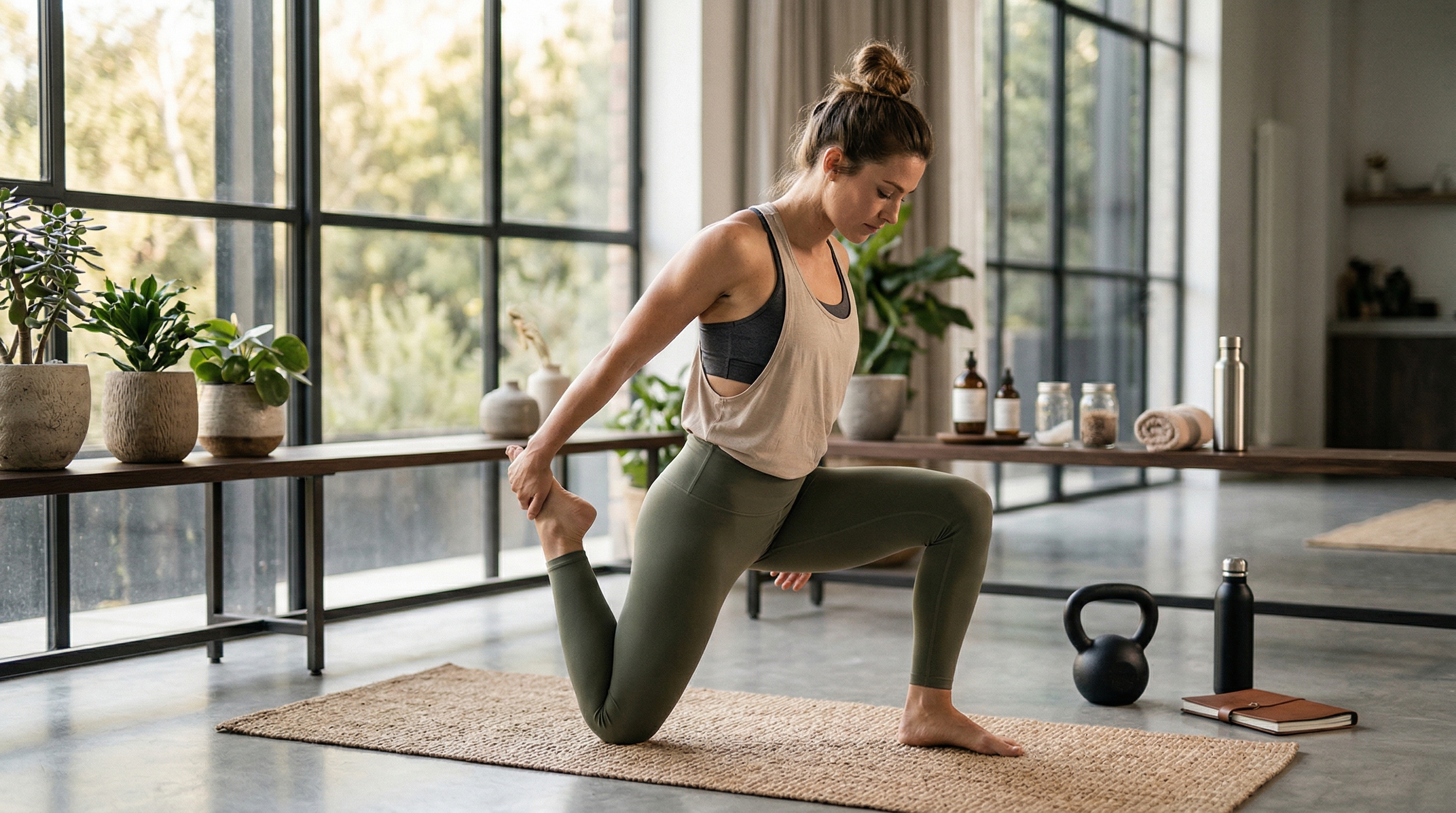
What the Research Actually Shows
The science here is genuinely promising but still maturing. Most studies are small, self-reported, or conducted in animal models. That caveat matters for honest interpretation.
Motivation and enjoyment: The 2019 University of Colorado study found cannabis users were more likely to meet weekly physical activity guidelines than matched non-users, even after controlling for demographics [YorkWilliams et al., 2019]. Researchers hypothesized that cannabis may lower the psychological activation barrier — the inertia that keeps people on the couch.
Inflammation and recovery: A 2020 review in Sports Medicine examined cannabinoids and exercise recovery, concluding that CBD showed particular promise for reducing exercise-induced inflammation and managing delayed onset muscle soreness (DOMS), while noting that human clinical trials remained limited [McCartney et al., 2020]. Animal studies have shown CBD reduces inflammatory cytokines including IL-6 and TNF-alpha following exercise stress.
Pain perception: THC has well-documented analgesic properties, and some athletes report that it raises their perceived pain threshold during training. This may help push through discomfort in endurance sports — but it also means you need to be careful not to override legitimate injury signals. Pain that signals damage should not be ignored.
Cardiovascular effects: THC can temporarily increase heart rate by 20–50 beats per minute in the first hour after consumption [Benowitz & Jones, 1975]. For healthy adults this is generally tolerable, but it adds cardiac load during intense exercise. This is the most important safety consideration, and it means people with any heart condition should approach cannabis-plus-exercise with physician guidance.
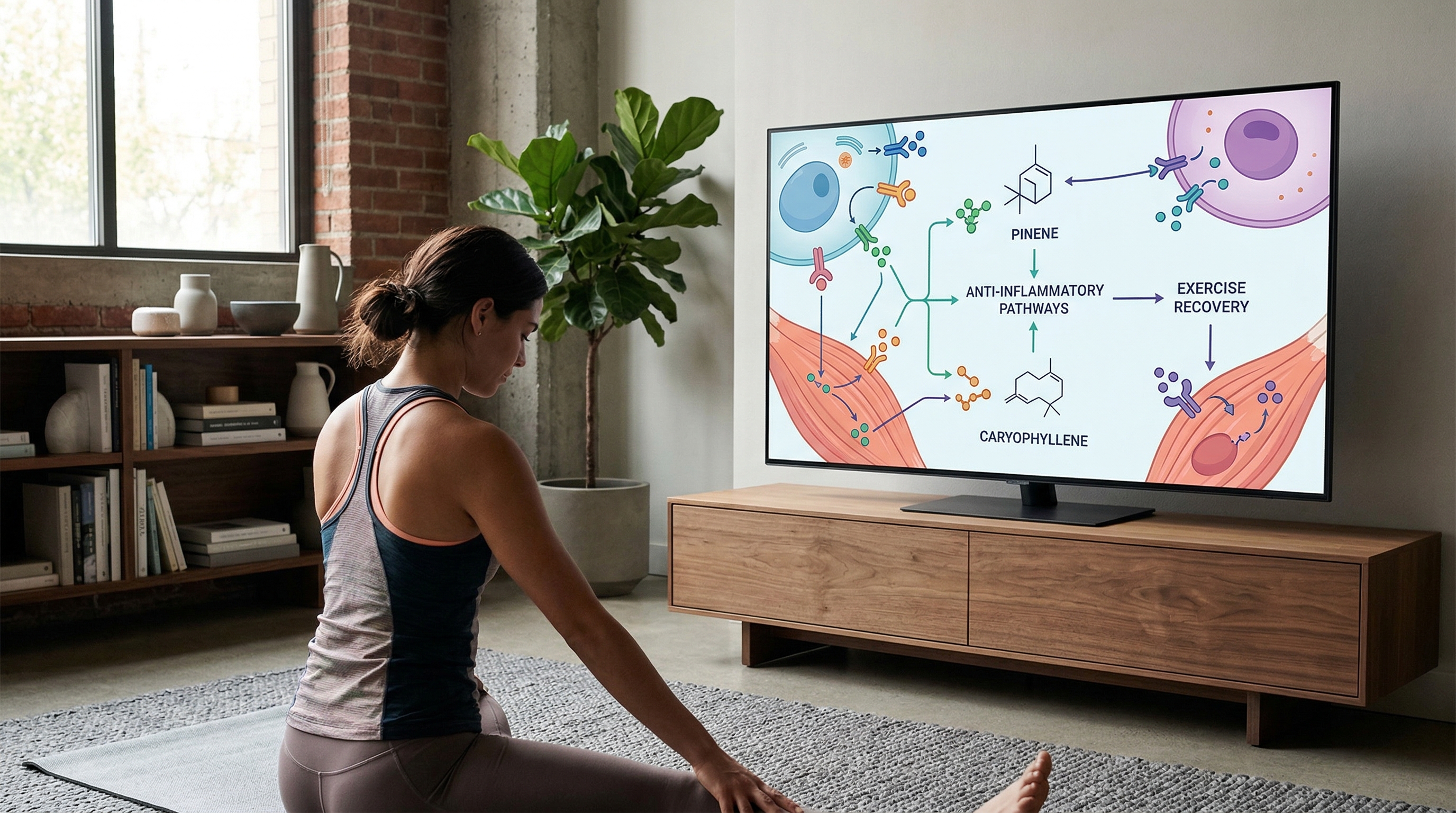
Terpene-specific effects: While direct exercise-and-terpene studies are scarce, terpene research broadly suggests meaningful contributions. Limonene demonstrated anxiolytic and mood-elevating effects in multiple animal model studies [de Almeida et al., 2012]. Alpha-pinene appears to inhibit acetylcholinesterase — potentially preserving focus and mental clarity during activity [Miyazawa & Yamafuji, 2005]. Beta-caryophyllene binds directly to CB2 receptors and has demonstrated anti-inflammatory activity in multiple preclinical studies [Gertsch et al., 2008].
The Key Terpenes for Fitness
Before getting into specific strains, it helps to understand which terpenes to look for — and why. The High Families classification system groups strains by terpene chemistry rather than the outdated indica/sativa binary, and it maps much more reliably to exercise applications.
Alpha-Pinene — The Focus Terpene
The most abundant terpene in nature and a major component in pine needles, rosemary, and many cannabis strains. Alpha-pinene may act as an acetylcholinesterase inhibitor, which means it could support memory retention and mental clarity [Miyazawa & Yamafuji, 2005] — useful when you are trying to maintain form during a complex lift or stay present during a long run. It also has documented bronchodilatory properties, potentially helping open airways during aerobic exercise.
Best for: Cardio, hiking, trail running, any activity requiring sustained attention.
Limonene — The Mood Elevator
The bright, citrusy terpene found in lemon rinds and many sativa-leaning strains. Limonene has shown consistent anxiolytic and antidepressant effects in animal models, mediated partly through serotonin and dopamine pathways [de Almeida et al., 2012]. For exercise purposes, it may help dissolve pre-workout anxiety and elevate mood during rhythmic activity like running or cycling. It is also a primary component of strains in the Energy High Family.
Best for: Cardio, morning workouts, social group fitness classes.
Terpinolene — The Energizer
Terpinolene produces a distinctive, complex aroma — piney, floral, herbal, slightly citrus — and is associated in observational cannabis research with uplifting, energizing, and cerebral effects. It appears disproportionately in strains that users consistently describe as stimulating rather than sedating. Though direct mechanism research is limited, its effects on the nervous system appear to favor alertness over relaxation.
Best for: Pre-workout energy, HIIT, cycling, any high-output session.
Beta-Caryophyllene — The Anti-Inflammatory
Uniquely among terpenes, beta-caryophyllene binds directly to CB2 receptors and is technically considered a dietary cannabinoid [Gertsch et al., 2008]. CB2 receptor activation modulates inflammatory responses in muscle and connective tissue — directly relevant to the micro-tears and inflammatory response inherent in resistance training. It is also found in black pepper, cloves, and copaiba oil. Strains rich in caryophyllene are a cornerstone of the Relieving High Family.
Best for: Strength training, post-workout recovery, managing exercise-induced inflammation.
Myrcene — The Recovery Terpene
The most abundant terpene in most commercial cannabis strains, myrcene is associated with sedation, muscle relaxation, and deep physical calm. Its role in exercise is almost exclusively post-workout: it is what you want when the training is done and your body needs to shift into repair mode. Preclinical research suggests myrcene has muscle-relaxant and sedative properties [do Vale et al., 2002]. High-myrcene strains dominate the Relaxing High Family.
Best for: Post-workout recovery, evening use after training, sleep support after hard sessions.
Humulene — The Anti-Inflammatory Companion
Often found alongside caryophyllene in the same strains (they share a biosynthetic pathway), humulene has demonstrated anti-inflammatory properties in animal studies [Fernandes et al., 2007]. As a bonus, it is mildly appetite-suppressing — a distinction from most cannabis compounds and potentially useful for athletes who prefer not to activate strong hunger responses during training.
Best for: Recovery, strength training, users who want anti-inflammatory benefits without heavy sedation.
Best Strains for Working Out: By Workout Type
Pre-Workout and Cardio: Energy, Focus, and Mood
For cardio sessions — running, cycling, swimming, dance classes, hiking — you want a strain that elevates mood, sharpens mental clarity, and sustains energy without sedation or anxiety. Look for strains in the Energy High Family with dominant limonene and terpinolene profiles.
Durban Poison The quintessential athletic sativa. This African landrace strain is famous among fitness-minded consumers for delivering clean, focused energy without the edge of anxiety. Terpinolene-dominant with supporting limonene, it creates a clear-headed, motivated state that pairs beautifully with endurance activity. THC typically runs 16–20%. Seibo Shen, jiu-jitsu competitor and VapeXhale founder, has publicly named it as his preferred training strain for focus and performance.
Jack Herer Named for the legendary cannabis activist, Jack Herer is one of the most decorated strains in cannabis history and a perennial favorite of athletes. Its terpinolene-forward profile creates a focused, euphoric buzz that blunts pre-workout anxiety while keeping you cognitively sharp. Moderate THC (18–24%) makes dosing relatively predictable. Excellent for yoga, Pilates, and any movement requiring body awareness.
Super Lemon Haze A two-time Cannabis Cup winner with a dominant limonene profile that delivers exactly what its name suggests: bright, uplifting, citrus-forward energy. It produces a social, talkative high that makes group fitness classes feel genuinely enjoyable. THC sits around 20–25%. Particularly well-suited for morning workouts when motivation can be elusive.
Green Crack Despite its provocative name, Green Crack is a classic sativa-dominant strain known for sharp mental focus and sustained energy. Its dominant terpenes — myrcene at low concentrations, plus limonene and caryophyllene — create a uniquely alert state. Multiple sources including HelloMD specifically cite it for HIIT, morning gym sessions, and cardio bursts. THC typically 16–24%.
Clementine A cross of Tangie and Lemon Skunk, Clementine is a limonene and terpinolene powerhouse with an unmistakably sweet citrus aroma. Its effects are bright and cerebral without being racey — a nuanced, alert energy that works well for steady-state cardio and activities requiring sustained attention. One of the cleanest pre-workout options for limonene-sensitive consumers.
Yoga, Stretching, and Mindful Movement
Yoga, Pilates, tai chi, and deep stretching benefit from something different from a hard cardio strain. You want gentle body awareness, reduced mental chatter, and present-moment focus — without cognitive fog or impairment that would interfere with balance and proprioception. Balanced or CBD-dominant strains shine here.
Harlequin One of the most respected high-CBD strains available, Harlequin typically tests around 5:2 CBD:THC ratio, producing clear-headed, functional effects with minimal psychoactivity. It is a consistent recommendation in the cannabis-for-athletes literature for its ability to reduce anxiety and mild pain without impairing cognition. The gentle myrcene and caryophyllene backbone provides a soft physical ease that pairs perfectly with a vinyasa flow or restorative session.
Cannatonic A foundational medical strain with roughly equal CBD and THC (or CBD-dominant phenotypes up to 17% CBD, 6% THC), Cannatonic offers anti-inflammatory and muscle-relaxing effects with only gentle psychoactivity. Its linalool content — linalool is the primary terpene in lavender — adds a calming, anxiolytic quality ideal for yoga practitioners who want physical ease without mental disruption.
ACDC With CBD levels reaching 20% and THC often below 1%, ACDC is effectively non-psychoactive for most users. It will not produce a “high” in the traditional sense, but it may provide genuine anti-inflammatory and anxiolytic benefits through CBD’s interactions with the ECS and serotonin receptors. For athletes who want the recovery and inflammation-modulating benefits of cannabis without any psychoactivity, ACDC is the gold standard. Often available as a tincture or concentrate.
Weightlifting and Strength Training
Strength training presents a fascinating challenge: you need enough focus and drive to execute heavy compound movements safely, while managing the accumulated discomfort of high-volume training. Beta-caryophyllene’s CB2 activity makes it the key terpene here, as does alpha-pinene for sustaining focus under fatigue.
GSC (Girl Scout Cookies) A landmark hybrid with a dominant beta-caryophyllene profile, GSC delivers a balanced, body-forward experience that many weightlifters describe as enhancing mind-muscle connection — the focused awareness of the muscle being trained during a set. At low to moderate doses (1–2 puffs), it sharpens concentration and provides a functional physical ease without inducing couch-lock. THC typically 25–28%, so dose carefully.
White Widow A Dutch classic that combines caryophyllene and myrcene with a notable pinene fraction. At moderate doses, White Widow creates a clear-headed, energized focus overlaid with a gentle physical relaxation — a surprisingly versatile combination for the gym. It has a long track record in the European cannabis community as a functional work-and-activity strain. THC 18–25%.
Cherry Pie A hybrid of Granddaddy Purple and Durban Poison, Cherry Pie balances the energizing genetics of Durban with some relaxing indica influence. The result is grounding but not sedating — described by some strength athletes as helping them stay present during long sessions without the aggression or anxiety that can accompany high-stimulant pre-workouts. Caryophyllene-forward with supporting myrcene. THC 16–23%.
Blue Dream One of the best-selling strains in the United States for years, Blue Dream’s popularity partly reflects its versatility. Its balanced myrcene-caryophyllene-pinene profile produces a gentle body ease overlaid with a clear, slightly elevated mood — functional without being sedating. Many gym-goers find it works best for moderate-intensity sessions rather than maximal-effort days. THC 17–24%.
Post-Workout Recovery
After training, your priorities shift entirely: reduce inflammation, ease muscle soreness, support quality sleep, and let your nervous system come down. High-myrcene, CBD-rich, or caryophyllene-dominant strains are the tools for this job.
Granddaddy Purple A myrcene-dominant indica with deep physical relaxation properties, Granddaddy Purple is a classic post-workout choice. Its grape and berry aroma belies a powerfully sedating body effect that can help muscles genuinely release after hard training. The myrcene content correlates with the muscle-relaxant properties documented in preclinical research [do Vale et al., 2002]. Best used in the evening after training — this is not a daytime strain.
Northern Lights One of the most revered indica strains in cannabis history, Northern Lights has a sweet, piney aroma and a high myrcene profile that produces near-total physical relaxation. Multiple sources specifically cite it for post-workout recovery and sleep quality improvement after intense training days. A small dose is often enough for substantial effect. THC 16–21%.
Remedy A high-CBD strain (15–18% CBD, under 1% THC) bred specifically for therapeutic relief. Non-psychoactive for most users. Remedy’s caryophyllene and myrcene-rich profile may provide meaningful anti-inflammatory and muscle-relaxant effects without impairment — allowing you to function (drive, work, parent) while your body recovers. An underappreciated option for daytime recovery.
Harlequin Worth mentioning again in the recovery context. When used post-workout rather than pre-workout, Harlequin’s CBD-forward profile may specifically target exercise-induced inflammation through CB2 pathway modulation. Its functional, non-sedating character means it works even if you need to be productive after training.
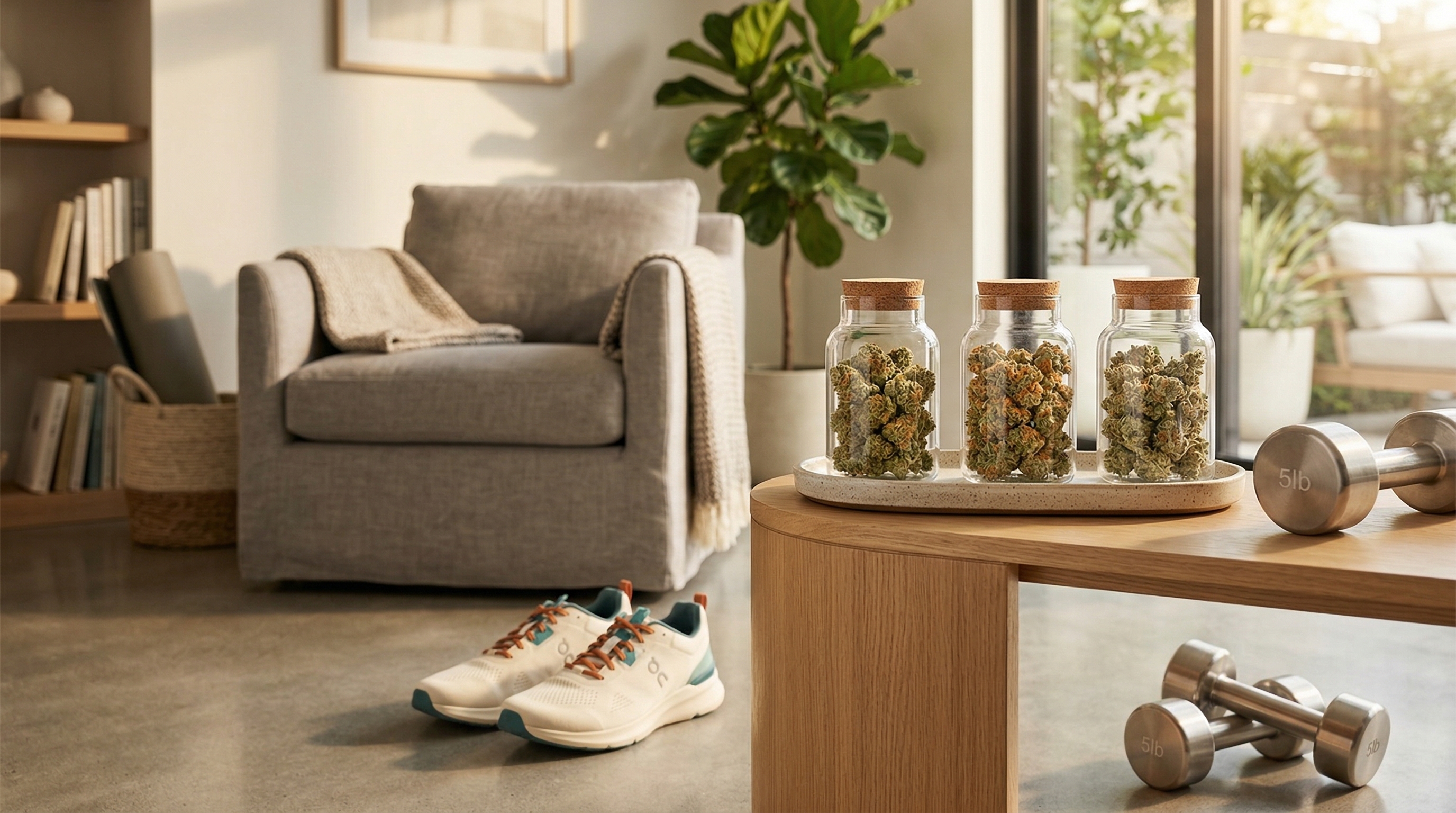
Quick Reference: Workout Type to Strain Chemistry
| Workout Type | High Family | Key Terpenes | Strain Examples |
|---|---|---|---|
| Running / Cardio | Energy | Limonene, Terpinolene | Durban Poison, Super Lemon Haze |
| HIIT / Cycling | Energy | Terpinolene, Ocimene | Green Crack, Clementine |
| Yoga / Stretching | Balancing | Low-intensity, CBD-rich | Harlequin, ACDC |
| Strength Training | Relieving | Caryophyllene, Pinene | GSC, White Widow |
| Post-Workout Recovery | Relaxing | Myrcene, Caryophyllene | Granddaddy Purple, Northern Lights |
| Daytime Recovery | Balancing | CBD-dominant | Remedy, Cannatonic |
Practical Guidance: Dosing and Timing
The Microdose Principle
The most consistent advice across athletes who integrate cannabis into training is to microdose. You are not trying to get heavily intoxicated — you are looking for a subtle physiological and psychological edge. For most people, this means:
- Inhalation (vaping): 1–2 small draws. Effects begin within 2–5 minutes, peak around 20–30 minutes, and taper over 1–2 hours. Vaping allows for precise titration and avoids the combustion byproducts of smoking.
- Tinctures (sublingual): 2.5–5mg THC, held under the tongue for 60–90 seconds. Onset 15–30 minutes, duration 2–4 hours. More predictable than edibles, useful for longer training sessions.
- Edibles: Delay of 45–90 minutes makes timing difficult for exercise. If using, 2.5–5mg THC is a reasonable starting dose. Not ideal for most workout contexts due to unpredictable onset.
- CBD-isolate or broad-spectrum CBD: Can be used without timing concerns for recovery purposes. Studies on athletes use doses from 150–600mg for anti-inflammatory effects, though the optimal dose for exercise-related inflammation remains unknown.
- Topicals: Applied directly to sore muscles, joints, or areas of discomfort. No psychoactive effect. Good option for injury-adjacent discomfort or post-training muscle soreness without affecting cognition.
Timing Guide
| Method | Take Before Training | Effects Peak |
|---|---|---|
| Vape / Dry herb | 5–10 minutes | 15–30 minutes in |
| Sublingual tincture | 20–30 minutes | 45–90 minutes |
| Edible | 60–90 minutes | 2–3 hours in |
| Topical | 15–30 minutes | Localized, ongoing |
Safety Considerations That Matter
Cardiovascular load: THC temporarily elevates heart rate 20–50 bpm [Benowitz & Jones, 1975]. Combined with vigorous exercise, total cardiac load increases meaningfully. Any history of heart disease, arrhythmia, or hypertension warrants a physician conversation before proceeding.
Dehydration: Cannabis causes dry mouth, and exercise causes sweating. Both increase dehydration risk. Drink more water than you think you need.
Coordination and reaction time: Both are measurably affected by cannabis at moderate-to-high doses. Avoid activities with significant fall risk (Olympic lifts, balance-dependent movements) until you know exactly how a strain affects your coordination. Low-risk first experiments — walking, stationary cycling, yoga — are smart.
Masking legitimate pain signals: Cannabis can raise perceived pain tolerance, which may help push through fatigue but can also cause you to ignore genuine injury warning signs. If something hurts in a way that feels structural rather than muscular, stop and assess soberly.
Legal and workplace considerations: Many competitive sports organizations prohibit cannabis use. WADA lifted CBD from its prohibited list in 2018, but THC remains prohibited in-competition. Know the rules of your sport.
Frequently Asked Questions
Does cannabis improve athletic performance? The evidence is mixed and nuanced. Cannabis may improve workout enjoyment, motivation, and pain tolerance — all of which can support training volume and consistency. There is no good evidence that it improves peak performance metrics like strength, speed, or VO2max. For most athletes, the case for cannabis rests on recovery and sustainability rather than direct performance enhancement.
Is it safe to smoke cannabis before exercise? Smoking introduces combustion byproducts and may irritate airways. For exercise specifically, vaping or tinctures are preferable. Beyond the delivery method, pre-workout cannabis use carries the cardiovascular considerations above and should be approached cautiously.
What’s the difference between CBD and THC for exercise? THC produces psychoactive effects, elevates mood and pain tolerance, and temporarily increases heart rate. CBD is non-psychoactive, may reduce inflammation, and does not elevate heart rate — making it safer for cardiovascular-adjacent use. Many athletes prefer CBD for recovery and THC (at low doses) for motivation and mood during activity.
Can cannabis help with DOMS (delayed onset muscle soreness)? Preclinical evidence suggests CBD and caryophyllene may reduce inflammatory markers associated with DOMS. Anecdotally, many athletes report that high-CBD strains or topicals meaningfully reduce muscle soreness 24–48 hours after training. Human clinical trials are limited, but the mechanism (CB2 receptor-mediated inflammation modulation) is scientifically plausible.
How do I know if a strain is terpinolene-dominant or limonene-dominant? The only reliable way is lab testing data. When purchasing from a licensed dispensary, ask for a Certificate of Analysis (COA) that includes terpene percentages. Strain names are not consistent across cultivators — two batches of “Jack Herer” can have very different terpene profiles depending on the grower, harvest conditions, and curing process.
The Bottom Line
Cannabis and exercise occupy a more legitimate intersection than the stoner stereotype suggests. The endocannabinoid system is genuinely involved in regulating pain, mood, inflammation, and physical motivation — and cannabis compounds interact directly with that system. A growing body of evidence suggests that used thoughtfully, certain strains and cannabinoid profiles may enhance workout enjoyment, support recovery, and help some people exercise more consistently.
The critical variables are which strain, how much, and when. Terpene-forward thinking — specifically looking for limonene and terpinolene before cardio, pinene and caryophyllene for strength training, and myrcene for recovery — is a far more reliable framework than chasing vague indica/sativa labels.
Start at the low end. Know how a strain affects you before you try it at the gym. Build a toolkit of two or three strains matched to your specific training needs. And always listen to your body — cannabis is an amplifier, and what it amplifies depends entirely on what you bring into the session.
The research cited in this article includes peer-reviewed studies. Cannabis research is ongoing and findings may evolve. This article is for informational purposes and does not constitute medical advice.


