Cannabis and Autism Spectrum: Emerging Therapeutic Research
What does the science say about cannabis and ASD? A deep dive into endocannabinoid research, clinical trials, and what families should know.


A Question Millions of Families Are Asking
Here’s a number that might surprise you: according to the CDC, approximately 1 in 36 children in the United States is diagnosed with autism spectrum disorder (ASD). That’s nearly 3% of the population — meaning millions of families are actively searching for ways to improve quality of life for their loved ones.
Here’s another number: in surveys of parents of children with ASD, a substantial portion report having considered or tried cannabis-based products for their child’s symptoms — often without guidance, often ahead of the science [Aran et al., 2019]. This isn’t fringe behavior. It’s a groundswell of family-led exploration that has outpaced formal clinical investigation for years.
So what does the science actually say? Is there a meaningful biological connection between the endocannabinoid system and autism? What do the clinical trials tell us — and where do their limitations lie? And what should anyone exploring this territory understand before drawing conclusions?
That’s exactly what we’ll unpack here. This article walks through the biology, reviews the most significant research published through early 2025 (including several landmark 2024 and 2025 studies), and connects the evidence to practical considerations. It is not medical advice — it’s a clear-eyed look at where the research stands, written for anyone who wants to separate emerging evidence from hype.
Important disclaimer: Nothing in this article constitutes medical advice. Autism spectrum disorder is a complex neurodevelopmental condition, and any therapeutic decisions — especially for children — must be made in close consultation with qualified healthcare providers. Cannabis remains a Schedule I substance federally in the United States, and its legal status for medical use varies widely by state.
The Science Explained
The Endocannabinoid System and Neurodevelopment
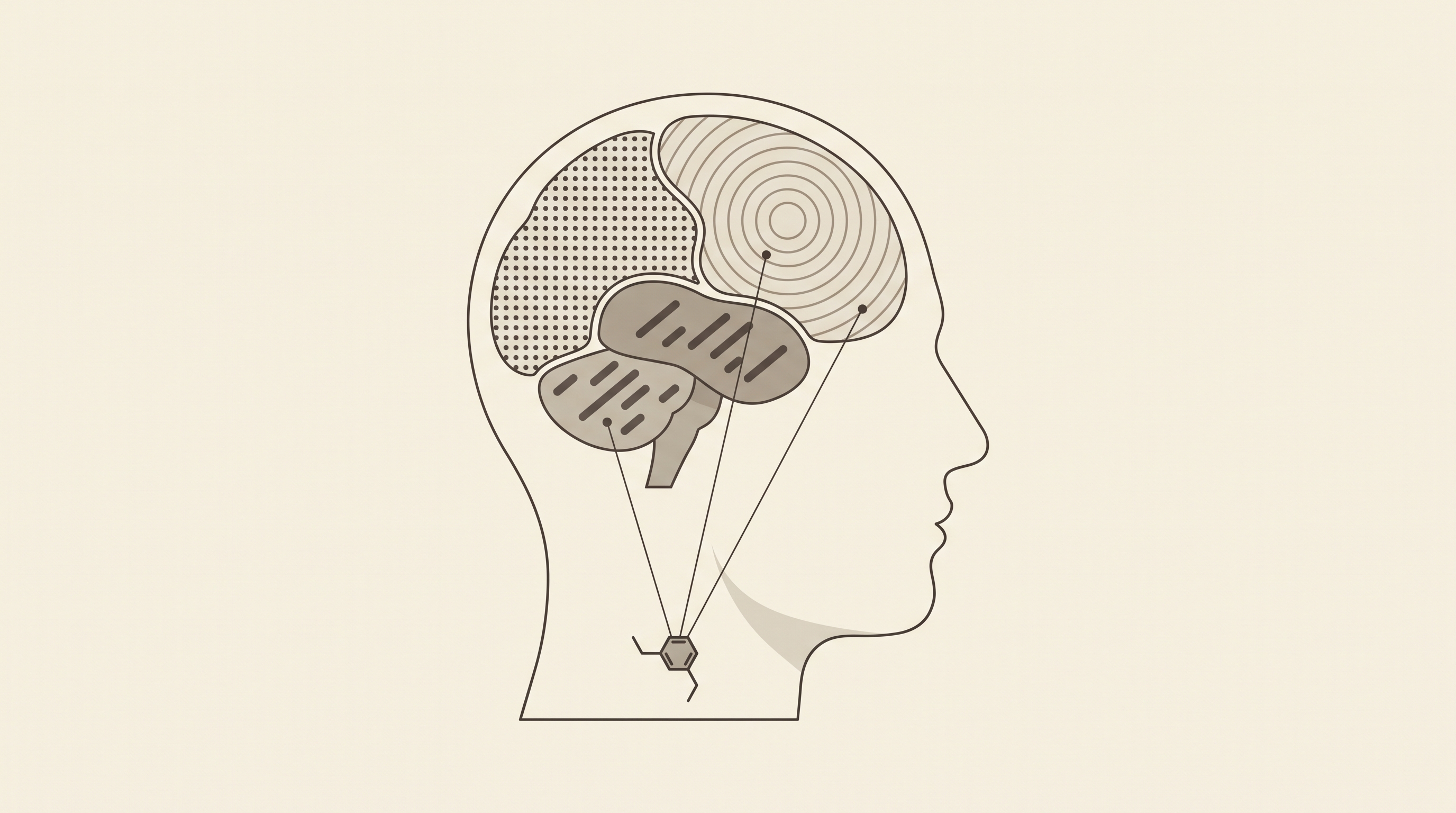
To understand why researchers are examining cannabis in the context of autism, you first need to understand the endocannabinoid system (ECS) — your body’s built-in chemical signaling network that helps regulate mood, sleep, pain, immune function, and critically, neurodevelopment.
Think of the ECS as a dimmer switch for your nervous system. It doesn’t simply turn things on or off — it modulates. It fine-tunes how neurons fire, how the brain processes sensory information, and how the body responds to stress. It operates through two primary receptors:
- CB1 receptors: Densely concentrated in the brain and central nervous system. They influence mood, memory, motor function, and — most relevant here — sensory processing and social reward.
- CB2 receptors: Found primarily in immune tissue and peripheral organs. They play a key role in inflammation and immune regulation, both of which have been implicated in ASD biology.
Your body produces its own cannabinoids — called endocannabinoids — to activate these receptors. The two most studied are anandamide (AEA, sometimes called the “bliss molecule”) and 2-arachidonoylglycerol (2-AG). Anandamide is particularly relevant to autism research.
Here’s why: a landmark study by Karhson et al. (2018) measured anandamide levels in children with and without ASD and found that children on the autism spectrum had significantly lower circulating anandamide levels [Karhson et al., 2018]. Lower anandamide has been associated with heightened social anxiety and reduced social reward processing — two hallmark challenges for many autistic individuals.
A separate line of research found correlations between endocannabinoid levels and the severity of certain ASD-related behaviors, suggesting the ECS plays a modulatory role in how autism manifests at a neurobiological level [Aran et al., 2019]. Preclinical research in mouse models has reinforced this: when anandamide signaling is pharmacologically boosted, social behavior improves in animal models of autism [Wei et al., 2015].
This does not mean a “broken” ECS causes autism — the condition is far too complex and multifactorial for any single mechanism to explain it. But it does establish the ECS as part of autism’s neurobiological landscape, which opens a scientifically grounded door to a key question: could modulating the ECS through exogenous cannabinoids influence some of ASD’s most challenging symptoms?
How CBD Interacts With the System
Cannabidiol (CBD) — the non-psychoactive major cannabinoid in cannabis — interacts with the ECS in ways that are directly relevant to the anandamide research. Unlike THC, CBD does not bind strongly to CB1 or CB2 receptors directly. Instead, it works through several complementary pathways:
-
FAAH inhibition: CBD inhibits the enzyme fatty acid amide hydrolase (FAAH), which breaks down anandamide. By slowing this breakdown, CBD effectively raises your body’s own endocannabinoid levels [Bisogno et al., 2001]. This is one of the most compelling hypothesized mechanisms for CBD’s potential in ASD — it doesn’t flood receptors artificially, it lets the natural system run longer.
-
Serotonin receptor activity: CBD binds to 5-HT1A serotonin receptors, producing anxiolytic (anti-anxiety) effects through a pathway entirely separate from cannabinoid receptors [Zanelati et al., 2010]. Given that anxiety is one of the most prevalent and debilitating comorbidities in ASD, this pathway is clinically meaningful.
-
Anti-inflammatory effects: CBD has demonstrated anti-inflammatory properties via multiple pathways, including CB2 receptor modulation. Neuroinflammation has been observed in post-mortem ASD brain studies, and while causality remains unclear, anti-inflammatory compounds are of growing interest to ASD researchers.
-
TRPV1 receptor modulation: CBD also interacts with transient receptor potential vanilloid type 1 (TRPV1) channels, which are involved in sensory processing — a domain where many autistic individuals experience significant challenges.
What the Clinical Research Shows
The clinical evidence base is growing rapidly. Here is an honest accounting of what it shows, organized from most to least methodologically rigorous.
Randomized Controlled Trials
The most rigorous evidence comes from a proof-of-concept RCT by Aran et al. (2021), which tested a CBD:THC (20:1) preparation in 150 participants with ASD in a double-blind, placebo-controlled crossover design [Aran et al., 2021]. Key findings:
- Statistically significant improvement in disruptive behavior (primary outcome) as measured by the Home Situations Questionnaire
- The most pronounced benefits appeared in participants with higher baseline behavioral severity
- Modest but meaningful improvements in social responsiveness, mood, and anxiety as secondary outcomes
- Treatment was generally well-tolerated; the most common side effects were sleepiness and increased appetite
A 2025 double-blind, placebo-controlled crossover trial published in the Journal of Autism and Developmental Disorders tested purified plant-derived CBD (Epidiolex) in autistic boys aged 7–14 with severe behavioral problems [Trauner et al., 2025]. This study is significant because it isolated CBD from THC — all previous studies used whole-plant preparations, making it impossible to attribute effects to any single compound. Results showed:
- Clinically evident improvement in 2 out of 3 participants on CBD
- An acceptable safety profile with no serious adverse events
- A prominent placebo effect that underscores the importance of controlled trial design
- No statistically significant group-level separation from placebo on primary outcome measures — a finding the authors attribute partly to the strong placebo response and to concomitant behavioral medications that may have reduced CBD blood levels
The placebo finding deserves careful interpretation: it does not mean CBD is ineffective. It means that in a small, heterogeneous population with a strong placebo response, detecting a drug effect is genuinely difficult. The study’s authors explicitly called for larger trials.
Observational Studies and Open-Label Data
Beyond RCTs, a substantial body of observational evidence has accumulated:
The Israeli cohort (Aran et al., 2019): This landmark retrospective analysis of 188 ASD patients treated with cannabis oil (predominantly CBD-rich, with some THC) over six months found:
- 30.1% reported significant behavioral improvement
- 53.7% reported moderate improvement
- 66.8% reported quality-of-life improvements
- Self-injury and rage episodes decreased substantially in many participants
- Side effects were mild: restlessness (6.6%), sleepiness (3.2%) — markedly less severe than those associated with risperidone or aripiprazole, the only two FDA-approved medications for ASD-related irritability
Brazilian observational study (Fleury-Teixeira et al., 2019): Eighteen autistic patients (primarily children) used CBD-rich cannabis extract for 6–9 months. Of the 15 who continued, improvements were observed across seizures, attention, social interaction, and sleep.
CBD-dominant full-spectrum extract study (Mazza et al., 2024): A 2024 retrospective observational cohort study from Brazil examined CBD-dominant full-spectrum extract (33:1 CBD:THC ratio) in children and adolescents aged 5–18 with moderate-to-severe non-syndromic ASD [Mazza et al., 2024]. Findings showed meaningful reductions in core ASD symptoms and comorbid challenges, with improved family quality of life. The study authors noted the formulation was “safe and effective” within its observational limitations.
Family accommodation study (David et al., 2025): An open-label mixed-methods study published in 2025 tracked families of autistic children through six months of CBD-rich cannabis treatment and found significant reductions in family accommodation (the adjustments families make to manage ASD-related behaviors) and parental distress — suggesting effects that extend beyond the individual patient to family functioning [David et al., 2025].
Neurophysiological Evidence
A 2024 preprint from the UC San Diego Center for Medicinal Cannabis Research offered a novel window into how CBD might work in low-functioning ASD. Researchers administered an 8-week daily CBD regimen to boys with low-functioning ASD and measured both cognitive-behavioral outcomes and EEG (electroencephalogram) brain activity [Cazares et al., 2024]. They found:
- CBD treatment was associated with broadband spectral changes in EEG — specifically in delta frequency bands
- Improvements in visuomotor coordination and nonverbal cognitive ability
- CBD blood metabolite levels correlated with electrophysiological changes, suggesting the drug was mechanistically active in the brain
This kind of neurophysiological data is rare in pediatric cannabis research and represents an important step toward understanding the biological mechanisms behind behavioral observations.

Preclinical Evidence: Animal Models
Animal model research provides important mechanistic insights, even if results don’t always translate directly to humans.
A 2024 study in Frontiers in Neuroscience used the BTBR mouse model — one of the most established animal models of idiopathic autism — to examine chronic CBD administration during the post-weaning period [Shrader et al., 2024]. Results showed that CBD:
- Reduced repetitive, stereotypic behaviors including marble-burying (a proxy for restricted, repetitive behavior)
- Attenuated social deficits in three-chamber social approach tests
- Demonstrated dose-dependent effects, with lower doses sometimes outperforming higher ones
These findings aligned with earlier preclinical work showing that CB1 receptor activation is important for normal social behavior in rodents, and that anandamide-boosting compounds improve social interaction in multiple ASD mouse models [Wei et al., 2015].
The THC Question
Most autism-focused cannabis research has deliberately emphasized CBD-dominant preparations — typically 20:1 CBD:THC ratios or higher. This is intentional and appropriate for several reasons:
- THC is psychoactive, and in higher doses can increase anxiety, paranoia, and sensory sensitivity — which could theoretically worsen certain ASD symptoms
- Developing-brain concerns around THC exposure are significant; pediatric use warrants maximum caution
- The anxiogenic potential of THC at higher doses is well-documented and directly conflicts with therapeutic goals for a population where anxiety is highly prevalent
That said, some researchers propose that trace amounts of THC may contribute to a beneficial entourage effect — the hypothesis that cannabinoids and terpenes work synergistically, producing effects that isolated CBD alone cannot replicate [Russo, 2011]. The Israeli trials consistently used preparations containing some THC, and some researchers argue this may be why their results exceeded those of the purified CBD trial.
Whether the inclusion of low-dose THC is beneficial, neutral, or potentially harmful in ASD populations remains an open and contested question. What the evidence does not support is high-THC use in this context.
The Terpene Dimension
While cannabinoids dominate the ASD research conversation, terpenes — the aromatic compounds that give cannabis its diverse scent profiles and contribute to its effects — deserve mention.
Linalool, found in lavender and many cannabis cultivars, has demonstrated anxiolytic properties in preclinical studies [Guzmán-Gutiérrez et al., 2015]. Beta-caryophyllene, notably the only terpene known to directly bind CB2 receptors, has shown anti-inflammatory and anxiolytic effects [Gertsch et al., 2008]. Myrcene has demonstrated sedative effects that may support the sleep improvements reported across multiple ASD studies.
No clinical trials have specifically tested terpene profiles in ASD populations, and connecting terpene science to ASD outcomes requires extrapolation. But as research matures, the full chemical profile of a cannabis preparation — not just its CBD:THC ratio — may prove critical to optimizing therapeutic effects.
For context within our High Families framework:
- The Relaxing High family, rich in myrcene and often paired with higher CBD content, aligns with the calming, sleep-supportive effects most studied in ASD research
- The Relieving High family, characterized by caryophyllene and humulene, may be relevant for the physical tension, anxiety, and discomfort some autistic individuals experience
- The Balancing High family, with gentle, low-intensity profiles, may appeal to those seeking minimal psychoactive effects
Note: These connections are theoretical and should not be interpreted as treatment guidance. No clinical trials have specifically tested High Family profiles in ASD populations.
Practical Implications
Where the Evidence Stands Right Now
Let’s be precise about the current state of the science. The evidence for cannabis and ASD is promising but preliminary. Here is how to weigh it:
Reasons for cautious optimism:
- Multiple studies — including at least one rigorous RCT — suggest CBD-rich preparations may reduce behavioral challenges in some autistic individuals
- The biological rationale is scientifically grounded: lower anandamide levels in ASD populations + CBD’s FAAH-inhibiting mechanism = a plausible hypothesis for why effects might occur
- Side effect profiles in studies have been relatively mild compared to risperidone and aripiprazole, which carry risks of weight gain, metabolic changes, and movement disorders
- Parent-reported quality-of-life improvements have been consistent across culturally diverse study populations (Israel, Brazil, Turkey, UK)
- The 2024 and 2025 research wave — including neurophysiological data and purified CBD trials — represents a significant maturation of the field
Reasons for continued caution:
- Sample sizes remain small across virtually all published studies
- Long-term safety data — particularly for developing brains — is essentially absent
- Optimal dosing, cannabinoid ratios, and formulations have not been established
- The strong placebo effect observed in the 2025 Trauner et al. trial is a methodological challenge that could confound earlier open-label findings
- Product quality in unregulated markets varies enormously; the preparations used in clinical research are far more standardized than commercially available CBD oils
- Heterogeneity within ASD means that findings for one subgroup may not apply to another
A Note on the Autistic Adult Perspective
Most published research has focused on children, driven largely by parental demand for therapeutic options. But many autistic adults report using cannabis on their own terms — not as a “treatment” for autism itself, but as a tool for managing anxiety, sensory overload, sleep disruption, and the chronic stress of navigating a world not designed for neurodivergent minds.
These self-directed experiences matter. They represent real-world data that precedes and informs clinical research. And the ethical landscape here differs meaningfully from pediatric use: adults can make informed decisions for themselves, developing-brain concerns are not present, and self-reported benefits deserve to be taken seriously even when they precede controlled trial confirmation.
If You or a Family Member Are Considering This
This is not a recommendation. It is a framework for informed decision-making:
-
Start with a specialist. Find a healthcare provider with experience in both ASD and cannabinoid medicine. For children, this must involve a pediatric specialist. This is not a situation for self-guided experimentation.
-
Understand what “CBD-rich” means in research context. The preparations used in clinical trials are standardized pharmaceutical-grade formulations — not the same as a CBD oil from a grocery store. If exploring this path, look for products with verified third-party Certificates of Analysis (COAs), confirmed cannabinoid ratios, and testing for pesticides, heavy metals, and residual solvents.
-
Start low, titrate slowly. Every study that showed positive results used careful dose titration — beginning at very low doses and increasing gradually over weeks. This applies to cannabis broadly, but it is especially critical here.
-
Track systematically. Keep detailed records of dosing, timing, behavioral observations, sleep patterns, and any side effects. Structured tracking transforms personal experience into data your healthcare team can actually use.
-
Stay current on the evidence. The field is moving fast. Multiple trials registered on ClinicalTrials.gov are underway as of 2025, including the CASCADE (CAnnabidiol Study in Children with Autism Spectrum DisordEr) study examining CBD for irritability and aggression [Sannar et al., 2024]. Results from these larger trials will substantially sharpen the evidence base.
-
Consider legal and regulatory context. Cannabis remains federally illegal in the United States, and state laws governing medical cannabis access for ASD vary significantly. Understanding your jurisdiction’s regulations is a necessary first step.
What This Research Means for the Broader Field
The cannabis-and-autism conversation is part of a larger scientific shift in how we understand the endocannabinoid system’s role in neurodevelopment and neurological diversity. The ECS is not peripheral to brain function — it is deeply embedded in the architecture of how brains develop, process sensory information, regulate emotion, and modulate social behavior.
Whether or not cannabis-based therapies become standard tools for ASD management, this research is deepening our understanding of the ECS itself — and that knowledge has implications far beyond cannabis. It is opening doors to entirely new classes of interventions, including FAAH inhibitors, synthetic endocannabinoid modulators, and targeted CB2 agonists that could offer benefits without any psychoactive effects.
The research is not yet there. But the direction it is heading is scientifically serious and worthy of careful attention.
Key Takeaways
- The endocannabinoid system is biologically altered in many autistic individuals, with lower anandamide levels linked to social anxiety and impaired social reward — providing a plausible mechanism for why cannabis compounds might interact with ASD symptoms [Karhson et al., 2018].
- CBD-rich preparations have shown modest but meaningful effects in early clinical research, particularly for behavioral challenges, irritability, and quality of life — with a relatively favorable side effect profile compared to approved medications [Aran et al., 2021; Mazza et al., 2024].
- A 2025 purified CBD RCT found clinically evident improvement in 2/3 of participants, but no group-level separation from placebo — highlighting both the promise and the methodological challenges of this research area [Trauner et al., 2025].
- The research is early-stage. No large-scale phase III trials are complete, and long-term safety data in developing brains remains limited. Caution is warranted, especially for pediatric use.
- Terpene profiles and cannabinoid ratios likely matter, but optimal formulations have not been established. No clinical trials have specifically tested terpene-focused approaches in ASD populations.
- Any exploration of cannabis for ASD requires qualified healthcare providers, pharmaceutical-quality products, careful dose titration, systematic outcome tracking, and full awareness of legal and regulatory context.
FAQs
Is CBD approved for treating autism?
No. As of early 2025, no cannabis-derived product is FDA-approved for autism spectrum disorder. Epidiolex (pharmaceutical CBD) is FDA-approved for seizures associated with Lennox-Gastaut syndrome, Dravet syndrome, and tuberous sclerosis complex — and some individuals with ASD and comorbid epilepsy may use it under those indications — but there is no ASD-specific approval. Regulatory approval for ASD use would require completion of large-scale phase III trials that have not yet concluded.
Can THC make autism symptoms worse?
It is possible, particularly at higher doses. THC can increase anxiety, paranoia, and sensory sensitivity in some individuals — symptoms that could overlap with and exacerbate certain ASD-related challenges. Most clinical research has used CBD-dominant preparations (20:1 CBD:THC or higher) for this reason. Individual responses vary significantly, and developing-brain concerns make high-THC use in children particularly cautionary.
What’s the difference between the cannabis used in studies and what I can buy?
Significant. Clinical trials use standardized, pharmaceutical-quality preparations with verified cannabinoid profiles, tested for contaminants, and administered at precise doses. Commercial CBD products — especially in unregulated markets — vary enormously in actual CBD content, may contain unexpected THC levels, and are often poorly tested. If exploring this path, third-party COAs from accredited labs are non-negotiable.
What about cannabis for autistic adults versus children?
The ethical and practical landscape differs meaningfully. Adults can make informed therapeutic decisions for themselves; developing-brain concerns around cannabinoid exposure are not present; and adults can more reliably self-report symptom changes. Most published research has focused on children and adolescents, but many autistic adults use cannabis to manage anxiety, sensory overload, and sleep difficulties. The same caution around product quality, dosing, and provider consultation applies — but the risk calculus shifts when the individual can fully consent.
Are there ongoing clinical trials I can follow?
Yes. Multiple trials are registered on ClinicalTrials.gov as of 2025. The CASCADE study (NCT04517799 and related registrations) is among the most significant ongoing investigations. Search “cannabidiol autism” or “cannabis autism spectrum” on ClinicalTrials.gov for current enrollment status and study details.
How does cannabis compare to existing ASD medications?
The only two FDA-approved medications for ASD-related irritability and aggression are risperidone and aripiprazole — both atypical antipsychotics with significant side effect profiles including weight gain, metabolic changes, sedation, and risk of tardive dyskinesia with long-term use. CBD-rich preparations in the studies reviewed here showed substantially milder side effects. This does not mean cannabis is equivalent in efficacy — the evidence base for approved medications is far larger. But the side effect comparison is a legitimate factor in why families and providers are exploring alternatives.
Sources
-
Aran, A., Cassuto, H., Lubotzky, A., Wattad, N., & Hazan, E. (2019). Brief Report: Cannabidiol-Rich Cannabis in Children with Autism Spectrum Disorder and Severe Behavioral Problems — A Retrospective Feasibility Study. Journal of Autism and Developmental Disorders, 49(3), 1284–1288. PMID: 30382443
-
Aran, A., Harel, M., Cassuto, H., Polyansky, L., Schnapp, A., Wattad, N., Shmueli, D., Golan, D., & Castellanos, F.X. (2021). Cannabinoid treatment for autism: a proof-of-concept randomized trial. Molecular Autism, 12(1), 6. PMID: 33536055
-
Bisogno, T., Hanuš, L., De Petrocellis, L., Tchilibon, S., Ponde, D.E., Brber, I., et al. (2001). Molecular targets for cannabidiol and its synthetic analogues: effect on vanilloid VR1 receptors and on the cellular uptake and enzymatic hydrolysis of anandamide. British Journal of Pharmacology, 134(4), 845–852.
-
Cazares, C., et al. (2024). Cannabidiol treatment is associated with broadband spectral electrophysiological changes and improved cognition in boys with low-functioning autism spectrum disorder. medRxiv preprint. https://doi.org/10.1101/2024.09.27.24314448
-
David, A., Gal, E., Ben-Sasson, A., Kohn, E., et al. (2025). Effects of Medical Cannabis Treatment for Autistic Children on Family Accommodation: An Open-Label Mixed-Methods Study. Medical Cannabis and Cannabinoids. PMC12563248.
-
Fleury-Teixeira, P., Caixeta, F.V., Ramires da Silva, L.C., Brasil-Neto, J.P., & Malcher-Lopes, R. (2019). Effects of CBD-enriched cannabis sativa extract on autism spectrum disorder symptoms: an observational study of 18 participants undergoing compassionate use. Frontiers in Neurology, 10, 1145.
-
Gertsch, J., Leonti, M., Raduner, S., Racz, I., Chen, J.Z., Xie, X.Q., et al. (2008). Beta-caryophyllene is a dietary cannabinoid. Proceedings of the National Academy of Sciences, 105(26), 9099–9104.
-
Guzmán-Gutiérrez, S.L., Bonilla-Jaime, H., Moreno-Alvarez, M., Jiménez-Ferrer, E., De Vivar, M.E., Navarrete, A. (2015). Linalool and beta-pinene exert their antidepressant-like activity through the monoaminergic pathway. Life Sciences, 128, 24–29.
-
Jawed, B., Esposito, J.E., Pulcini, R., et al. (2024). The Evolving Role of Cannabidiol-Rich Cannabis in People with Autism Spectrum Disorder: A Systematic Review. International Journal of Molecular Sciences, 25(22), 12453. https://doi.org/10.3390/ijms252212453
-
Karhson, D.S., Krasinska, K.M., Dallaire, J.A., et al. (2018). Plasma anandamide concentrations are lower in children with autism spectrum disorder. Molecular Autism, 9(1), 18. PMID: 29564053
-
Mazza, J.A.S., Ferreira, L., Martins-Viera, S., et al. (2024). Clinical and Family Implications of Cannabidiol (CBD)-Dominant Full-Spectrum Phytocannabinoid Extract in Children and Adolescents with Moderate to Severe Non-Syndromic Autism Spectrum Disorder (ASD): An Observational Study on Neurobehavioral Management. Pharmaceuticals, 17(6), 686. https://doi.org/10.3390/ph17060686
-
Russo, E.B. (2011). Taming THC: potential cannabis synergy and phytocannabinoid-terpenoid entourage effects. British Journal of Pharmacology, 163(7), 1344–1364.
-
Sannar, E.M., et al. (2024). Cannabidiol for treatment of Irritability and Aggressive Behavior in Children and Adolescents with ASD: Background and Methods of the CASCADE Study. medRxiv preprint. https://doi.org/10.1101/2024.08.12.24311894
-
Shrader, S.H., Mellen, N., Cai, J., Barnes, G.N., & Song, Z.H. (2024). Cannabidiol is a behavioral modulator in BTBR mouse model of idiopathic autism. Frontiers in Neuroscience, 18, 1359810. https://doi.org/10.3389/fnins.2024.1359810
-
Trauner, D., et al. (2025). Cannabidiol (CBD) Treatment for Severe Problem Behaviors in Autistic Boys: A Randomized Clinical Trial. Journal of Autism and Developmental Disorders. https://doi.org/10.1007/s10803-025-06884-y
-
Wei, D., Dinh, D., Lee, D., et al. (2015). Enhancement of anandamide-mediated endocannabinoid signaling corrects autism-related social impairment. Cannabis and Cannabinoid Research, 1(1), 81–89.
-
Zanelati, T.V., Biojone, C., Moreira, F.A., Guimarães, F.S., & Joca, S.R.L. (2010). Antidepressant-like effects of cannabidiol in mice: possible involvement of 5-HT1A receptors. British Journal of Pharmacology, 159(1), 122–128.


