Cannabis and Menopause: What Research Shows for Symptom Relief
What the research actually shows about cannabis for menopause symptoms—sleep, mood, hot flashes, and joint pain—and the limits of current evidence.


An Overlooked Transition, A Quietly Growing Conversation
Roughly 1.3 million people in the United States enter menopause each year, and the global population of women over 50 is expected to cross 1.2 billion in the next decade. Despite those numbers, menopause remains one of the most undertreated, understudied, and routinely dismissed transitions in modern medicine. Women describe years of sleepless nights, fogged-over mornings, sudden waves of heat, and mood shifts that arrive without warning—often to be told it’s “just a phase,” or prescribed hormone therapy they feel unsure about.
Against that backdrop, something interesting is happening. Surveys consistently find that a meaningful share of midlife women have quietly begun using cannabis to manage menopause-related symptoms. In a 2022 survey of 258 perimenopausal and postmenopausal people published in Menopause, 86 percent reported current cannabis use and nearly 79 percent said they were using it specifically for menopause-related symptoms [Dahlgren et al., 2022]. A separate Canadian cross-sectional study of 1,485 women aged 35 and over found that roughly 74 percent of current users rated cannabis as helpful for their symptoms [Babyn et al., 2023].
That is a lot of self-reported relief. It is also, importantly, not the same thing as clinical evidence. The honest story about cannabis and menopause sits in the space between those two realities: a small but biologically plausible set of reasons it might help, a large body of lived experience suggesting many women find it useful, and a research base that is genuinely sparse. This article walks through all three, carefully.
Important disclaimer: This is educational content, not medical advice. Cannabis interacts with the same liver enzyme pathways used by many common midlife medications—including hormone replacement therapy, antidepressants, blood thinners, and statins. If you are considering cannabis during menopause, talk to a healthcare provider who knows your full medication list.
What’s Actually Happening in Menopause
Menopause itself is defined as 12 consecutive months without a menstrual period, typically occurring between ages 45 and 55. But the transition often begins years earlier, in a phase called perimenopause, when estrogen and progesterone levels begin fluctuating unpredictably.
Estrogen is far more than a reproductive hormone. It helps regulate body temperature in the hypothalamus, supports serotonin and dopamine signaling, protects bone density, maintains vaginal and urinary tissue, and shapes sleep architecture. When estrogen declines and fluctuates, the downstream effects show up almost everywhere at once:
- Vasomotor symptoms — hot flashes and night sweats affect an estimated 60 to 80 percent of women during the menopause transition [Monteleone et al., 2018]
- Sleep disruption — between 35 and 69 percent of postmenopausal women experience insomnia, fragmented sleep, or nighttime waking [Maki et al., 2024]
- Mood changes — anxiety, irritability, and new or worsening depressive symptoms, particularly during perimenopause
- Joint and muscle aches — often underrecognized; linked to estrogen’s role in connective tissue and inflammation
- Cognitive shifts — the familiar “brain fog,” often tied to poor sleep and hormonal fluctuation
- Urogenital symptoms — vaginal dryness, decreased libido, recurrent urinary tract issues
None of these are minor. Together, they can reshape daily functioning for years.
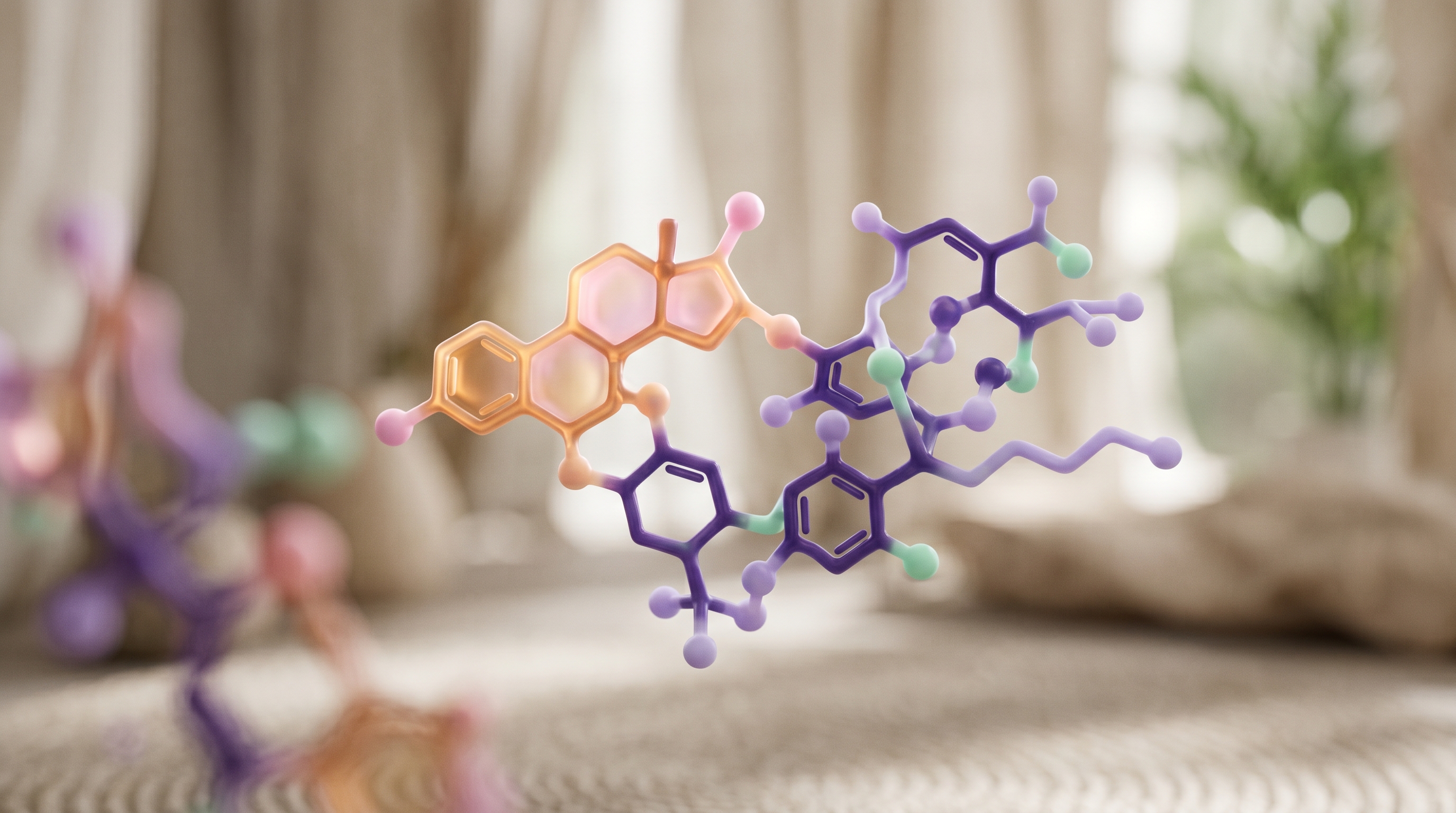
The Endocannabinoid System and Estrogen: A Two-Way Street
To understand why cannabis might intersect with menopause at all, it helps to understand the endocannabinoid system (ECS)—a body-wide network of receptors (CB1 and CB2), signaling molecules (your body’s own cannabinoids, like anandamide), and the enzymes that make and break them. The ECS helps regulate pain, mood, sleep, appetite, temperature, and immune function. If you are interested in a deeper primer, we have a full endocannabinoid system guide that walks through it in detail.
The relevant point for menopause is this: estrogen and the endocannabinoid system appear to regulate each other. Preclinical research has shown that estrogen modulates the expression of cannabinoid receptors and the availability of anandamide, the endocannabinoid sometimes called the “bliss molecule” [Maia et al., 2017]. In ovariectomized rats—a standard animal model for menopause—removal of the ovaries reduces endocannabinoid tone, and estrogen replacement restores it [Dahlgren et al., 2022, reviewing prior work].
In humans, anandamide levels fluctuate across the menstrual cycle and appear to track with estrogen, peaking around ovulation [El-Talatini et al., 2009]. One research commentary has suggested that postmenopausal women may show lower circulating anandamide compared to premenopausal controls, though this finding comes from limited human data and has not been definitively replicated in large populations.
The plausible narrative, then, is something like: as estrogen declines, endocannabinoid tone may decline alongside it, and the body’s internal signaling for mood regulation, thermoregulation, and sleep may shift. Phytocannabinoids like THC and CBD interact with the same system. This is a biologically reasonable story. It is not, yet, a proven mechanism in humans.
Symptom by Symptom: What the Research Actually Shows
Here is where we have to hold two things together at once. The survey data is striking—many women report real, meaningful relief. The clinical trial data is almost nonexistent. The Mejia-Gomez et al. (2021) systematic review of cannabis for vasomotor symptoms, mood, insomnia, and sexuality in peri- and postmenopausal women searched ten databases, retrieved 564 studies, and found exactly three that met inclusion criteria—none of which were designed as efficacy trials [Mejia-Gomez et al., 2021]. That is the evidence base, plainly stated.
With that context, here is what each symptom area looks like.
Sleep and Insomnia
This is the single most common reason women report using cannabis during menopause. In the Dahlgren et al. (2022) survey, 67 percent of respondents using medical cannabis for menopause cited sleep disturbance as their primary target. The Babyn et al. (2023) Canadian survey found 65 percent citing sleep difficulties.
The biological story here is the most developed. CBN (cannabinol, a mildly sedating oxidation product of THC) was evaluated in a 2023 double-blind randomized placebo-controlled study: 20 mg of CBN reduced nighttime awakenings and improved overall sleep satisfaction without next-day grogginess [Bonn-Miller et al., 2023]. CBD has demonstrated sleep benefits in a large case series and smaller trials, though effects appear dose-dependent and sometimes bidirectional—low doses may be mildly stimulating while higher doses support sleep. The terpenes myrcene and linalool are both associated with sedation and muscle relaxation in preclinical work. For a deeper dive, see our cannabis and sleep guide and the linalool terpene profile.
It is worth flagging that chronic nightly THC use is associated with reduced REM sleep over time, and tolerance builds quickly. For perimenopausal insomnia in particular, a CBD-dominant or CBD/CBN-balanced approach may be preferable to high-THC flower at bedtime.
Hot Flashes and Night Sweats
This is the area where the evidence gap is most uncomfortable. Vasomotor symptoms are the most recognizable feature of menopause, and mechanistically, there are reasons cannabinoids might help—cannabinoid activity in the hypothalamus influences thermoregulation, and cannabinoids generally produce vasorelaxation. Preclinical work in ovariectomized rats has shown anandamide can partially reverse the hemodynamic changes associated with estrogen deficiency.
But in humans, the direct evidence is thin. One early study of 120 women living with HIV found a crude association between cannabis use and hot flashes, though the direction of causality was not establishable. Only about 13 percent of women in the Dahlgren survey reported using cannabis specifically for hot flashes, compared to the 67 percent using it for sleep. Stephanie Faubion, medical director of the Menopause Society, has stated bluntly: “There’s no data to support the safety or effectiveness of cannabinoids for hot flash management” [Medscape, 2022].
A Phase 2 randomized placebo-controlled trial of hemp-derived minor cannabinoids for menopause symptoms is currently recruiting at Washington State University. That is the kind of study the field needs. Until it reads out, honest framing is: biologically plausible, anecdotally reported, not clinically established.
Mood, Anxiety, and the THC Dose Problem
Perimenopause is associated with a meaningful uptick in anxiety and depressive symptoms, and mood relief is the second most-cited reason women reach for cannabis [Dahlgren et al., 2022]. CBD has the strongest human data here—a 2019 study found that CBD significantly reduced anxiety in a simulated public speaking test [Linares et al., 2019], and a large case series supported anxiolytic effects at clinically relevant doses.
The asterisk is THC. At low doses (roughly 2.5 to 5 mg), THC is often experienced as calming. At higher doses, or for people with a history of anxiety sensitivity, THC can do the opposite—trigger racing thoughts, palpitations, or acute anxiety. For women already navigating the emotional volatility of perimenopause, high-THC products carry real risk of backfiring. This is one of the places where the “start low, go slow” principle stops being a slogan and becomes genuinely load-bearing advice. For more on the nuance here, see our article on how CBD affects serotonin and mood, and the somewhat counterintuitive finding that CBD can be mildly stimulating at low doses.
Joint Pain and Inflammation
An underappreciated feature of menopause is diffuse musculoskeletal aching, sometimes called “menopause arthralgia.” Estrogen helps regulate inflammation, and its decline is associated with increases in joint stiffness and pain. Roughly 33 percent of current cannabis users in the Babyn survey cited muscle and joint pain as a reason for use.
The cannabinoid and terpene story here is relatively well developed. Caryophyllene, a terpene found in many cannabis strains (and in black pepper and cloves), selectively activates CB2 receptors and has demonstrated anti-inflammatory effects in preclinical work [Gertsch et al., 2008]. Transdermal CBD reduces inflammation and pain behavior in rodent arthritis models [Hammell et al., 2016]. The 2017 National Academies report concluded there is substantial evidence that cannabis is effective for chronic pain in adults. For midlife joint aches, topical cannabinoids and low-dose THC/CBD combinations are a reasonable starting point. Our caryophyllene terpene guide goes deeper on the mechanism.
Cognitive Changes and Bone Health
Two quick notes on areas where the evidence is particularly preliminary. Menopausal “brain fog” is real but hard to study; the degree to which it reflects hormonal change versus downstream effects of poor sleep is still debated. Heavy THC use can acutely impair memory and attention, which is the opposite of what someone with cognitive complaints needs. CBD-dominant approaches are the safer experimental path here.
For bone health, estrogen decline accelerates bone loss and osteoporosis risk. Preclinical work has shown CBD may have a protective role in bone metabolism, but human data specific to postmenopausal bone density is absent. We covered this in more depth in our cannabis and bone health article.

Strains and Terpene Profiles Worth Considering
If you are thinking about cannabis for menopause symptoms, the specific chemistry of what you choose matters more than the sativa-versus-indica shorthand suggests. Terpene profiles shape the experience as much as the cannabinoid ratio does. A few strains with profiles that tend to align well with the symptom patterns described above:
- Harlequin — one of the few widely available CBD-dominant strains (roughly 5:2 CBD:THC), with a myrcene and pinene profile. Good for daytime anxiety relief without significant intoxication.
- ACDC — high-CBD, very low-THC. A reasonable starting point for cannabis-naive users or those worried about intoxication, and a frequent recommendation for anxiety-forward symptoms.
- Granddaddy Purple — myrcene and caryophyllene forward, classically sedating. Popular for nighttime use and for sleep-dominant complaints.
- Northern Lights — similar profile to Granddaddy Purple, often a bit less intense. Useful for joint pain and insomnia.
For organizing these choices by effect rather than strain, our Relax family collects sleep-and-calm-oriented options, while the Balance family focuses on gentler, more daytime-compatible profiles that are often a better fit for newer or older users.
Dosing and Safety for Adults 45 to 60
A few things change about how your body responds to cannabis as you age, and this matters for how you should approach it.
Start lower than you think. Hepatic metabolism slows with age, and body composition changes can prolong cannabinoid effects. A 2.5 to 5 mg THC edible that a 30-year-old processes quickly may linger noticeably longer for a 55-year-old. Begin at 2.5 mg THC for edibles, or a single small inhalation for flower or vape. Wait at least two hours before considering redosing for edibles.
Favor CBD-forward or balanced products initially. High-THC products carry a higher risk of backfiring—anxiety spikes, racing heart, disrupted sleep the following night. CBD-dominant or 1:1 CBD:THC products are typically better tolerated and are more consistent with the symptoms most women are actually targeting (sleep, mood, joint pain).
Take drug interactions seriously. CBD inhibits cytochrome P450 enzymes (particularly CYP3A4 and CYP2C19), which affects how the body processes a long list of common midlife medications. This includes hormone replacement therapy, statins, blood thinners like warfarin, many antidepressants, and some thyroid medications. The effect is not trivial. Our guide on cannabis and medication interactions walks through the specifics. If you are on HRT, you should be having this conversation with your prescribing provider.
Cannabis interacts with cortisol and stress regulation, too. For a fuller picture of how that plays out, see our article on cannabis and cortisol. This matters because perimenopausal anxiety and cortisol dysregulation often travel together.
If you are older than 60, a different set of considerations applies. Cardiovascular tolerance, polypharmacy, and balance issues all become more salient. Our cannabis for seniors guide covers that territory directly.
What We Don’t Know Yet
It is worth being direct about the limits here. We do not know:
- Whether cannabis produces better menopause outcomes than placebo in properly controlled trials (those trials are just now being run)
- Which cannabinoid ratios and terpene profiles work best for which symptoms
- How cannabis interacts with hormone replacement therapy over long time horizons
- Whether any of the preclinical mechanisms translate cleanly to human physiology
- The long-term effects of daily cannabis use beginning in midlife on cognition, cardiovascular risk, or bone density
A recent cross-sectional analysis of NHANES data suggested frequent cannabis use was associated with lower circulating Klotho, a longevity-related protein, in midlife adults. That association is early and contested, but we covered it with the seriousness it deserves because honest framing cuts both ways—pointing out the plausible upsides requires also pointing out the plausible downsides.
Professor High’s Practical Framing
If I were trying to give the shortest honest answer to “should I try cannabis for my menopause symptoms?”, it would go something like this.
For sleep, the case is reasonable. CBD, CBN, and low-dose THC all have some biological basis for helping, survey data is consistent, and the risks of a nightly 2.5 to 5 mg edible or a low-dose CBD/CBN capsule are manageable for most healthy adults. Track whether it is actually working past the novelty period.
For mood and anxiety, the case is reasonable but THC-sensitive. CBD-dominant products are the first stop. If you have a history of anxiety sensitivity, avoid high-THC products entirely.
For joint pain, the case is reasonable. Topicals, balanced tinctures, and caryophyllene-rich chemovars are all defensible starting points.
For hot flashes, the case is weak in terms of direct evidence. Many women report helpfulness, but the mechanism is unproven and no trial has established efficacy. It may work for you; it also may not, and it is genuinely hard to predict in advance.
For all of it: if you are on HRT or other midlife medications, this is a conversation to have with your provider before you start, not after. The interaction risks are real, they are manageable with the right information, and most clinicians would rather know than not.
And finally—menopause is not a single experience. It is years of nonlinear change, and the tools that help in one phase may not help in another. Give yourself permission to experiment carefully, track what you notice, and update your approach as your body does.
Sources
- Babyn, K., Ross, S., Makowsky, M., Kiang, T., Yuksel, N. (2023). “Cannabis use for menopause in women aged 35 and over: a cross-sectional survey on usage patterns and perceptions in Alberta, Canada.” BMJ Open. DOI: 10.1136/bmjopen-2022-069197. PMID: 37344107
- Bonn-Miller, M.O., et al. (2023). “A double-blind, randomized, placebo-controlled study of the safety and effects of CBN with and without CBD on sleep quality.” Experimental and Clinical Psychopharmacology 32(3).
- Dahlgren, M.K., El-Abboud, C., Lambros, A.M., Sagar, K.A., Smith, R.T., Gruber, S.A. (2022). “A survey of medical cannabis use during perimenopause and postmenopause.” Menopause 29(9): 1028-1036. DOI: 10.1097/GME.0000000000002018. PMID: 35917529
- El-Talatini, M.R., Taylor, A.H., Konje, J.C. (2009). “Fluctuation in anandamide levels from ovulation to early pregnancy in in-vitro fertilization-embryo transfer women.” Human Reproduction. PMID: 19176540
- Gertsch, J., Leonti, M., Raduner, S., et al. (2008). “Beta-caryophyllene is a dietary cannabinoid.” Proceedings of the National Academy of Sciences. PMID: 18574142
- Hammell, D.C., et al. (2016). “Transdermal cannabidiol reduces inflammation and pain-related behaviours in a rat model of arthritis.” European Journal of Pain. PMID: 26517407
- Linares, I.M.P., et al. (2019). “Cannabidiol presents an inverted U-shaped dose-response curve in a simulated public speaking test.” Brazilian Journal of Psychiatry. PMID: 30328956
- Maia, J., et al. (2017). “The endocannabinoid system expression in the female reproductive tract is modulated by estrogen.” Journal of Steroid Biochemistry and Molecular Biology, Vol. 174: 40-47.
- Maki, P.M., Panay, N., Simon, J.A. (2024). “Sleep disturbance associated with the menopause.” Menopause 31(8): 724-733. DOI: 10.1097/GME.0000000000002386
- Mejia-Gomez, J., Phung, N., Philippopoulos, E., Murphy, K.E., Wolfman, W. (2021). “The impact of cannabis use on vasomotor symptoms, mood, insomnia and sexuality in perimenopausal and postmenopausal women: a systematic review.” Climacteric 24(6): 572-576. PMID: 33759668
- Monteleone, P., Mascagni, G., Giannini, A., Genazzani, A.R., Simoncini, T. (2018). “Symptoms of menopause—global prevalence, physiology and implications.” Nature Reviews Endocrinology 14: 199-215. DOI: 10.1038/nrendo.2017.180
- National Academies of Sciences, Engineering, and Medicine. (2017). The Health Effects of Cannabis and Cannabinoids. Washington, DC: The National Academies Press.


