Cannabis Gummies: The Complete DIY Dosing Guide
Make perfectly dosed cannabis gummies at home — step-by-step infusion, dosing math, lecithin tips, molds, storage, and safety.

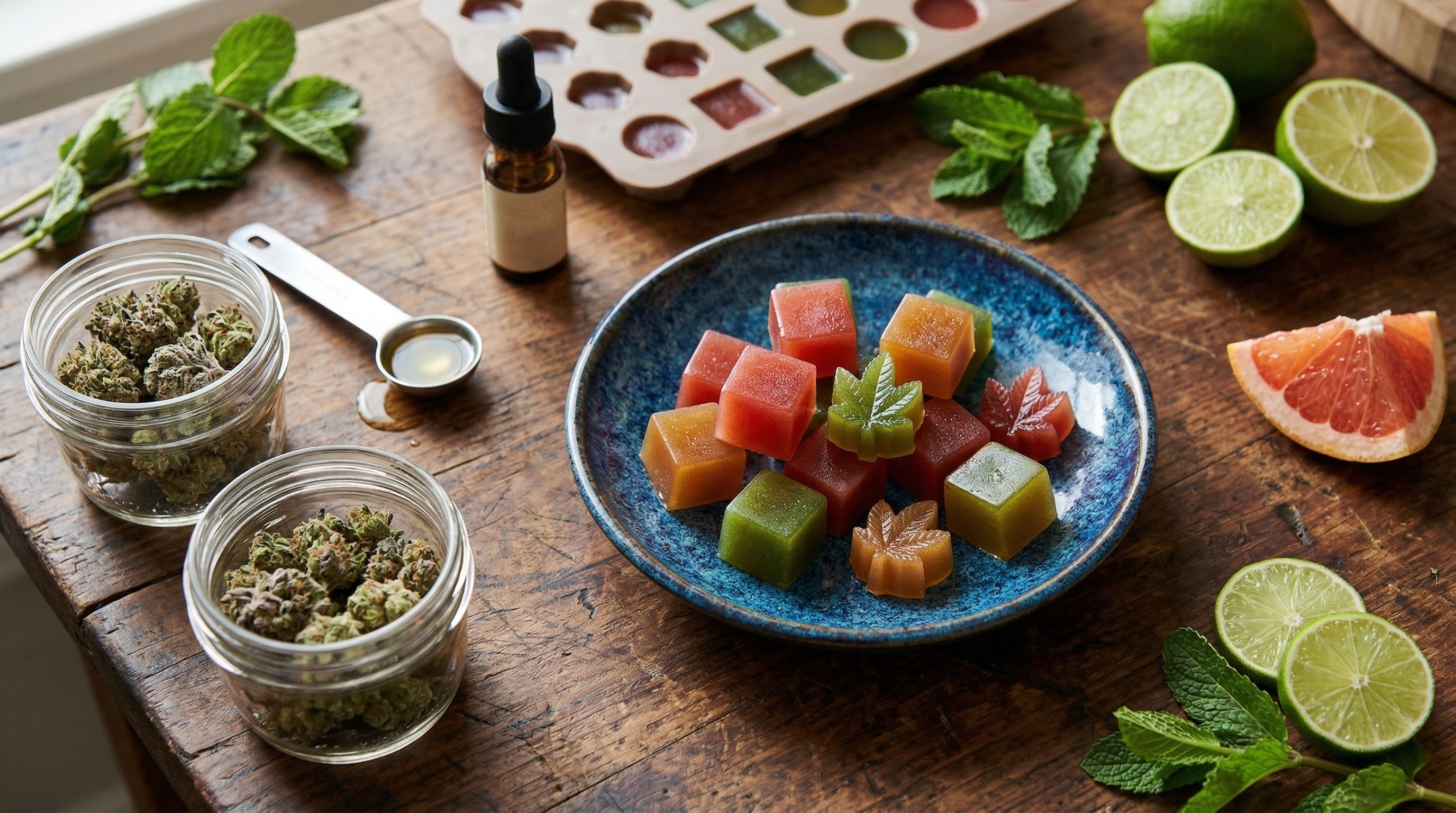
By the end of this guide, you’ll be able to make a batch of consistently dosed cannabis gummies in your own kitchen — no fancy equipment required. We’re talking real, chewy, flavorful gummies where you actually know how many milligrams of THC (or CBD) are in each piece. No more guessing games.
- Estimated time: 2–3 hours (plus 1–2 hours setting time)
- Difficulty level: Intermediate
- Yield: ~50 gummies (using standard silicone molds)
Important: Edibles affect everyone differently and take 30 minutes to 2+ hours to kick in. Always start low (2.5–5 mg THC per gummy) and wait before consuming more. This guide is for adults in jurisdictions where cannabis is legal.
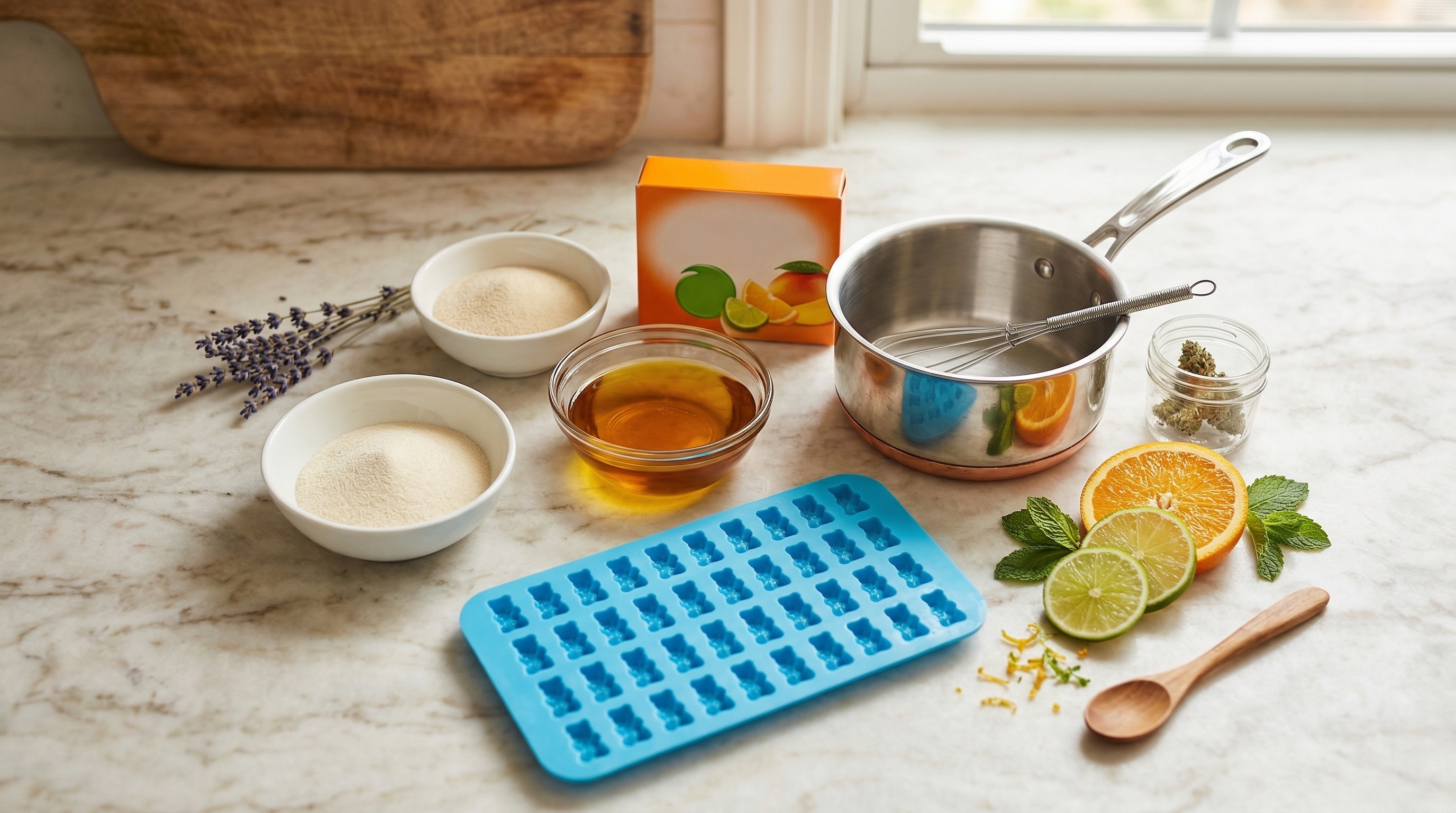
What You’ll Need
Required
- Cannabis-infused coconut oil or butter — ¼ cup (pre-made or homemade, with known potency)
- Flavored gelatin (Jell-O or equivalent) — one 3 oz package
- Unflavored gelatin — 2 tablespoons (about 2 packets)
- Water or fruit juice — ⅓ cup
- Sunflower or soy lecithin — 1 teaspoon (emulsifier for even distribution)
- Silicone gummy molds — standard cavity size (~2 mL each)
- Small saucepan
- Whisk
- Dropper or small measuring cup for pouring
Optional
- Citric acid — ½ teaspoon for sour coating
- Granulated sugar — for coating
- Candy thermometer — for precision
- MCT oil-based tincture — as an alternative to infused oil for easier dosing math
- Cornstarch — light dusting may help prevent sticking
Safety Equipment
- Oven mitts or heat-resistant gloves — the mixture gets hot
- Clearly labeled storage container — always label edibles with dosage and date
- Child-proof container — absolutely essential if children or pets are in the home
Step-by-Step Instructions
Step 1: Calculate Your Dosage
This is the most critical step. Skip it, and you’ll have no idea what you’re consuming.
Here’s the formula:
Total THC (mg) in your infused oil ÷ number of gummies = mg per gummy
For example, if you infused 1 cup of coconut oil with 7 grams of cannabis testing at 20% THC:
- 7,000 mg flower × 0.20 THC = 1,400 mg total THC (theoretical max)
- Typical home infusion extracts ~60–80% of available THC, so estimate conservatively: ~840–1,120 mg per cup
- This recipe uses ¼ cup = ~210–280 mg total
- Divided into 50 gummies = ~4.2–5.6 mg per gummy
That’s a perfect beginner-friendly dose range.
| Flower (g) | THC % | Oil (cups) | Gummies | mg per gummy |
|---|---|---|---|---|
| 3.5 | 20% | ¼ cup | 50 | ~2.1–2.8 mg |
| 7 | 20% | ¼ cup | 50 | ~4.2–5.6 mg |
| 7 | 20% | ½ cup | 50 | ~8.4–11.2 mg |
| 14 | 15% | 1 cup | 100 | ~6.3–8.4 mg |
Tip: If your flower hasn’t been lab-tested, assume 15% THC for a conservative estimate. You can always make them stronger next time — you can’t make them weaker after the fact.
Step 2: Bloom the Gelatin
Pour ⅓ cup of cold water or fruit juice into your saucepan. Sprinkle the 2 tablespoons of unflavored gelatin evenly over the surface. Let it sit for 5 minutes without stirring. The gelatin will absorb the liquid and become spongy — this is called “blooming” and it may help prevent clumping later.
Tip: Fruit juice (like tart cherry or mango) adds incredible flavor and can mask any cannabis taste. Avoid fresh pineapple or kiwi juice — enzymes in these fruits break down gelatin and prevent it from setting.
Step 3: Heat and Combine
Place the saucepan on low heat (never above medium — high heat will destroy both the gelatin’s setting power and may degrade cannabinoids). Stir gently until the bloomed gelatin melts completely, about 2–3 minutes.
Add the flavored gelatin package and whisk until fully dissolved. The mixture should be smooth with no visible granules.
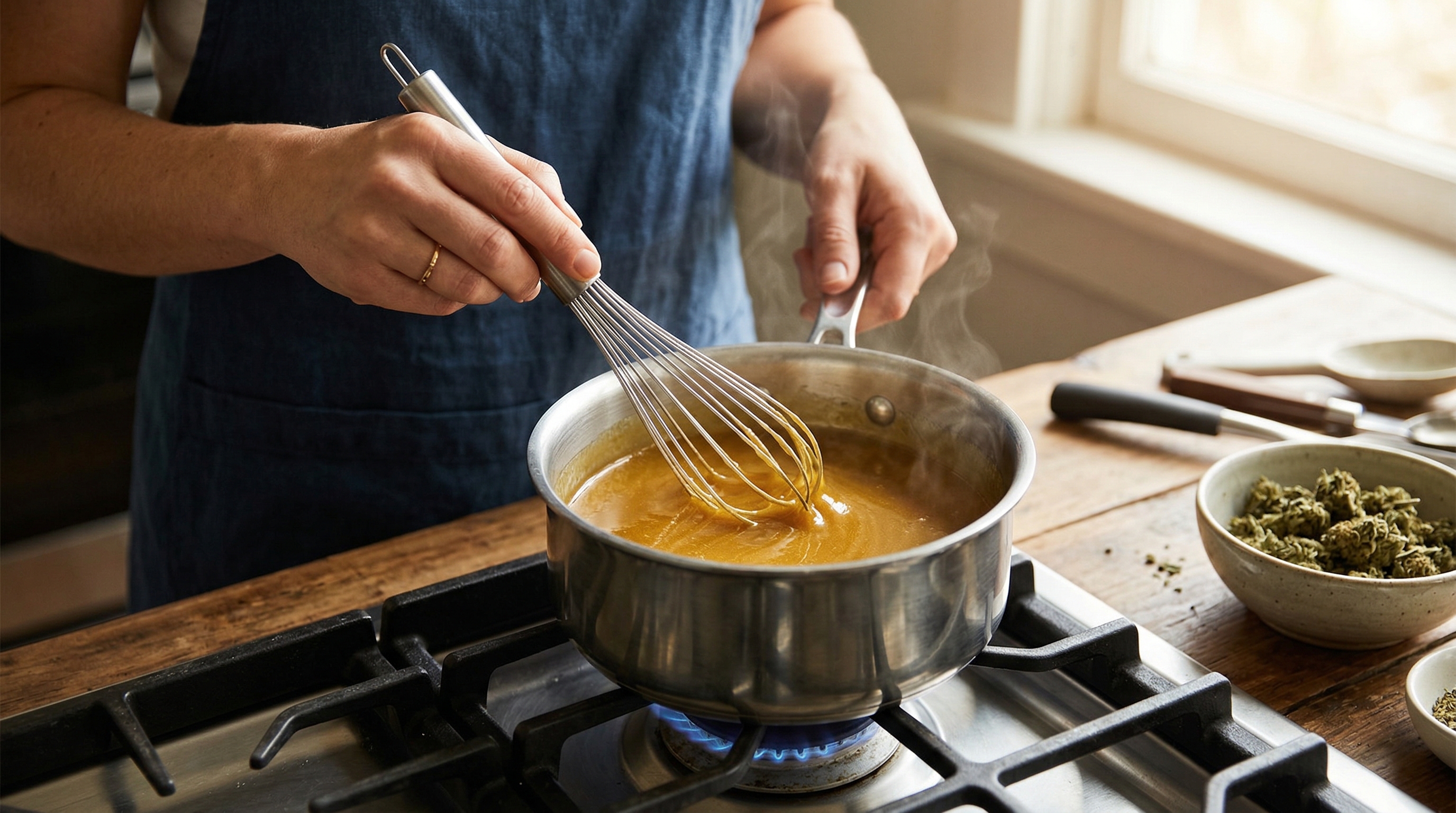
Now add your ¼ cup of cannabis-infused coconut oil and 1 teaspoon of sunflower lecithin. Whisk continuously for 3–5 minutes on low heat. The lecithin is your secret weapon here — it acts as an emulsifier, binding the oil and water-based gelatin together so every single gummy receives a consistent dose.
Key visual cue: The mixture should look uniformly smooth and slightly glossy. If you see oil separating and floating on top, keep whisking on low heat. Don’t move on until it’s fully homogeneous.
Step 4: Pour Into Molds
Remove the saucepan from heat. Working quickly (the mixture will start to set as it cools), use a dropper or small spouted measuring cup to fill each mold cavity evenly.
Fill each cavity to the same level — consistency here means consistent dosing. If you see bubbles, gently tap the mold on the counter to release them.
Time estimate: 5–10 minutes. Move with purpose — if the mixture starts to thicken too much in the pan, return it to low heat briefly and whisk again.
Tip: A squeeze bottle (like a condiment bottle) gives you the most control and least mess. Just make sure the opening is wide enough for the slightly viscous mixture.
Step 5: Set and Unmold
Place the filled molds in the refrigerator for 1–2 hours until completely firm. Don’t rush this — underset gummies will be sticky and misshapen.
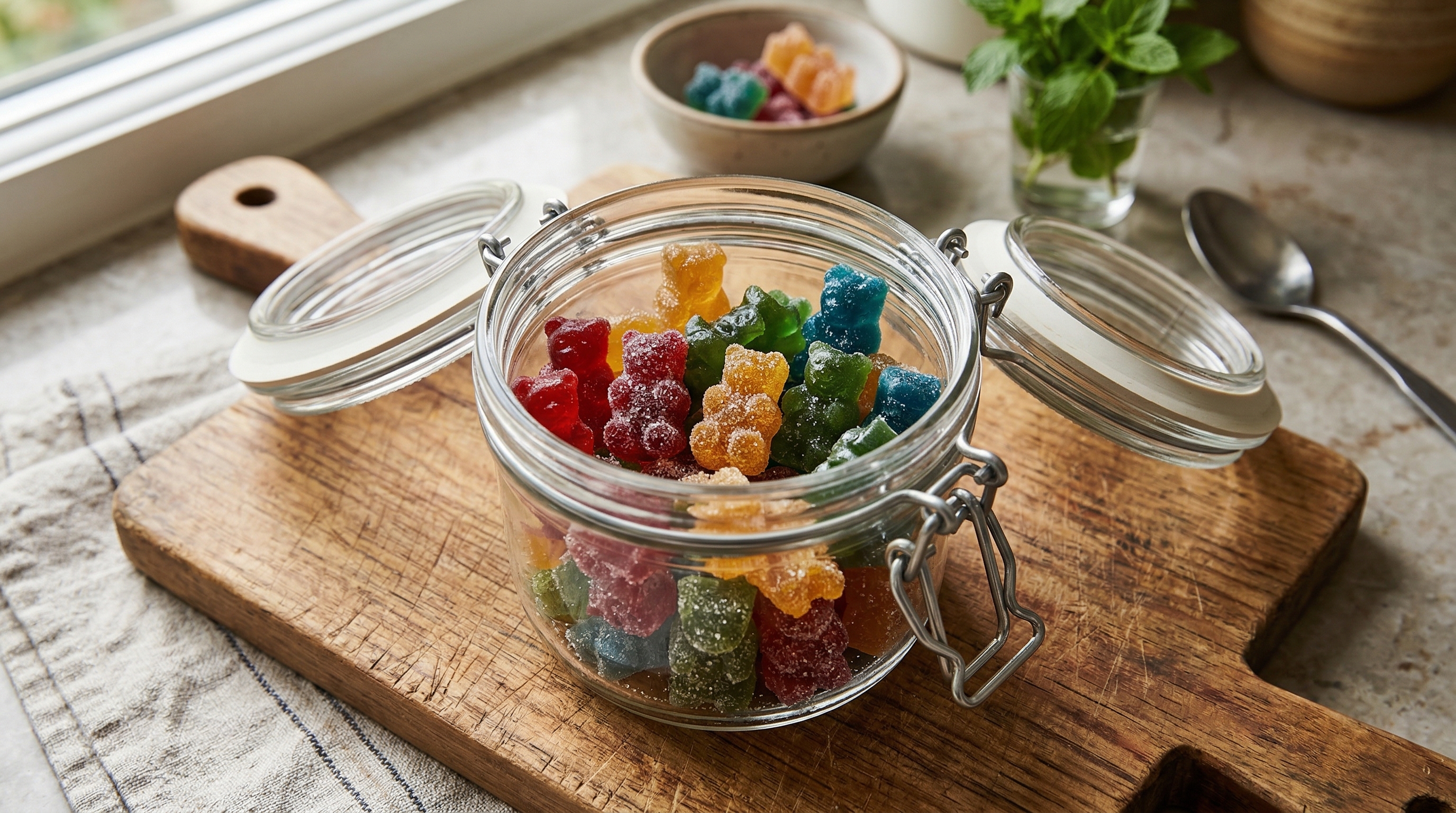
Once firm, gently flex the silicone molds and pop out each gummy. If you want a sour coating, toss them in a mixture of citric acid and granulated sugar while they’re still slightly tacky.
Step 6: Label and Store
Place gummies in a clearly labeled, child-proof container. Include:
- Date made
- Approximate mg per piece
- “CONTAINS CANNABIS” warning
Store in the refrigerator for up to 2 weeks, or freeze for up to 3 months. Gelatin-based gummies can become sweaty at room temperature, so cool storage is best.
Infusion Methods
Before you can make gummies, you need cannabis-infused oil or butter. Here are the three most common approaches:
Stovetop (Double Boiler)
Decarboxylate your flower first (240°F / 115°C for 40 minutes — see Decarboxylation Explained), then combine it with coconut oil in a mason jar set in a simmering water bath. Hold at 160–180°F for 2–3 hours. Strain through cheesecloth. This method gives you maximum control over temperature.
Slow Cooker
Same decarb step, then add flower and oil to a slow cooker on the lowest setting (around 160°F) for 4–6 hours. Easy to set and forget, but less precise. Check temperature with a candy thermometer occasionally.
MCT Oil Tincture (Easiest for Dosing)
Skip infusing oil entirely. Use a commercially prepared, lab-tested MCT oil tincture with milligrams per milliliter clearly labeled on the bottle. This is the most accurate path to a known dose per gummy — the math is transparent and there’s no infusion guesswork. Substitute it 1:1 for the infused coconut oil in this recipe.
Pro Tips for Consistency
Lecithin is non-negotiable for even dosing. Without an emulsifier, oil droplets stay suspended unevenly — some gummies will be stronger, some weaker. Sunflower lecithin (preferred over soy for people with allergies) appears to prevent separation throughout the pour. Use at least 1 teaspoon per ¼ cup oil.
Pour at the right temperature. Too hot and the gelatin hasn’t started to set, so the oil may separate in the mold. Too cool and the mixture clumps before you’ve finished filling. The sweet spot is just off the heat — around 120–130°F if you’re using a thermometer.
Decarboxylate properly. Raw cannabis contains THCA, which research suggests is not psychoactive until heat converts it to THC [Wang, 2016]. Without a proper decarb step — 240°F / 115°C for 40 minutes before infusion — your gummies will have all the flavor and none of the effect.
Consider your terpene profile. The strain you infuse with influences the experience beyond just THC content. Studies indicate that terpenes such as myrcene and limonene may modulate the effects of cannabinoids [Russo, 2011]. If you’re making gummies intended for relaxation and sleep, a strain from the Relaxing High family — rich in myrcene — is a natural fit. For social, mood-lifting gummies, look toward the Uplifting High family with its limonene-forward profiles.
Test one gummy first. Even with careful math, individual metabolism varies significantly. Eat one gummy, wait a full 2 hours, and assess before having more. Research suggests that edibles may hit harder than other methods because THC is thought to be converted to 11-hydroxy-THC in the liver — a more potent metabolite with a potentially longer duration. Patience is the skill that matters most here.
Troubleshooting
| Problem | Likely Cause | Solution |
|---|---|---|
| Gummies won’t set | Too much liquid or not enough gelatin | Add 1 more tablespoon unflavored gelatin; re-melt and re-pour |
| Oil separating in molds | Insufficient emulsification | Re-melt the batch, add more lecithin, whisk vigorously for 5+ minutes |
| Uneven potency between gummies | Mixture wasn’t homogeneous when poured | Use lecithin and whisk thoroughly; pour quickly before settling occurs |
| Gummies are too strong | Oil was more potent than estimated | Cut gummies in half; next batch, use less infused oil and fill with regular coconut oil |
| Rubbery or tough texture | Too much unflavored gelatin | Reduce unflavored gelatin by ½ tablespoon next time |
| Gummies are sticky or sweaty | Stored at room temperature | Refrigerate; lightly dust with cornstarch if needed |
| Cannabis taste is overpowering | Strong-tasting oil or high oil ratio | Use more flavorful gelatin, add citric acid, or switch to a tincture |
Variations
- Vegan gummies: Substitute gelatin with agar-agar (2 teaspoons). Texture will be slightly firmer and less chewy. Unlike gelatin, agar must be brought to a brief boil to activate — do this before adding your oil.
- CBD-only gummies: Use a CBD-infused oil or isolate for non-intoxicating gummies. Same recipe, same process, no psychoactive effect.
- Micro-dose gummies: Use 1–2 tablespoons infused oil instead of ¼ cup, and fill the rest with regular coconut oil. Aim for 1–2.5 mg per gummy — a balanced approach for newcomers or low-tolerance consumers.
- Scaling up: Double or triple the recipe while maintaining the same ratios. Use a larger saucepan and work in batches when pouring to keep the mixture at temperature.
Final reminder: Homemade edibles don’t have the precision of commercial products. Always err on the side of caution with dosing, label everything clearly, and keep all cannabis products locked away from children and pets.
Key Takeaways
Making cannabis gummies at home is achievable and repeatable once you understand a few core principles:
- Dosing math comes first. Always calculate total THC in your infused oil before you start, and divide by the number of gummies. Conservative estimates protect you from surprises.
- Lecithin is essential. It keeps oil and water-based gelatin bound together, ensuring every gummy contains roughly the same dose rather than a random one.
- Temperature control matters at every stage. Low heat preserves cannabinoid potency during infusion and may help prevent the gelatin from losing its setting strength.
- Start low, wait long. A single gummy and a two-hour wait is always the right first move — regardless of your experience with other consumption methods.
- Label everything. Homemade edibles must be clearly marked with dose and date, and stored out of reach of anyone who didn’t consent to consuming them.
Once you’ve dialed in your first batch, you’ll have a repeatable, cost-effective, and genuinely enjoyable edible that you made yourself — and one you actually trust.
Sources
- Wang, M. et al. (2016). “Decarboxylation Study of Acidic Cannabinoids: A Novel Approach Using Ultra-High-Performance Supercritical Fluid Chromatography/Photodiode Array-Mass Spectrometry.” Cannabis and Cannabinoid Research, 1(1), 262–271. DOI: 10.1089/can.2016.0020
- Russo, E.B. (2011). “Taming THC: potential cannabis synergy and phytocannabinoid-terpenoid entourage effects.” British Journal of Pharmacology, 163(7), 1344–1364. PMID: 21749363
- Barrus, D.G. et al. (2016). “Tasty THC: Promises and Challenges of Cannabis Edibles.” Methods Report (RTI Press). DOI: 10.3768/rtipress.2016.op.0035.1611


