Cannabis in Fine Dining: How Top Chefs Are Elevating Edibles
How top chefs are transforming cannabis edibles into fine dining using terpene science, precision dosing, and culinary artistry.

A Michelin Star With a Different Kind of Garnish
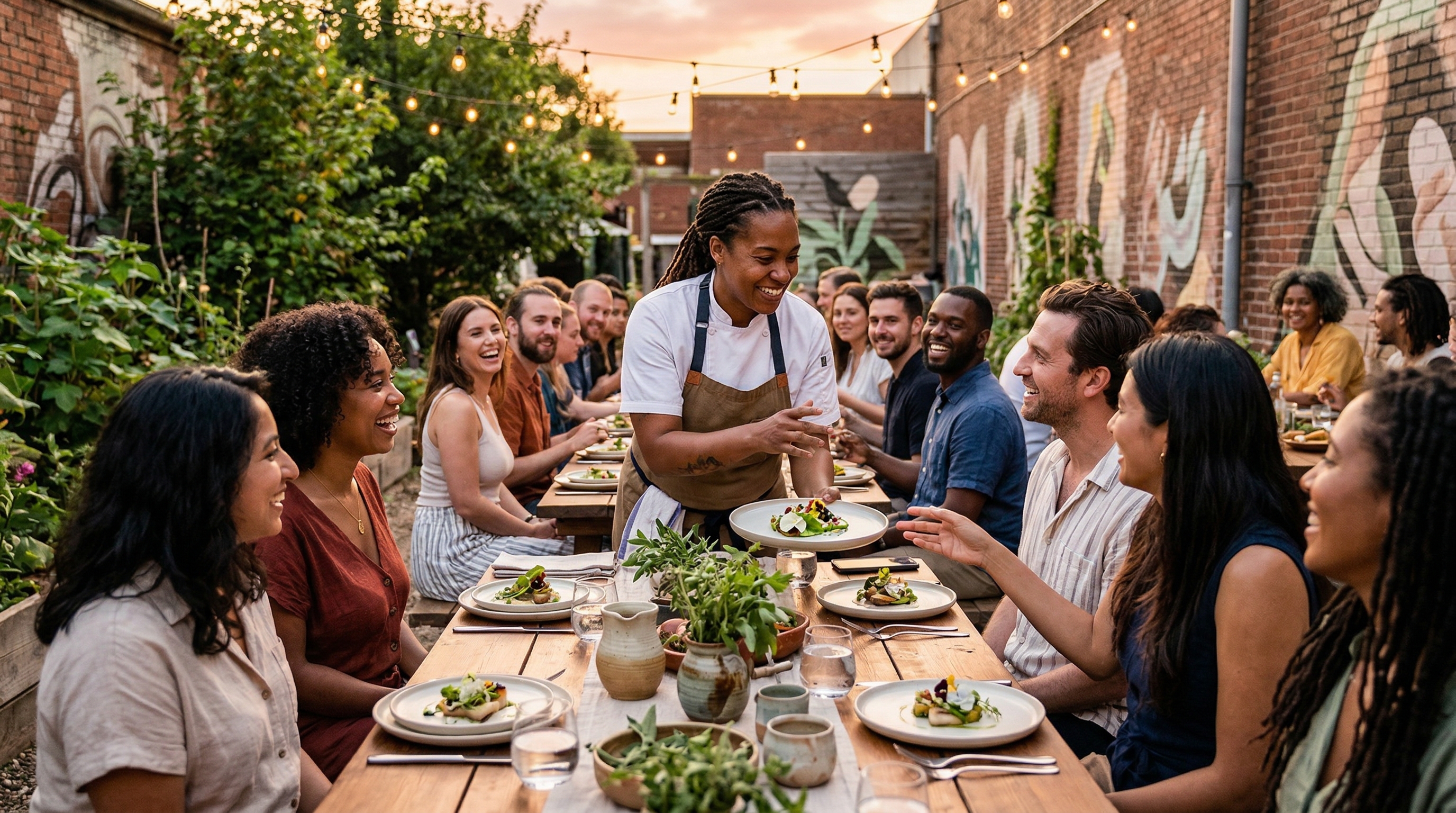
Here’s a fact that might surprise you: the global cannabis edibles market is projected to reach over $29 billion by 2028, and some of the most exciting innovation isn’t happening in dispensary kitchens—it’s happening in fine dining rooms. Forget the dense, vaguely chocolate-flavored brownie your college roommate made. We’re talking multi-course tasting menus where cannabis is treated with the same reverence as saffron, truffle, or high-grade olive oil.
Chefs like Jeff the 420 Chef (Jeff Danzer), Chris Sayegh of The Herbal Chef, and Andrea Drummer of Elevation VIP Cooperative have spent years pioneering what some call “cannabis gastronomy”—a culinary discipline where precise dosing, terpene pairing, and flavor integration turn a meal into a carefully orchestrated experience. These aren’t novelty dinners. They’re events where guests pay hundreds of dollars for a seat at the table.
Why does this matter to you? Because the science behind these meals—how cannabinoids interact with fats, how terpenes shape both flavor and effect, how heat transforms raw plant material into something your body can actually use—applies to every edible you’ll ever consume. Understanding what these chefs are doing can fundamentally change how you think about cannabis in the kitchen.
In this article, you’ll learn the culinary science that makes cannabis fine dining possible, how terpene profiles guide chefs’ pairing decisions, and how you can apply these principles at home.
The Science Behind Cannabis Cuisine
How Decarboxylation and Infusion Actually Work
If you’ve ever eaten a raw cannabis bud and felt nothing, there’s a good reason. The plant doesn’t naturally produce significant amounts of THC or CBD in their active forms. Instead, it produces acidic precursors—THCA and CBDA—that need heat to become the compounds your body recognizes.
This process is called decarboxylation (or “decarbing”), and think of it like this: imagine a key with a tiny plastic cap on the end. That cap prevents it from fitting into a lock. Heat removes the cap—specifically, it strips away a carboxyl group (a cluster of carbon, oxygen, and hydrogen atoms)—so the molecule can now interact with your endocannabinoid receptors [Wang et al., 2016].
Fine dining chefs obsess over decarboxylation temperatures because precision matters enormously. Too much heat destroys cannabinoids and terpenes. Too little, and the cannabis remains largely inactive. Most chefs work in the range of 105–120°C (220–250°F) for 30–45 minutes, though exact protocols vary depending on the strain and the dish [Taschwer & Schmid, 2015].
Once decarbed, cannabinoids need a carrier to be absorbed efficiently. THC and CBD are lipophilic—they dissolve in fats, not water. That’s why cannabis-infused butter, oils, and even animal fats are the backbone of cannabis cooking. Research suggests that consuming cannabinoids with dietary fats can increase bioavailability by up to four or five times compared to consuming them without fat [Zgair et al., 2016].
What the Research Shows: Terpenes as Flavor and Effect Architects
Here’s where fine dining chefs truly separate themselves from the average edible maker: they don’t just think about THC dosage—they think about terpenes.
Terpenes are the aromatic compounds found in cannabis (and countless other plants) that give each strain its distinctive smell and flavor. But emerging research suggests they do far more than that. The entourage effect hypothesis proposes that terpenes modulate how cannabinoids interact with your body, potentially shaping the character of the experience itself [Russo, 2011].
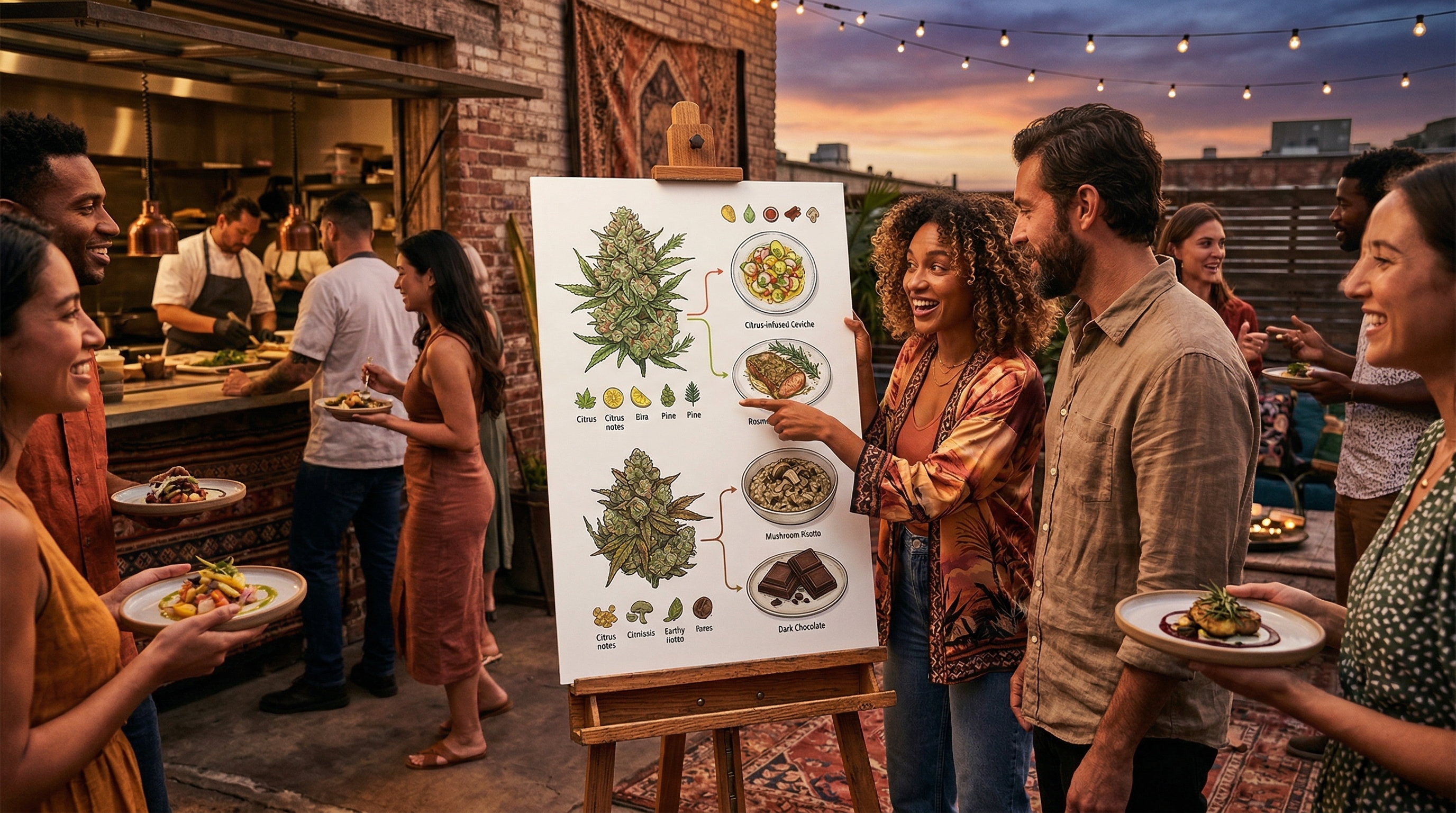
Top cannabis chefs use this science to guide pairing decisions. For example:
| Terpene | Flavor Profile | Culinary Pairing | Associated High Family |
|---|---|---|---|
| Limonene | Citrus, bright | Seafood ceviche, lemon desserts | Uplifting High |
| Myrcene | Earthy, musky | Braised meats, root vegetables | Relaxing High |
| Caryophyllene | Peppery, spicy | Charcuterie, dark chocolate | Relieving High |
| Linalool | Floral, lavender | Pastries, light cocktails | Uplifting High |
| Terpinolene | Herbal, piney | Fresh salads, gin-based pairings | Energetic High |
Chris Sayegh, who holds a degree in molecular biology alongside his culinary training, has described his approach as “cooking with the whole plant.” Rather than stripping cannabis down to pure THC distillate (which is flavorless), he works with full-spectrum extracts that preserve the terpene profile—what we’d classify as an Entourage High approach. The result is a dining experience where the cannabis doesn’t just get you high; it shapes the flavor narrative of the entire meal.
Research on terpene-cannabinoid interactions is still in relatively early stages, and much of the evidence comes from preclinical studies [Ferber et al., 2020]. But the culinary world isn’t waiting for final proof—chefs are running their own delicious experiments every night.
Practical Implications: What This Means for Your Kitchen
You don’t need a professional kitchen to apply these principles. Here’s how the science of cannabis fine dining translates to your own edible-making:
Dose with intention, not guesswork. Fine dining chefs typically aim for 2.5–5mg of THC per course, allowing guests to build their experience gradually over a multi-course meal. If you’re cooking at home, start low. A total meal dosage of 5–10mg is a reasonable starting point for most people. You can always have more at another meal—you can’t un-eat a 50mg entrée.
Pair terpenes deliberately. If you’re working with a limonene-dominant strain from the Uplifting High family, lean into citrus-forward dishes. If your flower is heavy in myrcene—a hallmark of the Relaxing High family—pair it with rich, earthy flavors that complement that profile. The terpenes already present in your food ingredients (herbs, spices, fruits) will harmonize with or contrast against the cannabis terpenes, just like wine pairing.
Protect your terpenes from heat. Many terpenes begin to evaporate at relatively low temperatures. Myrcene boils off around 167°C (332°F), and limonene at about 176°C (349°F). Fine dining chefs often infuse cannabis into fats at low temperatures over extended periods, then add those infusions to dishes at the very end—as a finishing oil, a drizzle, or folded into a sauce after it’s left the heat.
Use fat strategically. Remember that cannabinoids are lipophilic. An infused olive oil drizzled over a salad will absorb differently than a cannabis-infused butter melted into a rich braise. Higher-fat dishes may increase absorption [Zgair et al., 2016], so factor that into your dosing.
Key Takeaways
- Cannabis fine dining is real culinary science, not a gimmick—chefs use precise decarboxylation, terpene pairing, and micro-dosing to create sophisticated multi-course experiences.
- Terpenes are the bridge between flavor and effect. Understanding a strain’s terpene profile through the High Families system helps you make smarter pairing decisions, whether you’re a chef or a home cook.
- Fat is your best friend. Cannabinoids need lipids for efficient absorption, and the type of fat you use affects both flavor and bioavailability.
- Low and slow preserves the good stuff. High heat destroys terpenes and degrades cannabinoids—the best cannabis chefs treat temperature like a precision instrument.
- Start with low doses (2.5–5mg per serving) and build gradually. Fine dining proves that a powerful experience doesn’t require a powerful dose.
FAQs
Do cannabis edibles taste like weed?
They can, but they don’t have to. Skilled chefs either embrace the herbaceous flavor by pairing it with complementary ingredients, or they minimize it through careful infusion and filtration techniques. Full-spectrum infusions will always carry some plant character, which many diners actually enjoy as part of the experience.
Are cannabis dining events legal?
It depends entirely on where you live. Some states and countries permit private cannabis dining events, while others restrict any public consumption. Always check your local regulations. In places like California and Colorado, licensed cannabis dining experiences are emerging under new legal frameworks.
How is dosing controlled in a multi-course meal?
Professional cannabis chefs use lab-tested infusions with known potency and calculate milligram-level doses per serving. Each course is designed to contribute a specific amount—often 2.5–5mg THC—so the total meal experience builds gradually and predictably.
Can I pair any strain with any food?
You can, but thoughtful pairing makes a difference. Just like you wouldn’t pair a delicate white wine with a heavy steak, matching a strain’s terpene profile to your dish’s flavor profile creates a more harmonious experience. Use the High Families framework as your starting guide.
Sources
- Russo, E.B. (2011). “Taming THC: potential cannabis synergy and phytocannabinoid-terpenoid entourage effects.” British Journal of Pharmacology, 163(7), 1344–1364. PMID: 21749363
- Wang, M. et al. (2016). “Decarboxylation Study of Acidic Cannabinoids: A Novel Approach Using Ultra-High-Performance Supercritical Fluid Chromatography/Photodiode Array-Mass Spectrometry.” Cannabis and Cannabinoid Research, 1(1), 262–271. DOI: 10.1089/can.2016.0020
- Zgair, A. et al. (2016). “Dietary fats and pharmaceutical lipid excipients increase systemic exposure to orally administered cannabis and cannabis-based medicines.” American Journal of Translational Research, 8(8), 3448–3459. PMID: 27648135
- Taschwer, M. & Schmid, M.G. (2015). “Determination of the relative percentage distribution of THCA and Δ9-THC in herbal cannabis seized in Austria.” Forensic Science International, 254, 167–171. DOI: 10.1016/j.forsciint.2015.07.019
- Ferber, S.G. et al. (2020). “The ‘Entourage Effect’: Terpenes Coupled with Cannabinoids for the Treatment of Mood Disorders and Anxiety Disorders.” Current Neuropharmacology, 18(2), 87–96. PMID: 31481004


