Cannabis Social Clubs: The European Model Coming to America
Cannabis social clubs are thriving across Europe. Now the cooperative, community-driven model is inspiring American advocates and lawmakers.


The News
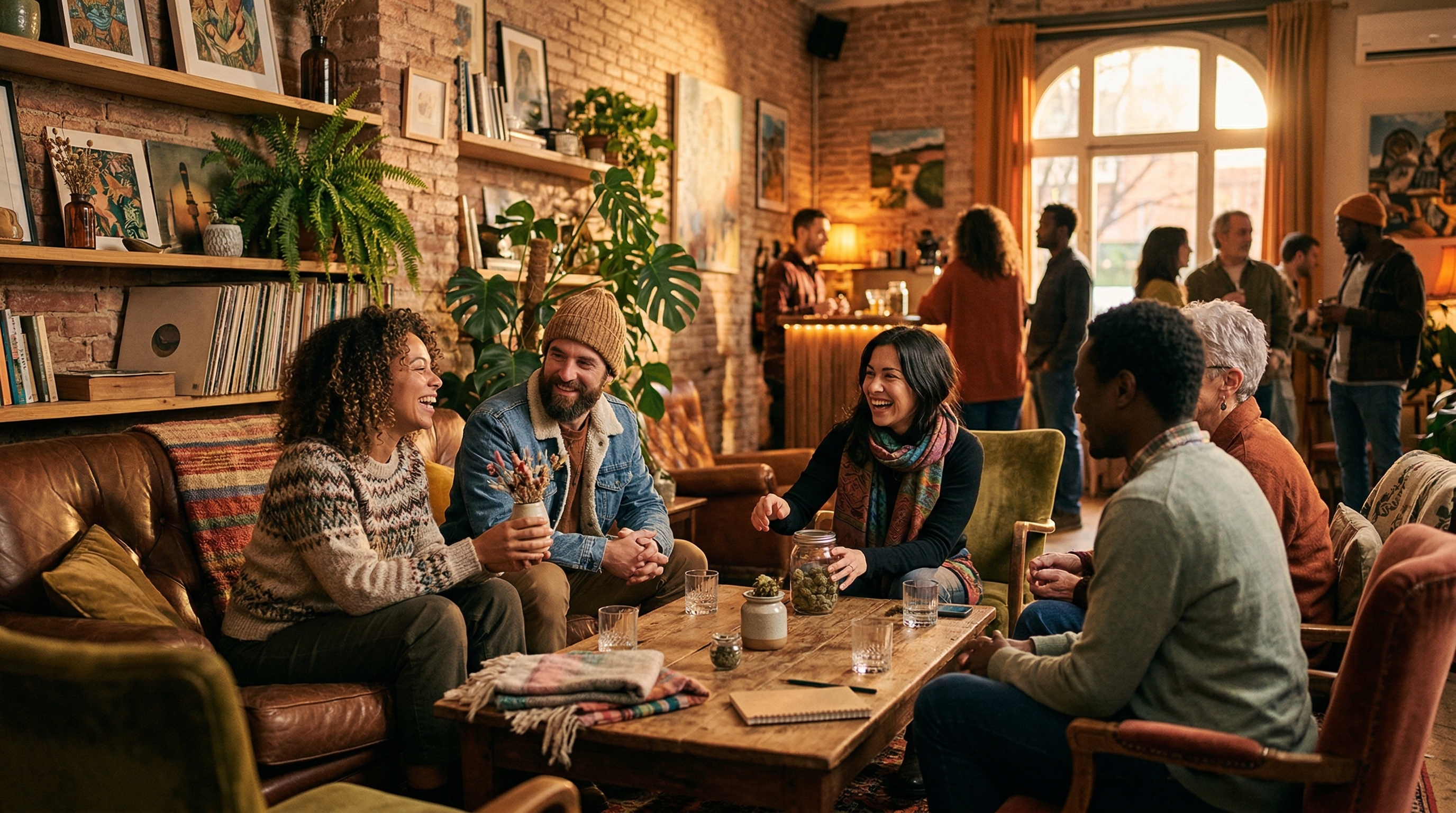
A quiet revolution in cannabis access is gaining momentum — and it doesn’t look like a dispensary. Cannabis Social Clubs (CSCs), the member-owned, nonprofit cooperatives that have operated across Europe for over two decades, are increasingly being discussed by American lawmakers, advocates, and community organizers as a viable alternative to the commercial dispensary model that dominates U.S. legal markets.
In April 2024, Germany made history by legalizing recreational cannabis under the Cannabis Act (Cannabisgesetz, CanG), making Cannabis Social Clubs the only legal path to accessing cannabis without growing it at home. By November 2024, Germany’s first clubs had distributed cannabis to members for the first time — though the licensing process has been slow, with just 14 clubs holding licenses as of late 2024. Malta blazed the trail before Germany, and the Netherlands is running similar programs in various stages of implementation. Meanwhile, Spain’s long-established asociaciones cannábicas — which date back to the 1990s and now number in the hundreds in Barcelona alone — continue to serve as the original blueprint.
Now, state-level conversations in New York, Vermont, Minnesota, New Mexico, and Massachusetts are translating that European proof of concept into American policy. As of December 2025, Massachusetts finalized rules for social consumption licenses after years of delays — becoming the first New England state to do so. New Jersey launched its first four licensed consumption lounges in July 2025. And in Colorado, Denver’s Cirrus Social Club opened in 2025 as a luxury cannabis hospitality venue, offering a glimpse of what social consumption could look like at its most elevated.
“The social club model puts community back at the center of cannabis,” said Dasheeda Dawson, a cannabis equity strategist and former Portland Cannabis Program Manager. “It’s not about eliminating the commercial market — it’s about offering people another option.”
Context & Background
How Europe Built the Blueprint
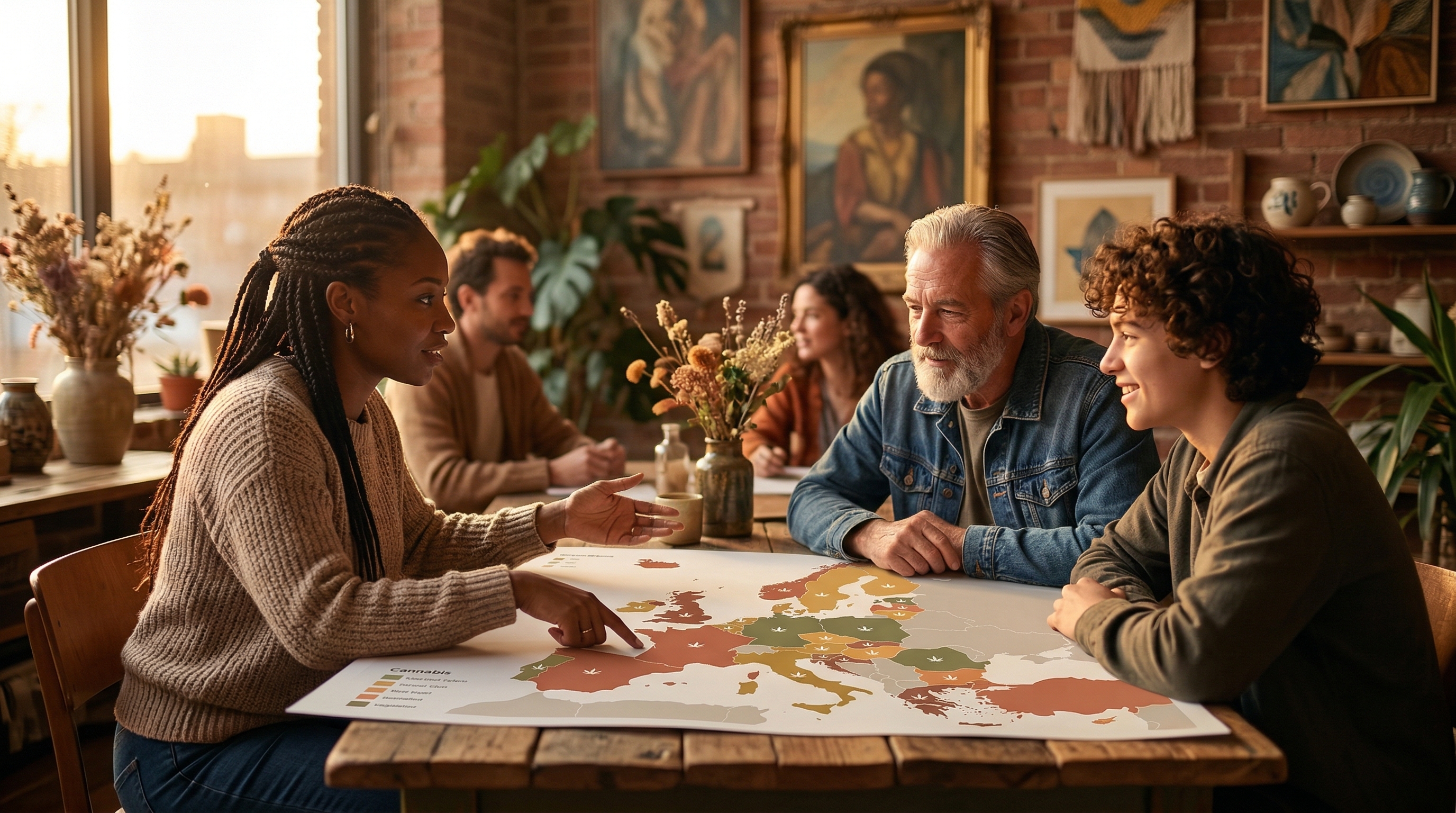
Cannabis Social Clubs aren’t new. Spain’s model emerged from a legal gray area in the 1990s where personal cultivation and private consumption were tolerated under privacy rights. Clubs like Barcelona’s iconic asociaciones formalized this into a membership cooperative: you join, pay dues (typically €20–€50/year), and the club cultivates cannabis collectively on your behalf. There’s no storefront, no advertising, and critically, no profit motive. Catalonia, the Basque Country, and Andalusia developed the most comprehensive regulatory frameworks, and Barcelona now hosts over 200 clubs.
The concept spread across Europe in different forms. Uruguay built social clubs into its national regulated framework. Malta became the first EU country to legally regulate them. And then the biggest domino fell.
Germany’s April 2024 Cannabis Act made Cannabis Social Clubs the centerpiece of national reform. German clubs are capped at 500 members, must operate as nonprofits, are prohibited from advertising, and cultivation is limited to what the membership collectively consumes. Members must be German residents aged 21 or older. The law also prohibits distribution near schools and youth facilities. It’s a cautious, community-controlled framework — and it’s the model American reformers are studying most closely.
Why America Is Paying Attention Now
The American legal cannabis landscape, despite its rapid growth, faces serious structural problems. High licensing fees, corporate consolidation, and the persistent exclusion of communities most harmed by prohibition have left many advocates disillusioned with the dispensary-only model. In states like California and Illinois, small operators have struggled to compete with multi-state operators (MSOs). Social equity programs have been widely criticized as under-resourced and slow.
Meanwhile, as of 2025, 14 states plus the U.S. Virgin Islands permit some form of cannabis consumption lounge or social use — including Alaska, California, Colorado, Illinois, Maryland, Massachusetts, Michigan, Minnesota, Missouri, Nevada, New Jersey, New York, New Mexico, and Vermont. Industry analysts project that number could exceed 25 states by 2027.
Against this backdrop, the European social club model offers something genuinely different: a decentralized, community-owned, nonprofit framework that prioritizes access over profit. It’s the kind of grassroots infrastructure that cannabis culture was arguably built on in the first place.
What This Means
For Consumers
If Cannabis Social Clubs gain traction in the U.S., everyday consumers could see a fundamentally different way to access cannabis. Instead of walking into a retail store, you’d join a local club — typically by paying modest annual dues — and receive cannabis grown collectively by or on behalf of the membership.
The appeal is significant:
- Lower prices: Without retail markup, advertising costs, and profit margins built into dispensary pricing, club-grown cannabis could be substantially more affordable
- Community connection: Clubs create social spaces where members share knowledge, build relationships, and participate in cannabis culture beyond just purchasing a product
- Transparency: When your club grows your cannabis, you know exactly where it came from, how it was cultivated, and what went into it
- Variety and exploration: Smaller-scale collective grows can experiment with diverse cultivars, including those rich in specific terpene profiles — whether you’re drawn to the mood-elevating limonene found in Uplifting High strains or the body-focused caryophyllene of the Relieving High family
- Access without a home: Many people can’t consume cannabis at home due to landlord rules, HOAs, or shared living situations. Social spaces solve a real problem
For people who’ve felt alienated by the sleek, transactional dispensary experience, social clubs represent something closer to what cannabis community has always been about.
For the Industry
The commercial cannabis industry will likely view CSCs with a mix of curiosity and concern. On one hand, clubs serve a different niche — they’re not competing for the same impulse-buy customer walking into a dispensary. On the other hand, any model that diverts consumer spending away from licensed retailers will draw scrutiny from operators who’ve invested millions in licenses and infrastructure.
The more likely outcome is coexistence. Just as craft breweries and homebrew clubs exist alongside major beer distributors, Cannabis Social Clubs could occupy a complementary space in the ecosystem. Some states may even see clubs as a way to reduce pressure on overburdened regulatory systems by allowing smaller-scale, self-governing entities to operate alongside commercial markets.
Established consumption lounges are already demonstrating that social cannabis spaces can be financially viable. Industry data from 2024 shows established venues generating average monthly revenues between $50,000 to $200,000, with profit margins ranging from 15% to 35% depending on location and model. High-traffic tourist areas like Las Vegas, West Hollywood, and Atlantic City demonstrate the strongest results.
For the Movement
This is where the stakes are highest. Cannabis Social Clubs represent a philosophical challenge to the assumption that legalization must mean commercialization. For equity advocates, the model offers a path forward that doesn’t require six-figure license fees or venture capital backing.
The social club model could be the most significant structural innovation in American cannabis policy since legalization itself — not because it replaces the existing market, but because it proves another model is possible.
Massachusetts offers a telling case study in the friction. Voters approved social consumption in their 2016 legalization ballot measure — but implementation was delayed nearly a decade by regulatory inaction, a scrapped pilot program, and political resistance. When the state finally approved final rules in December 2025, officials acknowledged there was still “more work to do” before any venues could actually open. That gap between legal authorization and operational reality is where European CSCs have something to teach: their frameworks were built incrementally, with community governance built in from the start.
What’s Next
The path from European model to American reality won’t be quick or simple. Here’s what to watch:
- State-level legislation: New York, Vermont, and New Mexico have the most active conversations around CSC-style frameworks. New Mexico’s existing microbusiness license structure could be adapted relatively quickly
- Municipal experiments: Even without state legislation, some cities are exploring local ordinances permitting cannabis cooperatives — Somerville, Massachusetts has already held stakeholder sessions on social consumption zoning
- Federal implications: The ongoing DEA rescheduling process and potential federal reform could either accelerate or complicate CSC adoption depending on how interstate cultivation and distribution rules are structured. Under the current Trump administration, federal reform is considered unlikely in the near term
- The equity lens: New York’s Community Reinvestment Fund already prioritizes social equity applicants for consumption lounge licenses — a sign that legislators understand CSC-style models as an equity tool, not just a novelty
- Timeline: Realistically, expect 18–36 months before any American CSC framework moves from proposal to operational reality. Germany’s process took over two years from legislation to first distributions
The biggest variable? Political will. The commercial cannabis industry has significant lobbying power, and any model that decentralizes access will face organized opposition. But the grassroots energy is real, the European proof of concept is hard to ignore, and the first American lounges are already demonstrating that social cannabis consumption is something people genuinely want.
Key Takeaways
- Cannabis Social Clubs are nonprofit, member-owned cooperatives where members collectively cultivate and share cannabis — no retail storefront, no profit motive
- Germany’s 2024 CSC framework joined Spain, Malta, and Uruguay as functioning examples, giving the model renewed international legitimacy
- 14+ U.S. states now permit some form of social consumption, with analysts projecting 25+ states by 2027
- CSCs could address major equity gaps in U.S. legalization by dramatically lowering barriers to entry and centering community ownership over corporate consolidation
- The models can coexist — social clubs aren’t meant to replace dispensaries, but to offer an alternative that prioritizes access, affordability, and genuine cannabis culture
- Watch Massachusetts, New Jersey, New York, and Colorado for the clearest signals of where American social cannabis policy is heading next


