CB1 vs CB2 Receptors: Why Location Is Everything
Two receptors, one system — discover how CB1 (brain) and CB2 (immune/body) shape every cannabis experience, from euphoria to physical relief.

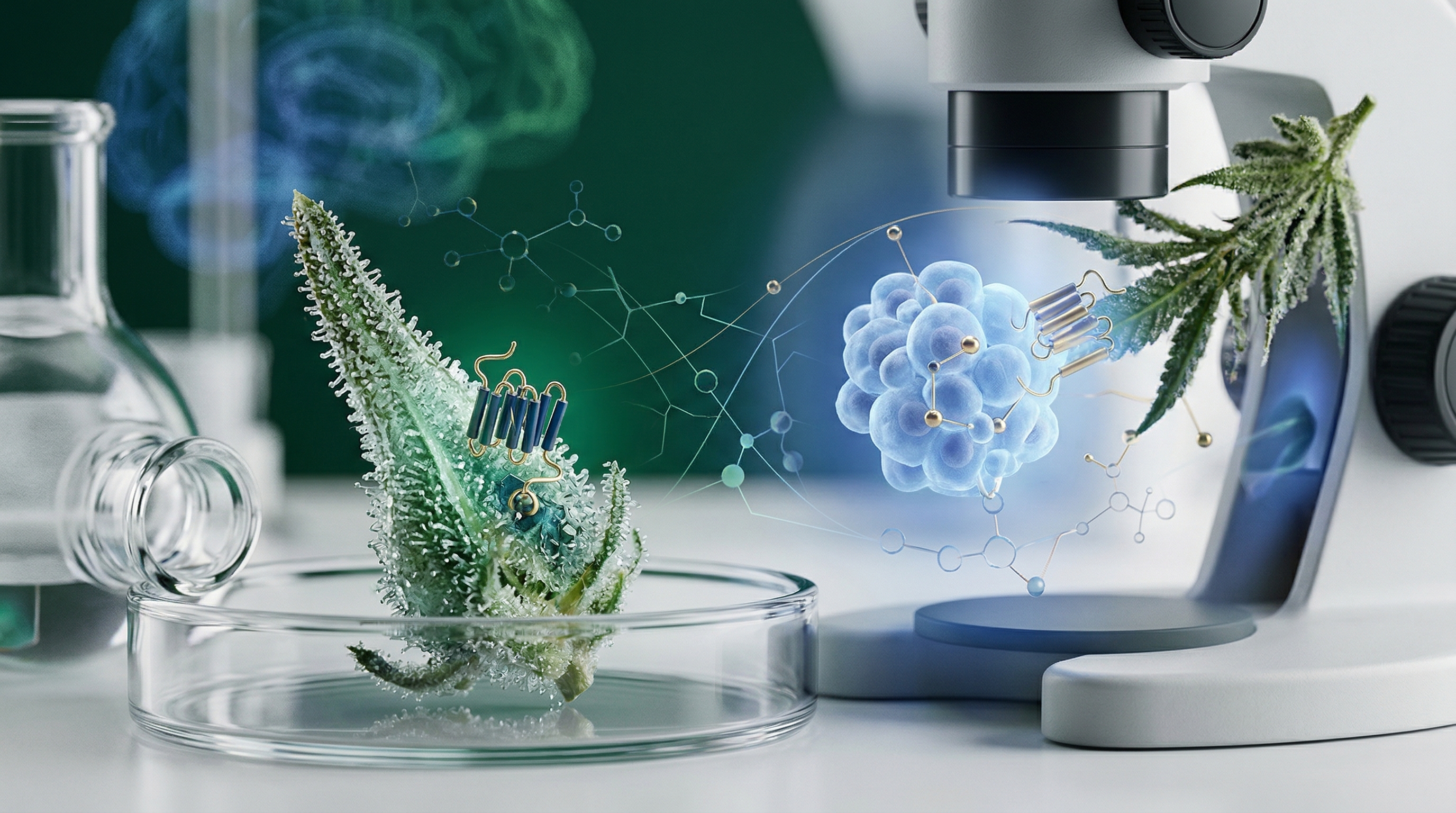
Your body has two types of cannabinoid receptors. One lives mostly in your brain. The other lives mostly in your immune system and body. Cannabis affects both — and which one gets more attention during any given experience is a big reason why some sessions feel cerebral and others feel physical. This guide explains how those two receptors work, where they are, and what that means for choosing the right strain or product for what you actually need.
Why Does the Same Plant Hit Your Brain and Your Body So Differently?
Here’s something worth sitting with: when you consume cannabis, the THC in your system isn’t just floating around randomly hoping to bump into something. It’s landing on specific molecular docking stations scattered throughout your body — and where those docking stations are located fundamentally changes what you feel.
These docking stations are called cannabinoid receptors, and you have two main types: CB1 and CB2. One is concentrated in your brain and central nervous system. The other is spread across your immune cells, gut, and peripheral tissues. Together, they form the core hardware of your endocannabinoid system (ECS) — a biological network that existed in your body long before you ever encountered cannabis.
Understanding the difference between CB1 and CB2 isn’t just trivia for science nerds. It’s the key to understanding why some cannabis experiences feel cerebral and euphoric while others feel like a warm wave of physical relief. It explains why certain cannabinoids get you high and others don’t. And it’s shaping the future of how researchers think about cannabis-based wellness.
By the end of this article, you’ll know what CB1 and CB2 receptors do, where they live, how different cannabinoids interact with each, and what that means the next time you choose a product or strain.
The Science Explained
How Cannabinoid Receptors Work
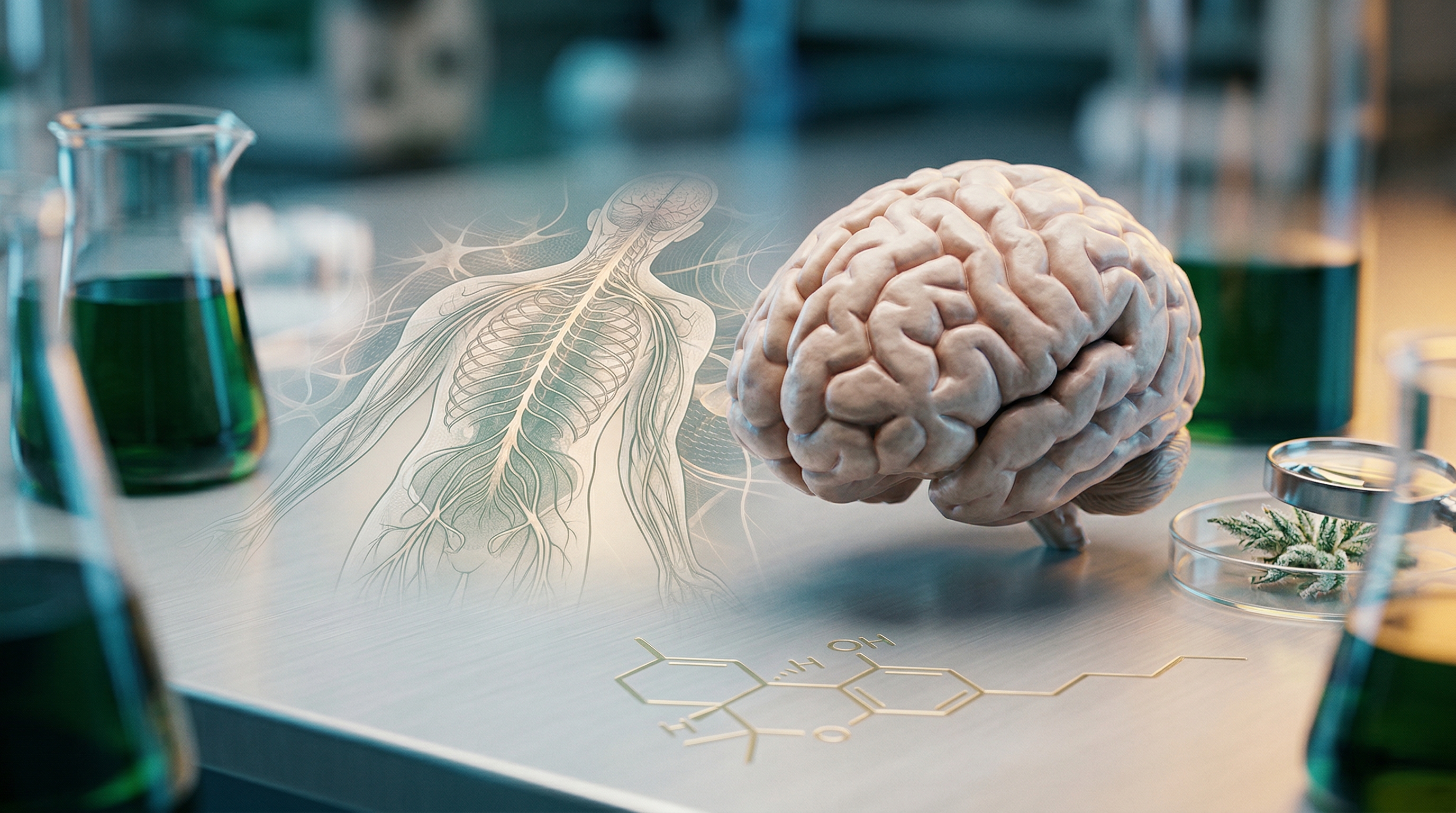
Think of CB1 and CB2 receptors like two different types of locks embedded in the surface of your cells. Cannabinoids — whether produced by your own body (endocannabinoids) or from the cannabis plant (phytocannabinoids) — act as keys that fit into these locks. When a key turns a lock, it triggers a cascade of chemical signals inside the cell that change how it behaves.
Your body already makes its own keys for these locks. The two most studied endocannabinoids are anandamide (sometimes called the “bliss molecule”) and 2-AG (2-arachidonoylglycerol). These molecules help regulate mood, pain signaling, immune response, appetite, and more [Lu & Mackie, 2016].
Now here’s where location becomes everything:
-
CB1 receptors are found primarily in the brain and central nervous system — especially in areas governing memory (hippocampus), coordination (cerebellum), emotion (amygdala), and reward (basal ganglia) [Mackie, 2005]. This is why activating CB1 produces psychoactive effects: euphoria, altered time perception, creativity shifts, and appetite stimulation.
-
CB2 receptors are concentrated in immune cells, the spleen, the gastrointestinal tract, and peripheral tissues [Munro et al., 1993]. Activating CB2 doesn’t produce a “high” in the traditional sense. Instead, it appears to modulate inflammation, immune response, and physical comfort signals.
What the Research Shows
THC — the cannabinoid most associated with being high — is a partial agonist at CB1 receptors, meaning it binds to and activates them, but not at full capacity [Pertwee, 2008]. This partial activation is what creates the characteristic psychoactive experience. THC also binds to CB2 receptors, but with less affinity, which may contribute to some of its body-level effects.
CBD, on the other hand, doesn’t bind strongly to either receptor in the traditional lock-and-key fashion. Instead, research suggests it acts as a negative allosteric modulator of CB1 — essentially changing the shape of the lock so that THC’s key doesn’t fit as snugly [Laprairie et al., 2015]. This may be one reason CBD appears to temper THC’s intensity for some people.

CBG (cannabigerol) is emerging as another interesting player. Early research suggests it may interact with both CB1 and CB2 receptors, potentially acting as a partial agonist at CB2 while having complex interactions at CB1 [Navarro et al., 2018]. This dual activity is one reason CBG-rich products are generating scientific interest.
Beta-caryophyllene, a terpene found in many cannabis strains (as well as black pepper and cloves), is notable because it selectively binds to CB2 receptors — making it the only known dietary terpene that directly activates a cannabinoid receptor [Gertsch et al., 2008]. This is a perfect example of the entourage effect in action: a terpene working alongside cannabinoids through the same receptor system.
Key insight: The psychoactive “high” is primarily a CB1 story. The body-focused comfort and immune modulation? That’s largely CB2 territory. Most cannabis experiences involve both — it’s the ratio and emphasis that shifts.
Practical Implications
What This Means for Your Cannabis Experience
Understanding CB1 and CB2 helps explain why different cannabis products and strains feel so different — and it connects directly to the High Families system.
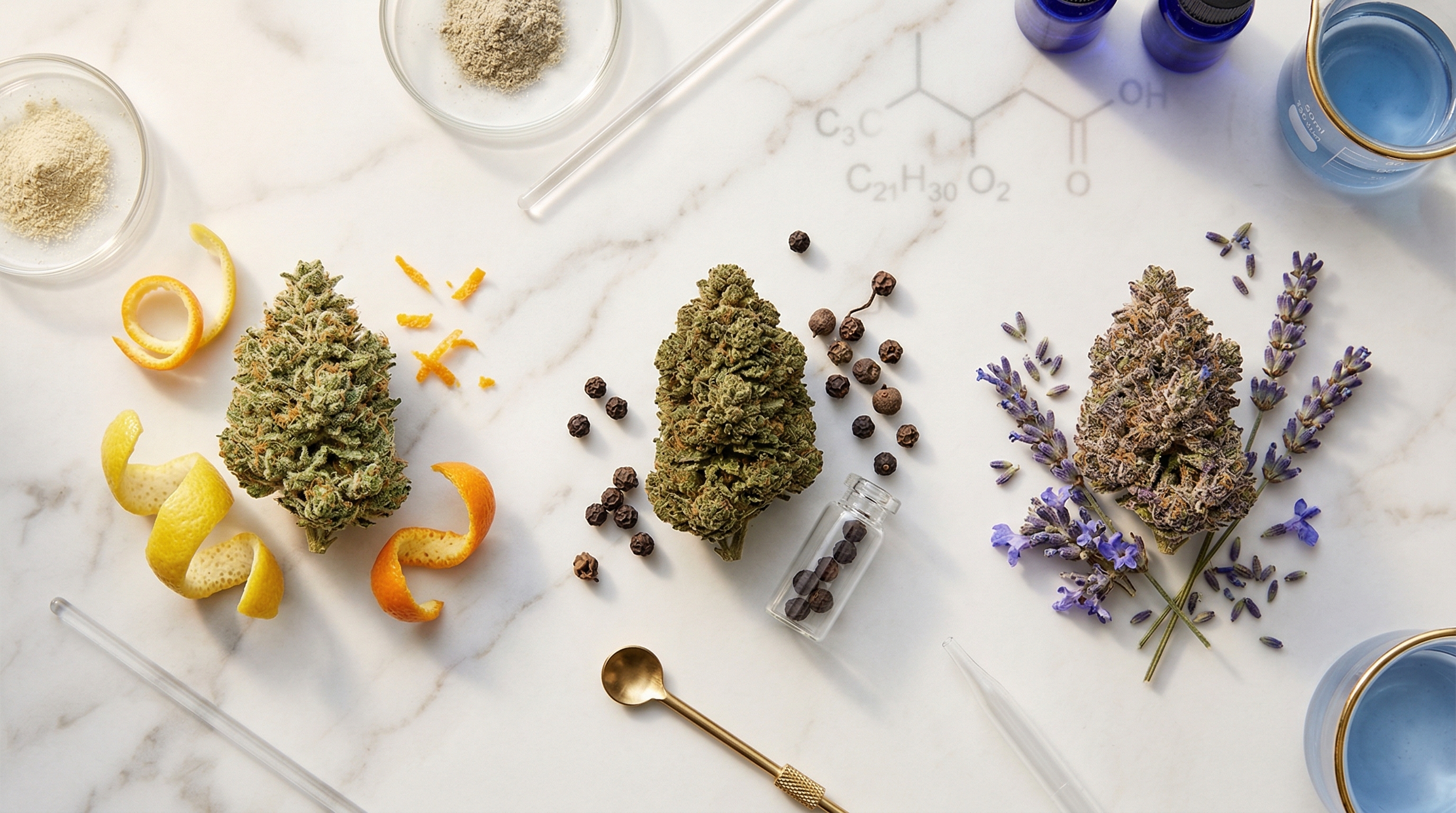
Strains in the Uplifting High family, rich in limonene and linalool, tend to produce experiences that lean heavily on CB1 activation — mood elevation, social energy, and creative thinking. The terpene profiles in these strains may influence how THC interacts with CB1 receptors in mood-related brain regions.
Strains in the Relieving High family, often rich in caryophyllene and humulene, bring CB2 into the conversation more prominently. Because caryophyllene directly activates CB2 receptors [Gertsch et al., 2008], these strains may produce more body-focused, physically comforting experiences.
Strains in the Relaxing High family, high in myrcene, are interesting because myrcene may enhance THC’s ability to cross the blood-brain barrier [Russo, 2011], potentially amplifying CB1 activation and contributing to deep sedation and calm.
Actionable Takeaways
- If you want a more cerebral, mood-focused experience, look for strains and products emphasizing THC with terpenes like limonene — these lean into CB1 activation.
- If you’re seeking physical comfort without intense psychoactivity, consider products with higher CBD, CBG, or caryophyllene content — these engage CB2 pathways more prominently.
- If you want a full-spectrum experience, the Entourage High family offers multi-terpene, multi-cannabinoid profiles that engage both receptor types simultaneously.
- Start low and go slow — everyone’s receptor density and sensitivity is different, influenced by genetics, tolerance, and prior use [Hirvonen et al., 2012].
Key Takeaways
- CB1 receptors live primarily in the brain and drive the psychoactive effects of cannabis — euphoria, creativity, altered perception, and appetite.
- CB2 receptors are concentrated in immune cells and peripheral tissues, influencing inflammation, physical comfort, and immune modulation without producing a traditional “high.”
- THC primarily activates CB1 (producing psychoactive effects), while CBD modulates CB1 indirectly and caryophyllene activates CB2 directly.
- The balance between CB1 and CB2 activation is a major reason different strains and High Families produce such distinct experiences.
- Your individual receptor biology is unique — which is why the same strain can feel different for different people.
FAQs
Can you get high from CB2 receptor activation alone?
No. CB2 activation does not produce the psychoactive “high” associated with cannabis. That experience is driven by CB1 receptor activation in the brain. CB2 effects are more subtle and body-focused.
Does CBD block THC’s effects?
Not exactly. Research suggests CBD may act as a negative allosteric modulator of CB1, subtly changing how THC binds rather than blocking it outright [Laprairie et al., 2015]. Some people find CBD softens THC’s intensity, but the interaction is complex and dose-dependent.
Why do some people feel more body effects from cannabis than head effects?
This likely involves a combination of factors: the strain’s terpene profile (especially caryophyllene for CB2 activation), the THC-to-CBD ratio, individual receptor density, and tolerance. Strains in the Relieving High family tend to emphasize these body-focused pathways.
Is the endocannabinoid system only activated by cannabis?
Not at all. Your ECS is active all the time, regulated by endocannabinoids your body produces naturally. Exercise, diet, sleep, and stress all influence ECS function. Cannabis simply introduces external compounds that interact with the same system [Lu & Mackie, 2016].
Sources
- Gertsch, J., Leonti, M., Raduner, S., et al. (2008). “Beta-caryophyllene is a dietary cannabinoid.” Proceedings of the National Academy of Sciences, 105(26), 9099-9104. PMID: 18574142
- Hirvonen, J., Goodwin, R.S., Li, C.T., et al. (2012). “Reversible and regionally selective downregulation of brain cannabinoid CB1 receptors in chronic daily cannabis smokers.” Molecular Psychiatry, 17(6), 642-649. PMID: 21747398
- Laprairie, R.B., Bagher, A.M., Kelly, M.E., & Bhatt-Bhatt, D.E. (2015). “Cannabidiol is a negative allosteric modulator of the cannabinoid CB1 receptor.” British Journal of Pharmacology, 172(20), 4790-4805. PMID: 26218440
- Lu, H.C. & Mackie, K. (2016). “An introduction to the endogenous cannabinoid system.” Biological Psychiatry, 79(7), 516-525. PMID: 26698193
- Mackie, K. (2005). “Distribution of cannabinoid receptors in the central and peripheral nervous system.” Handbook of Experimental Pharmacology, 168, 299-325. PMID: 16596779
- Munro, S., Thomas, K.L., & Abu-Shaar, M. (1993). “Molecular characterization of a peripheral receptor for cannabinoids.” Nature, 365(6441), 61-65. PMID: 7689702
- Navarro, G., Varani, K., Reyes-Resina, I., et al. (2018). “Cannabigerol action at cannabinoid CB1 and CB2 receptors and at CB1-CB2 heteroreceptor complexes.” Frontiers in Pharmacology, 9, 632. PMID: 29977202
- Pertwee, R.G. (2008). “The diverse CB1 and CB2 receptor pharmacology of three plant cannabinoids.” British Journal of Pharmacology, 153(2), 199-215. PMID: 17828291
- Russo, E.B. (2011). “Taming THC: potential cannabis synergy and phytocannabinoid-terpenoid entourage effects.” British Journal of Pharmacology, 163(7), 1344-1364. PMID: 21749363


