Hemp-Derived THC Is Sending Kids to the ICU: What Parents Need to Know
Delta-8 and other hemp-derived THC products cause more severe pediatric outcomes than regulated cannabis. The data parents need — and the steps that work.

Professor High

If a child has been exposed to any THC product right now: call Poison Control at 1-800-222-1222 immediately. Do not wait for symptoms. Do not induce vomiting. This article is education — it is not a substitute for emergency care.
The Hospital Phone Call No Parent Wants
It’s mid-afternoon. Your three-year-old is napping — or so you think. Two hours later she won’t wake up properly. She’s limp. Her eyes won’t track. Her breathing is shallow.
You call 911. The paramedics ask whether there’s anything she could have gotten into. You scan the kitchen. There’s an open bag of gummies on the counter — the ones you picked up at the gas station last week. You figured they were fine. The package said “hemp.” Hemp is legal. Hemp is at every truck stop in America.
Six hours later your daughter is in the pediatric ICU.
This scenario is not hypothetical. It is happening every day, in every state, to families who did nothing wrong except underestimate what “hemp-derived THC” actually means. America’s Poison Centers has managed more than 10,000 delta-8 THC exposure cases since 2021, and the data on who’s getting hurt is stark: the youngest children bear the heaviest burden.

The Data Parents Need to See
Let’s look at what the research actually shows, because the numbers deserve to be said plainly.
A landmark study published in Clinical Toxicology (Burgess et al., 2024) analyzed 5,022 poison center cases involving delta-8, delta-10, and THC-O acetate reported from January 2021 through December 2022. Here is what they found:
- Children under 6 years old accounted for 30% of all exposures — despite being a tiny slice of the adult-targeted market
- 38% of all cases involved a serious medical outcome
- 16% of all cases required hospital admission
- Children under 6 accounted for 58% of critical care unit admissions and 49% of non-critical care admissions — wildly disproportionate to their share of exposures
- The rate of exposure per 100,000 population increased 89% in a single year, from 2021 to 2022
- By 2025, America’s Poison Centers had logged over 10,400 delta-8 exposure cases total
A separate analysis by the same Nationwide Children’s Hospital team examining 2,069 single-substance delta-8 ingestions among children under 6 (2021–2023) found that more than one-third of children (36.4%) were admitted to a hospital, with 14.5% landing in a critical care unit.
One fatality has been documented in the National Poison Data System — a 2-year-old boy, single-substance, unintentional ingestion.
Ohio data from 2024 underscores the acceleration: the state logged more than 800 cannabis exposures in children 12 and under in a single year — a 52% spike from the previous year, driven largely by edibles from unregulated gray-market hemp stores.
The mode age for these exposures? Two years old.
Why Delta-8 Is Worse Than Regulated Dispensary Edibles
Here is where most parents get tripped up: they assume “hemp-derived” means “milder.” It doesn’t. In several important ways, gas-station delta-8 products are more dangerous to children than a properly dosed, regulated dispensary edible.
The synthesis problem. Delta-8-THC exists in cannabis in only trace amounts — typically less than 1% of the plant’s cannabinoid profile. The commercial delta-8 market works around this by chemically converting CBD into delta-8 using acid-catalyzed cyclization reactions. This process uses harsh acids (like p-toluenesulfonic acid), solvents, and high temperatures.
The problem: these reactions don’t produce pure delta-8. They produce a complex mixture including delta-9-THC, multiple THC isomers (delta-8-iso-THC, delta-4(8)-iso-THC), and various byproducts. Published research from the University of Missouri found impurities in commercial delta-8 products “in concentrations far beyond what is declared on certificates of analysis.” A Washington State analysis found that many products contain byproducts “not found in cannabis” — novel chemical entities with zero safety or pharmacology data in humans.
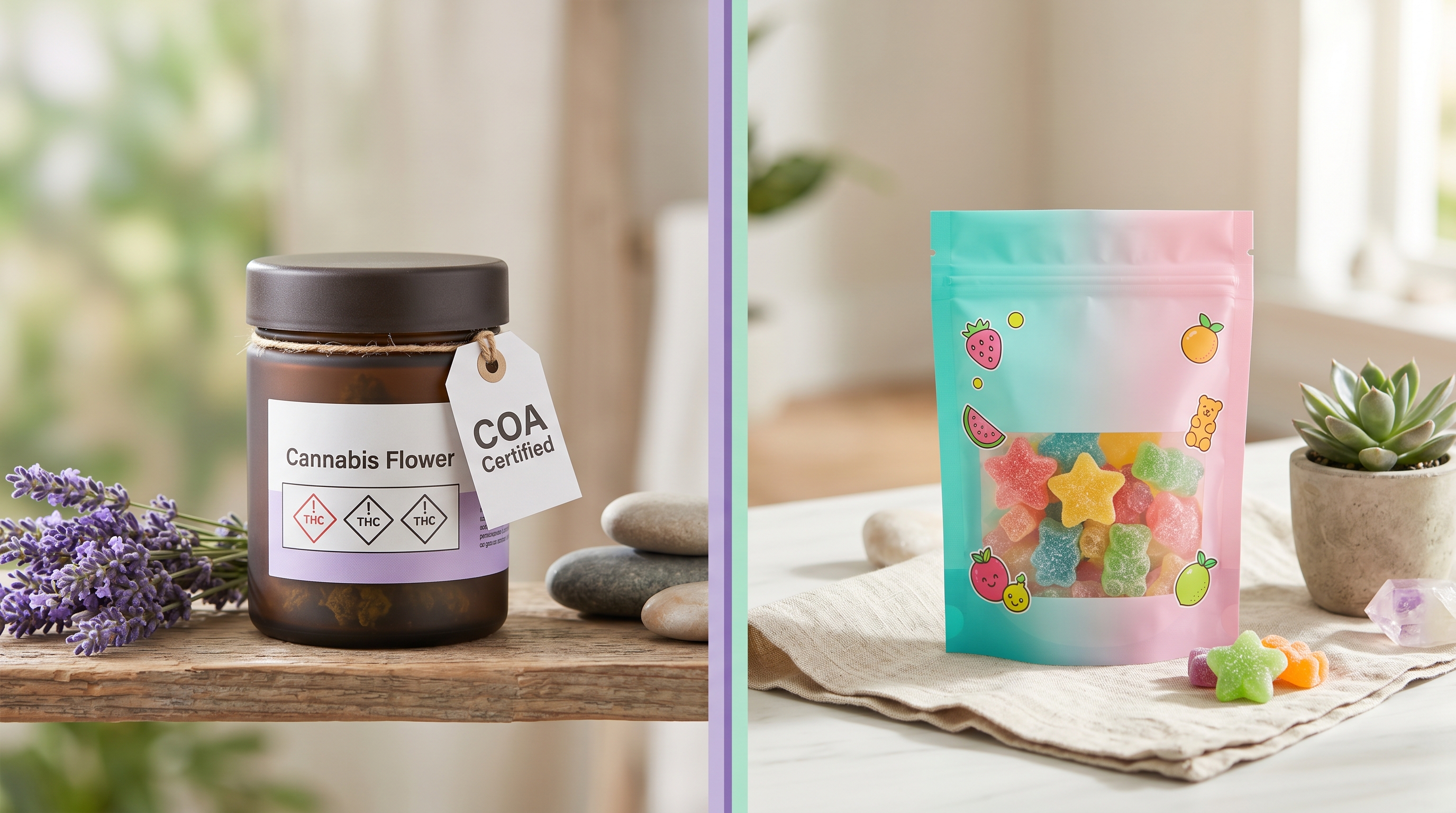
The potency problem. A regulated dispensary edible in a legal state must meet labeling requirements — a 10mg gummy contains 10mg, tested by an accredited lab, with batch records. A gas-station delta-8 gummy might say “10mg” on the label, but independent testing has repeatedly found products with 2–3x the labeled dose. Some packages contain hundreds or even thousands of milligrams of total THC across multiple servings, with no meaningful child-resistant barrier.
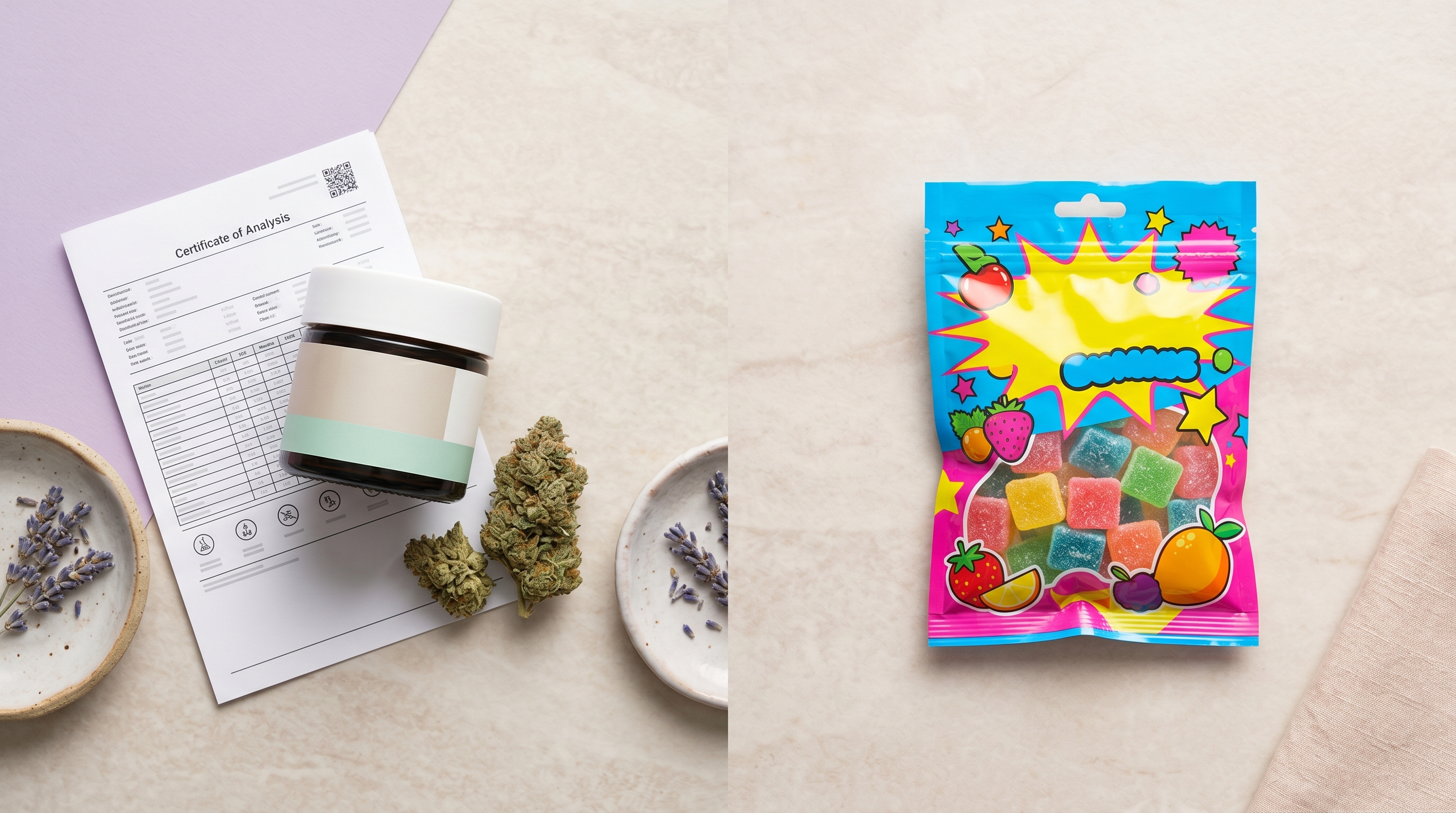
The recognition problem. Dispensary products in regulated states must use packaging that doesn’t mimic existing food brands — they cannot look like Skittles. Gas-station hemp gummies face no such restriction. They come in identical shapes, colors, and even branded knockoff packaging to candy children already recognize and reach for.
The weight problem. A 10mg dose that gives an adult a mild buzz delivers roughly 0.5 mg/kg to a 154-pound adult. That same 10mg delivered to a 27-pound toddler is 0.82 mg/kg — and research shows severe toxicity in children begins appearing at doses above 1.7 mg/kg. One gummy. One child. ICU.
The Symptoms — and Why They’re Scary
When adults consume too much cannabis, they’re uncomfortable but generally fine — anxious, disoriented, stuck on a couch for a few hours. Children respond differently, and more severely, because their neurological systems are still developing and their body weight means even small doses hit hard.
In pediatric delta-8 exposures, the documented clinical effects include:
- Lethargy and unresponsiveness — the “won’t wake up” presentation that sends parents to the ER
- Ataxia — uncoordinated movement, stumbling, the child seems “drunk”
- Central nervous system depression — slowed cognitive processing, delayed response
- Tachycardia — rapid heart rate (documented in 23% of all cases)
- Respiratory depression — slowed breathing, the most dangerous acute effect
- Vomiting — which, combined with sedation, creates aspiration risk
- Confusion and hallucinations — documented in a meaningful percentage of pediatric cases
- Seizures — rare but documented
One reason these cases are difficult for emergency physicians is the delay: THC edibles take 30–90 minutes to produce effects. A child can eat several gummies before the first one kicks in, dramatically amplifying the dose received. By the time symptoms appear, the child has often ingested far more than a single serving.
ER doctors also initially miss the diagnosis when parents don’t immediately connect the symptom presentation to cannabis — especially if the product in the home is marketed as “hemp” rather than THC. Children presenting with altered mental status, unexplained sedation, or ataxia get extensive (and expensive) workups — CT scans, lumbar punctures, blood panels — before anyone thinks to run a tox screen.
The Farm Bill Loophole in 30 Seconds
The 2018 Farm Bill redefined hemp as cannabis with less than 0.3% delta-9 THC. The intent was to legalize fiber, seed, and CBD products. What Congress did not anticipate: chemists could convert hemp-derived CBD into other intoxicating THC isomers — specifically delta-8 — that the bill’s language did not explicitly restrict.
Within two years, the gas-station cannabinoid market had exploded. Delta-8 gummies, vapes, and beverages flooded convenience stores, smoke shops, and truck stops in states where regulated cannabis remained illegal. In states where cannabis was legal, delta-8 products undercut dispensaries on price — with none of the regulatory overhead.
The research confirms the pattern: exposure rates in states where delta-8 was unregulated were 8 times higher than in states that had banned it. That is not a small difference.
The FDA has not approved any hemp-derived delta-8 product. The DEA has issued guidance suggesting chemically synthesized delta-8 may be federally controlled, but enforcement has been minimal. As of 2026, the patchwork of state regulations means delta-8 products are freely available in gas stations across large portions of the country, with no age verification requirements, no standardized dosing, and no mandatory lab testing.
What Regulated Dispensary Cannabis Looks Like vs. Gas-Station Hemp
If you use cannabis from a licensed dispensary, you are operating in a fundamentally different regulatory environment. Here is what that means in practice:
Regulated dispensary products:
- Child-resistant packaging required (typically a pinch-and-squeeze mechanism)
- Potency tested by state-licensed third-party lab
- Batch numbers and COAs (Certificates of Analysis) traceable to the actual product lot
- Warning labels — including “Keep out of reach of children”
- In METRC-tracked states, the product’s full chain of custody is documented
- No packaging that mimics existing candy or food brands
- Dosing per piece is standardized (typically 5mg or 10mg per unit)
Typical gas-station hemp-THC product:
- May or may not have child-resistant packaging
- May or may not have been third-party tested; if there’s a QR code, it may link to a test that doesn’t match the actual batch
- No METRC. No chain of custody.
- Candy-adjacent packaging, bright colors, flavors named after cereal brands
- Potency on label may bear no relationship to actual potency
- No age verification at point of sale in most states
Strains like Blue Dream, OG Kush, and Gelato from licensed dispensaries come with this full regulatory backstop. A “Blue Dream” gummy at a gas station is a different product entirely — same name, wildly different provenance.
For context on how regulated cannabis products interact with the body’s terpene and cannabinoid systems, our guides on myrcene and caryophyllene cover the science behind what’s actually in tested products. The Balance and Relax categories on This Is Why I’m High represent dispensary-sourced, effect-mapped options for adults seeking predictable experiences. Predictability is precisely what gas-station hemp products cannot offer.
For a broader look at sales of hemp-derived THC products to minors, see our sister piece: Hemp THC Products Sold to Minors: What the Data Shows.
The Practical Parent Playbook
This is the actionable section. If you have any THC product in your home — from a dispensary, from a hemp retailer, anywhere — here is what actually reduces risk.
1. Lock it. Not “up high.” Locked. “Up high” stops working around age 3–4, when children learn to climb. A medication lockbox ($15–25 at any pharmacy) or a dedicated locked cabinet is the standard recommendation from the Central Ohio Poison Center. This applies to dispensary cannabis AND any hemp-derived product.
2. Separate it from food storage. Don’t store edibles in the pantry, the refrigerator door, or any space where food is normally kept. Dedicated locked storage, separate from the kitchen if possible, removes the “it looked like food” confusion.
3. Never call edibles “candy” or “gummies” in front of children. Adults do this casually — “I’m going to have a gummy” — and children file it away. If a child hears adults eating gummies for fun, finding gummies in the kitchen is not alarming. It is food. Refer to cannabis products by neutral, boring names in front of kids: “medicine cabinet,” “adult items,” “the locked box.”
4. Brief every caregiver. Grandparents, babysitters, aunts, uncles: anyone who spends time in your home needs to know what’s in the locked cabinet and that it is not food. This conversation is awkward for about 30 seconds. It is important.
5. Audit the hemp products in your home. If you have delta-8, delta-10, THC-O, or HHC products — the kind that came from a gas station, a CBD shop, or online without dispensary licensing — apply the same lockbox standard as regulated dispensary cannabis. The argument that it’s “just hemp” is the exact misunderstanding driving the pediatric exposure data.
6. Don’t consume edibles in front of young children. The Nationwide Children’s Hospital team specifically flags this: children mimic adult behavior. If they see adults eating something from a colorful package, they will attempt to access that package.
7. If you use cannabis for relaxation, consider the full 100 cannabis safety tips — especially those covering storage and childproofing.
What to Do If a Child Is Exposed
If you suspect a child has ingested any THC product:
Call Poison Control immediately: 1-800-222-1222. They are free, available 24/7, confidential, and equipped to advise on whether the child needs emergency care based on the product, the estimated dose, the child’s weight, and current symptoms. Do not wait until symptoms appear — onset delay is part of what makes edible exposures dangerous.
Do not induce vomiting. This is counterintuitive but important. With a sedating substance, vomiting while becoming less responsive creates serious aspiration risk.
Go to the ER immediately if the child shows: significant sedation or difficulty waking, breathing that seems slow or labored, a seizure, loss of consciousness, or if the child is under 2 years old and any amount was ingested.
Tell the ER what they ingested. ER physicians cannot test quickly for every cannabinoid — standard THC immunoassays may not reliably detect delta-8. The more information you can provide (product name, packaging, estimated amount ingested), the faster and more targeted the treatment.
The reassuring reality: the overwhelming majority of pediatric cannabis exposures — even serious ones — resolve with supportive care: monitoring, IV fluids if needed, airway management in severe cases. There is no antidote, and none is needed for most exposures. The goal of the hospital stay is to keep the child safe while the body processes the THC. With prompt care and honest disclosure, outcomes are generally good.
Cannabis hyperemesis and other chronic-use complications are covered separately in Cannabinoid Hyperemesis Syndrome: Symptoms, Causes, and Treatment. Acute pediatric exposure is a different clinical scenario — and prompt action is the most important variable.
The Bigger Frame: Adult Use Is Fine. Kid Exposure Isn’t.
Let’s be direct about something. This article is not anti-cannabis. The audience reading it almost certainly includes adult cannabis users — people who use cannabis medicinally or recreationally, responsibly, and with good reason.
The argument here is not that cannabis is dangerous. The argument is that unregulated hemp-derived THC products create pediatric exposure risks that regulated dispensary cannabis, properly stored, does not. The difference is real, measurable, and documented in thousands of ICU admission records.
Responsible adult cannabis use and child safety are not in conflict. They require the same thing: treating THC products with the same respect you’d give any adult-only substance. Alcohol goes in a locked cabinet when you have toddlers. Prescription medications go in the medicine cabinet. Cannabis edibles — from a dispensary or a gas station — deserve the same treatment.
The hemp industry has built a multi-billion-dollar market on the perception that “hemp” equals “safe.” For adults making informed choices, that’s a marketing problem. For a two-year-old who finds a bag of candy-shaped gummies on the kitchen counter, it is a medical emergency.
The Practical Upside
Here is the good news baked into all of this: the risk is almost entirely preventable.
Lock your products. Know what you’re buying. Choose regulated dispensary products with COAs when possible — products you can verify and trust. The High IQ app helps adult users find licensed dispensaries carrying COA-tested products, so you know what’s actually in what you’re consuming.
Regulated dispensary cannabis, properly stored, represents a fundamentally different risk profile than gas-station hemp gummies left on a kitchen counter. That gap — in accountability, in testing, in packaging standards — is the entire reason pediatric exposures look the way they do in the data.
The data says the problem is real. The solution is practical, affordable, and already in your hands.
Sources
-
Burgess A, et al. “Delta-8 tetrahydrocannabinol, delta-10 tetrahydrocannabinol, and tetrahydrocannabinol-O acetate exposures reported to America’s Poison Centers.” Clinical Toxicology. 2024. https://pubmed.ncbi.nlm.nih.gov/38686923/
-
Nationwide Children’s Hospital. “New Study Finds Increase in Exposures to Synthetic Tetrahydrocannabinols Among Young Children, Teens, and Adults.” May 2024. https://www.nationwidechildrens.org/newsroom/news-releases/2024/05/deltathc_clinicaltoxicology
-
America’s Poison Centers. Delta-8 THC Exposure Tracker (updated April 30, 2025). https://www.poisoncenters.org/track/delta-8-THC
-
LoParco CR, et al. “Delta-8 Tetrahydrocannabinol Exposures Reported to US Poison Centers.” PMC / NIH. Published August 2024. https://pmc.ncbi.nlm.nih.gov/articles/PMC11436591/
-
Nationwide Children’s Hospital / BioMed Central. “Investigation of the toxic dose of ingested delta-8 tetrahydrocannabinol among young children.” Injury Epidemiology. 2025. https://injepijournal.biomedcentral.com/articles/10.1186/s40621-025-00617-6
-
Ray CL, et al. “Comprehensive Cannabinoid Profiling of Acid-Treated CBD Samples.” Molecules. 2022. https://mdpi-res.com/d_attachment/molecules/molecules-27-06924/article_deploy/molecules-27-06924.pdf
-
Geci M, Scialdone M, Tishler J. “The Dark Side of Cannabidiol: The Unanticipated Social and Clinical Implications of Synthetic Δ8-THC.” PMC. 2022. https://ncbi.nlm.nih.gov/pmc/articles/PMC10061328/
-
Washington State LCB. “A Synopsis of Recent Lab Findings.” Richard Sams, PhD. March 2023. https://lcb.wa.gov/sites/default/files/publications/rules/2023-Proposed-Rules/CSWG3-Synopsis-of-Lab-Findings.pdf
-
Health Policy Institute of Ohio. “Cannabis poisoning among Ohio children spiked in 2024.” August 2025. https://www.healthpolicyohio.org/health-policy-news/2025/08/22/cannabis-poisoning-among-ohio-children-spiked-in-2024-report-finds
-
Healio. “Pediatric exposures to synthetic THC increased by 132% in 2 years.” May 2024. https://www.healio.com/news/pediatrics/20240521/pediatric-exposures-to-synthetic-thc-increased-by-132-in-2-years
