How to Host a Cannabis Tasting Party: The Complete Guide
Learn how to plan and host an elevated cannabis tasting party with curated strain flights, terpene education, tasting cards, and responsible hosting tips.


Updated April 15, 2026 — Added direct links to every strain in the sample flight, a new pinene deep-dive reference for guests who want to go deeper, and a 2024 entourage-effect review to ground the terpene-to-food pairing claims [André et al., 2024].
Wine tastings have had their moment. Beer flights are everywhere. Now it’s time to bring the same intentionality, sophistication, and sensory curiosity to cannabis. A cannabis tasting party — sometimes called a “sesh tasting” or “terp flight” — is one of the most rewarding ways to deepen your appreciation for the plant while sharing a genuinely memorable experience with friends.
The key insight that makes these events work: cannabis has more terpene diversity than wine. A piney, citrusy Uplifting High strain and an earthy, peppery Relieving High strain are as different as a crisp Sauvignon Blanc and a smoky Cabernet. When you slow down and pay attention, you’ll start noticing those differences — and so will your guests.
Here’s how to plan and host one from start to finish.
Goal & Overview
What you’ll accomplish: You’ll plan and host a structured cannabis tasting where guests explore 3–5 curated strains, learn to identify terpene profiles by nose and palate, and discover which High Families resonate with their own preferences.
Estimated time: 2–3 hours for the event itself, plus 1–2 hours of prep beforehand.
Difficulty level: Intermediate — you don’t need to be a cannabis sommelier, but a basic understanding of terpenes and effects will make you a far better host.
Important: Only host a cannabis tasting party where consumption is legal for all attendees. Confirm everyone is of legal age in your jurisdiction, and never pressure anyone to consume.
What You’ll Need
Required
- 3–5 different cannabis strains, ideally spanning multiple High Families (strain selection guide below)
- Labeled glass jars (small half-ounce mason jars are ideal) for each strain — keep them sealed until each round
- A clean consumption method — a dry herb vaporizer is strongly preferred since it preserves terpene flavor at controlled temperatures; clean glass pipes or individual pre-rolls work as well
- Tasting cards or a printed menu listing each strain’s name, dominant terpenes, THC/CBD percentage, and High Family
- Palate cleansers — filtered water, plain crackers, sliced green apples, or coffee beans to sniff between rounds
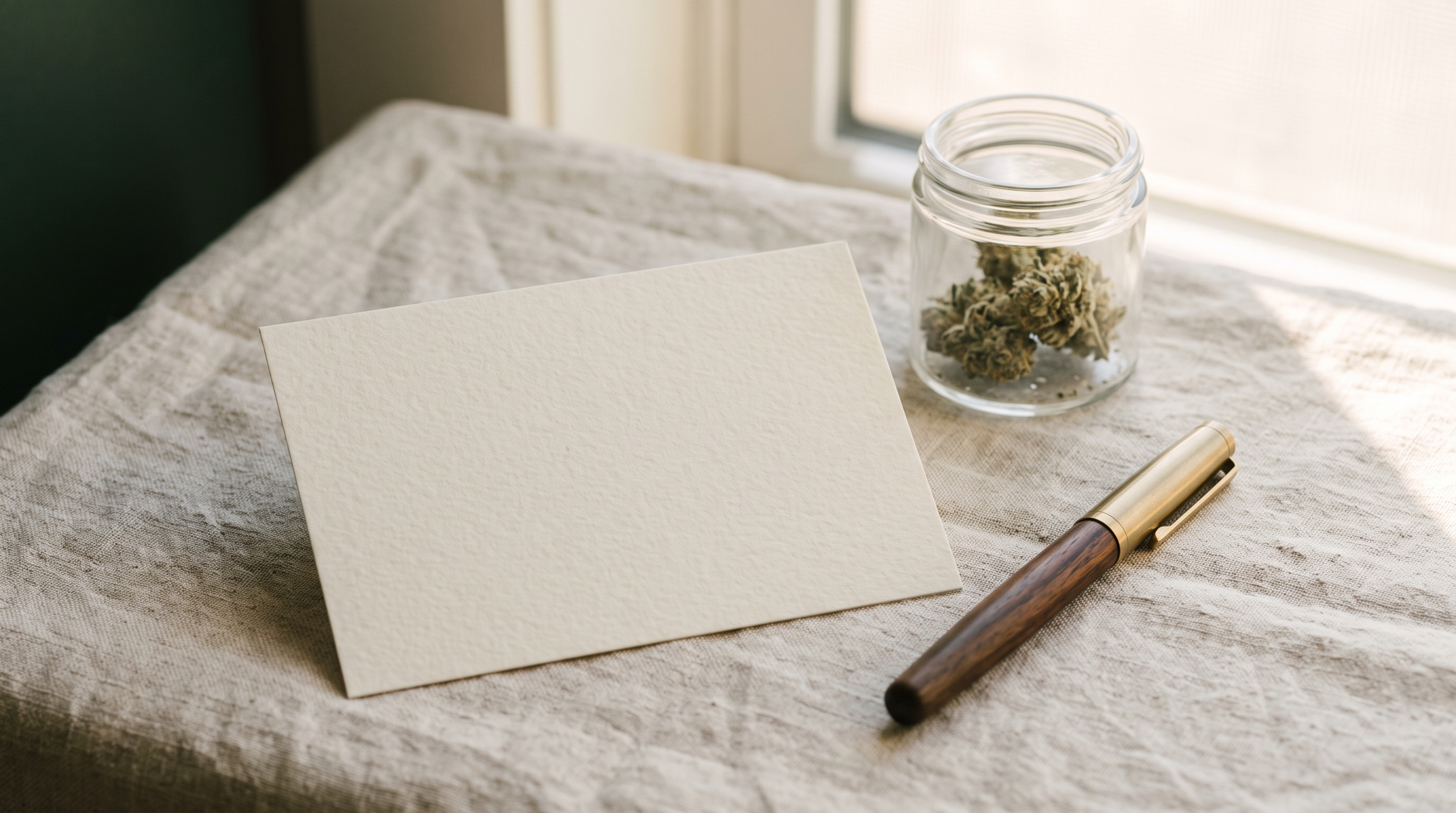
- Tasting sheets and pens for each guest to record impressions (template below)
- A comfortable, well-ventilated space with ample seating for 4–8 guests
Optional but Recommended
- A terpene aroma kit — available from cannabis education suppliers — so guests can smell individual terpenes like myrcene, limonene, and caryophyllene before the tasting begins
- Curated snacks that complement each strain’s terpene profile (food pairing guide below)
- A magnifying glass or jeweler’s loupe for examining trichome structure
- A low-key ambient music playlist that won’t compete with conversation
- CBD-only flower or tincture as a modulation option for anyone who overconsumes
Safety Essentials
- Designated drivers or pre-arranged rideshare — no one drives impaired, ever
- A guest sleeping area or crash space for anyone who needs it
- CBD tincture — CBD can help modulate uncomfortable THC effects if anyone goes too far
- Plenty of water and non-cannabis beverages throughout the event
Step-by-Step Instructions
Step 1: Curate Your Strain Flight (1–2 Days Before)
This is where the magic starts. Select 3–5 strains that offer distinct sensory and experiential contrasts. The best approach is to build your flight around High Families rather than the outdated indica/sativa binary — that framework is far more predictive of what your guests will actually experience.
Here’s a sample five-strain flight that covers the full experiential range:
| Order | High Family | Example Strain | Dominant Terpenes | Why It Works Here |
|---|---|---|---|---|
| 1 | Balancing High | Harlequin | Low terpene intensity, CBD-rich | Gentle opener; safe starting point for all tolerance levels |
| 2 | Uplifting High | Super Lemon Haze | Limonene, Linalool | Bright citrus and floral notes; social and energizing |
| 3 | Energetic High | Dutch Treat | Terpinolene, Ocimene | Sweet and piney; clear-headed and active |
| 4 | Relieving High | GSC (Girl Scout Cookies) | Caryophyllene, Humulene | Earthy, peppery depth; physical warmth |
| 5 | Entourage High | OG Kush | Multi-terpene complex | Full-spectrum complexity; the grand finale |
The rule: start mild and build. Begin with a lower-THC or CBD-rich strain and progress toward more potent or terpene-complex profiles. This protects newer consumers, keeps palates fresh, and gives the evening a satisfying arc.
A practical note on sourcing: visit your local dispensary and tell the budtender you’re hosting a tasting and want strains with clearly distinct terpene profiles. Dispensaries with lab-tested flower listing full terpene panels by percentage are ideal. If the label only lists THC, ask the staff — they often know the profiles from experience.
Time estimate: 30–60 minutes at the dispensary, plus 15 minutes to label and organize at home.
Step 2: Make Your Tasting Sheets
Tasting sheets transform a casual smoke session into a structured sensory experience. Keep them simple — a single page per guest with four columns for each strain:
What to include per strain row:
- Appearance — color of the flower, trichome density, structure (dense or airy)
- Aroma — first impressions (before grinding), then after squeezing the bud gently
- Flavor — what you notice on the inhale vs. exhale; how long the taste lingers
- Effects — onset location (head, body, or both), mood shift, energy level, intensity (1–10)
- Overall score — a simple 1–5 rating
At the bottom, add a section for “My Top Pick” and “High Family I’d revisit.” These become surprisingly valuable references later when guests are shopping at the dispensary.
Step 3: Prepare Your Space (1–2 Hours Before the Event)
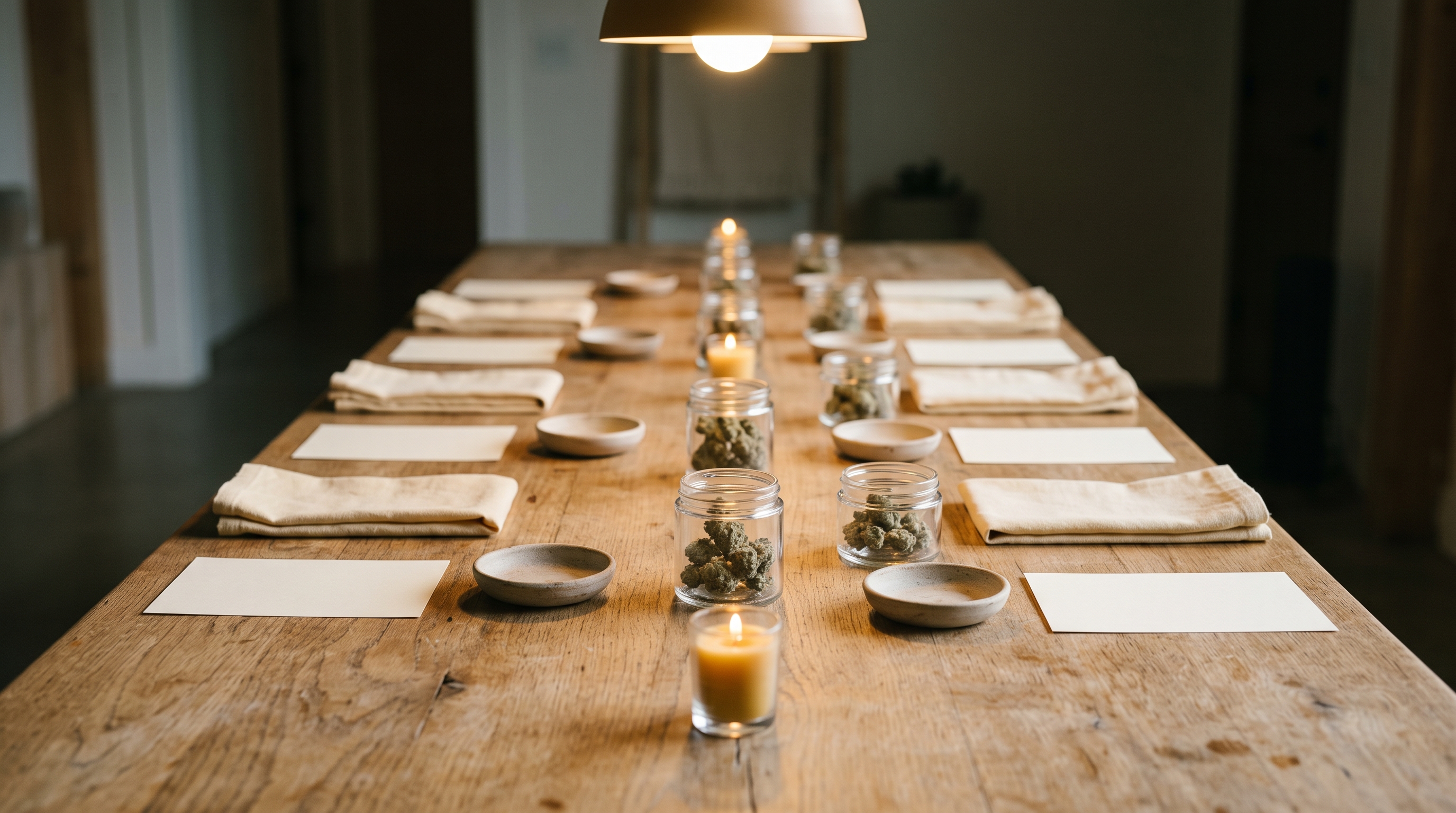
Set up a central tasting station — a coffee table, dining table, or kitchen island all work well. Arrange labeled jars in tasting order (mildest to most complex). Place tasting sheets, pens, water, and palate cleansers within easy reach of every seat.
Key setup considerations:
- Ventilation is essential. Open windows or run a fan on low. Good airflow keeps the space comfortable and — critically — helps guests distinguish aromas between rounds. A room saturated with cannabis smell makes terpene differentiation much harder.
- Lighting: warm and natural if possible. Soft lighting makes flower examination more pleasant and keeps the atmosphere relaxed. Avoid harsh overhead fluorescents.
- Eliminate competing aromas. No scented candles, incense, strong air fresheners, or heavily perfumed guests near the tasting station. Terpene detection is surprisingly easy to disrupt.
- Comfort matters. People will be here for 2–3 hours. Good seating, soft cushions, and a blanket or two for the later rounds aren’t just nice — they’re part of the experience.
Step 4: Welcome Guests and Set Expectations (10–15 Minutes)
Before anyone consumes anything, gather the group and cover the basics. This brief orientation is what separates a thoughtful tasting from an unstructured hangout.
- Explain the format: “We’re moving through five strains in order, pausing between each to share what we notice. No rush.”
- Normalize opting out: “You can skip any round, take a smaller amount, or stick to CBD. There is zero pressure here.”
- Walk through the tasting sheet: Show guests what they’ll be evaluating and encourage them to write something down — even a single word — for each category.
- Introduce the terpenes. If you have an aroma kit, pass it around now. This primes the nose and gives guests a vocabulary for what they’re about to smell and taste.
- Confirm transportation. Make sure everyone has a safe way home or a place to stay before the first round starts.
This 15-minute orientation is what transforms a gathering into an intentional, memorable event.
Step 5: Taste Each Strain Methodically (15–20 Minutes Per Strain)
For each strain in your flight, guide guests through this four-step sensory sequence:
-
Look — Pass the jar around unopened first. Examine the color, density, and visible trichome structure. Point out any visible orange pistils, unusual coloring, or standout characteristics.
-
Smell — Open the jar and take a slow, deep inhale. Then gently squeeze a small nug to release more terpenes. Ask the group: “What’s the first thing you notice? Citrus? Pine? Earth? Pepper? Fuel? Flowers?” Let people answer before you offer your own read — you’ll get more honest, uninfluenced observations that way.
-
Taste — Prepare a small, controlled draw from your vaporizer set to 175–185°C (350–365°F) to emphasize terpene expression without thermal degradation. If using pipes or pre-rolls, keep draws small. Focus on the flavor on the inhale and hold briefly. Notice what changes on the exhale.
-
Feel — Wait 5–10 minutes and note the onset. Where do you feel it first? Head, eyes, chest, body? Does it feel energetic or settling? Social or introspective? How intense?
After each strain, give the group a few minutes to finish writing notes, then open the floor for discussion. You’ll be genuinely surprised at how differently people perceive the same flower — and that divergence is one of the most interesting parts of the evening.
Between strains: Cleanse palates with water and plain crackers. Wait at least 15–20 minutes before moving to the next round. Rushing this is the most common hosting mistake — it leads to palate fatigue, cumulative intoxication, and guests who can’t distinguish strain three from strain four.
Step 6: Close with Discussion and Food (30–45 Minutes)
After the final strain, bring the group together for a proper wrap-up conversation:
- Share favorites. Which strain surprised you most? Which High Family felt most like “you”?
- Compare tasting notes. Read a few observations aloud — the variation in perception is genuinely fascinating and often hilarious.
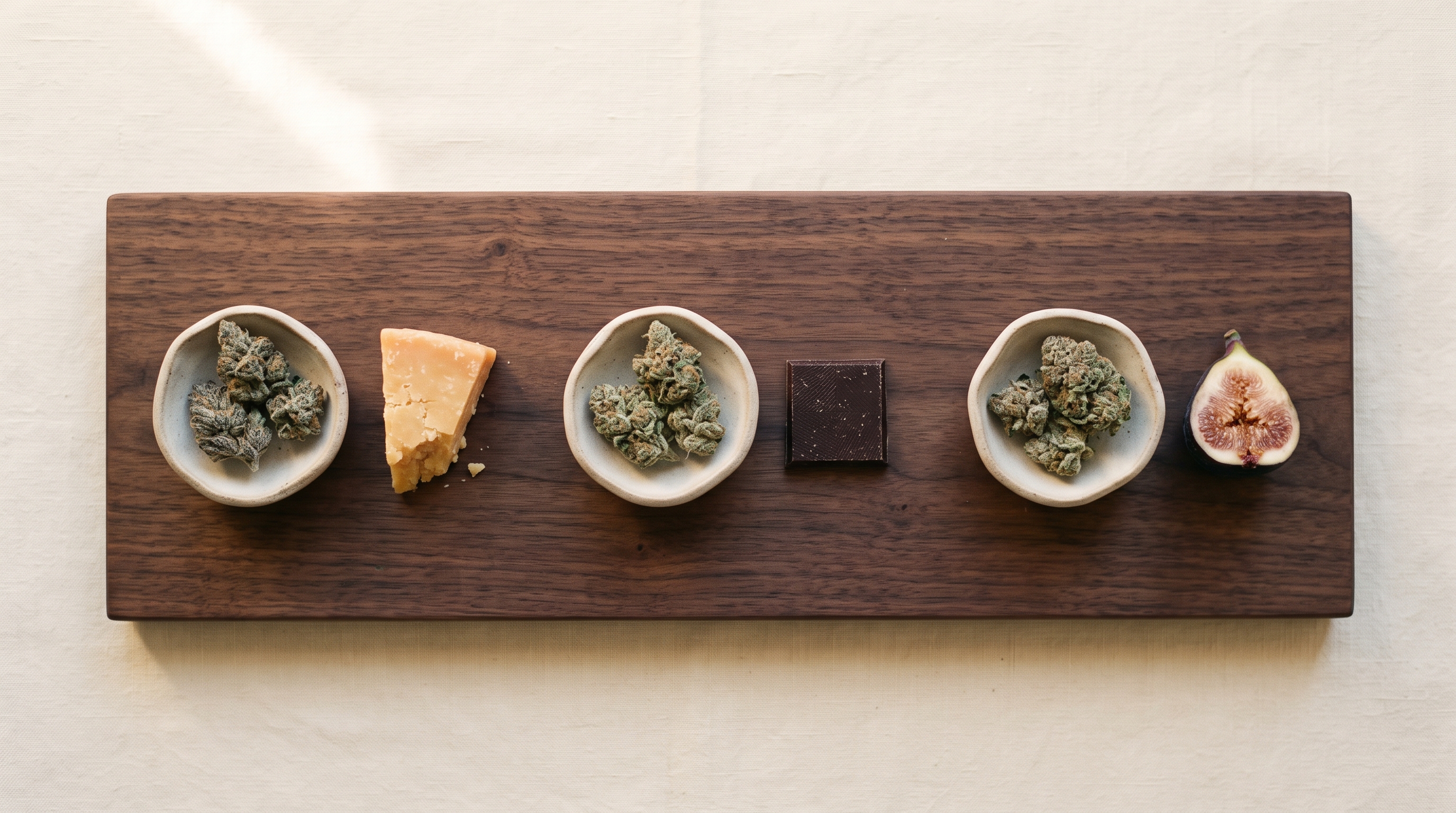
- Serve a substantial meal or snacks. Your guests will appreciate it, and food helps ground the experience. This is also where you can lean into food pairing (see below).
Collect tasting sheets if guests are willing. They make excellent references for future dispensary visits — and for planning your next tasting.
Terpene-to-Food Pairing Guide
This is the detail that elevates your event from enjoyable to genuinely impressive. Terpenes create predictable flavor families, and those families have natural culinary counterparts.
| Dominant Terpene | Aroma Profile | Food Pairings | High Family |
|---|---|---|---|
| Limonene | Bright citrus, lemon zest | Lemon tart, citrus salad, white wine, sparkling water with cucumber | Uplifting High |
| Myrcene | Earthy, musky, tropical fruit | Mango salsa, ripe melon, herbal tea, full-bodied red wine | Relaxing High |
| Caryophyllene | Pepper, spice, clove | Dark chocolate, aged cheddar, charcuterie, spiced nuts | Relieving High |
| Terpinolene | Sweet pine, fresh apple, floral | Green apple slices, fresh herbs, lightly dressed salad | Energetic High |
| Linalool | Floral, lavender, soft spice | Honey, chamomile, shortbread cookies, light floral cheeses | Uplifting High |
| Pinene | Forest pine, fresh herbs | Rosemary focaccia, pine nut dishes, mineral water | Energetic High |
| Humulene | Earthy, hoppy, woody | Craft beer, grainy bread, aged cheeses, earthy mushroom dishes | Relieving High |
You don’t need to serve a full pairing for every strain. Offering two or three thoughtful pairings for the closing food portion creates a memorable finale without overwhelming the logistics.
Pro Tips
Micro-dose the flight. The goal is tasting and noticing, not getting incapacitated by strain two. Encourage guests to take one or two small draws per strain. You want people alert enough to articulate what they’re experiencing through all five rounds.
Use a dry herb vaporizer whenever possible. Combustion destroys a significant portion of volatile terpenes before they reach your palate. Vaporizing at 175–185°C delivers a dramatically cleaner, more terpene-expressive experience — which is the entire point of a tasting. A quality vaporizer is the single best investment you can make for this format.
Try a blind tasting round. Label your strains by number only. Have guests guess the terpene profile and High Family before revealing the answers. This is surprisingly educational and generates great conversation.
Keep the group small. Four to eight guests is the sweet spot. Larger groups make it harder to share equipment hygienically, maintain pacing, and have meaningful group discussion. If you have more friends who want in, host two separate evenings.
Build the playlist to match the strains. Start with something upbeat and social for the Uplifting High strains, then gradually shift to something mellower as you move toward Relaxing High or Relieving High selections. The soundtrack should evolve with the experience.
Provide printed terpene cheat sheets. A single-page reference listing the major terpenes, their aroma descriptions, and which High Families they appear in helps guests feel informed without requiring them to memorize anything beforehand. It also makes great take-home material.
Troubleshooting
| Problem | Likely Cause | Solution |
|---|---|---|
| A guest feels too high or anxious | Overconsumption or low tolerance | Offer CBD tincture, water, a quiet space to sit, and calm reassurance. Remind them it’s temporary and will pass. |
| All the strains taste the same | Palate fatigue or moving too fast | Slow down significantly; use palate cleansers between rounds; try sniffing coffee beans to reset the nose |
| Guests lose interest in the structure | Too rigid a pace or too many strains | Cut to 3 strains and let conversation flow more naturally — that’s still a great event |
| Vaporizer isn’t producing visible vapor | Temperature too low or overly dry flower | Increase temperature 5–10 degrees; ensure flower is stored at 58–62% RH with a humidity pack |
| Guests arrive already significantly medicated | Pre-session before the event | Gently suggest they observe a round or two before joining; don’t force participation |
| Group can’t agree on what a terpene smells like | This is completely normal | Lean into it — individual terpene perception varies widely and the disagreement is part of the fun |
Variations to Try
CBD-Only Tasting: Perfect for cannabis-curious guests who are THC-cautious or new to cannabis entirely. Focus on high-CBD strains and hemp flower — the terpene diversity is genuinely impressive and the experience is accessible to everyone.
Edibles Flight: Replace flower with low-dose edibles (2.5–5mg THC each). This requires dramatically more time between courses — 60–90 minutes minimum — but creates a very different kind of evening. Plan for this to be a day-into-night event.
Single High Family Deep Dive: Choose three or four strains all within the Uplifting High family and explore the nuances within a single category. This is especially interesting for experienced consumers who want to sharpen their palate within a familiar effect profile.
Concentrate Flight: For experienced consumers, a small-format dab tasting using a controlled-temperature device (an e-rig set to 450–520°F) highlights terpene expression in concentrates in ways flower simply can’t match. This is advanced hosting territory — keep doses extremely small.
Key Takeaways
- Structure makes the difference. A tasting format — tasting order, tasting cards, palate cleansers, pacing — transforms a casual smoke session into a genuinely educational and memorable experience.
- Build your flight around High Families, not indica/sativa. This gives you a coherent arc from mild to complex and gives guests a vocabulary for what they’re experiencing.
- Terpenes are the story. Learning to identify limonene, myrcene, caryophyllene, and terpinolene by nose is the skill that unlocks everything else about cannabis connoisseurship.
- Micro-dosing is essential. One to two small draws per strain. The goal is sensory awareness, not intoxication.
- Safety infrastructure first. Transportation, CBD tincture on hand, a crash space available — get these in place before anything else.
- Food pairing elevates the closing. Matching terpene profiles to complementary flavors creates a satisfying finale and gives guests something tangible to take home.
FAQs
How many strains should I have at my first tasting?
Three is the sweet spot for a first event. It’s enough to create meaningful comparison and contrast, but manageable enough that guests don’t get overwhelmed or too intoxicated to stay engaged. Once you’ve hosted a three-strain tasting and understand the pacing, you can expand to five.
Do I need a vaporizer, or can we just smoke?
You can absolutely use glass pipes or pre-rolls. The tradeoff is that combustion destroys a significant portion of volatile terpenes at high temperatures, which reduces the flavor differentiation you’re trying to highlight. If any of your guests own a quality vaporizer, borrow it for the occasion — the difference in flavor clarity is substantial. That said, a great tasting can happen with any clean consumption method.
What if some guests don’t consume cannabis?
Non-consuming guests can fully participate in the Look and Smell steps, which are often the most educational parts of the evening. They can take notes, moderate discussion, and enjoy the food pairings. Designating one non-consuming guest as the “facilitator” who keeps things on pace is actually a great hosting move.
How do I handle guests with very different tolerance levels?
Build it into the format from the start. During your orientation (Step 4), clearly explain the micro-dosing approach and make it explicit that taking less — or nothing — for any given round is completely welcome. Having CBD flower or tincture available gives lower-tolerance guests a way to participate without overconsumption.
Where can I learn more about terpenes before my event?
Our guide on High Families is a good starting point — it maps terpene profiles to effect categories in a practical, accessible way. For deeper science, our article on Understanding High Families covers the research behind why terpenes matter and how to use them to make better strain decisions. For single-terpene deep dives, see our guides on pinene and terpinolene — both cover the latest 2025 research, including what the most recent human trials actually found.
On citations: The 2024 comprehensive review by André et al. (Pharmaceuticals 17(11):1543) is a useful reality check on how much human evidence exists for each terpene’s claimed effects — worth a skim before confidently telling a guest that myrcene “causes” couch-lock or that limonene “elevates” mood. The honest answer is “probably, but human evidence is thinner than the marketing suggests.”
Hosting a cannabis tasting party is ultimately about slowing down, paying attention, and sharing discovery with people you enjoy. It elevates cannabis from something you just do into something you genuinely experience — and that shift in attention changes everything about how the plant tastes, feels, and reveals itself. Pick your strains, set the table, and invite the friends who are ready to explore.


