LED Grow Lights for Cannabis: The 2026 Buyer's Guide
LED grow lights explained for cannabis in 2026. PPFD, full vs. tuned spectrum, top brands, and the right watt count for 2x2 to 5x5 tents.

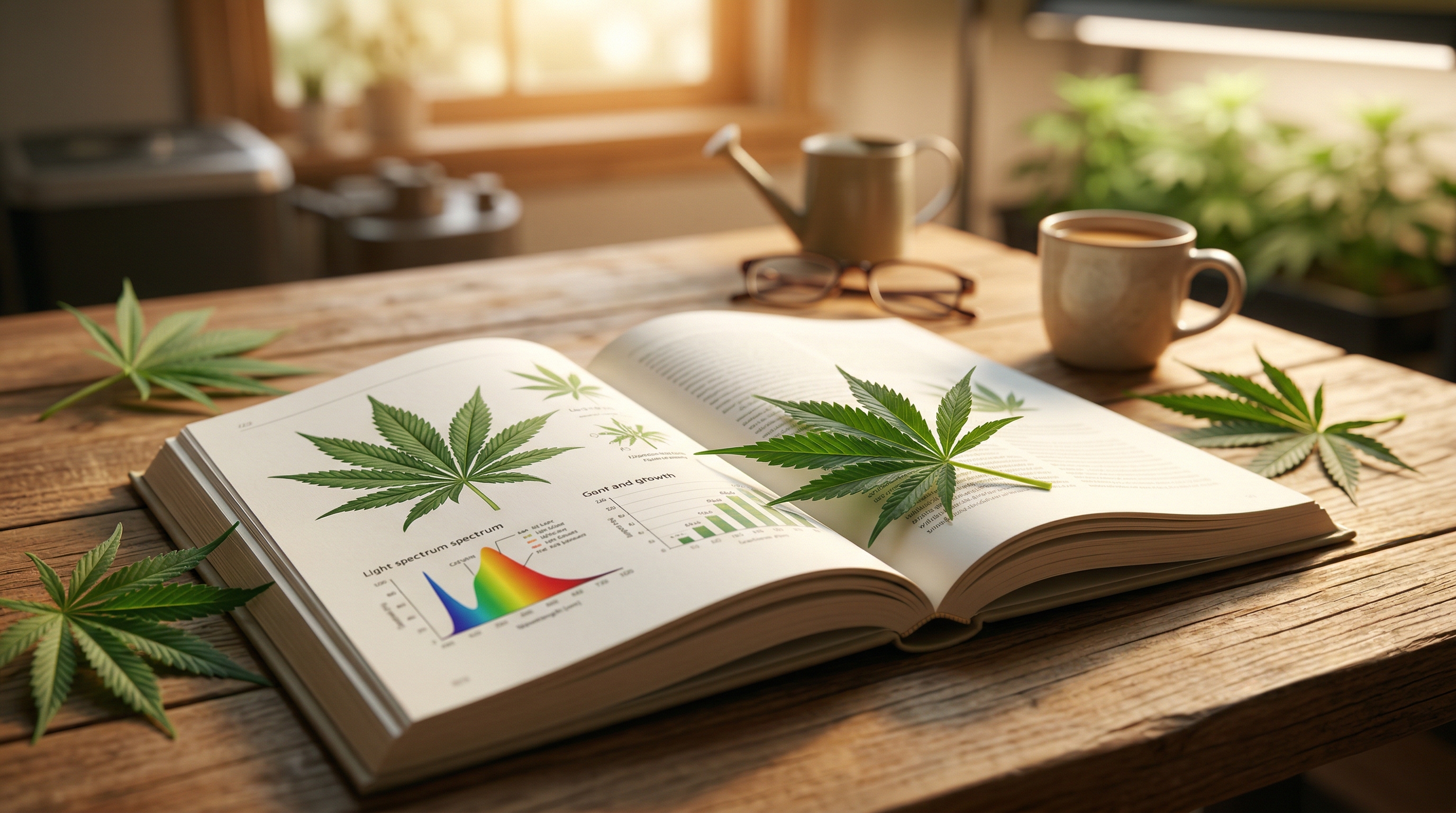
Why Your Grow Light Is the Most Important Purchase You’ll Make
Here’s a fact that surprises most new growers: cannabis plants can only convert about 5–8% of the light energy they receive into actual plant mass [Bugbee, 2016]. That means the quality, spectrum, and intensity of your grow light doesn’t just matter — it’s the single biggest lever you can pull to influence yield, potency, and the terpene profile of your harvest.
And here’s the thing: the LED grow light market in 2026 looks almost nothing like it did three years ago. Efficiency has skyrocketed. Prices have dropped. The science behind light spectrum manipulation has matured to the point where home growers can dial in conditions that rival commercial operations.
Whether you’re setting up your first grow or upgrading from an aging HPS (high-pressure sodium) fixture, this guide gives you the scientific foundation to make a smart purchase — and the practical know-how to actually use it. We’ll cover how plants “see” light, what the research says about spectrum and cannabinoid production, how to evaluate the dizzying array of LED options on the market, and which specific fixtures earn their price tags in 2026.
By the end, you’ll understand:
- Why PPFD and efficacy matter more than wattage
- How light spectra influence terpene and cannabinoid development
- What features actually justify a higher price in 2026
- The 8–10 best lights organized by tent size, from 2×2 to 5×5
- Where LED, HPS, and CMH each still win
Let’s dig in.
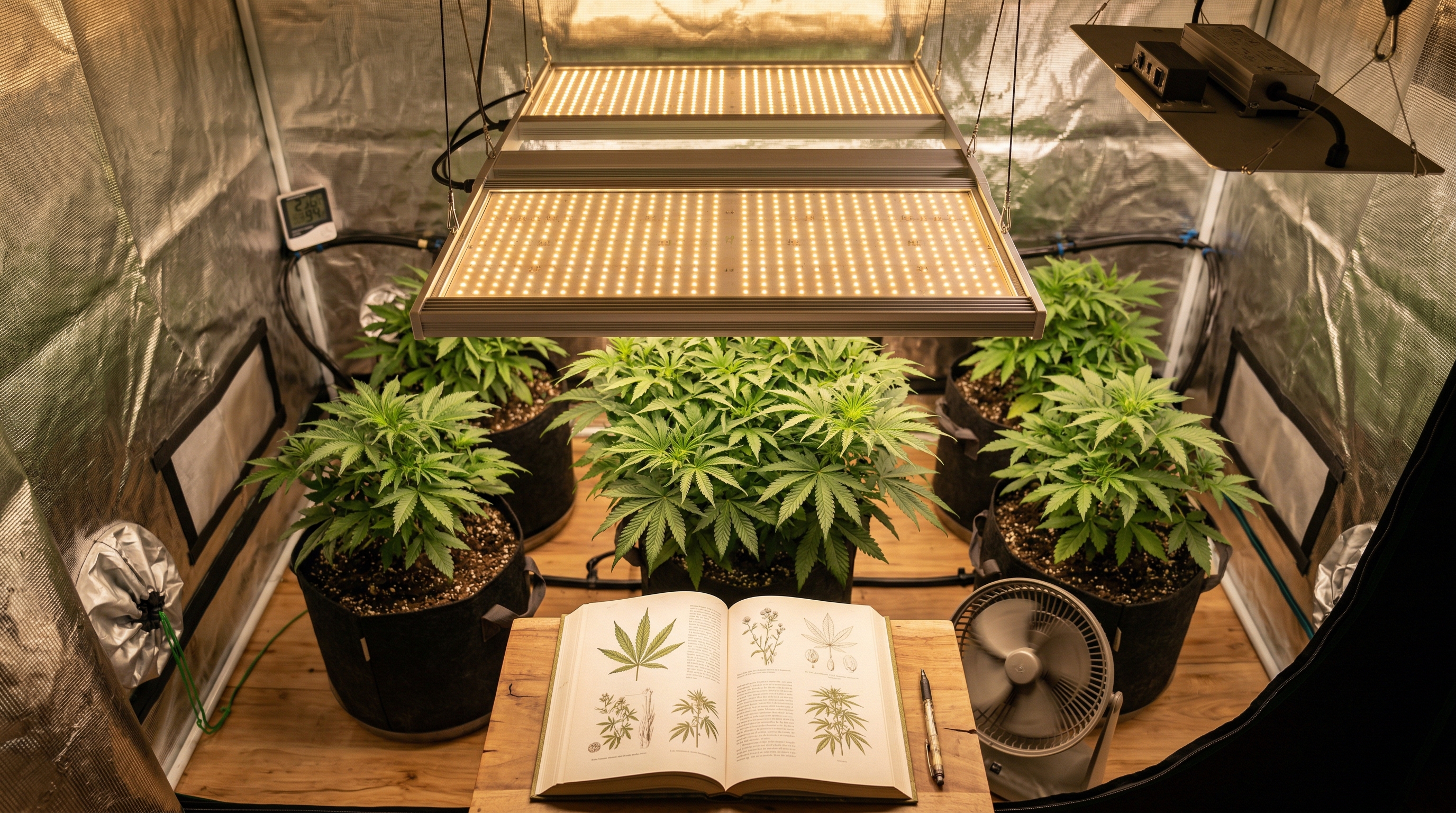
LED vs. HPS vs. CMH: Which Technology Actually Wins in 2026?
Before buying anything, it’s worth knowing where each major technology stands. The landscape has shifted dramatically.
High-Pressure Sodium (HPS)
HPS was the gold standard for indoor cannabis for 30+ years — and for good reason. It produces intense light concentrated in the 550–700nm range (yellow-orange-red), which drives flowering biomass aggressively. Commercial cultivators still run HPS in some facilities because of its proven track record.
But the numbers don’t lie. A modern 1,000W HPS system pulls 1,100W from the wall (ballast overhead), costs roughly $71/month to run during an 18-hour veg cycle, and generates significant heat that requires active climate control. At about 1.7 µmol/J efficacy, it’s outclassed by nearly every mid-range LED on the market today.
HPS still wins when: You have an existing setup with no air conditioning constraints, access to very cheap electricity (under $0.06/kWh), or you’re running a large sealed room where the heat load is actually useful in winter.
Ceramic Metal Halide (CMH / LEC)
CMH sits between HPS and LED. Its near-daylight spectrum (4,200K) includes UV that most LEDs lack, and growers report exceptional terpene and resin production. Efficacy runs around 1.9–2.1 µmol/J — better than HPS but behind modern LEDs.
CMH still wins when: You’re optimizing for terpene expression on a budget, don’t want to track down a specific UV bar, or you’re running a single-light setup where the heat output is manageable.
Modern LED
Full-spectrum LED is now unambiguously the best all-around technology for most home and small commercial grows. The Samsung LM301H EVO diodes powering top-tier fixtures in 2026 achieve 2.8–3.2 µmol/J efficacy — nearly double HPS. They run cooler, produce a broader and more tuneable spectrum, and last 50,000+ hours with minimal degradation.
LED wins when: You care about electricity costs, need precise temperature control, want tunable spectrum, or are setting up a new grow from scratch.
Bottom line for 2026: Buy LED unless you have a compelling reason not to. The efficiency gap is too large to ignore.
The Science Explained: How Plants “See” Light
To evaluate grow lights intelligently, you first need to understand how cannabis actually uses light.
Photosynthetically Active Radiation (PAR) and Beyond
Plants don’t use all wavelengths of light equally. PAR covers wavelengths from 400–700 nanometers — the range available for photosynthesis. Within that window, cannabis has peak chlorophyll absorption at blue (430–450nm) and red (640–660nm) [McCree, 1971].
For decades, this led manufacturers toward red+blue “blurple” LEDs — those distinctive purple-pink lights every new grower associates with early-2010s grow tents. The science has moved on.
It turns out green light (500–560nm), once dismissed as “wasted energy,” penetrates deeper into the canopy and drives photosynthesis in the lower leaves that red and blue simply can’t reach [Smith et al., 2017]. This discovery is why modern full-spectrum white LEDs have essentially replaced blurple designs entirely.
Far-red light (700–780nm) adds another layer. It triggers the Emerson enhancement effect — when combined with red light, it increases the overall photosynthetic rate beyond what either wavelength achieves alone [Zhen & Bugbee, 2020]. Researchers have proposed an expanded definition called ePAR that includes far-red, and many 2026 fixtures now include dedicated far-red diodes to take advantage of this.
Finally, UV light (280–400nm) appears to stimulate trichome production as a stress response — the plant manufactures more resin as a “sunscreen” [Lydon et al., 1987]. The evidence is still emerging and somewhat mixed; anecdotal reports from experienced growers are positive, but controlled studies on home-grow scales are limited. UV-B in particular requires careful dosing (2–4 hours per day maximum during late flower) to avoid leaf damage. For most beginners, UV supplementation is not a priority — focus first on getting PPFD, spectrum, and environmental control right. UV bars are an advanced optimization, not a requirement.
What Research Says About Light Intensity and Cannabinoids
The relationship between light intensity and cannabis yield is well-established. Chandra et al. (2008) found that cannabis photosynthesis increases linearly up to about 1,500 µmol/m²/s PPFD. Most home grows operate between 400–1,000 µmol/m²/s, meaning there’s genuine headroom for improvement in the average tent.
More recently, researchers at the University of Guelph demonstrated that increasing PPFD from 600 to 1,800 µmol/m²/s boosted THC yield per square meter by up to 30% [Rodriguez-Morrison et al., 2021] — but with important caveats: diminishing returns kick in above 1,200 µmol/m²/s, and real light stress risk emerges above 1,500. These gains also assume optimal temperature, CO2, and nutrition. In real home-grow conditions, the benefit of pushing PPFD beyond 1,000–1,200 µmol/m²/s is much smaller. The practical takeaway: more light means more cannabinoids up to a ceiling, and that ceiling is lower than you might expect without dialing in every other variable first.
Spectrum affects what kind of compounds your plant produces. A study by Magagnini et al. (2018) found blue-enriched spectra during flowering may increase CBD and certain terpene concentrations, while red-dominant spectra maximize total biomass. This means your lighting choice connects directly to the experience your harvest will deliver — a consideration we’ll revisit when recommending specific fixtures.
Key Metrics: What Actually Matters When Buying a Light
Before comparing products, you need to speak the language. Here are the specs that matter in 2026 — and the marketing terms to ignore.
Efficacy (µmol/J) — The Single Most Important Number
Efficacy measures how efficiently a fixture converts electrical energy (watts) into usable plant light (photons), expressed in micromoles per joule.
| Efficacy Rating | What It Means | Typical Price Range |
|---|---|---|
| Below 2.0 µmol/J | Outdated or budget-bin | $50–$150 |
| 2.0–2.5 µmol/J | Solid entry-level | $150–$350 |
| 2.5–3.0 µmol/J | High-performance | $300–$700 |
| Above 3.0 µmol/J | Top-tier / commercial-grade | $500–$1,200+ |
In 2026, anything below 2.0 µmol/J is essentially obsolete. The best Samsung LM301H EVO and Osram Oslon SSL diodes powering today’s top fixtures hit 2.7–3.2 µmol/J. For context, a 1,000W HPS delivers about 1.7 µmol/J — meaning a modern quality LED produces nearly twice the usable light per watt.
PPFD and Uniformity — Don’t Trust a Single Number
PPFD (Photosynthetic Photon Flux Density) measures how many photons hit a square meter of canopy per second. It’s the number that correlates directly to plant growth rate. But a single center-point PPFD reading is almost meaningless without context.
Look for manufacturers that publish full PPFD maps at specified hanging heights — a grid showing the reading at every point across the coverage area. The ratio of center-to-edge readings tells you about uniformity. A quality fixture maintains at least 70–80% of center intensity at the edges of its rated coverage area.
Cheap lights often show impressive center readings that collapse to 200–300 µmol/m²/s at the corners of the tent, creating uneven growth and wasted plant sites.
Wattage vs. Coverage — Sizing Your Light
Wattage alone tells you nothing about quality, but it’s essential for sizing. A reliable rule of thumb for flowering cannabis:
- 30–40 watts per square foot for good yields
- 40–50 watts per square foot for maximum production
| Grow Space | Recommended True Wattage | Target PPFD (flower) |
|---|---|---|
| 2×2 ft (4 sq ft) | 120–200W | 600–900 µmol/m²/s |
| 3×3 ft (9 sq ft) | 270–400W | 700–1,000 µmol/m²/s |
| 4×4 ft (16 sq ft) | 480–650W | 800–1,100 µmol/m²/s |
| 5×5 ft (25 sq ft) | 650–900W | 800–1,000 µmol/m²/s |
These are true draw watts — what the fixture actually pulls from the wall, not the “equivalent wattage” number manufacturers love to print on the box.
Spectrum Composition — Full Spectrum vs. Targeted
For most growers, a full-spectrum white LED (3,000K–3,500K warm white mixed with 5,000K–6,500K cool white) plus supplemental deep red (660nm) diodes is the sweet spot. This provides everything from seed through harvest without swapping fixtures.
Optional but increasingly mainstream additions in 2026:
- Far-red (730nm): Enhances flowering response via Emerson effect, may increase yield 5–15%
- UV-A (380–400nm): Mild trichome stimulation, safer to run throughout flower
- UV-B (280–315nm): Strongest trichome stimulation; requires careful dosing (2–4 hrs/day max)
The 2026 LED Buyer’s Guide: Top Lights by Tent Size
The following recommendations reflect fixtures available in 2026 that combine verified efficacy, quality components (Samsung LM301 series or Osram SSL diodes, Mean Well or equivalent drivers), and published PPFD maps. Prices are approximate retail.
2×2 Tent Picks (100–200W)
For a 2×2 space, you want a compact, efficient light that won’t cook your plants in a small enclosure. These spaces reward efficiency more than raw power.
Spider Farmer SF-1000 (~$150) The SF-1000 runs 100W true draw with Samsung LM301B diodes, 2.7 µmol/J efficacy, and a fanless design. It’s the go-to recommendation for beginners because it’s genuinely hard to mess up: the passive cooling is silent and reliable, the PPFD uniformity is solid for a panel design, and the 5-year warranty is rare at this price. Covers a 2×2 veg and 1.5×1.5 flower footprint comfortably. Expect 1–2 oz of quality flower per cycle once dialed in.
Mars Hydro TS1000 (~$140) The TS1000 draws 150W and delivers 2.3 µmol/J — slightly less efficient than the SF-1000 but with more raw output. Better for growers who want a bit more headroom in their 2×2 or are planning to run the light in a 2×2.5 space. Dimmable 0–100%, daisy-chain capable. The 5-year warranty is excellent. For roughly the same money as the SF-1000, you’re choosing between efficiency (SF) and intensity (TS1000).
3×3 Tent Picks (250–400W)
The 3×3 is arguably the most popular tent size for home growers — big enough for 2–4 plants but small enough to manage in most spare rooms.
Spider Farmer SF-2000 (~$230) At 200W true draw with Samsung LM301B diodes, the SF-2000 is one of the most-recommended lights in the home growing community, and for good reason. Its 2.7 µmol/J efficacy and even PPFD distribution across a 2×4 veg / 2×3 flower footprint make it ideal for training-heavy grows like SCROG. Fanless, plug-and-play, and backed by Spider Farmer’s strong customer service.
HLG 300L Rspec (~$350) Horticulture Lighting Group built its reputation on using the best components and publishing honest numbers. The 300L draws 265W, uses Samsung LM301H diodes (the higher-efficacy version), and achieves a measured 2.8 µmol/J. The Rspec variant adds deep red (660nm) and far-red (730nm) diodes that HLG specifically optimized for cannabis flowering. If you want to maximize what a 3×3 can produce and don’t mind spending more, the 300L is the benchmark.
AC Infinity CLOUDFORGE T9 / Ionboard S33 (~$280) AC Infinity has become one of the fastest-growing names in the home grow space. Their Samsung 301 diode boards combine solid efficacy with smart integration — AC Infinity lights communicate with their fan controllers, giving you automated climate response based on tent conditions. For a tech-forward grower who’s already in the AC Infinity ecosystem, the S33 is a compelling 3×3 option.
4×4 Tent Picks (450–650W)
The 4×4 is where most serious hobbyists land. It produces enough flower to justify the investment, and it’s where LED’s efficiency advantages over HPS become undeniable.
Spider Farmer SF-4000 (~$450) The SF-4000 draws 450W from Samsung LM301B diodes with 2.9 µmol/J efficacy — excellent numbers for the price. The PPFD map holds up well across a full 4×4 footprint. It’s been a community favorite for years and remains one of the best value-per-watt options at this tent size. If you’re upgrading from HPS and want a single light that covers a 4×4 without drama, this is it.
Mars Hydro FC-E4800 (~$380) Mars Hydro’s FC-E series represents their best effort at the quality end of the market: foldable bars, no-fan design, Samsung diodes, and published PPFD maps. The FC-E4800 draws 480W and delivers 2.7 µmol/J. It’s slightly less efficient than the SF-4000 but priced lower, and the foldable bar design makes storage and shipping easier. A genuinely competitive option for budget-conscious 4×4 growers.
HLG 650R (~$700) If you want to push a 4×4 to its ceiling, the HLG 650R draws 630W, uses the premium Samsung LM301H EVO diodes, and achieves a peer-verified 3.0 µmol/J. HLG designed this light around the 4×4–5×5 footprint, and the PPFD uniformity is exceptional. For experienced growers chasing maximum yields who accept the higher upfront cost as an investment in electricity savings and output, the 650R is hard to beat.
Gavita Pro 1700e LED (~$900) Gavita is the gold standard in commercial cultivation, and the 1700e is their entry into the home-scale market. At 645W draw and 3.0+ µmol/J efficacy, it delivers commercial performance with Gavita’s reliability reputation. The 10-year warranty is unmatched. It’s overkill for most home growers but worth knowing about if you’re building a semi-commercial operation or want the last light you’ll ever need to buy.
5×5 Tent Picks (650–900W)
Covering a 5×5 space well requires significant output. Single fixtures at this scale start to demand commercial-quality components.
Spider Farmer SE7000 (~$700) The SE7000 is Spider Farmer’s 5×5 flagship. It draws 730W with Samsung LM301H diodes (the higher-grade LM301 variant), achieves 2.85 µmol/J, and produces excellent uniformity across a 5×5 footprint — unusual at this price. The detachable driver moves heat outside the grow space, which matters more at this power level.
HLG Scorpion Diablo (~$950) The Scorpion Diablo is HLG’s high-THC production machine. It draws 650W and is specifically tuned around the red-heavy Rspec+ configuration with elevated far-red output. Multiple independent tests place it at 3.1 µmol/J. Growers in the premium flower space consistently report exceptional trichome density with the Diablo’s spectrum. If you’re growing strains where cannabinoid and terpene output matters most — especially high-THC cultivars — this is the light designed for exactly that goal.
Fluence SPYDR 2p (~$1,400) Fluence is Osram’s commercial LED division, and the SPYDR series is used in some of the highest-producing legal cannabis operations in North America. The 2p covers a 5×5 at 600W with exceptional uniformity and the build quality to match a 5-year commercial warranty. At this price, it’s a hard sell for home growers unless you’re running a commercial operation — but it represents what peak LED technology looks like in 2026.
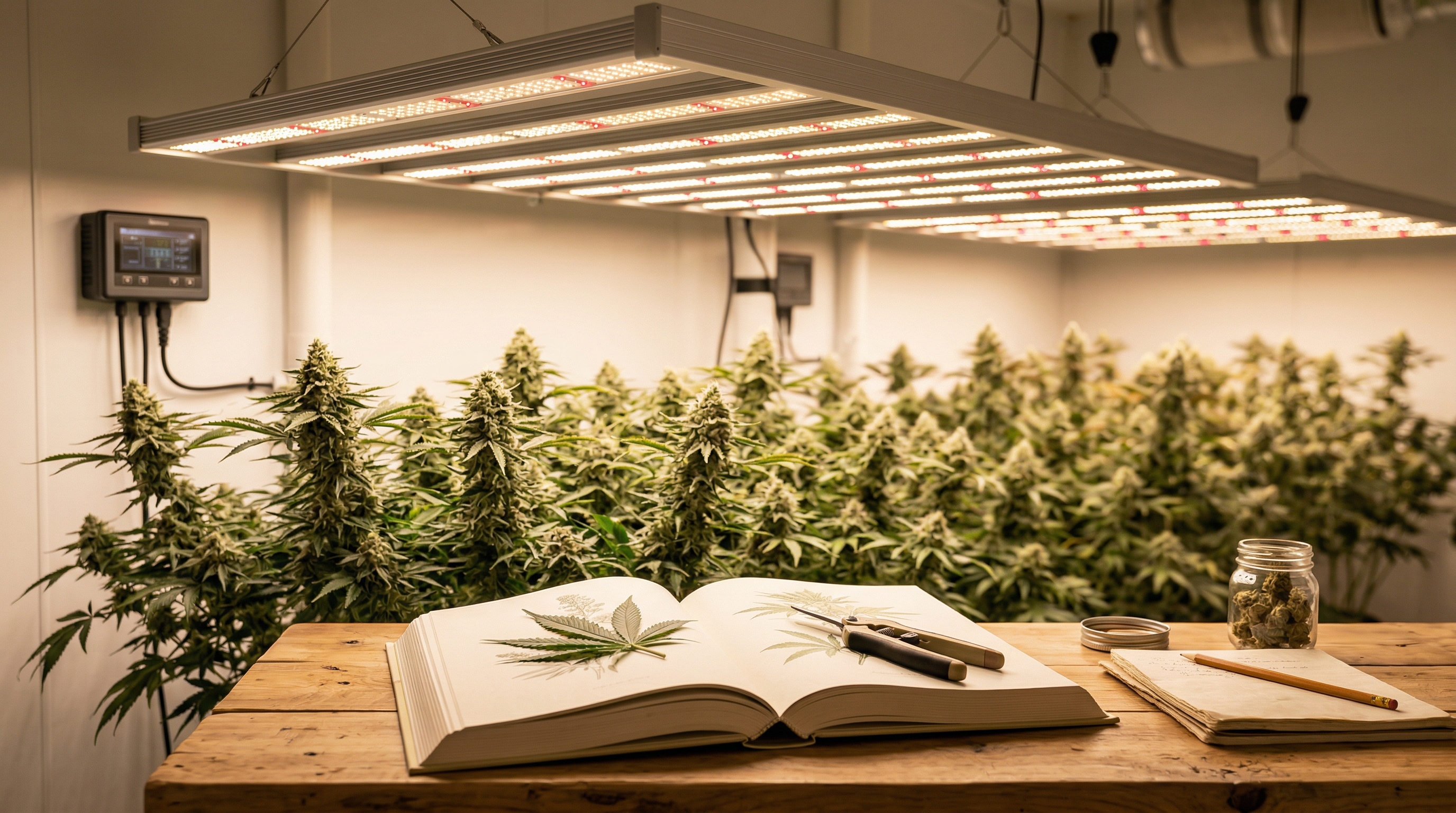
Budget vs. Premium: Where the Money Actually Goes
One of the most common questions: Is it worth spending $700 on an HLG when a $200 light does the job?
The honest answer: it depends on your goals and time horizon.
Budget lights ($100–$300): Brands like Mars Hydro’s TS series and Spider Farmer’s SF-1000/2000 have genuinely excellent components at these price points. You’re getting Samsung diodes, Mean Well (or quality equivalent) drivers, and decent PPFD uniformity. For a hobby grower doing 2–3 grows per year, these lights deliver good results.
Mid-range lights ($300–$600): The Spider Farmer SF-4000, HLG 300L, and AC Infinity Ionboard series sit here. You’re getting higher efficacy (2.7–2.85 µmol/J), better PPFD uniformity across the full coverage area, improved driver reliability, and generally more honest specs. For serious hobbyists, this is the sweet spot.
Premium lights ($600–$1,500+): HLG’s upper tier, Gavita, Fluence. You’re paying for 3.0+ µmol/J efficacy (real electricity savings over thousands of hours), exceptional PPFD uniformity, commercial-grade reliability, and long warranties. The electricity savings alone on a 650W premium LED vs. a 1,000W HPS can recoup the price difference within 12–18 months of regular grows.
The features that actually justify a premium:
- Verified 3.0+ µmol/J efficacy (confirmed by independent testing, not just spec sheets)
- Published PPFD maps with 80%+ uniformity across coverage area
- Passive cooling with no fans (fewer failure points, zero noise)
- Detachable driver (moves heat outside the tent)
- Long warranty (5+ years for mid-range; 10 years for commercial)
Features that do not justify a premium:
- Fancy app connectivity (nice to have, not essential)
- Marketing-only wattage claims (“1000W equivalent” for a 100W light — run)
- RGB color modes marketed as “spectrum control” (gimmick)
- Built-in timers (use a separate heavy-duty outlet timer; it’s more reliable)
The Electricity Math
Here’s the 12-month operating cost comparison for a 4×4 tent, assuming $0.12/kWh and 18hr veg + 12hr flower:
| Light Type | True Wattage | Annual Electricity Cost |
|---|---|---|
| HPS 1000W | 1,100W (with ballast) | ~$725 |
| Old LED (1.8 µmol/J) | 650W | ~$430 |
| Mid LED (2.7 µmol/J) | 450W | ~$295 |
| Premium LED (3.0 µmol/J) | 430W | ~$282 |
Switching from HPS to a modern mid-range LED saves roughly $430 per year in electricity alone. A $450 Spider Farmer SF-4000 pays for itself in energy savings within a single year compared to running HPS.
Common Mistakes That Waste Money and Yields
Understanding what not to do is as valuable as knowing what to buy.
1. Buying by wattage, not efficacy. A 1,000W blurple LED from 2019 will underperform a 400W modern fixture. Always lead with µmol/J.
2. Trusting manufacturer PPFD numbers at face value. Many brands measure PPFD at a single center point under optimal conditions. Look for 5×5 or 3×3 grid maps, or seek out third-party measurements from community testers.
3. Underestimating heat at scale. Even LEDs generate heat, and heat is the enemy of cannabis quality (terpenes degrade rapidly above 80°F). Every 100W of LED generates roughly 340 BTUs. A 600W fixture in a 4×4 tent will require active ventilation and possibly an AC in summer.
4. Hanging the light too close. Light stress — manifesting as bleaching, taco-ing leaves, or foxtailing buds — is common when inexperienced growers try to maximize PPFD. More is not always better. Dial in your PPFD with a meter (or the Photone app) rather than guessing by height.
5. Running full intensity through the entire grow. Seedlings and young plants can’t handle the same PPFD as mature flowering plants. A dimmable light lets you match intensity to growth stage. Run 25–40% for seedlings, 60–70% for veg, and 100% (or close to it) for flower.
6. Ignoring the photoperiod. Your light schedule matters as much as the light itself. Autoflowers run 18–20 hours of light regardless of stage. Photoperiod plants need 18/6 for veg and a strict 12/12 for flower. See our cannabis growing stages guide for the full lifecycle breakdown. Light leaks during the dark period cause hermaphroditism and irregular flowering.
How Light Choice Connects to Your Final High
Here’s what most grow light guides skip entirely: the light you choose influences the chemical profile of what you grow, which directly shapes the experience you’ll have consuming it.
Research is clear that blue-enriched spectra during late flower enhance certain terpene concentrations. This means if you’re growing a strain that lives in the Uplifting High family — where limonene and terpinolene drive energetic, mood-elevating effects — a fixture with a strong blue component or tunable spectrum may enhance exactly the compounds that define that experience.
For strains in the Relaxing High family (myrcene-dominant cultivars), maximizing overall light intensity during flower drives higher total cannabinoid content, which works synergistically with the sedating terpene profile to deepen the relaxing effect.
And for the complex multi-terpene profiles of Entourage High strains, a full-spectrum fixture with supplemental UV during the final two weeks of flower may produce the broadest range of secondary metabolites — exactly the chemical complexity that makes these strains distinctive.
You’re not just growing weed. You’re cultivating a specific experience. The light is part of that process.
Practical Implications: The Decision Framework
When you sit down to buy a grow light, run through these questions in order:
- What size is your tent? This determines your wattage range. Don’t overbuy or underbuy.
- What’s your budget? Mid-range ($300–$600) is the sweet spot for most serious hobbyists. Budget ($150–$300) is fine for beginners. Premium ($600+) only makes sense if you’re maximizing yield as a priority.
- What diodes does it use? Samsung LM301H/B EVO, Osram Oslon SSL, or equivalent — these are the benchmarks. If the manufacturer won’t tell you, that’s your answer.
- What driver? Mean Well or equivalent. Cheap drivers are the most common failure point.
- Is there a published PPFD map? If not, walk away. Any reputable manufacturer publishes these.
- What’s the warranty? Minimum 3 years. Prefer 5+.
- Is it dimmable? In 2026, there’s no excuse for a non-dimmable fixture in the mid-to-premium range.
If a light passes all seven of these checks, you’re looking at a legitimate product. If it fails one, proceed with caution. If it fails multiple, move on.
Key Takeaways
- Efficacy (µmol/J) is the single most important specification. In 2026, aim for at least 2.5 µmol/J. This tells you more about a light than any other number on the spec sheet.
- Full-spectrum white LEDs have won. The red-blue blurple era is over. Modern full-spectrum fixtures with supplemental deep red and optional far-red/UV deliver the best results across all grow stages.
- Light spectrum shapes your harvest’s chemical profile. Blue-enriched light during late flower may enhance terpenes in energizing strains; intensity drives cannabinoids in relaxing ones. Your lighting connects to the High Families experience you’re cultivating.
- Size your light to your space. Target 30–50W of quality LED per square foot of flowering canopy, and always verify with PPFD maps before committing.
- The best picks by tent size:
- 2×2: Spider Farmer SF-1000 or Mars Hydro TS1000
- 3×3: Spider Farmer SF-2000 or HLG 300L Rspec
- 4×4: Spider Farmer SF-4000, Mars Hydro FC-E4800, or HLG 650R
- 5×5: Spider Farmer SE7000 or HLG Scorpion Diablo
- The electricity savings are real. Modern LED cuts energy costs by 50–60% vs. HPS. The fixture pays for itself within one or two grow cycles.
FAQs
Can I use a regular LED bulb from the hardware store?
Technically, cannabis will grow under any light — but standard household LEDs lack the intensity and spectrum optimization for meaningful flower production. They’re fine for keeping a mother plant alive in a pinch, but purpose-built grow LEDs deliver 10–20× the canopy-level PPFD of a household bulb.
How far should I hang my LED above the canopy?
Depends on the fixture’s intensity and your target PPFD, but most manufacturers recommend 12–24 inches during flower and 24–36 inches during veg (or simply dim the light). The best approach: use a PAR meter or the Photone smartphone app to measure PPFD at canopy level and adjust accordingly. Signs of light stress include bleaching at the top colas, leaves “taco-ing” upward, or foxtailing buds.
Do I need different lights for veg and flower?
Not anymore. A quality full-spectrum LED with a dimmer handles the entire lifecycle: run 50–70% during veg at a greater distance, then increase intensity and lower the fixture for flower. Some advanced growers add dedicated UV bars during the last 2–3 weeks of flower, but a single good fixture covers both stages effectively.
Is a PAR meter worth buying?
If you’re serious about optimizing yields, yes. A quantum sensor like the Apogee MQ-500 (~$400) gives precise PPFD readings for dialing in height and intensity. Budget alternative: Photone (iPhone/Android app, ~$15) uses the phone’s front camera and delivers reasonable accuracy for the money — not lab-grade, but sufficient for home growers.
What’s the lifespan of a modern LED grow light?
Quality fixtures using Samsung LM301H or LM301B diodes are rated for 50,000 hours of operation at full output. At 12 hours per day (flower schedule), that’s over 11 years of use before the diodes reach 70% of original output (the industry standard for “end of life”). In practice, the driver typically fails before the diodes. That’s why driver quality (Mean Well) matters as much as LED quality.
Sources
- Bugbee, B. (2016). “Toward an optimal spectral quality for plant growth and development.” Acta Horticulturae. DOI: 10.17660/ActaHortic.2016.1134.1
- McCree, K.J. (1971). “The action spectrum, absorptance and quantum yield of photosynthesis in crop plants.” Agricultural Meteorology, 9, 191–216. DOI: 10.1016/0002-1571(71)90022-7
- Smith, H.L., McAusland, L., & Murchie, E.H. (2017). “Don’t ignore the green light: exploring diverse roles in plant processes.” Journal of Experimental Botany, 68(9), 2099–2110. PMID: 28575474
- Zhen, S., & Bugbee, B. (2020). “Far-red photons have equivalent efficiency to traditional photosynthetic photons.” Plant, Cell & Environment, 43(6), 1479–1491. DOI: 10.1111/pce.13730
- Lydon, J., Teramura, A.H., & Coffman, C.B. (1987). “UV-B radiation effects on photosynthesis, growth and cannabinoid production of two Cannabis sativa chemotypes.” Photochemistry and Photobiology, 46(2), 201–206. PMID: 3628508
- Chandra, S., Lata, H., Khan, I.A., & Elsohly, M.A. (2008). “Photosynthetic response of Cannabis sativa L. to variations in photosynthetic photon flux densities, temperature and CO2 conditions.” Physiology and Molecular Biology of Plants, 14(4), 299–306. PMID: 23572898
- Rodriguez-Morrison, V., Llewellyn, D., & Zheng, Y. (2021). “Cannabis yield, potency, and leaf photosynthesis respond differently to increasing light levels in an indoor environment.” Frontiers in Plant Science, 12, 646020. DOI: 10.3389/fpls.2021.646020
- Magagnini, G., Ferrini, F., & Ferrante, A. (2018). “The effect of light spectrum on the morphology and cannabinoid content of Cannabis sativa L.” Medical Cannabis and Cannabinoids, 1(1), 19–27. DOI: 10.1159/000489030


