Does Medicare Cover CBD in 2026? The $500 Pilot Explained
The CMS CBD initiative isn't a retail reimbursement benefit. Learn who may qualify, how the $500 limit works, and what to ask your care team.

Professor High
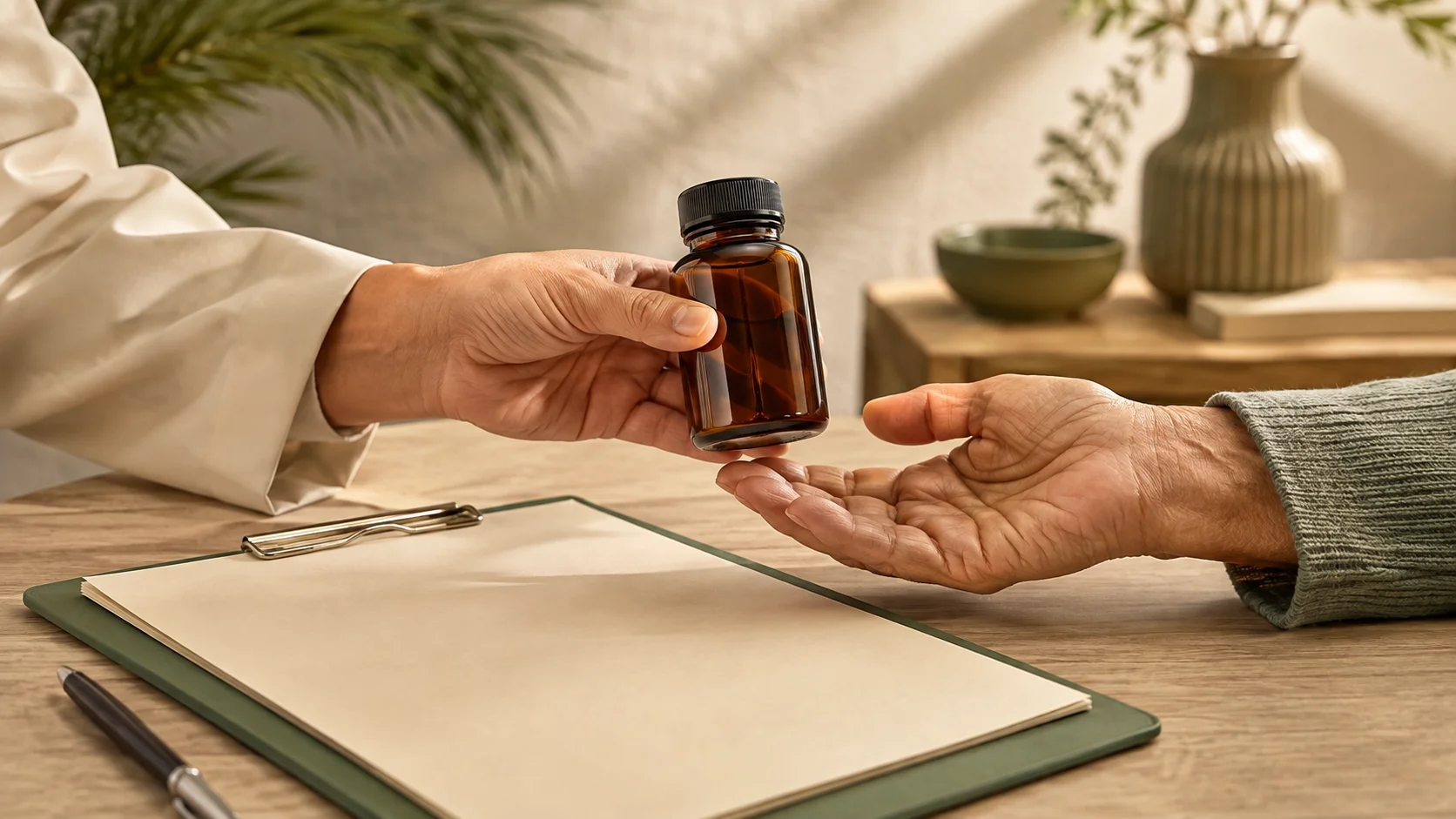
The 2026 CMS hemp initiative does not give every Medicare beneficiary $500 to spend on CBD. Certain participating care organizations can provide eligible products through a limited, clinician-guided program. Medicare does not reimburse those organizations for the products. CMS explicitly describes this as an initiative within selected care models, rather than a Medicare coverage expansion. CMS launch announcement
That difference matters before you buy anything. A headline about “Medicare CBD coverage” can sound like permission to order a bottle and submit the receipt. The actual route starts with your care team.
Policy checked September 7, 2026. This guide concerns the Substance Access Beneficiary Engagement Incentive, not every Medicare plan or cannabis-related insurance question.
What is the Medicare CBD pilot actually called?
Its formal name is the Substance Access Beneficiary Engagement Incentive, usually shortened to Substance Access BEI. “Medicare CBD pilot” is a useful search term, but it can obscure both who pays and who qualifies.
CMS announced the start on April 1, 2026, for the ACO REACH and Enhancing Oncology models. The LEAD model is scheduled to add the option in 2027. Organizations must opt in and receive CMS approval. At launch, CMS reported that five REACH organizations had submitted plans for review; that historical figure is not a September list of approved providers. CMS April 1 announcement
For the REACH pathway, the participating organization pays the product costs. REACH coordinates care for people with Original Medicare; being in Medicare by itself does not establish that your doctors participate in this particular model. CMS ACO REACH model
Who can qualify, and what does $500 mean?
The CMS rules set several gates: alignment with an organization offering the incentive, applicable model eligibility, and a physician’s assessment. General criteria include adulthood, exclusion of pregnancy or breastfeeding, and restrictions involving frailty and specified health conditions. The detailed participation documents determine those restrictions; the public summary is not a self-screening tool.
The annual limit is up to $500 in eligible products per beneficiary, not cash owed to a patient. Products must be furnished directly by a qualified physician affiliated with the participating organization. Buying a retail product and sending in receipts is expressly prohibited under this incentive. CMS eligibility and procurement FAQ
A useful way to approach the program is to ask three different questions:
| Question | What you need to establish |
|---|---|
| Does my care organization offer it? | Actual participation, not a general interest in CBD |
| Am I eligible through that organization? | Your alignment and the model’s patient criteria |
| Is a specific product appropriate for me? | An individual clinical discussion, not eligibility alone |
Those questions belong in that order. Comparing CBD brands before confirming access skips the part most likely to decide whether the program is available to you.
Which hemp products are eligible?
CMS excludes inhaled products, oral products exceeding 3 mg of tetrahydrocannabinols per serving, and products containing cannabinoids outside its natural-production criterion. It also specifies a delta-9 THC ceiling of 0.3%, applicable legal compliance, and independent potency and contaminant testing. These are program boundaries, not a recommended dose. CMS product standards
Ask the care team for the selected product’s ingredients and testing documentation. Our guide to reading cannabis laboratory results explains the difference between what a report measures and what a product label promises.
Do not assume a bottle already in your cupboard qualifies. The relevant question is what the participating organization is authorized and prepared to provide.
Did FDA approve CBD for this program?
FDA issued a separate April 1, 2026 enforcement memo for certain oral hemp-derived CBD products supplied through qualifying physician-directed Medicare settings. It describes conditions under which the agency does not intend to enforce two specified drug-law provisions solely because a product contains CBD. Conditions address manufacturing and labeling, contamination, child-directed presentation, and the clinical setting. FDA enforcement memo
That is an enforcement posture. It does not amount to approval of a bottle’s effectiveness for pain, sleep, or another symptom. Nor does the memo offer a blanket exemption for everything sold online as CBD.
FDA’s approved CBD drug, Epidiolex, has specified seizure indications. Its approval is product- and indication-specific; it cannot be transferred to a retail hemp extract because both contain cannabidiol. FDA cannabis and CBD questions
For your appointment, bring a current medication list and describe what you hope would change. “Sleep through the night” is a clearer discussion starting point than “try wellness products.” Our CBD, THC and prescriptions guide explains why the exact product and your other medicines belong in the same conversation.

Conceptual illustration: bring your current medication list to the discussion; program access does not establish that a particular product suits your treatment.
What to ask your care team before spending money
Use the program’s formal name so the office can distinguish it from a general insurance question:
- “Does your organization currently offer the Substance Access BEI?”
- “Am I aligned with the relevant participating organization?”
- “Who determines eligibility and reviews my medications?”
- “Which product would you provide, and how would follow-up work?”
- “Who should I contact if the product causes a problem?”
Write down the answers. If someone directs you straight to a retail checkout, ask them to explain the connection to this specific program before proceeding.
Frequently asked questions
Is the $500 a reimbursement for CBD I already bought?
No. Under the Substance Access BEI, retail receipts are not the access route. Contact the participating care organization before purchasing anything for this purpose. CMS procurement FAQ
Does the program prove CBD works?
No. CMS says it is evaluating implementation and outcomes and makes no therapeutic claim for these products. Access policy and treatment evidence answer different questions. CMS launch announcement
Is this the same as prescription coverage for Epidiolex?
No. Epidiolex is an FDA-approved prescription medicine with specific indications. If that is the medicine your clinician prescribed, ask your drug plan about that prescription rather than using this hemp-product initiative as a coverage guide. FDA CBD drug information
Where should I check for changes?
Start with the current CMS Substance Access page, then confirm availability with your care team. A dated announcement establishes what was announced; your organization must confirm what it actually offers today.
