The Blood-Brain Barrier and Cannabis: Which Compounds Cross and Why
How does cannabis reach your brain? Explore the science of BBB permeability, why THC crosses easily, how CBD differs, and what terpenes may do.


Why Your Brain Is So Picky About What Gets In
Here’s a wild thought: of the thousands of compounds circulating in your bloodstream at any given moment, your brain only lets a tiny fraction through the door. That door has a name — the blood-brain barrier (BBB) — and it’s one of the most selective bouncers in all of biology.
So when you consume cannabis and feel its effects within minutes, something remarkable is happening. Out of the 500+ identified compounds in the cannabis plant — cannabinoids, terpenes, flavonoids, and more — only certain molecules have the right molecular “VIP pass” to cross that barrier and interact with your brain directly.
Understanding which compounds cross and why isn’t just an academic exercise. It fundamentally explains why different cannabis products feel different, why edibles hit harder than a joint, and why the Entourage High feels so distinct from isolate-based products. It’s the science behind the experience.
In this article, you’ll learn how the blood-brain barrier works, what makes THC such an efficient barrier-crosser, how CBD takes a different path, and what emerging research suggests about terpenes making the journey too. Let’s get into it.
The Science Explained
How the Blood-Brain Barrier Works
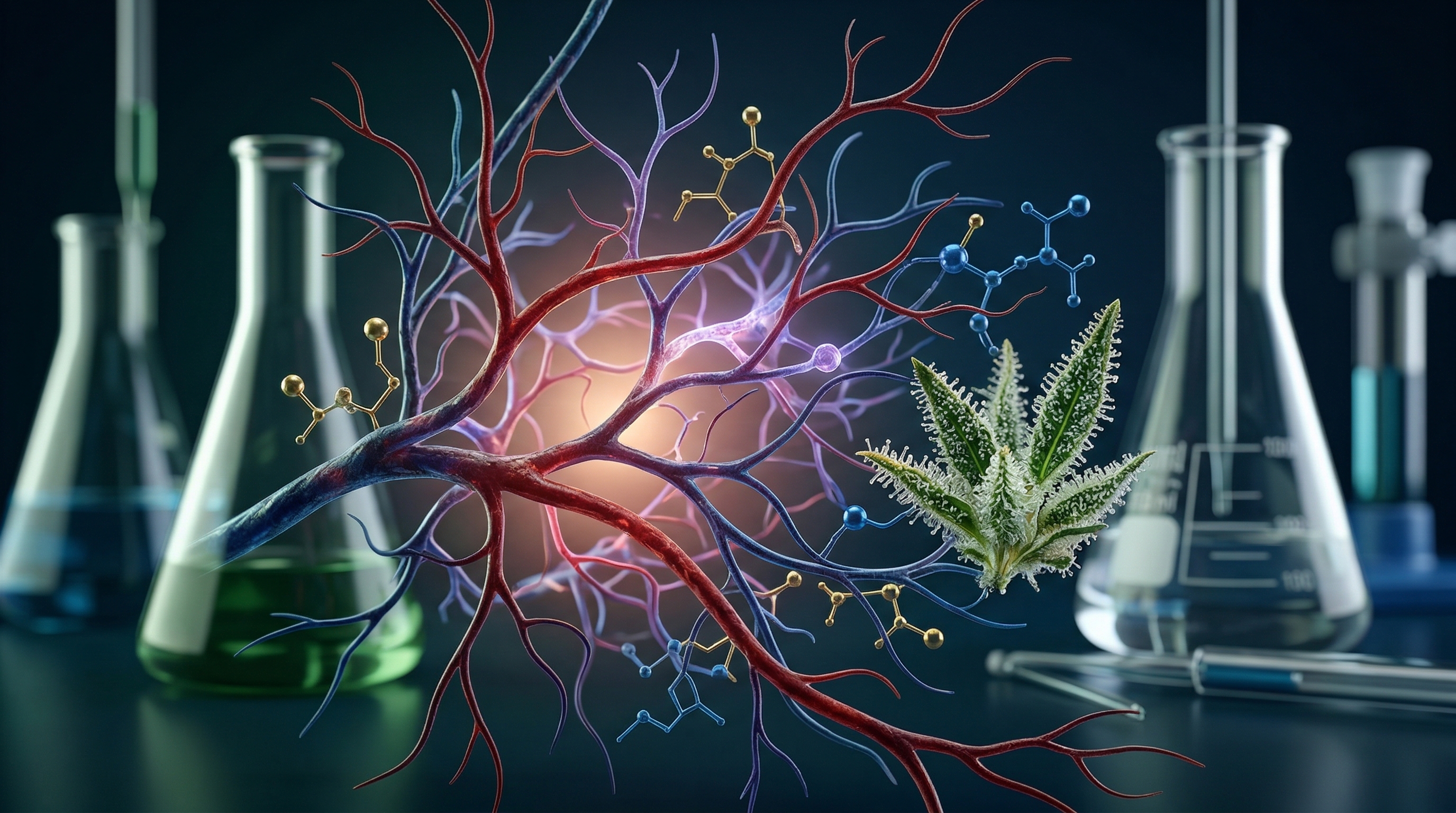
Think of the blood-brain barrier as a wall built from living cells. Unlike blood vessels elsewhere in your body — which have small gaps that let molecules slip through — the capillaries in your brain are lined with endothelial cells packed so tightly together that virtually nothing passes between them. These connections are called tight junctions, and they’re the reason your brain is protected from toxins, pathogens, and most drugs floating around in your blood [Daneman & Prat, 2015].
So how does anything get through? There are a few ways:
- Passive diffusion: Small, fat-soluble (lipophilic) molecules can dissolve right through the cell membranes. No special transport needed — they just melt through.
- Active transport: The barrier has specialized protein “shuttles” that carry essential molecules like glucose and amino acids across.
- Receptor-mediated transport: Larger molecules like insulin bind to specific receptors that pull them through.
For cannabis compounds, passive diffusion is the main route. And this is where molecular chemistry starts to matter a lot.
What Makes THC So Good at Crossing
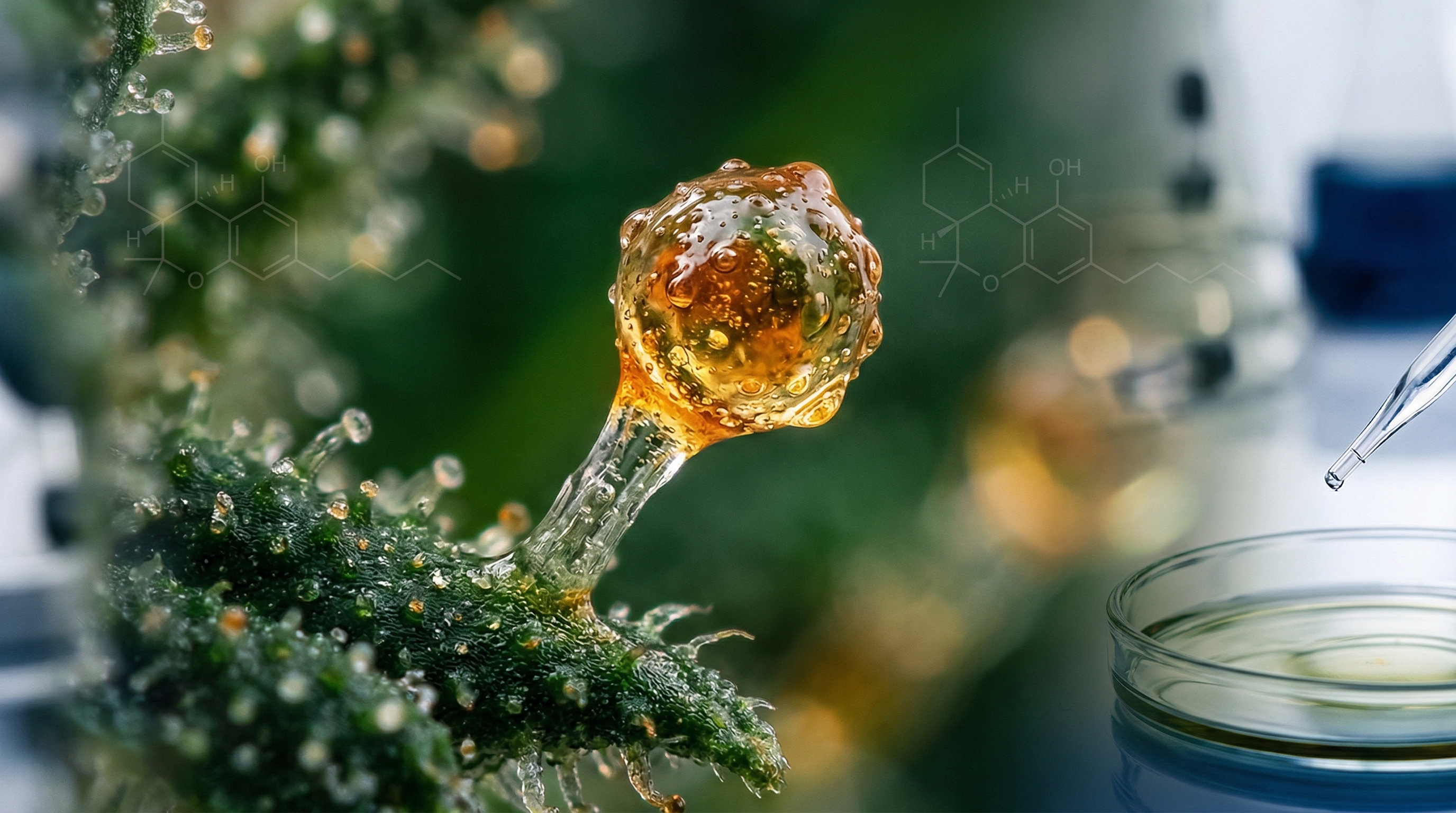
THC (Δ9-tetrahydrocannabinol) is remarkably well-suited to cross the BBB. It’s highly lipophilic — meaning it loves fat — with a logP value around 7, making it one of the more fat-soluble drug compounds known [Thomas et al., 1990]. Since cell membranes are essentially made of fat (phospholipid bilayers), THC slides through them with ease.
THC is also relatively small, with a molecular weight of about 314 g/mol — well under the roughly 400-500 g/mol threshold that typically limits passive diffusion across the BBB [Pardridge, 2012]. Combine high lipophilicity with low molecular weight, and you get a compound that reaches the brain rapidly — often within seconds when inhaled.
Once across, THC binds to CB1 receptors, which are densely concentrated in brain regions governing mood, memory, coordination, and perception. This is why THC produces its characteristic psychoactive effects.
How CBD Takes a Different Path
CBD (cannabidiol) has a nearly identical molecular weight and similar lipophilicity to THC — so yes, it crosses the blood-brain barrier too [Millar et al., 2018]. But the experience is dramatically different because of what happens after it crosses.
CBD has very low binding affinity for CB1 receptors. Instead, it appears to act as a negative allosteric modulator — essentially changing the shape of the CB1 receptor so that THC can’t bind as effectively [Laprairie et al., 2015]. It also interacts with serotonin receptors (5-HT1A), TRPV1 ion channels, and the endocannabinoid system’s own signaling molecules.
This is why CBD doesn’t produce a “high” but may modulate how THC’s high feels — and why products with balanced THC:CBD ratios often produce a smoother, more controlled experience. If you’ve ever noticed that a Balancing High strain feels gentler, this receptor-level interplay is a big part of the reason.
Do Terpenes Cross the Barrier?
This is where the science gets genuinely exciting — and genuinely uncertain. Terpenes like myrcene, limonene, and linalool are small, volatile, lipophilic molecules. On paper, they have the right physical properties to cross the BBB via passive diffusion [Russo, 2011].
Some early evidence supports this. A 2021 study found that certain terpenes appeared to modulate cannabinoid receptor activity in brain tissue, suggesting they do reach the central nervous system [LaVigne et al., 2021]. Myrcene, in particular, has been hypothesized to increase BBB permeability — potentially allowing other compounds to cross more easily — though this claim remains debated and under-studied.
Important caveat: Much of the terpene-BBB research comes from animal models or in vitro studies. We don’t yet have robust human clinical data confirming exactly how much of each terpene reaches the brain after cannabis consumption, or at what concentrations they become pharmacologically active.
Still, this is the mechanistic foundation for the entourage effect — the idea that cannabis compounds work better together than in isolation. If terpenes do cross the BBB and modulate receptor activity, it would help explain why the Entourage High — driven by complex, multi-terpene profiles — feels qualitatively different from pure THC.

Practical Implications
What This Means for Your Cannabis Experience
Understanding BBB permeability helps explain several things you may have already noticed:
Why inhalation hits fast: When you smoke or vape, THC enters the bloodstream through the lungs and reaches the brain in as little as 10-20 seconds. There’s minimal first-pass metabolism — the compound crosses the BBB largely intact.
Why edibles feel different: When consumed orally, THC passes through the liver first, where it’s converted into 11-hydroxy-THC — a metabolite that’s even more potent at crossing the BBB and activating CB1 receptors [Huestis, 2007]. This is why edibles can feel stronger and longer-lasting, not just slower.
Why full-spectrum matters: If terpenes do cross the BBB and influence receptor activity, then the difference between a full-spectrum extract and a THC isolate isn’t just marketing — it’s pharmacology. This aligns with the High Families approach, which classifies cannabis experiences by terpene chemistry rather than the outdated indica/sativa binary.
For example, strains in the Relaxing High family are rich in myrcene — the very terpene hypothesized to enhance BBB permeability. Whether that contributes to the deep, full-body relaxation people report is an open and fascinating question.
Actionable Takeaways for Consumers
- Choose full-spectrum products when possible if you want the potential benefits of multiple BBB-crossing compounds working together
- Respect edibles — 11-hydroxy-THC’s enhanced BBB penetration is why “start low, go slow” isn’t just a saying, it’s neuropharmacology
- Pay attention to terpene profiles — they may be doing more in your brain than we currently understand
Key Takeaways
- The blood-brain barrier is a selective filter that only allows small, fat-soluble molecules to pass through via passive diffusion — and THC is almost perfectly designed for this
- CBD crosses the BBB too, but its effects differ because it interacts with different receptor targets than THC
- Terpenes likely cross the barrier based on their molecular properties, though human clinical evidence is still limited
- Consumption method matters: inhalation delivers THC directly to the brain, while oral consumption creates 11-hydroxy-THC, a more potent BBB-crossing metabolite
- The entourage effect may have a BBB-level explanation — multiple compounds crossing together and interacting at brain receptors
FAQs
Does CBD cross the blood-brain barrier?
Yes. CBD has similar lipophilicity and molecular weight to THC, so it crosses the BBB via passive diffusion. However, it doesn’t bind strongly to CB1 receptors, which is why it doesn’t produce psychoactive effects. Instead, it appears to modulate how other compounds — including THC — interact with brain receptors.
Why do edibles feel so much stronger than smoking?
When you eat cannabis, your liver converts THC into 11-hydroxy-THC, a metabolite that crosses the blood-brain barrier more efficiently and binds to CB1 receptors more potently than regular THC [Huestis, 2007]. This metabolic conversion is why edibles can produce more intense and longer-lasting effects.
Can terpenes affect your brain directly?
Early research suggests yes — terpenes like myrcene, limonene, and linalool are small and fat-soluble enough to cross the BBB. Some studies show they may modulate cannabinoid receptor activity in brain tissue [LaVigne et al., 2021]. However, more human research is needed to confirm concentrations and clinical significance.
Is the blood-brain barrier the same for everyone?
Not exactly. BBB permeability can vary based on age, inflammation, certain medical conditions, and other factors. This may partially explain why the same cannabis product can affect different people differently, though genetics, tolerance, and endocannabinoid system variation also play major roles.
Sources
- Daneman, R. & Prat, A. (2015). “The Blood-Brain Barrier.” Cold Spring Harbor Perspectives in Biology, 7(1), a020412. DOI: 10.1101/cshperspect.a020412
- Huestis, M.A. (2007). “Human Cannabinoid Pharmacokinetics.” Chemistry & Biodiversity, 4(8), 1770-1804. PMID: 17712819
- Laprairie, R.B. et al. (2015). “Cannabidiol is a negative allosteric modulator of the cannabinoid CB1 receptor.” British Journal of Pharmacology, 172(20), 4790-4805. DOI: 10.1111/bph.13250
- LaVigne, J.E. et al. (2021). “Cannabis terpenes produce cannabimimetic behavioral effects in mice.” Scientific Reports, 11, 8232. DOI: 10.1038/s41598-021-87740-8
- Millar, S.A. et al. (2018). “A Systematic Review on the Pharmacokinetics of Cannabidiol in Humans.” Frontiers in Pharmacology, 9, 1365. DOI: 10.3389/fphar.2018.01365
- Pardridge, W.M. (2012). “Drug Transport across the Blood-Brain Barrier.” Journal of Cerebral Blood Flow & Metabolism, 32(11), 1959-1972. DOI: 10.1038/jcbfm.2012.126
- Russo, E.B. (2011). “Taming THC: potential cannabis synergy and phytocannabinoid-terpenoid entourage effects.” British Journal of Pharmacology, 163(7), 1344-1364. PMID: 21749363
- Thomas, B.F. et al. (1990). “Comparative receptor binding analyses of cannabinoid agonists and antagonists.” Journal of Pharmacology and Experimental Therapeutics, 255(2), 531-538. PMID: 2173751


