The Cannabis Beginner's Dosing Chart: How Much THC Is Right for You?
A beginner dosing chart compares milligrams across edibles, tinctures, and inhaled use. Edible timing and the first-session feel live in separate guides.

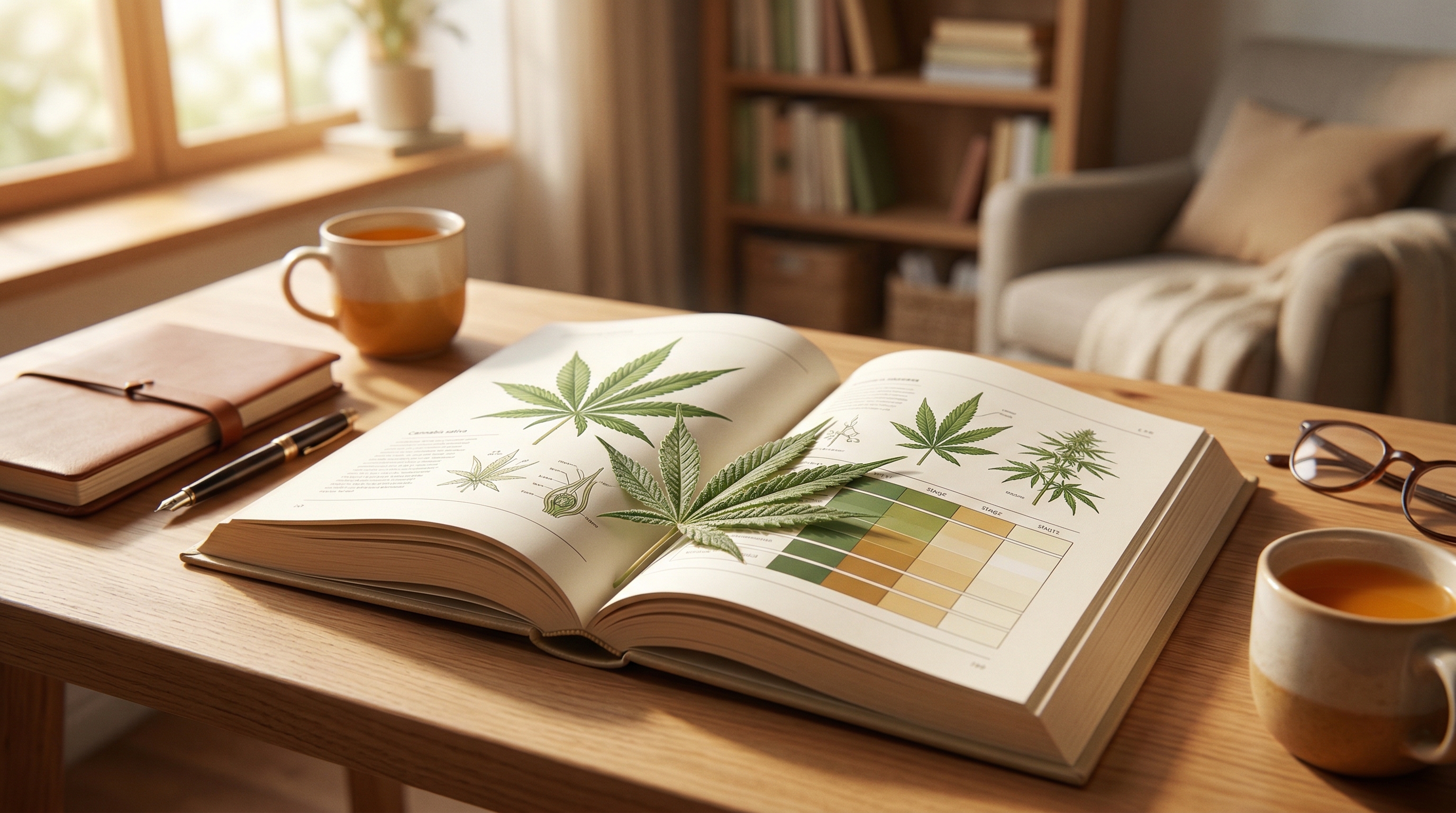
A beginner dosing chart compares milligrams across edibles, tinctures, and inhaled use. A number on this page is not a promise that the dose is right for you. Swallowed edible timing, including why two hours is not a signal to take more, is in the edible dosing for beginners guide. What a first session can feel like is in the first-time cannabis guide.
Why This Matters
If you’ve ever wondered, “How much should I actually take?”—you’re asking exactly the right question. It’s one of the smartest things a new cannabis consumer can do, and yet it’s one of the least talked-about topics at the dispensary counter.
Too little, and you might think cannabis doesn’t work for you. Too much, and you could end up with an uncomfortable experience that puts you off entirely. The sweet spot is personal, and finding it doesn’t have to be a guessing game.
Controlled clinical research supports what experienced consumers have long known: THC dose matters enormously. A 2020 study published in Drug and Alcohol Dependence found that infrequent cannabis users given 10 mg THC orally experienced noticeable subjective drug effects and elevated heart rate—but no impairment of cognitive or psychomotor performance. At 25 mg and 50 mg, those same users showed marked cognitive impairment. The takeaway: even small milligram differences produce meaningfully different experiences, especially for people without tolerance.
In this guide, you’ll get a clear dosing chart, learn how different consumption methods change the equation, and walk away with a step-by-step approach to finding your ideal dose—safely and enjoyably.
The Basics
What You Need to Know
THC (tetrahydrocannabinol) is the primary compound in cannabis responsible for the “high” feeling. But here’s what most people don’t realize: the amount of THC you consume matters far more than the strain name on the package.
Your ideal dose depends on several personal factors:
- Body weight and metabolism — people under 130 lbs may feel effects from doses that barely register for heavier individuals
- Prior cannabis experience — your endocannabinoid system adapts over time; tolerance builds with regular use
- Consumption method — smoking, edibles, and tinctures all hit differently (more on this below)
- Your unique biology — some people are genetically more sensitive to THC [Hartman et al., 2015]
- Mindset and setting — your environment and mood influence how you experience any dose
One important concept to understand: THC has a biphasic dose-response. This means low doses and high doses can produce opposite effects. Research published in Psychopharmacology found that 7.5 mg oral THC reduced stress and anxiety, while just 12.5 mg—barely 5 mg more—actually increased negative mood in the same subjects. This isn’t a quirk; it’s a core feature of how cannabis interacts with the body.
For research purposes, the National Institute on Drug Abuse (NIDA) defines a standard unit of THC as 5 mg. This isn’t a dosing recommendation—it’s simply the benchmark scientists use to compare study results. Many dispensary products still default to 10 mg as their “standard” serving, which is two standard units—a meaningful amount for someone without tolerance.
The golden rule of cannabis dosing is “start low, go slow.” You can always take more, but you can never take less. This isn’t a cliché—it’s genuinely the best harm reduction advice in cannabis.
Key Terms Glossary
| Term | Simple Definition |
|---|---|
| THC | The main psychoactive compound in cannabis that produces the high |
| CBD | A non-intoxicating compound that may soften THC’s intensity |
| Milligram (mg) | The unit used to measure THC dose, especially in edibles and tinctures |
| Microdose | A very small dose (1–2.5 mg THC) designed for subtle effects |
| Tolerance | Your body’s reduced response to THC after repeated use |
| Onset time | How long it takes to feel the effects after consuming |
| Endocannabinoid system | Your body’s built-in system of receptors that interacts with cannabis compounds |
| Bioavailability | The percentage of THC your body actually absorbs from a given method |
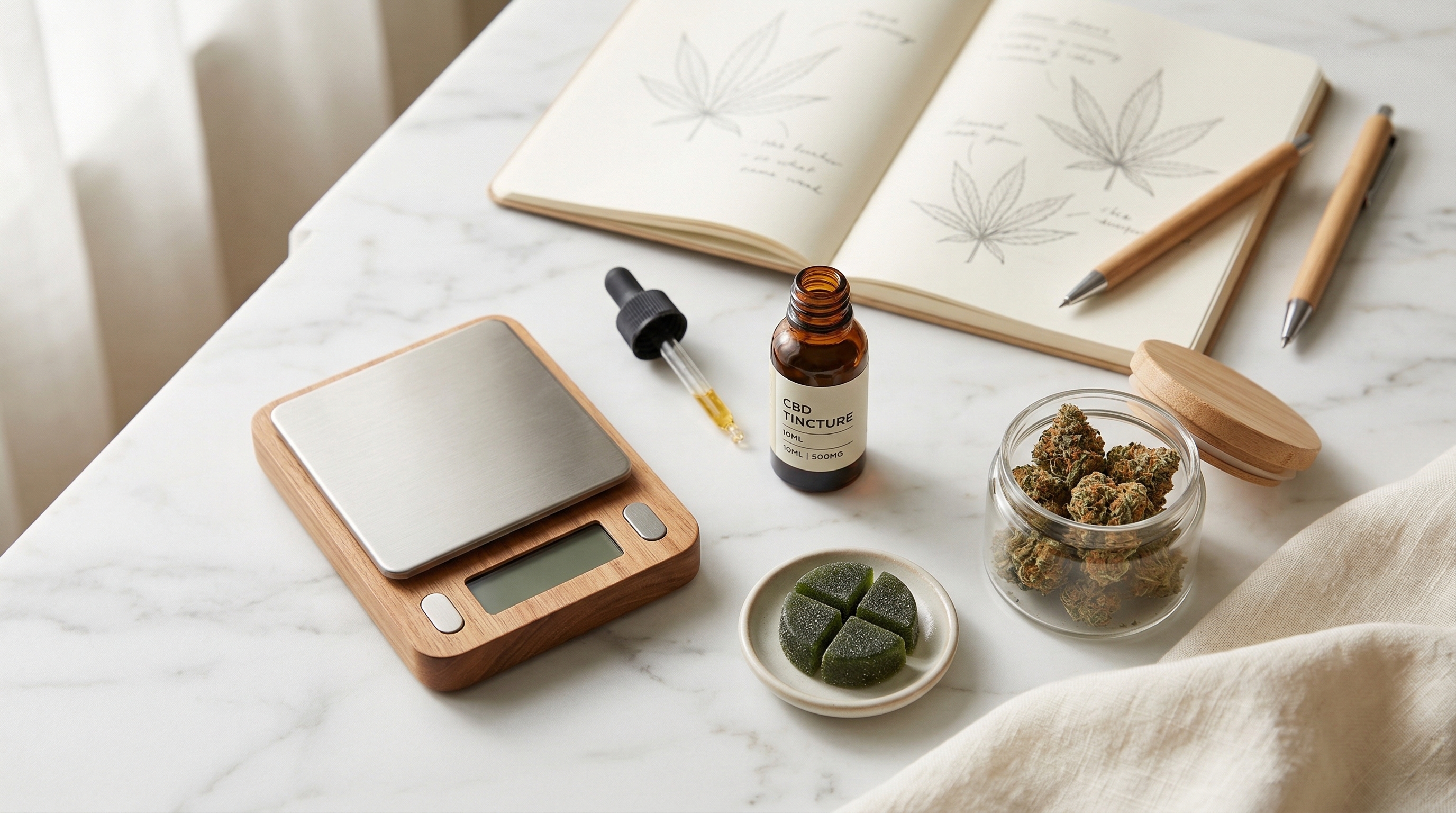
The THC Dosing Chart
Here’s a general framework based on THC milligrams. This applies most directly to edibles and tinctures, where dosing is precise. We’ll cover inhalation separately below.
| Dose Level | THC Amount | Typical Experience | Best For | Duration (edibles) |
|---|---|---|---|---|
| Microdose | 1–2.5 mg | Subtle mood lift, mild focus, minimal intoxication | First-timers, daytime functionality | 2–4 hours |
| Low dose | 2.5–5 mg | Gentle relaxation, light euphoria, mild relief | Beginners, social settings | 4–6 hours |
| Moderate dose | 5–10 mg | Noticeable high, stronger body effects, possible impairment | Occasional users with some tolerance | 4–8 hours |
| High dose | 10–20 mg | Intense euphoria, significant impairment likely | Experienced users only | 6–10 hours |
| Very high dose | 20–50 mg | Strong sedation, high risk of anxiety in low-tolerance users | High-tolerance users only | 8–12 hours |
| Do not attempt | 50+ mg | Extreme effects; reserved for experienced medical patients | Medical use under guidance | 8–12+ hours |
Key takeaway: If you’re brand new to cannabis, start at 2.5 mg of THC or less. Most people new to edibles should treat 10 mg as a high dose—not a starting point.
Body Weight as a Starting Reference
Body weight isn’t the only factor, but it can serve as a rough starting point before you know your tolerance:
| Body Weight | Suggested Starting Dose | Suggested Low Dose |
|---|---|---|
| Under 130 lbs | 1–2.5 mg | 2.5–5 mg |
| 130–175 lbs | 2.5–5 mg | 5–10 mg |
| 175–225 lbs | 5–7.5 mg | 7.5–15 mg |
| 225+ lbs | 5–10 mg | 10–20 mg |
These are starting points, not prescriptions. Your actual response may differ significantly based on tolerance, metabolism, and prior experience.
Keep in mind that products with CBD alongside THC may produce a more balanced, less anxious experience. If you’re curious about gentler introductions, our Balancing High family features strains and products with milder, beginner-friendly profiles.
Step-by-Step: Finding Your Ideal Dose
Step 1: Choose Your Consumption Method
Your method determines how fast effects hit and how long they last. This matters enormously for dosing.
| Method | Onset Time | Duration | Dosing Precision |
|---|---|---|---|
| Inhalation (smoking/vaping) | 1–5 minutes | 1–3 hours | Moderate (take one puff, wait) |
| Edibles | 30–90 minutes | 4–8 hours | High (labeled in mg) |
| Tinctures (under tongue) | 15–45 minutes | 3–6 hours | Very high (measured dropper) |
| Topicals | 15–30 minutes | 2–4 hours | N/A (non-intoxicating) |
For beginners, tinctures offer the best combination of precise dosing and reasonable onset time. Edibles are precise too, but their long onset can tempt you into taking more before the first dose kicks in.
Inhalation-Specific Dosing Reference
If you’re starting with flower or a vape pen, use these rough guidelines. Note that THC percentage on flower packaging refers to the concentration in the plant material—your actual absorbed dose per puff will be much lower.
| Flower THC % | Beginner Starting Point | Notes |
|---|---|---|
| 10–15% THC | 1–2 small puffs | Lower-potency strains are ideal for beginners |
| 16–20% THC | 1 small puff | Wait 15 min before considering more |
| 21–25% THC | Half a puff to 1 puff | High-potency—proceed with extra caution |
| 25%+ THC | Not recommended for beginners | Very high risk of overconsumption |
Vape pens labeled by THC percentage work similarly—a short, 2–3 second draw is a good starting unit. Count your draws, note the percentage, and give it 10–15 minutes between puffs.
Step 2: Start With a Microdose
Begin with 1–2.5 mg of THC. Yes, that’s a tiny amount. That’s the point. Many edible gummies come in 5 mg or 10 mg pieces—cut them in half or quarters.
If you’re inhaling, take one small puff and wait at least 15 minutes before considering another. For flower, one gram of cannabis at 20% THC contains roughly 200 mg of total THC—but bioavailability through inhalation is far less than 100%, and a typical puff delivers only a few milligrams. This is why “start with one puff” is sound advice, not timidity.
Step 3: Wait the Full Onset Window
This is where patience pays off.
- Inhaling? Wait at least 15 minutes before taking another puff.
- Edibles? Wait a full 2 hours. Not 45 minutes. Not “I don’t feel anything yet.” Two full hours.
Your body needs time to metabolize THC, especially with edibles, where it’s converted to 11-hydroxy-THC in the liver—a compound that’s actually more potent than regular THC [Huestis, 2007].
Step 4: Journal Your Experience
Keep a simple log. Note:
- Product name and THC/CBD content
- Dose in mg (or number of puffs)
- Time consumed
- When you first felt effects
- How you felt at 1 hour, 2 hours, and the next morning
This data is gold. Within a few sessions, you’ll have a personal dosing blueprint.

Step 5: Adjust Gradually
If your first session was underwhelming, increase by 1–2.5 mg next time. If it was too intense, drop back down. There’s no rush. Your High Family preference will become clearer as you experiment—some people gravitate toward the mood-lifting Uplifting High, while others prefer the deep calm of the Relaxing High.
Common Mistakes to Avoid
1. The “I Don’t Feel Anything” Redose
Swallowed edibles can still be developing after two hours. This chart does not repeat that timing lesson. Use the edible dosing for beginners guide before you take another piece.
2. Comparing Yourself to Experienced Friends
Your friend who takes 25 mg edibles has built tolerance over months or years. Their dose would likely be overwhelming for you. Your body, your pace.
3. Ignoring CBD Ratios
A product with a 1:1 THC-to-CBD ratio will feel very different from a THC-only product at the same milligram count. CBD may moderate some of THC’s intensity, making it a great training wheel for beginners [Russo, 2011].
4. Forgetting That Inhalation Doses Are Hard to Measure
When you smoke or vape flower, you don’t know exactly how many milligrams you’re getting per puff. This is normal—just go slow and count your puffs for consistency.
5. Consuming on an Empty Stomach
Like many substances, cannabis—especially edibles—can hit harder and faster without food. Having a light meal beforehand can lead to a smoother, more predictable experience.

Frequently Asked Questions
What if I take too much THC?
Stop and use the guide to coming down. This chart does not teach a rescue method. The question of a fatal overdose is covered in can you overdose on weed.
How long should I wait between cannabis sessions as a beginner?
There’s no hard rule, but spacing sessions 2–3 days apart early on helps you evaluate each experience clearly and keeps your tolerance from building too quickly.
Are edibles really that different from smoking?
Yes. The liver route and the delayed full effect are explained in the edible dosing for beginners guide. Use that page for timing. Use this chart for milligrams.
Can I mix cannabis with alcohol?
This is generally not recommended, especially for beginners. Alcohol can increase THC absorption and intensify effects unpredictably. If you’re learning your cannabis dose, keep the variables simple—skip the drink.
Is 10 mg a lot for a beginner?
For most beginners, yes. Despite 10 mg being a “standard” edible dose in many legal markets, research and anecdotal experience suggest that 2.5–5 mg is a much better starting point for people without tolerance [MacCallum & Russo, 2018].
Key Takeaways
- 2.5 mg is the universal beginner’s starting dose for edibles and tinctures—not 5 mg, not 10 mg.
- THC has a biphasic dose-response: low doses can relax; high doses can cause anxiety. More is not always better.
- Edibles are not smoking. When cannabis is digested, THC converts to 11-hydroxy-THC in the liver—a more potent compound that produces stronger, longer-lasting effects. Always wait 2 full hours before redosing.
- The “I don’t feel anything” trap is the most common beginner mistake. Patience is part of the dose.
- Your journal is your best tool. Within 5–10 sessions, you’ll have a reliable personal blueprint.
- CBD alongside THC may moderate intensity—a great choice for anxiety-prone beginners.
- Method matters as much as milligrams. The same person can feel very different effects from 5 mg smoked versus 5 mg eaten.
Next Steps
You now have a dosing framework, a step-by-step process, and the confidence to experiment safely. Here’s where to go from here:
- Understand your body’s cannabis receptors — read our deep-dive on anandamide, your body’s natural THC, to understand why everyone responds differently.
- Find beginner-friendly strains — our Best Cannabis Strains for Beginners guide pairs strain recommendations with dosing advice.
- Explore the High Families to understand what kind of experience you’re looking for—whether that’s energized creativity or deep relaxation.
- Keep your journal going for at least 5–10 sessions. Patterns will emerge.
- Talk to your budtender armed with your dosing notes. They can make much better recommendations when you say “I liked 5 mg of a 1:1 tincture” versus “I want something strong.”
Cannabis is a journey, not a destination. Go at your own pace, trust your body, and enjoy the process of discovering what works for you.
Sources
- Schlienz, N.J. et al. (2020). “Pharmacodynamic dose effects of oral cannabis ingestion in healthy adults who infrequently use cannabis.” Drug and Alcohol Dependence, 211, 107969. PMID: 32298998. Full text via NIH
- Childs, E. et al. (2017). “Dose-related effects of delta-9-THC on emotional responses to acute psychosocial stress.” Psychopharmacology, 234(14), 2207–2217. PMID: 28599212. PMC6349031
- Trachootham, D. (2023). “An Individuality of Response to Cannabinoids: Challenges in Safety and Efficacy of Cannabis Products.” Molecules, 28(6), 2791. MDPI
- Hartman, R.L. et al. (2015). “Cannabis Effects on Driving Lateral Control With and Without Alcohol.” Drug and Alcohol Dependence. PMID: 25735501
- Huestis, M.A. (2007). “Human Cannabinoid Pharmacokinetics.” Chemistry & Biodiversity. PMID: 17712819
- MacCallum, C.A. & Russo, E.B. (2018). “Practical considerations in medical cannabis administration and dosing.” European Journal of Internal Medicine. PMID: 29307505
- Russo, E.B. (2011). “Taming THC: potential cannabis synergy and phytocannabinoid-terpenoid entourage effects.” British Journal of Pharmacology. PMID: 21749363
- Eastman, A. (2025). THC dosage guide. See https://www.goodrx.com/health-topic/cannabis/how-much-thc-dosage
- Leafly (2025). Edible dosing chart. See https://www.leafly.com/learn/consume/edibles/edible-dosing


