Understanding Limonene: The Citrus Terpene That Elevates Your High
Discover how limonene, the citrus terpene in cannabis, may boost mood, reduce stress, and create uplifting experiences. Science-backed exploration inside.

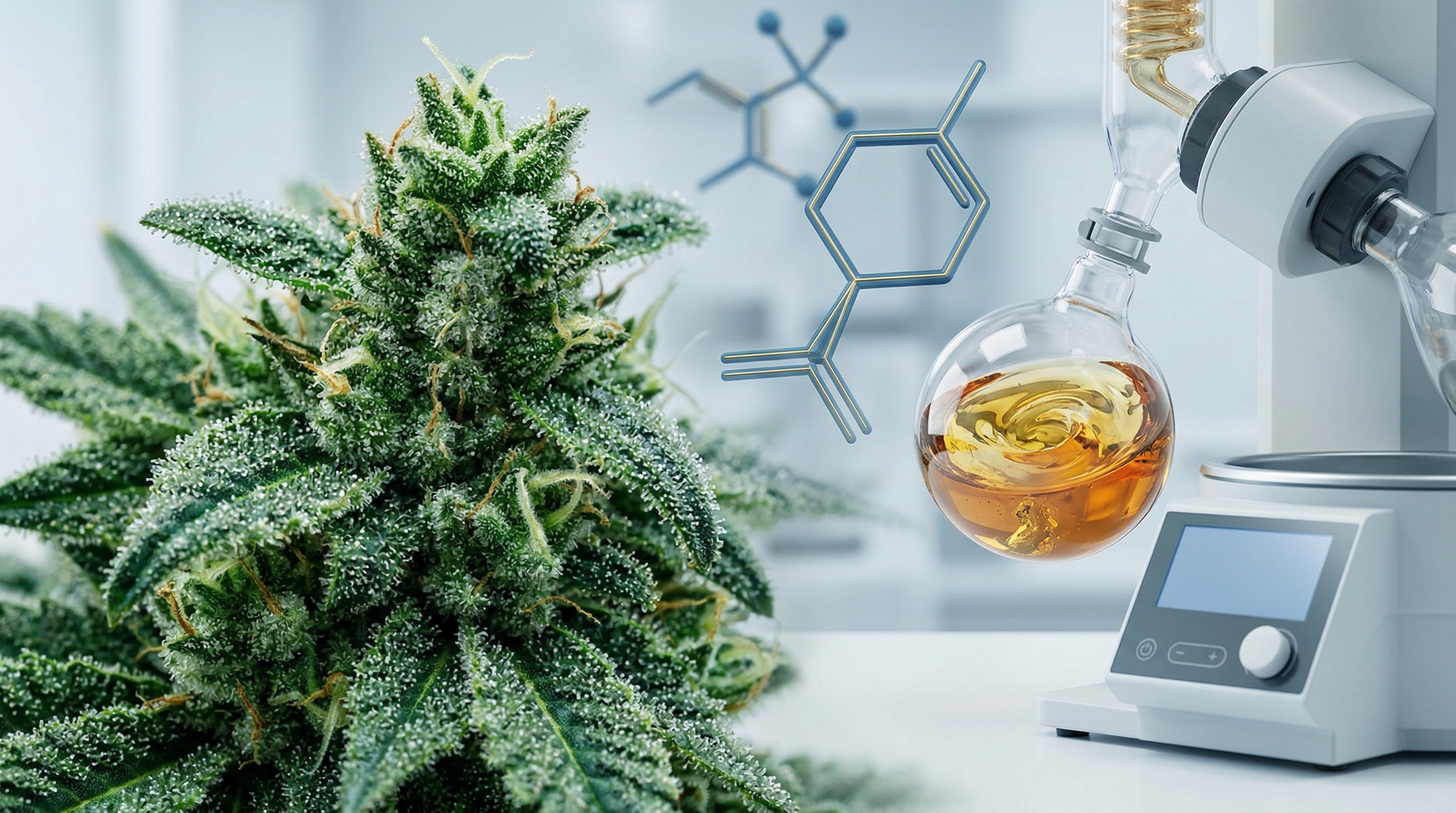
The Scent That Shifts Your Mood
You know that burst of brightness when you peel an orange? That instant lift in your spirits as citrus oil mists into the air? That’s limonene at work—and it’s doing far more than just smelling good.
Limonene is one of the most abundant terpenes in the cannabis plant, responsible for those unmistakable lemon, lime, and grapefruit notes in strains like Super Lemon Haze and Tangie. But here’s what makes it fascinating: this tiny molecule may be one of the reasons certain strains make you feel energized, social, and genuinely good.
While THC often gets all the credit for cannabis effects, researchers are increasingly discovering that terpenes like limonene play a crucial supporting role. They don’t just create flavor profiles—they may actually shape your entire experience.
In this deep dive, we’ll explore what limonene actually does in your body, what the research tells us about its potential benefits, and how understanding this citrus terpene can help you choose strains that match the experience you’re seeking.
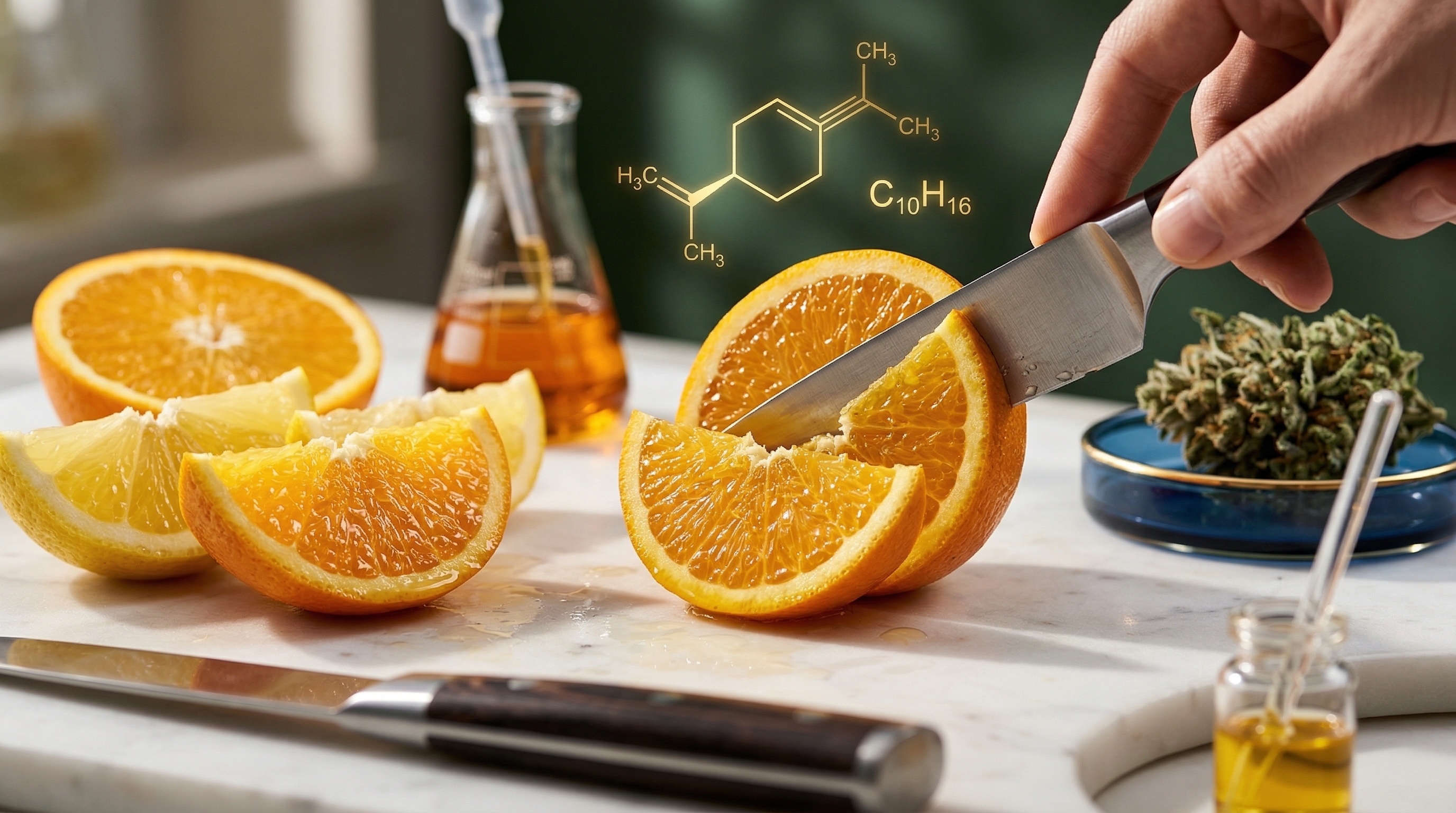
The Science Explained
How Limonene Works in Your Body
Imagine your nervous system as a complex switchboard, with countless receptors waiting to receive signals. When you inhale cannabis vapor or smoke, limonene molecules travel directly through your lungs into your bloodstream, reaching your brain within seconds.
Once there, limonene appears to interact with several key systems. Think of it like a skilled musician who can play multiple instruments—limonene doesn’t just hit one note, it creates harmony across different biological pathways.
The serotonin connection: Research suggests limonene may influence serotonin receptors, the same targets affected by many mood-regulating medications [Komiya et al., 2006]. This could explain why citrus-forward strains often produce that characteristic “sunny” feeling.
The adenosine pathway: Limonene also appears to modulate adenosine receptors, which play a role in how alert or relaxed we feel [Zhou et al., 2009]. This dual action—mood elevation plus gentle stimulation—is what makes limonene-rich strains popular for daytime use.
The entourage effect: Perhaps most importantly, limonene doesn’t work in isolation. It may enhance how other cannabinoids interact with your endocannabinoid system, potentially increasing the absorption and effectiveness of THC and CBD [Russo, 2011]. This synergistic relationship is called the entourage effect, and it’s why whole-plant cannabis often feels different than isolated compounds.
What the Research Shows
The science of cannabis terpenes has taken a major leap forward. While earlier studies relied on animal models, we now have human clinical trial data that validates what cannabis consumers have long suspected.
The Johns Hopkins 2024 Breakthrough: In a landmark double-blind, placebo-controlled study, researchers at Johns Hopkins University tested vaporized limonene with THC in 20 healthy adults [Spindle et al., 2024]. The results were striking: when participants received 30mg THC with 15mg limonene, they reported significantly reduced anxiety and paranoia compared to THC alone—while the desired effects like euphoria and relaxation remained intact. This is the first clinical evidence of the entourage effect in humans.
Earlier animal research: A 2013 study found that limonene vapor significantly reduced anxiety-like behaviors in mice, with effects comparable to some anti-anxiety medications [Lima et al., 2013]. The Johns Hopkins human trial now validates these earlier findings.
Anti-inflammatory potential: Multiple studies suggest limonene possesses anti-inflammatory properties [d’Alessio et al., 2013]. Inflammation plays a role in many conditions, from physical discomfort to mood disorders, which may partly explain limonene’s wide-ranging reported benefits.
Absorption enhancement: Here’s where it gets particularly interesting for cannabis consumers. Research indicates limonene may increase the permeability of cell membranes, potentially allowing other compounds—like cannabinoids—to be absorbed more efficiently [Sapra et al., 2008]. This could mean that limonene-rich strains deliver a more pronounced effect than their THC percentage alone would suggest.
Practical Implications
Finding Limonene-Rich Strains
Understanding limonene’s potential benefits is one thing—actually finding strains that contain meaningful amounts is another. Here’s how to put this knowledge into practice.
Check lab results: Many dispensaries now provide terpene profiles alongside cannabinoid percentages. Look for limonene listed in the top three terpenes, ideally at concentrations above 0.5%. Strains like Wedding Cake, Do-Si-Dos, and Strawberry Banana often test high in limonene.
Trust your nose: Before lab testing became widespread, experienced consumers selected strains by smell—and for good reason. If a strain hits you with bright, citrusy, or even slightly cleaning-product-like notes, you’re likely detecting significant limonene content.
Explore the Uplifting High family: At This Is Why I’m High, we classify strains by their dominant terpene profiles rather than the outdated indica/sativa distinction. Limonene is a defining terpene of the Uplifting High family, which includes strains known for mood elevation, social energy, and creative inspiration. If you’re seeking that characteristic citrus-driven experience, the Uplifting High family is your starting point.
When to Choose Limonene-Forward Strains
Based on limonene’s reported effects, these strains may be particularly well-suited for:
- Social gatherings where you want to feel talkative and engaged
- Creative projects requiring positive energy and flow states
- Morning or afternoon use when you need functionality alongside your high
- Mood support during periods of stress or low motivation
A word of caution: everyone’s endocannabinoid system is unique. While limonene-rich strains produce uplifting effects for many people, your personal response may vary. Start low, go slow, and pay attention to how different terpene profiles affect you.

Key Takeaways
-
Limonene is more than flavor: This citrus terpene may influence mood, stress response, and how your body absorbs other cannabinoids through the entourage effect.
-
Research is promising but early: Studies suggest limonene has mood-elevating and anti-inflammatory potential, though more human research is needed to confirm these effects.
-
Smell is a reliable guide: Bright, citrusy aromas typically indicate significant limonene content—trust your nose when selecting strains.
-
Look to the Uplifting High family: Strains classified in the Uplifting High family typically feature limonene as a dominant terpene, making them ideal for energetic, mood-enhancing experiences.
-
Personal experimentation matters: Terpene effects vary by individual, so track your experiences with different strains to discover what works best for you.
FAQs
Does limonene get you higher?
Not directly—limonene isn’t intoxicating on its own. However, research suggests it may enhance how your body absorbs THC and influence the quality of your high, potentially making it feel more uplifting and clear-headed rather than sedating.
Can I get limonene benefits from eating citrus fruits?
While citrus fruits do contain limonene, the concentrations are much lower than in cannabis, and most limonene is found in the peel rather than the flesh. Inhaling limonene through cannabis consumption delivers it directly to your bloodstream, which may produce more noticeable effects.
Are there any downsides to limonene?
Limonene is generally well-tolerated, but some people find very citrus-forward strains too stimulating, especially in the evening. If you’re sensitive to energizing effects or prone to anxiety with stimulating strains, you might prefer strains with more balanced terpene profiles.
Sources
Spindle, T.R., Zamarripa, C.A., Russo, E., et al. (2024). “Vaporized D-limonene selectively mitigates the acute anxiogenic effects of Δ9-tetrahydrocannabinol in healthy adults who intermittently use cannabis.” Drug and Alcohol Dependence. DOI: 10.1016/j.drugalcdep.2024.111267 | PubMed
Komiya, M., Takeuchi, T., & Harada, E. (2006). “Lemon oil vapor causes an anti-stress effect via modulating the 5-HT and DA activities in mice.” Behavioural Brain Research. PubMed
Zhou, W., Yoshioka, M., & Bhattacharyya, S. (2009). “Limonene: A review of its pharmacological activities.” Natural Product Communications. DOI: 10.1177/1934578X0900400136
Russo, E.B. (2011). “Taming THC: potential cannabis synergy and phytocannabinoid-terpenoid entourage effects.” British Journal of Pharmacology. PubMed
Lima, N.G., et al. (2013). “Anxiolytic-like activity and GC-MS analysis of (R)-(+)-limonene fragrance, a natural compound found in foods and plants.” Pharmacology Biochemistry and Behavior. PubMed
d’Alessio, P.A., et al. (2013). “Anti-stress effects of d-limonene and its metabolite perillyl alcohol.” Rejuvenation Research. PubMed
Sapra, B., et al. (2008). “Transdermal delivery of carvedilol containing essential oils: Permeation enhancing and skin irritation studies.” Drug Delivery. PubMed


