When to Increase Your Cannabis Dose (And When Absolutely Not To)
A practical, safety-first guide to cannabis dose titration: when to go up, when to hold, and the red flags that mean stop.

Goal & Overview
By the end of this guide, you’ll have a clear, repeatable framework for deciding whether to increase your cannabis dose — or stay exactly where you are. No guesswork, no anxiety spirals, no “I ate the whole edible” horror stories.
What you’ll accomplish: A personalized decision-making process for adjusting your cannabis dosage safely and intentionally.
Estimated time: 15–20 minutes to read and set up your tracking method. Dosage adjustments themselves happen over days or weeks — not minutes.
Difficulty level: Beginner-friendly, with pro tips for experienced consumers.
The golden rule of cannabis dosing: You can always take more. You can never take less. Commit this to memory before reading another word.
What You’ll Need
Required
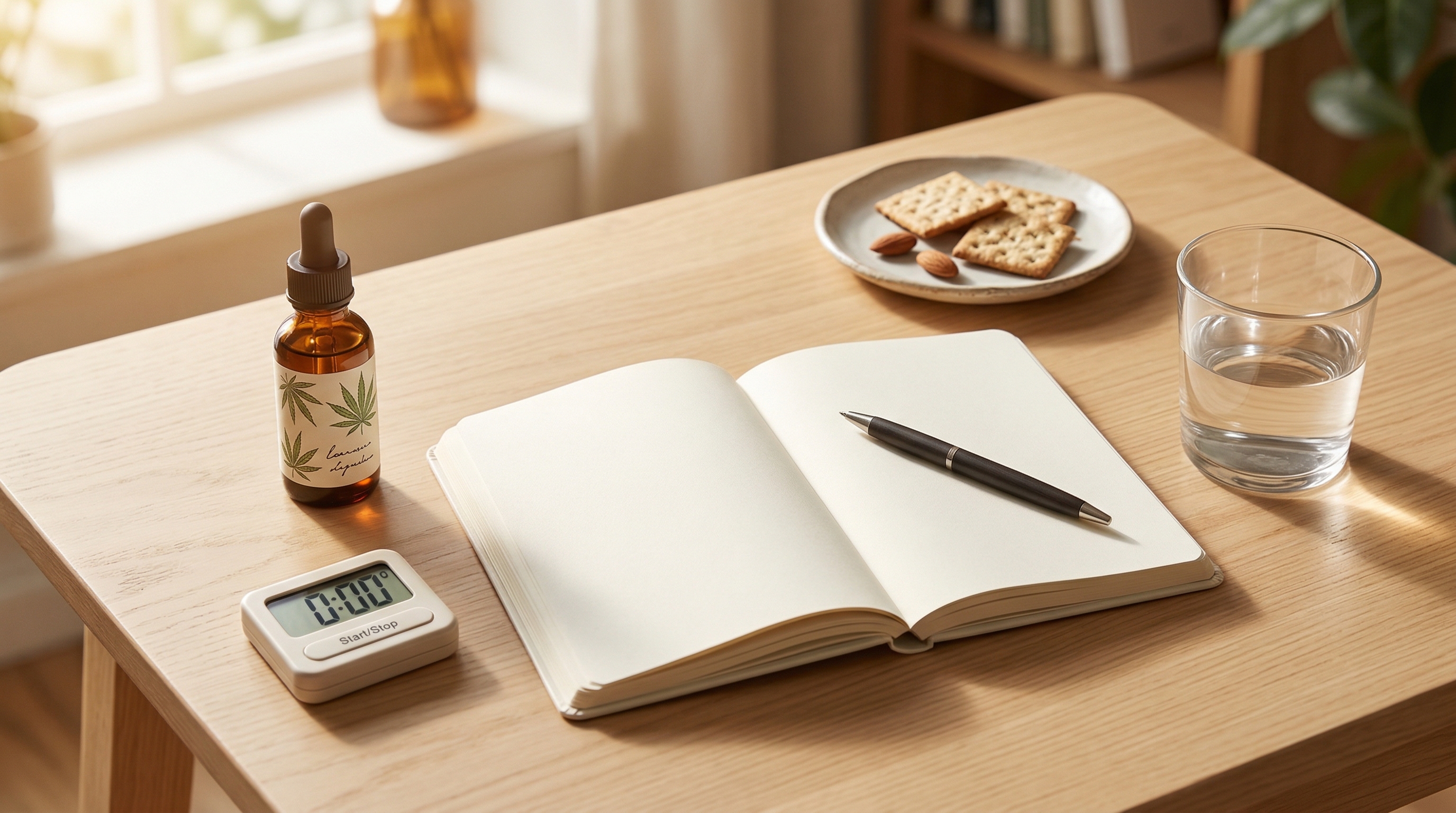
- A journal or notes app for tracking doses, timing, and effects
- Your current cannabis product with clearly labeled THC/CBD content (mg for edibles, percentage for flower/vape)
- A timer or clock — timing is everything in dosing decisions
- Honest self-awareness (no, really)
Optional
- A milligram scale for precise flower measurement
- A trusted friend or partner as a session buddy, especially when trying new doses
- A product from the Balancing High family for gentler experimentation
Safety Essentials
- Water and light snacks on hand
- A comfortable, familiar environment
- Knowledge of your personal medical history (especially heart conditions, anxiety disorders, or current medications — talk to your doctor if unsure)
- A plan for what to do if you overconsume (we’ll cover this below)
Step-by-Step Instructions
Step 1: Establish Your Current Baseline
Before you even think about increasing, you need to know exactly where you are right now. For at least 3–5 sessions, use the same product, same dose, same consumption method, and track:
- Dose amount (e.g., 5mg THC edible, one puff of 20% flower)
- Time of consumption
- Onset time (when you first feel effects)
- Peak effects (what you feel, intensity on a 1–10 scale)
- Duration (how long effects last)
- Aftereffects (next-day grogginess, mood changes)
If your experience varies wildly across those sessions, you don’t have a stable baseline yet. Keep tracking before adjusting.
Tip: Different High Families produce different effect profiles. If you’re using a Relaxing High strain rich in myrcene, your baseline will look very different from an Energetic High product with terpinolene. Always establish a new baseline when switching families.
Step 2: Identify Your “Why”
Ask yourself honestly: Why do I want to increase my dose?
Good reasons to consider an increase:
- You’ve been at the same dose for 2+ weeks and effects have noticeably diminished (tolerance building)
- You’re not reaching your desired effect at all (e.g., still can’t sleep, still feeling anxious)
- Your current experience feels pleasant but too subtle for your goals
Red-flag reasons to stop and reassess instead:
- You want to “feel more high” out of boredom or habit
- You’re increasing to manage emotional distress you haven’t addressed otherwise
- You’re chasing the intensity of your very first experience (that’s tolerance, and more isn’t the answer — a tolerance break is)
- Someone else told you your dose is “too low”
Your dose is your dose. There’s no minimum to be a “real” cannabis consumer.
Step 3: Choose Your Increment Size
This is where most people go wrong. They double their dose. Don’t do that.
The safe increment rule:
| Method | Current Dose Example | Recommended Increase |
|---|---|---|
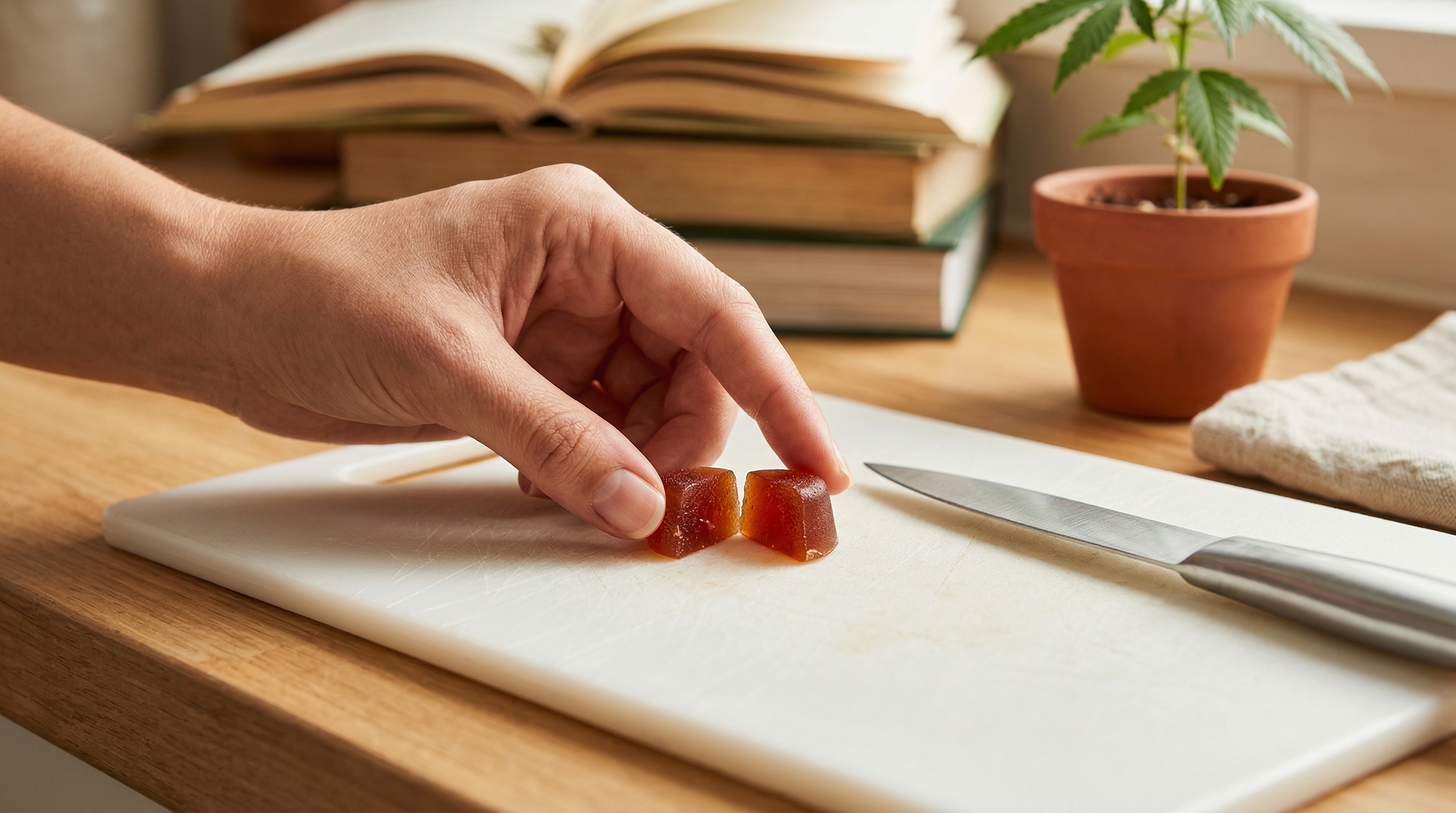
| Edibles | 5mg THC | +2.5mg (half a typical gummy) |
| Tinctures | 10mg THC | +2.5–5mg |
| Flower (smoked/vaped) | 1 puff | +1 additional puff, then wait |
| Concentrates | Rice-grain dab | Slightly larger grain — seriously, tiny |
For edibles and tinctures, increase by no more than 25–50% of your current dose. For inhalation, one additional puff with a full wait period is your increment.
Tip: If you’re working with high-THC products (25%+ flower or 80%+ concentrates), even smaller increments matter. Consider switching to a lower-potency product from the Balancing High family to give yourself more room to adjust.
Step 4: Wait the Full Onset Window Before Judging
This step saves people from overconsumption more than any other.
Minimum wait times before deciding your new dose “isn’t working”:
- Inhaled (smoke/vape): 15–20 minutes
- Tinctures (sublingual): 30–45 minutes
- Edibles: 2 full hours — non-negotiable
Research suggests that cannabis edibles undergo first-pass metabolism in the liver, converting delta-9-THC to 11-hydroxy-THC, which may produce more intense and delayed effects [Huestis, 2007]. This is why edible dosing requires extra patience.
If you don’t feel anything after the full wait window, do not take more that session. Log it, try the new dose again next session, and evaluate over 2–3 sessions before increasing again.
Step 5: Evaluate and Decide
After 2–3 sessions at your new dose, check your journal:
- Effects are closer to your goal → Stay here for at least a week before considering another increase
- Effects are stronger but manageable → Stay here. You’ve found your edge. Don’t push it.
- You experienced anxiety, paranoia, rapid heartbeat, or significant discomfort → Drop back to your previous dose. That was too much.
- No noticeable change → You may increase one more increment, following the same protocol
When to absolutely NOT increase: If you’re experiencing anxiety, panic, paranoia, nausea, or dizziness at your current dose, increasing will make it worse. Lower your dose, switch to a higher-CBD product, or take a tolerance break of 48–72 hours minimum.

When to Try a Different Strain Instead of Increasing
Before reaching for more, consider that your product itself might be the issue — not your dose. Signs that a strain switch beats a dose increase:
- Effects feel one-dimensional or flat, even when they were working before
- The same THC percentage hits completely differently in a new batch or brand
- You feel the “wrong” effect (e.g., anxious instead of relaxed at a dose that used to calm you)
- Tolerance built in under two weeks — rapid tolerance can signal a poor terpene-receptor match
Try moving to a different High Family at your current dose before escalating. The terpene chemistry shift — not a higher THC number — is often what you actually need.
Red Flags: When to Reduce Your Dose Instead
These are not situations to push through. If any of the following are present, dose down immediately:
- Persistent anxiety or paranoia during or after sessions
- Racing heart (tachycardia) — cannabis causes vasodilation; high doses can push heart rate to 120–150+ BPM in sensitive users
- Nausea or vomiting — at high doses, THC can flip from antiemetic to emetic by overloading CB1 receptors in the brainstem
- Panic attacks or derealization — amygdala hyperactivation at excessive doses
- Cognitive impairment carrying over to the next day (brain fog, memory gaps)
- Using cannabis to function rather than to enhance — a dependency signal worth taking seriously
- Weekly dose increases to maintain effects — this is tolerance escalation, not therapeutic use
If three or more of the above apply, a structured tolerance break of 3–14 days is strongly recommended before resuming.
Medication Interactions
Cannabis is broken down by liver enzymes called CYP450 — the same ones that process many common drugs. This means a drug interaction can make your normal dose feel much stronger (or weaker) than usual.
Talk to your doctor before increasing if you take:
- Blood thinners (warfarin) — cannabis can push levels dangerously high
- Benzodiazepines or sedatives — the combined sedation can be overwhelming
- SSRIs / SNRIs — some users feel more anxiety at higher doses when combined
- Beta-blockers — may blunt your heart’s natural response to high-dose THC
- Immunosuppressants — competing for the same enzymes can shift your medication levels
- Opioids — cannabis amplifies opioid effects; changes need medical supervision
If you take any prescription drug, ask your doctor before going up in dose. This is not optional.
Pro Tips
Consider a tolerance break first. If you’ve been consuming daily for weeks or months and effects are fading, your endocannabinoid receptors may be downregulated [D’Souza et al., 2016]. A 48-hour to 2-week break can reset your sensitivity more effectively than any dose increase. Many experienced consumers find that a short break makes their original dose feel fresh again.
Explore terpene variety instead of higher THC. Sometimes “more” isn’t more THC — it’s a different terpene profile. If your Relaxing High strain feels stale, try an Uplifting High product at the same THC level. The different terpene chemistry can create a noticeably different experience without increasing your dose at all.
Use the “microdose ceiling” method. Start each new product at a microdose (1–2.5mg THC for edibles, a single small puff for inhalation) regardless of your usual dose. Different products hit differently, and what’s moderate in one product might be intense in another.
Evening adjustments only. When testing a new dose, do it in the evening or when you have no obligations. Never test a higher dose before driving, working, or caregiving.
Troubleshooting
| Problem | Likely Cause | Solution |
|---|---|---|
| No effect after increasing | Product quality, tolerance, or full stomach (edibles) | Try on a lighter stomach; consider a 48-hour tolerance break |
| Too intense after small increase | Low personal tolerance, potent product, or interaction with other substances | Return to previous dose; try a CBD-rich product to potentially moderate effects |
| Effects feel different each time | Inconsistent dosing, varying meal timing, or different terpene batches | Use a scale; consume at consistent times; stick to one batch while calibrating |
| Anxiety or racing heart | Dose too high, or strain terpene profile doesn’t suit you | Lower dose immediately next session; try a Balancing High or high-CBD option |
| Building tolerance quickly (weekly increases needed) | Daily or near-daily consumption | Take a structured tolerance break of 3–14 days |
Variations
For medical consumers: If you’re using cannabis for symptom management, work with a cannabis-knowledgeable healthcare provider. Therapeutic dosing may follow different patterns than recreational use, and some conditions respond better to consistent low doses than escalating ones.
For edibles-only consumers: Consider switching to tinctures for more precise control. Sublingual tinctures allow you to adjust by 1–2mg increments, which is nearly impossible with most commercial edibles.
For high-tolerance consumers looking to reset: A structured “T-break” protocol — 48 hours minimum, 2 weeks ideal — combined with returning to a low starting dose often produces better results than continually increasing. Research on CB1 receptor availability suggests significant recovery within just 2 days of abstinence [D’Souza et al., 2016].
Your dose is a personal, evolving number — not a competition. The smartest cannabis consumers aren’t the ones taking the most. They’re the ones who know exactly how much they need and not a milligram more. Track it, respect it, and adjust with intention.
Key Takeaways
- Start with a stable baseline. Track 3–5 sessions before changing anything.
- Increase by 25–50% max — not double. For edibles, that’s as small as 2.5mg.
- Wait the full onset window. Edibles need 2 hours. Do not redose early.
- Tolerance is not a reason to escalate. A 48–72 hour break often works better than a higher dose.
- Try a different strain before a higher dose. A terpene shift can feel like a fresh start at the same THC level.
- Red flags mean go down, not up. Anxiety, racing heart, and paranoia are signals to reduce, not push through.
- Medications change the equation. Always check with your doctor if you take prescription drugs.
- There is no minimum dose to be a real consumer. Less is often more.
Sources
Huestis, M.A. (2007). “Human Cannabinoid Pharmacokinetics.” Chemistry & Biodiversity, 4(8), 1770–1804. PMID: 17712819
D’Souza, D.C. et al. (2016). “Rapid Changes in CB1 Receptor Availability in Cannabis Dependent Males after Abstinence from Cannabis.” Biological Psychiatry: Cognitive Neuroscience and Neuroimaging, 1(1), 60–67. PMID: 27162929
Russo, E.B. (2011). “Taming THC: potential cannabis synergy and phytocannabinoid-terpenoid entourage effects.” British Journal of Pharmacology, 163(7), 1344–1364. PMID: 21749363
MacCallum, C.A. & Russo, E.B. (2018). “Practical considerations in medical cannabis administration and dosing.” European Journal of Internal Medicine, 49, 12–19.


