Why Cannabis Education Is Broken (And How Science Fixes It)
Decades of myths replaced real cannabis science. Here's how terpene research and chemotype classification are finally giving consumers accurate information.

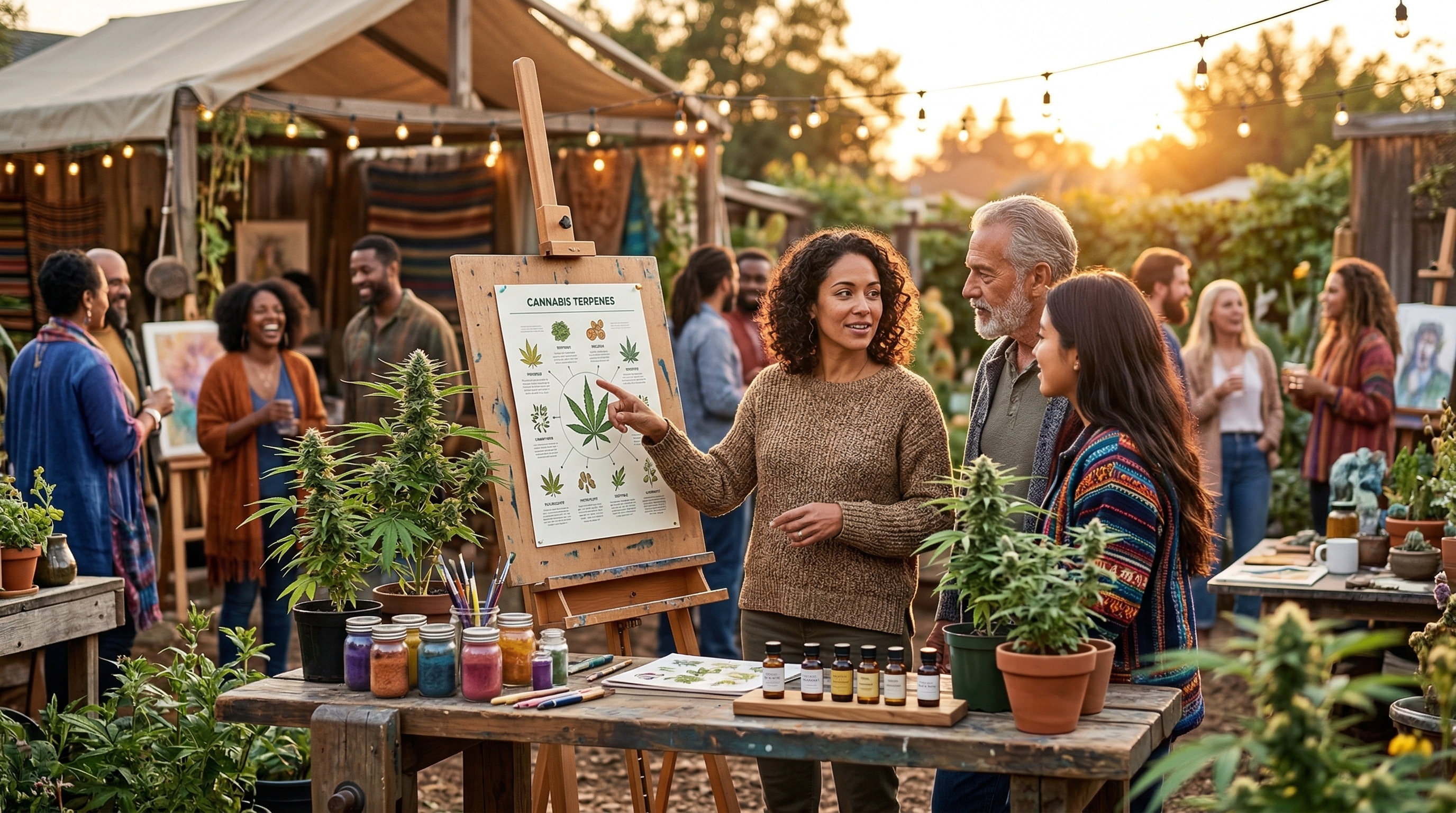
The Most Misunderstood Plant on the Planet
Here’s a fact that should make you uncomfortable: for the better part of a century, almost everything the public “knew” about cannabis was either a deliberate lie, an oversimplification, or a guess dressed up as gospel. The indica-sativa binary that dispensary budtenders still recite like scripture? It’s based on plant morphology — the shape of leaves and how tall the bush grows — not on what actually happens in your brain when you consume it. That’s like choosing a wine based on the shape of the bottle.
The consequences of broken cannabis education aren’t just academic. Real people make real decisions every day — what to buy, how much to consume, whether cannabis might support their wellness goals — based on a framework that science has largely debunked. And the stakes are rising. As legalization spreads across North America and beyond, millions of new consumers are entering the market armed with misinformation from decades of prohibition-era propaganda, well-meaning but outdated budtender advice, and an internet drowning in unverified claims.
But here’s the good news: science is catching up. Fast. A new generation of researchers, freed from the worst constraints of prohibition-era research bans, is building an evidence-based understanding of cannabis that’s richer, more nuanced, and far more useful than anything that came before. Terpene profiling, cannabinoid interaction mapping, and chemotype classification are replacing the old myths with something that actually works.
In this article, you’ll learn why cannabis education went so wrong, what the emerging science actually says, and how new frameworks — including the High Families system — are giving consumers a better way to understand and choose their cannabis experiences. Let’s fix this together.
The Science Explained
How We Got Here: A Brief History of Cannabis Misinformation
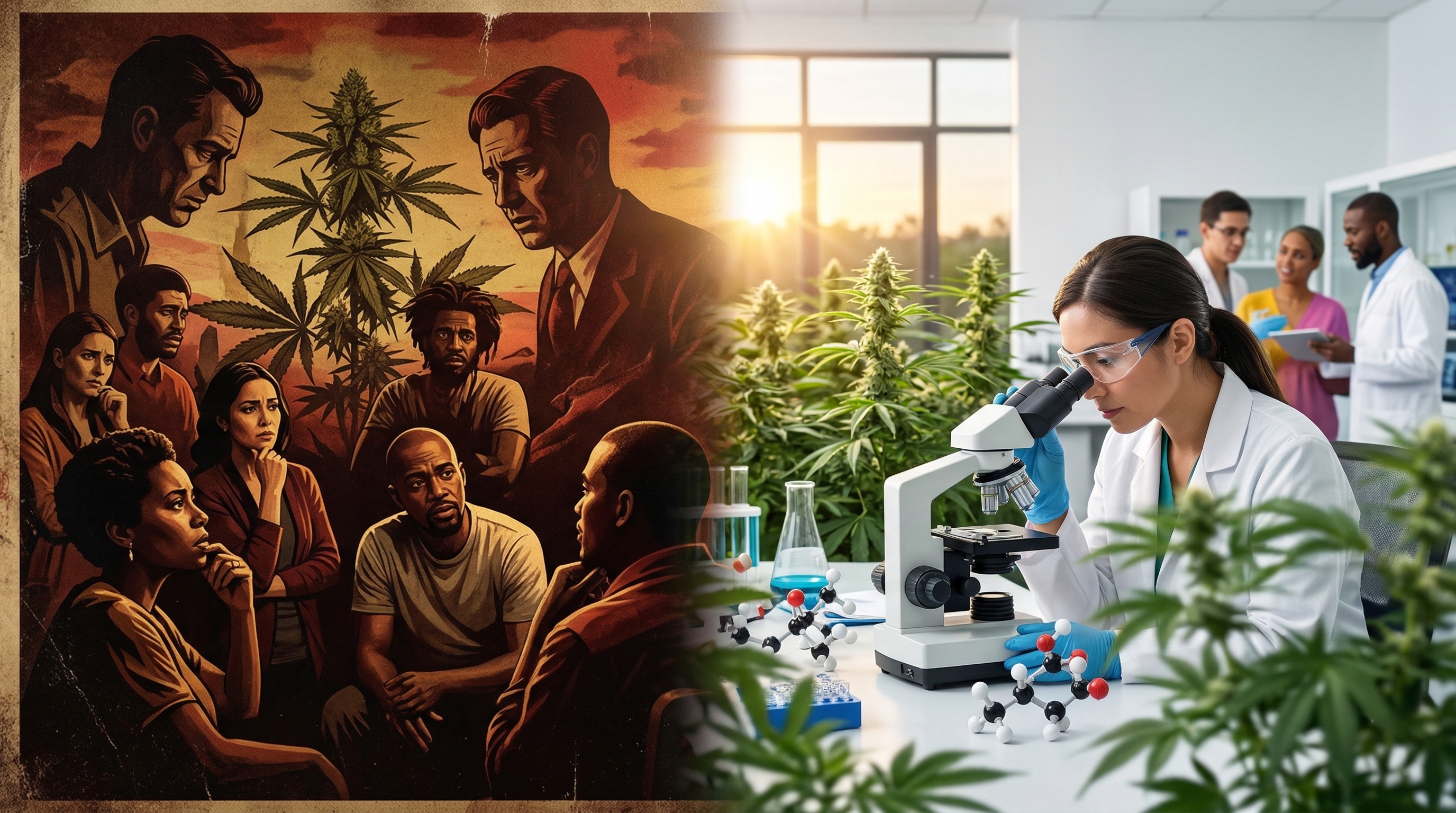
To understand why cannabis education is broken, you need to understand the machinery that broke it.
It starts with prohibition itself. When the United States effectively criminalized cannabis with the Marihuana Tax Act of 1937 — driven largely by racial animus and industrial competition rather than scientific evidence — it didn’t just restrict access to the plant. It restricted access to knowledge about the plant. The federal Schedule I classification, formalized in 1970 under the Controlled Substances Act, declared that cannabis had “no currently accepted medical use” and “a high potential for abuse.” That classification made it extraordinarily difficult for researchers to study cannabis legally, creating a devastating feedback loop: we can’t study it because it’s dangerous, and it’s dangerous because we haven’t studied it.
For decades, the only federally approved cannabis research facility in the United States was a single farm at the University of Mississippi. Scientists who wanted to study cannabis had to navigate a bureaucratic gauntlet that could take years, and the cannabis they received was often low-quality, poorly characterized, and nothing like what people were actually consuming. Imagine trying to understand wine by studying only one vineyard’s worst vintage.
Meanwhile, the cultural knowledge that did exist about cannabis was passed down informally — through growers, through communities of use, through the underground market. This knowledge was often practical and sometimes remarkably insightful (experienced cultivators understood terroir and strain variation long before scientists had the vocabulary for it), but it was also riddled with myths, confirmation bias, and marketing spin.
The Indica-Sativa Myth: Where It All Went Sideways
No single piece of cannabis misinformation has done more damage than the indica vs. sativa classification system.
The story goes like this: Cannabis indica makes you relaxed and sleepy (“in da couch”), while Cannabis sativa makes you energized and creative. It’s clean, simple, and easy to remember. It’s also, according to the science, largely meaningless as a predictor of effects.
The original botanical distinction between C. sativa and C. indica was made by Jean-Baptiste Lamarck in 1785, and it described physical characteristics of the plant — leaf width, growth pattern, geographic origin. It was never intended to predict psychoactive effects in humans. Over time, decades of crossbreeding have made the genetic lines so blurred that the commercial indica/sativa classification of strains has no consistent relationship to actual genetic ancestry.
The landmark evidence came in 2021 when researchers at Dalhousie University, publishing in Nature Plants, analyzed nearly 300 cannabis strains with indica and sativa labels. Their conclusion was stark: “Sativa- and Indica-labeled samples were genetically indistinct on a genome-wide scale.” Lead author Dr. Sean Myles put it bluntly: “All we’re doing in our study is demonstrating the degree to which these labels are good predictors of what’s in your package. The answer is they’re terrible predictors.” The study even found that two strains both named “OG Kush” were more similar to differently-named strains than they were to each other.
In 2024, National Geographic synthesized this research for mainstream audiences, noting that mounting evidence suggests indica and sativa labels are “largely meaningless, with no significant chemical or genetic differences between the two.” A 2022 study by Jikomes et al. at the University of Colorado, Boulder, confirmed this finding using data from six U.S. states, showing that sativa strains don’t necessarily contain more energizing compounds than indicas — or vice versa.
Think of it this way: if someone told you that all tall dogs are friendly and all short dogs are aggressive, you’d recognize that as absurd. Dog behavior depends on breed, training, individual temperament, and context — not height. Similarly, your cannabis experience depends on a complex interplay of chemical compounds, not on whether the plant’s ancestors grew in the Hindu Kush or equatorial Africa.
So what does determine how cannabis makes you feel?
The Labeling Crisis Is Worse Than You Think
The indica/sativa problem is just one layer of the education crisis. It turns out that even the numbers on cannabis labels — the THC percentages that have become the primary metric consumers use to judge product quality — are frequently wrong.
In March 2024, a peer-reviewed study published in PLOS ONE analyzed 23 cannabis flower samples from 10 dispensaries across northern Colorado’s Front Range. The findings were troubling: approximately 70% of the labels reported THC percentages more than 15% higher than what independent lab testing actually measured. Of the 23 samples, 18 displayed lower THC levels than reported, with three samples containing less than half the THC shown on the label.
A larger-scale study published in Scientific Reports in July 2025 by researchers at the University of Colorado Boulder examined 277 products from 52 dispensaries across 19 counties — the first comprehensive label audit of the legal cannabis market. The result: nearly 44% of cannabis flower products failed the state’s own accuracy standard (within 15% of labeled THC content), with the majority inflating their potency on the label. Concentrate products fared far better, with 96% accurately labeled.
“Focusing on THC on the label can actually do a disservice for consumers, because it creates an environment in which people buy based solely on THC content,” said senior author Dr. Cinnamon Bidwell, associate professor of psychology and neuroscience at CU Boulder.
Meanwhile, a separate 2024 study published in the Journal of Cannabis Research evaluated 107 dispensary flower products and found that only 30% met the ±20% acceptance criteria for THC content accuracy. The researchers cited a pressing need for more rigorous regulation — and pointed to potential lab fraud as a contributing factor, noting that testing labs may face financial incentives to report inflated numbers.
The incentive structure is easy to understand: consumers have been trained by the market to associate higher THC with higher quality. That creates pressure on every link in the supply chain — cultivators, testing labs, and dispensaries — to show the biggest numbers possible. The result is a market built on a metric that’s often fictional, measuring something that matters less than consumers think.
“Cannabis shoppers often conflate high THC with superior quality,” noted the PLOS ONE researchers. “People generally do not shop for wine or beer based on alcohol content.”
The Real Science: Terpenes, Cannabinoids, and the Entourage Effect
If THC percentage and indica/sativa labels are the wrong metrics, what should consumers actually look at?
The answer is chemistry — specifically, the unique combination of cannabinoids, terpenes, and other compounds in each cannabis cultivar, and how those compounds interact with your individual endocannabinoid system.
You’ve probably heard of THC (tetrahydrocannabinol) and CBD (cannabidiol), the two most abundant cannabinoids. But cannabis contains over 100 identified cannabinoids and more than 200 terpenes — aromatic compounds that give each strain its distinctive smell and appear to play a significant role in shaping the experience.
Dr. Ethan Russo’s landmark 2011 paper, “Taming THC: Potential Cannabis Synergy and Phytocannabinoid-Terpenoid Entourage Effects,” laid the groundwork for what’s now called the entourage effect: the idea that cannabis compounds work together synergistically, and that the overall experience is shaped not just by THC content but by the full chemical profile of the plant. This was a paradigm shift. It meant that chasing the highest THC percentage — a habit the legal market has enthusiastically encouraged — was missing the point entirely.
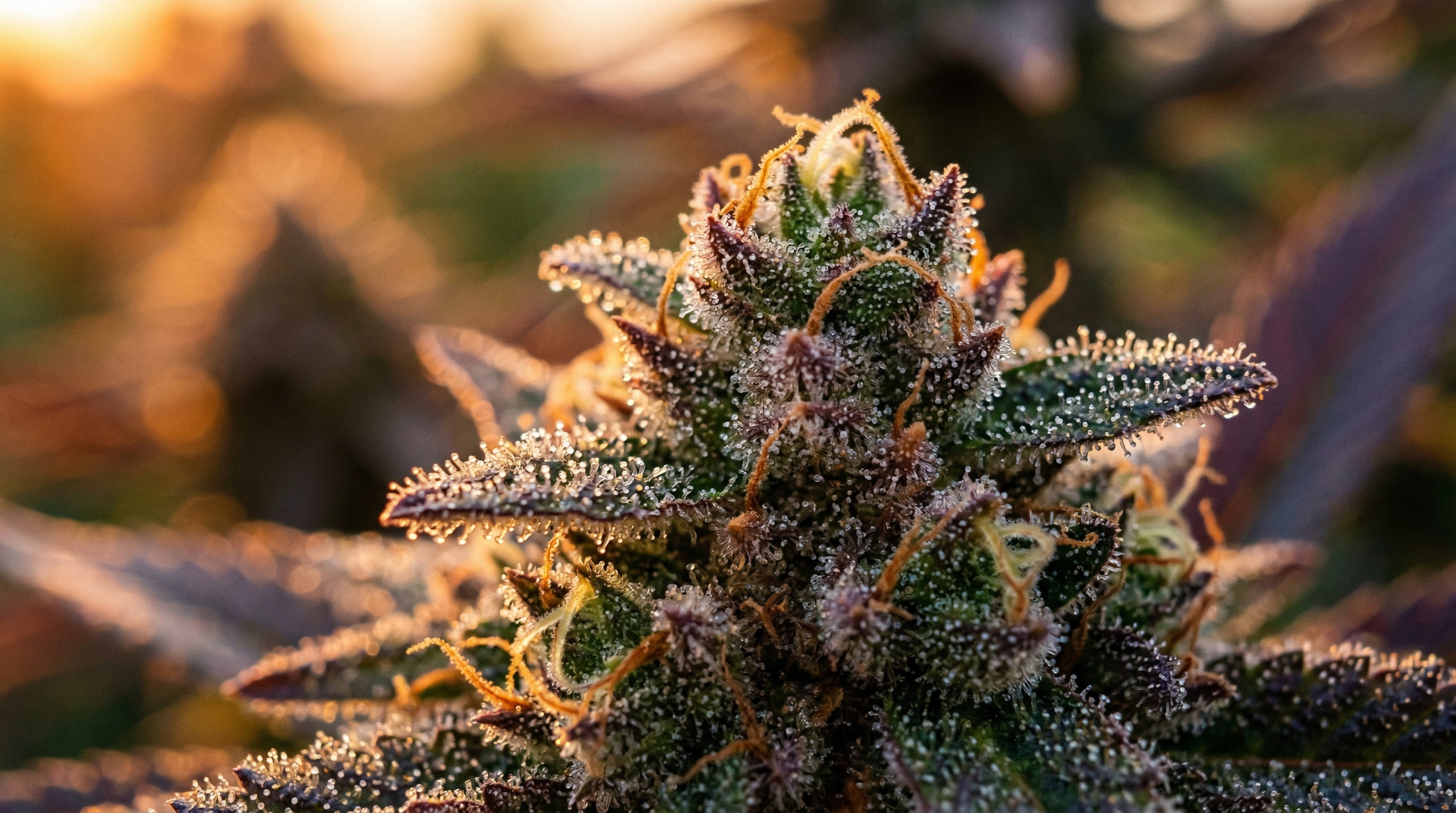
Consider myrcene, the most common terpene in cannabis. Research suggests it may have sedative and muscle-relaxant properties. Strains high in myrcene tend to produce more relaxing effects — regardless of whether they’re labeled indica or sativa. Meanwhile, limonene, the citrusy terpene also found in lemon peels, appears to have mood-elevating properties and may influence serotonin and dopamine systems. Caryophyllene, a spicy terpene found in black pepper, is unique because it actually binds to CB2 cannabinoid receptors, potentially offering anti-inflammatory benefits. Terpinolene and ocimene — dominant in many “sativa-labeled” cultivars — correlate with more alert, clear-headed experiences.
The emerging picture is clear: terpene profiles are a far better predictor of subjective cannabis effects than indica/sativa labels. A 2022 study published in PLOS ONE by researchers at the University of Colorado confirmed this, finding that participants’ reported experiences correlated more strongly with terpene composition than with THC content or strain classification.
This insight is already reshaping how the most sophisticated players in the industry categorize products. The CU Boulder researchers who conducted the 2025 labeling audit noted that other cannabinoids — including CBG (cannabigerol) and CBGA (cannabigerolic acid) — were more abundant than CBD across product categories, yet Colorado law only requires CBD to be listed on labels. “Our data suggests that multiple other cannabinoids should also be reported on there,” said Dr. Bidwell.
What the Research Shows: New Classification Systems Emerging
If the old system is broken, what replaces it?
Several research groups and industry leaders are converging on chemotype-based classification — organizing cannabis by its chemical fingerprint rather than its botanical lineage or arbitrary names. Two parallel frameworks have emerged:
Chemotypes group cannabis by dominant cannabinoid ratios: Type I is THC-dominant (the overwhelming majority of dispensary products), Type II offers a balanced THC-to-CBD ratio, and Type III is CBD-dominant. Knowing your chemotype preference is a prerequisite for consistent experiences.
Chemovars go deeper, adding terpene data to the cannabinoid ratio. Rather than saying “this is an indica,” a chemovar classification might tell you this is a “Type I (THC-dominant), myrcene-caryophyllene-dominant” cultivar — and from that description, you can reasonably anticipate a relaxing, body-forward experience.
SC Labs, one of California’s leading cannabis testing laboratories, has spent over a decade building the PhytoFacts chemometric classification system — analyzing hundreds of thousands of samples and sorting them into seven distinct terpene-based classes. Each category has characteristic aromas, flavor profiles, and experiential tendencies:
- Desserts (doughy, citrus, spicy; stimulating and comforting; GSC, Gelatos, Cakes)
- OGs & Gas (fuel, citrus, pepper; uplifting and analgesic; OG Kush, Sour Diesel, Gorilla Glue)
- Sweets & Dreams (indica-dominant; sweet, floral, sedative)
- Jacks & Haze (pine, citrus, haze; clear-headed and energetic; terpinolene-forward)
- Tropical & Floral (bright, fruity, floral; mood-lifting)
- Exotics (unique and complex multi-terpene profiles)
- Citrus (sulfur-driven citrus aromatics, diverse effects)
A parallel study using full-spectrum secondary metabolite profiling found this approach enables “a clearer, finer, and more meaningful” understanding of cannabis effects than the traditional system. The researchers concluded that terpene profile data explained more than 21% of the variation between samples — far more than indica/sativa labels, which explained essentially nothing.
This is exactly the approach behind the High Families system. Instead of asking “Is this an indica or a sativa?” — a question that science tells us is the wrong question — High Families asks: “What kind of experience do you want?” and matches that to terpene-driven categories rooted in real chemistry.
Practical Implications
What This Means for How You Choose Cannabis
So how does all of this translate to your next dispensary visit, your next online order, or your next conversation about cannabis?
First, stop chasing THC percentages. The legal market has created a “potency arms race” where cultivators breed for maximum THC at the expense of terpene diversity and overall experience quality. Research suggests that above a certain threshold, additional THC doesn’t meaningfully increase subjective enjoyment — but it does increase the likelihood of anxiety and other unwanted effects. And as the 2024-2025 labeling studies show, that 30% THC number on the jar may be fictional anyway. A well-rounded terpene profile at 18% often delivers a far more enjoyable and nuanced experience than a terpene-sparse flower claiming 28%.
Second, learn to read terpene profiles. More dispensaries and brands are now listing terpene data on their packaging. Look for the top two or three terpenes and their percentages. If you know you enjoy strains that make you feel uplifted and social, look for limonene-dominant profiles. If you want deep physical relaxation, seek out myrcene-heavy options. If you want clear-headed energy and focus, look for terpinolene. This is infinitely more reliable than asking “Is this an indica?”
Third, use frameworks that match the science. The High Families system was designed specifically to bridge the gap between terpene research and practical consumer decision-making. Instead of memorizing dozens of individual terpenes and their effects, you can learn six experience-based families and use them as a starting point for exploration:
- The Uplifting High — limonene and linalool-forward, for mood elevation and social energy
- The Energetic High — terpinolene and ocimene-forward, for focus and productivity
- The Relaxing High — myrcene-dominant, for deep calm and sleep support
- The Balancing High — gentler profiles, ideal for moderated, manageable effects
- The Relieving High — caryophyllene and humulene-forward, for physical comfort
- The Entourage High — complex multi-terpene profiles, for full-spectrum nuanced experiences
This isn’t marketing language draped over the same old categories. It’s a fundamentally different framework rooted in what the chemistry actually tells us.
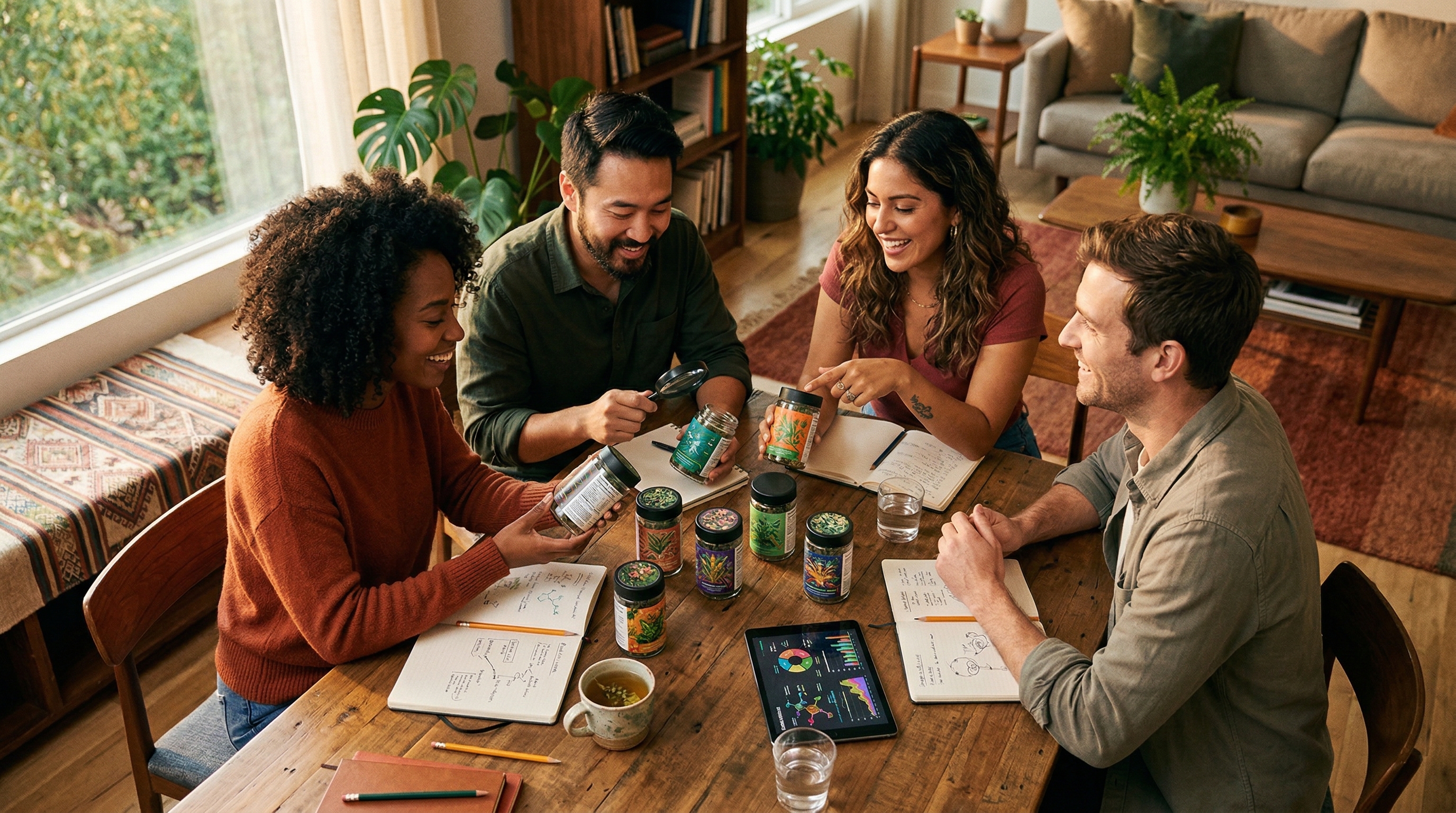
Fourth, embrace your own biology. One of the most important — and most humbling — findings in cannabis science is that individual variation matters enormously. Your endocannabinoid system is as unique as your fingerprint. Genetics, tolerance, metabolism, even your mood and environment all influence how a given cultivar affects you. No classification system, no matter how sophisticated, can perfectly predict your experience. Use frameworks like High Families as a starting point, then pay attention to your own responses and keep notes. Consistency in terpene profiles is a more reliable compass than consistency in strain names, which — as the Dalhousie study showed — can be assigned to chemically unrelated plants.
Fifth, demand better from the industry. As consumers, you have power. When you ask your budtender about terpene profiles instead of indica/sativa labels, you signal that the market needs to evolve. When you support brands that invest in third-party lab testing and transparent chemical data, you incentivize better practices across the industry. The 2024 and 2025 labeling studies are damning precisely because most consumers have no idea the numbers they’re trusting are so often wrong. Awareness is the first step toward accountability.
The bottom line: The shift from myth-based to science-based cannabis education isn’t just an academic exercise. It’s the difference between randomly grabbing a bottle off the shelf and making an informed choice that’s more likely to give you the experience you actually want — and that’s more likely to actually contain what the label says.
Key Takeaways
- The indica/sativa classification is botanically outdated and has no reliable correlation with psychoactive effects. A 2021 Nature Plants study from Dalhousie University confirmed that the labels are “genetically indistinct” and poor predictors of what you’re actually buying.
- THC percentages on labels are frequently inaccurate. A 2024 PLOS ONE study found 70% of Colorado flower labels overstated THC by more than 15%. A 2025 Scientific Reports study found 44% of flower products failed the state’s own accuracy standard.
- Terpenes are the real drivers of experience. The unique combination of aromatic compounds in each cultivar shapes your high far more reliably than THC percentage or indica/sativa labels.
- The entourage effect is real and significant. Cannabinoids and terpenes work together synergistically, meaning the whole-plant chemical profile matters more than any single compound.
- Chemotype and chemovar-based classification systems are the future. Frameworks like SC Labs’ PhytoFacts and the High Families system organize cannabis by terpene-driven experience categories rather than debunked botanical labels.
- Your biology is unique. Use science-based frameworks as a starting point, but always pay attention to your own body’s responses and adjust accordingly.
FAQs
Is the indica/sativa distinction completely useless?
Not entirely — it retains some relevance for growers describing plant structure, flowering time, and cultivation characteristics. But as a predictor of how a strain will make you feel? The science strongly suggests it’s unreliable. Terpene profiles and cannabinoid ratios are far better indicators of subjective effects.
Why do dispensaries still use indica/sativa labels?
Mostly inertia and consumer familiarity. The indica/sativa system is simple and deeply embedded in cannabis culture. Changing it requires educating both staff and consumers simultaneously — which is exactly why resources like High Families exist. The good news is that more dispensaries are beginning to include terpene data alongside traditional labels, and some are adopting terpene-first frameworks entirely.
Does higher THC really mean a better high?
Research suggests not. Studies indicate that above moderate thresholds, additional THC doesn’t proportionally increase enjoyment but may increase anxiety and paranoia. And as multiple 2024-2025 studies have shown, the number on the label often doesn’t reflect what’s actually in the flower. A well-rounded terpene profile at moderate THC levels typically delivers a more pleasant and nuanced experience than a terpene-sparse flower with an inflated potency claim.
How can I start learning about terpenes without a science degree?
Start with the High Families system — it groups terpene effects into six intuitive experience categories so you don’t need to memorize chemistry. Then, next time you buy cannabis, note the top listed terpenes and how the strain makes you feel. Over time, you’ll develop an intuitive sense of which terpene profiles work best for you.
What should I actually look for on a cannabis label?
Look for the terpene profile (top 2-3 terpenes by percentage), the cannabinoid ratios (not just THC percentage, but also CBD, CBG if available), and evidence of third-party lab testing. If a product only shows a THC percentage with no terpene data, you have less information than you might think. Ask your budtender if the dispensary carries certificates of analysis — reputable labs will provide them.
Sources
- Bidwell, L.C., et al. (2025). “Accuracy of labeled THC potency across flower and concentrate cannabis products.” Scientific Reports. DOI: 10.1038/s41598-025-03854-3
- Gertsch, J., et al. (2008). “Beta-caryophyllene is a dietary cannabinoid.” Proceedings of the National Academy of Sciences. DOI: 10.1073/pnas.0803601105
- Geweda, M.M., et al. (2024). “Evaluation of dispensaries’ cannabis flowers for accuracy of labeling of cannabinoids content.” Journal of Cannabis Research 6, 11. DOI: 10.1186/s42238-024-00220-4
- Jikomes, N., & Zoorob, M. (2018). “The Cannabinoid Content of Legal Cannabis in Washington State Varies Systematically Across Testing Facilities and Popular Consumer Products.” Scientific Reports. DOI: 10.1038/s41598-018-22755-2
- Kamal, B.S., et al. (2022). “Examination of the Relationships Between Cannabis-Related Factors and Subjective Drug Effects in Cannabis Users.” PLOS ONE.
- Komiya, M., et al. (2006). “Citrus Fragrance Elicits Human Sympathetic Responses.” Neuroscience Letters. DOI: 10.1016/j.neulet.2006.07.031
- Morgan, C.J.A., et al. (2012). “Cannabidiol reduces the anxiety induced by simulated public speaking in treatment-naïve social phobia patients.” Neuropsychopharmacology.
- Piomelli, D., & Russo, E.B. (2016). “The Cannabis sativa Versus Cannabis indica Debate: An Interview with Ethan Russo, MD.” Cannabis and Cannabinoid Research.
- Russo, E.B. (2011). “Taming THC: Potential Cannabis Synergy and Phytocannabinoid-Terpenoid Entourage Effects.” British Journal of Pharmacology. DOI: 10.1111/j.1476-5381.2011.01238.x
- SC Labs PhytoFacts Chemometric Classification System. Retrieved from sclabs.com/resources/cannabis-classification/
- Schwabe, A.L. & McGlaughlin, M.E. (2024). “Uncommon cannabis potency: THC discrepancies in lab-tested cannabis products.” PLOS ONE. DOI: 10.1371/journal.pone.0296328
- Watts, S., et al. (2021). “Cannabis labelling is associated with genetic variation in terpene synthase genes.” Nature Plants. DOI: 10.1038/s41477-021-01003-y


