Why Cannabis Hits Differently on an Empty Stomach
The science behind why eating—or not eating—before cannabis changes your high: absorption, fat solubility, metabolism, and practical dosing tips.

Professor High
Professor High breaks down the science of cannabis so you can make smarter, more intentional decisions with your session.
You Weren’t Imagining It
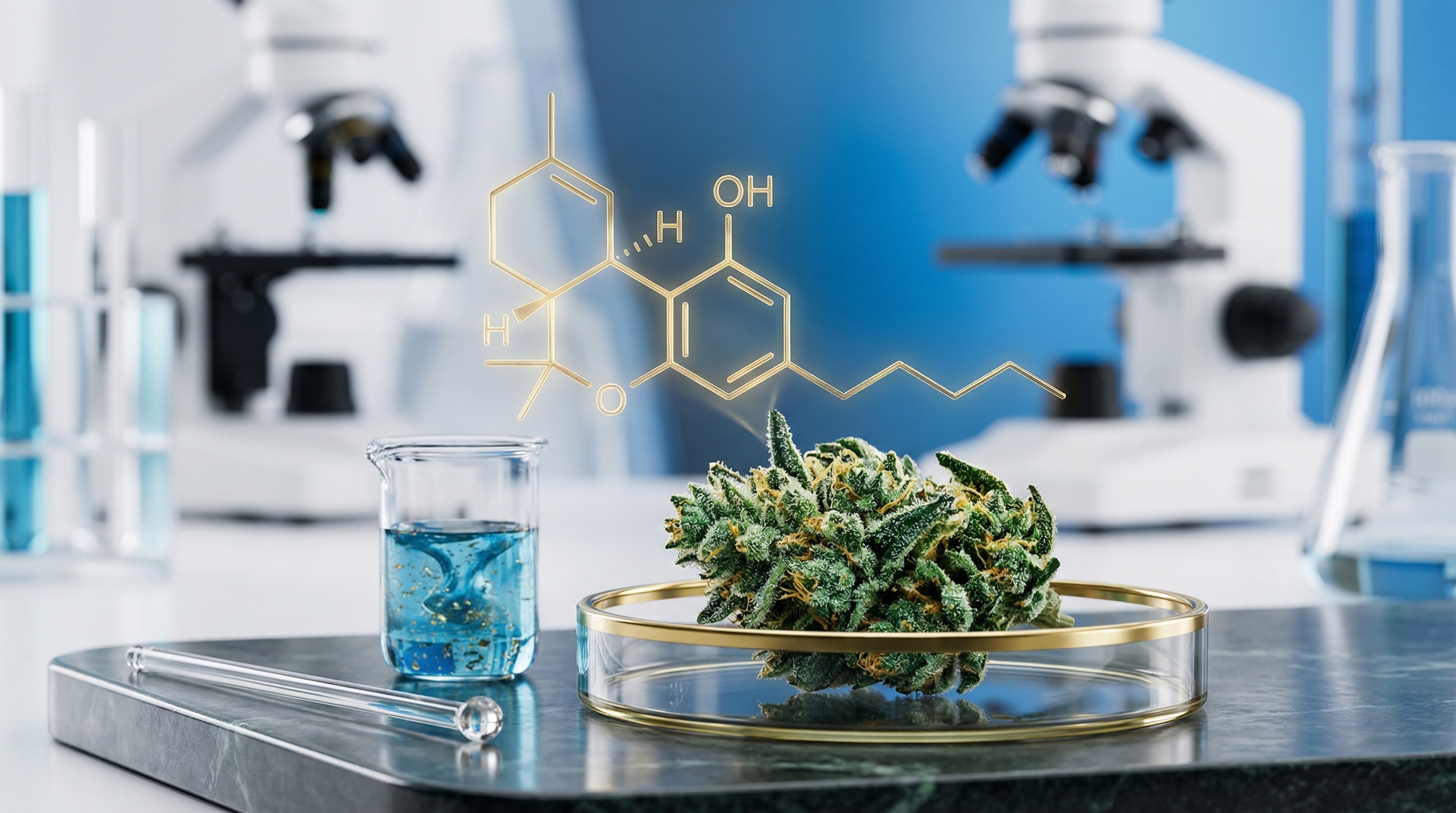
You skipped lunch, took your usual dose, and suddenly you’re on a completely different ride. The effects hit faster, feel stronger, and maybe caught you off guard. Meanwhile, your friend who just demolished a burrito seems barely phased by the same product.
This isn’t a placebo effect. There’s real science behind why cannabis interacts with your body differently depending on what’s in your stomach—and it involves everything from fat-soluble chemistry to the speed of your liver enzymes.
Whether you smoke, vape, or eat your cannabis, your fed-or-fasted state plays a meaningful role in how cannabinoids are absorbed, processed, and ultimately experienced. Understanding this mechanism can help you dial in more consistent, predictable sessions—and avoid those “whoa, that was too much” moments.
In this article, we’ll break down the pharmacokinetics (don’t worry, we’ll keep it friendly) of how THC and other cannabinoids interact with your digestive system, what the research says about food and absorption, and how you can use this knowledge to fine-tune your experience.
The Science Explained
How Cannabinoid Absorption Works
To understand why food matters, you first need to know one key fact about THC: it’s lipophilic, meaning it dissolves in fat, not water. Think of it like trying to mix olive oil into a glass of water versus stirring it into a warm sauce—the fat-rich environment is where THC feels at home.
When you consume an edible on an empty stomach, the THC passes relatively quickly through your stomach and into your small intestine, where absorption begins. But here’s the catch: without dietary fat present, your body doesn’t absorb that THC very efficiently. Some of it passes through without ever reaching your bloodstream.
When you eat a fatty meal first, your body ramps up bile production—bile acts like a natural emulsifier that breaks fats into tiny droplets. Since THC dissolves in those fats, it essentially gets a VIP escort into your intestinal walls and then into your bloodstream [Zgair et al., 2016]. One study found that taking a cannabis-based medication with a high-fat meal increased THC blood levels by approximately 2.5 to 3 times compared to a fasted state [Birnbaum et al., 2019].
So for edibles, an empty stomach doesn’t necessarily mean a stronger high—it can actually mean a less efficient one, though the onset may feel faster and less predictable because absorption becomes erratic.
Inhalation is a different story. When you smoke or vape, THC enters your bloodstream through your lungs, bypassing the digestive system entirely. But food still matters here—just through a different mechanism.
What the Research Shows
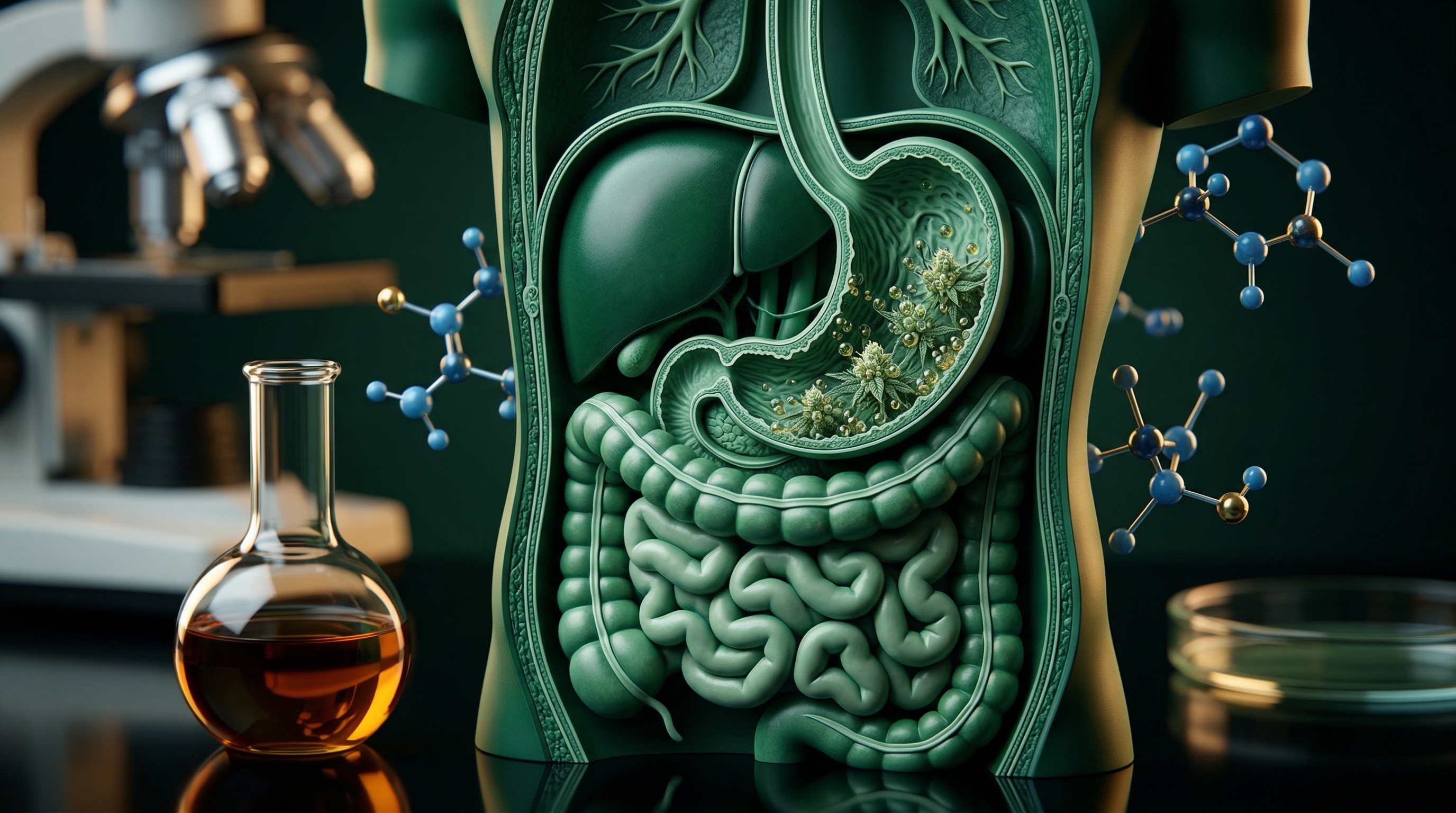
Your liver is the star of this subplot. After THC enters your bloodstream (regardless of consumption method), it travels to the liver, where enzymes from the cytochrome P450 family—specifically CYP2C9 and CYP3A4—metabolize it [Huestis, 2007]. One major metabolite is 11-hydroxy-THC (11-OH-THC), which is actually more potent at crossing the blood-brain barrier than regular THC.
Here’s where your stomach contents come in: when you haven’t eaten, your liver processes incoming compounds more aggressively during what pharmacologists call first-pass metabolism. For inhaled cannabis, this means THC circulating in your blood may get metabolized faster, but the initial peak can feel more intense because there’s no food competing for your body’s metabolic attention.
Research on related lipophilic drugs suggests that fasting states can alter the speed and peak concentration of these compounds in the blood [Charman et al., 1997]. While large-scale clinical trials specific to smoked cannabis and food timing remain limited, the pharmacokinetic principles are well-established.
An important nuance: individual variation is enormous. Your unique liver enzyme activity, body composition, tolerance, and even your endocannabinoid system tone all influence how dramatically food affects your experience [Huestis, 2007]. This is why your friend might barely notice a difference while you feel it acutely.
Practical Implications
How This Connects to Your High
This science has direct implications for how you might approach different cannabis experiences. If you’re exploring the High Families to find your ideal session, knowing how food affects absorption can help you get more consistent results.
For example, strains in the Relaxing High family—rich in myrcene and often chosen for evening wind-down—may feel overwhelming on a completely empty stomach if you’re using edibles, because absorption becomes unpredictable. Meanwhile, an Energetic High strain vaped after a light meal might deliver exactly the focused clarity you’re looking for.
Actionable Tips for Dialing In Your Experience
-
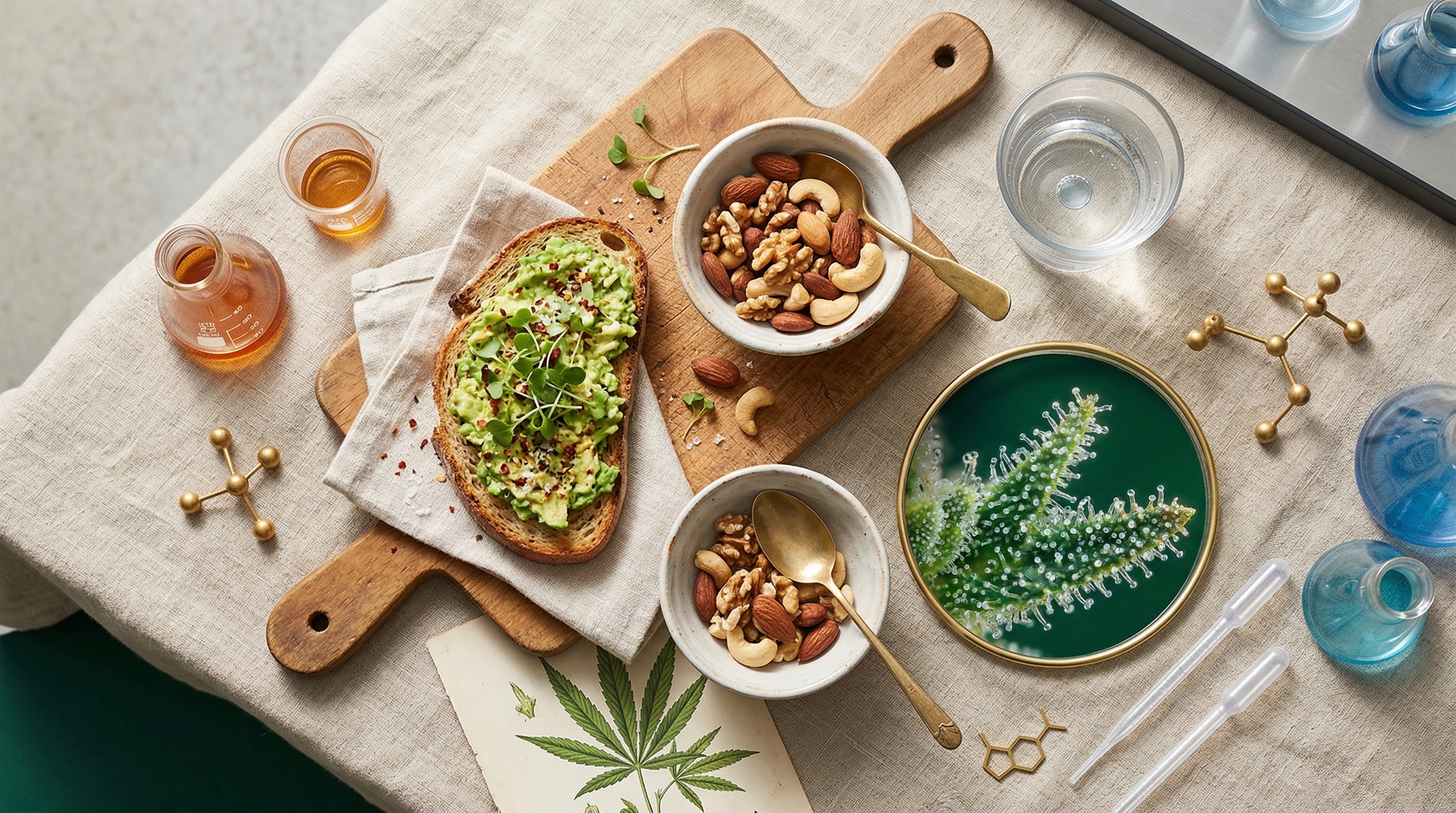
For edibles: Eat a small meal or snack containing healthy fats (avocado, nuts, cheese) about 30-60 minutes before dosing. This may improve absorption consistency and help you avoid the “I don’t feel anything… oh wait, now I feel everything” rollercoaster [Zgair et al., 2016].
-
For inhalation: If you tend to be sensitive, having some food in your system can moderate the initial intensity. If you haven’t eaten in many hours, consider starting with a smaller dose than usual.
-
For consistency: Try to consume cannabis under similar fed/fasted conditions each time. This reduces one major variable and helps you learn your actual tolerance and preferences.
-
Start low, go slow—especially fasted. This golden rule of cannabis dosing becomes even more important when your stomach is empty and your body’s processing speed is less predictable.
Pro tip: If you’re new to cannabis or trying a new product, always have a snack on hand. A handful of nuts or a piece of toast with butter can help smooth out an unexpectedly intense experience—and the fats may even support more efficient cannabinoid absorption going forward.
Key Takeaways
- THC is fat-soluble, so eating fats before edibles may significantly improve absorption—by up to 3x according to some research.
- An empty stomach doesn’t always mean a stronger high—for edibles, it can mean less efficient and less predictable absorption.
- For inhaled cannabis, food affects how quickly your liver metabolizes THC, which can influence intensity and duration.
- Consistency matters: consuming cannabis under similar conditions helps you learn your real tolerance.
- Individual variation is huge—your genetics, body composition, and endocannabinoid system all play a role.
FAQs
Should I always eat before using cannabis?
Not necessarily. It depends on your consumption method and goals. For edibles, a small fatty snack may improve consistency. For inhalation, it’s more about personal sensitivity. Experiment mindfully and note what works best for your body.
Does the type of food matter?
Yes—fat content appears to be the key factor for edible absorption. Foods rich in healthy fats (nuts, avocado, olive oil) may enhance THC bioavailability more than carb-heavy or low-fat meals [Zgair et al., 2016].
Will eating after cannabis reduce my high?
There’s limited research on this specific question. Anecdotally, some people report that eating after onset can moderate intensity, but this likely varies by individual and consumption method. It won’t “cancel” THC already in your bloodstream.
Why do edibles feel so much stronger than smoking?
This relates to first-pass metabolism. When you eat cannabis, your liver converts a larger proportion of THC into 11-OH-THC, which crosses the blood-brain barrier more effectively. Food timing adds another layer to this already potent conversion process [Huestis, 2007].
Sources
- Zgair, A. et al. (2016). “Dietary fats and pharmaceutical lipid excipients increase systemic exposure to orally administered cannabis and cannabis-based medicines.” American Journal of Translational Research. PMID: 27186421
- Birnbaum, A.K. et al. (2019). “Food effect on pharmacokinetics of cannabidiol oral capsules in adult patients with refractory epilepsy.” Epilepsia. PMID: 31247132
- Huestis, M.A. (2007). “Human cannabinoid pharmacokinetics.” Chemistry & Biodiversity. PMID: 17712819
- Charman, W.N. et al. (1997). “Physicochemical and physiological mechanisms for the effects of food on drug absorption: The role of lipids and pH.” Journal of Pharmaceutical Sciences. PMID: 9232520


