Why Lab Testing Standards Are Failing Cannabis Consumers
Cannabis lab testing was supposed to guarantee safety and accuracy. The science shows the system is broken—and what you can actually do about it.

Professor High
Your friendly cannabis educator, bringing science-backed knowledge to the community.
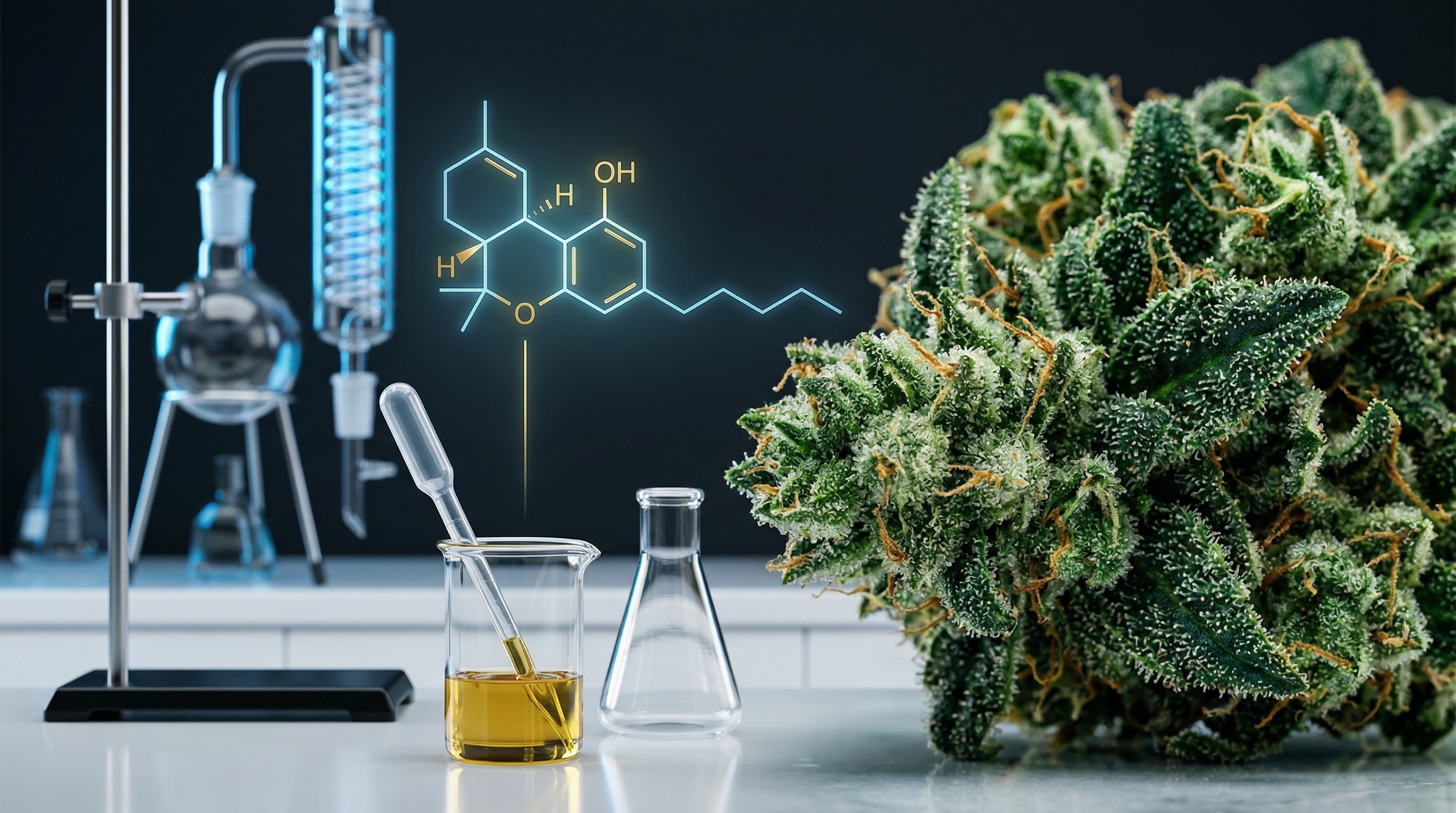
Cannabis lab testing is broken. The THC number on your dispensary label is frequently wrong, terpene data is barely standardized, and the financial incentives built into the system actively reward labs that cheat. This is the science behind why—and what you can do about it.
The Number on the Label Might Be a Lie
Here’s a fact that should give you pause the next time you’re standing in a dispensary: a single cannabis flower sample sent to multiple licensed labs can come back with THC results that vary by 15 percentage points or more. Not 1 or 2 percent—fifteen. That means the same bud could be labeled 18% THC at one lab and 33% at another.
This isn’t a fringe problem. A 2025 study published in Scientific Reports confirmed that over 70% of retail flower products fall outside a 20% accuracy threshold for labeled THC potency—and of those inaccurately labeled products, all but one were over-labeled [Giordano et al., 2025]. A separate Colorado study found that 18 out of 23 flower samples tested lower than their advertised potency, with 13 falling more than 30% below the stated value [Schwabe et al., 2023]. The DEA-seized cannabis flower averaged 13.88% THC in 2019—far closer to actual lab measurements than the 25–35% numbers consumers see on retail shelves today.
And it’s not just about potency numbers. Pesticide testing, heavy metal screening, terpene profiling, and microbial contamination checks—the entire framework of cannabis lab testing—suffer from a patchwork of inconsistent standards, misaligned incentives, and regulatory blind spots that have created what one scientist called “probably one of the largest consumer fraud issues in US history” [Erickson, 2024].
You deserve to know exactly what you’re putting in your body. That’s the whole promise of a legal, regulated cannabis market. But the current state of lab testing is undermining that promise in ways that affect your health, your wallet, and your ability to find the right experience.
In this article, we’re going to break down why cannabis lab testing is failing, what the science says about the scope of the problem, and what you can practically do to protect yourself. We’ll also explore how understanding cannabis chemistry—especially through experience-based systems like High Families—can help you make smarter choices even when the labels fall short.
Let’s dig into the science.
The Science Explained
How Cannabis Lab Testing Is Supposed to Work
Before we get into what’s going wrong, let’s understand what’s supposed to happen. When a cannabis cultivator harvests a batch, a sample is sent to a licensed testing laboratory. Think of it like a food safety inspection, but for cannabis.
The lab typically runs a series of analyses:
- Potency testing: Measures concentrations of cannabinoids like THC, THCA, CBD, CBG, and others via High-Performance Liquid Chromatography (HPLC) or Gas Chromatography (GC).
- Terpene profiling: Identifies and quantifies terpenes—the aromatic compounds that drive much of the cannabis experience and form the basis of High Families classification.
- Contaminant screening: Tests for pesticides, heavy metals (lead, arsenic, cadmium, mercury), residual solvents, and mycotoxins.
- Microbial testing: Checks for harmful bacteria like E. coli and Salmonella, as well as mold species like Aspergillus.
Each of these tests uses sophisticated analytical chemistry equipment. In theory, the process should be precise and reproducible. In practice, it’s anything but.
Problem 1: THC Inflation and the Economics of Lab Shopping
The most visible failure in cannabis testing is THC inflation—the systematic overreporting of THC percentages on product labels.
The economics of the problem are straightforward and damning. In most states, cultivators choose which lab tests their product. Higher THC numbers mean higher shelf prices, more consumer demand, and better profit margins. This creates a perverse incentive: labs that consistently return higher numbers get more business. Labs that report accurately—but unfavorably—lose clients.
This is what researchers and industry insiders call “lab shopping.” A cultivator unhappy with a 16% result simply sends the batch to a different lab until they get the 28% they want. In New York, lab operators described being approached with offers to guarantee high-potency results for an additional fee. In Massachusetts, labs documented competitors producing results that were impossible under basic chemistry—vape cartridges with “certified” total cannabinoid contents exceeding 100%. In Oregon, the state liquor and cannabis commission issued violation notices to seven out of eleven accredited testing facilities for misconduct ranging from negligent sampling to intentional THC inflation [OLCC, 2024].
The pattern that has emerged across states is what statisticians call a suspicious clustering of results. Properly distributed cannabis potency data should look like a bell curve. Instead, state-level data consistently shows an implausible spike of samples right around 20–25% THC—exactly where the market premium kicks in.
Beyond lab shopping, some labs engage in outright data manipulation: a practice known as “dry-labbing,” in which results are reported without performing any tests at all. In Massachusetts, one lab that tested 25% of the state’s cannabis before its suspension had a yeast and mold failure rate 90 times lower than the statewide average. Washington State revoked one lab’s certification after discovering it had falsified THC potency data for more than 1,200 samples. California revoked another lab’s license after finding it had falsified results for the pesticide chlorfenapyr—reporting “non-detected” when subsequent state testing found concentrations nearly 600 times above the legal limit.
Key Insight: When cultivators choose their own labs and higher numbers mean more revenue, the testing system creates a direct financial incentive to overreport potency. As one industry scientist put it, THC inflation is like chicken plumping—you’re paying for THC that isn’t there.
There’s also a chemistry problem that honest labs face. THC measurement is more complicated than it appears. Products are labeled with Total THC, calculated using the formula:
Total THC = (THCa × 0.877) + Delta-9 THC
The 0.877 conversion factor accounts for the mass lost when THCa decarboxylates into THC during heating. But some labs and brands simply add THCa and Delta-9 THC together—reporting a scientifically impossible “theoretical maximum” that consumers will never actually experience when they light up. Even with honest math, real-world smoking efficiency means you’re converting considerably less than 100% of available THCa.
Add in moisture content gaming—flower tested at lower moisture weighs less per gram of sample, concentrating the reported cannabinoid percentage—and a product claiming 30% THC might deliver a real-world experience closer to 18–22%.
Problem 2: Terpene Testing Gaps
THC inflation gets the headlines, but the failures in terpene testing may be even more consequential for your actual experience. The emerging science of cannabis pharmacology confirms that terpenes play a critical role in shaping effects through the entourage effect—the synergistic interaction between cannabinoids, terpenes, and other plant compounds [Russo, 2011].
The problem? Terpene testing is even less standardized than potency testing.
Most state regulations don’t require terpene profiling at all. When labs do test for terpenes, they use different methodologies (GC-FID vs. GC-MS vs. SPME), test for different compounds, and report results in inconsistent formats. Variability between labs testing the same terpene samples has been documented at over 50% for some individual compounds [Erickson, 2024]. That means one lab might report 1.2% myrcene while another reports 0.6% on the same flower.
This matters enormously if you’re trying to select cannabis based on chemical profile rather than a THC number. For example, if you’re seeking an experience in the Relaxing High family—characterized by dominant myrcene and calming properties—an inaccurate terpene profile could send you home with something that produces an entirely different experience.
Similarly, if you’re looking for the Energetic High driven by terpinolene and ocimene, unreliable terpene data means you’re essentially guessing. This is why budtenders who understand terpene chemistry—and systems that classify cannabis by experience-driven chemical profiles—provide more reliable guidance than a label number alone.
Problem 3: Contaminant Testing—The Safety Net with Holes
Perhaps the most concerning area involves contaminants—the stuff that can actually make you sick.
Pesticide testing varies dramatically by state: California tests for 66 pesticides, Oregon for 59, some states for fewer than 20. These aren’t just different numbers on a list—they represent fundamentally different levels of consumer protection. Cannabis sold in State A may contain pesticides that would trigger a recall in State B.
Heavy metal contamination presents a compounding gap. Cannabis is a remarkable bioaccumulator, meaning it readily absorbs lead, cadmium, arsenic, and mercury from soil and water. These metals can concentrate in plant tissue at levels that pose health risks, especially for daily consumers or those using combustion methods. Heavy metal testing requirements vary widely, with some states not requiring it at all.
Microbial testing faces similar inconsistencies. Acceptable limits for colony-forming units of bacteria and mold differ by state, and some methodologies fail to detect dangerous mold species like Aspergillus fumigatus—which can cause serious lung infections in immunocompromised individuals. The problem is compounded by the fact that labs documented as engaging in potency inflation have simultaneously shown anomalously low failure rates for microbial contamination—suggesting the same financial incentives that drive THC inflation also create pressure to pass products that should fail safety checks.
Problem 4: Sampling Methodology—Garbage In, Garbage Out
Underlying all of these issues is a fundamental challenge that even the best lab equipment can’t solve: how samples are collected.
Cannabis flower is not a homogeneous product. THC, terpene, and contaminant concentrations can vary significantly within a single plant, let alone across a batch of hundreds or thousands of plants. The way a sample is collected—which buds, from which plants, from which part of the canopy—dramatically affects results.
Most states provide minimal guidance on sample collection protocols, and there is little to no enforcement of the guidelines that do exist. Some states allow cultivators or their agents to collect their own samples—an obvious conflict of interest. Imagine allowing a restaurant owner to select which dishes a health inspector gets to try. That’s the structural problem in many cannabis markets.
Problem 5: No Federal Oversight and the Regulatory Patchwork
All of these problems are compounded by the fundamental regulatory landscape of cannabis.
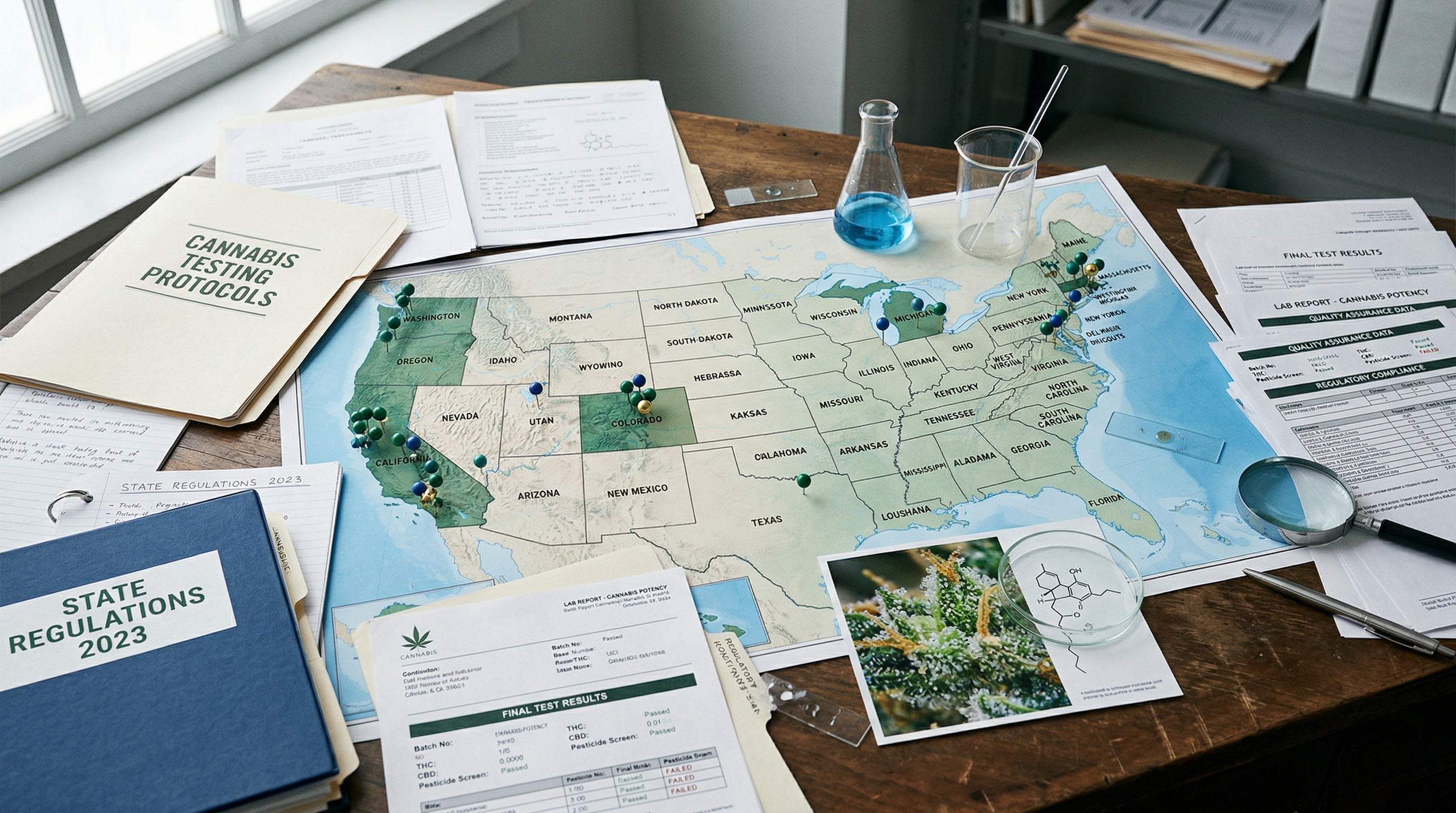
Because cannabis remains a Schedule I substance under federal law, there is no federal agency—no FDA, no USDA—establishing uniform testing standards across the country. Each state creates its own rules, its own acceptable limits, its own required tests, and its own lab accreditation requirements. The result is 38+ distinct regulatory frameworks with no national reference standards.
This means:
- No national reference standards: Unlike pharmaceutical or food testing, there are no federally certified reference materials for cannabis potency or contamination that all labs must calibrate against.
- No mandatory inter-laboratory proficiency requirements: In many states, labs aren’t required to demonstrate that their results match other labs testing the same material. NIST has been working to address this through its Cannabis Laboratory Quality Assurance Program (CannaQAP), which provides interlaboratory comparison exercises—but participation remains voluntary [Yarberry et al., 2024].
- Inconsistent enforcement: Even where good regulations exist on paper, enforcement budgets are often thin. Oregon found violations at 7 of its 11 labs. Massachusetts didn’t suspend a single lab for testing fraud until 2025.
- No mandatory terpene reporting: Even states with relatively rigorous potency and safety testing often leave terpene profiling entirely optional, despite its importance for consumers trying to select cannabis by effect.
Organizations like ASTM International, AOAC International, and the National Cannabis Laboratory Council have developed voluntary testing standards, but adoption is patchwork. ISO 17025 accreditation—the international standard for laboratory competence—is now required by California and Michigan and is increasingly being adopted elsewhere, but it remains far from universal. As of 2026, regulators in several states are tightening requirements, mandating reference labs to verify commercial testing results, and cracking down on lab shopping—but the system-wide problem remains structural.
Practical Implications
What This Means for You at the Dispensary Counter
Let’s bring this back to you, standing in a dispensary, looking at a wall of products with numbers on the labels.
First, stop chasing THC percentages. This is the single most actionable takeaway from everything above. Even if the numbers were accurate—and they frequently aren’t—THC percentage alone is a poor predictor of your experience. Research consistently shows that participants consuming higher-THC cannabis do not report proportionally stronger subjective effects. The entourage effect—the interplay of cannabinoids, terpenes, flavonoids, and other compounds—matters far more than any single number.
This is exactly why terpene-based experience systems like High Families exist. Instead of relying on an inflated THC number or the outdated indica/sativa binary, High Families groups cannabis by chemical experience profiles:
- Looking for focused productivity? Explore the Energetic High family, defined by terpinolene and ocimene.
- Want physical comfort and body-focused relief? The Relieving High family, rich in caryophyllene and humulene, may be your match.
- Seeking calm without sedation? The Uplifting High family, led by limonene and linalool, offers a mood-brightening alternative.
How to Actually Read a COA
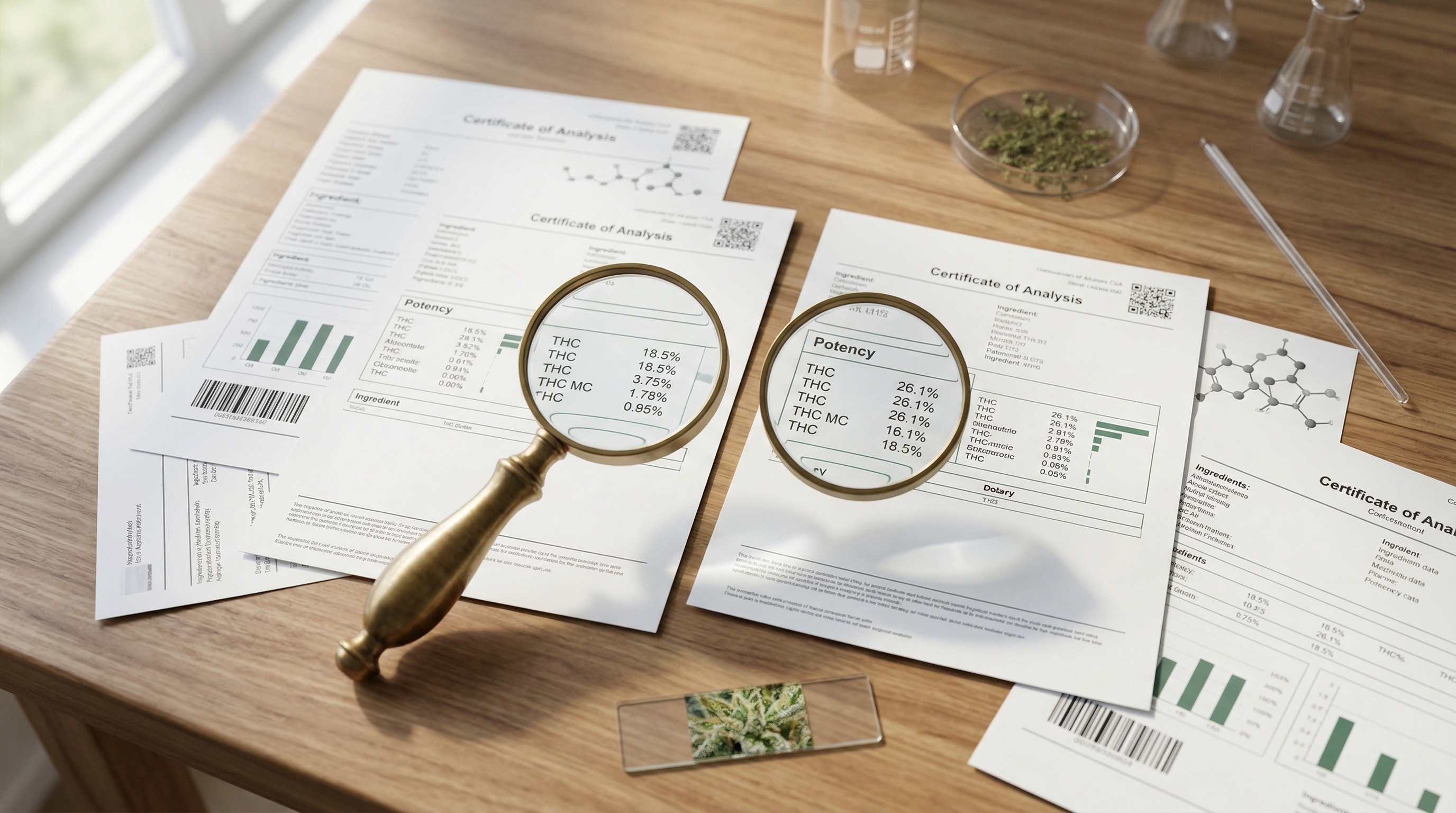
Every tested cannabis product should have a Certificate of Analysis (COA)—a report from the testing lab showing what was measured and what was found. We have a full guide to reading cannabis lab results, but here’s the critical checklist:
1. Check the lab’s credentials. Look for the lab name and verify it holds ISO 17025 accreditation. This international standard for testing laboratories means they’ve been independently audited for quality management and technical competence. Unaccredited labs are a red flag.
2. Check the test date. A COA more than six months old is a concern. THCa degrades into CBN over time, so old tests don’t reflect current product potency.
3. Look at the math. Verify the Total THC calculation: (THCa × 0.877) + Delta-9 THC. If a COA simply adds THCa and THC without applying the 0.877 conversion, that’s a red flag for overreporting.
4. Evaluate the terpene panel. If the COA has no terpene data, or lists suspiciously low terpene totals (below 0.5%), that tells you either the product is poor quality or the lab didn’t do a full analysis. Quality flower typically shows 1–3%+ total terpenes.
5. Check the contaminant panels. Look for pesticide, heavy metal, microbial, and residual solvent results. If any are listed as “not tested” for a state that requires them, don’t accept that product.
6. Watch for red flags in potency data. Consistently round numbers across multiple batches, THC percentages consistently at or above 30%, or total cannabinoids exceeding 100% in concentrates are all warning signs of data manipulation.
7. Scan the QR code if one exists. Some labs now issue verifiable digital COAs with QR codes that link directly to the lab’s database—making it impossible to alter or fabricate. This is the gold standard.
Practical Steps to Protect Yourself
-
Request the COA for any product you’re considering. Reputable dispensaries should have this readily available. If they don’t, that tells you something.
-
Use your senses. Your nose is a reliable terpene detector. A bud that smells like pine and earth (myrcene, pinene) will produce a different experience than one bursting with citrus (limonene). Hay-like or absent smell suggests degraded terpenes regardless of what the label says.
-
Be skeptical of extreme THC claims. Flower products claiming 35%+ THC warrant healthy skepticism. While not scientifically impossible with highly optimized cultivation, it’s rare—and the number is frequently inflated.
-
Prioritize terpene information over potency numbers. Even imperfect terpene data gives you more useful information about your likely experience than THC percentage alone.
-
Research the brand’s testing history. Brands that consistently use accredited labs, publish full COAs proactively, and don’t show suspiciously high outlier potency numbers across their product line are more trustworthy than those that don’t.
-
Advocate for better testing. Support state-level initiatives for reference labs, mandatory ISO 17025 accreditation, random market testing, and independent sampling protocols. Consumer pressure matters.
Reasons for Cautious Optimism
The crisis is real, but the response is growing:
- Multiple states are establishing state-run reference laboratories to independently verify commercial lab results—Oregon, New Jersey, California, and Massachusetts have all announced or launched programs.
- NIST’s CannaQAP program is building an interlaboratory proficiency framework that will eventually provide a scientific baseline for all licensed labs.
- ISO 17025 accreditation is becoming mandatory in an expanding list of states, raising the floor for lab quality.
- Federal rescheduling from Schedule I to Schedule III—currently under evaluation—would open the door for FDA involvement and the kind of uniform standards that exist for food and pharmaceuticals.
- Smart COAs with blockchain verification and QR-linked digital records are making it harder to falsify or manipulate results.
The system is broken, but it’s not unfixable. The pressure to fix it is growing—from regulators, from reputable labs losing business to fraudulent competitors, and from consumers who are starting to understand that the numbers don’t add up.
Key Takeaways
- THC numbers on cannabis labels are frequently inflated. A 2025 Scientific Reports study found over 70% of flower products fall outside a 20% accuracy threshold—and nearly all inaccurately labeled products were over-labeled.
- Lab shopping is endemic. Cultivators who choose their own testing labs create a direct financial incentive for those labs to produce flattering results, distorting the entire market.
- Terpene testing is even less standardized than potency testing, making it harder to select cannabis based on chemical profile—despite terpenes being critical to your actual experience.
- Contaminant screening varies wildly by state, with some markets testing for 66 pesticides and others testing for fewer than 20.
- No federal oversight exists, creating a patchwork of inconsistent state regulations with no national reference standards.
- You can protect yourself by requesting COAs, knowing how to read them critically, being skeptical of extreme THC claims, prioritizing terpene data, and using experience-based systems like High Families instead of chasing potency numbers.
FAQs
Are cannabis lab results completely unreliable?
Not entirely. Labs using rigorous methodology, ISO 17025 accreditation, and honest quality controls can produce reasonably accurate results. The problem is systemic—the incentive structure and lack of standardization mean you can’t always tell which labs are reliable without doing research. Think of it as trust-but-verify: look for accreditation, check the math on the COA, and prefer brands with consistent, non-outlier potency numbers across their catalog.
Why do dispensaries promote high-THC products if the numbers are inflated?
Because consumers have been conditioned to equate higher THC with a “better” product—similar to how alcohol proof is often associated with strength. This creates market demand that cultivators and retailers respond to, which in turn pressures labs to produce higher numbers. Breaking this cycle requires consumer education, which is why understanding terpene-driven experiences matters so much.
Will federal legalization fix cannabis testing?
Federal rescheduling or legalization would likely bring agencies like the FDA and USDA into cannabis regulation, establishing uniform testing standards, certified reference materials, and mandatory proficiency testing. However, building that regulatory framework would take years. In the meantime, state-level reforms—reference labs, mandatory ISO 17025, independent sampling, and random market testing—remain the most realistic paths to near-term improvement.
Is legal cannabis still safer than black market cannabis?
Generally, yes. Even with its flaws, the legal testing framework catches significant contamination issues that go completely undetected in unregulated markets. Studies consistently find substantially higher rates of pesticide contamination, heavy metals, and microbial hazards in illicit cannabis. Legal markets provide an imperfect safety net—but it is still a safety net.
What should I do if I find a product with an obviously fake or altered COA?
Report it to your state cannabis regulatory agency. Most states have online complaint portals. You can also report to the dispensary manager, who should pull the product. Consumer reports are one of the most reliable mechanisms that leads to lab investigations—Oregon’s 2024 enforcement actions against seven labs began with complaints from industry insiders and consumers.
Sources
- Giordano, G., Brook, C.P., Ortiz Torres, M. et al. “Accuracy of labeled THC potency across flower and concentrate cannabis products.” Scientific Reports 15, 20822 (2025). https://doi.org/10.1038/s41598-025-03854-3
- Schwabe, A.L., Johnson, V., Harrelson, J. & McGlaughlin, M.E. “Uncomfortably high: Testing reveals inflated THC potency on retail Cannabis labels.” PLOS ONE 18(4), e0282396 (2023).
- Erickson, B.E. “Shopping around for favorable cannabis testing labs.” Chemical & Engineering News 102(28) (2024). https://cen.acs.org/biological-chemistry/natural-products/Shopping-around-favorable-cannabis-testing/102/i28
- Yarberry, A., Phillips, M.M., Wilson, W.B. “Cannabis Laboratory Quality Assurance Program: Exercise 2 Cannabinoid Final Report.” NIST Interagency/Internal Report 8519 (2024). https://doi.org/10.6028/NIST.IR.8519
- Oregon Liquor and Cannabis Commission violation notices against seven cannabis testing laboratories (September 2024). https://oregonstatecannabis.org/news-25sep2024
- Jackson, M. “Mass. cops criticize cannabis regulators over THC potency inflation.” MJBizDaily (December 2025).
- National Cannabis Laboratory Council. “Standardizing Cannabis Lab Testing Nationally.” JD Supra (2022). https://www.jdsupra.com/legalnews/standardizing-cannabis-lab-testing-7409005/
- Russo, E.B. “Taming THC: potential cannabis synergy and phytocannabinoid-terpenoid entourage effects.” British Journal of Pharmacology 163(7), 1344–1364 (2011).


