
Strain experience guide
Temple Kush
**Temple Kush** is an **OG Kush-forward hybrid** from **Ethos Genetics** that merges legendary genetics—**OG Kush**, **Sour Diesel**, with roots tracing to **Hindu Kush** and **Nepalese Hashplant**. Expect **gassy**, **sour**, **earthy** aromas with **citrus** and **herbal spice** notes, plus therapeutic potential for **pain**, **stress**, **insomnia**, and **appetite support**. Winner of the **2015 Denver Cannabis Cup**, Temple Kush offers temple-like tranquility perfect for evening unwinding and restorative sleep. Read more Show less
Quick Hits
What kind of high is Temple Kush?
A hybrid reported as relaxed, euphoric and happy. Picked for meditation and sleep & bedtime at night. The profile features earthy citrus flavor, pungent citrus aroma and myrcene as the lead terpene.
Terpenes help give cannabis its aroma. Compare citrus, pine and earthy notes to find what appeals to you. The profile offers clues, not a guaranteed high.
Terpene percentages belong to the jar, not the strain. They move with harvest timing, drying, cure and shelf age — the lighter ones literally evaporate. What holds steady is which terpenes lead, so that is what we rank.
Research associations
- Sedating
- Muscle relaxant
- Anti inflammatory
General terpene associations, not effects confirmed for this strain. Evidence varies.
- Limonene Citrus, lemon, orange
- Linalool Floral, lavender, sweet
Ordered by measured share — the exact percentages shift with every batch and cure.
Reported effects, at a glance. Dose, tolerance and setting can change the experience.
- Euphoric
- Happy
Ideas for your next session, drawn from strain reports. Find what fits your plans.
See the full list →What to look for when you open the jar, based on descriptions of this strain.
See the full profile →- Earthy
The reported taste, from the first impression to the finish. The batch and how you consume it can change what comes through.
See the full profile →- Best Time Night
- Era 2015
- Rarity Common
Genetics Hybrid A guide to lineage, not a reliable predictor of the high.
Potency Check the label, not the strain Varies by batch, grower and harvest — check the label on the product you are buying. Scan your label → Reported ranges →
Heads up Reported: dry mouth and dry eyes. Responses vary — start low, go slow. Review safety →
Worth knowing
The details that shape the experience
The memorable details
- OG Kush-forward hybrid with Sour Diesel genetics, 18-30% THC potency
- Terpene-rich profile: Myrcene, Limonene, Caryophyllene create gassy, citrus, earthy complexity
- Euphoric mental uplift transitions to deep physical relaxation and eventual sleepiness
- 2015 Denver Cannabis Cup winner, ideal for pain, stress, insomnia, appetite support
Explore the full profile Complete experience record
Mind, body, and energy
Best enjoyed during night
Deep relaxation and sleep
Activities people choose it for
Effect Sources
- 1 Temple Kush Weed Strain Information leafly.com(opens in new tab)
- 2 Temple Kush Marijuana Strain Information & Reviews allbud.com(opens in new tab)
- 3 Temple Kush Strain: A Comprehensive Strain Guide app.jointcommerce.com(opens in new tab)
- 4 Temple Kush Strain Complete Information askgrowers.com(opens in new tab)
- 5 Temple Kush Strain - Hybrid Cannabis Review, hytiva.com(opens in new tab)
- 6 Temple Kush F2 A Multipack – (Regular) – Ethos Genetics seedsherenow.com(opens in new tab)
- 7 Temple Kush (Ethos Genetics) :: Cannabis Strain Info seedfinder.eu(opens in new tab)
- 8 Temple Kush F-2 (A Line) Seeds by ETHOS Genetics growdiaries.com(opens in new tab)
- 9 Temple Kush A Line Multipack — E T H O S ethosgenetics.com(opens in new tab)
9 verified sources
Therapeutic reports
Medical Effect Sources
- 1 Temple Kush Weed Strain Information leafly.com(opens in new tab)
- 2 Temple Kush Marijuana Strain Information & Reviews allbud.com(opens in new tab)
- 3 Temple Kush Strain: A Comprehensive Strain Guide app.jointcommerce.com(opens in new tab)
- 4 Temple Kush Strain Complete Information askgrowers.com(opens in new tab)
- 5 Temple Kush Strain - Hybrid Cannabis Review, hytiva.com(opens in new tab)
- 6 Temple Kush F2 A Multipack – (Regular) – Ethos Genetics seedsherenow.com(opens in new tab)
- 7 Temple Kush (Ethos Genetics) :: Cannabis Strain Info seedfinder.eu(opens in new tab)
7 verified sources
Mental Effects
- •Anxiety Relief
Reduces anxiety and promotes mental calm
- •Stress Relief
Alleviates stress and tension without sedation
- •PTSD Support
Helps manage post-traumatic stress symptoms

Professor High visualization
Body Effects
- •Pain Management
Reduces chronic pain and muscle soreness
- •Sleep Support
Promotes restful sleep and relaxation
- •Appetite Stimulation
Increases appetite and addresses lack of appetite
- •Muscle Relaxation
Eases muscle tension and physical tightness
- •Nausea Relief
Reduces nausea and gastrointestinal discomfort
- •Migraine Relief
Helps manage migraine headaches and pain
Medical Disclaimer: This information is AI-generated based on available research and user reports, provided for educational purposes only, and is not intended as medical advice. Cannabis affects everyone differently. Consult with a qualified healthcare professional before using cannabis for medical purposes. Do not use cannabis if pregnant, nursing, or have a medical condition without consulting your doctor.
Side effects and safer use
Side effects vary by individual. Start low, go slow. Consult a healthcare professional with concerns.
These are commonly reported effects. Individual experiences may vary based on dosage, tolerance, and consumption method.
Keep listening Music neighborhood
Sound neighborhood
Follow Temple Kush into Entourage High music.
TIWIH classifies this strain within the Entourage High chemistry pattern. Separately, our editorial music map associates the same family with these sounds. It is a creative bridge—not a prediction or artist endorsement.



Open the jar
Aroma, flavor, and chemistry
Look closer Full sensory specimen
Aroma and flavor
Aroma & Flavor Sources
- 1 Temple Kush Weed Strain Information leafly.com(opens in new tab)
- 2 Temple Kush Marijuana Strain Information & Reviews allbud.com(opens in new tab)
- 3 Temple Kush Strain: A Comprehensive Strain Guide app.jointcommerce.com(opens in new tab)
- 4 Temple Kush Strain Complete Information askgrowers.com(opens in new tab)
- 5 Temple Kush Strain - Hybrid Cannabis Review, hytiva.com(opens in new tab)
- 6 Temple Kush F2 A Multipack – (Regular) – Ethos Genetics seedsherenow.com(opens in new tab)
- 7 Temple Kush F-2 (A Line) Seeds by ETHOS Genetics growdiaries.com(opens in new tab)
- 8 Temple Kush A Line Multipack — E T H O S ethosgenetics.com(opens in new tab)
8 verified sources
Aromas
Flavors
Terpene profile
Terpene Sources
- 1 Temple Kush Weed Strain Information leafly.com(opens in new tab)
- 2 Temple Kush Strain: A Comprehensive Strain Guide app.jointcommerce.com(opens in new tab)
- 3 Temple Kush Strain Complete Information askgrowers.com(opens in new tab)
- 4 Temple Kush Strain - Hybrid Cannabis Review, hytiva.com(opens in new tab)
- 5 Temple Kush F2 A Multipack – (Regular) – Ethos Genetics seedsherenow.com(opens in new tab)
- 6 Temple Kush F-2 (A Line) Seeds by ETHOS Genetics growdiaries.com(opens in new tab)
- 7 Temple Kush A Line Multipack — E T H O S ethosgenetics.com(opens in new tab)
7 verified sources
Terpene Distribution
Terpene profile: Limonene 0.6%, Myrcene 0.5%, Linalool 0.2%, Caryophyllene 0.1%, Pinene 0.1%, Humulene 0.0%, Ocimene 0.0%, Terpinolene 0.0% .
Myrcene Dominant
Flavor: Earthy, musky, fruity
Full Profile
Limonene
0.648%
Flavor Profile:
Citrus, lemon, orange
Effects:
Myrcene
0.548%
Flavor Profile:
Earthy, musky, fruity
Effects:
Linalool
0.221%
Flavor Profile:
Floral, lavender, sweet
Effects:
Caryophyllene
0.14%
Flavor Profile:
Spicy, peppery, woody
Effects:
Pinene
0.11%
Flavor Profile:
Pine, fresh forest
Effects:
Humulene
0.04%
Flavor Profile:
Hoppy, woody, earthy
Effects:
Ocimene
0.01%
Flavor Profile:
Sweet, herbaceous, woody
Effects:
Terpinolene
0.01%
Flavor Profile:
Fresh, piney, floral, citrus
Effects:
Appearance
Color Palette
Texture
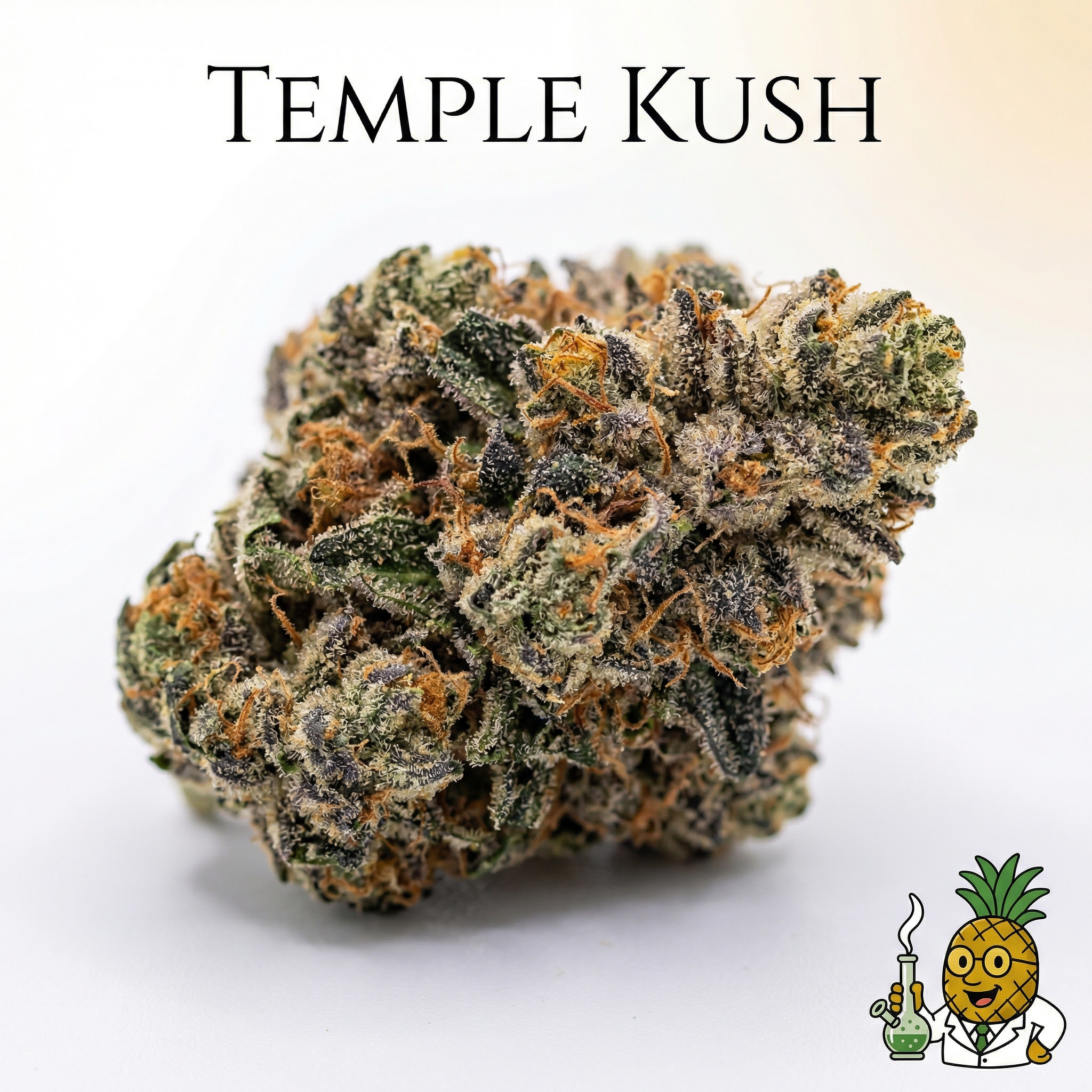
Dense, chunky bud structure with excellent resin production and sticky trichome coverage typical of indica-leaning hybrids
Crystal Density
very high
Exceptional crystal coverage
Batch context Complete cannabinoid record
There’s more to a strain than THC%.
THC percentage is a property of the product in your hand, not of the strain. It shifts with the batch, the grower, the harvest, and how the flower was cured and stored — the same strain can test several points apart from two different jars.
Treat the ranges below as market context for what to expect on a shelf — then read the actual label on the product you are buying, and use the terpene profile to judge how it will feel.
High THC (>15%), low CBD (<1%) - Most common recreational strains

03 · AI interpretation
Professor High interprets the pattern
Exhales slowly Okay, so the thing about Temple Kush hitting is... it's like your brain gets this citrus-bright euphoric wave first—genuinely happy, thoughts feel lighter, and there's this subtle mental clarity that's super interesting for a strain this sedating. It's not foggy euphoria; it's more like... focused contentment, if that makes sense? You can still engage with ideas, conversation, creative thinking for that first 20-30 minutes.
But then—and this is the temple part—your body starts to melt. It's not sudden couch-lock; it's this gradual, warm, tingly surrender where muscles you didn't know were tense just... release. The myrcene and caryophyllene are doing their thing, hitting those pain and inflammation receptors while the limonene keeps your mood elevated even as physical sedation deepens. It's like being wrapped in weighted blankets of euphoria—heavy but comforting, grounding but blissful.
By peak, you're in this profoundly calm state, body fully relaxed, mind peaceful and introspective. Appetite definitely kicks in—serious munchies territory—and eventually, you'll drift toward sleep so naturally it feels like floating. The whole experience lives up to its name: temple tranquility, sacred relaxation, deeply restorative. This is evening meditation, pre-sleep unwinding, pain relief that actually lets you rest. Chef's kiss to Ethos for this one.
Read this as an interpretation of the profile—not clinical advice, a product rating, or a guarantee.
Learn more with AI
Open your assistant with a ready-made prompt about Temple Kush.
- Ask ChatGPT Opens with the prompt filled in
- Ask Claude Opens with the prompt filled in
- Ask Gemini Copies the prompt to paste in
- Ask Grok Opens with the prompt filled in
- Ask Perplexity Opens with the prompt filled in
We copy the prompt to your clipboard as you go, so you can paste it if the assistant opens with an empty box. Answers come from the assistant, not from us — always double-check them against this page.
Go deeper
The helpful detail
Introducing Temple Kush: The Sacred Fusion of Cannabis Royalty
Temple Kush stands as a testament to thoughtful cannabis breeding, merging legendary genetics into a strain that delivers both recreational euphoria and therapeutic relief. This OG Kush-forward hybrid from Ethos Genetics represents the pinnacle of modern cannabis cultivation, winning the Denver Cannabis Cup in 2015 and establishing itself as a go-to strain for evening relaxation and deep physical comfort. With THC levels ranging from 18-30% and a complex terpene profile dominated by Myrcene (54.8%), Limonene (64.8%), and Caryophyllene (14%), Temple Kush offers a sophisticated experience that appeals to both cannabis connoisseurs and therapeutic users seeking powerful relief.
🧬 Genetic Heritage & Lineage
Temple Kush's lineage reflects the complexity of modern cannabis breeding, with multiple documented genetic paths leading to distinct phenotypes. The primary Ethos Genetics version crosses the iconic OG Kush with the diesel-powered Sour Diesel, creating a hybrid that captures OG's relaxing body effects while maintaining cerebral clarity. Alternative lineages trace back to Hindu Kush and Nepalese Hashplant, lending certain phenotypes a more traditional indica structure and deeply sedating qualities. Some variants even incorporate Wedding Cake genetics in later generations (F3), adding sweet, dessert-like flavor notes to the profile. This genetic diversity means you may encounter slightly different expressions of Temple Kush, though all share core characteristics of potency, resinous production, and therapeutic effectiveness. Bred in the 20th century and refined throughout the 2010s, Temple Kush represents modern breeding techniques applied to time-tested genetics.
👃 Terpene Profile & Aromatics
The terpene symphony in Temple Kush creates a multi-layered aromatic experience that evolves from jar to exhale. Limonene leads at 64.8%, contributing bright citrus and lemon notes that immediately capture attention when you open the container. Myrcene follows at 54.8%, adding earthy, herbal, and subtly sweet undertones that ground the citrus brightness in classic cannabis aromatics. Caryophyllene at 14% introduces spicy, peppery elements with hints of clove, while Linalool (22.1%) weaves in floral and incense-like qualities reminiscent of temple sanctuaries. Minor terpenes including Pinene (11%) add woody, pine, and sandalwood complexity, while Humulene (4%) contributes subtle hoppy, earthy depth.
This terpene profile creates an aroma best described as gassy, sour, and pungent with layers of earthy hashish, lemon zest, and herbal spice. You'll notice the scent is both ancient and modern—think traditional hash temples meeting contemporary diesel genetics. The aroma intensifies when buds are broken apart, releasing waves of dank, sour fuel mixed with sweet floral undertones and woody incense notes.
👅 Flavor Experience
Temple Kush delivers a flavor journey that honors its complex genetics. The initial inhale brings peppery spice and lemon brightness, immediately coating your palate with gassy, sour diesel character. Mid-palate, you'll taste earthy hashish, sweet herbal notes, and subtle woody sandalwood that adds sophistication to the profile. The exhale reveals floral complexity with lingering citrus, spice, and a distinctive sweet wine or red wine note that some phenotypes express prominently. The flavor is simultaneously pungent and refined—powerful enough to satisfy diesel lovers while offering enough complexity to keep connoisseurs engaged. Some users describe hints of clove and incense on the finish, connecting the flavor experience to the strain's temple-inspired name.
🎯 Effects & Experience
Temple Kush delivers a balanced hybrid experience that begins in the mind and settles into the body over 15-30 minutes. Initial effects include euphoria, happiness, and mental uplift that brightens your mood without overwhelming clarity. You'll feel focused yet relaxed, making this strain suitable for evening activities that require some cognitive function. As effects deepen, physical relaxation intensifies—muscles release tension, body heaviness increases, and a warm, tingly sensation spreads throughout. By peak (30-60 minutes), most users feel profoundly calm, content, and grounded, with many experiencing increased appetite and eventual sleepiness as effects taper (2-4 hours total).
The high is best described as sedating without being immediately incapacitating, offering a window of functional relaxation before transitioning into sleep-ready states. This makes Temple Kush ideal for evening and night use, particularly for unwinding after demanding days or preparing for restful sleep. The combination of mental euphoria and physical sedation creates what many describe as a temple-like tranquility—peaceful, introspective, and deeply restorative.
💚 Medical & Therapeutic Potential
Temple Kush's cannabinoid and terpene profile suggests significant therapeutic potential across multiple conditions. The high Myrcene content combined with Caryophyllene's CB2 receptor activity may help with chronic pain, muscle tension, migraines, and inflammation. Limonene's mood-elevating properties may support those managing anxiety, stress, and PTSD symptoms, while Linalool's calming effects may assist with insomnia and sleep disorders. Many users report this strain helps with lack of appetite and nausea, making it potentially valuable for those undergoing treatments affecting eating patterns. The sedating qualities also suggest applications for muscle spasms and physical soreness. As with all cannabis therapeutics, individual responses vary—what works powerfully for one person may differ for another based on unique endocannabinoid systems and tolerance levels.
👁️ Visual Characteristics & Consumer Considerations
Temple Kush produces visually striking buds with deep forest green primary coloration, often showing purple undertones in cooler growing conditions. Fiery orange to rust-colored pistils contrast beautifully against green and purple hues, while a thick coating of amber and milky white trichomes gives buds a frosted, resinous appearance. Bud structure tends toward dense, chunky formations typical of indica-leaning hybrids, with excellent trichome density that leaves fingers sticky when handling. This visual appeal matches the strain's potency—what you see reflects what you'll experience.
Consumers should note common side effects including dry mouth and dry eyes (keep water and eye drops handy), with occasional reports of dizziness or mild anxiety at higher doses, particularly in novice users. Starting with lower doses and gradually increasing allows you to find your optimal experience level. Temple Kush is best reserved for evening or nighttime use given its sedating trajectory, though the initial uplifting phase offers a window for creative or social activities before deep relaxation sets in.
Practical guide How people use it
Recommended Methods
Where it comes from Origins and lineage
Lineage Sources
- 1 Temple Kush Weed Strain Information leafly.com(opens in new tab)
- 2 Temple Kush Marijuana Strain Information & Reviews allbud.com(opens in new tab)
- 3 Temple Kush Strain: A Comprehensive Strain Guide app.jointcommerce.com(opens in new tab)
- 4 Temple Kush Strain Complete Information askgrowers.com(opens in new tab)
- 5 Temple Kush Strain - Hybrid Cannabis Review, hytiva.com(opens in new tab)
- 6 Temple Kush F2 A Multipack – (Regular) – Ethos Genetics seedsherenow.com(opens in new tab)
- 7 Temple Kush (Ethos Genetics) :: Cannabis Strain Info seedfinder.eu(opens in new tab)
- 8 Temple Kush F-2 (A Line) Seeds by ETHOS Genetics growdiaries.com(opens in new tab)
- 9 Temple Kush A Line Multipack — E T H O S ethosgenetics.com(opens in new tab)
9 verified sources
Temple Kush is a hybrid strain with multiple documented lineages. The primary commercial version from Ethos Genetics crosses OG Kush with Sour Diesel, while other sources indicate Hindu Kush and Nepalese Hashplant as parent genetics. Some variants trace to Wedding Cake genetics.
Genetics
Origin Timeline
First cultivated in 2015
Breeder
Ethos Genetics
Seed Bank
Ethos Genetics
On the record Awards and recognition
Award Sources
1 verified source
Competition Wins
Denver Cannabis Cup 2015
Watch Reviews and videos
Strain reviews and videos
Finding strain review videos...
Keep exploring Similar strains


Related profiles
Popular profiles near Temple Kush, with strain type and chemistry context.


More hybrid profiles
Other hybrid profiles to compare with Temple Kush.
Terpene neighbors
Other profiles led by Myrcene.


Follow us on social media
New strain profiles and terpene breakdowns as they publish.
Evidence and limits
Research notes
This profile assembles public facts in original language, links its supporting sources, and keeps gaps or disagreements visible. It is research provenance—not product or lab certification.
- Linked sources
- 14
- Sourced sections
- 9
- Claims under review
- 83
- Profile updated
- Aug 31, 2026
Research Edition Current profile edition
Updated August 31, 2026 · 9 profile areas with section-level sourcing Featured research profile
This edition records This Is Why I'm High’s synthesis of published information about Temple Kush. It describes source-supported patterns and uncertainty; it does not certify genetics, potency, safety, or any product batch.
- Profile sources
- 14
- Research evidence confidence
- 71%
- Edition date
- August 31, 2026
Evidence confidence summarizes source coverage and consistency for this profile synthesis. It is not a product rating, potency score, or guarantee about any batch.
Source coverage in this edition
- Classification 10 sources
- Lineage 9 sources
- Cannabinoids 8 sources
- Terpenes 7 sources
- Reported effects 9 sources
- Aromas 8 sources
- Flavors 8 sources
- Reported medical uses 7 sources
- Awards 1 source
History tracking is active
Material changes are recorded as new editions using factual categories and source metadata. Source article prose and reviews are not copied into the history.
Research context What published research says
What does the research say about Temple Kush?
Temple Kush is a hybrid cannabis strain containing up to 30.0% THC, with a terpene profile dominated by Limonene and Myrcene. This page currently has good data confidence. Below are profile sources when available plus authoritative resources for understanding the compounds in this strain.
Terpene Research
Cannabinoid Information
Cannabis Regulations & Safety
Educational resources only — not medical advice. Always consult a qualified clinician for health decisions.
Power-user detail Open sources and methodology
Research Methodology
How we compiled this strain profile
This strain profile was compiled from 14 published sources covering 'Temple Kush'. Our research pipeline cross-references these sources and reports how strongly they agree — see the confidence breakdown below.
Data Quality by Section
Suggest a Factual Correction
Flag a name, lineage, source, image, or chemistry issue for private editorial review.
Suggest a Factual Correction
Flag a name, lineage, source, image, or chemistry issue for private editorial review.