California Cannabis at 10: What Prop 64 Actually Changed
Prop 64 hit its 10-year mark. What California legalization actually changed — genetics, policy, culture — and what it didn't fix. The data and the lessons.

Professor High
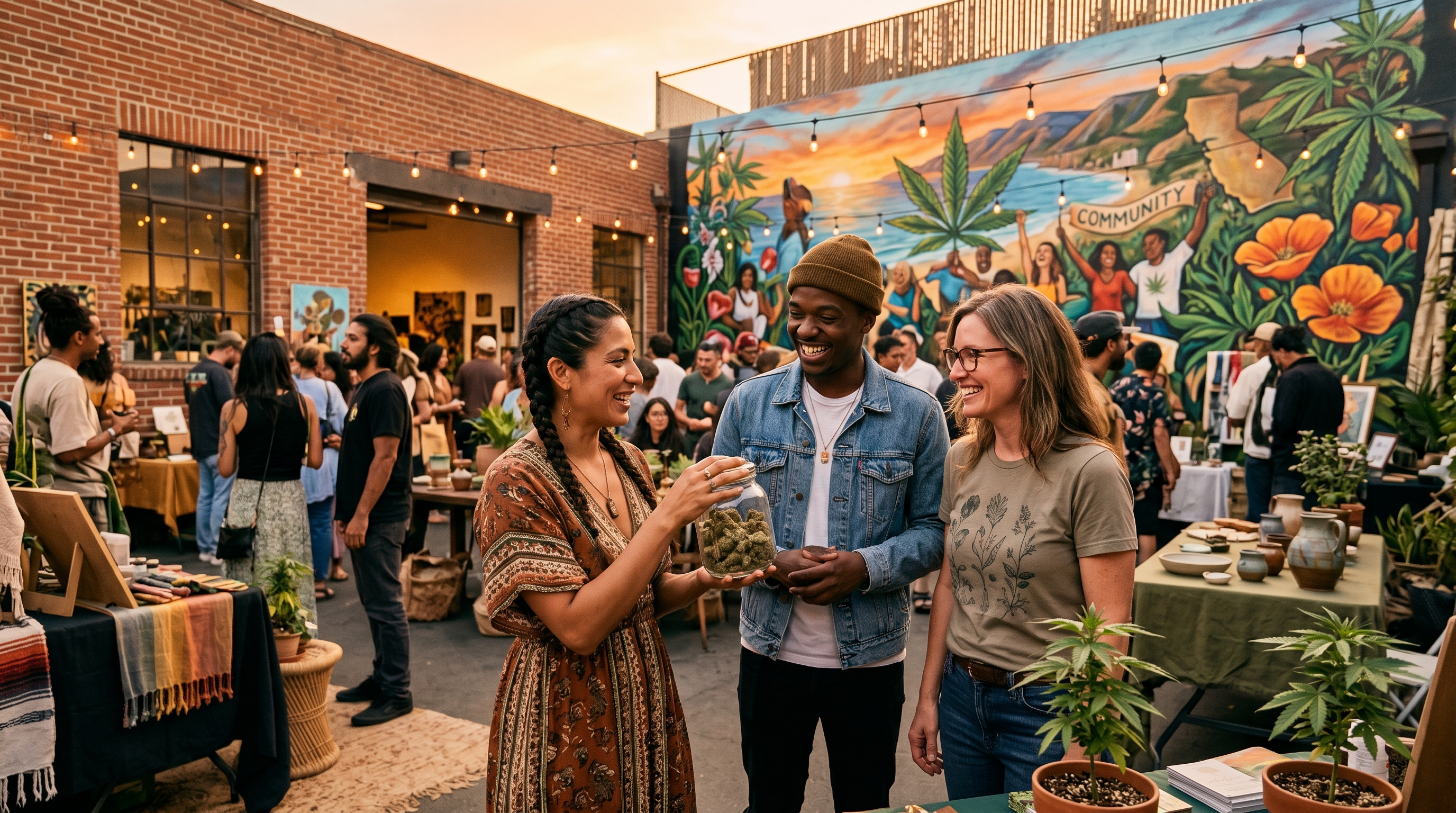
On the night of November 8, 2016, California became the most consequential cannabis vote in American history. Proposition 64 — the Adult Use of Marijuana Act — passed with 57 percent of the vote, making the nation’s most populous state the fifth to legalize recreational cannabis. Legal sales began January 1, 2018. Ten years on, we have enough data to give Prop 64 an honest report card.
The grade isn’t simple. California’s experiment is simultaneously the most successful and the most cautionary tale in cannabis policy. It cleared more criminal records than any other state. It built the largest regulated cannabis market on earth. It spawned the genetics that now dominate menus from Amsterdam to Auckland. And it still hasn’t cracked the illicit market — which, by volume, outproduces the legal one by a factor of eight to one.
This is what ten years actually looks like.
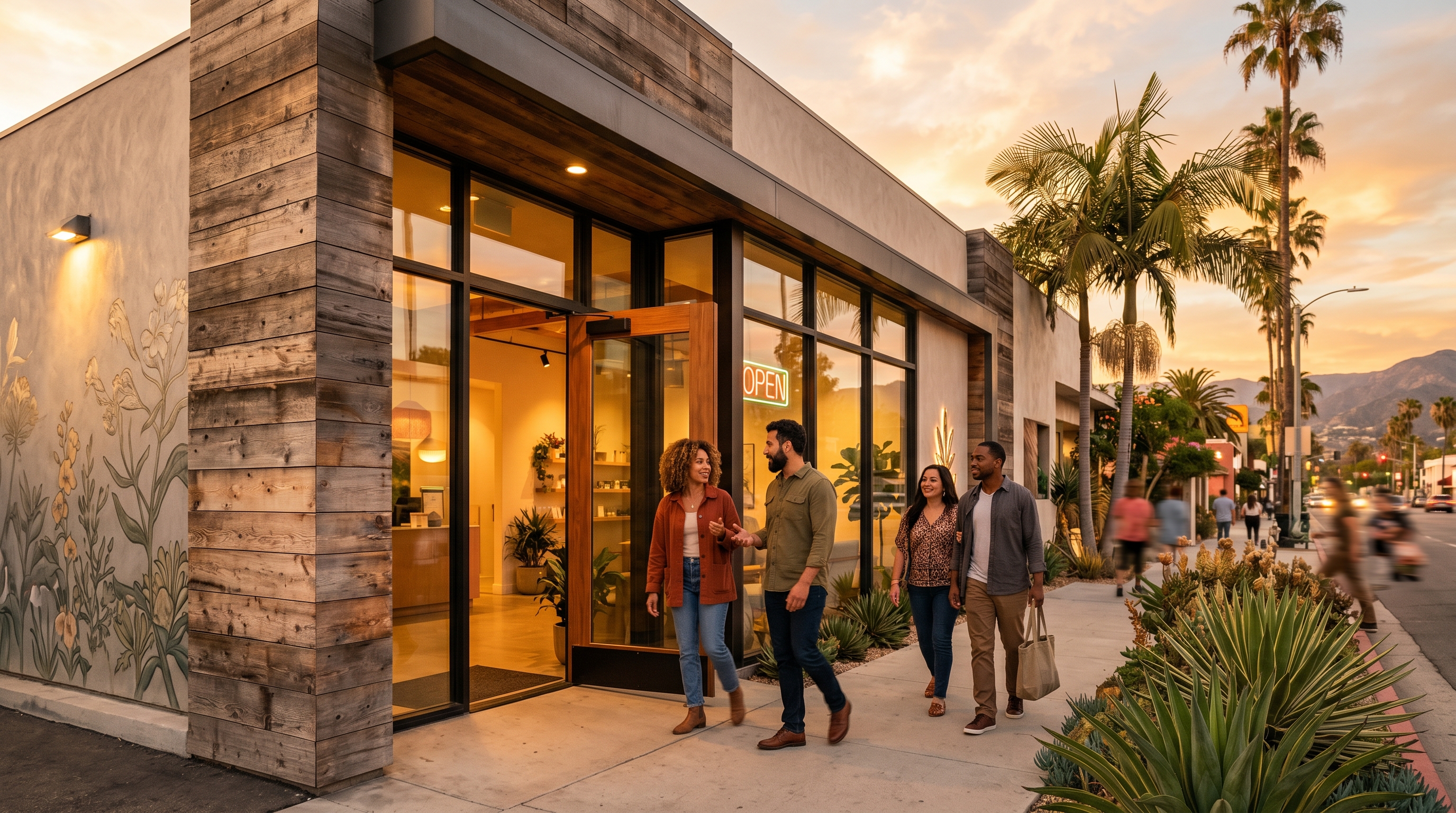
What Prop 64 Actually Did
The Adult Use of Marijuana Act accomplished three things immediately and one thing gradually.
Immediately: Adults 21 and older could possess up to 28.5 grams of cannabis and grow up to six plants at home. Personal-use penalties largely disappeared. Medical cannabis patients retained their existing rights.
Structurally: It established a licensing framework with distinct categories for cultivation, manufacturing, distribution, retail, and testing — each with separate state-level approvals and local permitting requirements layered on top. That layering would prove crucial, and costly.
Criminally: It created a pathway to retroactively clear or reduce cannabis convictions. By the ten-year mark, California has cleared or reduced more than 215,000 cannabis-related convictions. No other state comes close to that number. It is the most ambitious criminal justice dimension of any legalization law in the country.
Gradually: Tax revenue. California has collected more than $7 billion in cannabis excise and cultivation taxes since retail sales began in 2018. That money has funded the Cannabis Equity Grants Program, environmental restoration (over $90 million across 89 state parks projects), and community reinvestment. The early promises were bigger than the math delivered, but $7 billion is not nothing.
The Genetics Legacy: California As Breeder to the World
Here is the dimension of Prop 64 most policy analysts undercount: California was already the world’s most influential cannabis breeding hub before legalization, and legalization turbocharged that role.
The lineage is worth tracing. Girl Scout Cookies — bred by the Cookie Fam collective in San Francisco’s Bay Area around 2010 — crossed OG Kush with Durban Poison and produced something that changed everything. GSC established a new flavor profile: sweet, dessert-forward, terpene-dense, high-THC. It became a benchmark. And then it became a foundation.
From GSC’s genetic line came Gelato — a collaboration between Sherbinski and Cookie Fam — which combined Thin Mint GSC with Sunset Sherbet. Gelato’s limonene-forward and caryophyllene-rich profile became the template for the dessert hybrid era. From Gelato came Wedding Cake, another California-bred variety crossing Triangle Kush and Animal Mints, which now ranks among the most purchased strains in the United States.
Jungle Boys — Ivan and Juice, operating out of Los Angeles since 2006 — built a library of more than 500 cultivars. Wonderbrett, whose story begins with Brett receiving the original OG Kush in 1997, pheno-hunted thousands of seeds before commercializing. Compound Genetics, founded in 2017, pioneered collaborations like Apples and Bananas — a joint project with Cookies that emerged from Jet Fuel Gelato seed collections and became one of the most sought-after genetics of the early 2020s.
The pattern is consistent: California breeders working with California genetics, creating strains that other breeders in other states — and other countries — then crossed into their own local programs. Nearly every top dispensary in New York, Illinois, or Massachusetts carries strains that trace their lineage directly through California breeding programs. The genealogy connects nearly everything you’ve smoked in the last decade back to this geography.
Prop 64 didn’t create this breeding culture. But it funded it, legitimized it, and gave California breeders something they’d never had before: a legal retail shelf to put their work on.

The Tax Revenue Story
California projected that cannabis taxes would generate somewhere between $1 billion and $1.4 billion annually by the mid-2020s. The actual 2025 figure came in at approximately $640 million in state cannabis tax revenue — on $4.06 billion in legal retail sales.
That’s not failure; that’s a significant funding stream for public programs. But it’s also roughly half the early projections. What happened?
Three things. First, the cultivation tax — a flat per-ounce levy on all cannabis grown, regardless of wholesale price — proved punishing as prices collapsed. Governor Newsom signed Assembly Bill 195 in 2022 eliminating it, but the damage to smaller cultivators had already accumulated. Second, legal cannabis prices, while declining, still carry a 15 percent state excise tax on top of local sales taxes that often run 5 to 15 percent. In some jurisdictions, effective tax rates exceed 30 percent. That creates a price floor the illegal market simply ignores. Third — and most significantly — 56 percent of California’s municipalities have banned retail cannabis sales entirely. Those communities generate zero legal tax revenue and instead feed the illicit supply chain.
AB 564, signed in 2025, reversed a scheduled excise tax increase, providing some relief. But the structural problem remains: California designed a tax apparatus for a market that was assumed to out-compete the black market on price, quality, and convenience. It has done two of those three things moderately well. Price is not one of them.
The Illicit Market Problem
Let’s be precise about the numbers, because the headlines often blur the distinction between California’s in-state illegal market and the out-of-state export trade.
In 2024, licensed California cannabis cultivators produced approximately 1.4 million pounds of cannabis. Illegal cultivators produced an estimated 11.4 million pounds — eight times more. Of that illegal production, roughly $2 billion worth was consumed by Californians; approximately $9.9 billion worth was exported to other states. California’s illegal cannabis export trade is, by itself, larger than the entire legal markets of most other states.
Within California, approximately 60 percent of cannabis consumed comes from the unregulated market. The legal market’s 40 percent share has been roughly stable since 2020 — four years of near-flat growth in market penetration despite significant enforcement efforts.
The state’s Unified Cannabis Enforcement Task Force has not been idle. Since formation, it has seized more than 778,000 pounds of illicit cannabis, eradicated more than 1 million illegal plants, and disrupted an estimated $1.2 billion in illegal market activity. The California Department of Fish and Wildlife has separately eradicated 25.7 million plants. In 2025 alone, the state raided 617 illegal grow sites.
The raids continue. The market continues. Stanford behavioral sciences professor Keith Humphreys, assessing Prop 64 at the ten-year mark, put it plainly: “It was packaged as a free lunch. There are no free lunches.”
Why does the illicit market persist? UC Berkeley Cannabis Research Center director Michael Polson points to the structure: “Local control has been a real big hindrance.” When 56 percent of cities ban legal retail, consumers who live in those cities have two choices: drive to a permitted jurisdiction or buy from an unlicensed seller down the block. Most take the path of least resistance. The illegal delivery networks filling that gap operate at lower prices, with zero sales tax, and with minimal consequence — Prop 64 reduced illegal sales from felonies to a $500 fine and six months in jail, but enforcement is thin.
The balance that California sought between access and regulation has not yet been struck.
The Social Equity Gap
Prop 64 was explicit about social equity. The law directed tax revenue toward communities disproportionately affected by the War on Drugs. It established equity licensing programs in cities like Los Angeles and Oakland. The intent was clear: the people who bore the worst costs of prohibition should have a meaningful path into the legal industry.
The implementation has been far messier. Local governments are not required to operate social equity programs — California offers grant funding to incentivize them, but uptake varies enormously. Where programs exist, they have faced administrative backlogs, undercapitalization, and municipal foot-dragging.
A 2025 case in West Sacramento illustrates the pattern. Richard Miller met all of California’s and West Sacramento’s stated social equity eligibility criteria, advanced through a full Request for Proposal process, and then received notice that the city was canceling the equity retail RFP entirely — with no legally required rationale provided.
LA’s social equity exclusivity period has been repeatedly extended, currently through the end of 2025, because equity applicants continue to struggle accessing the capital required to open and sustain operations even after receiving licenses. A license without capital is an expensive piece of paper.
The uplift promised to harmed communities has arrived unevenly, where it has arrived at all. The Minority Cannabis Business Association has documented persistent gaps between equity program intentions and equity program outcomes across California municipalities. Access to capital — which white-owned MSOs obtained through institutional investors while social equity applicants were largely locked out — remains the central structural failure.
The Trendsetter Role: What Other States Learned
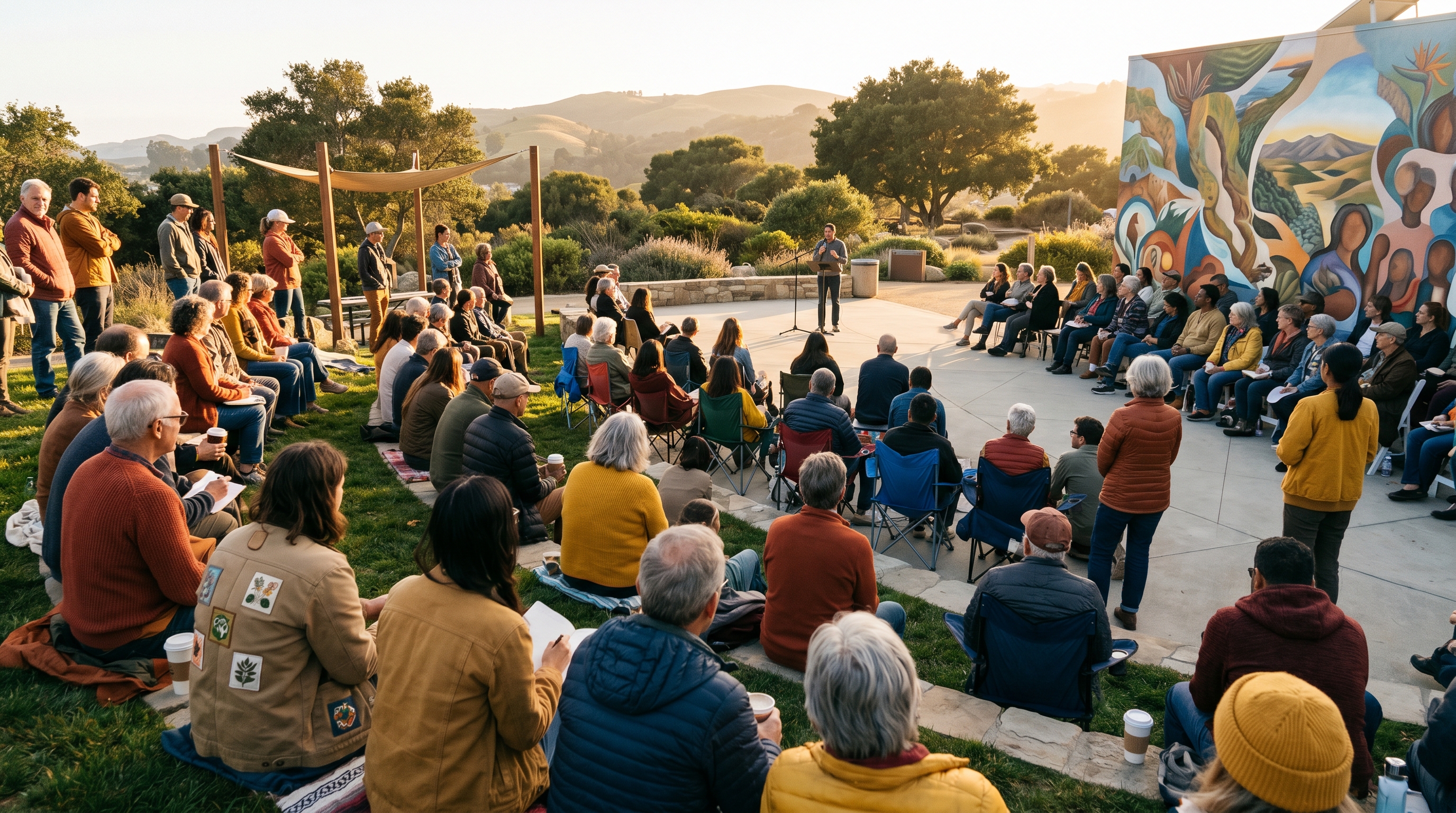
California was not the first state to legalize cannabis — Colorado and Washington preceded it by four years. But California was the biggest experiment and the most watched. When it launched legal retail in January 2018, every state policy shop in the country was taking notes.
The lessons were not all positive, but they were highly instructive.
Illinois (2020) built its social equity program with more teeth, reserving a percentage of licenses specifically for equity applicants and tying rollout timelines to equity license approvals. The program has its own failures, but it reflected deliberate learning from California’s weaker equity enforcement.
New York (2021/2023) explicitly attempted to prioritize equity applicants in its initial retail licensing wave — a direct response to watching California’s equity program get swamped by well-capitalized operators. New York’s implementation has faced its own serious problems, but the policy intent traced directly to California’s cautionary example.
Massachusetts moved more slowly than California on municipal opt-ins, but its host community agreement model — which requires dispensaries to negotiate directly with municipalities — drew on California’s experience with local bans creating geographic deserts.
None of these states avoided all of California’s mistakes. Several added their own. But the cannabis policy field would be significantly less informed without California as a decade-long laboratory. This is the understated role California has played: not a model to copy wholesale, but a data source rich enough to teach everyone what to do and what absolutely not to do.
This laboratory role will matter even more as federal rescheduling reshapes the national landscape. When interstate commerce becomes possible — potentially within this decade — California’s growers and breeders are positioned to be the wholesale suppliers to the nation. The genetics infrastructure, the cultivation scale, and the brand equity are already there.
What California Got Right
Let the record show: California built something real.
Product safety and testing standards are the clearest win. California requires licensed cannabis to be tested for pesticides, heavy metals, mycotoxins, microbials, and potency before it reaches consumers. The testing regime is among the most rigorous of any state. Consumers in the legal market have genuine assurance about what they’re buying that simply doesn’t exist in the illicit market.
License category granularity created genuine market diversity: separate licenses for small cultivators (Type 1 licenses for under 5,000 square feet of canopy), medium cultivators, large-scale operations, manufacturers, distributors, retailers, and testing labs. This created an ecosystem rather than just a retail market.
Conviction clearance at scale — 215,000+ cases — is a genuine civil rights achievement that no other state has replicated in scope.
Home cultivation rights are real and enforceable. Six plants per household. No state has walked this back.
Environmental enforcement against illegal grows has improved dramatically, with significant restoration investment in ecosystems damaged by illegal cultivation operations in Northern California’s growing regions.
What California Got Wrong
The failures are structural, not incidental.
The tax architecture was designed to fund programs while the market was assumed to grow. Instead, a cultivation tax hit small farmers hardest during a period of price collapse, the excise rate remained punishing relative to the illicit market price advantage, and local taxes compounded the gap. The fixes (AB 195, AB 564) came years after damage was done.
Local veto power created a patchwork that serves no one well. A state that legalizes cannabis but allows 56 percent of its municipalities to prohibit retail has not actually legalized cannabis for the majority of its residents. It has created a system where where you happen to live determines whether you have legal access within a reasonable distance. This geographic inequality was predictable and predicted. It was baked into Prop 64 as a political concession and has never been addressed legislatively.
Social equity as aspiration without enforcement allowed equity programs to become performative. Without capital access requirements, without mandatory license allocation percentages, and without municipal compliance enforcement, equity licensing became a goal that local governments could honor in form while undermining in substance.
Over-licensing in boom years followed by mass attrition. California issued thousands of licenses in 2018 to 2021 based on optimistic projections. By 2025, the state had lost more than one fifth of its active licenses in a single year, ending the third quarter with roughly 5,380 active licenses — down from a peak of more than 7,000. The consolidation is ongoing, squeezing out smaller operators who can’t sustain operating losses that well-capitalized MSOs absorb as a cost of doing business.
The Next Ten Years
California in 2036 will look materially different from California today because of forces Prop 64 set in motion but did not control.
Federal Schedule III reclassification changes the financial calculus for licensed operators. Under Schedule I, cannabis businesses could not deduct ordinary business expenses under Section 280E of the tax code. Reclassification removes that prohibition, immediately improving margins for every licensed operator in the country. California’s legal operators will benefit disproportionately because they have the largest legal market.
Interstate commerce is the bigger game. When federal law permits cannabis to cross state lines — either through comprehensive legalization or through regulatory accommodation — California’s cultivation infrastructure becomes a national supply chain. The Emerald Triangle (Humboldt, Mendocino, Trinity counties) has been producing world-class cannabis for sixty years. That expertise, that terroir, that genetic library doesn’t exist anywhere else in the country at comparable scale.
Germany’s model shows that even conservative legalization frameworks unlock massive latent demand. Thailand’s reversal shows that gains are not permanent without political and structural foundation. California has both the gains and the structural fragility. The next decade will determine which one defines the legacy.
Price stability — driven by interstate competition and federal tax reform — is the most likely market-shaping force. If legal California cannabis reaches price parity with the illicit market, the illicit market’s primary competitive advantage disappears overnight. That is not guaranteed. But it is, for the first time in the ten-year history of Prop 64, plausible.
The Honest Verdict
Prop 64 made cannabis legal in California. That is not a small thing. The personal freedom, the medical access expansion, the 215,000 cleared convictions, the quality standards that protect consumers — these are real accomplishments that matter in real people’s lives.
But legalization is not the same as a functional market. A functional market requires price competitiveness, geographic access, capital availability for small and equity operators, and enforcement sufficient to make illegal operation genuinely risky. California has made progress on some of these dimensions. It has stalled or backslid on others.
The generation that voted for Prop 64 in 2016 was voting against prohibition. They were right to. The generation that will redesign California’s regulatory framework over the next decade has a different question to answer: legalization for whom, at what price, accessible where?
Ten years of data have given us the answer to Prop 64. The next vote — whether legislative or at the ballot — needs to ask better questions.
Track your own cannabis experience as personal data. What works, what doesn’t, and at what dose — that’s intelligence the legal market can’t give you. Download the app and start building yours.
Sources: California Governor’s Office — 10-Year Cannabis Anniversary · Press Democrat — Prop 64 at 10: Illicit Market · LAO Cannabis Tax Revenue Update Q2 2025 · CDTFA Q1 2025 Cannabis Tax Revenue · California Cannabis Market Outlook 2024, ERA Economics · DCC — Unified Cannabis Enforcement Task Force 2024 · Weedmaps — The Strains That Made Compound Genetics · Leafly — Who Are the Jungle Boys · Cannabis Business Times — 60% Illicit Consumption · California Cannabis Statistics 2026
