The Environmental Cost of Growing Cannabis
Indoor cannabis produces up to 5,184 kg of CO2 per kg of flower. Explore the science of cultivation's footprint and what's changing.

Professor High
Your friendly cannabis educator, bringing science-backed knowledge to the community.
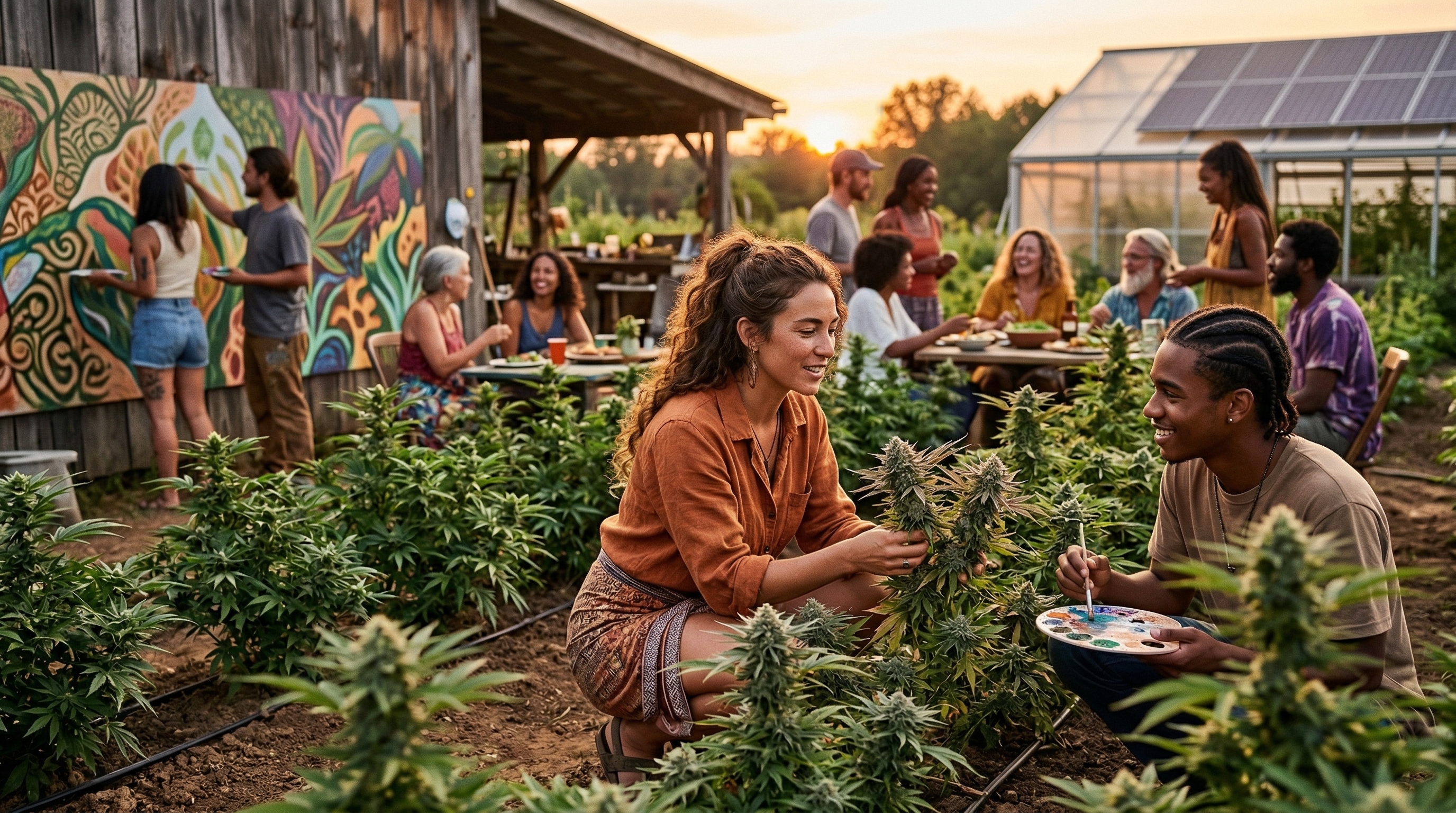
The cannabis industry is growing fast. As more states legalize cannabis, demand for flower keeps climbing. But this boom comes with a hidden cost: a massive environmental footprint. From power-hungry indoor grow rooms to water-starved watersheds, growing weed takes a real toll on the planet.
This deep dive breaks down the science behind that footprint. We will look at the data on energy use, water demand, and chemical runoff. We will also explore the solutions already making a difference. By the end, you will have a clear picture of what sustainability looks like in the cannabis world and how your choices as a consumer matter.
The Carbon Footprint in Your Joint
Here is a number that might stop you mid-puff: producing one kilogram of indoor-grown cannabis can generate roughly 2,283 to 5,184 kilograms of CO2 equivalent emissions [Mills, 2012]. That is comparable to driving a car across the United States and back for every 2.2 pounds of flower produced. If the entire U.S. cannabis market were a country, its energy use would rank it among small nations.
Behind the beautiful buds and terpene-rich aromas lies an uncomfortable truth: growing weed has a big environmental cost. Staggering electricity bills power indoor grow rooms. Rivers are being drained for irrigation in drought-stricken regions. The cannabis industry’s ecological footprint is something every consumer, cultivator, and advocate should understand.
This is not about guilt-tripping you. It is about understanding the full picture so our community can push for a greener future. If we love this plant, we should also love the planet that grows it.
The Science Explained
How Cannabis Cultivation Impacts the Environment
To understand the environmental cost of cannabis, think of cultivation as a three-legged stool: energy consumption, water use, and chemical inputs. Each leg carries significant weight, and the balance between them depends heavily on how and where the cannabis is grown.
Energy: The Indoor Growing Problem
Indoor cannabis cultivation is the most energy-intensive method by far. Imagine trying to recreate the sun, wind, and an entire climate inside a sealed warehouse. That is what indoor growers do. HID lights, HVAC systems, dehumidifiers, CO2 systems, and fans all run around the clock during different growth phases.
A landmark study by Evan Mills estimated that indoor cannabis production in the U.S. accounts for about 1% of the nation’s total electricity use. That equals the output of seven large power plants [Mills, 2012]. Per unit, indoor cannabis uses energy at a rate close to data centers, some of the most power-hungry facilities on Earth.
More recent work by Summers et al. (2021) showed that location matters a lot. Their analysis found that greenhouse gas emissions from indoor cannabis varied hugely by geography. The key drivers were local climate and energy grid mix. Growing indoors in a cool, coal-powered state like Colorado produced far more emissions than growing in a mild, renewables-heavy state like California [Summers et al., 2021]. In some locations, indoor growing could produce over 5,000 kg of CO2e per kilogram of dried flower.
Why does indoor growing persist despite these costs? Control. Indoor setups let growers fine-tune light cycles, temperature, humidity, and CO2 levels. This produces consistent, high-potency flower year-round. For many in the legal market, this consistency is a must. But the environmental price is steep.
Water: A Thirsty Plant in a Dry World
Cannabis is a very thirsty crop. Depending on the growing method and climate, a single plant can use between 6 and 22 liters (about 1.5 to 6 gallons) of water per day at peak growth [Bauer et al., 2015]. In regions already stressed by drought, like Northern California’s Emerald Triangle, this demand can have serious ecological effects.
Research by Bauer et al. (2015) showed how unregulated cannabis growing in California’s watersheds was pulling water from streams and rivers. This threatened endangered salmon and steelhead trout. During dry summer months, when cannabis water demand peaks, some streams shrank to a fraction of their natural flow. Cannabis irrigation could exceed the total streamflow of some small watersheds during low-flow periods.
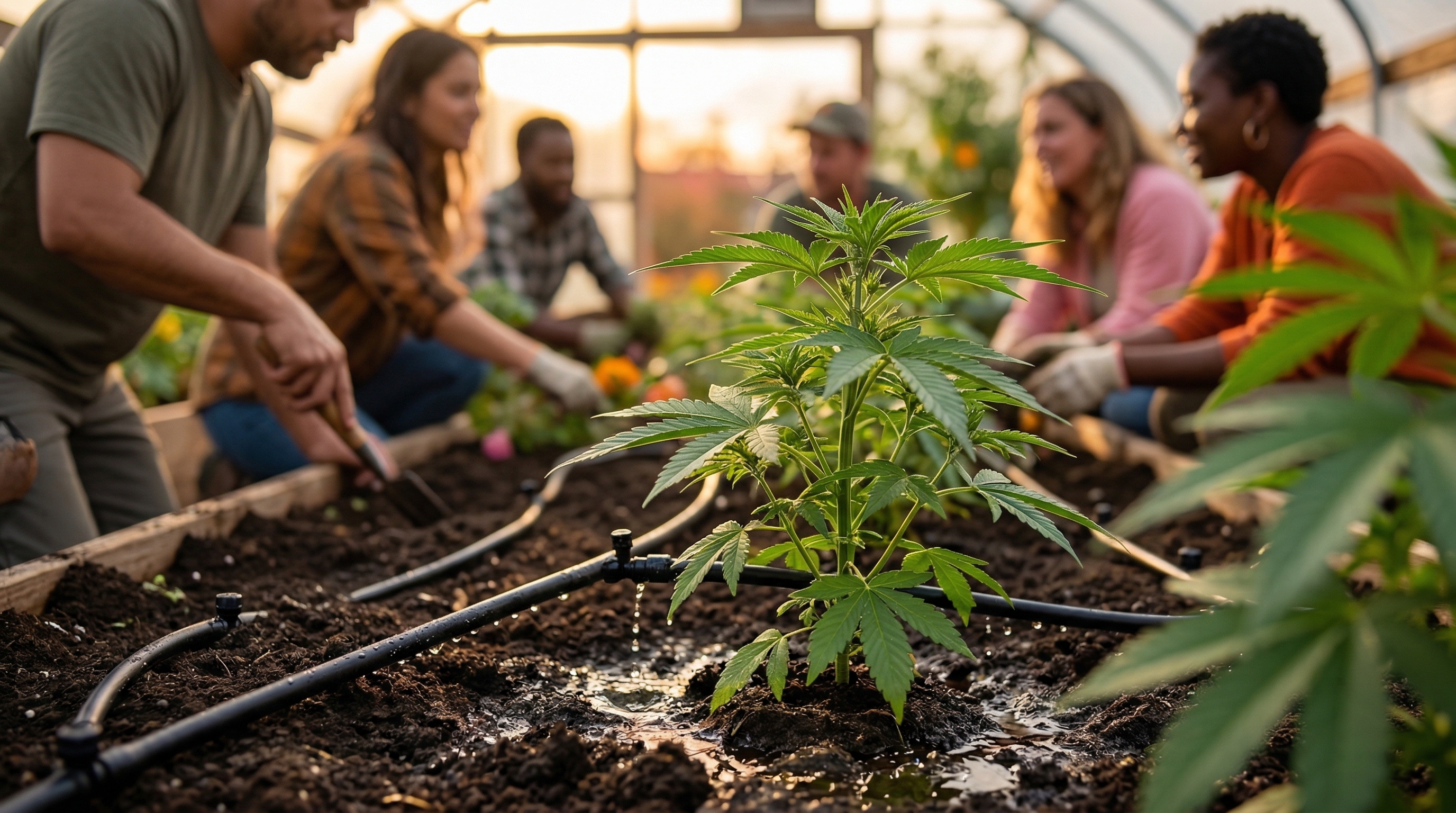
Even in legal, regulated operations, water use remains a challenge. Hydroponic and aeroponic systems can be more water-efficient than traditional soil growing, recirculating nutrient solutions rather than letting water drain away. But these systems often trade water efficiency for increased energy consumption—those pumps, chillers, and monitoring systems all need power.
Chemical Inputs: Pesticides, Fertilizers, and Runoff
The third leg of the environmental stool involves the chemicals used to grow cannabis. Like any intensive agriculture, cannabis cultivation relies on fertilizers to boost growth and pesticides to protect against pests and mold. When poorly managed, these inputs can contaminate soil, groundwater, and surface water.
A study by Gabriel et al. (2013) found that rodenticides used at illegal grow sites in California’s national forests were poisoning wildlife, including the endangered Pacific fisher. This research focused on illicit operations, but it highlights a broader concern: unregulated cannabis growing can introduce harmful chemicals into fragile ecosystems [Gabriel et al., 2013].
In the legal market, pesticide rules vary widely by state. Some states have strong testing requirements. Others have big gaps. Synthetic fertilizer runoff, rich in nitrogen and phosphorus, can cause algal blooms and dead zones in nearby waterways. This is a problem shared with mainstream farming, but it is amplified by cannabis cultivation’s often tight, concentrated footprint. Understanding how lab testing works can help you spot brands that take quality and safety seriously.
What the Research Shows: Indoor vs. Outdoor vs. Greenhouse
Not all cultivation methods are created equal. The environmental calculus shifts dramatically depending on whether cannabis is grown indoors, outdoors, or in a greenhouse.
| Factor | Indoor | Greenhouse | Outdoor |
|---|---|---|---|
| Energy Use | Very High | Moderate | Low |
| Water Use | Moderate-High | Moderate | Variable (climate-dependent) |
| Carbon Emissions | Highest | Moderate | Lowest |
| Yield Control | Highest | High | Lower |
| Pesticide Need | Moderate | Lower | Variable |
| Land Use | Smallest footprint | Moderate | Largest footprint |
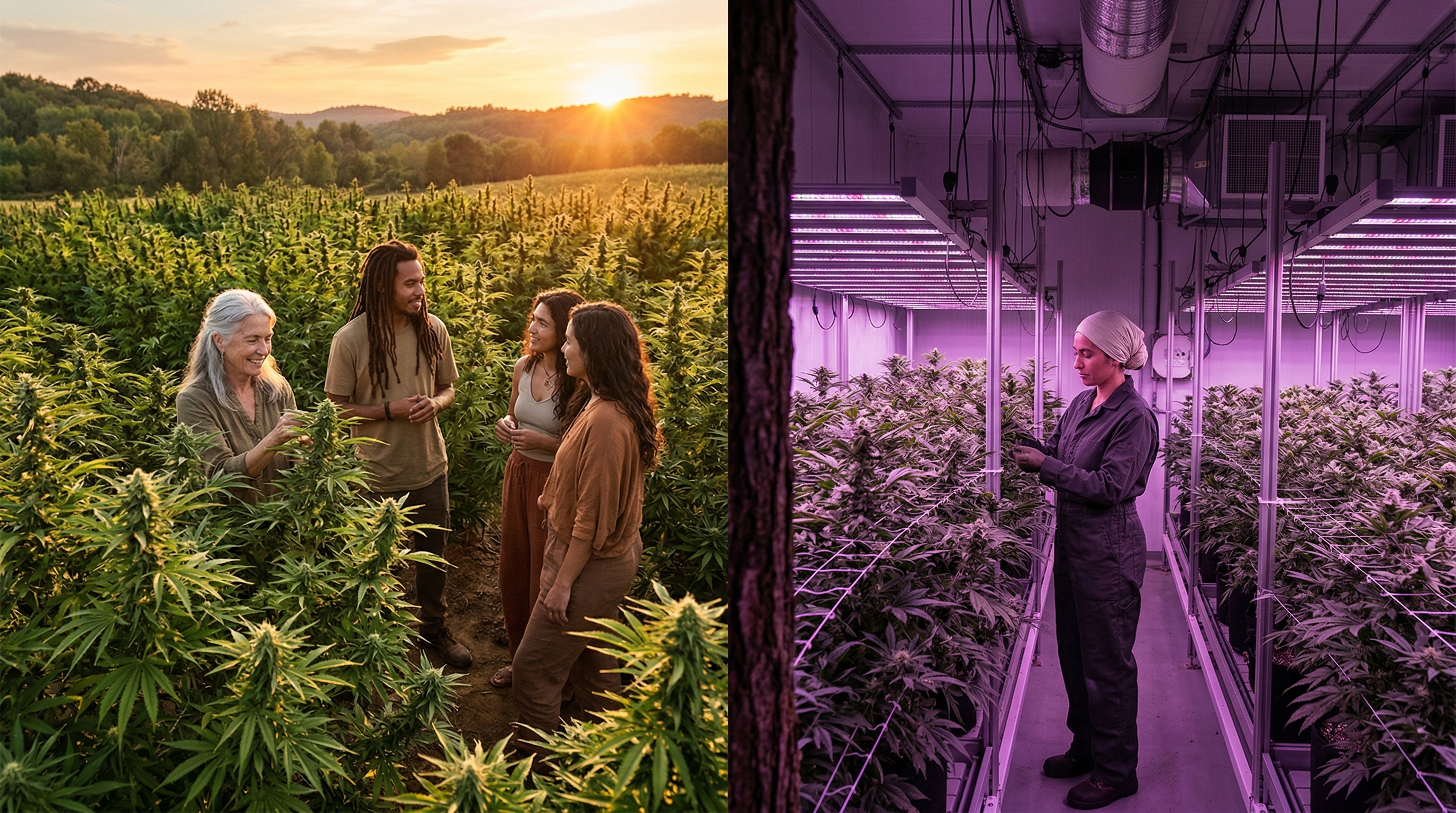
Outdoor cultivation, often called “sun-grown” cannabis, generally has the lowest carbon footprint by a wide margin. Sunlight costs nothing, and natural airflow can reduce the need for large HVAC systems. However, outdoor growing is subject to seasonal limits, weather changes, and pest pressures that may be harder to manage without chemical inputs.
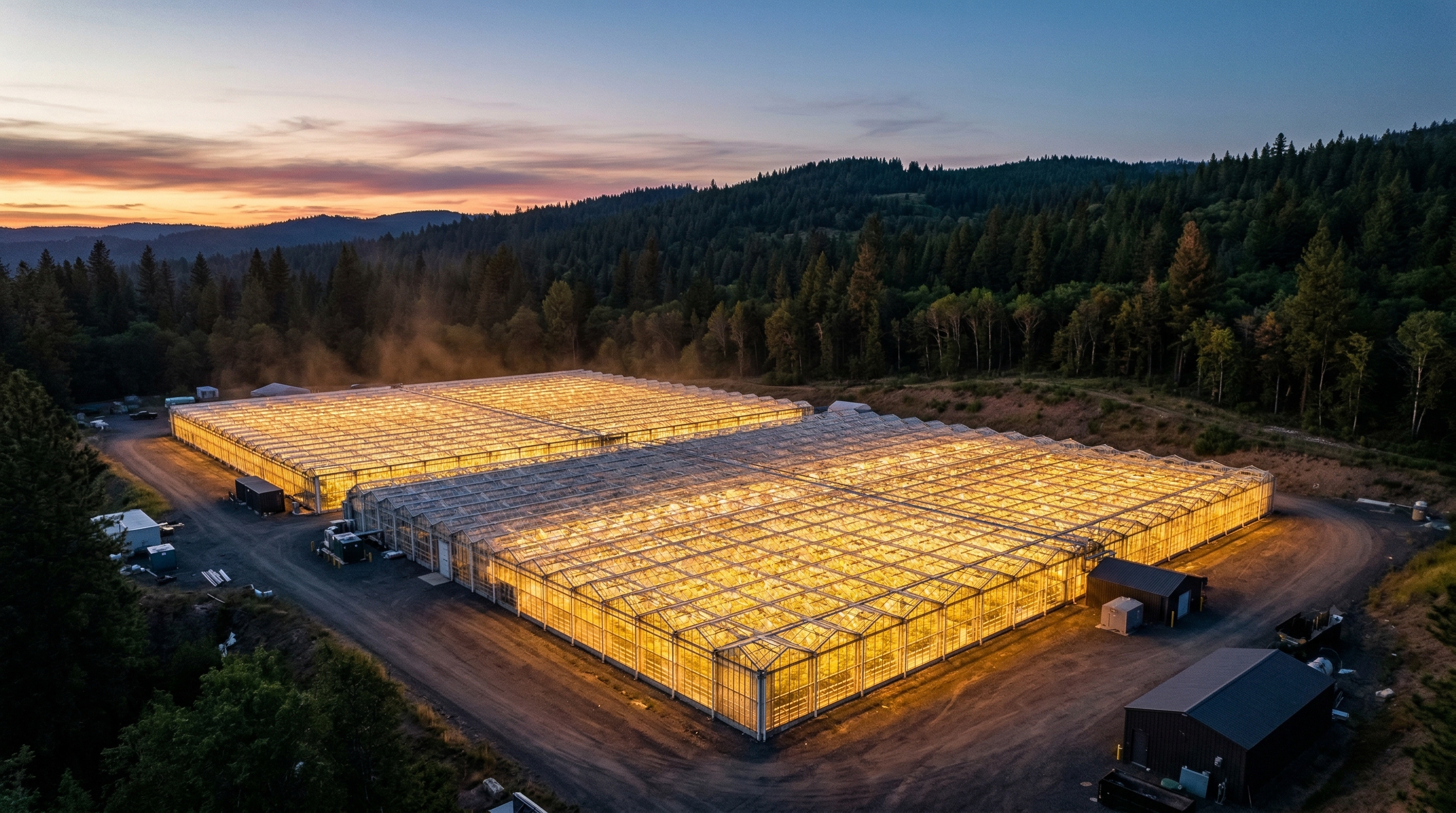
Greenhouse cultivation represents a promising middle ground. By harnessing natural sunlight while providing some environmental control, greenhouses can reduce energy consumption by 42% to 76% compared to fully indoor operations, depending on climate and design [Summers et al., 2021]. Light deprivation techniques allow greenhouse growers to manipulate photoperiods without relying entirely on artificial lighting, and supplemental LED lighting—far more efficient than traditional HID lamps—can fill in gaps during shorter days.
Emerging research also suggests that the terpene and cannabinoid profiles of sun-grown and greenhouse cannabis may differ from indoor-grown flower. While indoor environments offer precise control, some cultivators and researchers hypothesize that natural light spectrums and environmental stress can produce more complex terpene expressions. This is an area where more research is needed, but it’s a fascinating intersection of sustainability and quality that connects directly to how you experience your cannabis.
Key Insight: The way your cannabis is grown doesn’t just affect the planet—it may influence the terpene profile and, by extension, which High Family that strain falls into. A sun-grown cultivar with a rich, complex terpene profile might deliver a more nuanced Entourage High, while a tightly controlled indoor grow might produce a more predictable but narrower chemical expression.
Practical Implications: What This Means for You
The Consumer’s Role
You might be thinking, “I’m just buying an eighth—what can I really do?” More than you’d expect. Consumer demand shapes industry behavior. Here are concrete ways your choices ripple outward:
1. Ask about cultivation methods. Many dispensaries now label whether flower is sun-grown, greenhouse-grown, or indoor-grown. Some brands proudly market their sustainable practices. Choosing sun-grown or greenhouse cannabis when available sends a market signal that sustainability matters.
2. Look for sustainability certifications. Organizations like Sun+Earth Certified and Clean Green Certified are working to establish standards for environmentally responsible cannabis cultivation. These certifications consider factors like regenerative farming practices, fair labor, and chemical use. They’re not perfect, and the certification landscape is still maturing, but they’re a meaningful starting point.
3. Support local when possible. Cannabis that’s grown closer to where it’s sold has a smaller transportation footprint. As interstate commerce laws evolve, the temptation to ship cannabis across the country—from low-cost production regions to high-demand markets—will grow. Local and regional supply chains are generally more sustainable.
4. Consider your consumption method. This is less about cultivation and more about downstream impact, but it matters. Single-use vape cartridges, excessive packaging, and disposable hardware all add to the footprint. Reusable devices, minimal packaging, and flower-based consumption generally produce less waste. If you are comparing methods, our vaping vs. smoking guide covers the tradeoffs.
The Industry’s Path Forward
The good news is that the cannabis industry is starting to take sustainability seriously—driven by a combination of regulation, consumer pressure, and genuine environmental concern from cultivators who love the land they work.
LED lighting adoption is accelerating rapidly. Modern LED systems use 40-60% less electricity than traditional HID lighting while producing less heat, which in turn reduces HVAC demands [Nelson & Bugbee, 2014]. The upfront cost is higher, but the operational savings and environmental benefits are substantial.
Renewable energy integration is another frontier. Some forward-thinking operations are pairing cultivation facilities with solar arrays, and a handful of states have begun exploring requirements or incentives for cannabis operations to use renewable energy. Massachusetts, for example, has implemented energy reporting requirements for cultivators.
Water recapture and recycling systems are becoming more common in professional operations, and regenerative farming practices—cover cropping, composting, no-till cultivation—are gaining traction among outdoor and greenhouse growers who see themselves as stewards of the land.
Policy matters, too. As legalization continues to evolve, advocates are pushing for environmental standards to be baked into licensing requirements rather than treated as optional add-ons. The intersection of cannabis policy and environmental policy is still underdeveloped, but it’s one of the most important conversations happening in the industry right now.
Key Takeaways
- Indoor cannabis cultivation is extraordinarily energy-intensive, potentially generating thousands of kilograms of CO₂ per kilogram of flower—comparable to some of the most energy-hungry industries on the planet.
- Water consumption is a critical concern, especially in drought-prone regions where cannabis cultivation can compete directly with natural ecosystems for limited water resources.
- Greenhouse and sun-grown cultivation methods offer dramatically lower environmental footprints while still producing high-quality cannabis—and may even produce more complex terpene profiles.
- Consumer choices matter. Asking about cultivation methods, supporting certified sustainable brands, and buying local are tangible ways to push the industry toward greener practices.
- The industry is evolving. LED adoption, renewable energy, water recycling, and regenerative farming are all gaining momentum, but progress depends on continued pressure from consumers, advocates, and regulators.
FAQs
Is outdoor-grown cannabis lower quality than indoor?
Not necessarily. While indoor growing allows precise control, sun-grown cannabis can develop rich cannabinoid and terpene profiles. Quality depends more on the grower’s skill, genetics, and post-harvest handling than on the light source. Many connoisseurs argue that sun-grown flower offers a depth of experience that indoor cannot fully match.
How much water does it take to grow a pound of cannabis?
Estimates vary widely depending on method and climate, but outdoor cannabis plants may consume 6 to 22 liters of water per day during peak growth [Bauer et al., 2015]. Over a full growing season, producing a single pound of dried flower outdoors might require anywhere from 500 to over 1,500 gallons of water. Indoor hydroponic systems can be more water-efficient per unit of production but trade that savings for higher energy use.
What can I look for at the dispensary to buy more sustainably?
Look for labels indicating sun-grown or greenhouse cultivation, certifications like Sun+Earth Certified or Clean Green Certified, and brands that transparently communicate their environmental practices. Minimal packaging and locally grown products are additional indicators. Don’t be afraid to ask your budtender—dispensaries that prioritize sustainability are usually happy to talk about it.
Will federal legalization help or hurt cannabis sustainability?
It could go either way. Federal legalization could enable interstate commerce, which might concentrate production in regions with cheap energy and lax environmental standards—increasing the overall footprint. On the other hand, federal oversight could establish national environmental standards for cultivation, fund research into sustainable practices, and open the door to federal renewable energy incentives for cannabis operations. The outcome will depend heavily on how legalization is structured and what environmental provisions are included.
Sources
- Mills, E. (2012). “The carbon footprint of indoor Cannabis production.” Energy Policy, 46, 58-67. DOI: 10.1016/j.enpol.2012.03.023
- Summers, H.M., Sproul, E., & Quinn, J.C. (2021). “The greenhouse gas emissions of indoor cannabis production in the United States.” Nature Sustainability, 4, 644-650. DOI: 10.1038/s41893-021-00691-w
- Bauer, S., Olson, J., Cockrill, A., van Hattem, M., Miller, L., Tauzer, M., & Leppig, G. (2015). “Impacts of Surface Water Diversions for Marijuana Cultivation on Aquatic Habitat in Four Northwestern California Watersheds.” PLOS ONE, 10(3), e0120016. DOI: 10.1371/journal.pone.0120016
- Gabriel, M.W., Woods, L.W., Poppenga, R., Sweitzer, R.A., Thompson, C., Matthews, S.M., … & Higley, J.M. (2012). “Anticoagulant rodenticides on our public and community lands: spatial distribution of exposure and poisoning of a rare forest carnivore.” PLOS ONE, 7(7), e40163. DOI: 10.1371/journal.pone.0040163
- Nelson, J.A., & Bugbee, B. (2014). “Economic Analysis of Greenhouse Lighting: Light Emitting Diodes vs. High Intensity Discharge Fixtures.” PLOS ONE, 9(6), e99010. DOI: 10.1371/journal.pone.0099010


