Cannabinoids vs Superbugs: How CBC and CBG Are Outperforming Antibiotics
A 2026 study found CBC and CBG with silver nanoparticles killed MRSA 64x more effectively than silver alone — with zero resistance development. The science.

Professor High
When the World Health Organization’s 2025 surveillance report landed, it carried a number most people skimmed past: 4.71 million deaths in 2021 were associated with bacterial antimicrobial resistance, with 1.14 million directly attributable. That is the toll of bacteria evolving faster than our drugs can keep up — a slow-motion pandemic that gets a fraction of the airtime COVID earned, despite killing more people most years.
In April 2026, a peer-reviewed study quietly suggested the cavalry might be coming from an unexpected direction. Researchers showed that two minor cannabinoids — cannabichromene (CBC) and cannabigerol (CBG) — when combined with silver nanoparticles, killed methicillin-resistant Staphylococcus aureus (MRSA) at concentrations roughly 64-fold lower than silver alone. More remarkable still: across 20 days of serial passage, the bacteria did not develop resistance.
This is not a “smoke weed for infections” story. It is a pharmaceutical pipeline story, and it builds on a foundation that Italian and British scientists laid almost two decades ago. Let’s walk through what was found, what it means, and what consumers should — and should not — take away from it.
The Crisis Nobody Wants to Talk About
Antibiotic resistance is the kind of problem that compounds. Every prescription, every farm-animal feed additive, every incomplete course of treatment selects for bacteria that survive the drug. Over decades, the survivors take over. The bugs we used to kill with penicillin in 1945 now shrug off three or four lines of treatment in 2026.
MRSA is the textbook example. It is a strain of Staphylococcus aureus — the bacterium responsible for skin infections, pneumonia, and bloodstream sepsis — that has acquired resistance to methicillin and most beta-lactam antibiotics. The European Centre for Disease Prevention and Control reported that MRSA bloodstream infections still kill thousands across the EU/EEA each year, with overall AMR causing more than 35,000 attributable deaths annually in Europe alone. Globally, the numbers are grim and growing.
The pipeline of new antibiotics is shockingly thin. Pharmaceutical companies have largely abandoned the space because antibiotics are short-course drugs with low margins compared to chronic-disease medications. We are running out of working drugs and running short of new ones. That is the backdrop against which cannabinoid antibacterial research has suddenly become urgent.
What Cannabinoids Have to Do With It
The story starts in 2008, in a paper that should have made headlines and mostly didn’t. Italian chemist Giovanni Appendino and University of London pharmacist Simon Gibbons published Antibacterial Cannabinoids from Cannabis sativa: A Structure-Activity Study in the Journal of Natural Products. Their finding was simple and startling: all five major cannabinoids — cannabidiol (CBD), cannabichromene (CBC), cannabigerol (CBG), Δ9-tetrahydrocannabinol (THC), and cannabinol (CBN) — showed potent activity against multiple clinical strains of MRSA.
How potent? In their assays, several cannabinoids matched vancomycin, the so-called “antibiotic of last resort” used when MRSA shrugs off everything else. Two of the most active compounds — CBG and CBD — happened to be non-psychoactive, meaning a derivative drug could potentially be developed without producing a high. Appendino told reporters at the time that fiber hemp plants, which contain almost no THC, could “cheaply and easily produce potent antibiotics.”
The structure-activity work in that paper is worth pausing on. By systematically modifying the molecules, Appendino and Gibbons learned that the prenyl moiety (a small carbon chain that hangs off the cannabinoid skeleton) is not the active piece — it mostly modulates how readily the molecule dissolves into bacterial membranes. The actual antibacterial action seems to live in the olivetol core (the resorcinol ring at the heart of every cannabinoid), and the high potency suggests a specific molecular target the researchers could not yet identify.
For more on how the cannabinoid skeleton gives rise to so many different bioactive molecules, see our deep dive on CBDA and THCA, the raw acidic precursors — they share the olivetol core and, as it turns out, much of the antibacterial activity too.
The 2020 CBG Breakthrough
A decade after Appendino’s paper, McMaster University’s Eric Brown and his postdoc Maya Farha picked up the thread. In a 2020 American Chemical Society Infectious Diseases paper titled Uncovering the Hidden Antibiotic Potential of Cannabis, they screened 18 commercially available cannabinoids and zeroed in on cannabigerol as the standout.
CBG turned out to do things vancomycin cannot:
- Inhibited MRSA biofilm formation at sub-inhibitory concentrations
- Eradicated mature biofilms at 4 µg/mL — a concentration most antibiotics cannot achieve against entrenched biofilm
- Killed persister cells within 30 minutes, while the beta-lactam oxacillin at 5x its MIC did nothing to the same population
- Cleared MRSA infection in a mouse model of systemic disease, comparable to vancomycin
The mechanism the McMaster team proposed: CBG targets the cytoplasmic membrane of Gram-positive bacteria. Antibiotics like vancomycin and methicillin work by interfering with cell wall biosynthesis — a single, mutable target. Membrane-disrupting agents are harder to evolve around, because the membrane is the bacterium’s outer skin and you cannot mutate your way out of needing one.
That mechanism is a clue. It is also a thread the 2026 silver-nanoparticle paper picks up directly.
The 2026 Synergy Finding
The April 2026 study (published in Letters in Applied Microbiology and indexed by THC Total Health Care among other outlets) tested whether silver — a broad-spectrum antimicrobial used in wound dressings and catheters for over a century — could be amplified by cannabinoids. Silver works, but cytotoxicity at high doses limits how much you can use, and increasing reports of silver-resistant bacteria threaten its long-term utility.
The researchers tried combinations of silver (as silver sulfate or silver nanoparticles) with six cannabinoids: CBC, CBD, CBG, and their acidic precursors CBCA, CBDA, and CBGA. Pairwise silver-cannabinoid combos against E. coli and Pseudomonas aeruginosa were inconsistent. But the triple combination — silver plus CBC plus CBG — produced something different:
- Synergistic and bactericidal against MRSA, E. coli, and P. aeruginosa on time-kill analysis
- Up to 64-fold lowering of silver’s minimum inhibitory concentration on checkerboard assay
- Significant biofilm clearing against MRSA (p < 0.001) and P. aeruginosa (p < 0.001)
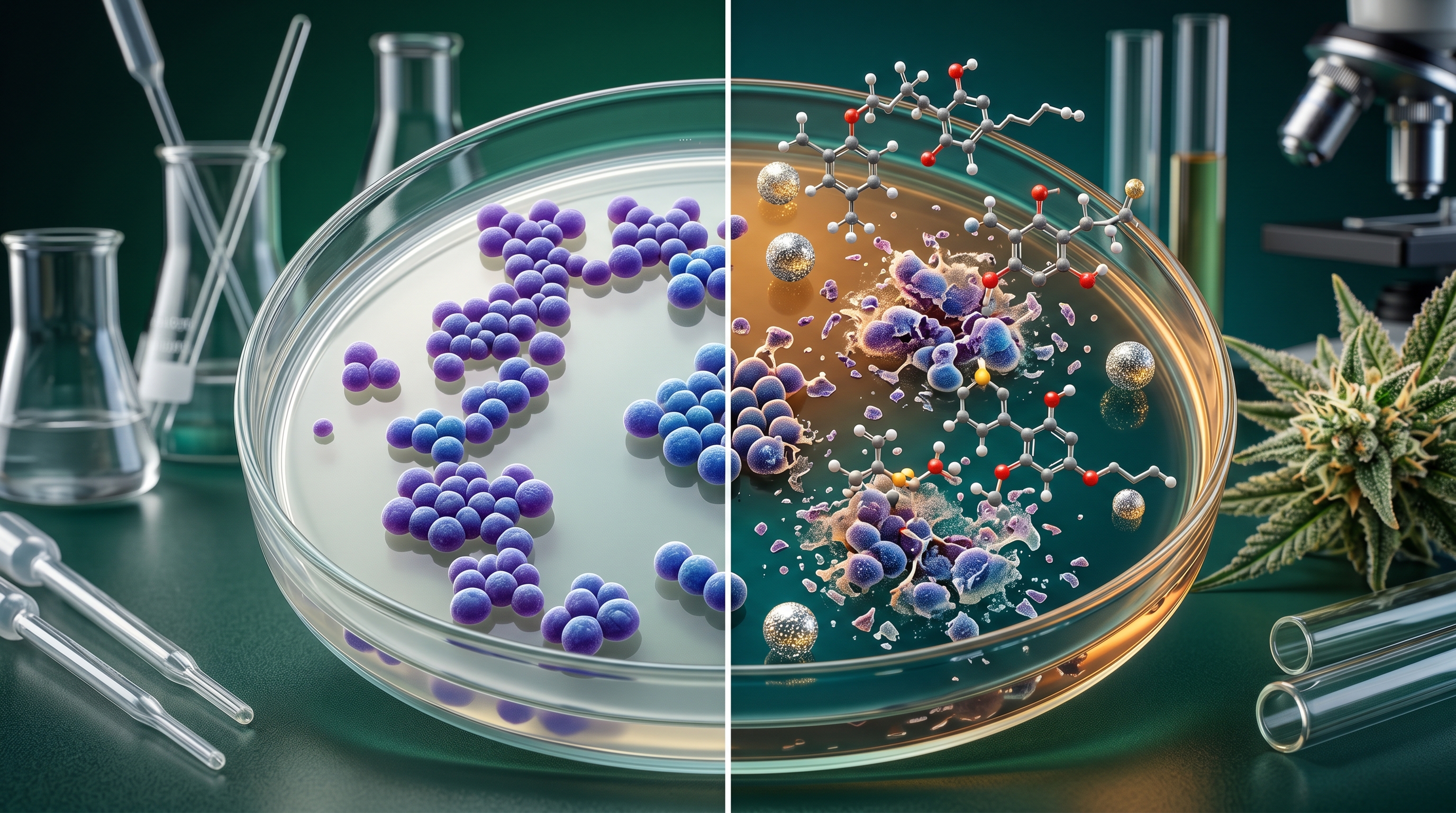
- No resistance development across 20-day serial passage
- Reduced cytotoxicity in human fibroblasts and keratinocytes compared to higher-dose silver alone
That last point is doubly important. Silver is bactericidal partly because it is generically toxic — it disrupts membranes, denatures proteins, generates reactive oxygen species. Lowering the dose 64-fold while retaining activity means the human-cell collateral damage drops too.
Why “Zero Resistance Development” Is the Headline
When a paper says bacteria did not evolve resistance over 20 days of serial passage, it is making a specific claim. Serial passage means you grow bacteria in sub-lethal concentrations of a drug, harvest the survivors, and re-grow them in fresh medium with drug. Repeat. Each round selects for any genetic variant that handles the drug a little better than its siblings. Most antibiotics will show resistance creep within 5 to 15 passages.
Cannabinoids appear to be different, and the leading hypothesis is the membrane-targeting mechanism. Bacteria can mutate single proteins relatively easily — that is how they evade beta-lactams (mutate the penicillin-binding protein) or fluoroquinolones (mutate the gyrase). They cannot easily mutate away from needing a membrane. Membrane-disrupting agents tend to show very low resistance frequencies.
The same logic applies to silver, which acts on multiple bacterial targets simultaneously. When you combine two multi-target agents, the bacterium would need to evolve several distinct mutations all at once to escape — a vanishingly low-probability event.
This is not a guarantee. Resistance can emerge in clinical use that lab passage misses. But the 20-day no-resistance result is the kind of result that gets pharmaceutical chemists out of bed in the morning.
Mechanism: How Cannabinoids Kill Bacteria
A common misconception: cannabinoids must work through CB1 or CB2 receptors, the same signaling proteins they target in our nervous and immune systems. Bacteria do not have CB1 or CB2 receptors. Whatever cannabinoids are doing to MRSA, they are doing through a fundamentally different pathway than how they make you feel relaxed, or why they regulate inflammation through the endocannabinoid system.
For more on the receptor-mediated story — how cannabinoids talk to your body via anandamide and the endocannabinoid system and how that ties into inflammation control — those mechanisms run on entirely different machinery from the antibacterial story.
The current best evidence points to membrane disruption, particularly for Gram-positive bacteria like S. aureus. Cannabinoids are extremely lipophilic — they love fatty environments. The phospholipid bilayer of a bacterial cell membrane is a fatty environment. Cannabinoids partition into the membrane, disrupt its integrity, and the bacterium loses the ability to maintain ion gradients, contain its cytoplasm, or generate ATP. Lights out.
This mechanism explains why Gram-positive bacteria (single membrane, easier to reach) are more vulnerable than Gram-negative (double membrane, the outer membrane is a barrier). It also explains why combining cannabinoids with agents that permeabilize the outer membrane — like polymyxin B, as the McMaster team showed in 2020 — extends activity to Gram-negatives.
Why CBG Specifically
CBG (cannabigerol) is having a moment, and the antibacterial data is one big reason. A few facts that make it stand out:
- It is the precursor. CBGA (the acidic form of CBG) is the molecule from which the plant biosynthesizes THCA, CBDA, and CBCA. Every other major cannabinoid descends from it. In most cultivars, the plant rapidly converts CBGA to other compounds, leaving very little CBG in the finished flower.
- It is non-psychoactive. Unlike THC, CBG does not bind CB1 receptors enough to produce intoxication.
- It punches above its weight against MRSA. In multiple studies, CBG’s MIC (minimum inhibitory concentration) against clinical MRSA isolates sits around 1–4 µg/mL — competitive with vancomycin and several orders of magnitude stronger than the activity of most plant phenolics.
You will sometimes see CBG-rich cultivars marketed as “the mother cannabinoid.” That is biosynthetically accurate. From a Balance family consumer perspective, modern CBG-dominant strains like White CBG or Jack Frost CBG offer a clear-headed experience without the cognitive load of THC. The antibacterial action is happening at concentrations far above what flower delivers — but the science behind these strains is what is fueling the pharmaceutical pipeline.
The Application Reality: What This Could Become
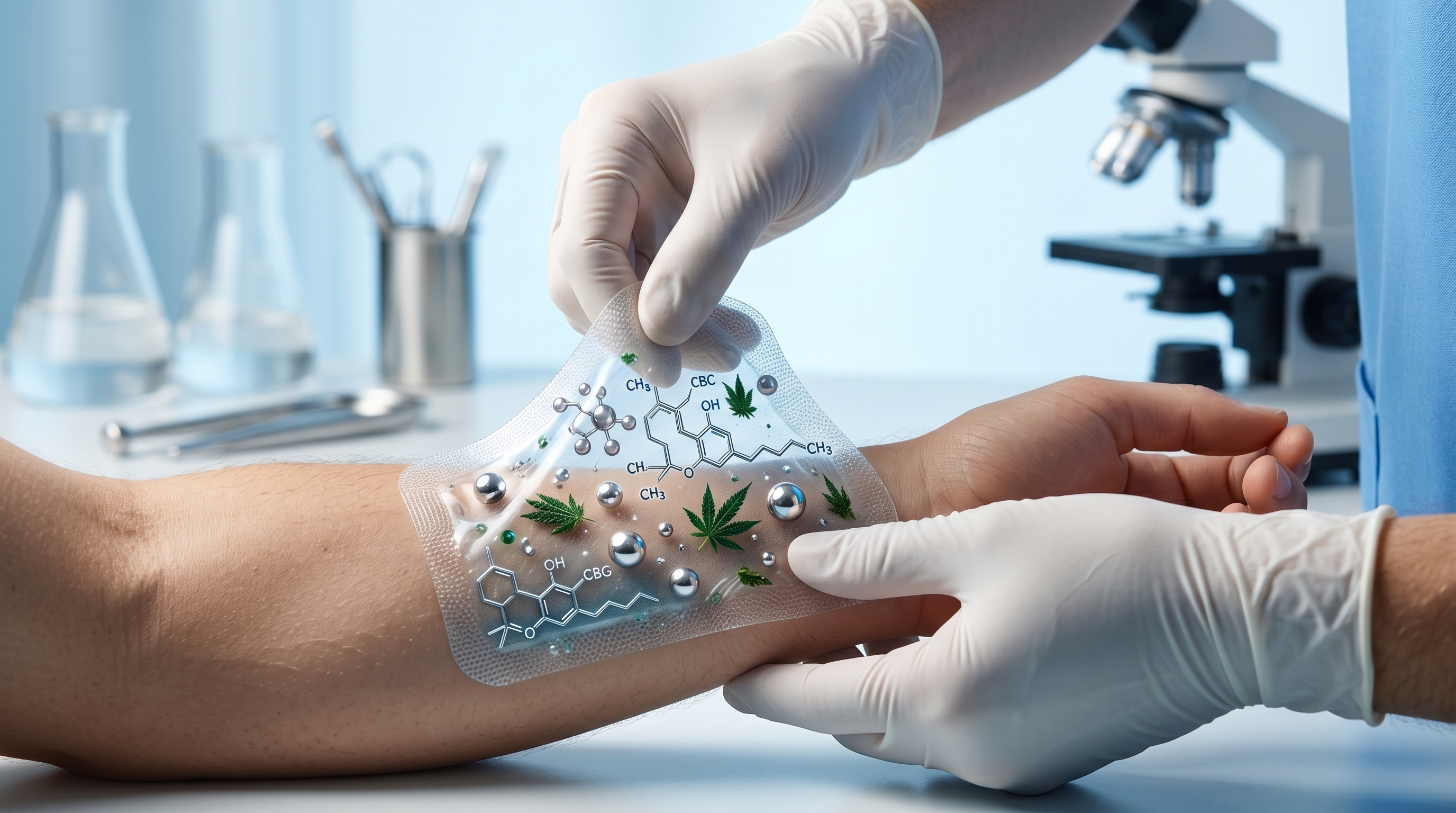
Read the 2026 paper’s framing carefully and you will see what the researchers think they have. They are not pitching an oral antibiotic. They are pitching a topical antimicrobial system — wound dressings, surgical site coatings, catheter linings, burn-care formulations.
This is the right scope. Healthcare-associated infections (HAI) are a perfect target because:
- The infections happen at exposed surfaces (wounds, surgical sites, catheter entry points)
- Topical delivery sidesteps the bioavailability problem cannabinoids have when swallowed
- Silver is already used in this space — clinical adoption pathways exist
- Reducing systemic antibiotic use reduces selection pressure for resistance
Companies are moving on this. The patent landscape includes WO2022016269A1 (“Silver enhanced cannabinoid antibiotics”) and several follow-on filings. Regulatory pathway: most likely a 510(k) device clearance for impregnated dressings, with longer-horizon trials for active pharmaceutical ingredients.
If you have ever used a silver-impregnated wound pad, picture that, plus a low concentration of CBC and CBG embedded in the matrix. That is what the next generation of HAI-control products is starting to look like.
What This Doesn’t Mean
I want to be very clear about the limits of this story, because cannabis science gets oversold constantly and that does the field no favors.
This does not mean smoking cannabis treats infections. Inhaled cannabinoid concentrations in your bloodstream are far below the MICs needed for antibacterial action. Worse, smoking actively impairs your lungs’ ability to clear pathogens. If you are fighting an infection, the worst thing you can do is light up.
This does not mean CBD oil is a wound spray. Over-the-counter CBD products are formulated for transdermal absorption, not topical antimicrobial action. The carriers are different, the concentrations are different, and the delivery vehicles matter enormously. CBG topicals exist on the market and may have some surface antimicrobial benefit — but they are not validated medical-grade products and have not been through controlled clinical trials.
This does not mean cannabinoids replace antibiotics. They might complement them, particularly in topical contexts. Systemic infections still require validated, clinically-trialed drugs delivered by trained medical professionals.
The 64-fold improvement is in vitro, against silver — not against gold-standard antibiotics. It is the silver dose that drops 64-fold; the cannabinoid dose stays in the same range. The clinical comparator that matters most — silver-CBC-CBG vs. vancomycin or daptomycin in a real wound — has not been run yet.
The Pipeline
Watch for several developments over the next 18 to 36 months:
- Phase I dermal safety studies for silver-cannabinoid topical formulations
- Veterinary applications (often the first regulatory pathway for novel antimicrobials) in wound care for livestock and companion animals
- Synthetic cannabinoid analogs optimized for antibacterial activity, removing the residual psychoactivity in THC-related scaffolds
- CBG-derived novel chemical entities — small molecules where the cannabinoid serves as a structural lead but the final drug is a chemically-modified analog
The emerging field tying nanotechnology to cannabinoid delivery is closely related — see our piece on CBD nanoparticles for the broader picture of how tiny carriers are reshaping what cannabinoids can do as therapeutics. And the flavonoid story covers the other class of cannabis-derived molecules with bioactive potential beyond the cannabinoids themselves.
What This Means for Cannabis Consumers
A few practical takeaways for people buying actual cannabis products:
Minor cannabinoid products are real, and the science behind them is improving fast. CBG isolate, CBG flower, CBC tinctures — these are emerging from boutique status. The pharmaceutical pipeline is what is funding analytical chemistry, sourcing standards, and quality assurance across the whole minor-cannabinoid sector.
Track topical cannabinoid effects carefully if you use them on skin issues. This is exactly the kind of self-experiment our app is built for. Log the product, the application, and the response over time. If you are using a CBG-rich balm on stubborn skin conditions, you are running a personal observational study — and your data is more useful than anecdote when you can track it consistently with /app once.
Pair cannabinoid use with terpenes that complement the family. Caryophyllene is the only known dietary CB2 agonist and brings its own anti-inflammatory action that pairs well with topical use. Pinene has documented antimicrobial activity in its own right. Myrcene is sedating and shifts the experience toward relaxation. The Relief family of strains tends to be high in these supportive compounds.
Don’t believe anyone selling cannabis as a cure for systemic infection. That is not what the science says. The real story is more interesting: cannabinoids are giving pharmaceutical chemistry a new chemical scaffold to build on, in a field that desperately needs new ideas.
Sources
- Appendino, G., Gibbons, S., Giana, A., Pagani, A., Grassi, G., Stavri, M., Smith, E., & Rahman, M. M. (2008). Antibacterial cannabinoids from Cannabis sativa: a structure-activity study. Journal of Natural Products, 71(8), 1427–1430. DOI: 10.1021/np8002673
- Farha, M. A., El-Halfawy, O. M., Gale, R. T., MacNair, C. R., Carfrae, L. A., Zhang, X., Jentsch, N. G., Magolan, J., & Brown, E. D. (2020). Uncovering the Hidden Antibiotic Potential of Cannabis. ACS Infectious Diseases, 6(3), 338–346. DOI: 10.1021/acsinfecdis.9b00419
- Wassmann, C. S., Højrup, P., & Klitgaard, J. K. (2024). Combinations of Cannabinoids with Silver Salts or Silver Nanoparticles for Synergistic Antibiotic Effects against Methicillin-Resistant Staphylococcus aureus. Antibiotics, 13(6), 473. DOI: 10.3390/antibiotics13060473
- Broad-spectrum bactericidal synergy of silver-cannabichromene-cannabigerol triple combinations against healthcare-associated pathogens. Letters in Applied Microbiology, April 2026.
- Alfei, S., Schito, G. C., & Schito, A. M. (2023). Synthetic Pathways to Non-Psychotropic Phytocannabinoids as Promising Molecules to Develop Novel Antibiotics. Pharmaceutics, 15(6), 1889.
- World Health Organization (2025). Global Antibiotic Resistance Surveillance Report 2025. WHO Press.
- European Centre for Disease Prevention and Control (2025). Antimicrobial Resistance in the EU/EEA — Annual Epidemiological Report 2024.
- World Health Organization (2024). Antimicrobial Resistance: A Status Report on Global Action. WHA77 / UNGA HLM Briefing Document.
- Patent WO2022016269A1: Silver enhanced cannabinoid antibiotics. World Intellectual Property Organization, 2021.
The bacteria are not waiting for us to catch up. Neither, it turns out, is the cannabis plant.
