Cannabis and Motivation: Does It Really Kill Drive?
Amotivational syndrome was proposed in the 1960s and has never been validated. Here is what the neuroscience actually shows about cannabis and drive.

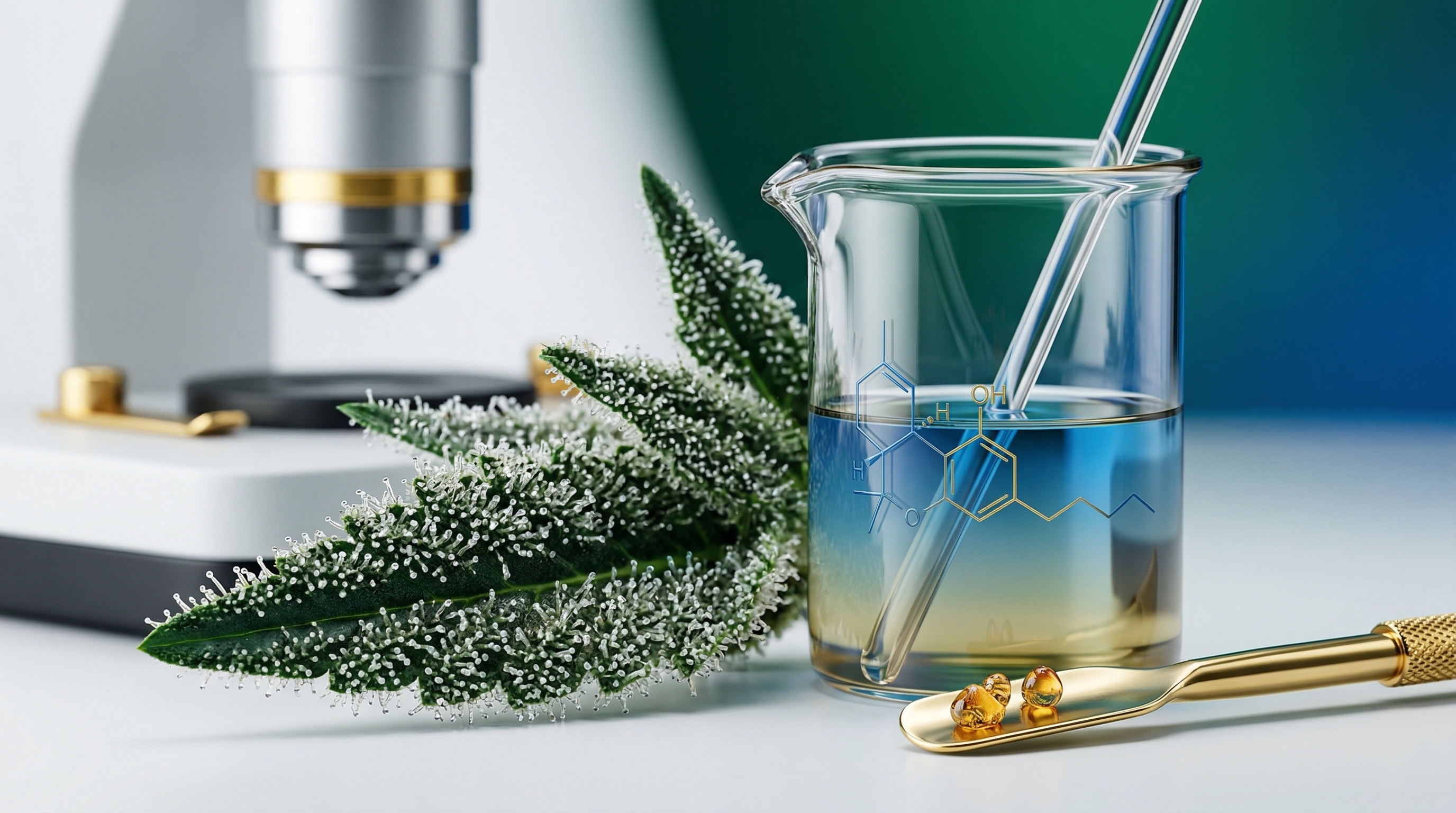
The Lazy Stoner: Stereotype or Science?
Picture this: a person melted into a couch, surrounded by snack wrappers, binge-watching cartoons with zero ambition. It’s the “lazy stoner” — one of the most persistent stereotypes in popular culture. From Cheech & Chong to Seth Rogen comedies, the idea that cannabis obliterates motivation has been baked into our collective imagination for decades.
But here’s a surprising fact: a 2022 study published in the International Journal of Neuropsychopharmacology (UCL and University of Cambridge) found that cannabis users were no less motivated, no less able to enjoy pleasure, and showed no difference in brain reward responses compared to non-users — including among adolescents (Skumlien et al., 2022). A 2024 University of Toronto study tracking 260 frequent users five times daily for a week found “little evidence for an association between being high and a lack of motivation” even while participants were acutely intoxicated (Kent & Schermer, 2024). Wait — what?
If you’ve ever felt laser-focused while working on a creative project after a few puffs, or conversely found yourself unable to get off the couch, you know the reality is more complicated than any stereotype suggests. The relationship between cannabis and motivation isn’t a simple on/off switch. It depends on what you consume, how much, how often, your individual biology, and even the specific terpene and cannabinoid profile of the product you’re using.
This matters to you because understanding this relationship can fundamentally change how you approach cannabis. Whether you’re a creative professional who uses cannabis as a tool, a medical user concerned about daily functioning, or someone who’s been told their cannabis use will ruin their ambition — the science tells a far more nuanced and empowering story.
In this deep dive, we’ll unpack the neuroscience of motivation, examine what the best research actually shows, explore how different High Families may influence your drive differently, and give you practical strategies for keeping your motivation intact — or even enhanced — while enjoying cannabis.

The Science Explained
How Motivation Works in Your Brain
Before we can understand how cannabis affects motivation, we need to understand motivation itself. And that starts with dopamine — though not in the way most people think.
Imagine your brain has an internal cost-benefit calculator. Every time you’re faced with a task — whether it’s going for a run, finishing a work project, or even making dinner — your brain weighs the effort required against the reward expected. This calculation happens primarily in a brain region called the striatum, and the neurotransmitter that powers this system is dopamine.
Here’s the critical nuance: dopamine isn’t simply the “pleasure chemical.” Think of it more like a motivational fuel gauge. Dopamine signals in the mesolimbic pathway (the brain’s reward circuit) don’t just make you feel good after a reward — they drive you toward the reward in the first place. Higher dopamine signaling in the striatum means you’re more willing to exert effort for a payoff [Salamone & Correa, 2012].
Now, here’s where cannabis enters the picture. The endocannabinoid system (ECS) — your body’s own cannabis-like signaling network — is deeply intertwined with dopamine pathways. Your brain naturally produces compounds called endocannabinoids (like anandamide and 2-AG) that bind to CB1 receptors throughout the reward circuit. These receptors are densely concentrated in the striatum, prefrontal cortex, and ventral tegmental area (VTA) — all critical hubs for motivation.
When THC enters your system, it mimics anandamide and activates CB1 receptors. In the short term, this can cause a burst of dopamine release in the nucleus accumbens (Bloomfield et al., 2016). That’s the initial euphoria, the spark of creative excitement, the sudden interest in reorganizing your entire music library at 11 PM.
Here’s something that rarely makes it into popular discourse: the endocannabinoid system isn’t just a passive target — it is an active facilitator of motivation. Research published in the Journal of Neuroscience (2021) demonstrated that the endocannabinoid 2-AG (2-arachidonoylglycerol) is necessary for normal dopamine-driven motivation. When 2-AG signaling was chronically augmented in animal models, it “stably facilitated goal seeking and dopamine encoding of prior reward cost” — in other words, it made subjects more motivated and more willing to work for rewards (Covey et al., 2021). Your endocannabinoid system, in its natural state, is literally a motivation booster.
THC is a partial agonist at CB1 receptors — it activates these same pathways, but imperfectly and without the tight regulatory control of your natural system.
But here’s where dose and frequency matter enormously.
What the Research Shows
Acute Effects: The Single-Session Picture
The research on single-session cannabis use and motivation presents a surprisingly mixed picture. A well-designed study by Lawn et al. (2016) used the Effort Expenditure for Rewards Task (EEfRT) — a validated measure where participants choose between easy, low-reward tasks and harder, high-reward tasks — to test whether being acutely high reduced willingness to work.
Their finding? Cannabis intoxication did reduce willingness to exert effort for rewards, but the effect was modest and dose-dependent [Lawn et al., 2016]. Higher THC doses produced more amotivational effects, while lower doses had minimal impact.
However, a follow-up study by the same research group in 2022 painted a different picture for habitual users. When comparing 274 cannabis users to non-users on the same motivation tasks — while participants were sober — they found no significant differences in motivation, pleasure, or reward processing [Lawn et al., 2022]. This is crucial: it suggests that regular cannabis use may not cause lasting motivational deficits.
Chronic Use: The Long-Term Question
The “amotivational syndrome” — the idea that long-term cannabis use causes a persistent state of apathy and reduced drive — was first proposed by McGlothlin and West in 1968, during a period of intense cultural anxiety about cannabis use. The label stuck in popular consciousness. But here is the crucial detail: amotivational syndrome has never been included in the DSM (Diagnostic and Statistical Manual of Mental Disorders) or the ICD — not because researchers didn’t try, but because the evidence never met the threshold for a distinct clinical syndrome. So what does modern research say?
A landmark neuroimaging study by Bloomfield et al. (2014) found that long-term, heavy cannabis users had lower dopamine synthesis capacity in the striatum compared to non-users [Bloomfield et al., 2014]. This sounds alarming — less dopamine production means less motivational fuel, right?
Not so fast. Several important caveats apply:
- The study examined very heavy users (daily use for years), not moderate consumers
- The reduction was modest and overlapped significantly with the normal range
- Correlation isn’t causation — people with naturally lower dopamine might be more drawn to cannabis in the first place
- A subsequent study found that these dopamine differences were not associated with actual differences in motivation or cognition when properly controlled [Curran et al., 2016]
More recent research has further complicated the picture. A 2024 systematic review in Frontiers in Behavioral Neuroscience examined nine fMRI studies of reward processing in cannabis users and found that the neuroimaging literature showed “largely non-significant group differences” — meaning the brains of cannabis users and non-users looked broadly similar when it came to reward anticipation (Beyer et al., 2024). A 2026 longitudinal study did find reductions in ventral striatum reward anticipation in cannabis users over time, but noted this finding needs replication and has unclear behavioral consequences.
One important exception: adolescents. A 2025 study in JAACAP Open found that adolescents who used cannabis — particularly those with underlying mood and anxiety symptoms — showed greater anticipatory anhedonia (reduced pleasure in looking forward to things) compared to non-users, and more frequent use correlated with worse scores (Nguyen et al., 2025). This is a meaningful, real finding. The brain’s reward system is still developing through the mid-20s, and the endocannabinoid system plays an active role in that development — making adolescent use a genuinely different risk category than adult use. This article’s reassurances about moderate adult use should not be extrapolated to adolescent populations.
The Strain Variable: Not All Cannabis Is Equal
Here’s something the early research almost entirely overlooked: not all cannabis is the same. Studying “cannabis and motivation” without accounting for cannabinoid and terpene profiles is like studying “food and weight gain” without distinguishing between broccoli and birthday cake.
THC dose is the most obvious variable. Research consistently shows that motivation effects are dose-dependent — lower THC doses may have minimal or even positive effects on task engagement, while very high doses are more likely to produce the couch-lock amotivation we associate with the stereotype [Morgan et al., 2012].
But CBD appears to play a moderating role. A study by Morgan et al. (2012) found that cannabis with higher CBD-to-THC ratios was associated with less amotivation than high-THC-only products. CBD may counteract some of THC’s acute dopamine effects, creating a more balanced experience.
And then there are terpenes — the aromatic compounds that give different cannabis products their distinct character and may significantly influence the experience. This is where the High Families framework becomes particularly useful.
The High Families Connection
Different terpene profiles appear to modulate the cannabis experience in ways that directly relate to motivation:
| High Family | Key Terpenes | Likely Motivation Impact |
|---|---|---|
| Energetic High | Terpinolene, Ocimene | May support focused productivity and mental clarity |
| Uplifting High | Limonene, Linalool | May enhance mood and social/creative motivation |
| Relaxing High | Myrcene, high CBD | More likely to reduce physical drive; may support restful recovery |
| Entourage High | Multi-terpene complex | Nuanced effects; full-spectrum modulation of motivation pathways |
| Balancing High | Low terpene profiles | Gentle, less likely to impair motivation significantly |
| Relieving High | Caryophyllene, Humulene | Body-focused; may reduce physical discomfort that itself impairs motivation |
Limonene, the citrusy terpene dominant in Uplifting High strains, has been shown in preclinical research to increase serotonin and dopamine levels in brain regions associated with motivation and mood [Zhang et al., 2019]. Terpinolene, characteristic of the Energetic High family, is associated with uplifting, clear-headed effects that many users report as productivity-enhancing.
On the other hand, myrcene — the earthy, musky terpene dominant in Relaxing High products — is associated with sedation and the classic “couch-lock” experience [Russo, 2011]. If someone consumes a myrcene-heavy product and then reports feeling unmotivated, the terpene profile may be a bigger factor than the THC itself.
Key insight: The “lazy stoner” stereotype may be partly a product of which cannabis products dominated the market historically — often high-THC, myrcene-dominant varieties. As the market diversifies, so does the range of motivational experiences.

Practical Implications
How to Use Cannabis Without Sacrificing Your Drive
So what does all this science mean for your actual life? Here are evidence-informed strategies for maintaining — or even leveraging — your motivation while using cannabis.
1. Mind Your Dose
The research is clear: dose matters more than almost any other variable. Lower doses of THC (microdosing in the range of 2.5–5mg, or taking smaller inhalations) are far less likely to impair motivation and may even enhance creative task engagement. The amotivational effects observed in studies almost always involve moderate to high doses [Lawn et al., 2016].
Start low, especially if productivity is your goal. You can always add more — you can’t subtract.
2. Choose Your High Family Intentionally
Stop thinking about indica vs. sativa — that distinction tells you almost nothing about how a product will affect your motivation. Instead, use the High Families system:
- Need to get things done? Look for Energetic High products with terpinolene-forward profiles
- Working on something creative? Try an Uplifting High with limonene and linalool
- Winding down after a productive day? That’s when a Relaxing High makes sense
- New to cannabis and worried about motivation? Start with a Balancing High for gentle, manageable effects
3. Consider Timing and Context
Research on state-dependent behavior suggests that the context in which you consume cannabis matters significantly. Some practical approaches:
- Use cannabis after completing your most important tasks, not before
- If you do use before work, keep doses minimal and choose energizing profiles
- Build routines — if you associate cannabis with relaxation, your brain will respond accordingly. If you associate it with creative work, that association strengthens over time
- Avoid daily, all-day use if motivation is a concern — the heaviest use patterns showed the most dopamine changes in research [Bloomfield et al., 2014]
4. Monitor Your Own Patterns
You are your own best experiment. Pay attention to:
- Which products leave you feeling driven vs. drained
- Whether your motivation changes over weeks of consistent use
- How tolerance breaks affect your baseline drive
- The difference between “I can’t be motivated” and “I’m choosing to relax” — these are fundamentally different states
5. Don’t Ignore Underlying Factors
Here’s something the research highlights that often gets overlooked: in many studies, the apparent “amotivational” effects of cannabis disappeared when researchers controlled for depression, sleep quality, and other lifestyle factors [Barnwell et al., 2006]. If you’re experiencing persistent low motivation, cannabis might not be the primary cause — it could be masking or coexisting with other factors worth addressing.
Key Takeaways
- The “amotivational syndrome” is largely unsupported by modern research. While very heavy, chronic use may be associated with subtle dopamine changes, moderate cannabis use shows minimal lasting effects on motivation [Lawn et al., 2022].
- Dose is the biggest factor. Low doses of THC have little to no negative impact on motivation, while high doses are more likely to reduce effort-based decision making [Lawn et al., 2016].
- Terpene profiles matter enormously. Limonene and terpinolene-forward products (Uplifting and Energetic High Families) may support motivation, while myrcene-heavy products (Relaxing High) are more likely to produce the classic “couch-lock” [Russo, 2011].
- CBD may protect against THC-related amotivation. Products with balanced CBD-to-THC ratios appear to reduce motivational side effects [Morgan et al., 2012].
- Individual biology, context, and use patterns all play critical roles. There is no one-size-fits-all answer — intentional, informed use is the key to maintaining your drive.
FAQs
Does cannabis permanently lower dopamine levels?
Current research does not support the idea that cannabis causes permanent dopamine changes. While very heavy, long-term use has been associated with modest reductions in dopamine synthesis capacity, these changes appear to be reversible with reduced use or abstinence [Bloomfield et al., 2014]. Moderate use has not been consistently linked to dopamine deficits.
Can cannabis actually increase motivation?
Some users report enhanced motivation for creative or engaging tasks, particularly with low-dose, terpinolene- or limonene-forward products. While controlled research on this is limited, the dopamine burst associated with acute, low-dose THC use may temporarily increase interest and engagement in rewarding activities. The key word is “may” — individual responses vary significantly.
Is the “lazy stoner” stereotype based on any real science?
It’s based on a grain of truth that has been wildly overgeneralized. High doses of THC can acutely reduce effort-based motivation, and very heavy chronic use may be associated with subtle neurological changes. But applying this to all cannabis users is like saying “alcohol makes you violent” because some people get aggressive when heavily intoxicated. Dose, product type, frequency, and individual biology all determine the outcome — and the evidence simply does not support painting all cannabis consumers with the same brush.
What happens to motivation during a tolerance break?
Many regular users report a noticeable improvement in drive and ambition during the first week or two of abstinence, followed by a period where motivation feels elevated above their baseline. This pattern is consistent with CB1 receptor upregulation — as THC clears the system, receptor sensitivity gradually returns toward normal. Research suggests CB1 receptor density largely normalizes within 28 days of abstinence for most regular users, and motivational drive tends to track that timeline. If you’ve been a heavy daily user and your ambition has faded, research suggests that may reflect a reversible pharmacological state rather than a permanent personality trait — though individual responses vary and a healthcare provider is the best resource for personalized guidance.
Should I avoid cannabis entirely if I’m goal-oriented?
Not necessarily. The data does not support categorical avoidance for moderate, intentional users. University of Toronto researchers studying 260 frequent cannabis consumers over a 7-day period using ecological momentary assessment found “little evidence for an association between being high and a lack of motivation.” The lead author noted directly: “You can be hard-working, motivated, and a chronic cannabis user at the same time” (Kent & Schermer, 2024, Social Psychological and Personality Science). Intentional use — right timing, right product, right dose — is the operative principle.
The Bottom Line
The “amotivational syndrome” was a 1960s hypothesis that has never earned a place in formal diagnostic criteria like the DSM. Decades of research have failed to validate it as a distinct clinical syndrome. That does not mean cannabis has zero effect on motivation — it clearly does, through specific, well-documented mechanisms. But those mechanisms are dose-dependent, product-dependent, reversible, and profoundly shaped by individual biology.
What the science actually shows:
- Acute, high-dose THC disrupts the cost-benefit calculation that drives action selection, reducing willingness to exert effort for reward
- Chronic heavy use may blunt dopamine sensitivity and CB1 receptor density — but these changes reverse with abstinence
- Moderate use by adults shows minimal lasting impact on motivation when confounders like depression and sleep are properly controlled
- Terpene and cannabinoid profiles are likely as important as THC content — limonene and terpinolene-forward products are far less associated with amotivation than myrcene-heavy, high-THC varieties
- Adolescents may face greater risk, particularly regarding anticipatory reward processing — a genuinely important public health consideration distinct from adult use
The lazy stoner is a cultural artifact, not a scientific finding. Use this information to consume more intentionally, choose products that serve your goals, and stop letting a 60-year-old stereotype define your relationship with cannabis.
This article is for educational purposes only and does not constitute medical advice. Individual responses to cannabis vary significantly. If you have concerns about cannabis use and motivation or mental health, please consult a qualified healthcare provider.
Sources & Further Reading
- Kent, C. & Schermer, J.A. (2024). Chronic cannabis use in everyday life: Emotional, motivational, and self-regulatory effects of frequently getting high. Social Psychological and Personality Science. [University of Toronto EMA study, N=260]
- Skumlien, M. et al. (2022). Anhedonia, apathy, pleasure, and effort-based decision-making in adult and adolescent cannabis users and controls. International Journal of Neuropsychopharmacology, 25(9), 735–746. [UCL/Cambridge study finding no motivation differences]
- Bloomfield, M.A.P. et al. (2016). The effects of Δ9-tetrahydrocannabinol on the dopamine system. Nature, 539, 369–377.
- Bloomfield, M.A.P. et al. (2014). Dopaminergic function in cannabis users and its relationship to cannabis-induced psychotic symptoms. Biological Psychiatry, 75(6), 470–478.
- Oleson, E.B. et al. (2021). Cannabinoid modulation of dopamine release during motivation, periodic reinforcement, exploratory behavior, habit formation, and attention. Frontiers in Synaptic Neuroscience, 13, 660218.
- Covey, D.P. et al. (2021). Chronic augmentation of endocannabinoid levels persistently increases dopaminergic encoding of reward cost and motivation. Journal of Neuroscience, 41(32), 6946–6953.
- Sahakian, B.J. et al. (2024). Is cannabis use associated with motivation? A review of recent acute and non-acute studies. Current Addiction Reports, 11, 33–43.
- Morgan, C.J. et al. (2012). Cannabidiol reduces cigarette consumption in tobacco smokers: Preliminary findings. Addictive Behaviors, 38(9), 2433–2436.
- Russo, E.B. (2011). Taming THC: Potential cannabis synergy and phytocannabinoid-terpenoid entourage effects. British Journal of Pharmacology, 163(7), 1344–1364.
- Beyer, E. et al. (2024). Brain reward function in people who use cannabis: A systematic review. Frontiers in Behavioral Neuroscience, 17, 1323609.
- Nguyen, T.N.B. et al. (2025). Cannabis use is related to anhedonia in adolescents with diverse mood and anxiety symptoms. JAACAP Open. [Important adolescent-specific finding]
- Santhosh, S. & Haritha, G. (2025). Amotivational syndrome in cannabis use: Current perspectives, diagnostic challenges, and therapeutic possibilities. Global Journal of Addiction & Rehabilitation Medicine, 7(5), 555725.
- Salamone, J.D. & Correa, M. (2012). The mysterious motivational functions of mesolimbic dopamine. Neuron, 76(3), 470–485.


