Cannabis and Testosterone: What the Research Actually Says
Does cannabis lower testosterone? We break down the actual studies, separate myth from evidence, and explain what the science really knows.

The Claim That Won’t Go Away
If you’ve spent any time in fitness forums, health podcasts, or even casual conversations about cannabis, you’ve probably heard some version of this: “Weed kills your testosterone.” It’s one of those claims that gets repeated so confidently and so often that most people assume it’s settled science.
It’s not.
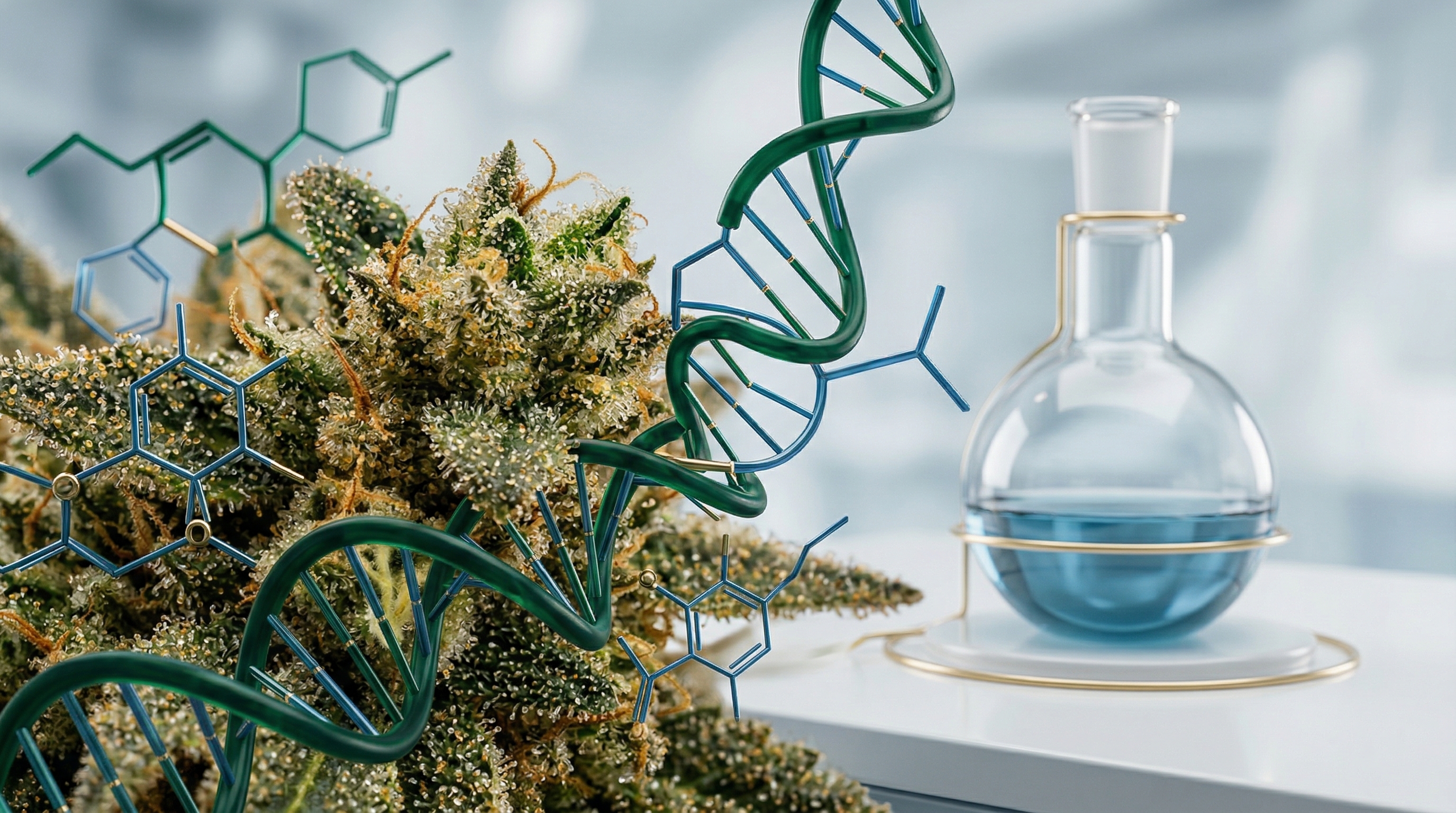
The relationship between cannabis and testosterone is far more nuanced than a gym-bro headline suggests. Some studies show a decrease, others show no change, and a handful even hint at an increase. The truth is that researchers are still piecing together a complicated puzzle — one that involves your endocannabinoid system, your hypothalamic-pituitary-gonadal (HPG) axis, dose, frequency, and a whole lot of individual variability.
Whether you’re someone who consumes cannabis regularly and wants to understand the hormonal picture, or you’re just tired of hearing unsourced claims, this article is for you. We’re going to walk through what the research actually shows — the good, the bad, and the genuinely inconclusive — so you can make informed decisions about your own body.
Let’s get into it.

The Science Explained
How Testosterone Regulation Works
Before we talk about cannabis, let’s quickly understand how your body manages testosterone — because it’s not as simple as “more is good, less is bad.”
Testosterone production is controlled by a communication chain called the hypothalamic-pituitary-gonadal (HPG) axis. Think of it like a three-step relay:
- Your hypothalamus (a region in your brain) sends a signal called GnRH (gonadotropin-releasing hormone).
- That signal tells your pituitary gland to release LH (luteinizing hormone) and FSH (follicle-stimulating hormone).
- LH travels to the gonads (testes in males, ovaries in females), which then produce testosterone and other sex hormones.
This system runs on a feedback loop. When testosterone levels rise high enough, the hypothalamus dials back its signal. When levels drop, it ramps up. It’s elegant, self-regulating, and — here’s the key part — it’s sensitive to outside influences, including cannabinoids.
Your body has CB1 and CB2 receptors (part of the endocannabinoid system) located throughout this relay, including in the hypothalamus, pituitary, and testes [Walker & Bhatt, 2020]. That means THC and other cannabinoids have biological access points to potentially influence every step of the process. To understand the broader picture of how this system works, it helps to first understand how anandamide — your body’s own THC-like molecule — operates within the same network.
What the Research Shows
Here’s where things get interesting — and messy.
Animal studies have generally shown that high doses of THC can suppress testosterone. A widely cited early study found that THC administration reduced LH and testosterone levels in male rats [Kolodny et al., 1974]. Multiple rodent studies since then have supported this finding, particularly at high or chronic doses [Murphy et al., 1998].
But animal studies don’t always translate to humans. And when we look at human research, the picture gets murkier.
A 1983 study found no significant difference in testosterone levels between chronic cannabis users and non-users [Friedrich et al., 1983]. More recently, a large cross-sectional study of over 1,500 U.S. men actually found that cannabis users had slightly higher testosterone levels than non-users — though the authors cautioned that this didn’t prove causation [Thistle et al., 2017].
On the other hand, some human studies have found acute decreases in testosterone shortly after cannabis use, particularly in heavy, daily consumers [Kolodny et al., 1974]. The effect appears to be dose-dependent and temporary — testosterone levels tend to normalize after a period of abstinence.
The takeaway so far: Research suggests that high-dose, chronic THC use may temporarily suppress testosterone through HPG axis interference, but human studies generally show modest effects that often appear to reverse with reduced use. This pattern is far from settled science.
It’s also worth noting that most of this research has focused on males. Studies on cannabis and female hormonal health — including testosterone, which plays important roles in all bodies — remain significantly underrepresented [Brents, 2016].
Practical Implications
What This Means for Your Cannabis Use
So, should you worry? For most people, the honest answer is: probably not much, but it depends on context.
If you’re a moderate consumer — say a few times a week — the existing human evidence doesn’t strongly suggest you’re tanking your testosterone. The body’s HPG axis is remarkably resilient, and the effects seen in studies tend to be small and reversible.
If you’re a daily, heavy consumer and you’re concerned about hormonal health (perhaps you’re noticing symptoms like low energy, reduced libido, or mood changes), it’s reasonable to consider whether your consumption pattern could be a contributing factor — alongside sleep, diet, stress, and exercise, which all have far more established impacts on testosterone.
Here’s a practical framework:
- Dose matters. Lower doses of THC appear less likely to affect the HPG axis. Microdosing or moderate consumption may carry minimal hormonal impact.
- Frequency matters. Occasional use shows weaker associations with testosterone changes than daily, heavy use.
- Tolerance may play a role. Some researchers hypothesize that the endocannabinoid system adapts over time, potentially blunting THC’s hormonal effects in regular users [Pagotto et al., 2006].
- Terpenes and cannabinoids beyond THC haven’t been well-studied in this context. However, strains from the Balancing High family — which tend to have lower THC and gentler overall profiles — may be worth exploring if you want to minimize any potential hormonal disruption while still enjoying cannabis.
If you’re actively trying to optimize testosterone for athletic performance or fertility, it’s worth having an honest conversation with a healthcare provider who’s knowledgeable about cannabis — not just relying on internet forums.
It’s also worth remembering that sleep quality, stress, diet, and exercise have far more established and direct effects on testosterone than cannabis does. Poor sleep alone can lower testosterone by 10–15% within a week [Leproult & Van Cauter, 2011]. If you’re concerned about hormonal health, those lifestyle factors are your highest-leverage targets. For cannabis users specifically, sleep quality is worth paying attention to — chronic high-dose THC use can suppress REM sleep, which may create an indirect hormonal pathway.
The CBD Question
Most research on cannabis and testosterone has focused on THC. CBD is a different story — and the evidence is even more limited. Some animal studies suggest CBD may interact with steroidogenic enzymes involved in testosterone synthesis, but human data is sparse and inconsistent [Brents, 2016]. A 2023 study found that long-term CBD use was associated with slightly fewer cases of low testosterone in older men compared to non-users — though that study had significant limitations.
The bottom line: we don’t yet have enough human data to say confidently how CBD affects testosterone. Anyone who tells you otherwise — in either direction — is getting ahead of the science.

The Bigger Picture
Cannabis sits within a broader conversation about lifestyle and hormonal health. Before drawing conclusions about cannabis and testosterone, it’s worth stepping back to understand the endocannabinoid system’s role in overall endocrine regulation — a field of research that is genuinely young and evolving. As cannabis use becomes more common and legal access expands, the quality and quantity of human research is improving. The studies from 2017 onward are meaningfully better designed than the 1974 research that seeded the “weed kills testosterone” myth.
Key Takeaways
- The claim that cannabis “kills testosterone” is oversimplified. Human studies show mixed results, and effects appear to be dose-dependent and often temporary.
- Animal studies show suppression at high doses, but these don’t always translate directly to human outcomes.
- Some human research suggests no significant difference — or even slightly higher testosterone — in cannabis users compared to non-users.
- Daily, heavy use is the most likely pattern to have measurable effects, but even these tend to reverse with reduced consumption.
- More research is needed, especially in females, with diverse cannabinoid profiles, and over longer timeframes.
FAQs
Does CBD affect testosterone?
There’s very limited research specifically on CBD and testosterone in humans. Some animal studies suggest CBD may interact with hormone-producing enzymes, but we don’t have enough human data to draw conclusions [Brents, 2016]. If you’re concerned, this is a great question to bring to a healthcare provider.
Will quitting cannabis raise my testosterone?
If heavy, chronic use has caused a mild suppression, evidence suggests testosterone levels may normalize after a period of abstinence [Kolodny et al., 1974]. However, for moderate users, there may not be a meaningful difference to recover from.
Is there a “safe” amount of cannabis for testosterone?
No study has established a precise threshold. The general pattern in the research suggests that lower doses and less frequent use are associated with smaller (or no) hormonal effects. Listening to your body and consulting a healthcare professional are your best tools.
Sources
- Kolodny, R.C., et al. (1974). “Depression of plasma testosterone levels after chronic intensive marihuana use.” New England Journal of Medicine, 290(16), 872-874. PMID: 4816716
- Friedrich, G., et al. (1983). “Serum testosterone concentrations in cannabis and opiate users.” Drug and Alcohol Dependence, 11(1), 117-122. PMID: 6409596
- Murphy, L.L., et al. (1998). “Effects of delta-9-tetrahydrocannabinol on copulatory behavior and neuroendocrine responses of male rats to female rat secretions.” Pharmacology Biochemistry and Behavior, 61(4), 405-410. PMID: 9802835
- Pagotto, U., et al. (2006). “The emerging role of the endocannabinoid system in endocrine regulation and energy balance.” Endocrine Reviews, 27(1), 73-100. PMID: 16306385
- Brents, L.K. (2016). “Marijuana, the Endocannabinoid System and the Female Reproductive System.” Yale Journal of Biology and Medicine, 89(2), 175-191. PMID: 27354843
- Thistle, J.E., et al. (2017). “Marijuana use and serum testosterone concentrations among U.S. males.” Andrology, 5(4), 732-738. PMID: 28395129
- Walker, O.S., & Bhatt, R. (2020). “Endocannabinoids and the hypothalamic-pituitary-gonadal axis.” Journal of the Endocrine Society, 4(Supplement_1). DOI: 10.1210/jendso/bvaa046
- Leproult, R., & Van Cauter, E. (2011). “Effect of 1 week of sleep restriction on testosterone levels in young healthy men.” JAMA, 305(21), 2173-2174. DOI: 10.1001/jama.2011.710


