Cannabis Coffee & Tea: Morning Microdose Recipes
Learn to make cannabis-infused coffee and tea with precise microdosing. Step-by-step recipes for a balanced, uplifting morning ritual.

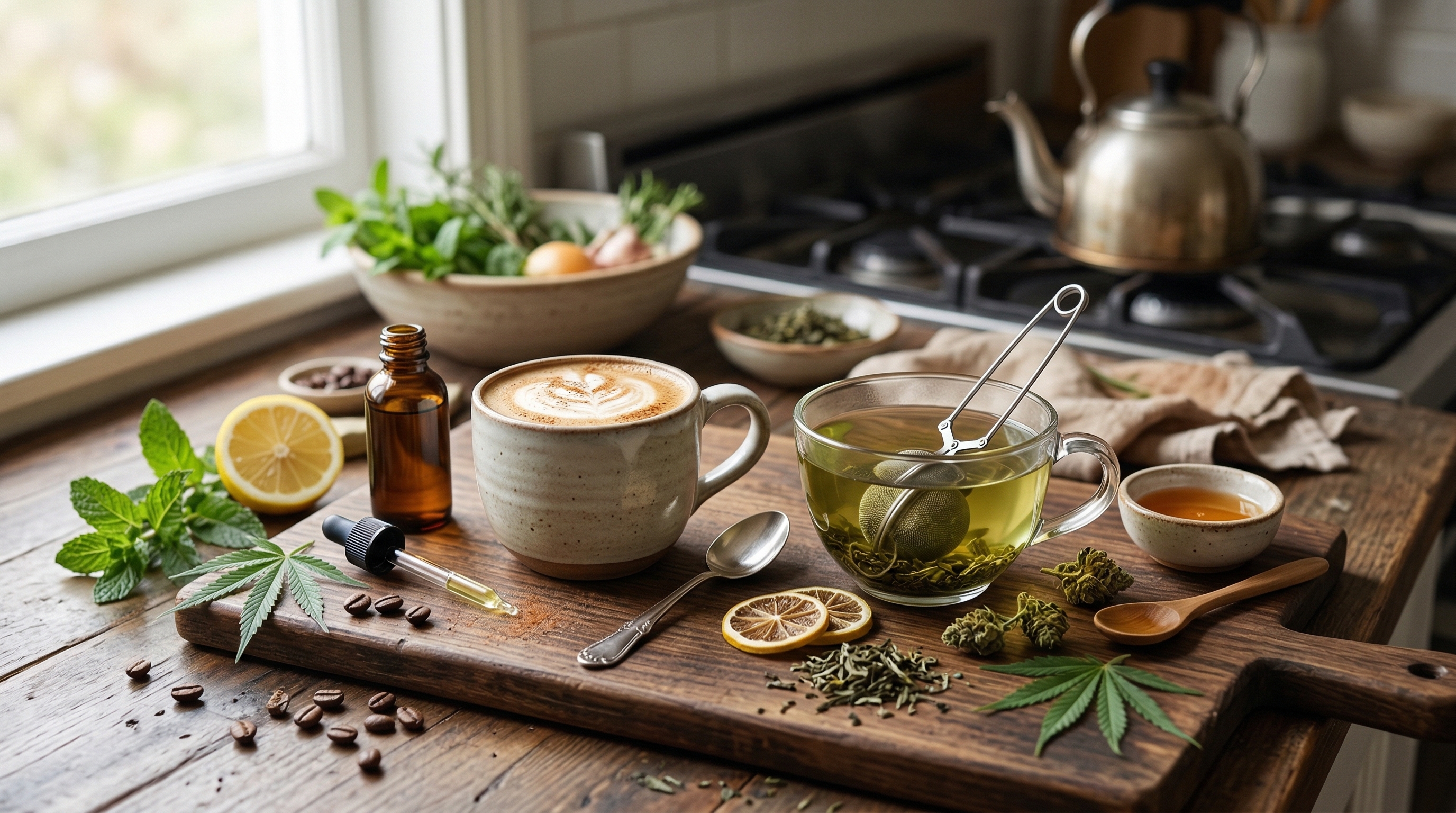
Cannabis-infused morning drinks are one of the most practical ways to build a microdosing routine. Instead of reaching for a separate product, you fold a small, measured dose into something you already do — make coffee or tea. The key is precision: knowing your dose, understanding why fat is required, and giving your body time to respond before you consider having more.
This guide covers the science behind why infused beverages work, and walks you through two recipes you can make in under 30 minutes.
Goal & Overview
By the end of this guide, you’ll know how to prepare two cannabis-infused morning beverages — a creamy infused coffee and a soothing infused tea — using precise microdoses designed for functional, clear-headed days. We’re talking about that gentle lift that pairs beautifully with caffeine: enhanced focus, a touch of mood elevation, and none of the couch-lock.
- Estimated time: 15–30 minutes per recipe (plus 1–2 hours if making cannabutter or oil from scratch)
- Difficulty level: Beginner
- Servings: 1 per recipe
Important: Edibles affect everyone differently. Always start with the lowest dose (1–2.5 mg THC), wait at least 90 minutes before considering more, and never drive or operate machinery after consuming. If you’re new to edibles, check out our dosing tips below.
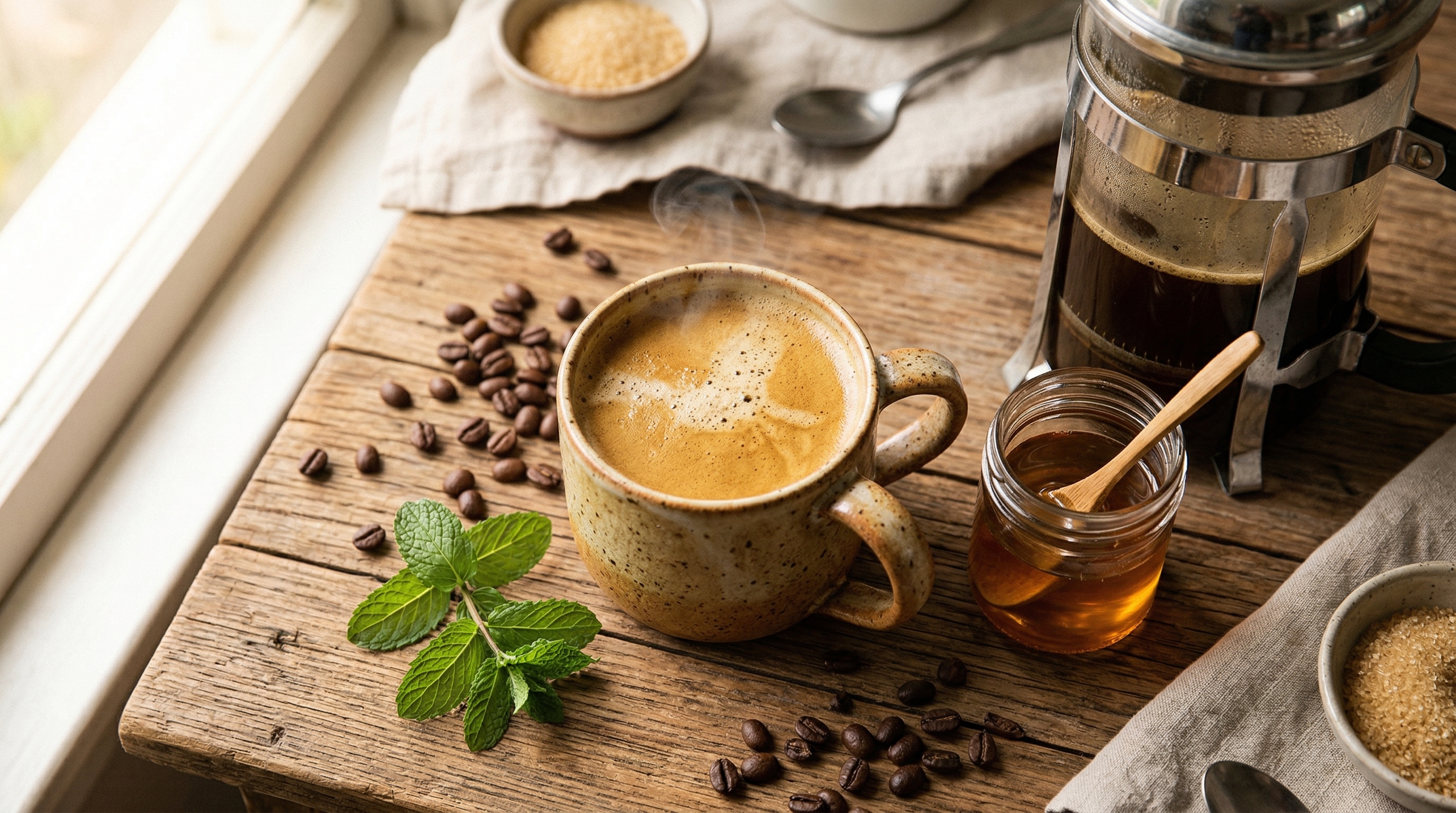
What You’ll Need
Required
- Cannabis-infused fat — Choose one:
- Cannabis-infused coconut oil (store-bought or homemade)
- Cannabis-infused butter (cannabutter)
- Cannabis tincture (oil-based, with known mg/mL potency)
- Freshly brewed coffee (8 oz) or loose-leaf tea of your choice (8 oz)
- Small kitchen scale or measured dropper for precise dosing
- Milk frother, blender, or small whisk (fat won’t mix with water on its own — you need to emulsify)
- Your favorite mug
Optional
- Creamer, oat milk, or heavy cream (helps emulsification and flavor)
- Honey, maple syrup, or sweetener of choice
- Cinnamon, cacao powder, vanilla extract, or adaptogens for flavor layering
- MCT oil (unflavored, for a neutral carrier)
Safety Equipment
- Clearly labeled containers for your infused oils (keep them away from non-infused ingredients)
- A notebook or phone note to log your dose and effects each morning
Step-by-Step Instructions
Recipe 1: Cannabis-Infused Coffee
Step 1: Know Your Dose
This is the most critical step. A microdose typically ranges from 1 to 5 mg of THC. If your infused coconut oil contains 10 mg THC per teaspoon, then half a teaspoon gives you 5 mg, and a quarter teaspoon gives you roughly 2.5 mg.
- If using a tincture, check the label for mg per dropper (typically 1 mL).
- If using homemade infused oil, calculate potency based on the flower’s THC percentage and the amount of oil used. When in doubt, start with less.
Tip: Write your oil’s potency on the jar with a piece of tape. Future-you will thank present-you.
Step 2: Brew Your Coffee
Brew 8 oz of coffee using your preferred method — French press, pour-over, drip, or espresso. The brewing method doesn’t matter for infusion purposes, but a rich, full-bodied coffee tends to complement the herbaceous notes of cannabis oil best.
- Time: 3–5 minutes depending on method
Step 3: Combine and Emulsify
Here’s where most people go wrong. You can’t just stir oil into coffee and expect it to blend. Fat and water separate — you’ll end up with an oily slick on top and zero consistency in dosing.
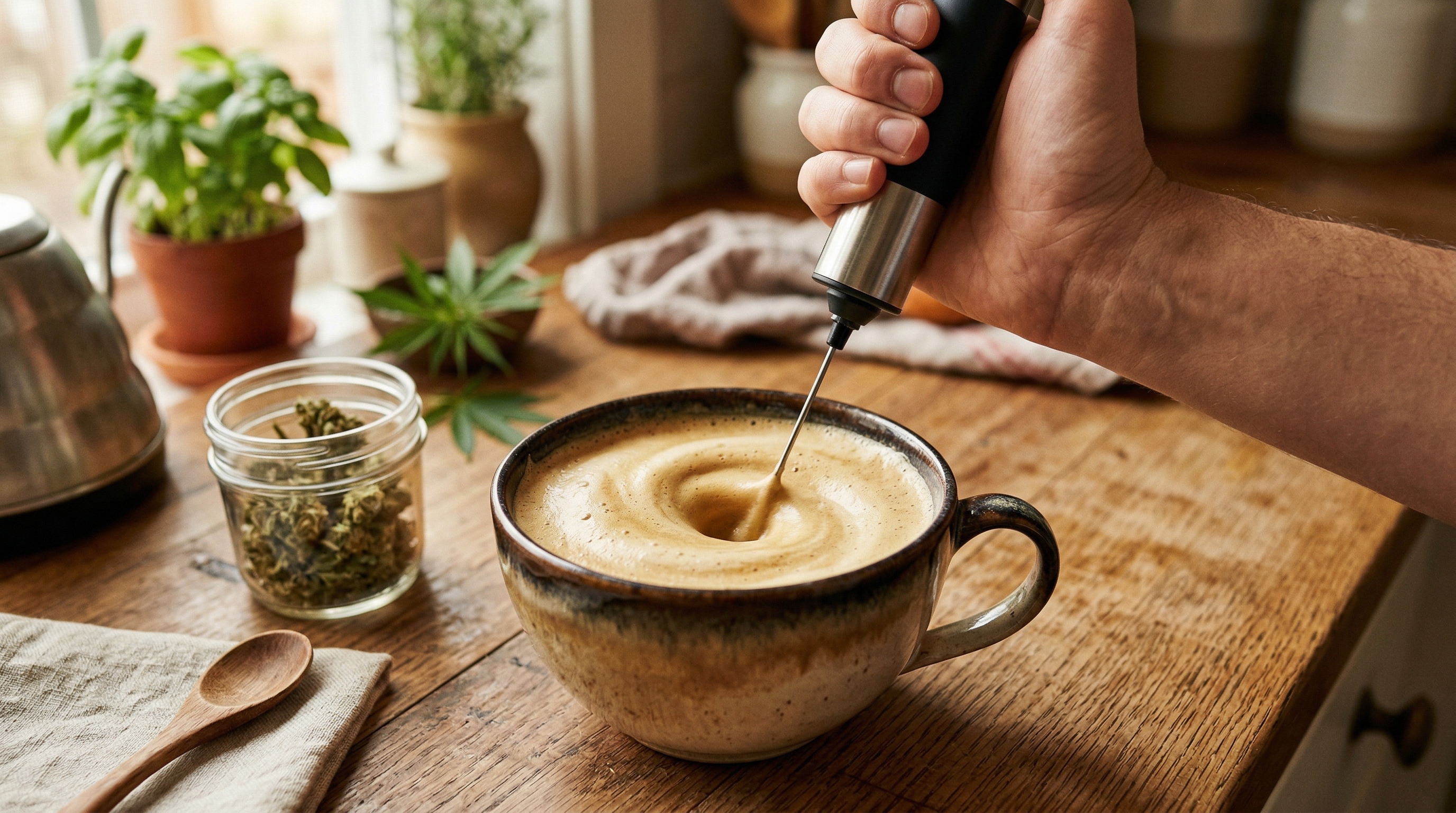
Pour your hot coffee into a blender (or use an immersion blender or milk frother directly in your mug). Add:
- Your measured cannabis-infused oil or tincture
- 1–2 tablespoons of creamer, oat milk, or coconut cream
- Optional sweetener and spices
Blend for 15–20 seconds until the mixture is frothy and uniform. You’re looking for a creamy, latte-like consistency with no visible oil separation.
Tip: A battery-powered milk frother (under $10) is the easiest tool for this. It emulsifies beautifully right in the mug.
Step 4: Sip, Wait, and Observe
Pour into your favorite mug and enjoy slowly. Do not redose for at least 90 minutes. Edibles take longer to kick in than smoking or vaping because your body needs to metabolize the THC through your digestive system and liver.
Log the time, dose, and how you feel at 30, 60, and 90 minutes. This data is gold for dialing in your perfect morning dose over time.
Recipe 2: Cannabis-Infused Tea
Step 1: Choose Your Tea
Different teas pair with different moods. Here’s where our High Families system comes in handy for matching your tea to your desired experience:
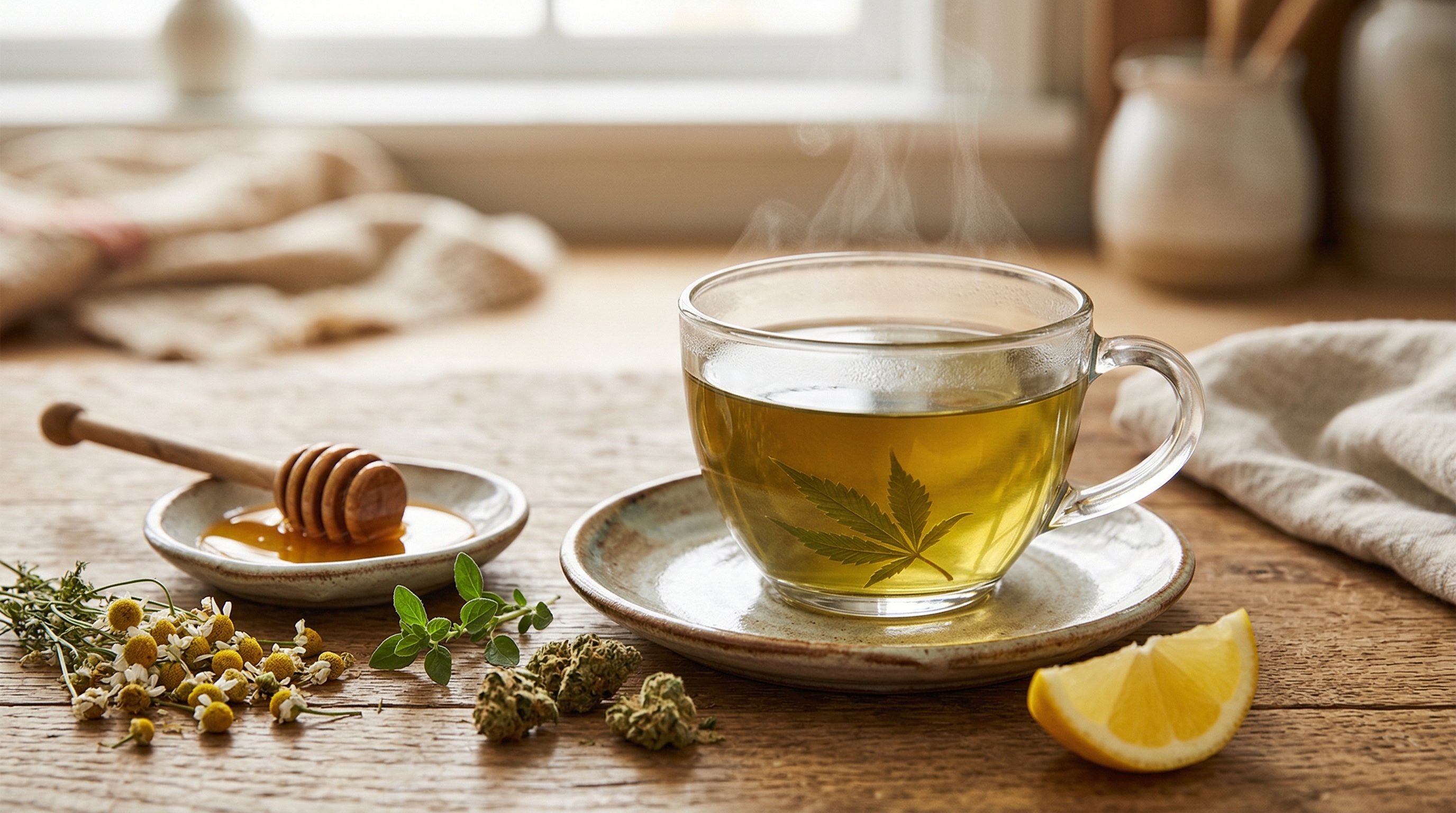
- Green tea + Uplifting High tincture (limonene-forward): Bright, social, creative morning energy
- Chamomile + Relaxing High tincture (myrcene-forward): Weekend slow mornings, gentle calm
- Black tea + Energetic High tincture (terpinolene-forward): Focused productivity, mental clarity
Step 2: Steep and Prepare
Brew 8 oz of tea at the appropriate temperature for your tea type (boiling for black/herbal, 175°F for green). Steep for the recommended time — typically 3–5 minutes.
Step 3: Add Fat and Infusion
THC is fat-soluble, so your tea needs a fat component for proper absorption. Add:
- Your measured cannabis oil or tincture (same dosing principles as the coffee recipe above)
- 1 tablespoon of coconut cream, whole milk, or oat milk
- Optional: honey, lemon, or ginger
Stir vigorously with a frother or whisk until fully blended.
Step 4: Enjoy Mindfully
Same rules apply — sip slowly, wait 90 minutes before considering any additional dose, and log your experience.
Pro Tips
Dial in your ratio over a week. Don’t change your dose daily. Pick a starting point (say, 2 mg THC) and stick with it for 3–5 mornings. Note how it interacts with your caffeine tolerance, sleep quality, and breakfast. Then adjust by 1 mg increments.
Fat quality matters. Coconut oil and MCT oil are popular carriers because medium-chain triglycerides may be absorbed more efficiently than long-chain fats [Zgair et al., 2016]. This can mean faster onset and more consistent effects compared to butter.
Temperature won’t destroy your THC — at least not at coffee or tea temperatures. THC’s boiling point is around 315°F (157°C), and your beverages are well below that at 150–212°F. Your cannabinoids are safe.
Consider CBD-dominant or balanced ratios. If you want functional clarity without much psychoactivity, a 1:1 CBD:THC oil at 2.5 mg each offers what many describe as a calm, focused experience. Research suggests CBD may modulate some of THC’s more intense effects [Russo, 2011].
Make it a ritual, not a race. Microdosing is about subtlety. You shouldn’t feel “high” in the traditional sense — you should feel like a slightly better, more present version of your morning self.
Troubleshooting
| Problem | Likely Cause | Solution |
|---|---|---|
| Oil floating on top of drink | Inadequate emulsification | Use a frother or blender; add more creamer/milk as an emulsifier |
| No effects after 90 minutes | Dose too low, or consumed on empty stomach affecting absorption | Try a slightly higher dose next time (increase by 1 mg); eat a small snack with healthy fats |
| Effects too strong | Dose too high or potency miscalculated | Reduce dose by half next time; double-check your oil’s mg/mL; CBD can help take the edge off |
| Unpleasant herbal taste | Strong cannabis oil flavor | Use flavored tinctures, add cacao/cinnamon/vanilla, or switch to a more refined MCT-based oil |
| Inconsistent effects day to day | Uneven oil mixture or variable metabolism | Shake your infused oil well before measuring; keep meal timing consistent |
Variations
- Iced version: Brew coffee or tea double-strength, emulsify with your infused fat and creamer, then pour over ice.
- Cannabis chai latte: Steep chai spices (cardamom, cinnamon, clove, ginger) in whole milk on the stovetop, add your infused oil, and froth.
- Bulletproof-style: Skip the creamer and blend coffee with 1 tablespoon MCT oil + your measured cannabis oil for a keto-friendly option.
- Scaling for groups: Multiply your single-serving dose by the number of guests, emulsify into a larger batch, and clearly label the carafe as infused. Never surprise anyone with an edible.
Golden rule of cannabis edibles: You can always take more, but you can never take less. Start low, go slow, and enjoy the ritual.
Key Takeaways
- Fat is not optional. THC and CBD are fat-soluble. Without a fat carrier — coconut oil, butter, cream, or oat milk — most of the cannabinoids pass through your system without being absorbed.
- Start at 1–2.5 mg THC. This is the functional microdose range for most people. You can always increase by 1 mg the next morning if needed.
- Emulsify properly. A milk frother or blender for 15–20 seconds turns an oily separation into a consistent, creamy drink. Skip this step and your dosing becomes unpredictable.
- Wait 90 minutes before redosing. Edibles take longer to hit than smoking or vaping because they pass through your digestive system first.
- Log your mornings. Note dose, timing, and effects. A week of data is worth more than a month of guessing.
- Match your tea to your mood. Use the High Families system to pair your tincture’s terpene profile — limonene for focus, myrcene for calm, terpinolene for clarity — to your tea choice and your day.
If you want to go deeper on the science of why small doses behave differently than large ones, see our guide on cannabis and the endocannabinoid system.
Sources
- Russo, E.B. (2011). “Taming THC: potential cannabis synergy and phytocannabinoid-terpenoid entourage effects.” British Journal of Pharmacology, 163(7), 1344–1364. PMID: 21749363
- Zgair, A. et al. (2016). “Dietary fats and pharmaceutical lipid excipients increase systemic exposure to orally administered cannabis and cannabis-based medicines.” American Journal of Translational Research, 8(8), 3448–3459. PMID: 27648135


