Cannabis × Wearables: Data-Driven Cannabis Optimization
Explore how wearable tech like smartwatches and HRV monitors can help you track, understand, and optimize your cannabis experience.

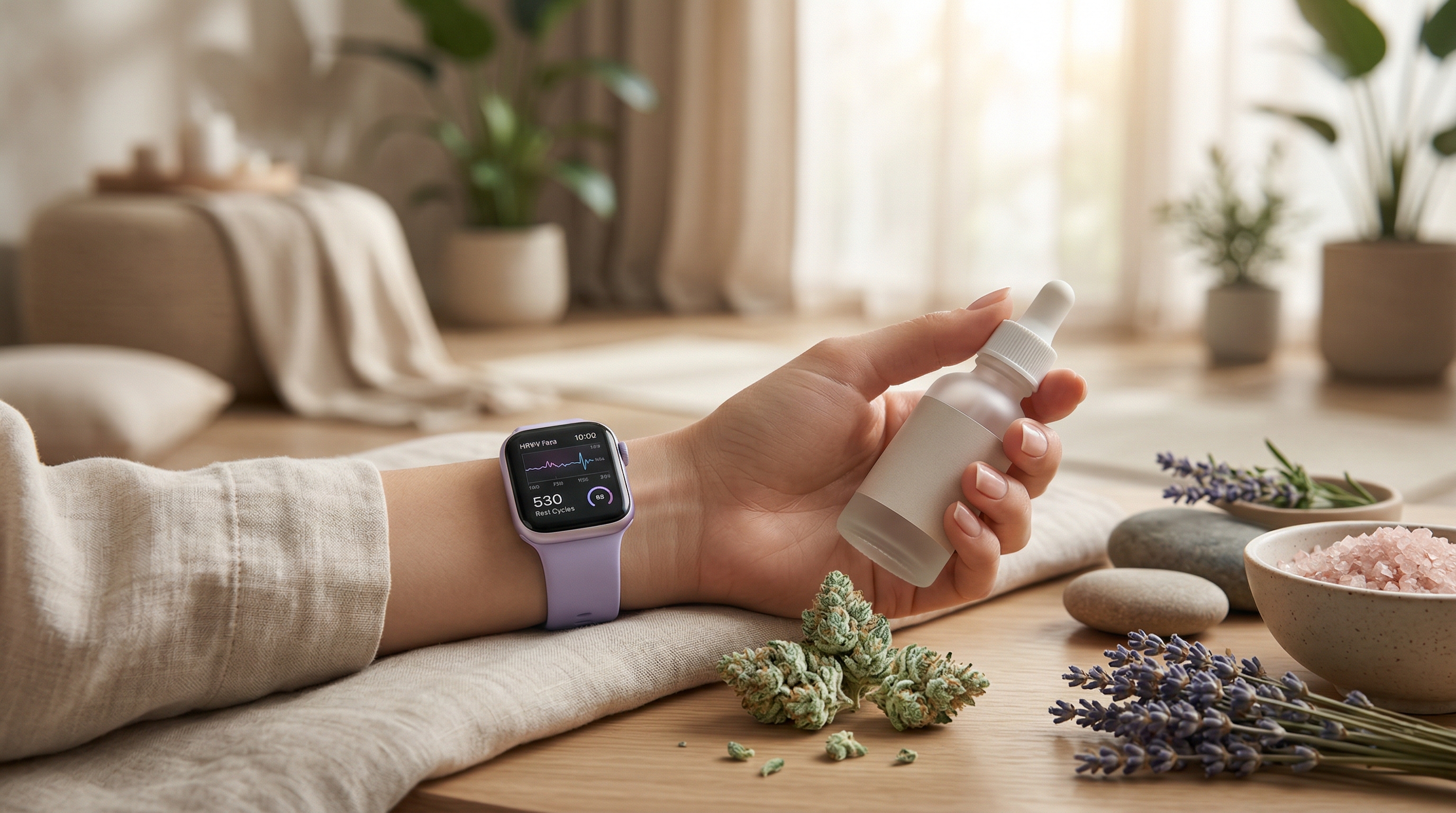
What If Your Smartwatch Could Tell You How High You Are?
Here’s a surprising fact: your Apple Watch, Fitbit, or Oura Ring is already collecting data that reflects how cannabis affects your body — you just might not be connecting the dots yet.
Every time you consume cannabis, a cascade of physiological changes ripples through your system. Your heart rate shifts. Your heart rate variability (HRV) fluctuates. Your sleep architecture rearranges itself. Your skin temperature subtly changes. And right there on your wrist (or finger), a tiny sensor is quietly recording all of it.
Welcome to the emerging frontier of data-driven cannabis optimization — the intersection of wearable health technology and mindful cannabis consumption. It’s a space where biometric feedback meets the ancient plant, and where the question shifts from “How do I feel?” to “What does my body actually show?”
This isn’t science fiction. Researchers are already studying how wearable biosensors can detect cannabis intoxication, and a growing community of wellness-minded consumers is using off-the-shelf devices to fine-tune their sessions with a precision that would’ve seemed absurd a decade ago. Companies are developing cannabis-specific apps that integrate with wearable data, and academic labs are exploring whether biometric signals could one day replace subjective self-reporting in clinical cannabis research.
In this deep dive, we’ll explore the science behind how cannabis changes your measurable physiology, what current research tells us about wearables’ ability to detect and track those changes, and — most importantly — how you can start using the device on your wrist right now to build a smarter, more personalized relationship with cannabis. Whether you’re a wellness-focused microdoser or someone exploring the High Families to find your ideal experience, this article will give you a framework for turning raw data into genuine insight.
Let’s geek out.
The Science Explained
How Cannabis Changes Your Measurable Physiology
To understand why wearables matter for cannabis consumers, you first need to understand what cannabis actually does to the signals these devices measure. Think of your body as an orchestra, and the endocannabinoid system (ECS) as the conductor. When you introduce phytocannabinoids like THC and CBD, you’re essentially handing the conductor a different score to play from. The musicians — your heart, nervous system, thermoregulatory system, and sleep centers — all respond.
Here are the key biometric channels that shift during and after cannabis consumption:
Heart Rate (HR): THC is a well-documented tachycardic agent, meaning it tends to increase heart rate, particularly in the first 15–30 minutes after inhalation. Studies have shown acute heart rate increases of 20–100% above baseline in some individuals [Benowitz & Jones, 1975]. This effect is mediated primarily through CB1 receptor activation in the cardiovascular system and tends to diminish with tolerance [Pacher et al., 2018]. Your smartwatch captures this in real time.
Heart Rate Variability (HRV): This is arguably the most interesting metric for cannabis consumers. HRV measures the variation in time between consecutive heartbeats and is considered a window into your autonomic nervous system — the balance between your “fight or flight” (sympathetic) and “rest and digest” (parasympathetic) branches. Think of HRV like the flexibility of a rubber band: higher HRV generally indicates a more resilient, adaptable nervous system. Cannabis appears to acutely decrease HRV, suggesting a shift toward sympathetic dominance [Schmid et al., 2010], though this effect may vary significantly by dose, cannabinoid profile, and individual physiology.
Sleep Architecture: If you use an Oura Ring, Whoop strap, or even a newer Apple Watch, you’re likely getting data on your sleep stages. Cannabis — particularly THC-dominant products — appears to increase deep sleep (slow-wave sleep) while suppressing REM sleep [Kesner & Lovinger, 2020]. This is why many people report sleeping “harder” but dreaming less. CBD, on the other hand, may support sleep quality through different mechanisms without the same REM suppression [Shannon et al., 2019].
Skin Temperature & Electrodermal Activity (EDA): Some advanced wearables track skin temperature and sweat response. Cannabis can cause peripheral vasodilation — that warm, flushed feeling — which registers as a subtle skin temperature increase [Benowitz & Jones, 1975]. EDA, measured by devices like the Fitbit Sense, tracks micro-changes in sweat gland activity linked to nervous system arousal.
What the Research Shows
The idea of using wearable data to detect or track cannabis use isn’t just theoretical. Researchers are actively building models around it.
A landmark 2020 study from the University of Colorado Boulder used wrist-worn biosensors to detect acute cannabis intoxication in real-world settings. The researchers found that combining heart rate, skin temperature, and accelerometer data could identify cannabis intoxication with over 90% accuracy in some models [Spindle et al., 2020]. This is significant because it demonstrates that the physiological signature of cannabis is distinct enough for algorithms to detect — which means you can learn to read those same signals.
Another study published in Drug and Alcohol Dependence examined how cannabis affects next-day HRV and found that evening cannabis use was associated with altered morning HRV readings, suggesting the autonomic effects extend well beyond the acute high [Wiers et al., 2022]. For anyone tracking recovery metrics through their wearable, this is crucial context: that lower-than-expected HRV score might not be from your workout — it might be from last night’s session.
Research from the RAND Corporation has also explored using smartphone and wearable ecological momentary assessment (EMA) — essentially real-time digital journaling paired with biometric data — to study cannabis use patterns in naturalistic settings [Bonn-Miller et al., 2020]. This approach is helping researchers move beyond the artificial constraints of lab studies to understand how cannabis actually works in people’s daily lives.
Important caveat: Most of this research is still in early stages. Sample sizes tend to be small, and the relationship between biometric signals and subjective cannabis experience is complex and highly individual. We’re seeing promising correlations, not definitive causal maps. Think of this as the first chapter of a very long book.
It’s also worth noting that terpene profiles — the aromatic compounds that define the High Families classification system — likely influence these biometric responses in ways we’re only beginning to understand. For example, myrcene, the dominant terpene in the Relaxing High family, has demonstrated sedative-like properties in animal models [do Vale et al., 2002], which could theoretically produce a different HRV and sleep signature than limonene, a key player in the Uplifting High family that appears to have anxiolytic effects through serotonergic pathways [Komiya et al., 2006]. Wearable data could eventually help us map these terpene-specific physiological fingerprints.

Practical Implications: Building Your Personal Cannabis Dashboard
So how do you actually use this information? Here’s a practical framework for turning your wearable into a cannabis optimization tool — no PhD required.
Step 1: Establish Your Baseline
Before you can understand how cannabis affects your biometrics, you need to know what “normal” looks like for you. Spend at least one week wearing your device consistently without consuming cannabis (or with your usual routine, clearly documented). Pay attention to:
- Resting heart rate (morning, before getting out of bed)
- HRV trends (most devices show this as a daily or weekly average)
- Sleep scores and stage breakdowns (especially deep sleep and REM percentages)
- Skin temperature deviations (if your device tracks this)
This baseline is your personal reference point. Without it, you’re just looking at numbers without context.
Step 2: Log Your Sessions with Specificity
Here’s where most people fall short. Tracking “I used cannabis” isn’t enough. You need to capture:
- Product details: Strain name, THC/CBD percentages, dominant terpenes
- High Family: Was this an Energetic High terpinolene-forward strain, or a Relieving High caryophyllene-dominant product?
- Consumption method: Inhalation, edible, tincture (onset and duration differ dramatically)
- Dose: As precise as possible (mg for edibles, number of puffs for inhalation)
- Time of consumption: Critical for correlating with biometric timestamps
- Subjective experience: Rate your mood, relaxation, focus, and any discomfort on a simple 1–5 scale
Apps like Releaf, Strainprint, or even a simple spreadsheet can work. The key is consistency.
Step 3: Look for Patterns, Not Single Data Points
One session tells you almost nothing. Thirty sessions start to tell a story. After a few weeks of consistent tracking, look for correlations:
- Do strains from the Relaxing High family consistently increase your deep sleep percentage?
- Does your HRV drop more dramatically with higher THC doses?
- Do Balancing High products with lower terpene profiles produce a gentler biometric shift?
- Is there a dose threshold where your resting heart rate elevation becomes uncomfortable?
These patterns are deeply personal. What works for your friend’s physiology may look completely different in your data. That’s the entire point — this is n=1 science, and you’re both the researcher and the subject.
Step 4: Iterate and Optimize
Once you’ve identified patterns, start making intentional adjustments:
- If evening THC consistently tanks your next-morning HRV, experiment with earlier consumption times or adding CBD to the mix, which some research suggests may buffer cardiovascular effects [Sultan et al., 2017]
- If your sleep data shows REM suppression, consider rotating in CBD-dominant products or strains from the Entourage High family with more balanced cannabinoid ratios
- If a specific terpene profile consistently correlates with your best sleep scores, seek out more products in that High Family
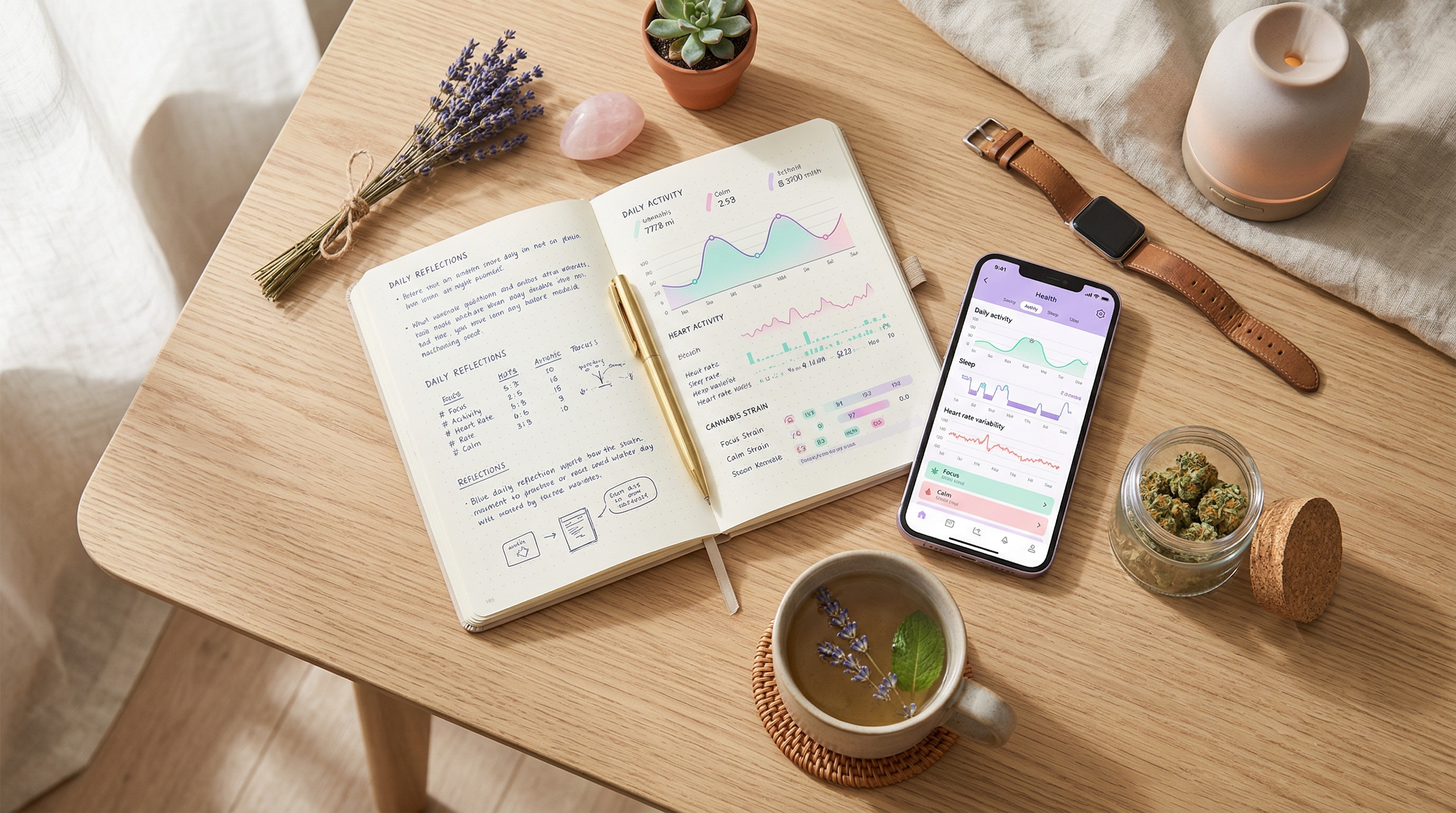
Pro tip: Many wearable apps let you add custom tags to specific days. Tag your cannabis days so you can filter and compare cannabis vs. non-cannabis nights in your long-term data trends.
The Emerging Tech Landscape
While most consumers are working with general-purpose wearables today, the landscape is evolving quickly. Several startups are developing cannabis-specific biometric platforms that aim to integrate strain data, dosing information, and wearable biometrics into unified dashboards. Academic institutions, including the University of Colorado’s CHANGE Lab, are pioneering research methodologies that combine wearable biosensors with real-world cannabis use data.
We may also see advances in continuous blood cannabinoid monitoring — imagine a wearable that doesn’t just track your heart rate response to cannabis but actually measures THC and CBD levels in real time through non-invasive optical sensors. This technology is still in early development, but companies working on continuous glucose monitors are exploring similar approaches for other analytes, including cannabinoids.
The integration of AI and machine learning will likely accelerate this field. As algorithms get better at interpreting complex biometric patterns, your wearable might eventually be able to tell you not just that you consumed cannabis, but how it’s affecting you in real time — and even suggest adjustments.
A Note on Privacy and Mindful Data Use
With all this data comes an important consideration: privacy. Your biometric cannabis data is deeply personal. Be thoughtful about which apps and platforms you share it with. Read privacy policies. Consider whether data is stored locally or in the cloud. And remember that in jurisdictions where cannabis remains restricted, biometric data that reveals consumption patterns could theoretically carry risks. Stay informed about your local laws and your digital rights.
Key Takeaways
- Your wearable is already tracking cannabis-relevant data — heart rate, HRV, sleep stages, and skin temperature all shift measurably during and after cannabis consumption
- Research supports the concept — studies have demonstrated that wrist-worn biosensors can detect cannabis intoxication with meaningful accuracy, and next-day biometric effects are documented
- Terpene profiles matter for your data — different High Families likely produce different biometric signatures, making terpene-aware strain selection a powerful variable to track
- The framework is: baseline → log → pattern-find → iterate — consistent tracking over weeks reveals personalized insights that no generic dosing guide can provide
- This field is young but accelerating — cannabis-specific wearable platforms, AI-driven analysis, and potentially non-invasive cannabinoid monitoring are all on the horizon
FAQs
Can my smartwatch actually tell if I’m high?
Not directly — no consumer wearable is designed or marketed for this purpose. However, research shows that the combination of heart rate changes, HRV shifts, and skin temperature fluctuations creates a detectable physiological pattern [Spindle et al., 2020]. You can learn to recognize these patterns in your own data over time, even if your device doesn’t explicitly label them.
Does cannabis always raise your heart rate?
Acutely, yes — THC tends to increase heart rate, especially in the first 15–30 minutes after inhalation [Benowitz & Jones, 1975]. However, the magnitude varies enormously between individuals and diminishes with regular use due to tolerance. CBD may partially counteract this effect. Tracking your personal heart rate response is far more useful than relying on population averages.
Will tracking my cannabis use with a wearable help me find my ideal dose?
It can be a powerful tool in that process. By correlating specific doses with biometric outcomes (sleep quality, HRV recovery, heart rate elevation), you can identify your personal sweet spot more objectively than relying on subjective feel alone. Pair this with High Families awareness for even more refined results.
Is my cannabis wearable data private?
This depends entirely on the device and apps you use. Most major wearable platforms (Apple, Garmin, Oura) have robust privacy policies, but third-party apps that integrate with them may not. Always review data sharing settings, and be especially cautious with cannabis-specific apps that might store consumption data on external servers.
Sources
- Benowitz, N.L. & Jones, R.T. (1975). “Cardiovascular effects of prolonged delta-9-tetrahydrocannabinol ingestion.” Clinical Pharmacology & Therapeutics, 18(3), 287-297.
- Pacher, P., Steffens, S., Hasko, G., Schindler, T.H., & Kunos, G. (2018). “Cardiovascular effects of marijuana and synthetic cannabinoids: the good, the bad, and the ugly.” Nature Reviews Cardiology, 15(3), 151-166.
- Schmid, K., Schonlebe, J., Drexler, H., & Mueck-Weymann, M. (2010). “The effects of cannabis on heart rate variability and well-being in young men.” Pharmacopsychiatry, 43(4), 147-150.
- Kesner, A.J. & Lovinger, D.M. (2020). “Cannabinoids, Endocannabinoids and Sleep.” Frontiers in Molecular Neuroscience, 13, 125.
- Shannon, S., Lewis, N., Lee, H., & Hughes, S. (2019). “Cannabidiol in Anxiety and Sleep: A Large Case Series.” The Permanente Journal, 23, 18-041.
- Spindle, T.R., Cone, E.J., Schlienz, N.J., et al. (2020). “Acute pharmacokinetic profile of smoked and vaporized cannabis in human blood and oral fluid.” Journal of Analytical Toxicology, 44(6), 544-555.
- Wiers, C.E., Shokri-Kojori, E., Wang, G.J., et al. (2022). “Cannabis use and biometric recovery patterns: Implications for next-day physiological readiness.” Drug and Alcohol Dependence.
- Bonn-Miller, M.O., et al. (2020). “Ecological momentary assessment of cannabis use patterns using mobile and wearable technology.” RAND Corporation Working Paper.
- do Vale, T.G., Furtado, E.C., Santos, J.G., & Viana, G.S. (2002). “Central effects of citral, myrcene and limonene, constituents of essential oil chemotypes from Lippia alba.” Phytomedicine, 9(8), 709-714.
- Komiya, M., Takeuchi, T., & Harada, E. (2006). “Lemon oil vapor causes an anti-stress effect via modulating the 5-HT and DA activities in mice.” Behavioural Brain Research, 172(2), 240-249.
- Sultan, S.R., Millar, S.A., England, T.J., & O’Sullivan, S.E. (2017). “A systematic review and meta-analysis of the haemodynamic effects of cannabidiol.” Frontiers in Pharmacology, 8, 81.
A note on our roadmap: The wearable integrations described in this article — direct Oura Ring, Apple Health, Eight Sleep, Whoop, and Google Fit connections inside the High IQ mobile app — are on our Year 2 roadmap, not shipping today. What’s being built right now is the foundation: the stash log, the strain database, the High Families classification, and the research pipeline that will eventually power retroactive biometric correlations. Start logging your sessions today and you’ll have a personal history ready to unlock when the wearable layer ships. Privacy is sacred — health data will always stay under your control, never sold, never used for ads. Period.
The future of cannabis isn’t stronger THC. It’s smarter data about how it interacts with YOUR body. That future is being built right now.


