Cannabis Withdrawal Is Real (And Milder Than You Think)
Cannabis withdrawal is clinically recognized but widely misunderstood. Here's what research says about symptoms, timeline, and how to manage it.

Professor High
Your friendly cannabis educator, bringing science-backed knowledge to the community.

The Elephant in the Smoke-Filled Room
Here’s a statement that manages to annoy almost everyone: cannabis withdrawal is real.
If you’re a long-time cannabis enthusiast, you might be rolling your eyes. If you’re someone who has struggled with it, you might feel validated for the first time. And if you’re on the anti-cannabis side of the fence, you might be tempted to yell, “See, I told you so!”
But here’s the part nobody in any camp talks about enough: cannabis withdrawal, while clinically recognized, is dramatically milder than withdrawal from alcohol, opioids, or even caffeine in many respects. It’s not nothing—but it’s also not what decades of fear-mongering have painted it to be.
In 2013, Cannabis Withdrawal Syndrome officially entered the Diagnostic and Statistical Manual of Mental Disorders (DSM-5), giving it a clinical name and diagnostic criteria [American Psychiatric Association, 2013]. That was a significant moment. It meant the medical community acknowledged that regular, heavy cannabis use can produce a real, measurable set of symptoms when you stop.
Yet most people—including many daily consumers—have never heard of it. And those who have often swing between two extremes: dismissing it entirely or catastrophizing it.
This article walks right down the middle with the actual science. You’ll learn what cannabis withdrawal looks like, why it happens at a neurological level, how long it lasts, and what you can do about it. Whether you’re a daily consumer considering a tolerance break or just someone who wants the facts, this one’s for you.

Why Withdrawal Happens: The CB1 Receptor Story
How Your Endocannabinoid System Adapts
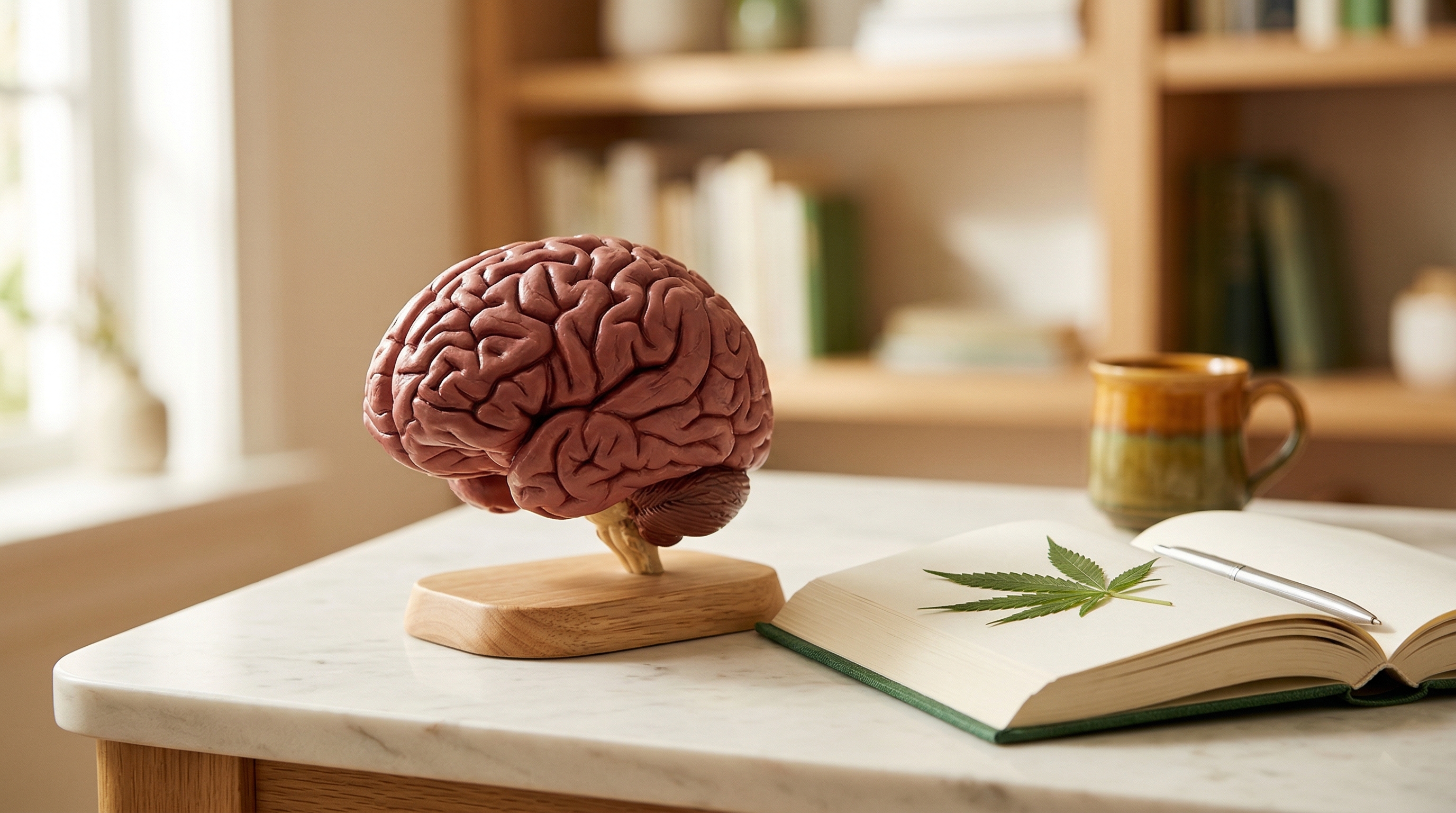
To understand withdrawal, you first need to understand why your body reacts when you stop using cannabis. That starts with your endocannabinoid system (ECS)—a network of receptors, enzymes, and signaling molecules that helps regulate mood, sleep, appetite, pain, and more.
Think of your ECS like a thermostat. It constantly adjusts to keep your body in balance—a state called homeostasis. Your body produces its own cannabinoids, called endocannabinoids, that bind to CB1 and CB2 receptors throughout your brain and body.
When you consume cannabis, THC floods those same CB1 receptors with far more stimulation than your endocannabinoids typically provide. Your brain notices this surplus and responds predictably: it downregulates. That means it reduces the number of available CB1 receptors and decreases their sensitivity [Hirvonen et al., 2012].
Imagine someone keeps turning up the music in a room. Eventually, you put in earplugs. That’s essentially what your brain does—it dials down its own sensitivity to cannabinoid signaling to compensate for the constant influx of THC.
This is tolerance in action. It works fine as long as the THC keeps coming.
But when you suddenly stop? Your brain is standing there with earplugs in, and the music has gone silent. Your natural endocannabinoid system hasn’t yet bounced back. The thermostat is miscalibrated. That gap between your downregulated system and normal functioning is what produces withdrawal symptoms.
What the Research Shows
A landmark meta-analysis by Bahji et al. (2020) pooled data from 47 studies involving over 23,000 participants and found that roughly 47% of regular, heavy cannabis users experienced some form of withdrawal upon cessation. The most commonly reported symptoms included:
- Irritability and anger (reported in up to 76% of cases)
- Sleep difficulties, including insomnia and vivid dreams
- Decreased appetite
- Restlessness and anxiety
- Depressed mood
- Physical symptoms such as headaches, sweating, and stomach discomfort
The DSM-5 criteria require at least three of these symptoms developing within approximately one week of stopping, and they must cause clinically significant distress [American Psychiatric Association, 2013].
Here’s where the “milder than you think” part becomes clear. A comprehensive review by Bonnet and Preuss (2017) compared cannabis withdrawal to other substance withdrawal syndromes and found that while symptoms are genuine and uncomfortable, they are typically:
- Not medically dangerous (unlike alcohol or benzodiazepine withdrawal, which can be life-threatening)
- Self-limiting, with most symptoms peaking around days 2–6 and resolving within 1–2 weeks
- Moderate in severity, with most people rating them as mild to moderate on clinical scales
For context: alcohol withdrawal can cause seizures and delirium tremens that require emergency medical care. Nicotine withdrawal includes intense cravings that persist for months. Cannabis withdrawal is uncomfortable, but it is in a different league entirely when it comes to medical risk.
The neurological good news? Research using PET imaging has shown that CB1 receptor availability begins to recover within just 2 days of abstinence and returns to levels comparable to non-users within approximately 4 weeks [Hirvonen et al., 2012]. Your brain’s thermostat recalibrates. The earplugs come out.
The Withdrawal Timeline
Understanding the typical arc of symptoms helps normalize the experience:
| Timeframe | What to Expect |
|---|---|
| Hours 0–24 | Little to no symptoms for most people; mild irritability may begin |
| Days 1–3 | Symptoms ramp up: irritability, sleep disruption, appetite changes, anxiety |
| Days 2–6 | Peak discomfort — this is the hardest stretch for most people |
| Days 7–14 | Gradual improvement; sleep and mood stabilize |
| Weeks 2–4 | Most symptoms resolved; CB1 receptors continue recovering |
| Week 4+ | System largely normalized; receptor sensitivity restored |
This timeline assumes abrupt cessation after heavy, regular use. Occasional or light consumers are far less likely to experience a notable withdrawal arc at all.
The Sleep Factor: Why Dreams Get Wild
One of the most talked-about withdrawal effects deserves its own mention: the vivid dreams. Many people on tolerance breaks report intensely vivid, sometimes unsettling dreams during the first week. This isn’t just anecdote—there’s a clear neurological explanation.
THC is known to suppress REM sleep, the sleep stage most associated with dreaming [Kesner & Lovinger, 2020]. When you stop consuming, your brain rebounds with extra REM activity—a phenomenon called REM rebound. The result? Dreams that feel like feature-length films. For a deeper look at how THC changes sleep architecture, see our guide on how THC affects REM sleep and dream recall.
This typically peaks in the first week and settles as sleep architecture normalizes. It’s not a sign of something wrong—it’s your brain catching up.
Cannabis vs. Other Substances: A Reality Check
One reason cannabis withdrawal is so often dismissed—or so often catastrophized—is a lack of comparison context. Here’s where it actually sits relative to other common substances:
| Substance | Withdrawal Severity | Medical Risk | Typical Duration |
|---|---|---|---|
| Alcohol | Severe | High (seizures possible) | Days to weeks |
| Opioids | Severe | Moderate (flu-like but agonizing) | 5–10 days acute |
| Benzodiazepines | Severe | High (seizures possible) | Weeks to months |
| Nicotine | Moderate | Low | Weeks to months |
| Caffeine | Mild | Very low | 2–9 days |
| Cannabis | Mild–Moderate | Very low | 1–2 weeks |
Cannabis withdrawal is real. It’s also, by this comparison, one of the most manageable cessation experiences among widely used psychoactive substances.
Practical Strategies for a Smoother Break
If You’re Planning a Tolerance Break
- Expect some discomfort, especially in the first 3–6 days. Knowing it’s temporary and neurologically normal reduces anxiety about the experience.
- Taper gradually if possible. Reducing consumption over 1–2 weeks rather than stopping abruptly may lessen symptom severity, though clinical evidence on tapering protocols is still limited.
- Prioritize sleep hygiene. Since sleep disruption is one of the most common symptoms, establish a consistent bedtime routine, avoid screens before bed, and consider non-cannabis sleep supports like magnesium glycinate or chamomile tea.
- Stay active. Exercise promotes endocannabinoid tone through natural production of anandamide and 2-AG, which may help fill the gap left by reduced THC input.
If You’re a Daily Consumer With No Plans to Stop
Periodic tolerance breaks—even short ones of 2–4 days—may help restore CB1 receptor sensitivity, meaning you’ll need less to achieve the same effects. That’s good for your wallet, your tolerance, and your endocannabinoid health.
Consider rotating between different High Families. Varying your terpene and cannabinoid intake—say, alternating between an Energetic High during the day and a Balancing High in the evening—may help prevent the deep receptor downregulation that comes from constant, identical stimulation.
If You’re Experiencing Withdrawal and Struggling
You’re not imagining it, and you’re not weak. This is a documented physiological response to the neuroadaptations your brain made during regular use.
Most symptoms resolve within 1–2 weeks. If they persist beyond that, feel severe, or include significant depression or anxiety, talking to a healthcare provider is a reasonable and worthwhile step.
Key Takeaways
- Cannabis withdrawal is clinically recognized (DSM-5) and affects roughly half of regular heavy users—but it is not medically dangerous and typically resolves within 1–2 weeks.
- Symptoms are real but moderate: irritability, sleep disruption, vivid dreams, appetite changes, and restlessness are the most common.
- CB1 receptor downregulation is the neurological mechanism—your brain adapts to constant THC input, then needs time to recalibrate when it stops.
- The timeline peaks at days 2–6 after cessation and largely resolves within two weeks.
- Your brain recovers quickly: CB1 receptors begin restoring within 48 hours and largely normalize within 4 weeks.
- Vivid dreams are REM rebound, not a sign of something wrong—your brain is catching up on dream sleep that THC was suppressing.
- Compared to alcohol, opioids, and benzodiazepines, cannabis withdrawal carries very low medical risk.
- Gradual tapering, sleep hygiene, exercise, and informed expectations are your best tools for a comfortable tolerance break.
FAQs
Is cannabis withdrawal dangerous?
No. Unlike withdrawal from alcohol, opioids, or benzodiazepines, cannabis withdrawal is not considered medically dangerous. Symptoms are uncomfortable but self-limiting. That said, if you experience severe anxiety, persistent depression, or symptoms lasting beyond 2–3 weeks, it’s worth speaking with a healthcare provider.
How long does cannabis withdrawal last?
Most symptoms tend to peak between days 2 and 6 after cessation and resolve within 1–2 weeks [Bahji et al., 2020]. Sleep disturbances may linger slightly longer but typically normalize within a month.
Does everyone who stops cannabis experience withdrawal?
Not at all. Research suggests roughly 47% of regular, heavy users experience clinically significant withdrawal [Bahji et al., 2020]. Factors like frequency of use, duration, THC potency, and individual biology all play a role. Occasional or light consumers are far less likely to experience notable symptoms.
Can CBD help with cannabis withdrawal?
This is an active area of research. Some early studies suggest CBD may help reduce anxiety and support sleep—two of the key withdrawal symptoms [Shannon et al., 2019]. However, robust clinical trials specifically targeting cannabis withdrawal with CBD are still limited. It shows promise, but the evidence isn’t definitive yet.
Why do I get such vivid dreams when I stop?
THC suppresses REM sleep. When you stop, your brain compensates with a “REM rebound,” producing more intense dreaming than usual. This is temporary and normalizes within 1–2 weeks. See our full explainer on THC and dream recall.
Sources
- American Psychiatric Association. (2013). Diagnostic and Statistical Manual of Mental Disorders (5th ed.). Arlington, VA: American Psychiatric Publishing.
- Bahji, A., Stephenson, C., Tyo, R., Hawken, E.R., & Seitz, D.P. (2020). “Prevalence of Cannabis Withdrawal Symptoms Among People With Regular or Dependent Use of Cannabinoids.” JAMA Network Open, 3(4), e202370. DOI: 10.1001/jamanetworkopen.2020.2370
- Bonnet, U., & Preuss, U.W. (2017). “The cannabis withdrawal syndrome: current insights.” Substance Abuse and Rehabilitation, 8, 9–37. DOI: 10.2147/SAR.S109576
- Hirvonen, J., Goodwin, R.S., Li, C.T., et al. (2012). “Reversible and regionally selective downregulation of brain cannabinoid CB1 receptors in chronic daily cannabis smokers.” Molecular Psychiatry, 17(6), 642–649. PMID: 21747398
- Kesner, A.J., & Lovinger, D.M. (2020). “Cannabinoids, Endocannabinoids and Sleep.” Frontiers in Molecular Neuroscience, 13, 125. DOI: 10.3389/fnmol.2020.00125
- Shannon, S., Lewis, N., Lee, H., & Hughes, S. (2019). “Cannabidiol in Anxiety and Sleep: A Large Case Series.” The Permanente Journal, 23, 18–041. DOI: 10.7812/TPP/18-041


