CBD May Protect Your Brain From Nicotine Damage: 2026 Study
A 2026 study found CBD reverses nicotine-induced glymphatic system damage in animal models. The neuroscience and the practical takeaway for vapers.

Professor High
The Brain Has a Plumbing System You’ve Probably Never Heard Of
Your brain produces waste — used neurotransmitters, oxidized lipids, fragments of amyloid-beta and tau, the cellular equivalent of coffee grounds. The body has a lymphatic system to drain this kind of garbage from the rest of you, but anatomists long noticed something odd about the brain: no traditional lymph vessels. For nearly a century, that was an unsolved problem.
Then in 2012, a team led by Maiken Nedergaard and Jeffrey Iliff at the University of Rochester described a previously hidden plumbing network they called the glymphatic system [Iliff et al., 2012] — a portmanteau of glia and lymphatic. Cerebrospinal fluid (CSF) is pushed along the outside of arteries through tiny channels called perivascular spaces, washes through brain tissue picking up waste, and drains out through veins and meningeal lymphatic vessels into the deep cervical lymph nodes in your neck.
Even more striking: the glymphatic system runs hardest while you sleep. During slow-wave sleep, glial cells shrink, perivascular spaces widen by roughly 60 percent, and waste clearance accelerates dramatically [Xie et al., 2013]. This is the most concrete biological reason science has produced for why sleep is non-negotiable. You are not just resting — you are running a deep-clean cycle on the most metabolically expensive organ in your body.
When the system fails, things accumulate that should not: amyloid plaques, tau tangles, inflammatory proteins. Glymphatic dysfunction has been linked to Alzheimer’s, traumatic brain injury, stroke recovery, and ageing-related cognitive decline [Nedergaard & Goldman, 2020]. A 2025 Cambridge analysis of 40,000 UK Biobank brain scans found that impaired glymphatic flow at baseline predicted dementia risk over the following decade [Williams et al., 2025].
So when something damages this system, it is worth paying attention to. And one of the things that damages it, it turns out, is nicotine.
What Nicotine Does to It
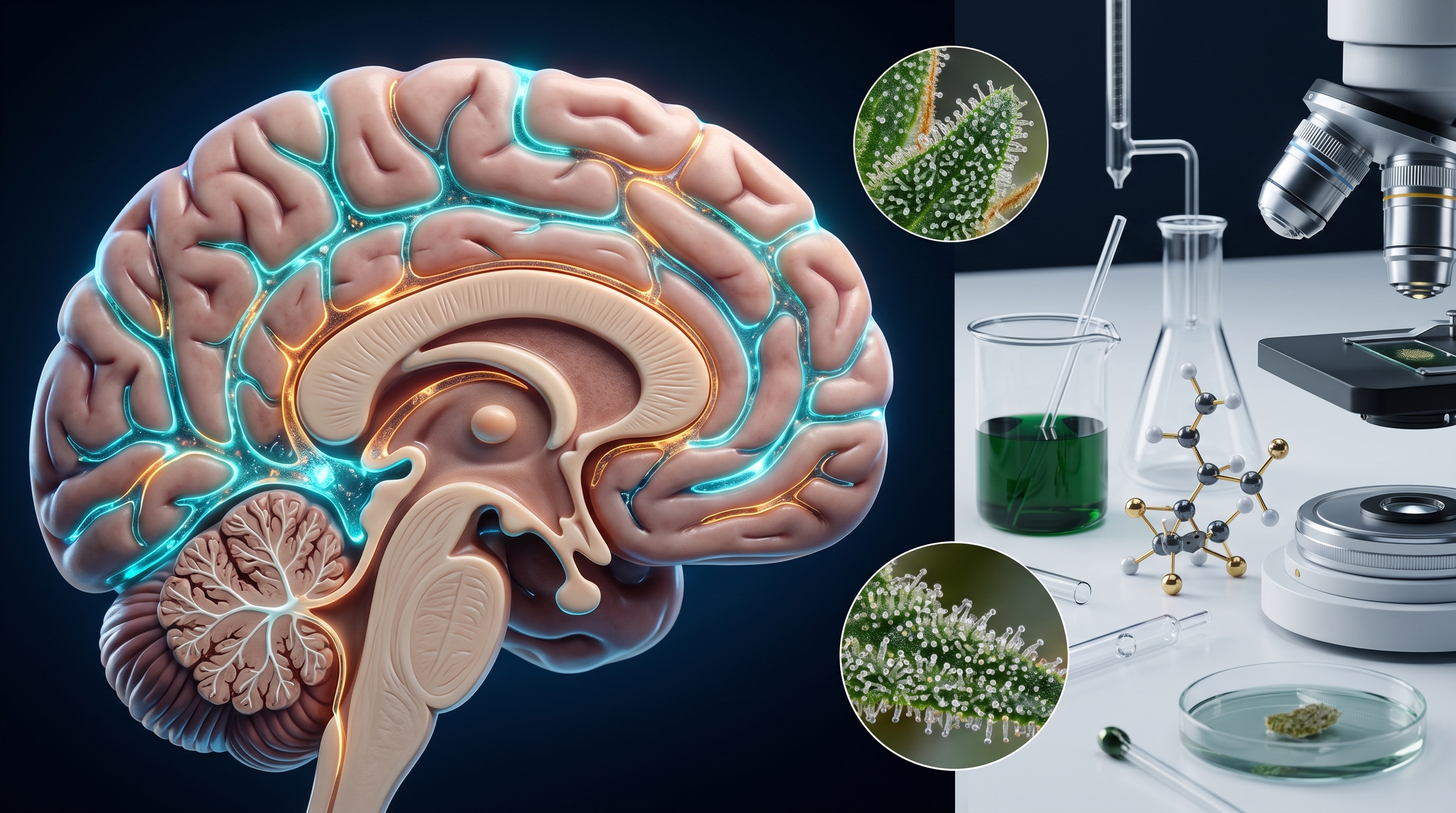
Nicotine constricts cerebral blood vessels, drives oxidative stress, and in chronic exposure promotes a low-grade inflammatory state in the brain [Mahar et al., 2012]. What was missing until recently was a clean mechanism connecting those known harms to glymphatic plumbing.
The connecting protein turns out to be aquaporin-4 (AQP4) — a water channel embedded in the end-feet of astrocytes, the star-shaped glial cells wrapping brain blood vessels. AQP4 is what makes the glymphatic flush possible. Water enters the brain through AQP4 channels along arteries, sweeps through tissue, and exits through AQP4 channels along veins. Knock out AQP4 in mice and glymphatic clearance drops by roughly 65 percent [Mestre et al., 2018]. AQP4 is, in a real sense, the drain.
Preclinical studies show chronic nicotine does several bad things at once. It downregulates AQP4 expression — fewer drains. It elevates pro-inflammatory cytokines like IL-6 and damage-associated molecules like HMGB1. It activates microglia, the brain’s resident immune cells. And it disrupts the polarised positioning of AQP4 along astrocyte end-feet — almost as bad as removing it, since the drains are still there but pointed the wrong way.
The net effect: a brain that clears waste less efficiently, runs hotter on inflammation, and shows molecular signatures that resemble — uncomfortably — the early biology of neurodegenerative disease.
The 2026 CBD Finding
In late 2025 and early 2026, a research group led by Bidhan Bhandari and Babak Baban at Augusta University’s Dental College of Georgia published the first study to directly test whether cannabidiol (CBD) could reverse this damage. The paper appeared in Nicotine & Tobacco Research under the specific title “Protective Role of CBD Against Nicotine Pouch-Induced Seizure Aggravation and Alterations in Brain Glymphatic Biomarkers” [Bhandari et al., 2025].
Here is what they did. Mice were exposed to either acute nicotine pouch or seven days of chronic exposure. Seizures were then induced with kainic acid — a standard model probing brain vulnerability — and scored on the Racine scale. The team measured AQP4 by immunofluorescence and Western blot, quantified IL-6, HMGB1, BDNF, and c-FOS, and tracked glymphatic function directly by injecting fluorescent rhodamine-dextran tracer into the cisterna magna.
Acute nicotine transiently reduced seizure severity — consistent with short-term nicotinic acetylcholine receptor activation. But chronic nicotine flipped the script: seizures got significantly worse, AQP4 dropped sharply, IL-6 and HMGB1 climbed, and tracer studies confirmed CSF was no longer flowing efficiently. The drains were impaired.
Then the researchers gave a subset of chronic-nicotine mice inhaled CBD. Across nearly every readout, CBD reversed the damage. Seizure severity dropped back toward baseline. AQP4 was restored. IL-6 and HMGB1 normalised. c-FOS came down. An ex vivo assay confirmed CBD was suppressing nicotine-induced IL-6 production in brain-derived immune cells upstream of IL-6 receptor signalling — turning down the broadcast, not just blocking the receiver.
This is not the first hint that CBD protects the glymphatic system. A 2024 study showed CBD improved intracranial lymphatic drainage and reduced phosphorylated tau and amyloid-β after traumatic brain injury, also via AQP4 repolarisation [Wang et al., 2024]. The 2025–2026 work extends that finding to a more common insult: chronic nicotine.
Why CBD Specifically
Why CBD and not, say, an aspirin? Because the glymphatic-damaging effects of nicotine are multi-pronged, and CBD happens to hit several of those prongs at once. It is what pharmacologists politely call a “promiscuous” molecule.
1. Anti-inflammatory action. CBD activates PPARγ, suppresses NF-κB signalling, and reduces microglial reactivity — the most direct route to lowering IL-6 and HMGB1.
2. Antioxidant capacity. CBD scavenges free radicals and upregulates endogenous antioxidants like superoxide dismutase and catalase. Oxidative stress is a major driver of AQP4 dysregulation [Aquaporin & ECS Review, 2024], so reducing reactive oxygen species protects the channel directly.
3. Endocannabinoid modulation. CBD inhibits fatty acid amide hydrolase (FAAH), the enzyme that breaks down anandamide, your body’s own cannabinoid. Higher endocannabinoid tone is linked to better blood-brain barrier integrity. CBD also touches the 2-AG axis covered in our post on endocannabinoid dopamine control — 2-AG signalling helps gate microglial inflammation.
4. CB2 and 5-HT1A receptors. CBD is a partial agonist at 5-HT1A and an indirect modulator of CB2 on immune cells. Both reduce neuroinflammation through complementary mechanisms.
Layered together, these explain why one molecule can simultaneously lower IL-6, restore AQP4, calm microglia, and improve glymphatic flow. CBD is not a precision tool — it is a damping field thrown over an over-active inflammatory system.
What This Doesn’t Mean
A short list of things this study does not establish, because the temptation to over-claim is real.
This is animal data. Mice are not humans. Their glymphatic systems are similar but not identical, and rodent neuroinflammation effect sizes often shrink in human trials. The findings are mechanistically informative and hypothesis-generating — not clinical proof.
This is not a license to keep vaping nicotine. The Bhandari paper studied reversal in mice exposed to nicotine for seven days. It did not study lifetime smokers, and it absolutely did not establish that CBD makes nicotine safe. The simplest way to protect your glymphatic system from nicotine damage remains: use less nicotine.
This is also not a recommendation to inhale CBD products. Inhaled CBD was used in the study for rapid brain bioavailability. But human inhalation exposes lungs to whatever else is in the cartridge, and the cannabis vape supply chain has its own problems — see our deep-dive on acetylated cannabinoids and the hidden ketene risk in some vape products. Oral and sublingual CBD have different pharmacokinetics but more predictable supply chains.
What the study does establish is a plausible mechanism by which CBD could exert neuroprotective effects in the population most exposed to glymphatic damage from nicotine.
The Real Population That Cares
If you have never used nicotine, this is interesting science but not urgent. The population it matters for is more specific.
People who vape both nicotine and cannabis. A real and growing overlap, particularly 18-to-34. Nicotine vapes and cannabis vapes are everywhere, and plenty of people use both — sometimes in the same evening. If chronic nicotine is impairing glymphatic clearance and your cannabis use includes appreciable CBD, you may be partially offsetting that damage without realising it. (Whether the offset is meaningful at typical recreational doses is unknown.)
People transitioning off nicotine. Withdrawal-related cognitive deficits hit attention, working memory, and episodic memory during the first weeks of cessation. A 2019 study found CBD reversed these impairments via the same anti-inflammatory pathway implicated in the 2026 paper [Saravia et al., 2019]. Adjunctive CBD during cessation is a hypothesis worth flagging with your doctor.
Long-term former smokers and nicotine-pouch users. Cumulative neuro-damage from smoking persists for years after quitting; if glymphatic function is sluggish, anti-inflammatory support is directionally sensible. Pouch use is growing faster than cigarettes among young adults, and the “smokeless and therefore safer” framing has outrun the long-term neurological data.
Other Habits That Hammer Your Glymphatic System
Nicotine is not the only insult. The glymphatic system is sensitive to a long list of modern habits: sleep deprivation (less slow-wave sleep, less clearance), heavy alcohol (downregulates AQP4 and disrupts perivascular polarisation), chronic stress (sustained cortisol alters astrocyte function), ageing (flow drops roughly 40 percent from young adulthood to old age), and hypertension (reduces the arterial pulsation that drives flow).
CBD’s anti-inflammatory and AQP4-supporting effects are not selective to nicotine — the same mechanism applies across this basket. Worth knowing if you use CBD primarily for sleep; the sleep strain guide covers cultivars where CBD content matters as much as THC. Improving sleep is itself a glymphatic intervention; CBD on top may compound the effect.
The Practical Takeaway
If you already use CBD products — for sleep, anxiety, inflammation, or anything else — the 2026 finding is one more reason to feel reasonable about that choice. Not a reason to start if you do not already, and not a reason to think of CBD as a cure for anything.
If you currently vape nicotine, the better move is cessation, not “I will balance it with CBD.” Adding CBD to a nicotine habit is a hedge, not a fix. The biology driving glymphatic damage — the IL-6 spike, the AQP4 downregulation, the microglial activation — keeps firing as long as the nicotine input is there. CBD reduces downstream damage. It does not turn off the cause.
If you are quitting nicotine, talk to your provider about whether CBD has a role. Early human trials on CBD reducing cigarette cravings and cue salience are reasonably encouraging [Hindocha et al., 2018].
If you are deliberately seeking CBD-rich strains, two of the most extensively documented are ACDC (typically 20:1 CBD:THC, rich in myrcene and caryophyllene) and Charlotte’s Web (10–20% CBD with under 1% THC). Both sit in our Balance High family — chemovars selected for therapeutic profile rather than intoxication. For inflammation-leaning use, the Relief family is the more common destination, with linalool-forward profiles that pair well with CBD’s anti-inflammatory action.
The Bigger Cannabinoid Neuroprotection Picture
The CBD-nicotine paper is one tile in a larger mosaic. Cannabinoids are being investigated as adjunctive neuroprotection in Alzheimer’s, traumatic brain injury (glymphatic mechanisms now central), stroke recovery, multiple sclerosis, and epilepsy (CBD-derived Epidiolex is already approved for several seizure disorders). A separate frontier is delivery — oral CBD has notoriously poor bioavailability, and approaches like CBD nanoparticle formulations could meaningfully shift the dose-response curves seen in current trials.
None of this makes CBD a wonder drug. It does suggest the cannabinoid system is one of the most under-utilised levers in neurology. The next decade will tell us how much of that potential survives rigorous trials.
For You
If you want to track your own response to CBD — for sleep, recovery from substances, or baseline cognitive clarity — the discipline is the same as any biological intervention. Track sleep quality, cognitive symptoms, recovery from nicotine or alcohol, and side-effect signals over several weeks. Compare on-CBD weeks to off-CBD. Be honest about confounds. This is exactly what the High IQ app is built for — patterns invisible day-to-day become obvious over a month of data.
Glymphatic biology is a young field. CBD’s role in it is younger still. But the converging signal — animal data, mechanistic plausibility, multiple independent insults responding to the same molecule — is more than noise. It is the early shape of a real story.
Stay curious about your own brain’s plumbing. It is doing more work than you think.
Sources
- Bhandari, B., Naeini, S. E., Rogers, H. M., et al. (2025). Protective Role of CBD Against Nicotine Pouch-Induced Seizure Aggravation and Alterations in Brain Glymphatic Biomarkers. Nicotine & Tobacco Research. https://doi.org/10.1093/ntr/ntaf253
- Iliff, J. J., Wang, M., Liao, Y., et al. (2012). A paravascular pathway facilitates CSF flow through the brain parenchyma and the clearance of interstitial solutes, including amyloid β. Science Translational Medicine, 4(147), 147ra111.
- Xie, L., Kang, H., Xu, Q., et al. (2013). Sleep drives metabolite clearance from the adult brain. Science, 342(6156), 373–377.
- Nedergaard, M., & Goldman, S. A. (2020). Glymphatic failure as a final common pathway to dementia. Science, 370(6512), 50–56.
- Mestre, H., Hablitz, L. M., Xavier, A. L., et al. (2018). Aquaporin-4-dependent glymphatic solute transport in the rodent brain. eLife, 7, e40070.
- Wang, J., Li, Y., Wang, Y., et al. (2024). Cannabidiol Alleviates Neurological Deficits After Traumatic Brain Injury by Improving Intracranial Lymphatic Drainage. https://pubmed.ncbi.nlm.nih.gov/38553903/
- Saravia, R., Ten-Blanco, M., Grande, M. T., et al. (2019). Anti-inflammatory agents for smoking cessation? Focus on cognitive deficits associated with nicotine withdrawal in male mice. Brain, Behavior, and Immunity, 75, 228–239.
- Hindocha, C., Freeman, T. P., Grabski, M., et al. (2018). Cannabidiol reverses attentional bias to cigarette cues in a human experimental model of tobacco withdrawal. Addiction, 113(9), 1696–1705.
- Williams, B., et al. (2025). Glymphatic dysfunction and dementia risk in 40,000 UK Biobank participants. Alzheimer’s & Dementia. (University of Cambridge press release, October 2025.)
- Aquaporin 4 and the endocannabinoid system: a potential therapeutic target in brain injury. (2024). https://pmc.ncbi.nlm.nih.gov/articles/PMC11306651/
- Mahar, I., Tan, S., Davoli, M. A., et al. (2012). Subchronic peripheral neuregulin-1 increases ventral hippocampal neurogenesis and induces antidepressant-like effects. PLoS ONE, 7(11), e49643.
- Iliff, J. J., & Nedergaard, M. (2021). The glymphatic system. Current Biology, 31(20), R1371–R1375.
