Dabbing 101: A Beginner's Guide to Cannabis Concentrates
New to dabbing? Learn what concentrates are, the gear you need, step-by-step technique, and essential safety tips in this beginner-friendly guide.

Important warning before you read further: Despite the “101” in the title, dabbing is not a recommended entry point for new cannabis users. Concentrates routinely test between 60% and 90%+ THC — three to six times stronger than flower — and the effects come on within seconds. This guide is written for cannabis-experienced adults who already understand their tolerance and want to learn how to dab safely. If you have never used cannabis before, start with low-dose flower or edibles and build comfort first. Come back to this guide later.
Why This Matters
So you’ve heard people talk about “dabs” and you’re curious — maybe a little intimidated, too. That’s completely normal. Dabbing is one of the fastest-growing consumption methods in cannabis, and for good reason: it delivers potent, flavorful experiences that many enthusiasts swear by. But the torches, the rigs, and the unfamiliar terminology can make it feel like you need a chemistry degree just to get started.
You don’t. I promise.
In this guide, you’ll learn exactly what dabbing is, what equipment you need, how to take your first dab safely, and how to avoid the mistakes that trip up most beginners. Whether you’re exploring concentrates for stronger effects, cleaner flavor, or just plain curiosity, this article meets you where you are — no judgment, no gatekeeping.
Let’s break it all down.
The Basics
What Is Dabbing, Exactly?
Dabbing is a method of consuming cannabis concentrates by vaporizing them on a heated surface and inhaling the resulting vapor. Unlike smoking flower (the dried buds you might already be familiar with), dabbing uses concentrates — highly refined cannabis products that contain much higher levels of cannabinoids like THC and CBD compared to regular flower.
Think of it this way: if cannabis flower is fresh-squeezed orange juice, concentrates are frozen orange juice concentrate. The essential stuff is all there — cannabinoids, terpenes, flavonoids — just in a much more potent, condensed form.
A typical cannabis flower might contain 15–25% THC. Concentrates? They can range from 60% to over 90% THC. That potency is exactly why the “start low, go slow” principle is especially important here.
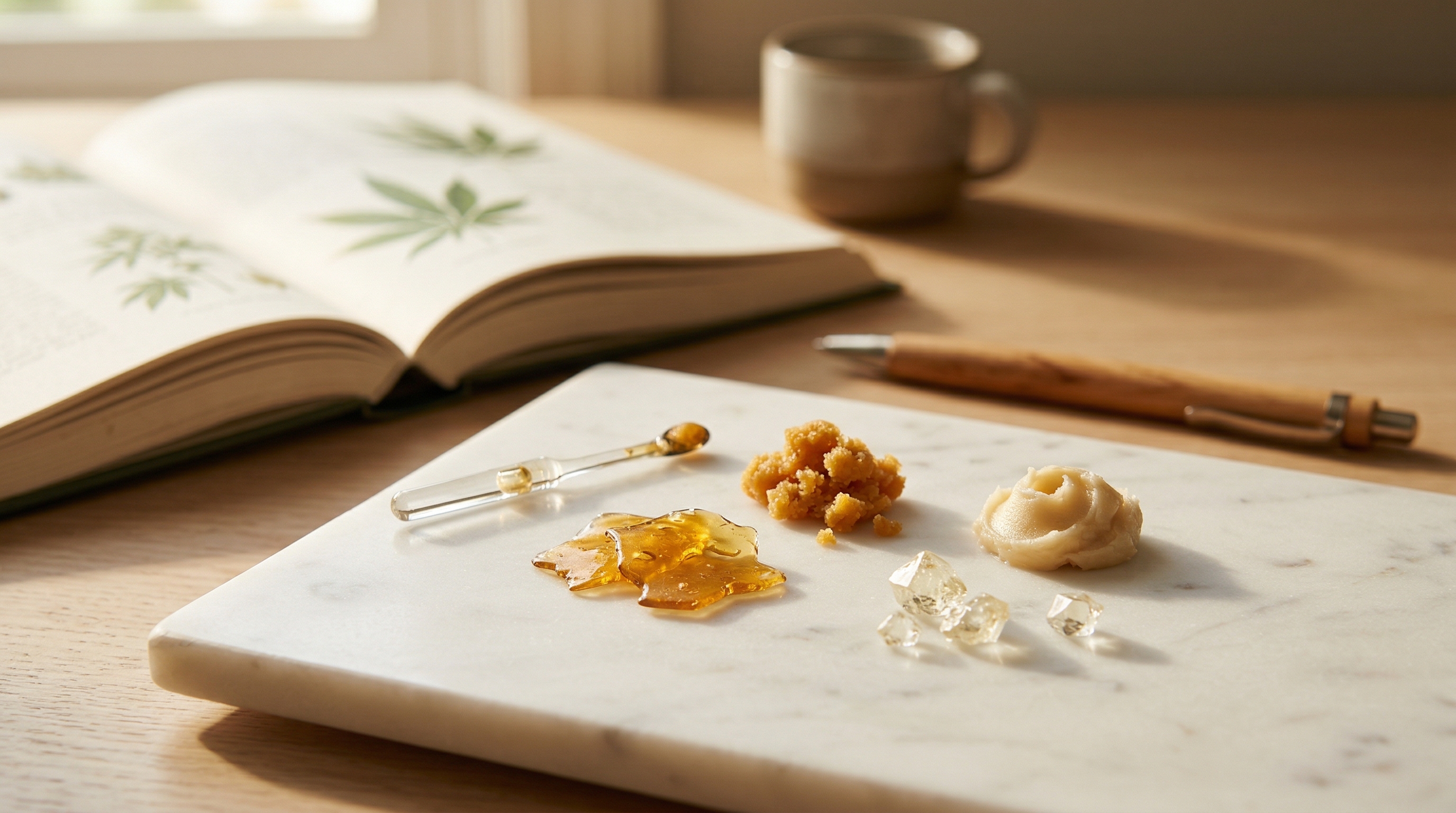
Types of Concentrates You’ll Encounter
Not all concentrates are created equal. They differ based on how they’re extracted and processed, which affects their texture, flavor, and potency. Here are the most common types you’ll see:
- Shatter: Translucent, glass-like consistency. Snaps or “shatters” when broken. Stable and easy to handle.
- Wax: Soft, opaque, and pliable — like candle wax. Easy to scoop with a dab tool.
- Budder/Badder: Creamy, butter-like texture. Whipped during processing for a smooth consistency.
- Crumble: Dry, crumbly texture (as the name suggests). Easy to portion but can be messy.
- Live Resin: Made from flash-frozen cannabis, preserving more terpenes. Known for exceptional flavor.
- Rosin: A solventless concentrate made using only heat and pressure. Popular with purity-focused consumers.
- Diamonds/Sauce: Crystalline THC-A structures suspended in a terpene-rich “sauce.” Very potent.
The terpene profiles preserved in these concentrates directly influence your experience. A live resin rich in limonene and linalool might deliver an Uplifting High, while a concentrate heavy in myrcene could lean toward a Relaxing High. This is where our High Families system becomes especially useful — it helps you choose concentrates by the experience you’re seeking, rather than relying on outdated indica/sativa labels.
Key Terms Glossary
Before we go further, let’s make sure you’re fluent in the language of dabbing:
| Term | Simple Definition |
|---|---|
| Dab | A small dose of cannabis concentrate |
| Dab rig | A specialized water pipe designed for vaporizing concentrates |
| Nail/Banger | The heated surface where you place the concentrate (usually quartz, titanium, or ceramic) |
| Carb cap | A lid placed over the banger after applying the dab to trap heat and improve vaporization |
| Torch | A butane torch used to heat the nail/banger |
| E-nail/E-rig | An electronic device that heats the nail to a precise temperature — no torch needed |
| Dab tool/Dabber | A small metal or glass instrument used to scoop and apply the concentrate |
| Low-temp dab | Dabbing at lower temperatures (around 315–450°F) for smoother, more flavorful hits |
| Hot dab | Dabbing at higher temperatures (500°F+) for bigger clouds but harsher vapor |
| Reclaim | Leftover concentrate residue that collects inside the rig after use |
| Terp pearls | Small balls placed inside the banger that spin to distribute heat evenly |
Key Takeaway: You don’t need to memorize all of this right now. Bookmark this page and come back to it as you learn. The most important terms for your first dab are rig, banger, torch, carb cap, and dab tool.
What Gear Do You Need?
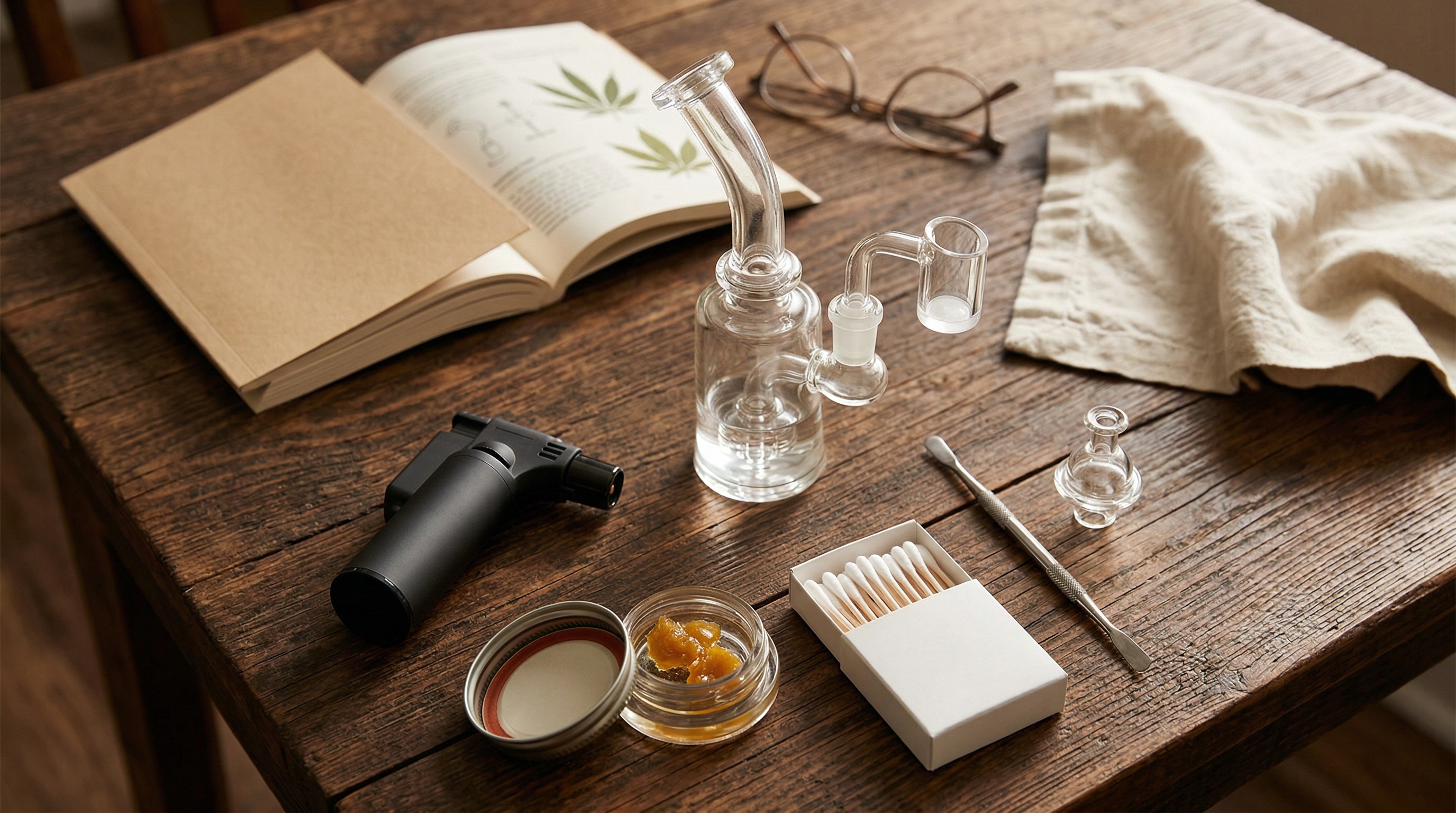
Before your first dab, you’ll need to gather a few essentials. Here’s the starter kit breakdown:
The Essentials
- A dab rig — A small water pipe with a joint that fits a banger. Beginner-friendly rigs are compact and affordable ($30–$80).
- A quartz banger — The most popular nail material. Quartz heats evenly and preserves flavor better than titanium or ceramic.
- A butane torch — A kitchen-style torch works perfectly. You don’t need anything industrial.
- A dab tool — A pointed or scooped metal tool for handling your concentrate.
- A carb cap — Matches your banger size. Essential for low-temp dabs.
- Cannabis concentrate — Start with something approachable like wax or budder (easier to handle than shatter or sauce).
- Cotton swabs (Q-tips) — For cleaning your banger after each dab. This isn’t optional — it extends the life of your quartz and keeps flavors clean.
- A timer — Your phone timer works. This helps you nail (pun intended) the cool-down time.
The “Skip the Torch” Alternative: E-Rigs
If the idea of a butane torch makes you nervous, you’re not alone. Electronic rigs (e-rigs) like the Puffco Peak or Dr. Dabber Boost eliminate the torch entirely. You press a button, select a temperature, and the device heats itself. They cost more upfront ($100–$400+), but they offer:
- Precise temperature control
- No open flame
- Portability
- A more approachable experience for beginners
Either path — traditional rig or e-rig — gets you to the same destination. Choose whichever feels right for you.
Step-by-Step: How to Take Your First Dab
Alright — gear assembled, concentrate chosen, nerves managed. Let’s walk through the process step by step.
Step 1: Prepare Your Dab
Using your dab tool, scoop a very small amount of concentrate — about the size of a grain of rice or smaller. Seriously, start tiny. You can always do more. You cannot undo too much.
Time needed: 30 seconds
Step 2: Add Water to Your Rig
Fill your dab rig with enough water to cover the percolator holes (the small slits or openings inside the rig). Test it by inhaling through the mouthpiece without any heat — you should see bubbles without getting water in your mouth.
Time needed: 1 minute
Step 3: Heat the Banger
Hold the torch flame against the bottom and sides of the quartz banger. Heat it evenly until the quartz starts to glow slightly orange-red. This usually takes 30–60 seconds depending on your torch and banger thickness.
Time needed: 30–60 seconds
Step 4: Let It Cool Down (This Is the Crucial Step)
Turn off the torch and wait. This is where most beginners go wrong — they dab immediately on a scorching-hot surface, which burns the concentrate and produces harsh, unpleasant vapor.
For a low-temp dab (recommended for beginners):
- Thin quartz banger: Wait 30–45 seconds
- Thick quartz banger: Wait 45–75 seconds
Pro tip: Use a timer until you develop a feel for it. If the dab sizzles aggressively when applied, your banger was too hot. If it pools and doesn’t vaporize much, it was too cool. You’re looking for a gentle sizzle and smooth vapor.
Time needed: 30–75 seconds
Step 5: Apply the Dab and Inhale
Touch the concentrate to the inside wall and bottom of the heated banger while simultaneously inhaling slowly and steadily through the mouthpiece. Rotate the dab tool to ensure all the concentrate melts off.
Time needed: 5–10 seconds
Step 6: Cap It
Immediately place the carb cap over the banger. This traps the heat and creates a low-pressure environment that helps the concentrate vaporize fully at lower temperatures. You should see the vapor thicken inside the rig.
Continue inhaling gently for another 5–15 seconds.
Step 7: Exhale and Breathe
Exhale. Take a few normal breaths. The effects from dabbing tend to come on much faster than smoking flower — often within seconds. Give yourself a few minutes before deciding if you want more.
Step 8: Clean Your Banger
While the banger is still warm (but not scorching), use a dry cotton swab to wipe out any residual concentrate. If there’s stubborn residue, dip the swab in isopropyl alcohol first. A clean banger means better flavor on your next dab and a longer-lasting piece.
Time needed: 15 seconds
What’s Normal: Coughing — even experienced dabbers cough sometimes. A slight head rush. Rapid onset of effects within 1–5 minutes. Feeling more intense effects than you’re used to from flower.
What’s Concerning: Extreme dizziness, nausea, or anxiety that doesn’t subside after 15–20 minutes. If this happens, sit or lie down somewhere safe, hydrate, and remember: the feeling will pass. You cannot fatally overdose on cannabis, but you can have a very uncomfortable experience.
Common Mistakes to Avoid
Even with the best instructions, beginners tend to stumble in predictable ways. Here’s what to watch out for:
1. Taking Too Big of a Dab
Why it happens: Concentrates don’t look like much, so people scoop a generous portion thinking it’s comparable to packing a bowl of flower.
The fix: Remember — concentrates are 3–5x more potent than flower. A grain-of-rice-sized dab is plenty for your first time. You can always take another.
2. Dabbing on a Scorching-Hot Nail
Why it happens: Impatience, mostly. The banger is glowing, the concentrate is ready, and waiting feels counterintuitive.
The fix: Always time your cool-down. A too-hot dab destroys terpenes (killing flavor), produces harsher vapor, and can irritate your throat and lungs. Low-temp dabs are smoother, tastier, and more efficient.
3. Skipping the Carb Cap
Why it happens: Beginners don’t realize how much of a difference it makes.
The fix: A carb cap is not optional — it’s essential. Without it, your concentrate won’t vaporize fully at low temperatures, and you’ll waste product while getting a weaker hit.
4. Not Cleaning the Banger
Why it happens: After the dab hits, cleaning feels like an afterthought.
The fix: Swab your banger after every single dab. Residue that builds up and gets reheated turns into chazz — a dark, crusty layer that permanently degrades your quartz and makes everything taste burnt. A clean banger is a happy banger.
5. Holding the Torch Incorrectly or Unsafely
Why it happens: Torches are unfamiliar tools for most people.
The fix: Always point the torch away from your body, other people, and flammable materials. Set it down on a stable surface after use. Never leave a torch unattended while lit. If you’re uncomfortable with open flames, invest in an e-rig — there’s zero shame in that.
Frequently Asked Questions
Is dabbing safe for beginners?
Dabbing can be safe for beginners as long as you approach it with respect for the potency. The biggest risks come from taking too much too fast or mishandling a torch. Start with the smallest dab you can manage, use proper equipment, and give yourself time between dabs to gauge the effects. If you’re new to cannabis entirely, consider getting comfortable with flower first before moving to concentrates.
How is the high from dabbing different from smoking flower?
The effects from dabbing are generally more intense and faster-acting than smoking flower. Because concentrates are so potent, you may notice stronger psychoactive effects, more pronounced body sensations, and a quicker onset. The specific experience depends heavily on the terpene profile of your concentrate — a live resin with high terpinolene might deliver an Energetic High, while one rich in caryophyllene could lean toward a Relieving High. The High Families system can help you predict and choose your experience.
Can you overdose from dabbing?
You cannot fatally overdose on cannabis. However, consuming too much — especially through a potent method like dabbing — can cause extremely uncomfortable effects: intense anxiety, paranoia, nausea, rapid heartbeat, and dizziness. This is sometimes called “greening out.” If it happens, move to a comfortable space, hydrate, try to stay calm, and remember that the effects are temporary and will pass, usually within 30 minutes to a few hours.
How much does a dabbing setup cost?
A basic setup can be surprisingly affordable:
- Budget-friendly (traditional rig + torch): $50–$100 total
- Mid-range (quality rig + accessories): $100–$200
- E-rig (all-in-one electronic): $100–$400+
You don’t need top-shelf gear to have a great experience. A simple quartz banger and a small rig will serve you well while you’re learning.
How do I store my concentrates?
Keep concentrates in a cool, dark, airtight container — silicone jars, glass jars with tight seals, or non-stick parchment work well. Heat, light, and oxygen all degrade cannabinoids and terpenes over time. Many enthusiasts store live resin and rosin in the refrigerator (or even the freezer) to preserve the volatile terpenes that give them their flavor.
Why does temperature matter so much?
Temperature is the single biggest factor in dab quality. Every cannabinoid and terpene has a different boiling point, and you only get the full spectrum of flavor and effect when you vaporize them — not when you scorch them.
- Low-temp dabs (around 500–600°F / 260–315°C) preserve fragile terpenes like linalool, limonene, and myrcene. The vapor is smoother on your throat, the flavor is much cleaner, and you actually use less concentrate to feel the effects.
- High-temp dabs (700°F+ / 370°C+) combust your terpenes, produce harsher and potentially more irritating vapor, and waste material as soot and reclaim. You get bigger clouds — and a worse experience.
If you take only one thing from this article, take this: lower temperatures, smaller dabs, and proper carb-cap technique are how experienced dabbers get more flavor and better effects out of less concentrate.
Why People Choose Dabbing
Once the safety side is squared away, it’s worth understanding why people who dab tend to be passionate about it:
- Flavor: A well-extracted live resin or hash rosin can deliver terpene clarity that flower simply cannot match. Low-temp dabs taste like the strain — citrus, pine, gas, dessert — instead of like burning plant matter.
- Efficiency: A single rice-grain dab can deliver effects equivalent to a multi-bowl session. For tolerance-built consumers, that math adds up fast.
- Medical-dose delivery: Patients managing chronic pain, severe nausea, or appetite loss often need high-cannabinoid doses fast. Dabbing offers rapid onset and precise dosing once you know what you’re doing.
- Cleaner inhalation than combustion: Vaporizing concentrates skips the smoke, ash, and combustion byproducts of lit flower. It is not “harmless,” but for many it is a cleaner-feeling alternative.
A Final Word on Harm Reduction
Let’s be direct one more time, because it matters: dabbing is the most potent common form of cannabis consumption, and the “101” in this title refers to technique, not to experience level. If you are still figuring out how cannabis affects you, dabbing is not where you start.
For anyone moving forward:
- Start with a dab smaller than a grain of rice. You can always take another. You cannot un-take one.
- Never dab alone the first few times. Have a sober or experienced friend nearby.
- Hydrate before, during, and after. Concentrates are dehydrating, and a green-out feels worse on an empty, dry system.
- Respect the torch. Butane torches reach 2,500°F+. Treat them like any other open-flame tool. Set them on a stable, non-flammable surface, never point them at anyone, and turn them off completely between uses.
- Respect your tolerance, not your ego. Coughing through a too-big dab is not a personality trait. Pacing is.
- If you green out, sit or lie down somewhere safe, breathe slowly, drink water, and remember: it always passes.
Dabbing rewards patience, technique, and self-awareness. Approach it that way and it can be a remarkable way to enjoy cannabis. Approach it carelessly and it will humble you fast.
Welcome to the deeper end of the pool. Swim slow.
Key Takeaways
- Dabbing is not a beginner entry point. The “101” refers to technique, not experience level. Concentrates are 60–90%+ THC.
- Gear basics: dab rig, quartz banger, butane torch (or e-rig like a Puffco Peak), carb cap, dab tool, cotton swabs.
- Concentrate types: shatter, wax, budder, crumble, live resin, rosin, diamonds/sauce, hash rosin — flavor and potency vary by extraction.
- Low-temp dabs (500–600°F) preserve terpenes, taste better, and use less material. High-temp dabs (700°F+) waste product and irritate your lungs.
- Dose carefully: start with a portion smaller than a grain of rice. You can always take more.
- Safety first: respect the torch, never dab alone your first few times, hydrate, and have an exit plan if you green out.
- Why people dab: unmatched flavor, efficient dosing, fast onset, and clean medical-dose delivery — once you know what you’re doing.


