Dry Herb Vaporizer Temperature Guide: Hit-by-Hit
Dry herb vaporizer temperature guide: cannabinoid and terpene boiling points, the low-to-high temp bands, and how to step temps for the high you want.

If you bought a dry herb vaporizer, set it to one number, and decided the device “wasn’t as strong as smoking,” I have good news: you were holding a precision instrument and using it like a light switch. Temperature is the most powerful dial you have, and most people never touch it.
A dry herb vaporizer doesn’t burn anything. It heats your flower just enough to boil specific compounds into vapor while leaving the plant material intact. That’s the whole trick. And because every cannabinoid and terpene boils at its own temperature, the number you choose decides which molecules come off the bud and into your lungs. Vape low and you get a bright, clear, terpene-forward experience. Vape high and you pull heavier, sedating compounds for a body-melting effect. Walk the temperature up across a single bowl — hit by hit — and you can ride the whole spectrum without reloading.
This is the guide I wish someone had handed me with my first vape. We’ll cover the boiling points that matter, the three temperature bands and what each one feels like, the hit-by-hit stepping method, and why conduction versus convection changes everything.
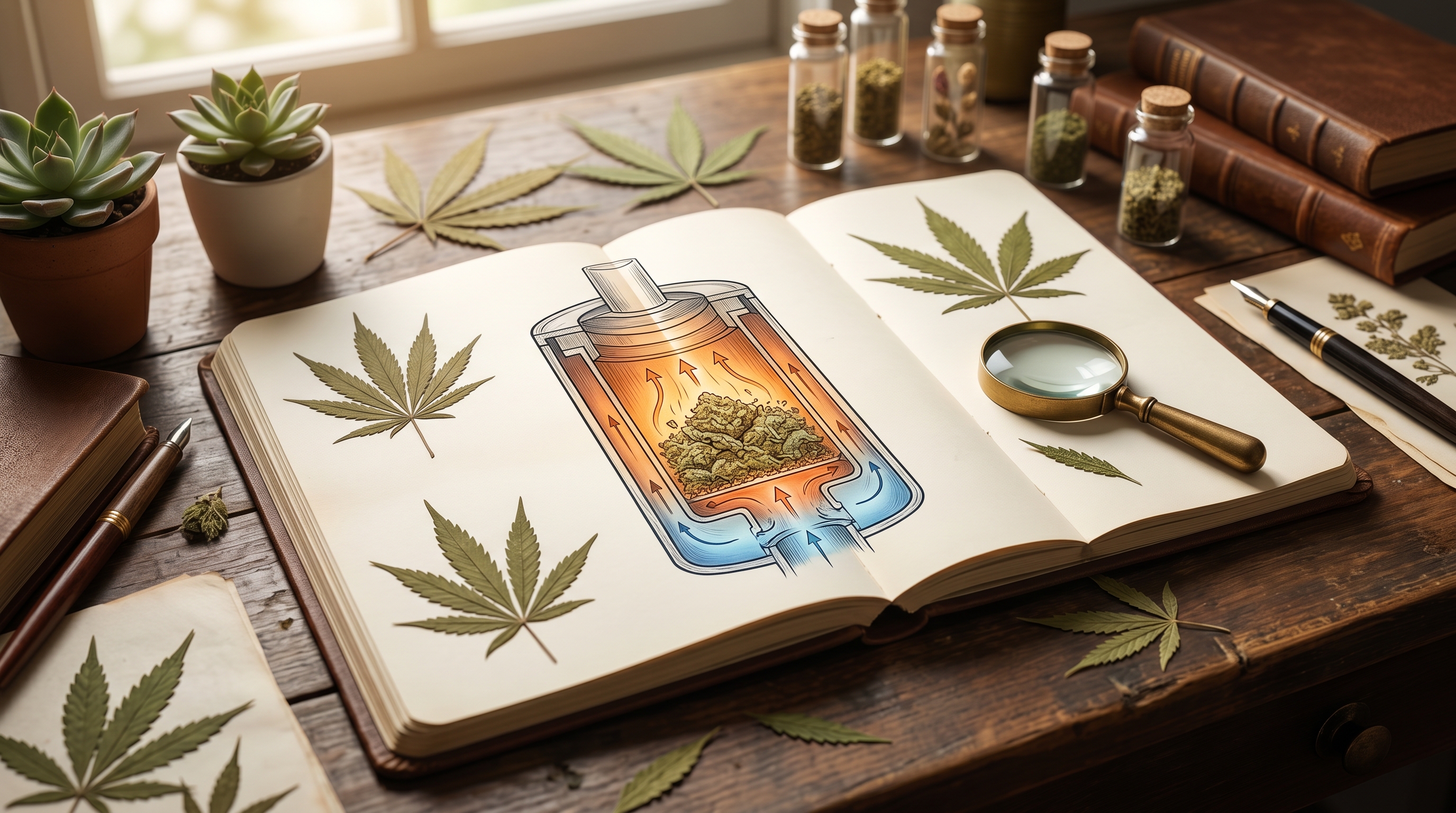
Vapor Is Not Smoke
Combustion — what happens when you light a joint — kicks in around 230°C (446°F). At that point the plant matter ignites and you’re inhaling carbon monoxide, tar, benzene, and a long list of byproducts that have nothing to do with the cannabinoids you actually wanted.
Vaporizing keeps you below that line. Everything worth having boils off well before 230°C, which means a well-run vape session never gets near combustion. The catch is that this only works if you respect the ceiling. Cranking a dry herb vape to its max and holding a long, hot draw can scorch your flower and push you into combustion territory anyway — defeating the entire purpose. The sweet spot lives in the roughly 70-degree window between “nothing happens yet” and “now you’re just smoking.”
For the bigger picture on how vaping fits alongside other methods, our flower, edibles, and concentrates comparison is a useful primer.
The Boiling Points That Matter
Here’s the foundation of everything. Note that lab boiling points are measured at standard atmospheric pressure — in a real vape chamber, airflow, packing density, humidity, and your altitude all nudge the effective temperature. Treat these as a map, not GPS coordinates.
| Compound | Type | Boiling Point | What It Brings |
|---|---|---|---|
| Beta-Caryophyllene | Terpene | ~119–130°C / 246–266°F | Peppery; binds CB2, physical comfort |
| Alpha-Pinene | Terpene | ~155°C / 311°F | Pine; alertness, memory support |
| THC | Cannabinoid | ~157°C / 315°F | The classic psychoactive lift |
| CBD | Cannabinoid | ~160–180°C / 320–356°F | Non-intoxicating, balancing |
| Myrcene | Terpene | ~167°C / 332°F | Earthy, musky; sedation, “couch” feel |
| Limonene | Terpene | ~176°C / 349°F | Citrus; mood elevation |
| CBN | Cannabinoid | ~185°C / 365°F | Drowsy, heavy body effect |
| Humulene | Terpene | ~198°C / 388°F | Hoppy, earthy; appetite modulation |
| Linalool | Terpene | ~198°C / 388°F | Floral; calm, stress relief |
| Terpinolene | Terpene | ~185–220°C / 365–428°F | Complex; uplifting, cerebral |
| CBC / CBG | Cannabinoids | ~220°C / 428°F | Heavier minor cannabinoids |
| Combustion | — | ~230°C / 446°F | Stop. This is smoke. |
A practical rule of thumb: set your vape about 10°F (or a few °C) above the boiling point of the compound you’re chasing, so it actually volatilizes efficiently rather than just simmering.
Notice how the molecules stack up. The light, flavorful terpenes like caryophyllene and pinene come off first. THC sits right in the middle. The sedating, heavy hitters — myrcene, CBN, linalool — need more heat. That stacking order is exactly why temperature lets you steer the experience.
Band 1: Low Temperature (160–180°C / 320–356°F)
This is the flavor zone. At low temps you’re boiling off the most volatile terpenes and just enough THC to feel a clear, functional lift.
What it feels like: Light, cerebral, heady, and fully functional. People often describe it as “the ceiling of feeling something” — you’re high, but you can work, create, and hold a conversation without fog. It’s perfect for daytime use and microdosing.
What you taste: Everything. The vapor is cool, thin, and bursting with the strain’s true flavor because the delicate terpenes survive instead of getting scorched. A Super Lemon Haze or Sour Diesel tastes like the live plant down here.
Best for: Terpene-forward strains and bright, uplifting profiles. The citrus-and-pine sparkle of Jack Herer, Durban Poison, Tangie, or Green Crack shines in this band. If your goal is a creative or energetic session, start here. This is also the friendliest band for anyone managing tolerance or just getting comfortable — see our beginner’s guide for more.
Band 2: Medium Temperature (180–200°C / 356–392°F)
The all-rounder. If you set your vape once and never touch it again, this is the band to pick — roughly 180–190°C is the most-recommended starting point for a reason.
What it feels like: Balanced and noticeably stronger. You’re now volatilizing the bulk of the THC plus a wider cast of terpenes and cannabinoids, so the euphoric head high arrives with a gentle body component. Relaxing, sometimes meditative, but not yet sleepy.
What you taste: Still flavorful, slightly fuller and warmer than the low band. A good trade-off between taste and potency.
Best for: Most sessions, most strains, most people. This is the medical patient’s home base because it activates the majority of therapeutic compounds at once. Balanced hybrids like Blue Dream, Gelato, Wedding Cake, Pineapple Express, or GSC live comfortably here, as do entourage-rich profiles where many compounds work together. For the science of why combinations matter, read up on the entourage effect.
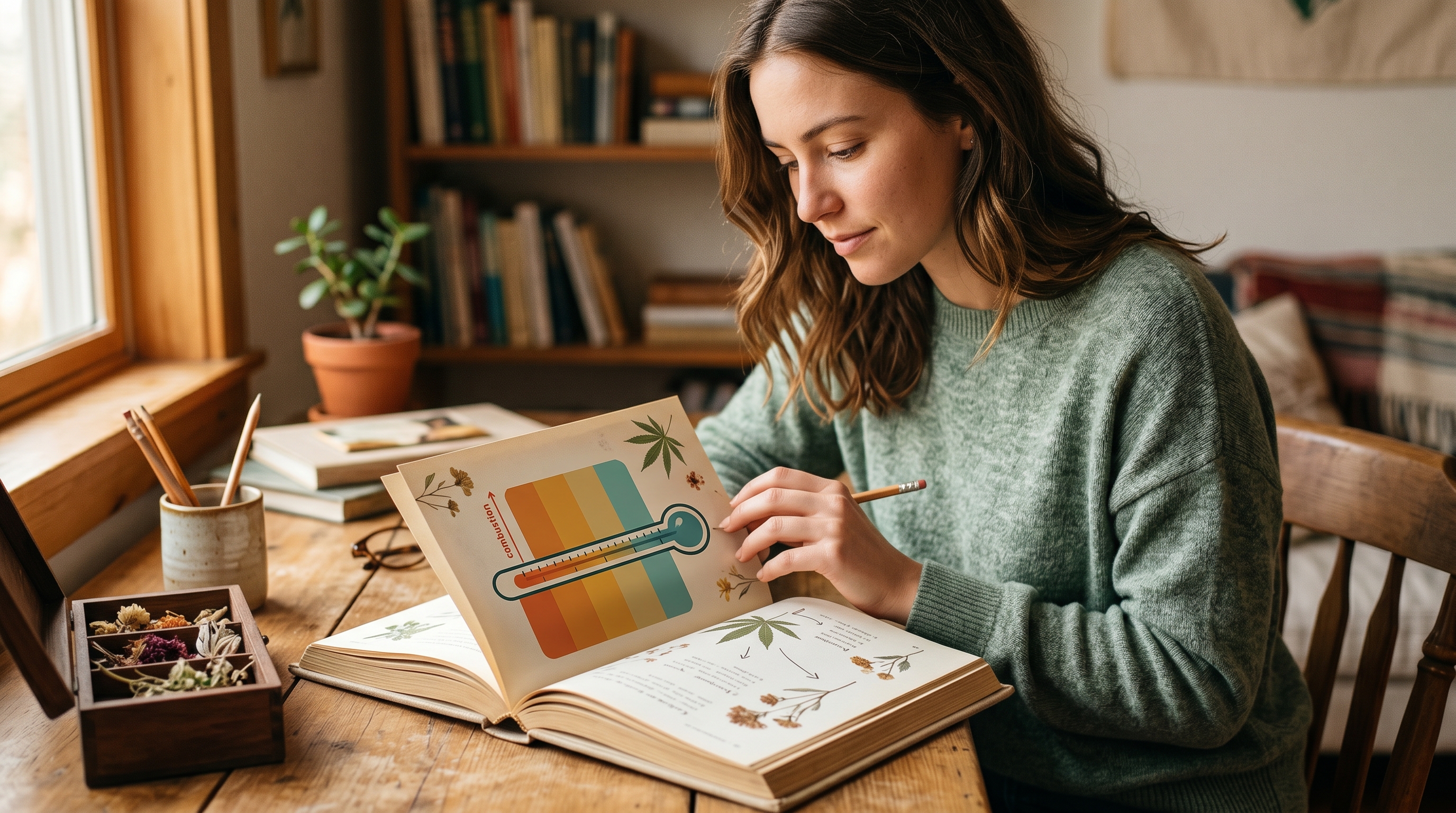
Band 3: High Temperature (200–225°C / 392–437°F)
The heavy hitter. Up here you extract nearly everything left in the bowl — the high-boiling minor cannabinoids and the sedating terpenes that need real heat to release.
What it feels like: Strong, warm, and physical. This is where you pull CBN, the heavier minors like CBC and CBG, and sedating myrcene. The result is a dense body high — drowsy, heavy-limbed, the kind of effect that’s great for the evening wind-down and questionable before a meeting.
What you taste: Less. The vapor is hot and harsher, and the delicate flavor terpenes are long gone. You’re trading taste for raw potency, and if you push too far you’ll start tasting chlorophyll and toasted plant matter — your cue to back off.
Best for: Relaxing, relieving profiles and end-of-day strains. The deep calm of Granddaddy Purple, Northern Lights, Bubba Kush, or Ice Cream Cake opens up fully in this band, and a sedated or pain-relief goal is best served here. High-caryophyllene strains like GSC bring extra physical comfort at these temps.
The one rule: stay under 230°C. Once you cross that combustion line you’re not vaping anymore — you’re smoking, with all the harshness and byproducts that come with it.
The Hit-by-Hit Method
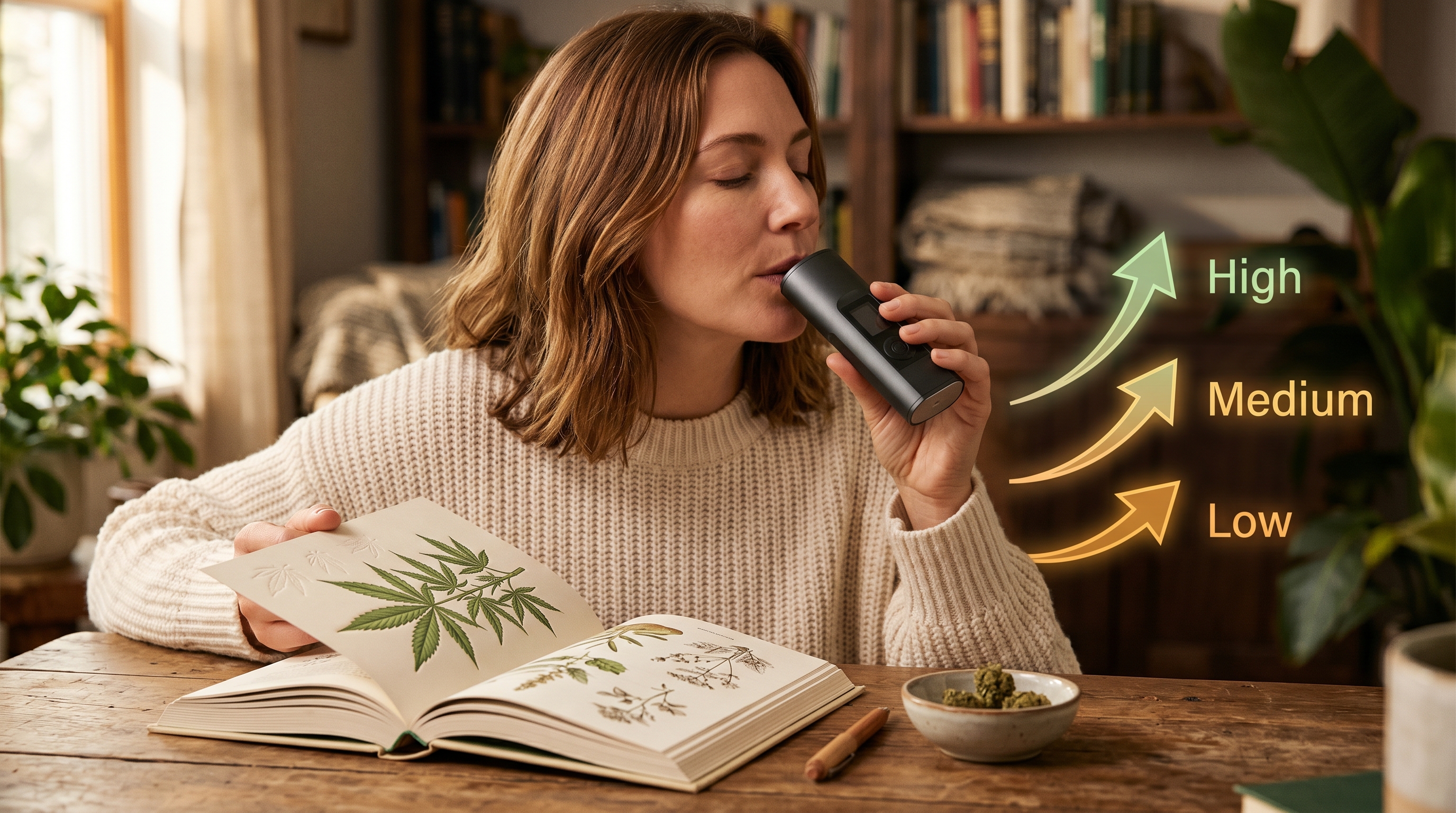
Here’s the technique that turns a vape from “fine” into “why did I ever smoke?” Instead of picking one temperature, you climb the ladder across a single bowl. Each step pulls a fresh layer of compounds the previous step left behind.
A classic three-step climb:
- Start at ~175°C (347°F). The first few hits are pure flavor — bright terpenes, a clean cerebral lift, almost no harshness. Savor these; they’re the best-tasting draws you’ll get.
- Step up to ~195°C (383°F). Now the THC and mid-range cannabinoids come off in force. The high deepens and rounds out. This is the meat of the session.
- Finish at ~215°C (419°F). The closer. You’re extracting the heavy, sedating compounds the bowl was still holding — the body-melt finale. This is also where you get the most out of your flower before it’s spent.
Why bother? Two reasons. First, you get the full spectrum of effects from one bowl instead of locking into a single mood. Second, you waste nothing. A single fixed temperature leaves money in the chamber — your already-vaped bud (AVB) still holds compounds that a higher final step would have captured. Stepping up squeezes out the rest. To save even more flower, pair this with a quality grinder for an even, efficient pack.
Microdosers can invert the idea: stay entirely in the low band, taking small flavorful hits and stopping early. You’ll feel a gentle, controllable lift and the bowl will last for several sessions.
Conduction vs. Convection: Why Your Device Matters
Two vapes can show the same number on the screen and deliver wildly different results, because how they heat changes how accurate that number is.
Conduction heats your flower by direct contact with a hot surface — the herb sits on or against a heated chamber wall. It’s fast and cheap to build, but the bud touching the wall gets much hotter than the bud in the middle, so extraction is uneven and the contact layer can edge toward scorching. The displayed temperature is the wall, not your flower.
Convection heats your flower with a stream of hot air passing through it, like a tiny oven. It’s more even, more flavorful, and far more responsive to temperature changes — which makes convection devices ideal for the hit-by-hit method, since the chamber actually tracks the number you set. The trade-offs are cost and, sometimes, a slight draw-resistance.
Hybrids combine both: a conductive pre-heat for instant vapor plus convective airflow for even extraction. They’re a popular middle ground.
The practical takeaway: if you want precise temperature control and clean stepping, a convection or hybrid device will reward you. On a conduction-only vape, expect the real chamber temperature to run a touch hotter than the readout, so dial in 5–10°C lower than these guidelines suggest and stir between hits to even things out. For more on building a setup that fits your style, see our cannabis gear guide.
Dialing In Your Own Number
All of this is a starting framework, not a prescription. Two people can vape the same strain at the same temperature and have different experiences, because what’s actually driving your effects is your body’s response to a specific terpene and cannabinoid profile — not the strain name on the jar, and not the number on the screen alone.
That’s exactly why a high-CBD strain like ACDC, Harlequin, or Cannatonic feels so different from a THC-heavy OG Kush even at identical temperatures — the chemistry coming off the bud is different. Understanding High Families — grouping strains by the effect their chemistry tends to produce — gets you far closer to a repeatable result than chasing indica-versus-sativa labels.
The smartest thing you can do is keep notes: strain, temperature band, and how you actually felt. After a handful of sessions you’ll spot your own patterns — maybe you love Strawberry Cough at 180°C but find it racy at 200°C, while Granddaddy Purple only delivers the body high you want above 205°C. That personal map is worth more than any generic chart, including this one. Tracking what works — strain, temp, and result — is exactly the kind of pattern the High IQ app is built to surface for you, turning scattered sessions into a profile you can actually trust.
Key Takeaways
Your vape is a dial, not a switch. To get the most from it:
- Vapor isn’t smoke. Stay below the ~230°C / 446°F combustion line — everything worth having boils off before then.
- Low band (160–180°C): Bright flavor, clear cerebral lift, daytime functionality. Best for uplifting, terpene-forward strains.
- Medium band (180–200°C): The balanced all-rounder. The right home base for most strains, most people, most sessions.
- High band (200–225°C): Heavy, sedating body effects from myrcene, CBN, and the minor cannabinoids. Best for relaxing, end-of-day flower.
- Step hit by hit. Start cool, climb across the bowl, finish hot — full-spectrum effects and zero wasted flower.
- Device matters. Convection and hybrid vapes track your set temperature far more accurately than conduction.
- Track your own results. The best temperature isn’t on any chart — it’s the one your notes tell you works for you.
Professor High’s takeaway: Low for flavor and a clear head, medium for the everyday balance, high for the body-melt. Start cool, climb hit by hit, and never cross 230°C. Then write down what worked — that personal map beats every generic guide, including this one.
Sources
- Alchimia Grow Shop — Temperatures for vaporising Cannabis: https://www.alchimiaweb.com/blogen/temperatures-vaporising-cannabis/
- VapoChecker — All 11 Cannabinoids: Boiling Points + Best Vape Temps: https://vapochecker.com/en/cannabinoid-boiling-points/
- Royal Queen Seeds — Ideal Temperatures For Vaporizing Cannabis: https://www.royalqueenseeds.com/us/blog-ideal-temperature-settings-for-vaporizers-n936
- Camouflet — Vaporizer Temperature Guide: What Settings Actually Work: https://camouflet.com/blogs/vaporizer-guide/vaporizer-temperature-guide
- Exxus Vape — Conduction and Convection Heating in Dry Herb Vaporizers: https://www.exxusvape.com/blogs/news/what-is-conduction-and-convection-heating-in-dry-herb-vaporizers
- Sensi Seeds — The Best Temperature to Vape Weed: https://sensiseeds.com/en/blog/the-best-temperature-to-vape-weed/


