Best Cannabis Grinders 2026: From Budget to Premium
From budget aluminum to titanium and electric grinders, here is how to pick the right cannabis grinder in 2026 by material, teeth, and kief catcher.


Here is a small heresy from your friendly pineapple scientist: the cheapest, most overlooked tool in your kit might be doing more damage to your sessions than the strain you picked. You spent real money on flower with a beautiful terpene profile, and then you tore it apart with your fingers or crushed it in a $4 plastic gadget that left half the trichomes smeared on its teeth. The grind is where a good session is quietly won or lost.
A grinder is not a luxury. It is a consistency machine. When flower is broken down evenly, it burns evenly, draws air evenly, and releases its aroma evenly. When it is ragged and clumpy, you get canoeing joints, harsh hits, and a bowl that scorches on one side while staying green on the other. So let us do this properly: how grinders actually work, how the types compare, what to look for, and which tier makes sense for you in 2026.
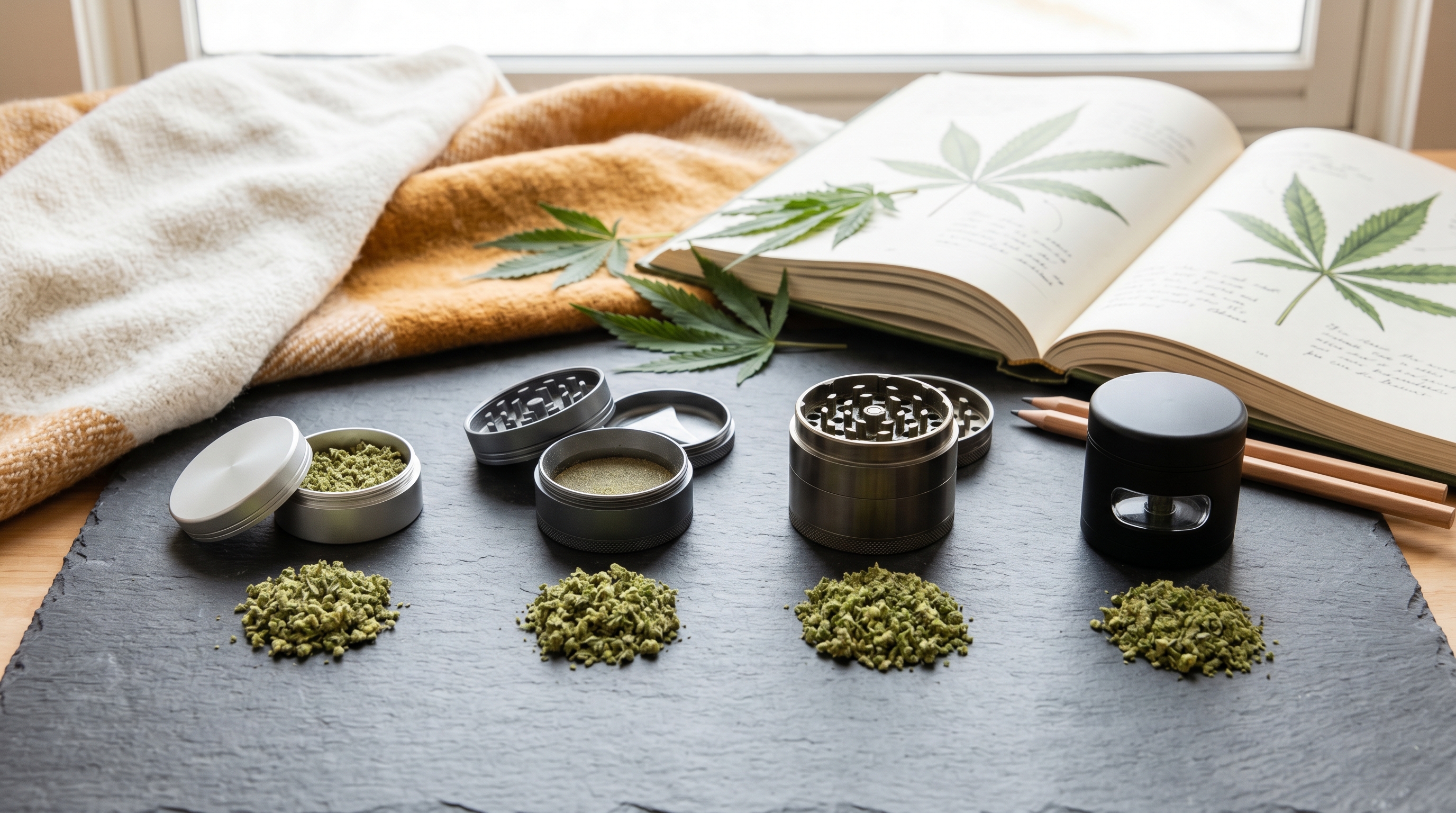
How a Grinder Actually Works
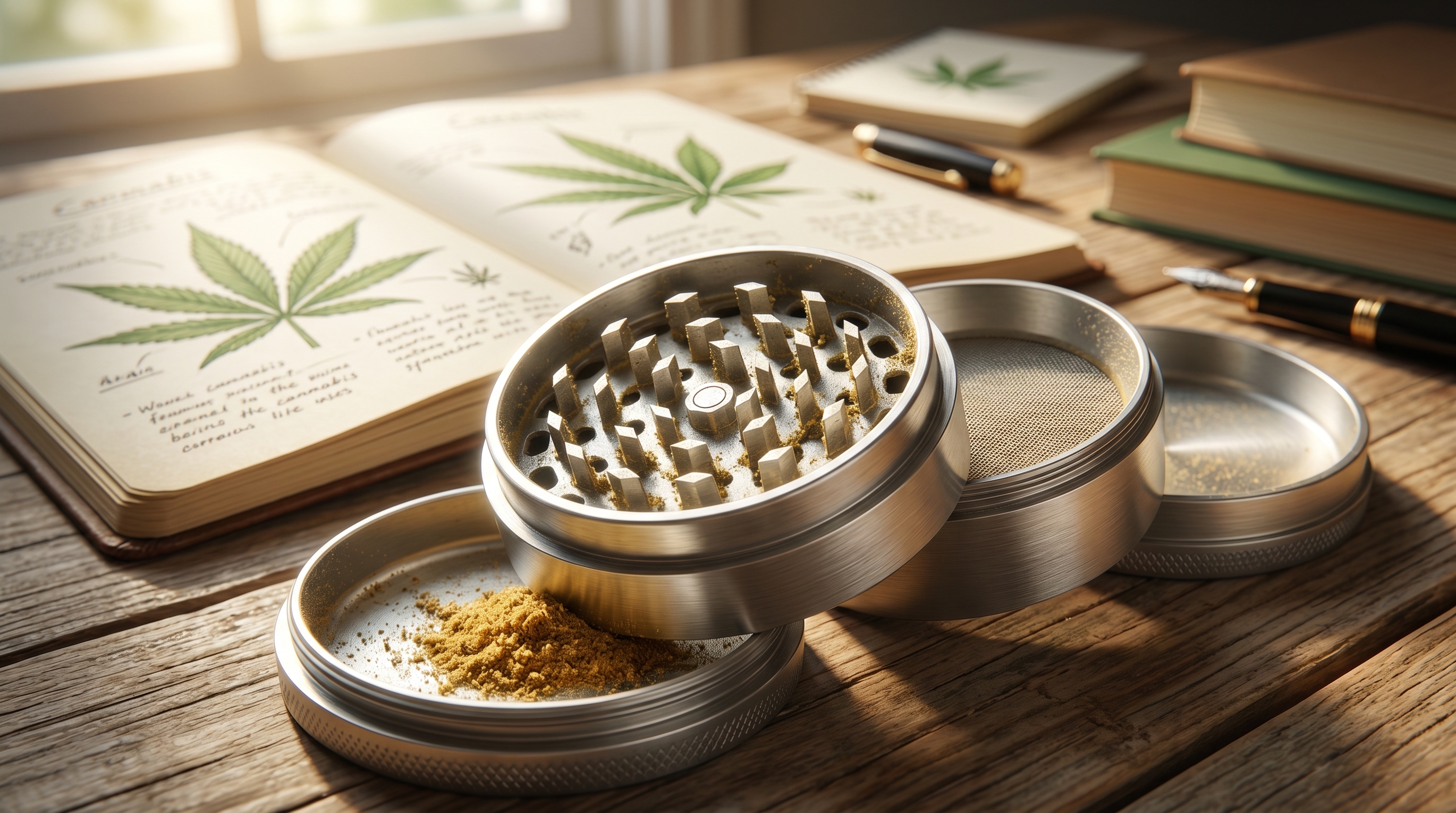
Picture two discs studded with teeth, facing each other like interlocking gears. You load flower between them, twist the top against the bottom, and the teeth slide past one another like a pair of scissors. Good teeth cut the flower. Cheap or dull teeth crush it, and that difference matters more than almost any spec on the box.
Cutting shears the bud into uniform pieces while leaving the delicate, resin-filled trichomes largely intact. Crushing smashes everything into a sticky, uneven paste, smears resin onto the metal, and bruises the very glands that hold your terpenes and cannabinoids. There is real physics happening in there: a shearing force from the teeth plus a tumbling action as pieces shift around, so each twist breaks material down a little more.
In a multi-chamber grinder, the floor of the grinding chamber has holes punched in it. Once a piece is cut small enough, gravity pulls it through into the chamber below. This is clever for two reasons. First, it limits over-grinding, because material that drops through the holes is no longer exposed to the teeth. Second, the size of those holes is a big part of what makes your grind fine or coarse. Over-grinding is the single most common mistake I see. A few firm twists is plenty. Pulverizing flower into dust restricts airflow and makes everything burn hot and fast.
The Types Compared: 2-Piece vs 4-Piece vs Electric
There is no universally “best” grinder. There is the one that fits how you actually consume. Here is the honest breakdown.
2-Piece Grinders
A 2-piece is just a lid and a chamber, both with teeth. You twist, the ground flower stays in that single compartment, and you tip it out when you are done. They are compact, fast, almost impossible to break, and there is nothing to lose or clog. The trade-off: no storage chamber and no kief catcher, so you scoop ground flower out by hand.
Best for: travel, minimalists, and people who mostly pack bowls in a pipe or bong and grind only what they need right before smoking. A well-made 2-piece is genuinely all many casual users ever need.
3-Piece Grinders
A 3-piece adds a storage chamber below the teeth so ground flower drops out of the grinding zone and into a clean collection cup. It is a real ergonomic upgrade over a 2-piece, but most people who go past two pieces just go straight to four, because the kief catcher is the feature that justifies the extra hardware.
4-Piece Grinders (With Kief Catcher)
This is the gold standard for regular consumers. A 4-piece adds a fine mesh screen and a bottom chamber. Flower gets cut up top, drops through holes into a collection chamber, and the smallest, most potent trichome heads pass through the screen into a dedicated kief catcher below. Over weeks of use, that bottom chamber fills with a golden powder you can sprinkle on a bowl, twist into a joint, or save up and press into hash.
Best for: daily users, anyone who rolls or vapes regularly, and people who want a more usable stash area instead of digging clumps out of the teeth.
One honest caveat: for pure glass-pipe use, some folks find a fine 4-piece over-filters, leaving drier flower that burns a touch faster. If you only ever pack bowls, a great 2-piece may suit you better than a mediocre 4-piece.
Electric Grinders
Battery- or USB-powered grinders do the twisting for you. Press a button, and motorized teeth reduce flower to a consistent grind in seconds. They are genuinely excellent for people with arthritis, hand pain, or limited mobility, and they are fast. The trade-offs are real, though: more parts that can break, batteries to charge, and grinds that can run inconsistent if the motor over-processes a packed chamber. Quality models add a clear chamber so you can watch progress, a safety lock, and dishwasher-safe parts.
Best for: high-volume users, anyone with hand mobility issues, and people who value speed and zero effort over the tactile ritual of a manual twist.
What to Look For: Materials, Teeth, and Screens
Materials
The material defines how long your grinder lasts and how it feels in the hand.
- Aluminum is the most popular choice in 2026, and for good reason. High-quality aircraft-grade aluminum (often labeled 6061) is lightweight, durable, machines into crisp teeth, resists corrosion, and takes an anodized finish that resists scratching. CNC-machined aluminum twists smooth and clean with no gritty spots. It is the easiest “good” option to find and the best bang for your buck for most people.
- Titanium is the premium tier. It is stronger than aluminum, corrosion-proof, and the teeth essentially never dull. The downside is price, typically two to three times a comparable aluminum model. If you want a true buy-it-for-life tool, titanium delivers.
- Stainless steel (often 304 medical grade) is the heavyweight tank: non-reactive, scratch-resistant, and famously low-maintenance, with a buttery twist. The catch is weight. A stainless grinder feels like a small dumbbell, so it is less of a travel piece and more of a forever home-base grinder.
- Wood looks gorgeous on a shelf but tends to produce a chunkier, less consistent grind, rarely includes a kief catcher, and absorbs moisture and resin over time. Buy it for aesthetics, not performance.
- Acrylic and plastic are the budget basement. They function, but teeth dull, threads strip, and aggressive cleaning can damage them. Fine for an emergency or a first grinder, not for the long haul.
A note on safety: avoid cheap painted finishes that can chip into your flower. A proper anodized layer is chemically bonded to the metal, which protects both the grinder and your material. And a recurring complaint about bottom-tier metal grinders is finding tiny metallic shavings in ground flower, a sign of soft alloy and poor machining. That alone is reason enough to skip the $4 mystery-metal option.
Tooth Design
Teeth are the most important and most overlooked part. Diamond-cut teeth with sharp facets are the versatile default on quality grinders; they cut from multiple angles and push material toward the holes. Shark or blade-style teeth are even sharper and chew through sticky flower fast, though they can wear quicker. Pyramid or peg teeth are durable but less efficient.
Ignore the marketing arms race over tooth count. More teeth do not mean a better grind [Bell, 2026]. Tightly packed teeth tend to over-process flower into powder and choke airflow. What actually matters is sharpness, spacing, cutting angle, and tight machining tolerances. Fewer, well-placed, precision-cut teeth routinely outperform a dense field of dull ones.
Screens and Microns
In a 4-piece, the screen decides what becomes kief. Trichome heads are roughly 50 to 100 microns across, so the standard kief screen sits around 100 to 150 microns, about 80 to 120 lines per inch [Munchmakers, 2024]. A coarser screen lets more material through faster but mixes in plant dust. A finer screen yields purer, golden kief but collects slowly and clogs more easily, which is why grinders clog faster once the screen is dirty. Look for a stainless steel mesh screen; aluminum bends and nylon stretches over time, widening the openings and contaminating your kief.
Matching Your Grind to Your Method
Consistency should match how you consume, not chase some universal ideal:
- Coarse grind for pipes and bongs. Bigger pieces keep airflow open and slow the burn.
- Medium grind for joints, blunts, and pre-roll cones. Even, fluffy texture rolls tight and burns straight.
- Fine grind for dry-herb vaporizers, which need more surface area for efficient extraction, but never powder, which packs down and blocks airflow.
If you switch methods often, the modular grinders with interchangeable top plates or screens that let you dial coarse, medium, or fine are worth a look.
Top Picks by Tier
I avoid naming single “winners” because the right grinder depends on you, but here is how to shop each price band in 2026.
Budget Tier ($10–$30)
Look for a simple, well-machined aluminum 2-piece, or a basic aluminum 4-piece in the $15–$35 range. Grinder cards and keychain grinders are ultra-portable backups. Skip acrylic and plastic if you can, and absolutely skip soft mystery-metal that sheds shavings. Expect a one-to-three-year lifespan and fewer frills. This is the right tier for a first grinder or a dedicated travel piece, and it pairs well with a starter toolkit.
Mid-Range Tier ($30–$70)
The sweet spot for most people: a CNC-machined 6061-T6 aluminum 4-piece with diamond-cut teeth, an anodized finish, a stainless screen, and a 2 to 2.5-inch diameter. This is the “buy a good one and forget about it” zone, and where a four-piece with a kief catcher earns its keep for regular smokers. Electric grinders also live here, typically $25–$80.
Premium Tier ($70+)
Machined titanium or heavy stainless steel for the buy-it-for-life crowd, plus precision shear-style grinders that use channels and a stationary blade plate to produce a remarkably uniform grind, often with interchangeable plates for coarse, medium, and fine. You are paying for durability, feel, and tolerances, not chamber count. A premium tool also rewards premium flower, the kind you might pick after reading why THC percentage is a terrible way to choose cannabis.
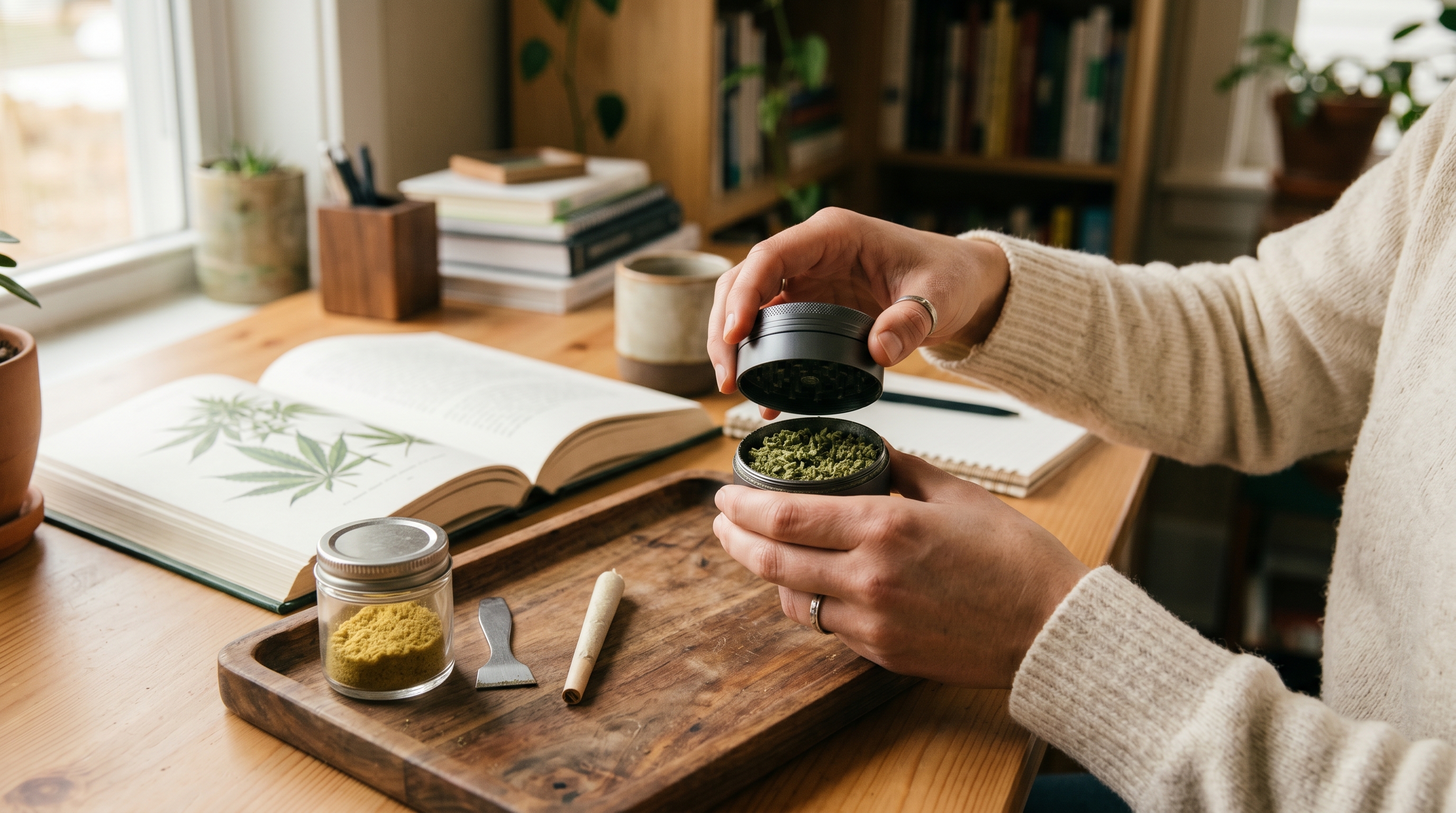
Care and Cleaning
A clean grinder twists smoothly, grinds consistently, and protects your kief screen. Signs it is time to clean: the lid is hard to turn, ground flower looks compressed instead of fluffy, or the screen looks dark and clogged.
Quick weekly maintenance. After each grind, tap the side to settle material before opening, then sweep the chamber with a small brush. Do not overfill; load to about 60 to 70 percent so the teeth have room to work.
Deep clean (metal grinders). First, freeze the disassembled pieces for 15 to 30 minutes, then tap them over parchment paper. Cold makes the resin brittle so it flakes off, and you can save that loose kief. Then soak the metal parts in 91 percent or higher isopropyl alcohol for 15 to 30 minutes, scrub with a soft toothbrush, rinse with warm water, and dry completely before reassembly. A pinch of coarse salt in the bag adds gentle scrubbing.
A few cautions. For anodized aluminum, keep alcohol soaks shorter and more frequent rather than long and occasional, since extended exposure can wear the coating over time. Stainless steel and titanium shrug off long soaks. Remove rubber O-rings before soaking, and never use metal brushes or abrasive pads. And to be clear: freezing is a short-term trick to loosen residue and harden kief, not a cleaning method. It does not dissolve buildup, and freezing flower itself can dry it out and dull flavor. Proper cleaning is the real solution. How often? Daily users: light clean every one to two weeks, deep clean monthly. Occasional users: clean as needed when performance drops.
The Bigger Picture
Here is the Professor High through-line. A grinder does not change your flower’s chemistry; it protects the chemistry that is already there. The same logic runs through everything I write: the strain label is not your destiny, terpenes shape your experience more than a category name, and the tools you use either preserve or degrade what the plant offers. A clean cut keeps trichomes intact, an even grind keeps airflow open, and a kief catcher banks the potency you would otherwise lose.
The smartest move of all is to notice what actually works for you: which grind, which method, which flower left you feeling the way you wanted. That is exactly what the High IQ app is built for, helping you track your sessions so your patterns, not the packaging, guide your next choice. Grind well, stay curious, and as always, know exactly why you’re high.
Key Takeaways
- A grinder is a consistency machine. An even grind burns evenly, draws evenly, and protects your trichomes; a crushed, clumpy grind wastes potency and burns harsh.
- Match the type to your routine: a 2-piece for travel and bowl-packers, a 4-piece for daily users who want a kief catcher, and electric for hand-mobility needs or speed.
- Material matters most for longevity. CNC-machined 6061 aluminum is the best value; titanium and 304 stainless are buy-it-for-life; skip painted finishes and soft mystery-metal.
- Teeth beat tooth count. Sharp, precision-cut diamond teeth and tight tolerances outperform a dense field of dull ones.
- Match the grind to the method: coarse for pipes and bongs, medium for joints and cones, fine (not powder) for vaporizers.
- Clean with 91 percent or higher isopropyl alcohol; freeze first to harden resin, save the loose kief, and keep soaks shorter on anodized aluminum.
FAQ
Do I really need a grinder? You do not strictly need one, but it meaningfully improves consistency, airflow, and flavor compared with breaking flower by hand, and it keeps sticky resin off your fingers. For the cost of a sandwich, a basic aluminum grinder pays for itself in better sessions.
Is a 4-piece worth it over a 2-piece? For regular users, usually yes. The storage chamber keeps your teeth from clogging, and the kief catcher banks potency over time. If you only pack bowls and grind small amounts on demand, a great 2-piece may serve you better than a so-so 4-piece.
Are electric grinders better than manual ones? Not inherently. They are faster and far easier on the hands, which is a real benefit for some users, but they add batteries and breakable parts and can over-process flower. Many enthusiasts still prefer the control of a manual twist.
Is it safe to put my grinder in the freezer? Briefly, and only if it is fully metal, clean, and dry. Freeze 15 to 30 minutes to harden resin and kief, then let it return to room temperature. It is a loosening trick before a deep clean, not a substitute for one.
How do I avoid metal shavings in my flower? Buy a CNC-machined grinder in proper 6061 aluminum, titanium, or 304 stainless steel with an anodized (not painted) finish. Soft, cheap mystery-metal grinders are the usual culprits behind shavings.
What grind do I want for a vaporizer versus a joint? Fine (but not powder) for dry-herb vaporizers to maximize surface area, and medium for joints and cones so they roll tight and burn evenly. Save coarse for pipes and bongs.
Sources
- Bell, M. (2026). Tahoe Grinder Company — “Best Weed Grinders of 2026: The Complete Buyer’s Guide” and companion guides on grinder parts, kief catchers, freezing, and cleaning. tahoegrinderco.com
- Munchmakers (2024–2026). “Best Weed Grinders 2026,” “Grinder Teeth Types Explained,” “Kief Catcher Guide,” and “How to Clean a Grinder.” grinders.munchmakers.com
- Oil Slick — “Herb Grinder Buyer’s Guide 2026.” oilslickpad.com
- King Palm — “Grinder Weed: Complete Guide to Choosing and Using Herb Grinders.” kingpalm.com
- ZamGrinders — “Weed Grinder Screens Explained” (micron and LPI ranges). zamgrinders.com
- Odin Grinders and LOT420 — grinder cleaning and maintenance technique guides. odingrinders.com
Educational content only. Cannabis affects individuals differently; consult a healthcare professional about your circumstances, and follow your local laws.


