Germany's Cannabis Law: What 2026 Looks Like Two Years In
Two years after the CanG law passed, Germany's bold cannabis experiment reveals surprising data, a medical market boom, and a tense political standoff.


Two years ago, Germany did something no major EU economy had dared. On April 1, 2024 — yes, April Fools’ Day, a date the opposition never let them forget — the German government enacted the Cannabisgesetz (CanG), legalizing cannabis for personal adult use. Adults 18 and older could now carry up to 25 grams in public, grow up to three plants at home, and eventually join nonprofit Cannabis-Anbauvereinigungen (Cannabis Social Clubs, or CSCs) to collectively cultivate and distribute cannabis among members.
Now, in spring 2026, we have two years of data. And the results are both more nuanced and more dramatic than almost anyone predicted.
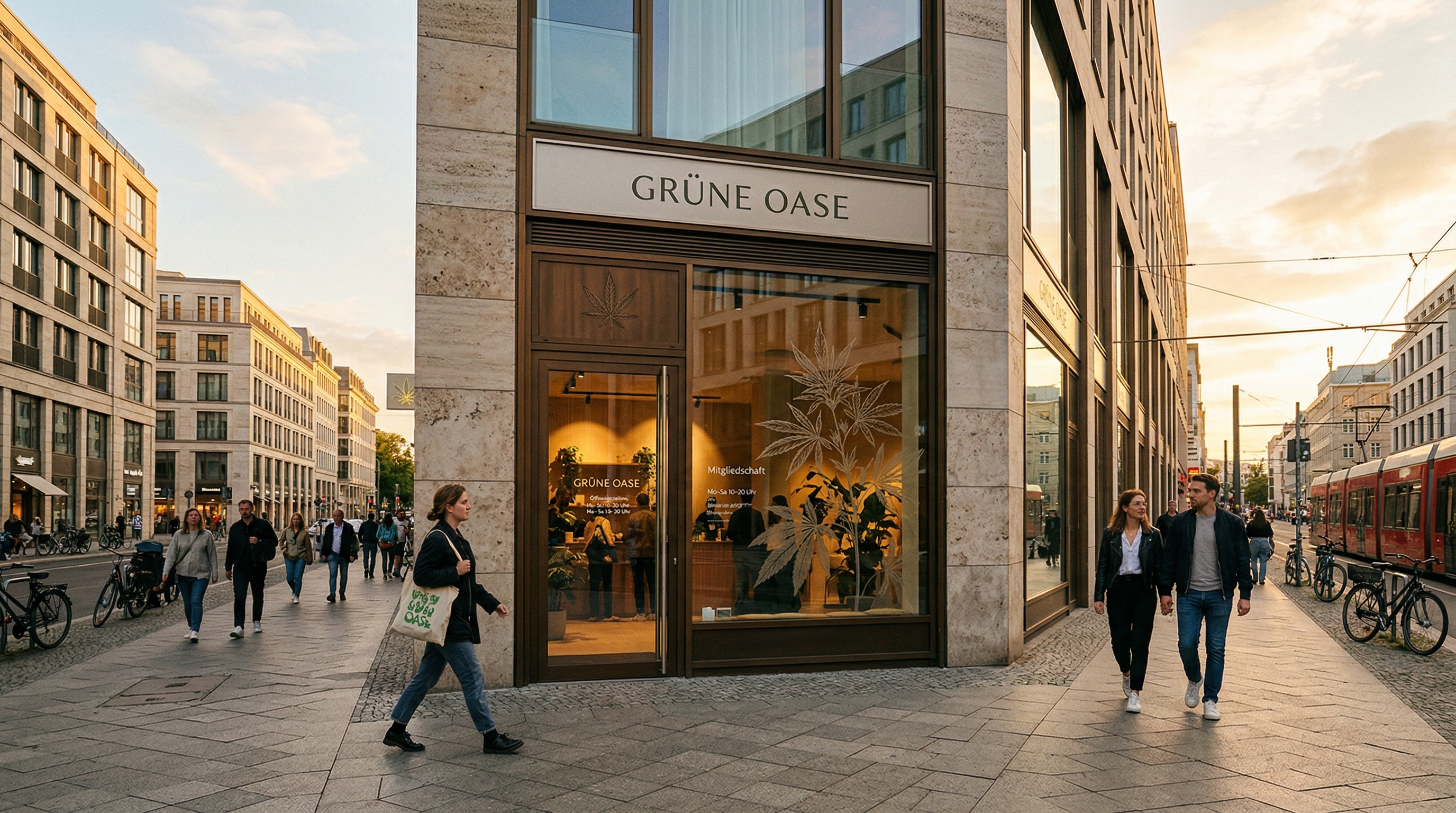
The Two-Pillar System: What Germany Actually Built
Before diving into the outcomes, it’s worth understanding what Germany actually built — because it’s not what most Americans picture when they hear “legalization.”
Germany’s CanG is a two-pillar system designed to avoid EU legal conflicts. Earlier drafts aimed for a fully commercial market, but EU drug trafficking laws created serious legal gray areas. The government had to pivot.
Pillar One (active since April 2024) covers:
- Personal possession: up to 25g in public, up to 50g at home
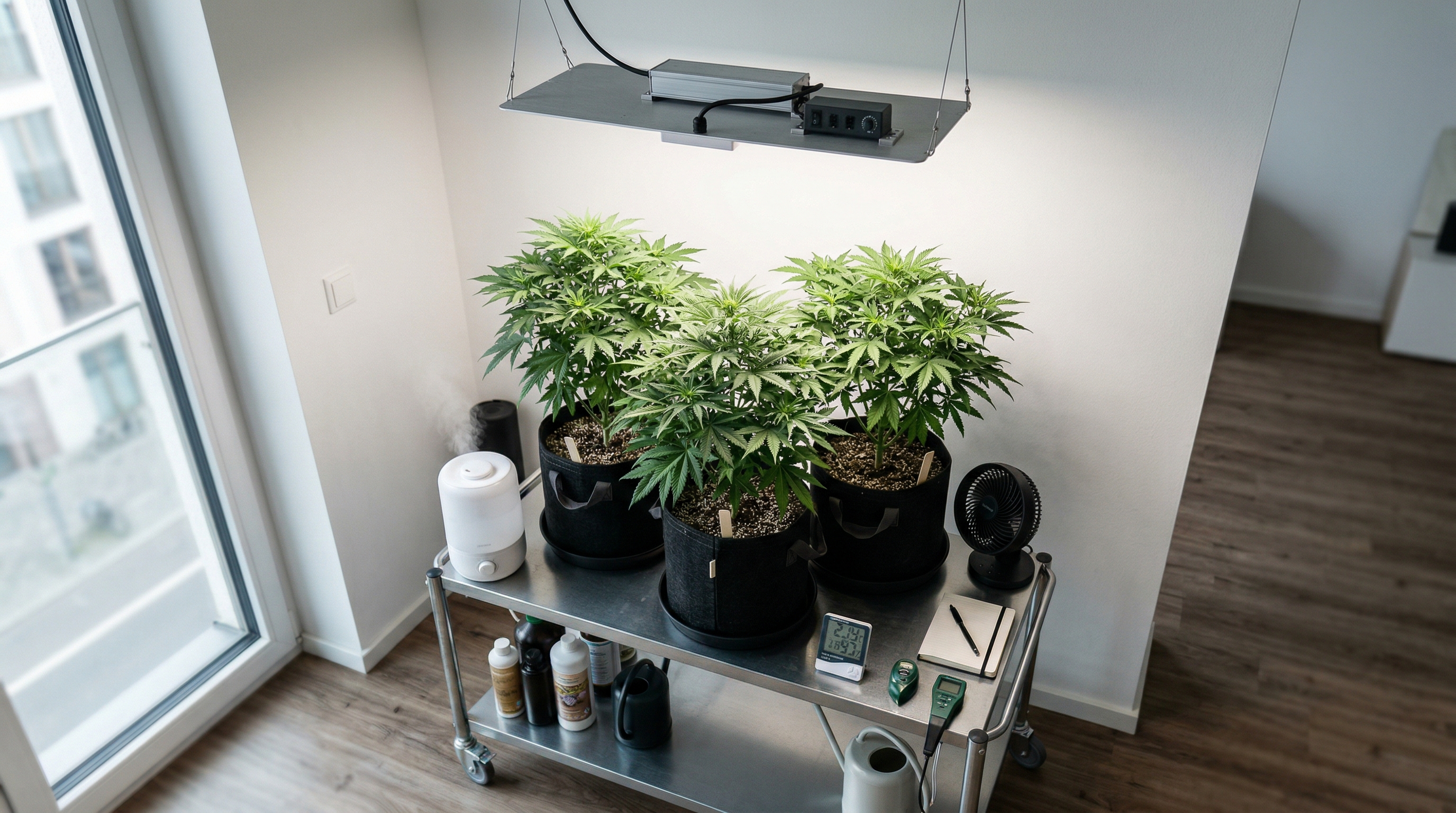
- Home cultivation: up to 3 plants per adult
- Cannabis Social Clubs: nonprofit, members-only associations capped at 500 members, allowed to cultivate and distribute up to 50g/month per adult member (25g for those 18–21)
Pillar Two (still pending): Regional commercial pilot programs in select cities — essentially licensed retail stores operating as five-year scientific studies. Originally slated for cities like Berlin, Hamburg, and Hannover, this phase is now caught in political uncertainty.
No dispensaries. No recreational retail stores. No licensed lounges — at least not yet. What Germany built is more conservative than Colorado circa 2014, but it’s still historic for the EU.
The Medical Market Explosion Nobody Saw Coming
Here’s the number that should stop you mid-scroll: 3,300%.
That’s how much German medical cannabis prescriptions increased between March 2024 and December 2025, according to Bloomwell Group’s Cannabis Barometer. Not a typo. Not a rounding error. The removal of cannabis from Germany’s Narcotics Act (Betäubungsmittelgesetz, or BtMG) in April 2024 didn’t just change recreational access — it triggered an avalanche of medical demand.
The hard data backs it up:
- Import volumes went from roughly 8 tonnes in Q1 2024 to nearly 57 tonnes in Q3 2025 alone
- Total 2025 imports: 201.1 tonnes — up 176% year-over-year, making Germany the world’s largest regulated medical cannabis market by import volume
- Market value: Germany crossed €1–2 billion in pharmacy sell-out in 2025 (estimates vary by methodology, but the consensus is firmly 10-figure territory)
- Patient count: From approximately 250,000 patients at CanG passage to an estimated 800,000–900,000 by mid-2025, with projections of up to 1.4 million by 2027
What drove this? Three forces intersected perfectly. First, removing cannabis from the narcotics list meant doctors could prescribe it without the bureaucratic nightmare of controlled substance paperwork. Second, statutory health insurers (GKV) now reimburse qualifying prescriptions, making cannabis financially accessible for patients who couldn’t afford the old out-of-pocket model. Third, telemedicine platforms specifically targeting cannabis patients exploded in popularity, dropping friction to near zero.
For context, medical cannabis has been legal in Germany since 2017. But it took deregulation and the removal of the BtMG classification to unleash the latent demand. The lesson for other countries considering legalization: medical and recreational reforms are deeply interconnected.
Social Clubs: The Promising Model That Got Stuck in Bureaucracy
The Cannabis Social Club model — communal, nonprofit, member-controlled — was supposed to be Germany’s elegant solution to the EU legal problem. No commercial market, no corporations extracting profit, just community growing for community consumption. It’s a model that’s been quietly working in Europe for decades.
Reality has been messier.
Social clubs weren’t permitted to begin operations until July 1, 2024 — a three-month delay after Pillar One. And while hundreds of applications poured in from across Germany, licensing has moved at wildly different speeds depending on which Bundesland (state) you’re in. Bavaria and Saxony — both CDU/CSU strongholds — have processed applications at a crawl. Berlin and Hamburg, more progressive politically, have moved faster.
As of early 2026, club access remains limited. Clubs that are operational must test their cannabis products, maintain strict membership records, and prohibit any consumption on premises near minors. The restrictions are designed for safety but add compliance burdens that have deterred some organizers.
The result: many German consumers who wanted to go legal simply couldn’t. Estimated black market usage remains high — a fact that CanG critics have seized on, though supporters note this was always expected in the transition period before full implementation.
The CDU Opposition: Rollback Threat or Political Theater?
February 2025’s federal elections changed the political calculus dramatically. The CDU/CSU, historically the most vocal opponents of legalization, emerged as the leading coalition party under Friedrich Merz. Their platform included scaling back or eliminating Pillar Two.
Two years into the CanG, a formal academic review was published on April 1, 2026 — commissioned from researchers at the Universities of Tübingen, Düsseldorf, and Hamburg-Eppendorf. The CDU/CSU immediately highlighted the findings that showed:
- Early youth prevention programs have weakened — authorities report reduced ability to compel attendance at addiction-prevention programs
- Black market activity persists, with police reporting ongoing enforcement difficulties
- Medical cannabis potency concerns, with high-THC prescriptions up ~198% and researchers flagging mental health risk questions
But the same report also showed:
- Overall cannabis use has not surged — consumption data shows only moderate increases consistent with pre-existing trends
- Youth consumption is actually declining — younger Germans are using cannabis at lower rates than before legalization
- No evidence the reform directly caused a spike in cannabis consumption
In other words, the data is genuinely mixed, and both sides can find ammunition. The CDU/CSU’s loudest argument — that legalization would dramatically increase youth drug use — appears not to have materialized. Their other arguments about black market persistence and enforcement challenges are real but were anticipated.
A full rollback of Pillar One is considered highly unlikely. Public support for the personal possession and home grow provisions remains strong at 55–65% across polling. But Pillar Two — the commercial retail pilots — is very much on ice. The model legislation for regional pilot programs was still under development as of early 2026, and the new coalition shows little appetite to accelerate it.
What This Means for the EU and Global Reform
Germany’s significance extends well beyond its 84 million citizens. As the EU’s most populous nation and largest economy, what Germany does creates political permission structure for the rest of Europe.
The European Commission’s decision not to challenge Pillar One established something important: personal use legalization and nonprofit social clubs fall within EU member states’ discretion. That precedent now exists. It can be cited. It can be built upon.
The Czech Republic, Luxembourg, and Malta have all been watching Germany’s implementation closely, with their own reform bills shaped in part by what Germany demonstrated was legally viable under EU framework. The Netherlands — famous for its coffee shop model — is pushing toward full-chain legalization in part emboldened by Germany’s political and legal path.
For the global reform movement, Germany is generating what advocates have always wanted: rigorous, European-quality data on the effects of legalization. The April 2026 academic report, despite being weaponized politically, represents exactly the kind of evidence-based policy evaluation that should drive decision-making. More reports will follow. The United Nations Commission on Narcotic Drugs will be paying attention. France, Italy, and Spain — all with active legalization debates — are watching Germany’s data like a hawk.

The Bigger Picture: What Cannabis Science Tells Us
The German experiment also reinforces what cannabis researchers have been pointing out for years about how legalization interacts with health outcomes. Understanding how THC actually works in the body helps contextualize why the medical boom happened so fast — the endocannabinoid system is implicated in dozens of conditions that previously-stigmatized patients were quietly struggling with.
Germany’s medical boom also puts a spotlight on the terpene profiles and potency differences between products. The concern about high-THC medical prescriptions isn’t unfounded — the entourage effect means potency doesn’t exist in isolation. As the German market matures, expect pressure toward more nuanced prescribing guidelines that account for full-spectrum chemistry rather than raw THC percentage.
Key Takeaways for 2026
Pillar One is working, slowly. Personal possession decriminalization has been the clearest win — millions of Germans no longer face criminal exposure for possession. Home cultivation is legal. The social stigma has measurably decreased.
Social clubs are real but access is uneven. Club licensing has progressed, but geographic disparities mean legal access varies dramatically by state. Full nationwide access likely requires another two to three years of processing pipeline.
The medical market is a landmark story. Germany is now definitively Europe’s largest medical cannabis market, with a €1–2 billion pharmacy market and nearly a million patients. The BtMG reclassification was the single most impactful regulatory change.
Pillar Two is politically on hold. Commercial retail pilots are not dead, but they’re delayed. The CDU/CSU’s concerns need to be addressed — or elections need to shift again — before Germany opens licensed stores.
The EU precedent is set. The European Commission’s acceptance of Pillar One opens a legal pathway for every other EU member state. That’s arguably the most historically significant outcome of Germany’s experiment.
The bottom line: Germany’s cannabis legalization hasn’t been the revolution that advocates hoped for or the catastrophe that opponents predicted. It’s been a slow, methodical, bureaucratic rollout — which is exactly what you’d expect from Germany. But the data emerging from that careful process is already reshaping how policymakers worldwide think about cannabis reform. Germany got two years in, and the most important thing it proved is that a major EU economy can legalize cannabis without falling apart. That’s worth more than any dispensary.
Sources
- German Cannabisgesetz (CanG), Bundesgesetzblatt BGBl. 2024 I Nr. 109
- Bloomwell Group. (2026). Cannabis Barometer — prescription growth tracking data
- BfArM (Federal Institute for Drugs and Medical Devices). (2025). Import data Q1 2024–Q3 2025
- Cannamonitor. (2026, March). “Germany Imports 201 Tonnes of Medical Cannabis in 2025 and Crosses €1 Billion in Sales”
- Cansativa Group. (2026, January). “Outlook 2026 – Regulation, Market Developments, and Political Direction in Germany”
- DW (Deutsche Welle). (2026, April 1). “Germany: CDU/CSU calls for cannabis rethink 2 years in”
- StratCann. (2026, April 1). “German cannabis legalization remains controversial as report shows no major increase in use”
- Cannabis Europa. (2026, April 7). “Germany Cannabis Legalisation: The Business Guide 2026”


