Hash Burger: The Anti-Candy Strain That Won 2025 Strain of the Year
Hash Burger took Leafly's 2025 Strain of the Year — a Donny Burger × Han Solo Burger funk-gas hybrid that marked the post-Cookies cannabis era pivot.

Professor High
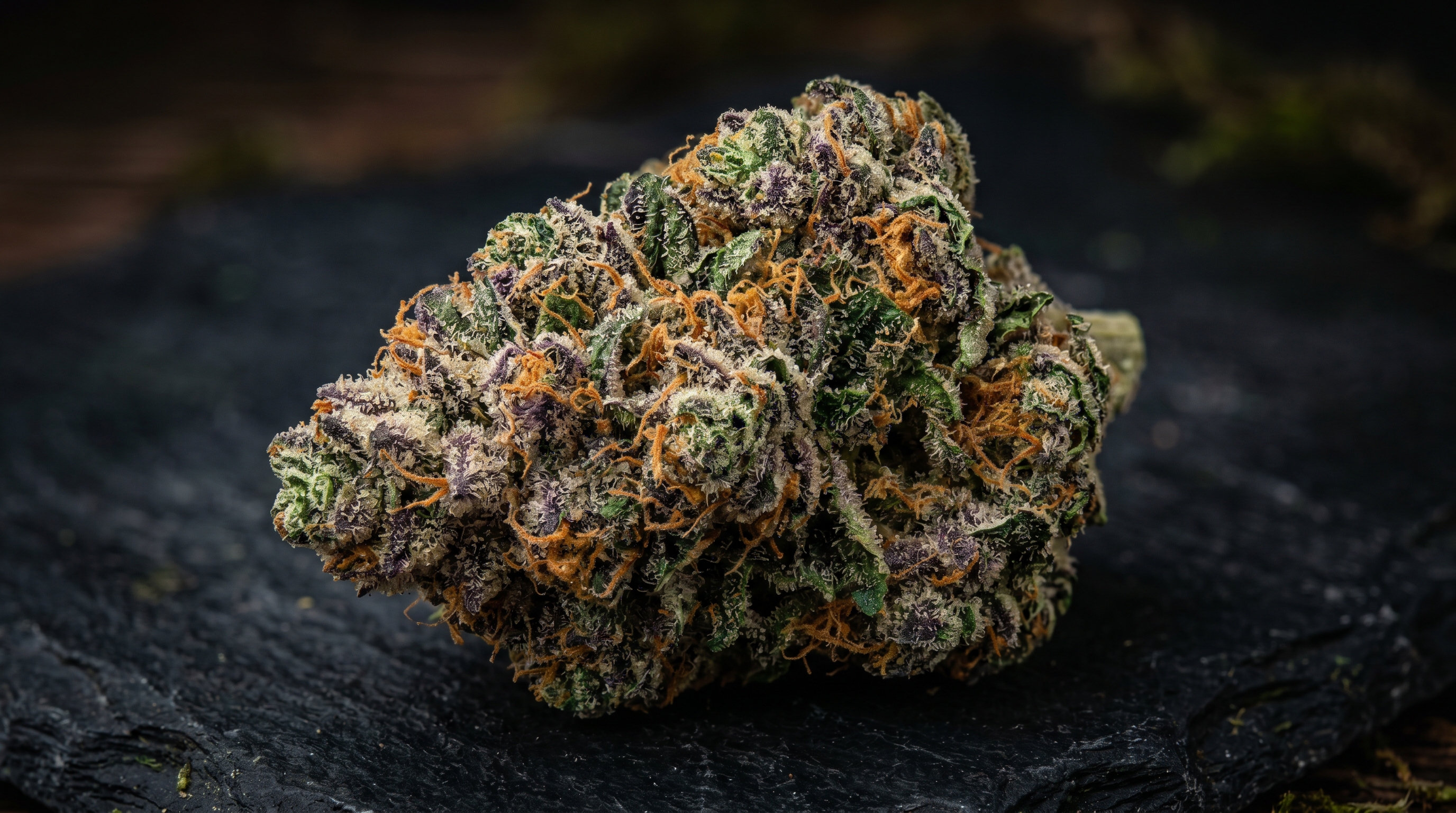
When Leafly announced its 2025 Strain of the Year, a lot of people in the cannabis world did a double-take. Not because the winner was obscure — Hash Burger had been quietly stacking dispensary sales and connoisseur word-of-mouth for the better part of two years. The double-take was about what it wasn’t.
It wasn’t a Gelato descendant. It wasn’t a Runtz cousin. It didn’t taste like fruit candy or birthday cake. It tasted like garlic, aged cheese, and something you might describe as “a gas leak in the best possible way.” Leafly’s 2025 Strain of the Year smelled like a deli counter and hit like a freight train — and the fact that this is what the cannabis community rallied around says everything about where connoisseur culture is headed.
Hash Burger’s win isn’t just a strain story. It’s a market story. It’s the clearest signal yet that the decade-long Cookies-era candy palate — the fruity, sweet, dessert-first philosophy that gave us Gelato, Runtz, and an avalanche of their descendants — is giving way to something older, funkier, and significantly more pungent.
What Hash Burger Actually Is
Let’s get the genetics right, because the Hash Burger family tree is a masterclass in strategic cannabis breeding.
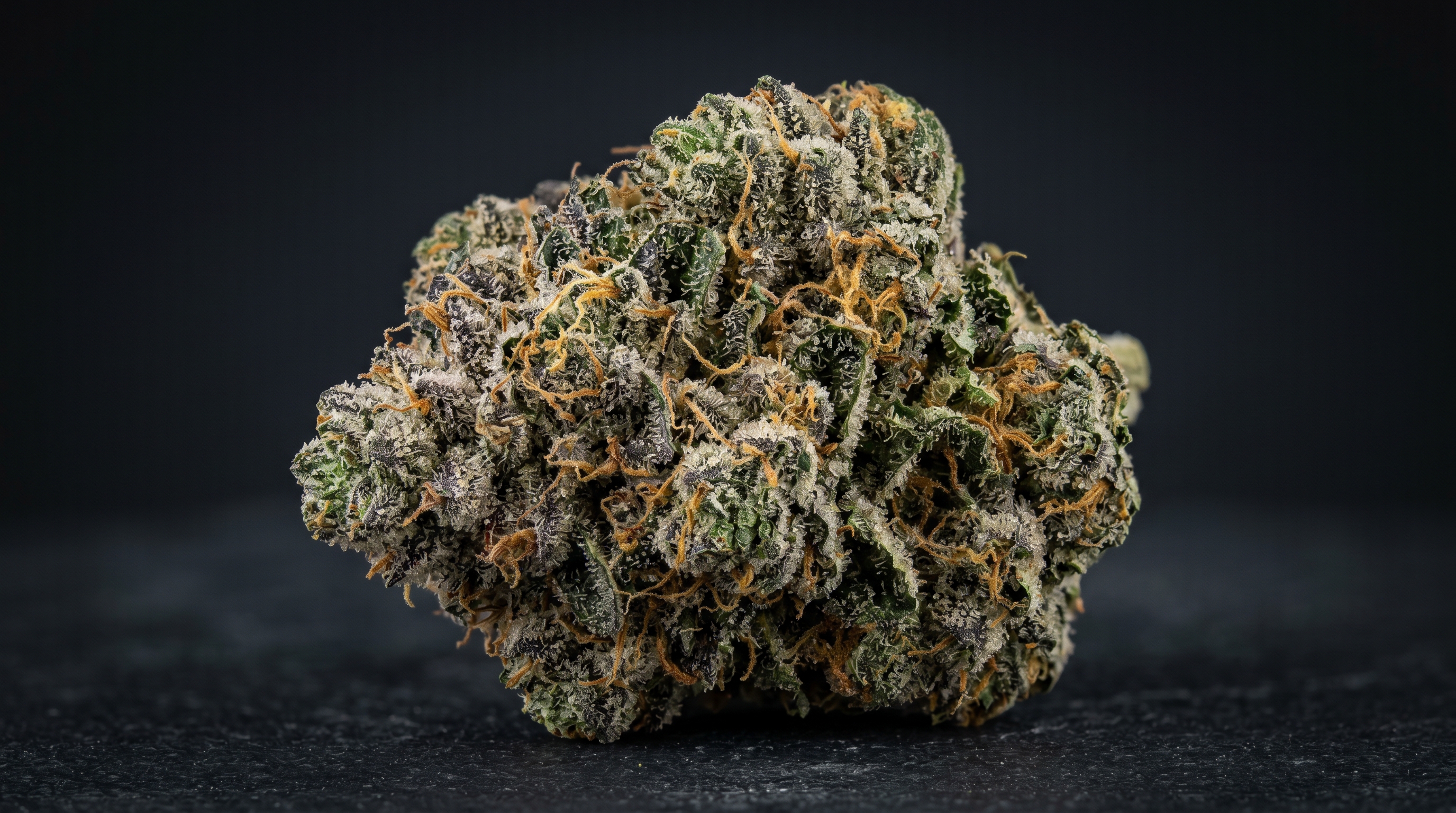
Hash Burger is a cross of Han Solo Hash Plant and Double Burger, bred by Respect and Mrs. Respect of California Seed Bank in partnership with Skunkmasterflex of Skunk House Genetics. It’s a slightly indica-dominant hybrid — roughly 60% indica, 40% sativa — and it typically tests between 28–35% THC, averaging around 30% in most verified retail batches.
To understand why this cross matters, you need to understand both parents. Han Solo Hash Plant is itself a child of Han Solo Burger and Black Triangle Kush — bringing the heavy resin production and compressed, hash-like terpene density that its name promises. Double Burger, the pollen donor, is a cross of GMO (Garlic, Mushroom, Onion — aka Garlic Cookies) and Donny Burger (which is itself GMO × Han-Solo Burger). So Hash Burger carries GMO influence on both sides of its lineage. The garlic-fuel-onion genetic architecture isn’t an accident; it’s a deliberate amplification of everything that makes the Burger strain family the funkiest family in modern cannabis.
Skunk House Genetics, founded by Skunkmasterflex in 2005, was already building savory-forward cultivars before “gassy” became a mainstream trend. GMO became one of the most sought-after clones in cannabis history for exactly this reason — its offensive, room-filling garlic-soup aroma was a direct rejection of the candy-bar aesthetic that dominated dispensary shelves. Hash Burger is the next-generation expression of that philosophy: more refined, more potent, and now officially recognized at scale.
The strain won Silver at the 2024 California State Fair Cannabis Awards for high THCa content before Leafly’s recognition arrived. By late 2025, it was averaging approximately 9,000 strain page views per month on Leafly — a dizzying acceleration that showed no sign of slowing down by the time the award was announced.
The Flavor Pivot Nobody Planned
If you spent any time in a cannabis dispensary between 2018 and 2024, you know what the Cookies era smelled like. It smelled like a candy shop. Runtz: tropical Skittles. Gelato: sweet cream and berries. Wedding Cake: vanilla frosting and sugar. Lemon Cherry Gelato: citrus candy with a tart finish.
These were not bad strains. Many of them are exceptional, and the genetic artistry behind the Cookies family — the work of Berner, Sherbinski, and their collaborators — is genuinely important. Gelato redefined what a hybrid could smell and taste like. Runtz won Strain of the Year in 2020 and brought the candy palate to millions of new consumers. These are real achievements.
But by 2023, something was happening at the edges of the market. Veteran consumers and connoisseurs — the people who’d been smoking for ten, fifteen, twenty years — started expressing a different kind of fatigue. Not boredom with cannabis, but boredom with sweet. The dessert aisle had become crowded. Differentiation between candy strains narrowed. Every new release seemed to be “strawberry something” or “citrus something” or yet another Gelato x Cake cross with a different numbered phenotype.
Respect, one of Hash Burger’s breeders, put it directly in an interview with Leafly: “I smoke this newer stuff, and I don’t feel stoned. I don’t feel happy. People aren’t as happy smoking weed now! And that’s because the terps aren’t there.”
That quote is worth sitting with. The Cookies era’s focus on certain fruit-forward terpene profiles came at the expense of terpene complexity — the layered, sometimes challenging, often polarizing aromatics that veteran smokers associate with genuinely excellent cannabis. The candy palate had democratized the market. Hash Burger’s rise signals that the connoisseur tier is now reclaiming the conversation.
The Terpene Story: What Makes It Smell Like That
Hash Burger’s terpene profile is dominated by three primary compounds: myrcene, caryophyllene, and limonene.
Myrcene leads — and this is important context. Myrcene is sometimes simplified to “earthy and sedating,” but in Hash Burger’s genetic context it expresses something deeper: a dense, musk-forward heaviness that contributes to the skunky-umami nose, increases membrane permeability (which may affect how quickly other compounds cross into the bloodstream), and delivers the signature indica body weight. This is myrcene doing what it does in hash-forward cultivars, not in the gentler fruit-enhancing role it plays in something like Blue Dream.
Caryophyllene runs second — the only terpene in cannabis known to directly bind CB2 receptors, the cannabinoid receptors concentrated in your immune system and peripheral tissues rather than your brain. This is why strains high in caryophyllene tend to deliver physical comfort and anti-inflammatory effects that feel different from purely THC-driven body highs. It’s the peppery backbone in Hash Burger’s flavor — the note that makes it savory rather than simply skunky — and it contributes meaningfully to the strain’s reputation among medical users. According to Leafly’s data, 27% of Hash Burger reviewers use it for anxiety and 20% for stress, with caryophyllene’s CB2 activity likely playing a supporting role.
Limonene rounds out the primary trio — not in the citrus-candy role it plays in Runtz or Lemon Cherry Gelato, but functioning here as a mood-brightening counterweight to myrcene’s sedating tendency. Limonene is why Hash Burger’s high has a social, euphoric opening despite the heavily indica-dominant genetics. It’s the “giggly up top” before the body takes over.
The result is a flavor profile that Leafly describes as “a heaping helping of umami”: garlic, onion, cheese, pepper, and an ammonia-tinted base. The comparison to fine aged cheese is apt — it’s complex, it’s assertive, and a significant portion of casual consumers will find it challenging. That’s the point. This is not a crowd-pleaser strain. It’s a connoisseur strain that happened to win a mainstream award.

What the High Actually Feels Like
Hash Burger’s effects follow its genetics honestly, which is increasingly rare. Too many high-THC strains deliver a flat, indistinguishable ceiling regardless of terpene profile. Hash Burger is not that.
The onset is social. That limonene-driven opening delivers a wave of mood elevation — giggly, light, conversational — that catches people off guard given how heavy the smoke smells. Then, over the following twenty to thirty minutes, the myrcene-caryophyllene architecture begins to assert itself. Body relaxation settles in. Not the couch-lock paralysis of a heavy pure indica, but what Leafly describes as “like taking off a pair of too-tight shoes after a marathon” — a genuine, comprehensive release of physical tension.
By the time you’re an hour in, you’re likely sleepy. Hash Burger consistently rates “sleepy,” “relaxed,” and “euphoric” as its top three reported effects. This is an evening or late-night strain. Users who try to treat it as a daytime cultivar will find themselves mid-afternoon trying to maintain a conversation while their body stages a silent protest.
This maps Hash Burger clearly into the Relax High Family — strains built for physical ease, tension release, and mental unwinding. There’s a meaningful crossover into Entourage territory given the multi-terpene complexity: the interplay between myrcene, caryophyllene, and limonene produces an effect that’s larger than any single compound predicts.
The medical applications are real. Hash Burger was bred with pain management in mind, and the THC-plus-caryophyllene combination explains why it’s found a dedicated following among patients dealing with chronic pain, anxiety, and stress-related insomnia. The 4.7-out-of-5 star average on Leafly (across a large review base) reflects a strain that consistently delivers what it promises.
The Cookies Era: A Respectful Eulogy
To understand why Hash Burger’s win matters culturally, you need a brief history of how we got here.
The Cookies era, broadly defined, runs from roughly 2012 to 2024. Its origin point is Girl Scout Cookies (GSC), the OG Kush × Durban Poison cross bred by Berner and his Bay Area collaborators. GSC was a revelation — a strain that combined OG’s heavy body effect with Durban Poison’s cerebral energy, wrapped in a flavor profile that nobody had encountered before: sweet, earthy, slightly minty, with a complex herbal depth.
GSC launched a lineage explosion. Sherbet, Gelato (born 2014), Wedding Cake, Ice Cream Cake, Runtz (Gelato × Zkittlez), and eventually Lemon Cherry Gelato, Zkittlez itself, and dozens of numbered phenotypes of each. By 2018-2019, Cookies genetics were everywhere. By 2020, Runtz had won Strain of the Year and the candy-dessert profile was the default setting for premium cannabis marketing.
This was commercially brilliant. Sweet, accessible flavors lowered the barrier for new consumers. The Cookies palate was easier to sell because it was easier to like — it tasted familiar, friendly, non-threatening. For a market trying to normalize cannabis consumption after decades of prohibition stigma, this was exactly right.
But commodity status inevitably follows mass adoption. By 2023, there were so many Gelato crosses and Runtz variants that distinguishing between them required a dedicated spreadsheet. The connoisseur tier — the people willing to pay $60+ for a premium eighth and spend twenty minutes evaluating the nose before lighting up — started actively looking elsewhere. You can explore this arc in detail in our Gelato breakdown and our look at how Lemon Cherry Gelato keeps the Cookies lineage relevant while the broader trend moves on.
The gas-and-funk revival wasn’t spontaneous. It was led by breeders like Skunkmasterflex, who had been cultivating savory, pungent profiles through GMO and the Burger family for years before the wider market noticed. OG Kush had always represented an older, earthier aesthetic — and the hash-forward tradition that OG Kush descended from (Afghan and Hindu Kush landrace genetics) was always waiting to be rediscovered. Hash Burger represents that rediscovery becoming a certified mainstream moment. For more on navigating the connoisseur tier in this era, see our guide to strains for experienced users.
Hash Burger vs. Toad Venom: The Gas Era’s Two Faces
If Hash Burger is the gas-funk revival’s victory lap, Toad Venom is what comes next.
The two strains share important DNA: both are explicitly savory-leaning, both reject the candy profile, and both have become flashpoints for connoisseur discourse in 2025 and 2026 respectively. But they express the anti-candy thesis differently.
Hash Burger’s approach is maximalist. It takes GMO’s already-aggressive garlic-onion-cheese character and amplifies it through double-sided genetic stacking. The result is a strain with almost no sweetness, no fruit notes, nothing that might be described as “approachable.” It’s a deliberate challenge to the consumer — you either lean into the funk or you don’t.
Toad Venom (Animal Face × Sin Mintz), which we covered in depth in our Toad Venom spotlight, takes a more nuanced position. It’s savory-leaning but not militantly so — the Sin Mintz parentage adds a mint-tart complexity that makes Toad Venom more sessionable, more usable across different contexts. Where Hash Burger is a late-evening choice almost by definition, Toad Venom works into the late afternoon.
Think of Hash Burger as the genre-defining record — the one that proves the shift is real, that the market has genuinely moved. Toad Venom is the polished second album that makes the genre accessible to a wider audience. Both matter. Neither is replacing the other.
Hunting Tips: This Isn’t on Every Shelf
One underreported aspect of Hash Burger’s rise is that it’s still not uniformly available. Skunk House Genetics and California Seed Bank operate differently from the large commercial genetics houses — smaller batch production, more selective distribution, a preference for licensed cultivators they trust to work the genetics properly.
This means that Hash Burger from a boutique single-state cultivator who sourced directly from the original breeding program is a different experience than Hash Burger grown by a large multi-state operator at commercial scale. The terpene expression narrows considerably when the strain is pushed for yield over quality.
Practical advice:
- Ask your budtender specifically about the cultivator, not just the strain name. Hash Burger grown by someone who has worked the phenotype carefully will show notably higher terpene percentages and more pronounced umami character.
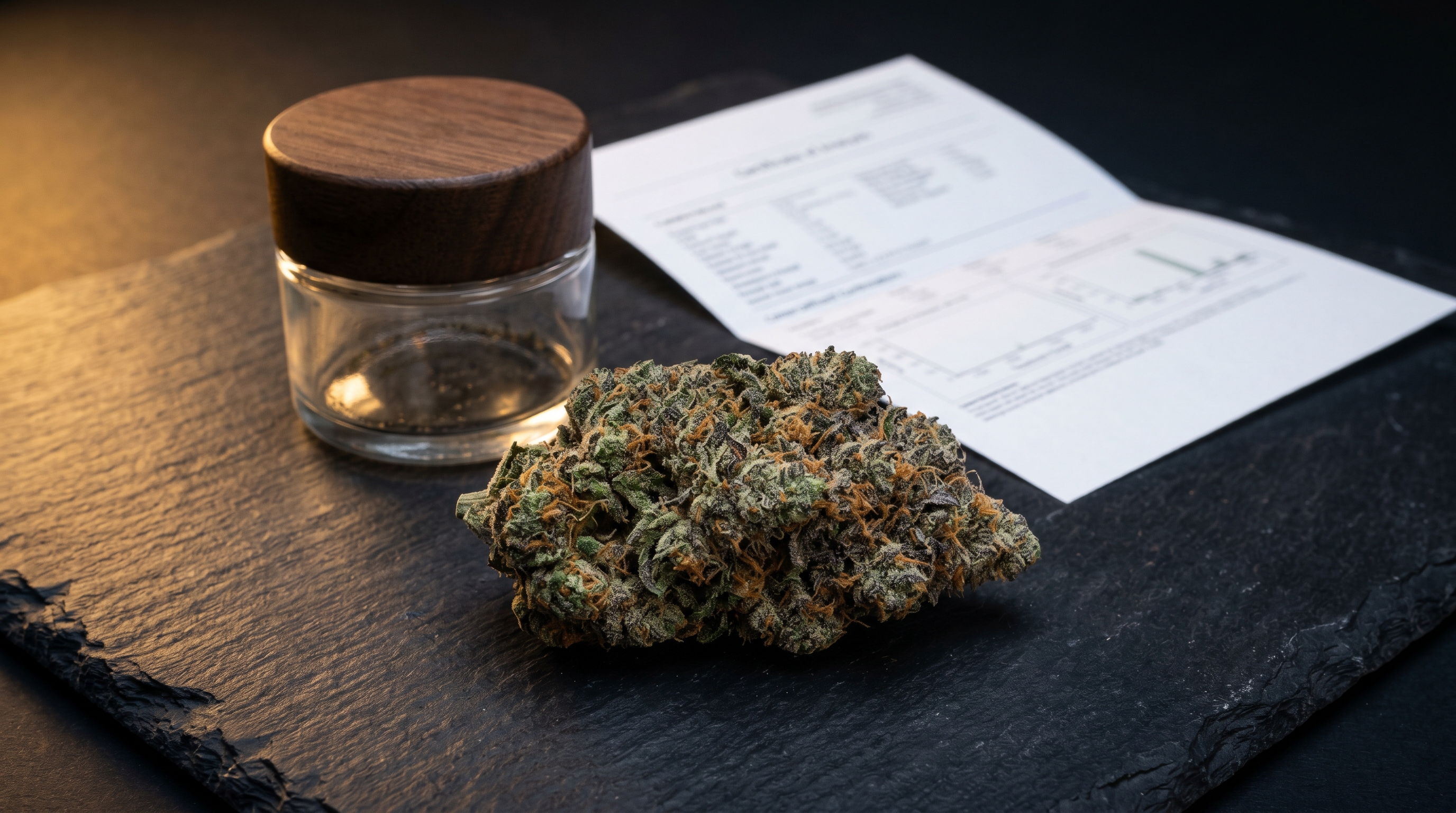
- Check the COA (Certificate of Analysis) for the terpene breakdown. You want to see myrcene, caryophyllene, and limonene all showing up meaningfully — not a flat total terpene percentage without breakdown.
- Look for it in states with strong boutique markets: California, Oregon, Washington, and Massachusetts have seen the most consistent quality distribution so far. Midwest and Southeast markets are getting it, but supply is thinner and provenance is harder to verify.
- Don’t mistake Hash Burger for similar-sounding Burger family strains. Double Burger, Donny Burger, Solo Burger, and others are all distinct cultivars with different genetic weights. They’re related but not interchangeable.
The Bigger Picture: Palate Cycles Are Real
Cannabis connoisseur culture, like any mature consumer culture, moves in cycles. These cycles don’t replace what came before — they layer on top of it, redirect attention, and recalibrate what earns enthusiasm at the leading edge.
The Cookies era lasted approximately a decade. That’s a long run, and it leaves a deep genetic legacy. Gelato and Runtz aren’t going anywhere — they’re catalog strains now, reliable and widely available, and millions of consumers genuinely love them. Wedding Cake is still a staple at dispensaries that know their customer base. The candy palate has earned its permanent seat at the table.
But the headline strains — the ones that win awards, that budtenders recommend to the person who says “give me the most interesting thing you have,” that generate the kind of obsessive word-of-mouth that moves a dispensary’s entire batch in an afternoon — those are moving toward complexity, pungency, and savory character. Hash Burger’s 2025 win is the data point that makes this trend undeniable rather than anecdotal.
The gas-and-funk era has a lineage going back to classic Skunk genetics from the 1970s and 1980s, through OG Kush, through GMO, to the Burger family and now to Hash Burger’s mainstream moment. In cannabis, as in food culture and music, the underground eventually surfaces. What the connoisseur community has been selecting for quietly becomes what the market chases loudly. We’re watching that process play out in real time.
The open question is how long the gas era runs. Six years? Ten? The answer depends partly on what breeders produce next — and based on the genetic lines currently in development, the savory-pungent direction is nowhere near exhausted. But predicting trend longevity is a fool’s errand. What you can do is pay attention to what the people who care most about cannabis quality are drinking — er, smoking — right now.
Right now, it’s Hash Burger.
Sources
- Order up! Hash Burger is Leafly Strain of the Year 2025 — Leafly, 2025
- Hash Burger Strain Information — Leafly strain database
- 6 Cannabis Market Flavor & Aroma Trends for 2025 — Abstrax Tech, 2025
- Leafly 2025 Strain of the Year announcement on X — @Leafly, 2025
Knowing what YOUR palate actually prefers — sweet or savory, gas or fruit, funk or candy — is the starting point for every great cannabis decision. The only way to find out is to track your sessions honestly. The High IQ app makes that easy: log strains, rate effects, and let the data tell you what your palate is actually saying.
